This is breath. The orchard shadows laddering an Autumn way out. I follow the windfall of dead sparrows, to an evening where Time’s vapours wet their little bones. I tell my dog that I have seen grief come small as birds. You were one thing. And people come and go. In the orchard I am king to the passages of persimmon and fig, and the dog finds me worthy. This is a music video where I look sad in technicolour and women dance at my hips and the petals come away. If I am lonely, it is loneliness that I am cool blooded and blued as the hills. At the gallery someone will say the blue hills represent the fever dream of somebody so distant he touches love in its purist form. But I am not that person. This is breath. The dog watches my palms for happiness. I let him down. We collect sparrows like they might ripen into laughter, two by two. My dog and I guard them, little maybes.
Elizabeth Morton
Elizabeth Morton is a yarn teller, poem maker, and neuroscience enthusiast from Tāmaki Makaurau. Her latest collection of poetry is Naming the Beasts (Otago University Press, 2022).
It feels like a year ago we stood on the back deck and peered into the dark, bewildered, bemused, until our camera showed us this. I spiralled into thoughts on staring into the dark fruitlessly, and on how surprisingly, like a miracle, what I am reading, the poem, the novel, the essay, sometimes reveals what I couldn’t see.
It’s been a week of smash and uplift. Let’s focus on the uplift. Listening to Isla Huia read at the Ockham NZ Book Award ceremony (I live streamed it). I loved Isla’s book so what a treat to hear her read. It was indeed a treat to hear all the authors read, and to absorb the ongoing insistence on why books matter. Yes, we are all reading and writing and liking different things, but books matter. They can make a difference in our lives. Emily Perkins nailed it in her acceptance speech.
New books in the post: Meantime, Majella Cullinane (poetry, Otago University Press) Brown Bird, Jane Arthur (children’s novel, Penguin). A Bunch of Family Poems by Adrienne Jansen. Ooh! Exciting package from THWUP of books out in a few months:Slim Volume by James Brown, Tarot by Jake Arthur, Still Is by Vincent O’Sullivan.
The past weeks have been the toughest since my transplant for various reasons and I am so grateful to the nurses, doctors, and my dentist who, no matter how stretched or underpaid they are, are infinitely patient, kind and helpful. Why isn’t this a frontline issue for those in ‘power’? Why do I feel the gap between the privileged and the less so widens? I am sharing this with you because together we are imagining and working towards a country that is equitable, humane, welcomes all cultures, genders, disabilities, languages, is willing to share and support.
Sadly, I can’t accept poem submissions. I do accept books to review.
Week’s links
Monday: Poem: ‘Skeletal‘ by Megan Kitching aga pukapuka pekapeka open for submissions Majella Cullinane launchesMeantime
Tuesday: book review and reading: Hopurangi -Songcatcher Poems from the Maramataka by Robert Sullivan
The Dunedin City of Literature team is excited at the recent announcement of a special collaboration with SuperGrans and renowned poet Jenny Powell.
Earlier this year on World Poetry Day, it was announced that Jenny will be running a series of free poetry workshops for SuperGrans, Dunedin staff, volunteers and their community.
Jenny is the Dunedin UNESCO City of Literature South D Poet Lorikeet and is a teacher and award-winning poet. The series of free workshops over six weeks is a way of saying thank you to the SuperGrans group for their great mahi in the community. SuperGrans staff and volunteers provide free holistic support to individuals and whānau to learn new skills to thrive in the modern world.
Jenny will lead the workshops wearing her bespoke ‘chain of office’, which was handcrafted by Dunedin local Jill Bowie of the Dunedin Public Libraries. Jenny, who also delivers free City of Literature poetry workshops to five-year-olds, is thrilled to be working with the SuperGrans.
For Jenny, giving a poetic voice to seemingly impossible ideas is accompanied by joy and wonder. She wants to encourage and share these qualities through the energy of poems and sees this as a crucial part of her role.
The collaboration was revealed on World Poetry Day, 21 March, as part of an international campaign with all the Cities of Literature around the globe. The workshops will be held over six weeks from June.
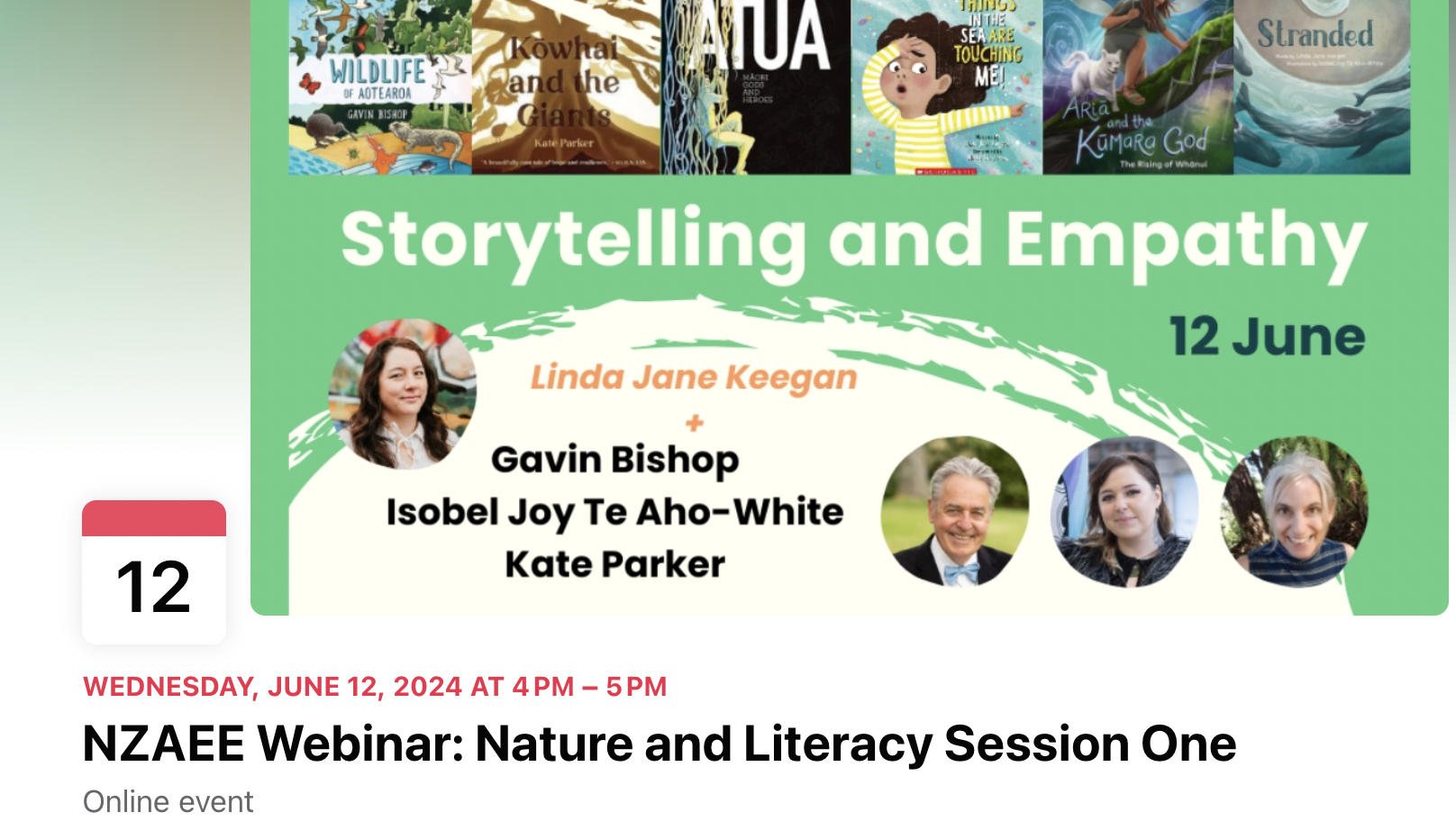
Facilitated by Linda Jane Keegan Guest speakers: Gavin Bishop, Isobel Joy Te Aho-White and Kate Parker
Join us for this free webinar exploring the importance of storytelling and empathy within environmental education and literacy learning. Our panel of speakers are children’s book authors and illustrators and each bring a unique perspective.
We will include some time for questions at the end and you can add your questions to the registration form beforehand if you like. We also have free books to give away to some lucky participants who attend live or who complete our survey after attending or watching the recording.
Note this webinar is the first in a series of two panel discussions, with the second webinar on June 18th.
There’s a complex trough of grief. There’s a ridge of missing hearts.
Paula Green
I love couplets, and love the look of a single couplet on the page, how it catches my attention like a solitary cloud in a bright blue sky. I love how it can unfold in a breath, and you get awe or surprise or sweet wit, with or without rhyme, near rhyme, off rhyme, slant rhyme. Enjambment or a picnic stop. Regular beats or irregular stutters. You might meet the commonplace or the complicated, the uncanny or a confession. Truth or lies. You might veer off to unexpected gulleys and crevices. And of course couplets might gather together in clusters; threading ideas, experience, motifs, mood. My early book, Chrome, was an entire book of couplets on the page. I was drawn to how, on first glance you encounter sameness and routine (one critic loathed this banality), but how the more you look, the more nuances and differences are exposed. A bit like looking at the same view of the Waitākere ranges from our lounge window for the past decades.
For a number of years, I have delighted in Bill Manhire’s flair with couplets, the unsaid, the mysterious, the hinted-at anecdote, humour. His deft touch with rhyme. Here is a favourite:
Talking to the Moon
But the moon has drifted out to sea. It doesn’t know what will make me happy.
Bill Manhire from Victims of Lightning, THWUP, 2010
James Brown emailed me: “Your request has got me pondering couplets – when is a couplet not a couplet etc. I’ve written poems in rhymed couplets as a challenge to myself and because it’s not the done thing (for good reasons – I’m not advocating for rhymed couplets). Poets can be contrary people and because the prevailing form is free verse, rhymed couplets are a challenging temptation. ‘Peculiar Julia’ and ‘Shrinking Violet’ from Floods Another Chamber were turned into songs on a recent album Please Go Wild, that will be released by Polite Company next week. Another poem I wrote using rhyming couplets is ‘Winston Peters’ (The Tip Shop), whom I’ve no time for, so the poem also disrupts the common perception that a poem always conveys the poet’s truth.”
Ah. I have been musing on couplets a lot lately, on why I love them, and why I keep writing them, especially in the middle of the night, occasionally publishing them on Twitter (X). Writing a couplet in my head can be such a satisfying diversion in the midst of pain or doubt or melancholy or 3 a.m. wakefulness. The other night, when I was listening to a BBC programme on seaweed, I decided to post a suite of couplets on Poetry Shelf, both new and unpublished, by local poets, rhyming or not rhyming. And then I slipped into musing on ‘The troubled crocodile cloud / says peace not war out loud.’
A Suite of Couplets
Marriage
His hands in the sink, he felt his loneliness like a tide pulling him out to sea. She came back up the stairs, more a cloud than a silver lining.
Anna Jackson
The Joke
Each poem an astonishment that breath has once more entered and then left —
a sneeze, a hiccup, laughter at the joke. Inside each joke the fear of death.
Chris Price
from ‘Stone by Stone’
they saw in the north a glimmer a whisper of light from the fissure a promise of better
elbowing like atua cramped between their olds trying to prise the lid off to break the mould
Ariana Tikao
Sediments
sediments in the earth rock and dirt we are the same
looking back looking forward time collapsed we are the same
Ariana Tikao
Tell You What
One bird explains the sky to another. That’s the way they operate.
+
In the 1950s all the boys had big ears. Those were embarrassing years.
+
Every boy with his book. Every sheep with its showground.
+
We used to call the stove the range. I don’t see why that should have had to change.
+
Raewyn keeps in touch. I never liked her much.
Bill Manhire
Unrushed Light
Something sparks at the end of the wire. I have a memory like a flour sifter.
Paula Green
How to Age
Don’t panic. Just keep going.
Cilla McQueen
Mixed Messages
Do you like yourself? I do.
James Brown
Entwined
*
We are the perfect couple, like a headache and Panadol.
*
The real myth of Cinderella is that the order is first the drudgery, then the prince.
*
When he sees the new baby, the child says to his mother ‘Now you’re not just my mum, you’re my brother-er.’
*
In her room, the child talks on a toy phone playing the game of not being alone.
Emma Neale
Syrinx
He blew hot stupid breath through me and called it music. My mind watched my body from up in the sky, could only think how beautiful the reeds look reflected in the river.
Lily Holloway
Inside
Inside the city of longing is the city of bare feet. Inside the city of fear is the city of cumin seeds.
Paula Green
Dawn
It’s just shy of dawn. There’s a pheasant on the lawn.
Paula Green
A Suite of Autumn Couplets
[ . . . ]
Chronic pain like lemon juice rain.
Alpinecore
A toxic man-thought in the brilliant light: that I could beat a mountain in a fight.
Four Months in Four Regrets
That paisley shirt. Benching my leading scorer. Excessive drinking. Missing the aurora.
Mujaddara
I know. I know what’s happening elsewhere. While I mess around with my kitchenware.
Diary, 2024-05-10
Friday. I wrote another first line of a book. I’m now at one ten-thousandth of 10,000 books.
Braided Rivers
I also look dried-up if you’re passing by. I also suddenly flood if you ask why.
Warfare
In short, emotional asymmetry. I think of you and you don’t think of me.
[ . . . ]
As much charm as a factory farm.
Processing
Consider the empty networks of grief working like the veins in a dry leaf.
60 Cathedral Square, Christchurch Central City, Christchurch 8011, New Zealand
Celebrate International Biodiversity Day with an amazing line-up of guest speakers sponsored by RSNZ.
Lindsey Conrow – geographer at UC, talking about black-billed gulls
Gail Ingram – local poet, author of: anthology (n.) a collection of flowers (Pūkeko Publications 2024)
Sara Kross – ecologist / conservation biologist at UC speaking on opportunities and risks for wildlife in our urban jungle
Rebecca (Bex) Le Grice – entomologist and curator at Canterbury Museum, talking about flies
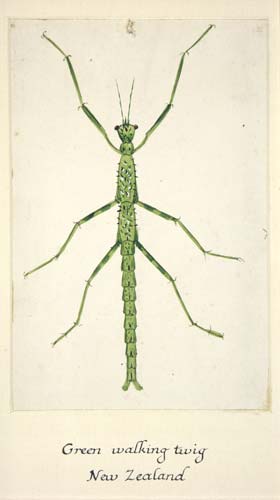
Morgane Merien – entomologist and science communicator at Canterbury Museum, talking about stick insects (and yes, there will opportunities to get a selfie with a stick insect)
Food and drink will be available to purchase.
Photo credit: John Backhouse (1845–1908) on Te Ara
“I am incredibly moved by all the amazing readings we’ve had tonight. They just bring the room alive. Books multiply the world, and it’s just incredible to hear all of the worlds that were evoked in these books we’ve heard from tonight. I really want to shout out to all the books that have been published in the past year. I am so grateful to everyone who supports books, to the booksellers, all the sponsors, to everyone who has come here tonight, to readers, I think of all of us writers as readers, first and foremost, and that’s something that brings us all together.
It’s been helpful for me to remember that it’s been our books going through this prize process, not us, it’s really easy to conflate these things, especially in writing when we’ve put all of ourselves into our work. It is about the books. I hope everyone can go to their local library or booksellers and ask them to recommend a New Zealand book.
Fiction is a form of magic. It’s necessary magic. It has saved many of us at different times in our lives and it will again if we let it. To the politicians and decision makers and anybody who might find themselves in a system of ‘what if?’, I say read a story, read a novel, and the work of the great Canadian writer, Alice Munro, who died today, and remember how vulnerable and layered and loving and connected we all are, and how much we need each other.”
an extract from Emily Perkins acceptance speech for Lioness (Bloomsbury UK), winner of the Jann Medlicott Acorn Prize for Fiction
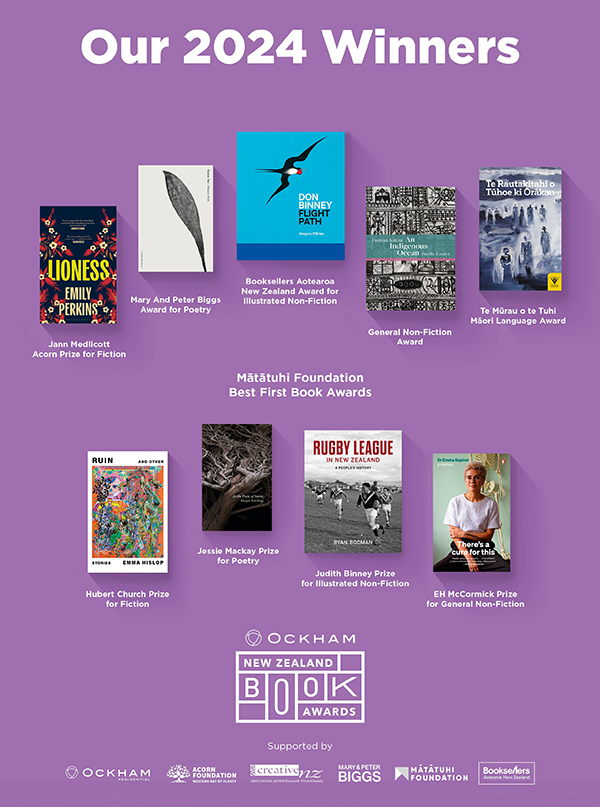
Last night I live streamed the book awards. It was a terrific occasion that honoured sixteen books shortlisted in the four categories, and the three best first books. This year Te Mūrau o te Tuhi, a special award given for a book written originally and entirely in te reo Māori, was given to Tā Pou Temara KNZM (Ngāi Tūhoe), esteemed academic and Waitangi Tribunal member, for Te Rautakitahi O Tūhoe ki Ōrākau(Kotahi Rau Pukapuka, Auckland University Press). Watch online here.
Like Emma, I particularly loved the short readings from each author. I loved Jack Tame as emcee. I valued the ongoing insistence that books matter, that our books reflect and speak to us, and that in Aotearoa, we continue to write, read, publish, purchase and borrow books.
I loved Emma Wehipeihana‘s reading from There’s a Cure for This (Penguin). Her acceptance speech for (E. H. McCormick Prize for Best First Book of General Non-Fiction) was brilliant, especially with junior doctors going on strike again today. Emma said: “As a doctor I’ve seen the insides of most orifices of the human body and held the viscera of the living and the dead, and I can tell you without a doubt, it’s the arts and artists who elevate our existence from being sacks of meat circling a dying star to something magical, sometimes with meaning.” The judges write: “Emma Wehipeihana’s engaging, eloquent, witty and sometimes confronting memoir is an extremely impressive first book. It is structured as a series of powerful essays about her journey as a wahine Māori through both her early life and her time in medical school. Emerging as a doctor, she recounts with candour and wry humour the racism she and other Māori experience, and she highlights, in an infinitely readable way, the structural inequalities in the health system.”
I also loved Emily Perkins speech and her reading from Lioness (Bloomsbury UK), winner of the Jann Medlicott Acorn Prize for Fiction. Perhaps one of the best acceptance speeches I have heard in years and I’ve quoted most of it above. I began 2024 by reading Lioness. A perfect start to the year – so layered and heart tapping, idea challenging, character rich – it’s a must read. The judges write: “Emily Perkins deftly wrangles a large cast of characters in vivid technicolour, giving each their moment in the sun, while dexterously weaving together multiple plotlines. Her acute observations and razor-sharp wit decimate the tropes of mid-life in moments of pure prose brilliance, leaving the reader gasping for more. Disturbing, deep, smart, and funny as hell, Lioness is unforgettable.”
Gregory O’Brien‘s beautifully published Don Binney Flight Path (Auckland University Press) won the Booksellers Aotearoa NZ Award for Illustrated Non-Fiction. It is an art treasure. So much love and research and care went into this book. The judges write: “Even as an experienced biographer, Gregory O’Brien has achieved a near impossible task in Don Binney: Flight Path. He has encapsulated the artist’s full life, honestly portraying his often contrary personality, and carefully interrogating a formidably large body of work and its place in Aotearoa New Zealand’s art history. O’Brien’s respect for Binney includes acknowledging that he could be both charming and curmudgeonly, and as a result he offers a complete picture of this complex and creative man.”
Book awards have the ability to your attention to books you have missed, books that immediately go to the top of the must-read pile. Today I am ordering a copy of Toeolesulusulu Damon Salesa‘s An Indigenous Ocean: Pacific Essays (Bridget Williams Books). He won the General Non-Fiction Award for his and the judges said: “This scholarly but highly accessible collection of essays carves out space for indigenous voices to tell their own narratives. Grounded in a deep understanding of Pacific history and cultures, Salesa addresses the contemporary social, political, economic, regional and international issues faced by Pacific nations. This seminal work asserts the Pacific’s ongoing impact worldwide, despite marginalisation by New Zealand and others, and will maintain its relevance for generations.”
I am also itching to read Emma Hislop’s (Kāi Tahu) Ruin and Other Stories (Te Herenga Waka University Press) which was awarded Hubert Church Prize for Best First Book of Fiction. The judges write: “Emma Hislop’s portrayals are perceptive, providing the women in her stories the space to grapple with disquieting questions that lack easy answers, while the insistent humanity of her characterisations suggests cause for hope. There is not a spare word in these refined and compelling stories, which introduce a striking new voice to our literature.”
Yes, there are countless extraordinary books that made neither the 2023 longlist nor the shortlist, but today, for just this moment, I am saluting our fabulous winners. Long may we write, read, publish, buy and share our local stories, knowledge and imaginings.
It is with great pleasure I congratulate Grace Yee, winner of the 2024 Ockham NZ Book Award for Poetry, and Megan Kitching, winner of Best First Book of Poetry. It was a stellar shortlist; I loved all four books on the list, and celebrated them on Poetry Shelf with absolute poetry pleasure (as indeed I did the longlist and various sublime collections that didn’t make either). I have included the judges’ comments at the bottom.
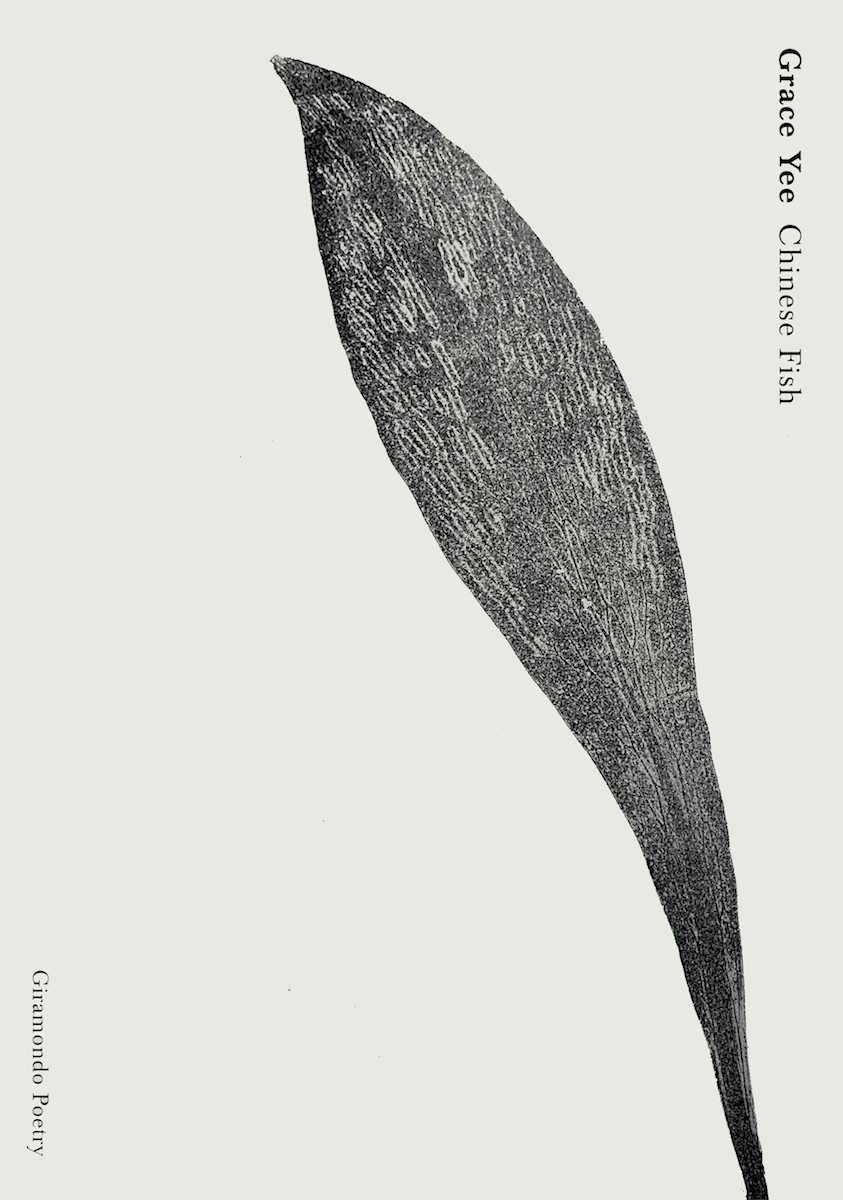
Winner of Mary and Peter Biggs Award for Poetry Chinese Fish, Grace Yee, Giramondo Press, 2023
Grace Yee’s terrific debut poetry collection caught my attention immediately- the clarity of writing, the intricate and affecting weave of multiples voices, voices that carry family, issues of immigration and racism, overlapping motifs. She weaves English and Cantonese and Taishanese. Dialogue sits alongside the newspaper borrowings, lyricism alongside more scholarly lines. Historical and cultural facts, along with additional comments, arrive in a faint grey font, little disruptions like a persistent shadow that hovers behind every we line we read, every voice we hear. And yes food is a succulent presence, a visibility that heightens both the sense of belonging and not belonging: from roast lamb, brussel sprouts and white bread to steamed rice and wontons in soup.
In my review I wrote:
“Grace has produced a remarkable poetry collection that speaks to who we are and who we have been. It is a vital reminder that we need to do better, that we need to listen and forge connections, celebrate and welcome, make and enact laws that are just, acknowledge the richness of all cultures. Poetry has the power to reflect and speak to humanity. It is essential. To have spent time with this book is a gift.“
What is the point of this anecdote? Is this a story about assimilation or – god forbid – miscegenation? This Cherry character doesn’t seem very … Chinese. Could you put her in a chong-sam or have her wipe a few grains of rice from her mouth…or explore the Pākeha boy’s point of view perhaps? How does he feel kissing this exotic Chinese girl? Does she taste like soy sauce?
from ‘For the Good Husband’
“Yee’s craft is remarkable,” judge Erik Kennedy says. “She moves between old newspaper cuttings, advertisements, letters, recipes, cultural theory, and dialogue. Creating a new archival poetics for the Chinese trans-Tasman diaspora, the sequence narrates a Hong Kong family’s assimilation into New Zealand life from the 1960s to the 1980s, interrogating ideas of citizenship and national identity. It displaces the reader, evoking the unsettledness of migration. In Chinese Fish, Yee cooks up a rich variety of poetic material into a book that is special and strange; this is poetry at its urgent and thrilling best.”
Grace Yee is the author of Chinese Fish, winner of the Victorian Prize for Literature and the Victorian Premier’s Poetry Award in 2024. Her poetry has been widely published and anthologised across Australia and Aotearoa, and internationally, and has been awarded the Patricia Hackett Prize, the Peter Steele Poetry Award, and a Creative Fellowship at the State Library Victoria. Grace has taught in the Writing and Literature Program at Deakin University, and in the Creative Writing Program at the University of Melbourne, where she completed a PhD on settler Chinese women’s storytelling in Aotearoa New Zealand. She lives in Melbourne, on Wurundjeri land.
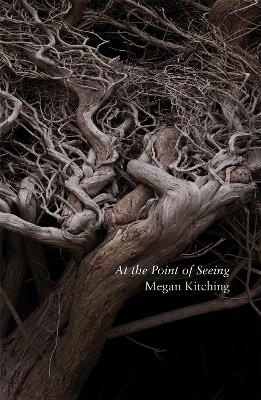
Winner of The Jessie Mackay Prize for Poetry Best First Book At The Point of Seeing, Megan Kitching, Otago University Press, 2023
When I first started reading Megan’s At the Point of Seeing, it was an intake of breath, knowing this was a poet to watch, this was a book of return, and indeed, on every occasion of reading, I think and feel something new. It is there in the title, this vital cusp, this sway between comprehension and obliviousness. Awareness alongside ignorance. Megan’s collection holds out the natural world, so we may also stand on the point of seeing. So we may absorb the wildness, the wilderness, the edge. So we may inhale beauty and growth. So we may recognise how our states of awareness might be infected or controlled, how our blindness to choices of the past might aggravate contemporary and future life.
In my review I wrote:
“I also read this sumptuous collection as musical sound track, and again it produces wonder, delight, sonic surprise. It is a sweetly mixed playlist as we move from assonance, to rhyme, near rhyme, alliteration, aural dip and lift and slide. It is writing on the wire. It is scoring the world, it is intricate melody, it is open tuning.”
Ah. I am pitching this book to you, when against all odds, poetry is a lifeline, the source of joy, the connecting force, the point of contemplation. We are at the point of seeing, we are at the point of speaking, sharing, hoping, and poetry such as this, poetry as good as this, makes all the difference.
An Environmental History
The book hurts but I go on reading. It doesn’t take long once we come to it: sharp as an adze blow, ash blaze, rats’ teeth, whalebone, deals done, a swift overrun. The toll of knock-on consequences like a ship’s wake razing shore upon shore is a line too often sung. Eaten, exhausted, our stores of regret for the flightless dead.
Down on the beach, gulls are feeding. All I do for today is watch each fend their patch as terns zone in, heads cocked. Fish shirr water, fleet away to their own resources. Ponderous, as if evolving only now, dimly feeling something has changed, chitons graze the rock. There is food in books too, better knowing, but until we come to that let algae, plankton, foliage flourish long enough to keep the survivors fed.
Megan Kitching At the Point of Seeing, Otago University Press, 2023
The judge, Erik Kennedy writes: “At the Point of Seeing is one of the most accomplished debuts readers are likely to encounter. The collection uses structure to amplify meaning, and its luxuriant lexicon and sometimes knotty syntax are always invigorating rather than confusing. But this book is never a mere exercise in building poems mechanically. Megan Kitching’s poems are warm-blooded, compassionate, and inquiring. They take the reader into an Aotearoa landscape and a moral universe that they will want to explore over and over again.”
Megan Kitching was born in Tāmaki Makarau Auckland and now lives in Ōtepoti Dunedin. She holds a PhD in English Literature from Queen Mary University, London, looking at the influence of the natural sciences on eighteenth-century poetry. She has taught English and creative writing in the UK and at the University of Otago. Her poetry has appeared in The Frogmore Papers (UK), takahē, Poetry New Zealand, and Landfall. “The horses,” published in takahē 95, was nominated for Best Small Fictions 2020. In 2021, she was the inaugural Caselberg Trust Elizabeth Brooke-Carr Emerging Writer Resident. At the Point of Seeing is her debut collection.
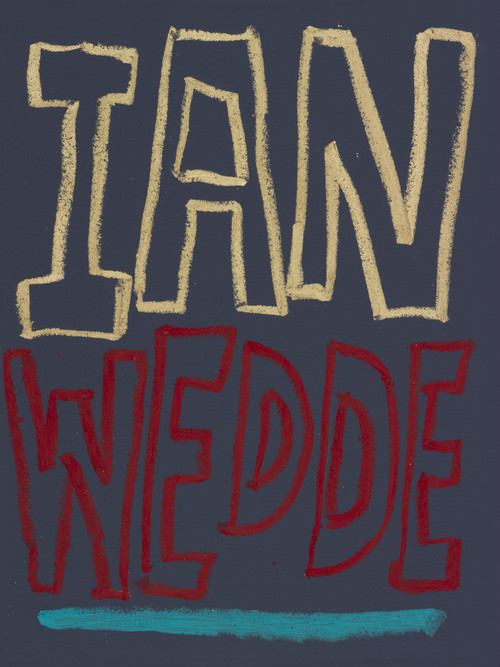
Welcome to a new and ongoing series on Poetry Shelf. I have been thinking a lot about the place of poetry in global catastrophe and the incomprehensible leadership in Aotearoa. How do we write? What to read? Do we need comfort or challenge or both? I am inviting various poets to respond to five questions, and to include a poem or two of their own. This week poet, novelist, essayist and editor, Ian Wedde.
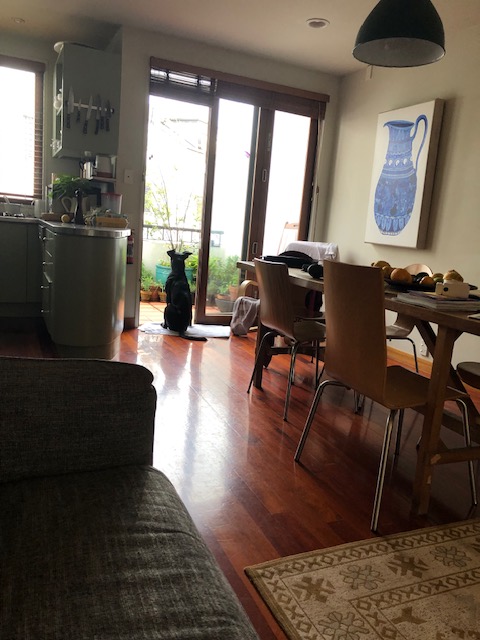
Maxi checking walk weather
1Has the local and global situation affected what or how or when you write poetry?
Always – sometimes the bad news shuts me up, as now somewhat, with a sense of weariness at the very bad regressive policies of New Zealand’s current government. At other times – ‘You have to start somewhere/ in these morose times’ (The Lifeguard) – or when I wrote poems about call it the human condition (Barbary Coast) it was from a compassion with and for those of us not feeling good about the state of call it the human condition:
and I can’t remember where the silence ended and speech began, where vision ender and tears began. All our promises vanish into thin air.
… bit morose, really.
Other responses have been less introverted, for example the work I did with Fawwaz Tuqan producing the book of poems by the Palestinian poet Mahmoud Darwish back in 1973, my contribution of a sort to the situation I lived with while working with Palestinian refugees in Amman, Jordan.
2 Does place matter to you at the moment? An object, an attachment, a loss, an experience? A sense of home?
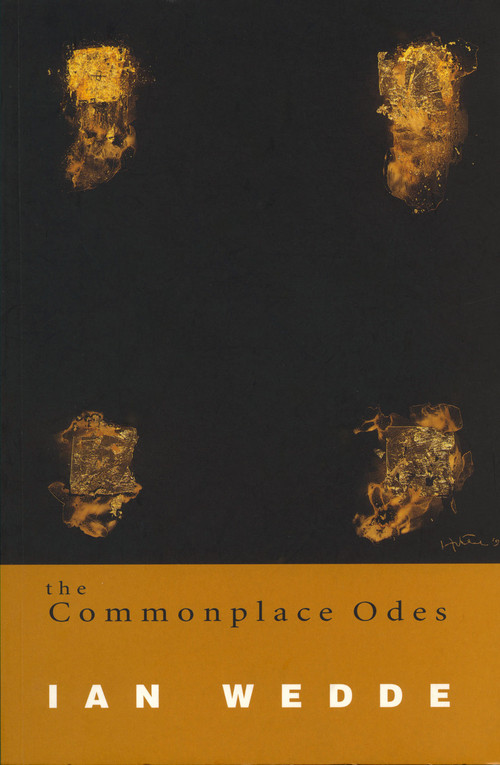
Yes it does. I love living where I do at present, in Three Lamps, Ponsonby, Auckland, encircled by sea and in a walking-distance neighbourhood with pretty much everything I need within dog-walk reach, including a swimming beach (when not polluted by rain run-off). I lived nearby in Wood Street back in the 60s when I was at university and Ponsonby was very down market, so I have a kind of stretched-out sense of home. There’s a new small book on the way called Ode to Auckland, which begins like this:
1
McCahon’s Defile For John Reynolds
And so Colin I cast off in my frail craft of words my craft of frail words of crafty words into the defile of Three Lamps where struck by sunshine on the florist’s striped awning and the autumn leaves outside All Saints as you did before fully waking in Waitākere to look at the elegant pole kauri in dewy light I defile my sight with closed eyes and so see better when I open them the Sky Tower pricking a pale blue heaven like Raphael’s in Madonna of the Meadows or the scumbled sky of Buttercup fields forever where there is a constant flow of light and we are born into a pure land through Ahipara’s blunt gate a swift swipe of pale blue paint on Shadbolt’s battered booze bar where bards bullshitted among the kauri.
Gaunt cranes along the city skyline avert their gazes towards the Gulf away from babblers at Bam Bina breakfast baskers outside Dizengoff some pretty shaky dudes outside White Cross beautiful blooms in buckets at Bhana Brothers (open for eighty years) Karen Walker’s window looking fresh and skitey across Ponsonby Road my charming deft dentist at Luminos most of South Asia jammed into one floor at the Foodcourt
… and so on for a few pages, from 2020.
3 Are there books or poems that have struck a chord in the past year? That you turn to for comfort or uplift, challenge or distraction.
I’ve been loving very regular email posts from my good mate Barry (Bazza) Hill in Queenscliff, Victoria, Australia. He’s been sending regular chunks of a new book for me to have a read and comment as appropriate, so it’s like a drawn-out conversation when I suspect both of us have a glass of wine to hand. His poems are coming in an amazing rush of energy largely driven by rage at the conflicts in Ukraine and Gaza, a momentum I can’t even imagine matching, especially as the poems I’m writing at present are very slow to come and often minimal when they finish. Sample from back in 2007:
Film Treatment
The klieg lights, the dark, dripping forest, the rank flanks
of horses, a sneery hound pissing on wet tents. The collapse
of public transport, the unhygienic orphanage, the barracks, the unpredictable
success of tour discounts. A lake in which a lake
is reflected. A mountain superimposed on another where
thoughts race along the boardwalk losing touch with their bodies
4 What particularly matters to you in your poetry and in the poetry of others, whether using ear, eye, heart, mind – and/or anything ranging from the abstract and the absent to the physical and the present?
Pretty capacious question! I’d say entertainment in the very broad sense of texts that engage me fully by whatever means, ideally very diverse and as unexpected as possible – poems that entertain everything from the most minimal and conceptual to the most deliberately programmatic. I admit to wearying of let’s call it the introverted domestic-personal, I prefer the unexpected and to not have my sympathy courted too simply.
5 Is there a word or idea, like a talisman, that you hold close at the moment? For me, it is the word connection.
Conversation.
Born 1946 in Blenheim, New Zealand, Ian Wedde has lived in various places in New Zealand and elsewhere and currently in Auckland with his wife the screen-writer Donna Malane and their dog Maxi. They have five sons between them and six grandchildren.
We will read all poems sent to us between now (May) and 30 June 2024.
We’ll aim to respond to everyone by the end of August.
Issue 11 will be launched in the Southern hemisphere spring.
What we ask:
Share your poetry – be it a roar, purr, or pip-squeak.
Broadly, we seek poems in which we feel a warm-blooded liveliness – beating hearts, teeth and claws or rough-tongued tenderness. To get a sense of the range of work we’ve adored before, browse our previous issues online.
We believe that you should pursue the writing that most energises you, rather than tailoring your voice to journals – and we are always pleasantly surprised by new modes of enchantment. Send us the work you’d be most chuffed to see in the world.
Email us up to five poems, preferably in a Word document, to sweetmammalian at gmail.com along with an author bio in your cover note. We also appreciate knowing we’re you’re from, within Aotearoa or abroad.
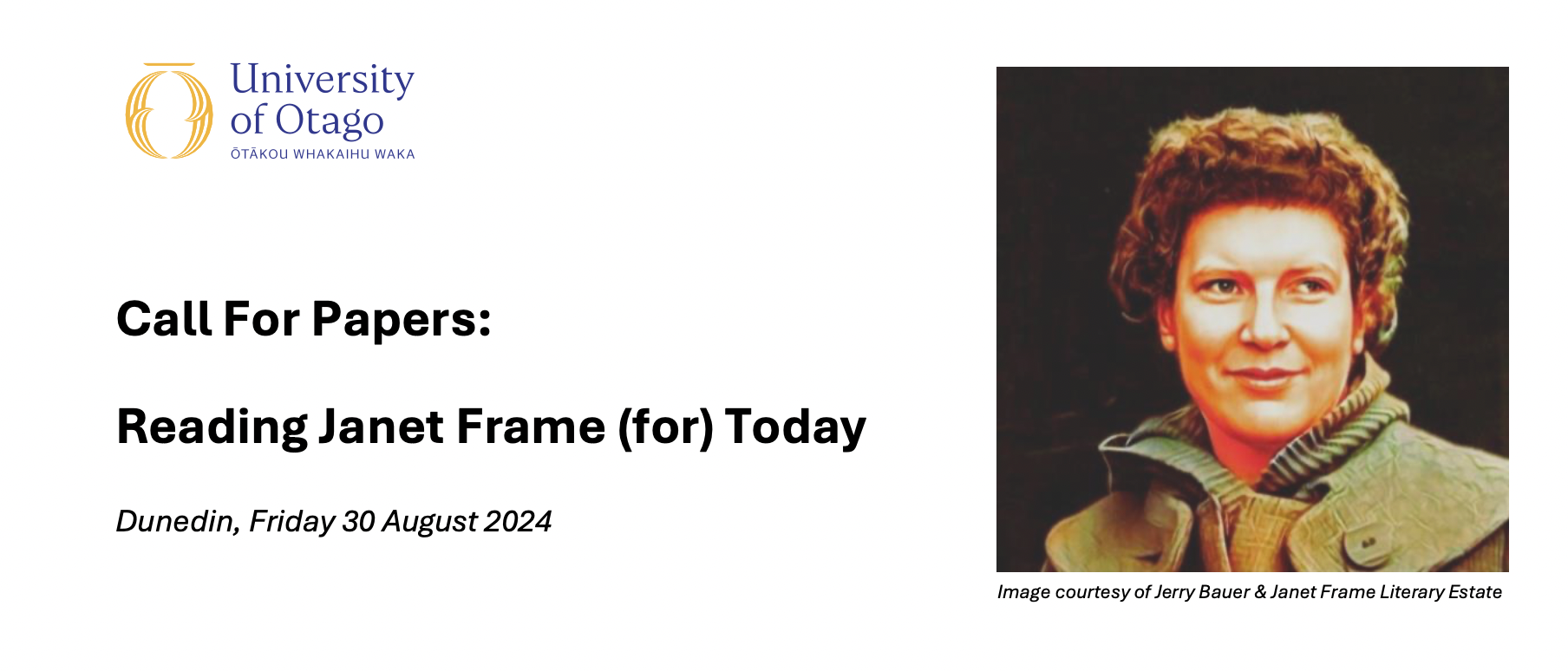
A writer’s work is inevitably—at least to some degree—anchored in its own time and space. And yet some writing also transcends those temporal and geographical connections in important ways: opening up questions that refuse easy answers, these works stay hauntingly relevant long after they were first published, and well beyond their particular geographical locale. Janet Frame, as a writer of immense creative capability, paired with formidable intellectual curiosity and social awareness, has endowed us with such “transcendent” writing; indeed, she has given us a body of work whose probing questions we have barely begun to unpack with the full attention, and respect, that they deserve.
To celebrate Frame’s extraordinary legacy and mark the centenary of Frame’s birth in Dunedin, the University of Otago English and Linguistics Programme invites scholars and writers to participate in a one-day symposium that teases out some of the enduring questions raised by her work. We specifically aim to explore the complex ways in which Frame’s work might speak to the contemporary moment: how—and perhaps why—might we read her work today?
We invite scholarly and creative abstracts of no more than 300 words. Topics might include, but are not limited to:
Creative adaptations of Janet Frame’s work
The demands of reading Frame in an era of distraction
Beyond New Zealand: Frame and the world of migration/travel/cross-cultural encounter
The state of Frame scholarship
Frame and the world of ideas
Empathy and (non-)violence in Frame’s writing
The question of the political in Frame’s writing
Frame and contemporary cultural theory (How might recent theoretical turns, such as affect theory or ecocriticism, inflect our understanding of Frame? Conversely, what resources might Frame offer to contemporary theoretical preoccupations?)
Frame’s attentiveness to time and place
Frame’s attentiveness to “the marginalised”
Creative writing—or reading—through of one or more of Frame’s texts
Frame’s lineage and legacy in contemporary literature. Please email abstracts and a short biographical note to janetframesymposium@gmail.com by 15 June (with notification of acceptance on or before June 30).






 NZ Poetry Shelf