

This weekend the brilliant Featherston Booktown Festival will be in full swing – such a warm and inspiring occasion. Would so loved to have been at Friday’s late night event with Tayi Tibble, Becky Manawatu, Lee Murray, Madeleine Slavick and Mary McCallum (‘A Place to call Home’). Or to catch Jenny Bornholdt talking about Annemarie Hope-Cross (1968–2022) with Lynn Freeman.
And this week Poetry Shelf has launched a new series – I invite writers to respond to 5 Questions. Like so many people in these troubling times, I keep agonising over what and how to write, what and how to blog. Community feels so important.
Looking forward to opening AUP New Poets 10 edited by Anne Kennedy – it will be launched on May 29th but is out in shops now.
Also looking forward to seeing responses to sessions at the Auckland Writers Festival on social media. Lots of poets appearing at The Streetside events at Britomart. If anyone wants to send me festival thoughts, I will make a collage of them when the festival is over – words and pictures!
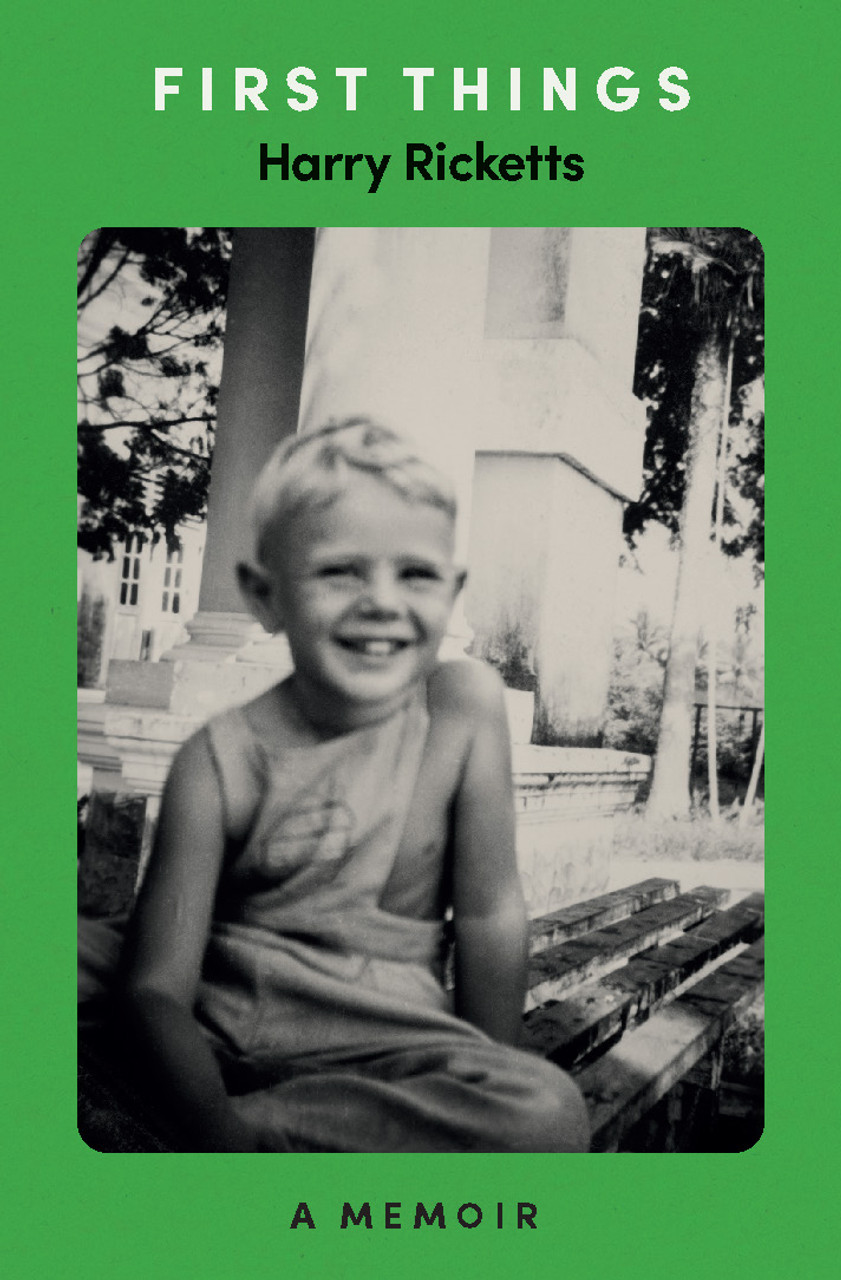
New books in my post box this week: First Things – A Memoir, Harry Ricketts (THWUP) and Manuali’i, Rex Letoa Paget (Saufo’i Press).
Poetry Shelf does not accept open submissions for poems, but do send me notices for the noticeboard, and new books. I cannot promise to feature or review everything as my energy jar is still half full. Thank you so much for your contributions, ideas and enthusiasm for poetry, and indeed, for the gorgeous books published in Aotearoa.


The week’s links
Monday: Monday Poem – Bill Manhire’s ‘Hello’
Tuesday: Sylvan Spring reads from Killer Pack
Jesse’s Reading Party
Wednesday: 5 Questions – Khadro Mohamed
The Rush Cottage Writers’ Residency
Thursday: Review and conversation with Amy Brown, My Brilliant Sister
Friday: Review of Madeleine Slavick’s Town
A poem and a musing
II
How she grew old happened in fine-darned places,
Cracked pictures, seen too close: you’d barely know . . .
She was a red-haired woman, two little lines
Sharp cut between her brows: her eyes looked tired
As long as I remember, and her strong mouth sad.
Still she held firmly: when we went for walks
It was I who flagged: you’d never guess what frocks
She made us, while the clean thread broke and broke,
And I stood pricking at red sateen, or spoke
Roughly: that dance, the only one we had,
I remember Judy’s frock of petals, wired
Bright blue, with silver wrappings round the stalks.
Sometimes I loved her: but I liked smooth faces
Like the other mothers had, and told her so.
She laughed: she was never frightened: she took knocks
Square on the mouth, and wouldn’t hit you back:
I never saw my mother dressed in black
But grief came . . . and she never let it go.
Robin Hyde
from ‘The People’ in Houses by the Sea and the Later Poems of Robin Hyde, ed Gloria Rawlinson (Caxton Press, 1952)
So many poems of and for and by mothers on my shelves. How do we know and love and speak our mothers? In my second collection, Chrome (Auckland University Press, 2000), I built my house, my home, my place of belonging. The four sections were infused with a colour: my yellow self, my rose-red mother, my father green as grass, and the blue ripeness of poetry. I haven’t looked at this collection for a very long time, but with Mother’s Day on Sunday I wanted to read the mother section and see how I felt. My mother died a few days before Christmas last year, after a challenging month, and I could barely get to the airport, let alone fly down to care for her, or go to her funeral. So I mourned her here, at home.
Chrome. Fabrizia Ramondino’s novel Althénopis, inspired me to perform, in poetry, the process of writing home. I was writing myself as home, I was writing my mother and father as home, and finally, I was writing the text itself, the long poem, as a form of home. Colour functioned as both filter and point of saturation. I was drawn to the compelling colours of certain films: the work of Andrei Tarkovsky and Peter Greenaway, Sergo Paradjanov’s The Colour of Pomegranates. Alexander Theroux’s book The Primary Colours extended the range and play of colour. The blue-purple of The Rothko Room in London’s Tate Gallery and the yellow of a Wolfgang Laib installation helped provide the stillness I needed in order to write.
It was good to return to this sequence, to see what I had written all those years ago, to remember the complications of maternal relationships, and how we only ever know partial versions of our parents. I usually keep my family out of my poems, so this was an usual book to write. Today, when things feel so challenging both health-wise and planet-wise, I am still drawn to colour, to the earthy hues of Frances Hodgkins, a still life of Agnes Martin, the vibrant art of Sara Hughes and Grace Wright, Saskia Leek and John Pule, to the light on the Waitākere Ranges, the colour pop of food on a plate, tomatoes ripening in the garden.
At the end of the toughest week I have had in ages, when I want to weep at this nincompoop Coalition, at how very hard it is to recognise notions of ‘better’ in any of their choices, I witness the immeasurable kindness and care of health workers despite their breaking points. And yes, it was good to return to Chrome, to think of my mother, to think of writing, of reading, to find moments of stillness and joy.
I have a couple of spare copies of Chrome to give away, message me if you would like one.
we call it repetition
we call it in that order
red dahlias on the table
your face still fevered and hectic
here is a history of mothering
here is resentment and love
love is your origin
the flowers and the light
cyclamens flame-deepened on the sill
fuschias held for a moment
I am holding my mother closer
lingering at the border of home
she walks across Scottish Highlands
along Nelson rivers and Northland tracks
with crisp air salvaging a life
the mother returns to the beginning
the mother in pieces
where do I begin?
my voice cracked and blunt
the difficult daughter herself in pieces
I will walk along the Cascade track
in the secluded undergrowth
we sweep the rocks
we take the sand
I, the wayward daughter with heart
grown on stories and words and damask
leaking mouth
leaking lungs
see the tired skin of the mother
my mother still with milk memory
she moves on her own now
to places she once lived
I search for a token
a familiar place
we speak
in shifting patterns
Paula Green, from ‘Red’ in Chrome
 NZ Poetry Shelf