
Poetry Shelf congratulates Poetry Aotearoa Yearbook editor Tracey Slaughter who is the 2024 Calibre Essay Prize winner. Congratulations also to contributor, essa may ranapiri, who has been selected, along with Jenni Fagan, as the inaugural Island to Island Residency residents, courtesy of Moniack Mhor, Scotland and VERB Wellington.
she takes the bark and dyes it
into the strands
a feather plucked from a sacred
bird to replace a shell
hinged by turmeric lengths
reshaping the metaphor and
moving it into a forest I’ve never been to
but want to go
essa may ranapiri, from ‘love as a verb’
The readings
Anuja Mitra

Anuja reads ‘Reprise’
Anuja Mitra lives in Tāmaki Makaurau Auckland. As well as Poetry Aotearoa, her poetry has been published in places liketakahē, Tarot, Turbine | Kapohau, Landfall, and international journals. She is currently trying to write more prose and feeling anxious about it. Her Twitter and linktree can be found @anuja_m9.
Tunmise Adebowale
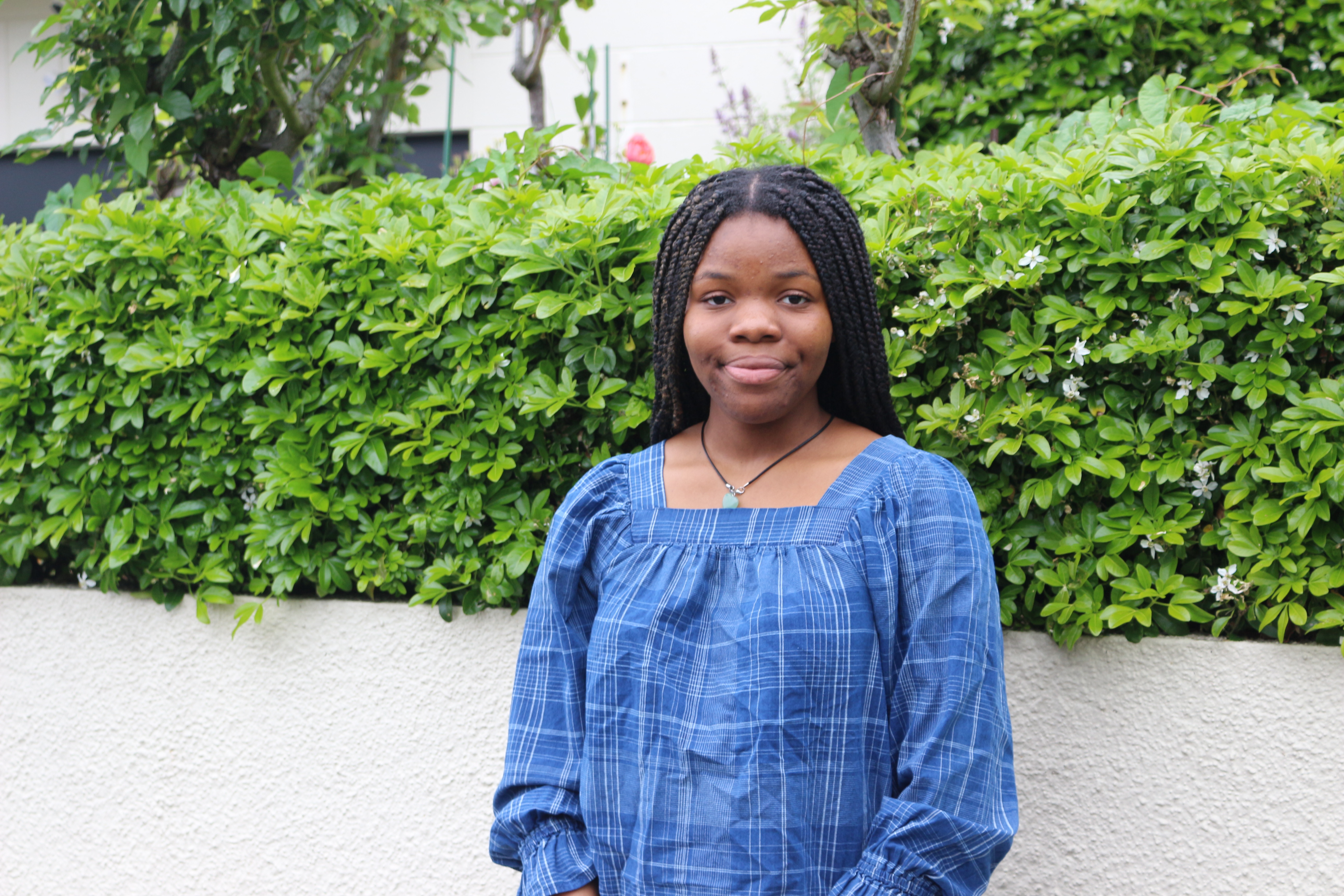
Tunmise reads ‘A Little Grace’
Tunmise Adebowale is a Nigerian-born New Zealander currently studying at the University of Otago. She is the winner of the 2023 Poetry Aotearoa Yearbook Student competition in the Year 13 category, and the 2023 Sargeson Short Story Award for the Secondary Schools Division. Her work has been published in takahē magazine, Pantograph Punch, Turbine-Kapohau, Newsroom, NZ Poetry Shelf and Verb Wellington. She was also featured in Canadian theatre company, Theatrefolk’s 2021 collection: BIPOC Voices and Perspectives Monologue. You can find her on Substack
Charles Ross
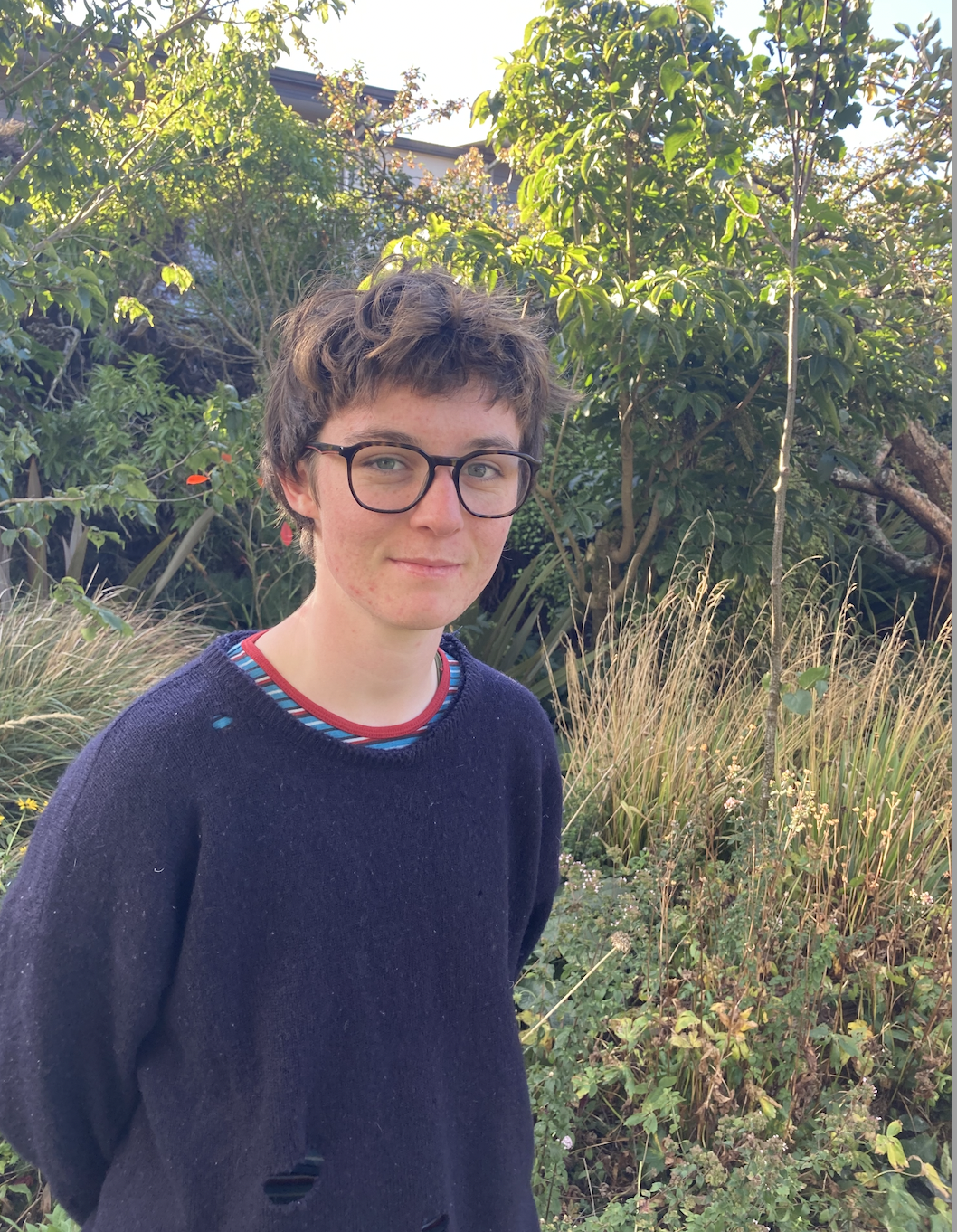
Charles reads ‘Hilaroroa’
Charles Ross is a year 13 student who lives next to a tidal estuary in Waitāti, just outside Ōtepoti Dunedin. Charles’s poems ‘Hikaroroa’ won first prize in the 2023 Poetry Aotearoa Yearbook student poetry competition in the year 12 category.
Adrienne Jansen
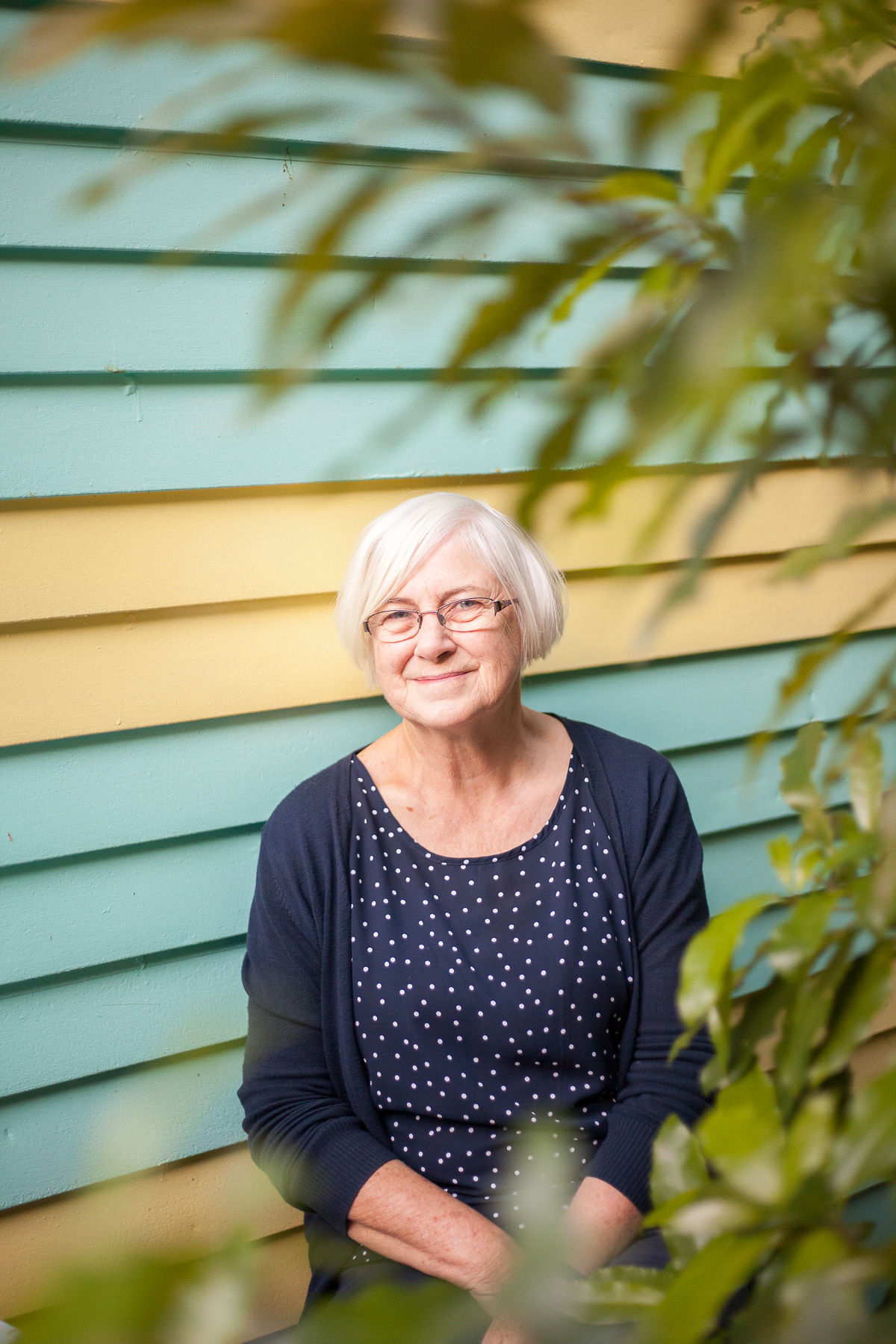
Adrienne reads ‘Five am among the pine trees’
Adrienne Jansen writes fiction and non-fiction for adults and children, but poetry is at the heart of it all. For her poems are often like photographs, recording a small moment, like this poem. She has published four collections of poetry, and is part of Landing Press, a small Wellington publisher of accessible poetry that particularly includes voices not often heard. She lives in Tītahi Bay, north of Wellington.
essa may ranapiri

essa reads ‘love as a verb’
essa may ranapiri (Ngaati Raukawa, Te Arawa, Ngaati Puukeko, Clan Gunn, Horwood) is a person who lives on Ngaati Wairere whenua. Author of ransack and ECHIDNA. PhD student looking at how poetry by taangata takataapui enhances our understanding of atuatanga. Co-editor of Kupu Toi Takataapui | Takataapui Literary Journal with Michelle Rahurahu. They have a great love for language, LAND BACK and hot chips. Thanks as always goes to their ancestors, who are everything. They will write until they’re dead.
Shaun Stockley

Shaun reads ‘Autumn (onset)
A museum storyteller by day, Shaun Stockley draws on a lifetime of poetic ambition to explore the stillness and beauty of our everyday world. First published in Young Writers (UK, 2004), his recent works have appeared in the Poetry Aotearoa Yearbook(2023, 2024) and the Given Words Poetry Competition (2023). He has also contributed several war poems to the National Army Museum Te Mata Toa in Waiouru.
Aimee-Jane Anderson-O’Connor

Aimee-Jane reads ‘Gorse’
Aimee-Jane Anderson-O’Connor is a Kirikiriroa writer, collage maker and dabbler. She believes in the power of community, collaboration, and imagination.
Medb Charlton

Medb reads ‘Wairēinga /Bridal Veil Falls’
Medb Charleton is originally from Ireland. Her poetry has been published in journals in Aotearoa New Zealand including Landfall, Poetry Aotearoa Yearbook, Sport and Turbine|Kapohau.
The review
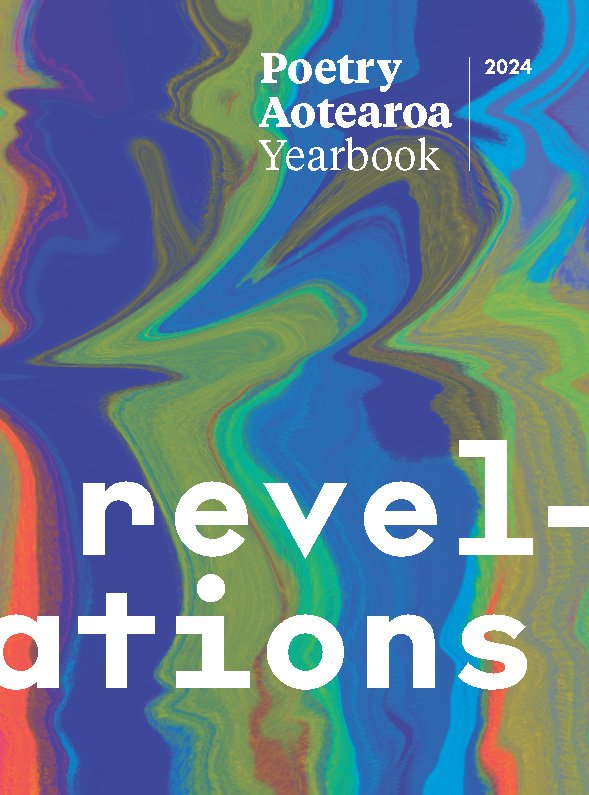
Poetry Aotearoa Yearbook 24 is again edited by Tracey Slaughter. It features poetry by Carin Smeaton, reviews of 29 books, includes two essays (one by Erena Shingade and one by John Geraets) and 123 new poems. You’d be hard pressed to find greater review attention paid to local poetry books from a range of reviewers.
Tracey’s introduction is the perfect introduction to a selection of poetry that is eclectic, acidic, honeyed. She discusses the first poem she ever wrote, aged twelve, in a house and with a patriarch she loathed. Her internal wounds flooded into the lines, sparking, fierce, non-deferential, and it seems that this first poem propelled her into the complicated, necessary and wonderful currents of writing. She is placing the personal before us, inviting us to reassess what a poem ought to be, and whether navigating the dark, the pain, or personal trauma is to be dismissed, or whether various forms of bleeding on the page can be vital facets of poetry, avenues into ‘feeling deeply’, for both reader and writer. She makes poignant reference to the loss of Paula Harris and Schaeffer Lemalu. For all kinds of reasons, I found the introduction a source of light, a reason to pick up my pen, to open another book, to let ideas simmer.
Tracy writes:
And reading this year’s poems, I felt that weight, that toll. If the imagery of end-days was ever-present, so too was the echo of how much our poets pay to speak for it. It can be a tough haul from our first poem to our last one, and after long-term exposure to the system we are so often eroded into poetry, hollowed, ground-down, exhausted into it – poem after poem that came in this year sounded voiced from the “end of the rope”, uttered “right up against this precipice”, hanging on by a “whimper blight a slow sapping”, a statement of precarity, struggling to preserve in the lines the frailest shred of hope.’ from ‘Writing from the red house’
night fell and never got up
so many floors of sediments ago
the sun forgot all signposts
as the rainbow sank past the last bar
of reception, nightshade
photons relinquishing blue.
Megan Kitching, from ‘In the Midnight Zone’
Tracey’s introduction was especially apt as I struggle with what to post on Poetry Shelf – as the toxic and difficult world collides with the way poetry offers delight, writing it, reviewing it, reading it. New blog ideas simmer in the middle of the night and I keep returning to the idea that Poetry Shelf is a meeting place, a way to exchange ideas and poetic forms, new directions and old enchantments.
I betake myself to my mattress, fold my
t-shirts in neat little rows. Dream of different
houses, of black cattle running below my
levitating body. Tend to get so submerged in
my own despair, an exponentially multiplying
occupying force. The rain has bought the
vermiform of my guts to the mud-slicked surface.
Elliot McKenzie, from ‘Small heights’
Poetry Aotearoa Yearbook 24 is both sharp edges and warm embrace. It is curve and skid and sinkhole. It is open window and bleeding wound. It is echoing motifs and themes, shifting tenor of voice, variable forms. Enter this poetic thicket and you will fall upon: clouds origami hallucinations rose-bushes illness birds light ghosts death streams kitchens angels coffee vanishing points the weather whanau love supermarkets hospitals the moon the sun a first kiss time-passing.
Carin Smeaton, the featured poet, brings voice into sharp searing brilliant focus, with shifting voices, with everyday vernacular, with conversational pepperiness. You are in the embrace of whanau, the land, experience, life and death, tough circumstances, the after and ongoing effects of a pandemic, a cyclone. In an interview with Tracey, Carin acknowledges Tracey’s characters and narratives have inspired her ‘to write more from the fire in my belly’. Carin writes for herself, from herself, to weave the damaged, the difficult, the challenging out into the open space of her poems. She also, importantly, writes within and because of communities: aunties, friends, wāhine, poets, especially Māori poets.
You will find other writers in the shadows of the 123 poems: Mary Oliver Paula Harris Gregory Khan Dylan Thomas Michel Foucault TS Eliot Eleanor Catton. You will find an eclectic range of poets, from Adrienne Jansen, James Norcliffe, Kerrin P Sharpe, Erik Kennedy, Jan FitzGerald, Anuja Mitra, Aimee-Jane Anderson O’Connor, Riemke Ensing and Elizabeth Morton to alana hooton, Alice Hooton, Amanda Joshua, Devon Webb, Keith Nunes and to the winners of the Secondary School Poetry Competition.
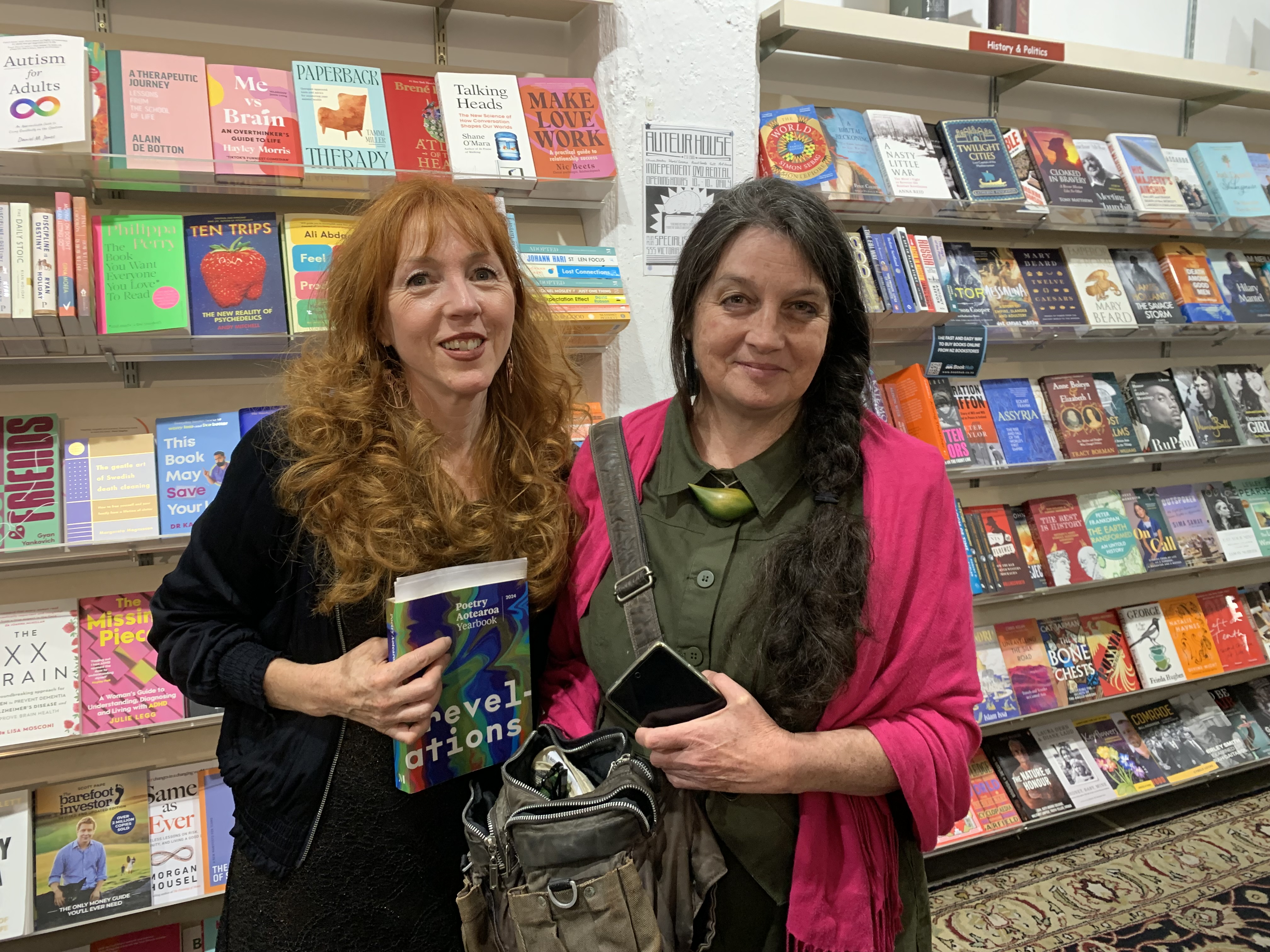
Tracey Slaughter with Carin Smeaton at launch
and I run run run run run run run run through every movie scene
where one of the main characters has realised they can’t live without
your love and they’re about to miss their last possible chance to tell you that and to be happy and so we all, all of us movie characters, all of
us afraid to be loveless for the rest of our lives, all of us afraid we’re
about to miss our one chance, we run run run run run
Paula Harris, from ‘If you have ever had a delayed flight …’
The poems might get you in the gut or heart or stomach, perhaps even your bones. The issue is entitled revelations, a fitting title for a gathering that gets you musing on what poetry can do, on the connections it might forge, the experiences it can negotiate, and yes, the wound and the stitching, the pain and the hope. Find your own pathways through this engaging thicket.
Tracey Slaughter teaches creative writing at the University of Waikato, where she edits the journals Mayhem and Poetry New Zealand Yearbook.
Massey University Press page
 NZ Poetry Shelf
Thankyou Paula, you are such a treasure, I love your response to poetry.
LikeLike
You are a joy and light to the literary world. Thanks, Paula!
LikeLike
Pingback: Poetry Shelf Weekly Newsletter | NZ Poetry Shelf