Monthly Archives: October 2023

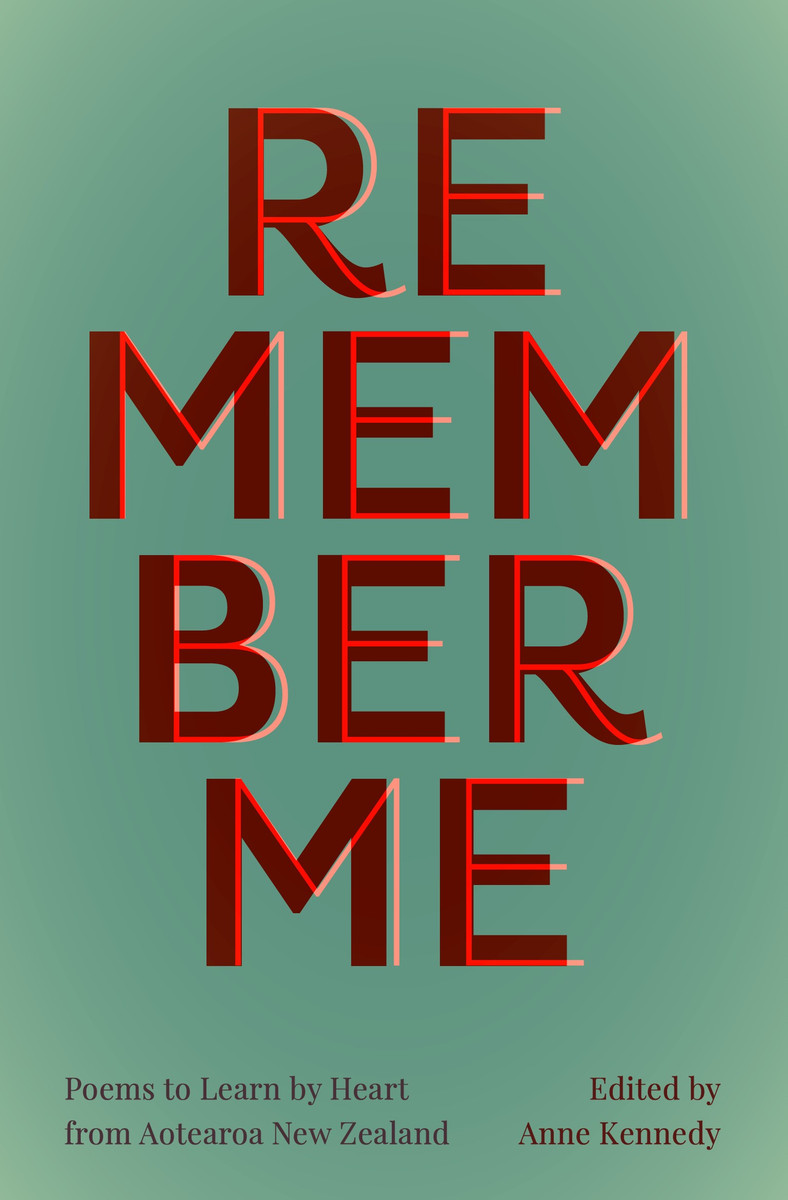
Poetry Shelf review: Remember Me – Poems to Learn by Heart from Aotearoa New Zealand, editor Anne Kennedy

Remember Me: Poems to Learn by Heart from Aotearoa New Zealand,
edited by Anne Kennedy, Auckland University Press, 2023

What a wonderful idea for a poetry anthology, gathering together poems to learn by heart, and bearing such a resonant title. I am reminded of reciting poems I love and of how I hold talisman poems close to my heart. The word heart is rich in possibilities as it becomes pulse, life force, aroha, hub, nub, humaneness. I am thinking pulse, aroha and life force might form a holy trinity of poetry.

Anne Kennedy, much loved poet and fiction writer, with the help of Robert Sullivan as consulting editor te reo Māori, has brought her astute ear and eye (and heart) to the job of anthologist. It is no easy task trawling through decades of poetry, across place, style, voice and subject matter, to pare back the list of poems you love. Anne has assembled a fine array of voices, poems that are beloved by many, and a list, as she says, she hopes we will add to in our ongoing readings.

So many sublime poems are gathered here. Charismatic poems that hold rewards for your ear, as well as your mind and heart. I am musing that a poem sometimes resembles a small pebble you hold in your hand and take comfort from it, a poem such as Airini Beautrais‘s ‘Charm for the Winter Solstice’ and ‘Charm to Get Safely Home’. Here is the meeting ground of music and light shimmering. Or Arapera Hineira Blank‘s ‘Dreamtime’ with its equally sublime light and musical effects.

Some poets strike chords right from the beginning, and it is not a matter of rote learning, it is of heart learning. Maybe even heart leaning. I am thinking of how I fell in love with the poetry of Bill Manhire the instant I read him, and how some of his collections, say Wow, Lifted and The Victims of Lightning, have had such a profound and enduring effect, and how some of the poems are talismans I hold close for all kinds of reasons. I can remember hearing him read ‘Hotel Emergencies’ in the Titirangi Hall during Going West once, and the audience did an audible gasp.

Bill kindly recorded three of his poems in the collection so you can listen too.

Bill reads ‘Kevin’

Bill reads ‘Huia’

Bill reads ‘Little Prayers’

I think, too, of the first time I heard Mohamed Hassan read in Ōtautahi Christchurch and how that talismanic effect was imbued in his subsequent debut collection, National Anthem. And how I hold that collection, and that listening experience, to heart. Mohamed has kindly recorded a poem, a poem that matters so very much, so that you can listen too.

Mohamed reads ‘The Guest House’

Yes, we would all make different lists of poems we learn and hold by heart, but I have zero interest in how my list would differ, because what chimes so sweetly with me is how this book reunites me with poems that have given me goosebumps. Here are a few: Bub Bridger‘s ‘Wild Daisies’, Cilla McQueen‘s ‘Joanna’, Hone Tuwhare‘s ‘No Ordinary Sun’, Ursula Bethell‘s ‘Detail’, Elizabeth Smither‘s ‘Here Come the Clouds’, Ruth Dallas‘s ‘Milking Before Dawn’, Fleur Adcock‘s ‘For a Five-Year-Old’. I am thinking of Kiri Piahana-Wong‘s ‘This is it’, Anna Jackson‘s ‘The treehouse’, Tusiata Avia‘s ‘Ode to da life’, Robert Sullivan‘s ‘Voice carried my family, their names and stories’, Sue Wootton‘s ‘Magnetic South’, Jenny Bornholdt‘s ‘Wedding Song’, Johanna Aitchison‘s ‘Miss Dust loses her key’, Dinah Hawken‘s ‘Pure Science’. Ah.This is what poetry that sticks.

I am thinking of the sublime range of collections being published by young poets in recent years. How, as my blog attests, I am falling in love with so many of them. Picking up Remember Me and I am loving again Jiaqiao Liu‘s ‘that hand is for holding’, Fardowsa Mohamed‘s ‘Tuesday’, essa may ranapiri‘s ‘Silence, Part 2’, Ruby Solly‘s ‘How to Meet Your Future Husband in His Natural Habitat’, Nina Mingya Powles‘s ‘Last Eclipse’.

I am returning to the poems of Chris Tse, Anne Kennedy, Selina Tusitala Marsh and Michele Leggott, and savouring how they have stuck so sweetly and sharply.

Why is that a poem sticks, that this is the poem you remember, this is the poem you need to remember? It might be an idea, a spike, a feeling, an inviting space, it might be a sequence of musical chords, a startle of mnemonic words, a comfort blast. I am reminded, how when the world is so heart-blasting awry, and I cannot stop thinking of the Gaza Strip, when inhumanity is so devastatingly ugly, or of the Ōtautahi Mosque massacres, I hold Mohamed’s ‘The Guest House’ and Bill’s ‘Little Prayers’ close. I learn by heart. I mourn by heart.

Holding Remember Me, I am thinking the poetry of Aotearoa is in such very good heart, that there are many ways of holding it close, just as there are many ways of sharing it, writing it, reading it, learning it, loving it. Let us speak. Let us recite. Let us mourn. Let us challenge and comfort and celebrate. Let us find courage in what words, in what poetry, in what we, can do and be.

Recipient of a Prime Minister’s Award for Literary Achievement, Anne Kennedy is the author of four novels, a novella, anthologised short stories and five collections of poetry. She is the two-time winner of the New Zealand Book Award for Poetry, for her poetry collections Sing-Song and The Darling North. Her latest book, The Sea Walks into the Wall, was shortlisted for the 2022 Ockham New Zealand Book Awards.

Auckland University Press page
Poetry Shelf Monday Poem: The Dream at Bark Bay by Ruben Mita

The Dream at Bark Bay

The sea was the whole of the dream
and the full world of sound
to the pair in the tent,
their heads on the dune.

With eyes closed, up on the dune,
waiting for the unknown dream,
the sea was all the sound to the pair,
who heard, in the sea-sound rushing up the dune,
other sounds that were not the sea,
that were so deep within the sound of the sea
as to be the very dream of the sea,
and, rushing up the blushing dune,
became the dream of the pair.

As well, they heard sounds that were not the sea,
that were surrounded, dissolved into the dream of the sea,
that became the sea to the pair,
just as the sea, blushing up the sullen dune,
became the sound of the dream of the pair,
the sound of things that were not the sea,
but fully within the sea, the whole of the dream
and the full world of sound.

All sound promises motion,
and all things that move, move together,
as the dark sea face moved with the wind,
moved with the sound of the sea,
and the sand stripped from the constant dune
moved with the breath of the tent,
moved with the full world of sound,
led the dance of the dream of the pair.

The dream was the whole of the pair,
the promise of the sea to the pair,
and the pair in the tent were the dream of the sea,
rolling its deep sea-dream up the calling dune,
filling the tent with the whole of the dream
and the full world of sound.

The dream of the pair was the shivering of the tent,
the lightheaded dune losing substance
before the sound of the sea.
The touching skin of the pair was like dune and sea.
It was the the whole of the dream
and the full world of sound.

Ruben Mita

Ruben Mita is a poet, musician and ecology student in Pōneke. He has been published in multiple outlets and won the 2022 Story Inc. IIML Poetry Prize. He likes fungi, fires and some noises.

Poetry Shelf poem: dreaming in the dark night by Paula Green

dreaming in the dark night

i am squatting next to a small girl
squatting next to an old woman
squatting in the ruins

everything is ruins as far
as we can see but
we are looking
at a tiny bud growing

if everyone in the world
gives it a drop
of water it will survive,
the old woman whispers

if everyone in the world
chooses peace, it will grow
says the small girl

if everyone in the world
loves each bud,
we will find hope, i whisper

we are holding hands
we are singing
someone is joining in
we are standing
together
hand in hand
tears to tears
wound to wound
heart to heart
and it is humanity

Paula Green
26 October 2023

Poetry Shelf Cafe: Five poets read from Takahē 107

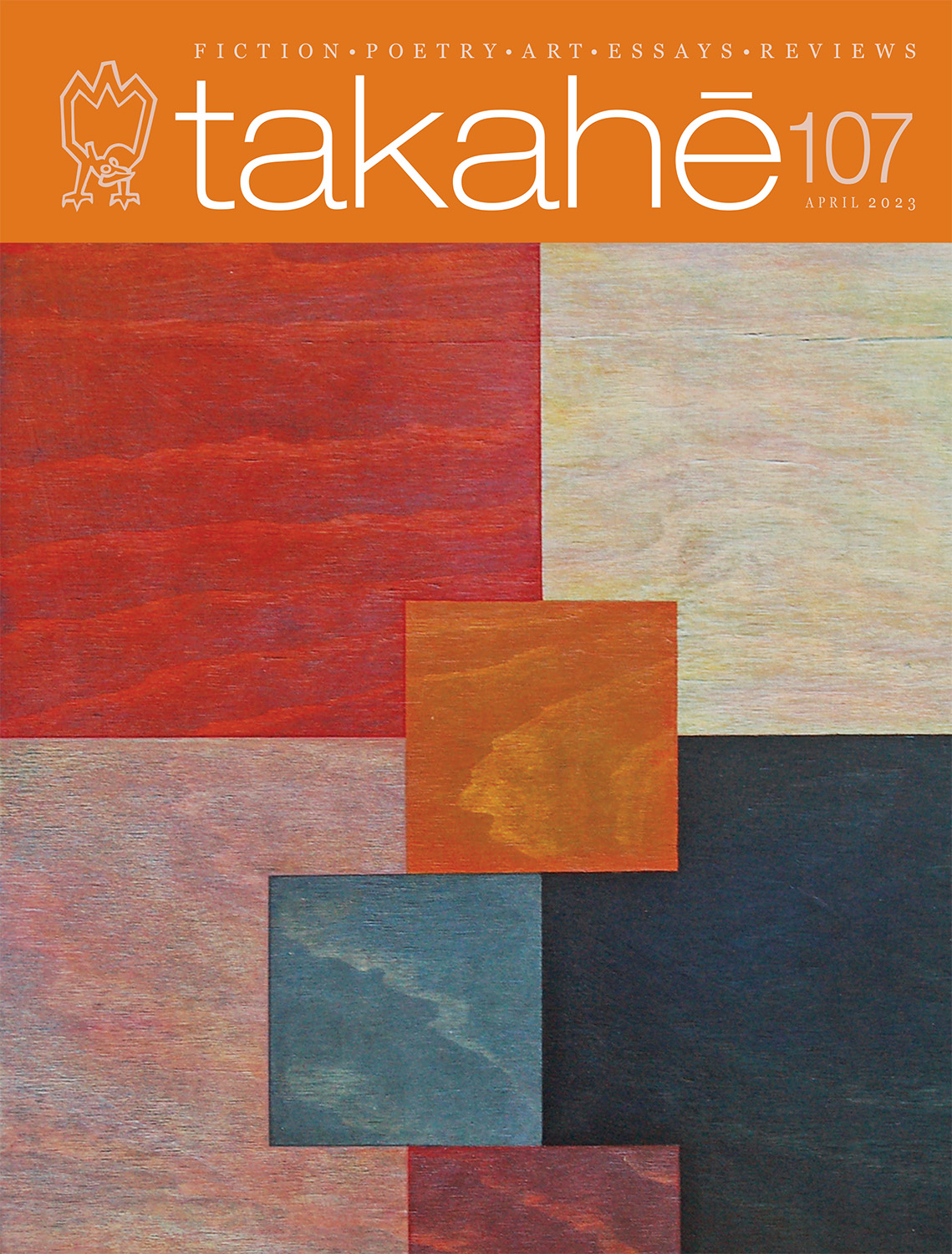
Takahē 107 is published by the Takahē Collective Trust with Zoë Meager as Fiction Editor, Erik Kennedy as Poetry Editor, Andrew Paul Wood as Arts Editor, Alie Benge as Essays Editor, Sile Mannion Reviews Editor, with Zoë and Andrew editing comics. That gives you an idea of the terrific range of material each issue offers.

In her editorial, the chair of the the Takahē Collective Trust, Anna Scaife, writes of the disappointment at not receiving Creative New Zealand Funding, but how that makes the team even more determined to provide a platform ‘to support the literary arts in Aotearoa’.

Things are changing at Takahe. Eric Stretton, an active member of the collective, writes:

“Takahē magazine is shifting to solely digital publishing from December 2023. This is a pragmatic response to funding shortages, but also stems from our determination to continue our kaupapa: showcasing diverse new and emerging voices alongside the work of established practitioners. 

We’re excited that each issue will now be free to read online, bringing our art, poetry, short fiction, reviews, comics, interviews, and essays to an even broader audience. Unchanged is our commitment to high quality, to paying contributors fairly and supporting them throughout their careers, and offering feedback and development to our contributors and staff in as many ways as possible.

Our independent spirit has kept us in continuous publication since 1989, and we have a whole lot more mahi and innovation planned to uplift Aotearoa artists and writers into the future. Our independent spirit has kept us in continuous publication since 1989, and we have a whole lot more mahi and innovation planned to uplift Aotearoa artists and writers into the future.”

Takahe 107 includes a guest fiction writer, Dominic Hoey, whose ‘School Road’, is pitch perfect in voice, confession, memory, with a pierce-in-the-gut ending, the kind of ending that loops you back to the beginning so you can experience the whole sweet effect again. Plus a guest poet, Khadro Mohamed. Kadro’s poetry is a joy to read: haunting, movement rich, with sweet cadence, as she draws upon who she is, upon place, ancestors, her mother, things missed. Ah, such an uplift. Both guests were highlights of the issue for me. Takahe 107 hosts a range of writers, mostly local, but a number from overseas, familiar names and those new to me. To celebrate the creative energies, the diverse connections and styles, five poets read their poems for you.

Wendy BooydeGraaff reads ‘Reclamation’

Wendy BooydeGraaffs poetry has been included in Cutleaf, About Place Journal, Flyover Country, Chapter House Journal, the Not Very Quiet anthology (Recent Work Press), and the upcoming Under Her Eye anthology (Black Spot Books). Her fiction and essays have been included in Phoebe, X-R-A-Y, and Ninth Letter online. She is the author of the picture book Salad Pie (Ripple Grove Press/Chicago Review Press), and her middle grade short fiction will be included in the upcoming Haunted States of America anthology (Godwin Books). Born and raised on a fruit farm in Ontario, Canada, she now lives in suburban Michigan, United States.

Charlotte Simmonds reads ‘Biological Determinist’

Charlotte Simmonds is an autistic writer, editor and translator in Te Whanganui-a-Tara. Their work has appeared in, among others, Ōrangohau | Best New Zealand PoemsThe Iowa Review, Cordite and Landfall. Their book The World’s Fastest Flower, a collection of poetry and lyric prose, is available from Te Herenga Waka University Press.

tokorima reads ‘me he korokoro Heteralocha acutirostris.

tokorima Taihuringa is an Aotearovian.

Philip reads ‘The City Under Rain’

Philip Armstrong teaches writing and literary studies at the University of Canterbury. His poetry collection, Sinking Lessons, was published by Otago University Press in 2020. You can find out more about his work here.

Paul reads ‘Rain at Killerton’

As well as Takahē, Paul Connolly’s poetry has appeared in many publications worldwide. He is currently seeking a publisher for his novel, Work, which was longlisted for the Bridport Prize.

Poetry Shelf Monday Poem: ‘shadowboxing a situationship’ by Amy Marguerite

shadowboxing a situationship

aching after
all that 6-3-2
1-1-6 could’ve
outed your
phone number
hard gone
viral with
my aching
for a reason
haven’t
memorised it
won’t can’t
be bothered
2 slabs
of lasagne
for 2 strong
arms useless
dream of an-
other woman no
sex just saving
her from
something
you said
talk soon
that was 5
days ago almost
25 now & may is
full of birth-
days not mine
my sister’s &
mother’s
i remember
being my mother’s
age see
you soon
that was 5
years ago
pinkie ache
blame the glove
teaspoon
in a dishwasher
remember
wide air fish-
hook proof
of anything
at least 1
person really
wanted
seal the
piñata & there’s love
in that & i
have some
weird faith in that
juvenile
arousal
flame before
the bones
grow up bird
crap
wind-
shield wipe
a phoney ventricle
fuck active
recovery
what actual
fool promises
to jog on
the spot
i wanna leap
year round
the clock round-
house kick
my want
candelabra
through this
ache & what app isn’t
a second peek
at god?

Amy Marguerite

Amy Marguerite (she/her) is a poet and essayist living in Tāmaki Makaurau. She completed an MA in Creative Writing at the International Institute of Modern Letters in 2022 and is currently working towards the publication of her debut poetry collection. Her writing can be found here and on her blog.

Poetry Shelf update

One day this week I was feeling so steamrollered, unable to answer emails, to post the review of Morgan Bach’s poetry collection, a book I had spent two weeks loving and reviewing. It took every ounce of strength to move. I could barely function. But then I read an interview with Sam Neill where he talked about his cancer experience, his new memoir and more importantly his life experience. I connected with so much he said, resparking, rebooting. I also did this with Dai Henwood when he talked about his cancer experience on the radio recently. Sam said he was more interested in talking about life than about his time with cancer. Living. Doing things. I get that.

For ten years I never mentioned my health issues publicly, and rarely to friends. But when I was about to have the transplant, I decided it was time to speak openly. Partly as an explanation for reduced activity and partly as a way of sharing my choices and challenges with others also facing tough health situations. I did the Listener interview and I’ve posted updates on the blog. I have acknowledged deep gratitude for the stellar team who care for me at Auckland Hospital’s Haematology Department.

Since my bone marrow transplant last year, and the subsequent onset of Graft Versus Host Disease, I have held some key daily mantra close: live one day at a time, focus on what you can do, find things to do that give you joy each day, mute toxic voices, say no. I find it hard saying no to requests, not answering emails promptly, and I find it even harder not being able to review all the poetry and children’s books I get. Especially when it feels like both categories get less review attention (children’s books and authors especially so!). So many sublime books are being published in Aotearoa, and I so love finding and sharing my idiosyncratic pathways through them. Some days I yearn to work at my old pace.

Toxic voices are an equally hard challenge. I’m also finding it heartsmashing to think a nation of families might die through enforced thirst while unbearable bloodshed is escalating on all sides. I find it hard to bear politics that are blind to the wellbeing of our planet, to the wellbeing of people across all cultures, societies, classes, locations. The word community feels like a key word.

This week my body has carried the weight of such heavy thought and grief and speechlessness. How to weather my myriad symptoms that are on an indefinite timeline and that pin me to a state of disfunction? How to weather global grief?

I am going back to the notion of one precious day. Here I am this morning reading Ruby Tui’s picture book for children and it is so darn uplifting as she writes of her child self, reaching out to the girl crying next to her with her spilled ice cream, picking up the rugby ball and running. I am grateful to Sam and Dai for speaking and sharing their stories with us, I am grateful to the aid workers, the cancer researchers, the peace brokers, the writers and publishers in Aotearoa who lift our hearts, the musicians who share the gift of music, the people who have sent me kind and gentle emails, the nurse on the end of the phone, the health workers working such long tough hours, the writers who contribute to both my blogs, the people who are so very patient with me, for my partner and daughters.

Poetry Box and Poetry Shelf are a joy patch in my day, along with reading and baking bread, cooking simple meals, and daydreaming. I may not keep to my schedules, but I will keep celebrating what words can do. One precious day at a time.

Poetry Shelf review: Middle Youth by Morgan Bach

Middle Youth, Morgan Bach, Te Herenga Waka University Press, 2023

Each poetry collection I read at the moment seems to widen the scope of what poems can do. When I read Hannah Mettner’s collection Saga, I began musing on poetry as mesh. Fascinating. Yet poetry can be and do a universe of things, and it is incredibly limiting to anchor a book in one framing device. But here I am captivated by how Morgan Bach’s new collection is, amongst other things, poetry as fire. And there it is in the blurb on the back: ‘The poems of Middle Youth look directly into fire’.

Middle Youth is driven by the searing blaze of a world under threat. Think global warming, war, plague, floods, famine, the rich and the poor, the dispossessed and the the abused. Hierarchies, downright ignorance, racism. Such a global blaze, such sharp edges of catastrophe, but Morgan embeds the flame in hints, sparks, tongues, as well as widening the molten implications of climate change.

I read: ‘a business man’s burning fingers’, ‘peripheral glimpses of fire’, ‘a woman breathes fire’, the ‘extinguished flame’ in a cocktail, ‘our unwanted thoughts / just below combustion point’, ‘California is burning’, ‘In Iceland people have gathered / to watch fire pouring from a fissure’.

The heat creeps up on you. It becomes a shared rage along with a wallop of hopelessness and veins of hope. I am reading the astonishing poem, ‘I could love you for a moment /but there is a democracy / to think of’, and I am in awe at the searing marriage of understatement and knife in the heart, ellipsis and the brutal present, exquisite melody and piercing image.

the dark
is no longer
dark
but spotted
in gold
like the hide
of a cheetah
fast approaching

The ubiquitous presence of fire is traced in motifs and subject matter, but it also becomes a form of tone, the heat of speech, the self under threat, the refusal to look away. And now I am reading poetry as skin, the skin of my reading singed, a barometer, a register of helplessness. The skin of the poem, that scaldable barrier, that fragile layer, sunburnt, allergic. In ‘heat death‘, Morgan writes: ‘Within weeks / my skin is dust on the shelves / of my new room’.

I haven’t had a poetry collection affect me like this for an eon. You could also see this through the lens of mesh. There are layers of connection and connecting. The speaker has her tarot cards read and goes driving in the country to eat sandwiches by a lake with friends. She celebrates a birthday, gets vaccinated, pays her pension, furnishes her living space, loves and is loved. The penultimate poem, ‘to proceed within a trap (v)’, begins with the speaker and three generations of her family watching the Beatles documentary. It ends with an approaching New Year, the conundrum of how to live the weeks leading up to it, and before marking the new year as ‘fresh silence’, we read:

Did the future always gape? An empty
room, requiring a rhythm, a melody

to appear from somewhere, the air to fill
with a scaffolding from out of the minds

of people with enough ego
to give the rest of us something

to look at, to sing along to.

Middle Youth (yes as opposed to middle age) got me musing on whether I can view flame as beauty, comfort, warmth, light or as devastation, discomfort, disintegration, darkness. Or both. Is it possible to look upon the future as the empty room that we will furnish with words and actions, restoration and healing? Ah. What to do when we wake up and step into the vociferous rooms of the day? Middle Youth is poetry at its skin tearing, provoking out of slumber, flame sparking best.

Morgan Bach was the recipient of the 2013 Biggs Family Prize in Poetry, and her first book, Some of Us Eat the Seeds, was published in 2015. Some of her recent work appears in Turbine, The Spinoff and Best New Zealand Poems. In 2014, with Hannah Mettner and Sugar Magnolia Wilson, she co-founded the online poetry journal Sweet Mammalian.

Cover painting: Karla Marchesi, The Sense of an Ending

Te Herenga Waka University Press page

You can hear Morgan read from the collection

Poetry Shelf Monday Poem: The Lonely Poet by Bill Manhire

The Lonely Poet 

I love the evening when the dark must lose its blue. 
I love the way the world just takes its time . . . 
There’s no one here to tell me what to do. 

Clouds and the moon play peek-a-boo; 
they come and go, then can’t be bothered trying.  
I love the evening when the dark must lose its blue – 

though sometimes there’s this squeak inside my shoe, 
it makes me stumble when I mean to rhyme. 
I wish there was someone could tell me what to do. 

I folded my wings before I flew, 
then wandered along behind the firing line, 
believing the sky would never lose its blue. 

And now I can see the sky has better things to do: 
it’s losing its faith in things divine, 
it’s done with the days of honey-dew. 

I don’t know where to start with missing you. 
I write a line and then I end up crying. 
There’s no one here to tell me what to do. 
I love the evening when the dark must lose its blue. 

Bill Manhire

Bill Manhire‘s last collection of poems, Wow, was published in 2020, and was a Poetry Book Society Selection. An interview subsequently appeared in PN Review. A recent collaboration with Norman Meehan and others, Bifröst, has been released by Rattle.

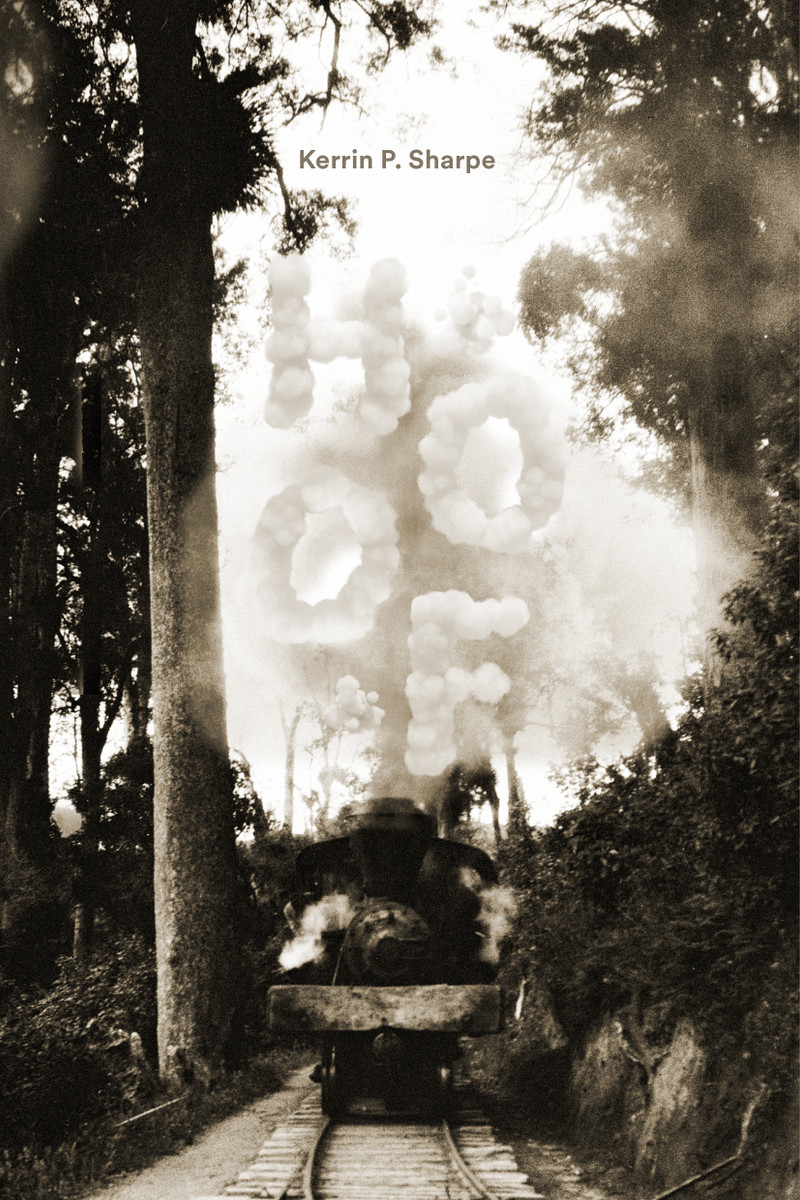
Poetry Shelf Cafe: Kerrin P. Sharpe reads from Hoof

Readings from Hoof, Kerrin P Sharpe, Te Herenga Waka University Press, 2023

‘blue’

‘If you’re looking for Leonard’

‘On a night angry enough’

‘Kalene Hill 1948: the baby won’t turn’

‘In loco parentis’

Kerrin P Sharpe: I have published four previous collections of poetry (all with Te Herenga Waka University Press, Wellington, NZ). My latest collection of poetry, Hoof, published by Te Herenga Waka University Press, October 2023. I have had poems published in a wide range of journals both in NZ and overseas including Oxford Poets 13 (Carcanet Press), Blackbox Manifold, Poetry (USA), PN Review, berlin lit, and Stand. In 2020 I was shortlisted for the Alpine Fellowship Writing Prize and in 2021 I was awarded a Michael King Writers Centre Summer Residency. 

Te Herenga Waka University Press page

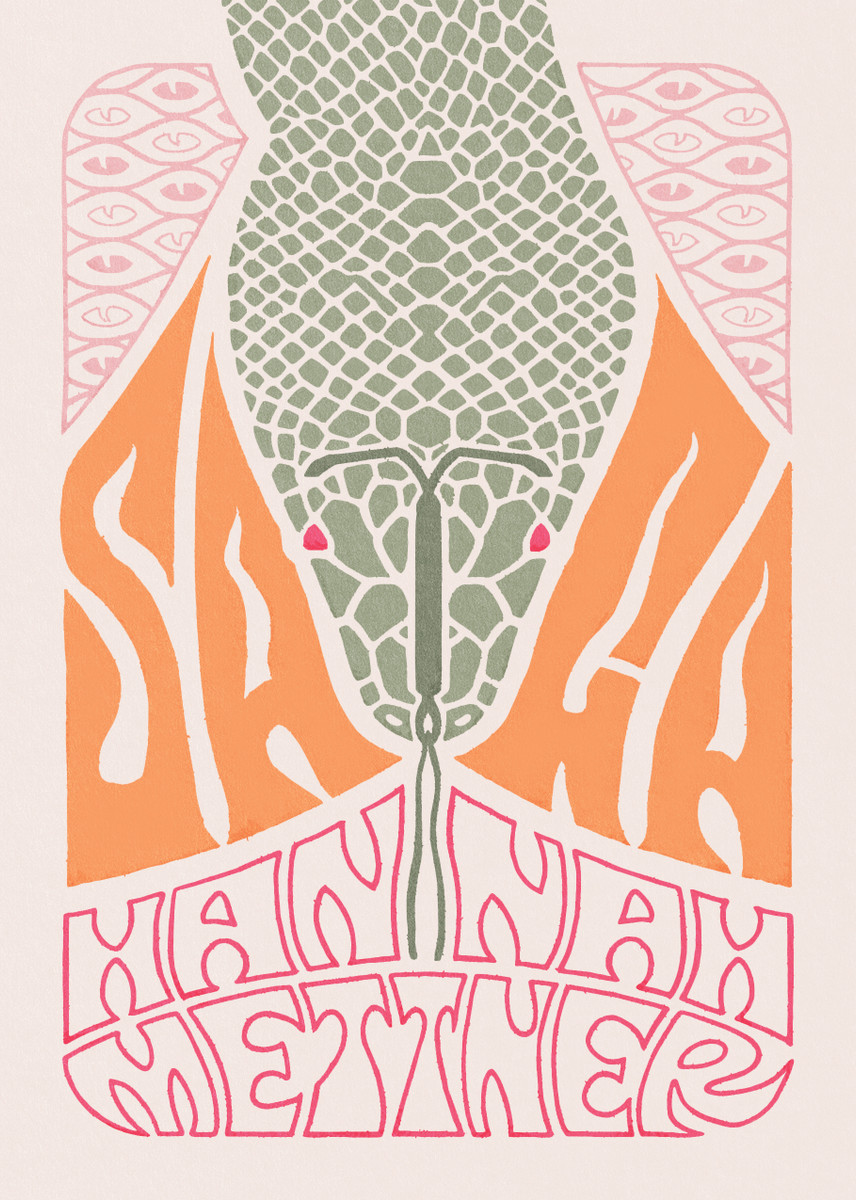
Poetry Shelf review: Saga by Hannah Mettner

Saga, Hannah Mettner, Te Herenga Waka University Press, 2023

[…] My aunt reports
that we used to be Vikings, but it is clear that
that was a very long time ago. For example
all my hobbies are activities that involve sitting
down and not being killed. I only learn these
things as I learn that it is rude to introduce
myself with nothing more to offer than a name.
My history tightens around me like a knot and
there is a wild blackberry growing through it
like everything here.

final stanza in ‘Saga’

The first stanza of ‘Saga’, the opening poem in Hannah Mettner’s new collection, Saga, is utterly intriguing. The kind of experience where if you read it in a bookshop, you know you’d simply have to buy the book, knowing the poem could move in myriad fascinating directions. The speaking ‘I’ draws you into enigma, penetrating questions, revelations, the unexpected.

I have adored spending slow-motion time with Saga, letting its layers and voice, crevices and bloom, take root as I read. I get to the end of the collection and I have written a phrase in my notebook: poetry as mesh. It feels apt.

In the acknowledgement pages, Hannah makes it clear she writes within a nourishing community; think other writers, writing clubs, her Poetry Pals, her friends, editors and journals. This matters. This makes a difference.

Hannah writes within a history of reading and viewing, and this also makes a difference. Some of the poems are written in direct response to the work of others. The brilliant opening poem, ‘Saga’, is a direct response to Mary Ruefle’s ‘Saga’ from her book Trances of the Blast. You can also follow links to bell hooks, Tolstoy’s Anna Karenina, Kristen Ghodsee’s Why Women Have Better Sex Under Socialism, Radclyffe Hall’s The Well of Loneliness, sonnets by Elizabeth Barrett Browning, Eavan Boland’s ‘Atlantis–A Lost Sonnet’, Fleur Adcock’s ‘for a Five-Year-Old’. Add in Buffy and the Vampire Slayer, ‘Three times a lady’, Werner Herzog. A cultural and literary mesh that sustains and extends.

The poems also feel embedded within a mesh of personal history. Although I can’t draw a definite line between fiction and autobiography, I found myself viewing the poetry as a vehicle for self conservation, even self recognition. The subject matter roves from sexuality to love, mothering, daughtering, marriage, not marriage, physicality, longing, hunger, friendship.

Relationships are key to poetry as mesh: friends, family, lovers, child.

Unsleeping in the dark, I count my friends
for reassurance, rather than sheep.
I turn to them like the dog-eared pages
of a favourite book. Each with their own
reliquaries of chaos and glory.

from ‘Coven’

Then there is the necessary mesh of a world under threat, disturbing, question raising, action provoking.

If only the world was a brain that could rinse herself as we sleep.
Really, there is no ultimatum we might offer except our own extinction.

from ‘Poem while watching the world burn’

Saga is a magical, thought-provoking, heart-boosting read that sticks to your skin, dances on your eyeballs, trembles in your eardrums, circles in your mind. It is complex and full bodied and haunting. It is mesh. Glorious poetry mesh.

You can hear Hannah read two of the longer poems here

Hannah Mettner is a Wellington-based poet from Gisborne. Her first collection, Fully Clothed and So Forgetful, won the 2018 Jessie Mackay Best First Book Award for Poetry. Her poems have appeared widely in literary journals, including Sport, Turbine and Cordite. In 2014, with Morgan Bach and Sugar Magnolia Wilson, she co-founded the online poetry journal Sweet Mammalian.

Te Herenga Waka University Press page