And Rachel O’Neill’s terrific One Human in Height. Hue & Cry are forging a great stable of poetry
Thursday 6pm 12 June 2014
RM GALLERY, 1st Floor, 307 K Road, Auckland, Entrance on Samoa House Lane
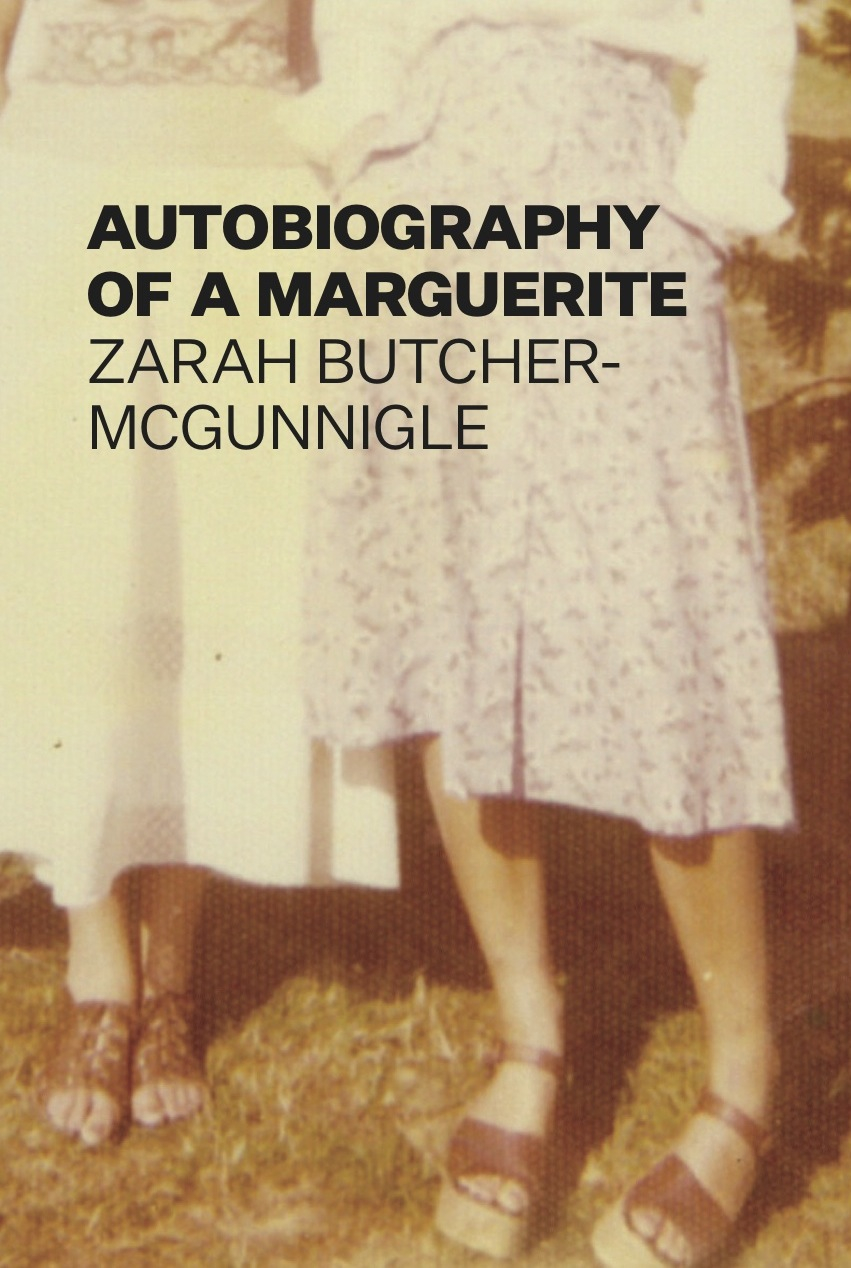

And Rachel O’Neill’s terrific One Human in Height. Hue & Cry are forging a great stable of poetry
Thursday 6pm 12 June 2014
RM GALLERY, 1st Floor, 307 K Road, Auckland, Entrance on Samoa House Lane
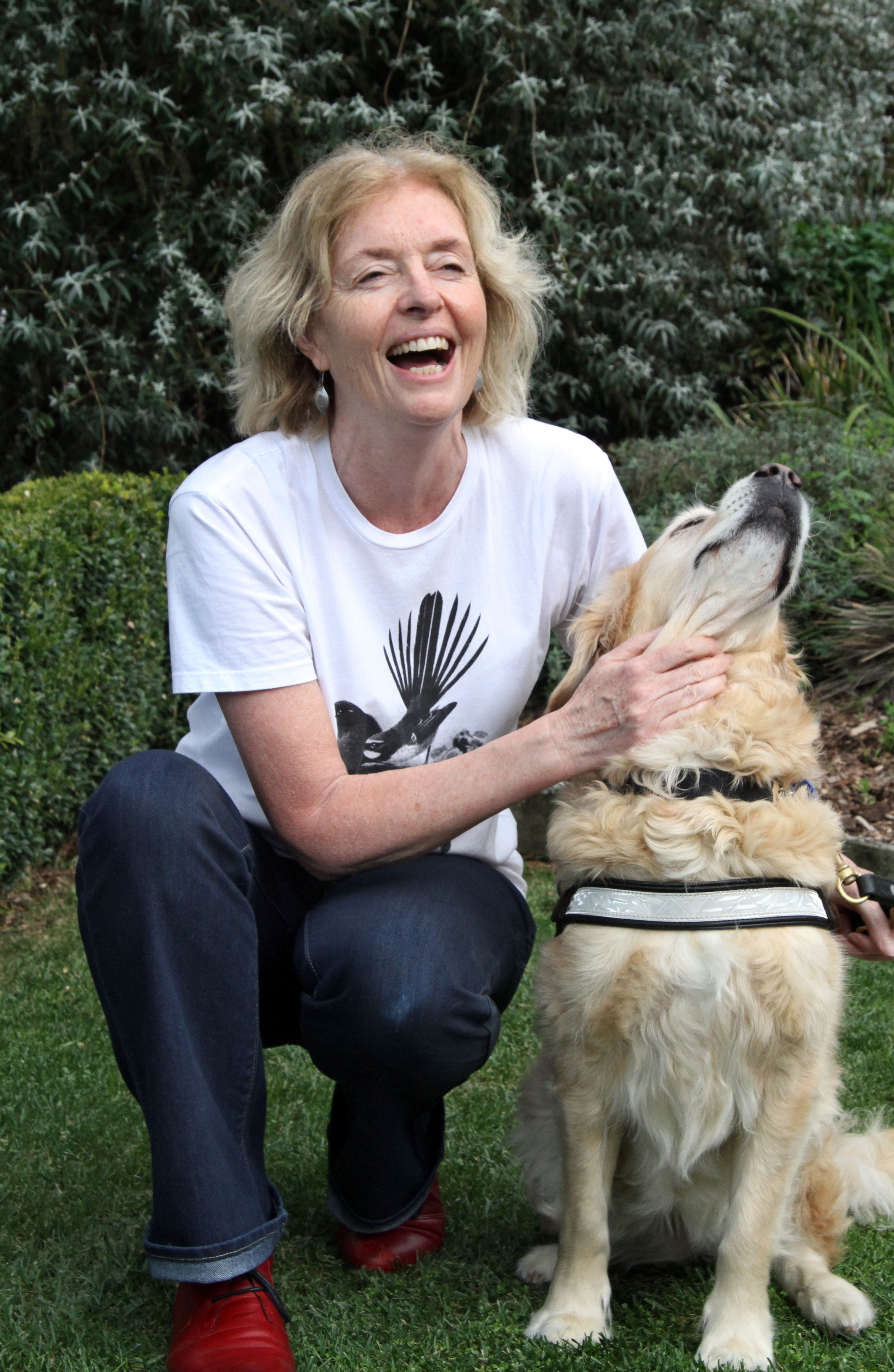
Photo credit: Tim Page
Michele Leggott was the inaugural NZ Poet Laureate under the National Library scheme (2007), was made a Member of the New Zealand Order of Merit for her services to poetry (2009) and last year received The Prime Minister’s Award for Literary Achievement in Poetry. She is an award-winning poet, was a founding director of the New Zealand Electronic Poetry Centre and is currently a professor in The University of Auckland’s English Department. She has published several anthologies (including the substantial edition of Robin Hyde poems). She has contributed much to New Zealand poetry, not just in the books she writes, but through the work she does in the wider, poetry communities.
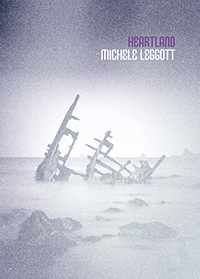
Michele’s new collection, Heartland, is a companion to Mirabile Dictu—same shape (marking a departure from the landscape format of her previous books) and same preoccupations. These two new books are inextricably linked to the poetry that comes before, but there is a shift in the way the poetry opens out to you. Her previous work was linguistically difficult, musically fluent and offered semantic lacework that drew you to sources signposting an astonishing range of reading and interests. These early collections have been amongst my all-time favourite poetry experiences in the New Zealand context. The difficulty was a lure for me, and once you entered the mesh of poetic possibilities, the rewards were immense. Her new books exhibit the same delight in language, a keenly tuned ear and an ability to stroll through worlds both physical and cerebral, and absorb points of fascination.
The blurb suggests ‘Heartland steps on from Mirabile Dictu, tracing the idea of family as a series of intersecting arcs, some boat-shaped, others vaults or canopies, still others vapour trails behind a mountain or light refracted through water.’ However family is shaped and traced by the poet, this book draws family from the shadows to centre stage—into the heart of the matter. Familial stories become the vital substance of a poem. Mythological sidetracks, traces of poet forbears, intellectual musings deliver the reader back to the intimate family fold. This is arms-open-wide poetry, that then draws you in close to the stories and legends that form and sustain a family (families). Voyagers, settlers, husbands and wives, men who went to war, women who stayed behind, missing relatives, rediscovered relatives, close family, extended family, the loving husband, the sons.
Yet, as with any poetry collection by Michele, the moment you begin to say it is this, is the moment you recognise it as more than this. What makes these poems settle beneath your skin is the way Michele writes the world. The critical role of the ear is evident, not just in the aural honey generated in each line but in the way the poet listens to the world. Poems arrive differently it seems, in the dark, before they become light. The very first poem leads you to the ear: ‘my friend you are a voice/ against a dark red wall.’ In a number of poems Michele is travelling, both at home and abroad, back in time, through the poetic lines of others, and as a traveller, she is highly attuned to sound of things, to dialogue, to the pitch of weather and the rhythm of an anecdote. Her poems are, in part, resonant soundtracks of the travelled world: ‘the grass ghosts singing/ in our ears,’ ‘black wings crying,’ ‘dog snuffling,’ ‘swans clattering/ into the sky,’ ‘soft sound of light on stone’ ‘shattering glass,’ ‘a museum flicking past my inattentive ear.’ Her poems are also traces of the visible world filtered through memory, and the eyes and archives of others: ‘the joker in the orange vest,’ ‘a line of fish skeletons at our feet,’ ‘late light on the cliffs,’ ‘the valley fell away/ in a green tilt,’ ‘hello to the brick veneer.’
Then there is the elegant beauty, that sweet aural treat, in the bare bones of the line, where sounds lift and connect as melody: ‘thick drift of leaves,’ ‘blood red or pitch black because of the ash cloud,’ ‘to look at heaven from the end of a dark wharf,’ ‘begin the talk that catches its tail.’ Repetition is like a refrain in several poems (‘experiments [our life together]’ and ‘talking to the sky’), where the repetition produces song and/or a sumptuous list poem. Rhythm shifts and settles like the moveable rhythms of the traveller in the magnificent sequence, ‘Many Hands.’ Line breaks hold you back at times, and then produce little startles with a shift in expectation. There are the abundant caesurae (takes me to Louise Glück and her love of interruption)—little pauses in the line that stall you or that signal tremors and trembles of the narrating self, and the self that has stepped into the shoes of others, of extended family. A moment of inward breath, breath held.
The rewards of these poems are multiple—from the acute observation to the infectious musicality and the internal beating heart. And to that you need to add wit and humour. You fall upon little jokes or wry twists on a line, surprisingly, wonderfully (the names of the train-wreck couple , or the dogs for example). There is, too, the open debt to the poets who have nourished her. Michele goes hunting for the graves of poet Lola Ridge’s parents, and, in that hunt, brings Lola to our attention again. Michele gets to see the statue of Henry Lawson, but there is no statue of Lola. Ah, that long line of invisible women. Michele is always ready with her torch.
The collection is replete with standout poems, poems that force you to stay awhile because you hit that spot where poetry is a conduit to joy—the way place is as evocative as people. ‘Olive’ is a poem that particularly resonated for me. The poem interlaces two events linked in time but that produce myriad connections. On the day of the Greymouth mine explosion, the delivery of Michele’s guide dog, Olive, is postponed. It is an utterly moving poem—poignant on so many levels. The subterranean terror and blackness is alongside the poet’s lack of vision; the guide dog that is a lifeline is alongside the tenuous hope of the outside world; lost in the dark reverberates both ways; the song that lifted from the valley alongside the song that is this poem, sits alongside the song that guides the poet’s heart, her ink and drive to write.
from ‘Olive’
my dog how can you move with such grace
through these days pulling sea and sky along
with you under the red-flowering trees mixing it
up and down the road with all comers this is not peace
but motion ten thousand people looking up
the valley to a dip in the ranges while someone sings
You’ll Never Walk Alone not peace but motion
what is her name they ask me and I say
she has been here since the start her name is Olive
Michele’s new collection is testimony to the powers of a poem to move and catch you in ways that can be as plain as day and as mysterious as night. You are caught on the musical coat tails of a line, lifted into the heart of what matters, taken outside and inside, into the slipstream of family, along the contours of home and nothome, within the beating pulse of story. This is a terrific reading experience.
nzepc page
New Zealand Book Council page
Auckland University Press
My review of Mirabile Dictu
Rachel Blau duPlessis on Heartland
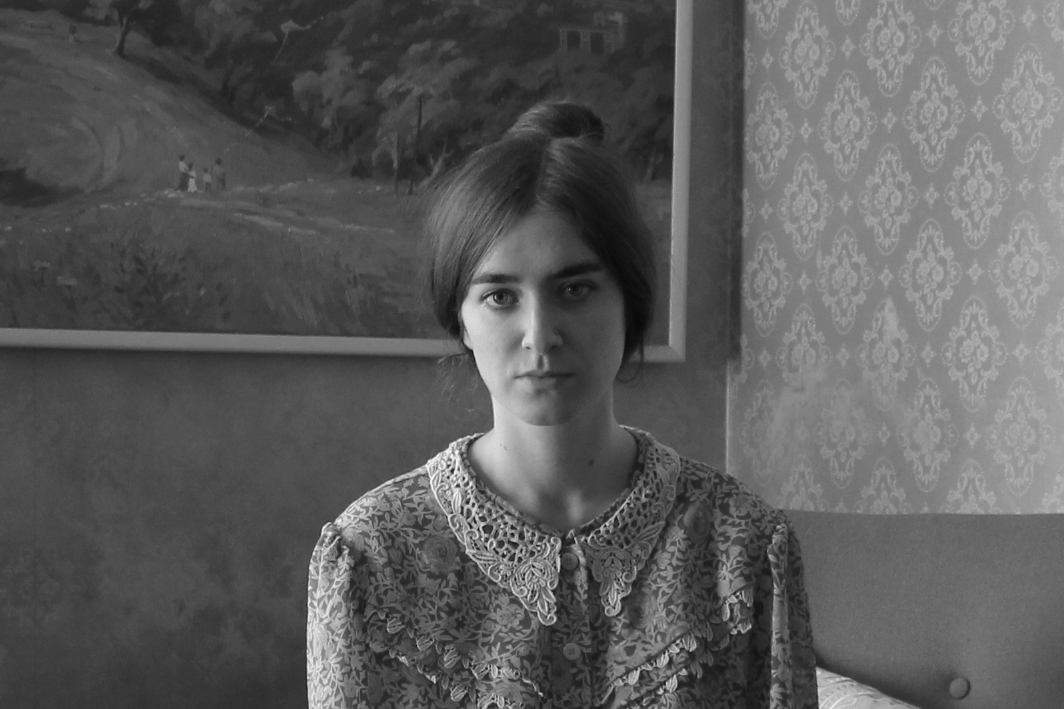
Photo of Zarah courtesy of Hue & Cry Press
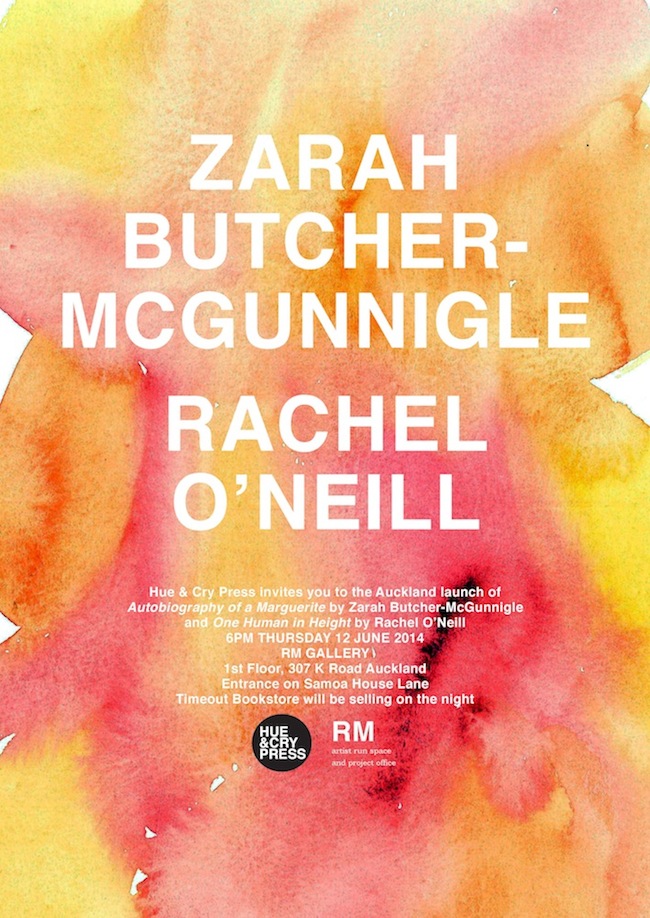
Rachel O’Neill has interviewed Zarah Butcher-McGunnigle for Poetry Shelf to mark the arrival of their two debut poetry collections (Hue & Cry Press). I will be launching both books on
Thursday 6pm 12 June 2014
RM GALLERY, 1st Floor, 307 K Road, Auckland, Entrance on Samoa House Lane
The Marguerites: an interview with poet Zarah Butcher-McGunnigle
A book-length poem is no easy feat, and Zarah Butcher-McGunnigle has achieved this coup magnificently in Autobiography of a Marguerite, creating a visceral and emotionally sparky long poem haunted and stalked and befriended by a host of Marguerites as well as other identities shaped by illness, crumbling and strikingly intimate family relationships, and language in which the adults’ voices break like teenagers, while the ‘young people’ make a note to have more snacks in their bedrooms to survive the strange new flow of time.
Rachel O’Neill [RO]: Who was the first Marguerite? Did any of the Marguerites beget a Marguerite?
Zarah Butcher-McGunnigle [Z B-M]: The first Marguerite was a thirteen year old who sat in front of my grandmother at school. My grandmother admired the girl’s blue eyes and black hair, and she said to herself that when she was older she was going to have a daughter with blue eyes and black hair and she would name her Marguerite. And, as my grandmother has told me various times, that is exactly what happened – her first child was a daughter with blue eyes and black hair, and she named her Marguerite. Coincidentally, there is a Marguerite Duras novel called Blue Eyes, Black Hair, and I used this as one of my source texts for my book. My mother is actually embarrassed about the fact that her name appears in the title of my book. When someone, like a colleague, asks her what the title of my book is, my mother says she can’t remember.
[RO]: Can you describe three things that interested you about the process of putting this collection together?
[Z B-M]: When I first read this question, I wrote: pain, identity, burden. Then I wrote: texture, experience, subversion, non-linearity. I was interested in working on a book-length poem or project rather than writing individual poems that I’d put together at the end in a collection. So I guess I don’t really see the book as a ‘collection’ as such. I wanted the book to be more of an experience. I was interested in autobiographical writing, but I also wanted to write poems that were more ‘language-centred’. In the early stages, my supervisor said there was too much situation, and not enough story – that I needed more structure, more narrative, and more from the outside word. So I tried to adjust the balance. I wanted the pieces to speak to each other and cumulate meaning as the book progressed, but I also had to think about ways to counter the risk of repeating or pushing too hard at certain ideas [when exploring things in long sequences].
[RO] What happens when you start to make objects and subjects out of memory?
[Z B-M]: “It’s the beginning of forgetting.” “The room is empty. The only furniture is two chairs and a table.” “She switches on the lights. And lies herself down in the middle of the light, where she has dragged the sheets.”
You miss out details or you put too many details in. You miss out details because you know the back story and forget that the reader doesn’t, or you put in unnecessary details because you get distracted by the memory and try to recreate or represent a particular situation, rather than focusing on a feeling.
You can get lost inside the memory and become exhausted, trying to navigate it from the inside. You can decide to alter a memory and write something that isn’t ‘true,’ but then later that something can turn out to be ‘true,’ or more accurate to ‘real life’ than you thought.
[RO]:Can you tell us a little about your use of footnotes in the book? Are they apertures to things outside of the main text or do they point to the holes already blistering the so-called main story?
[Z B-M]: The footnotes function both as openings to things outside of the main text as well as pointing to holes in the main story. The footnotes interrupt the ‘absorptive’ flow of the confessional narrative, but their tone is more lyrical than academic or explanatory. They add another layer of time and identity. All of the footnotes come from novels by Marguerite Duras and Marguerite Yourcenar, so a Marguerite comments on the life of another Marguerite. The footnotes act as a kind of fragmented (auto)biography of the books they come from, while adding details to another redacted autobiography… and the autobiography is a story within a story. The footnotes exist in a different time space than the main text… and the narrator who is writing the autobiography put the footnotes there as part of a way of reinterpreting the past in the present, sometimes adding metaphorical details, sometimes adding self-aware notes like, ‘Cheap melodrama’. I also see the footnotes as another voice, another monologue, in the play of Marguerite’s life. Or maybe like experimental stage directions. The reader experiences both being a witness and an actor (like the narrator) because they have to participate in piecing together the main narrative text as well as welding the footnotes to the text. The form (the half-finished sentences + the footnotes) is a kind of performance of the process of remembering, and reinterpreting the past.
[RO]: What draws you to reflect on moments of miscommunication and the scary moments of real understanding?
[Z B-M]: Because something has to be at stake – for me as the writer, and for the reader. “‘Pain is not interesting,’ but it is.” And your whole life script can be based on a few moments of miscommunication.
[RO] Does illness mean you locate yourself in time differently? And what was your motivation for giving visibility to illness in the book?
[Z B-M]: I think so, yes. Because illness is a way of measuring time… (Oh, I used to swim every week back then, before I got sick… We moved here a year after I got so sick, so that must be seven years ago, now… That was the summer your father got so ill he almost died…). I’m talking about chronic illness in particular. And in my experience, you can feel both as if you’ve lost time and as though you’re stuck in time. You remain [the age you were when you were diagnosed]… you didn’t have the chance to live in a way like other people did [at that age] to have the experiences other people did, because of your illness. If you have to spend months at home resting, you can feel as if you are wasting time or losing time. And the trauma that illness may bring can also lead to not being able to remember a period of time very well, as a defence mechanism… so you look back [on your life] and you say, ok, I remember going to the hospital and I remember sitting in the lounge for a while, but I don’t know what else happened during those five months. Illness also means you locate yourself in time differently because the way you use your time and the way you view the future will most likely change. Maybe the future seems much more uncertain and frightening now that you are ill. The symptoms you have are not just concerning because they are happening right now, but because of what they mean for how your life will be from this point on. Time passes, and you are still sick, so you have to get used to it, or you have to get used to not getting used to it.
Thinking and talking and writing about illness seems interesting and important to me. In particular, how illness shapes the way someone sees themselves, and how others see them. How does a person deal with their illness? How do other people react, and how does the reaction of others alter the way someone deals with their illness? Does illness become part of a performance? Is illness (socially) rewarded or punished? What value do we give illness x or y? How does it affect relationship dynamics? I guess I want people to think about these things… as well as perhaps gain more understanding and empathy for people they know with a chronic illness. It seems also important to give visibility to chronic illnesses because they are often ‘invisible’… in that there may be no physical signs apparent to friends or people on the street, and so when people do find out, they often say things like, ‘Oh, but you don’t look like someone who would have [x, y, z]…you look too young to have it!’ or ‘But you look fine! You don’t look sick… ’.
Early on though, I realised I didn’t want to write about a journey of a particular illness, with all the medical details and experiences. I wanted to explore the social aspect of illness in relation to identity and family, and I wanted to use illness as a concept, to illustrate the struggle for autonomy and a sense of self, tying it in with a relationship where the daughter struggles to separate herself from her mother. And although I don’t name an illness, I do mention that it is an autoimmune illness – another detail which symbolises/highlights the struggle for a sense of self. The immune system is a boundary between you and the outside world, and the first task of the immune system is distinguishing self from non-self. Autoimmunity occurs when the immune cannot recognise what is self and non-self, and begins to attack its own tissues. In the book, it is sometimes difficult to distinguish the mother and the daughter, particularly in the second section with the footnotes. The footnotes could also be seen as a kind of autoimmune illness, attacking the main body of the text, the other Marguerites.
[RO]: What was the last boring thing you did that also gave you a lot of satisfaction?
[Z B-M]: Probably… responding to a couple of emails that had been in my ‘flagged’ pile for ages. Going through my inbox and flagging emails is also kind of satisfying.
Zarah Butcher-McGunnigle’s work has appeared in a wide range of publications, including Hue & Cry, the publisher behind this book. You can get a taste for her work by checking out Best New Zealand Poems 2011 and 2012 and the latest issue of Hue & Cry. She was awarded the Biggs Poetry Prize from the International Institute of Modern letters for her manuscript, the first rendition of Autobiography of a Marguerite. You can find out more about the book here or pick up a copy at the Auckland launch.
Rachel O’Neill’s first book of poems One Human in Height was published by Hue & Cry Press in 2013. See Hue & Cry author page here. Paula’s review of Rachel’s debut collection here.
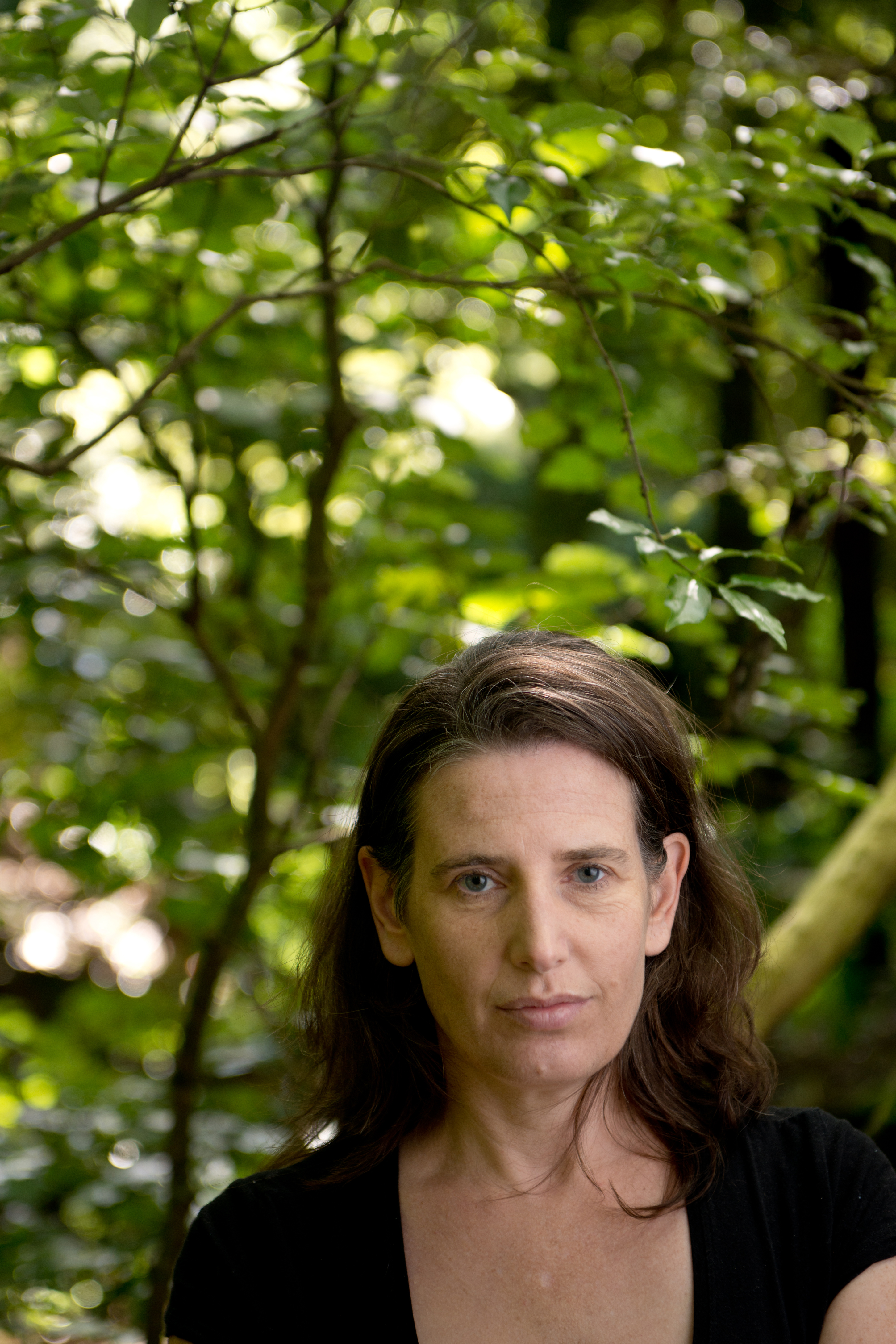
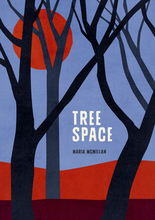
Maria McMillan lives on the Kapiti Coast. She is a writer, activist and information architect (fascinating bio!). In 2013, Seraph Press published a limited edition of her chapbook, The Ropewalk. In a review I said of this book: ‘I love the grace, the phrasings, the syntax — the flecks of life and the speckles of fiction that move you out of routine into the sheer pleasure of poetry.’ For the full review go here. Victoria University Press released her new collection, Tree Space, on June 6th. To celebrate the arrival of this terrific collection, Maria agreed to answer some questions for Poetry Shelf. I will post a review of the new collection shortly.
Thanks to Victoria University Press I have a copy of the book to someone who likes or comments or this post or my forthcoming review.
Did your childhood shape you as a poet? What did you like to read? Did you write as a child? What else did you like to do?
I think it must have in the sense that words and books and thinking were all considered important in my family. I wasn’t musical or sporty but I read and that was more than okay. In fact I think I spent most of my childhood hidden behind closed curtains lying on the strip of sun that fell on to the wide windowsill of our sitting room. My mother would play piano, or someone would be playing Bowie, or Kiss or Split Enz, there’d be the rain-like clatter of my father’s typewriter. I and usually one or two other people around the house would be reading.
There were bookshelves in all the rooms and there was always something to read. I read mostly novels and loved almost all of them. My sisters were a few years older so I had this wonderful back catalogue of all those subversive 60s and early 70s piccolo and puffin and others. But also I’d come across the plain hard-covered books of my mother’s childhood, often a dirty orange I think with the crisscrossed mull showing through the spine and the sort of title you could feel with your fingers. There were lots of other books too, some common, some obscure that I never saw in other people’s houses. So I had and adored E. Nesbit books, Noel Streatfeild, Madeline L’Engle, Elizabeth Goudge but also the Anne of Green Gable books, and Girl of the Limberlost and those funny NZ versions of the English boarding school books of the 1940s. We also had stacks of Tintin and Asterix comics. We all read the Moomin books, so it was a house with Hattifatteners floating around it and, when seasons changed, the sound of Snufkin’s flute. Even as adults my siblings and I describe people we’ve met in relation to the Moomin character they most resemble.
We’d get books for Christmas and birthday presents too and my brother and I were usually allowed to choose one or two novels through the Scholastic Book Club. Some of my favourites came that way; The Velvet Room, a fantastic depression-era tale by Zilpha Snyder was one I read and reread. I think Playing Beatie Bow, came that way too, and I remember the jolt of realising it was the same Sydney and written by the same Ruth Park as Poor Man’s Orange and Harp in the South – old books I’d discovered of my mother’s. I feel lucky too that I came into my teenage years just as Margaret Mahy was writing for that age group. The Changeover was particularly lovely and important. So many. Books were just there.
When you started writing poems as a young adult, were there any poets in particular that you were drawn to (poems/poets as surrogate mentors)?
A bit earlier than that, for my seventh birthday I got a gorgeous anthology of children’s verse. My mother was getting me to read out poems and I chose that Robert Louis Stevenson’s From a Railway Carriage ‘Faster than fairies, faster than witches / Bridges and houses, hedges and ditches…’ and understanding and loving how it sounded like a train on its tracks. When my mother said I could read another one I just asked to read that one again. I loved how exciting it was and the sounds bounding and rattling over one another. That feels important.
Mum had Fleur Adcock’s Selected Works and as a young adult that became perhaps my favourite of all poetry books. I loved that Adcock was intensely emotional but writing intelligently and in a restrained almost detached way. I had no idea how she did it but I could see how the carefulness of her craft was key to its potency.
How does being an activist impact on your writing?
I think the process of reconciling my activist self and my writing self has been huge and will probably keep being huge. I used to write a lot of protest poems, urgent, angry and furiously important to me. I don’t think they were very good as poems, but I also miss and I guess try to honour some of the compulsion and passion that drove me to write them.
I think for me beginning to learn properly the craft of poetry has been about understanding what poetry can and can’t handle as a medium or – I should say – what my poetry can and can’t handle – many others are writing overtly political poems that are wonderful.
I have, over the years felt and thought so much about the world and what I think is wrong and right about it that I can’t address that stuff directly in verse without the lines shrivelling up. Sometimes I blog about that stuff, I‘ve had fun with indignant press releases, and I get into some satisfyingly hard core online arguments, I just can’t bring it off in the sort of poetry I want to be writing.
Another idea has been helpful through all of this – I can’t remember where I first came across it. That is, if you’re experiencing or thinking about something intensely, it’s going to come into your poetry no matter what you’re writing about. If your best friend has died, you can write about something completely different, say a cat, and the poem will still be about your grief over your friend. That’s useful because I don’t want to be writing bad political poetry but I also don’t want to be carving off a writing part of me from an activist part of me. I just have to have faith that the things that are important to me are there in what I write. And everyone who has read Tree Space has mentioned the ethical and political dimension to the work, so it must be there.
I think this whole issue of how to be a politically engaged writer is ongoing for me. I think if you understand about injustice, the most important work you have to do in your life is to challenge it. I don’t yet know how that fits with writing, but I also do want to write, and if I’m not writing directly about injustice, then I worry I’m wasting my time.
There’s other parts of me which recognise that genuine original creativity is the best and most exhilarating sort of liberation. It’s the great challenge to the oppressive forces that silence and control people. I’ve mentioned Madeline L’Engle already. I loved that scene in A Wrinkle in Time when Meg goes to another planet and there’s a town there where her father is hostage and the whole place is controlled by an enormous brain. Meg walks into it, and every street has a row of identical houses, each with a perfectly mowed lawn and every lawn has an identically dressed child and they’re all bouncing a ball in time with each other. It’s a wonderful and petrifying scene. When Meg faces off the huge all controlling brain she resists it by recalling ideas, poetry, knowledge and feelings. On good days I think poetry is inherently good and subversive just because it’s there standing up against mass produced lies and violence.
Does it make a difference that the writing pen is held by a woman?
Yes and no. Yes because I think our life experiences are still very gendered. I had parents who brought me up absolutely to believe that girls could do anything, and women should be financially independent and have control over their own bodies and minds. Despite all that, coming into adulthood as a young woman is I think a world away from coming into adulthood as a young man. Learning the rules of adulthood for us are, and I’d guess even more so for young women today, about valuing ourselves and each other according to male approval. It’s also about learning of the vulnerability that comes with sexual maturity. It seemed that for years in my late teens getting to know women friends was about them disclosing to me their stories of rape or abuse or eating disorders. It’s really confusing that all this physical and emotional desire to explore sex and sexuality, celebrational and exciting stuff, comes packaged with these rather frightening realisations. Those experiences and the other experiences of womanhood in what is still a sexist society are profound and different and inevitably impact the knowledge base that I (and I’d guess other women) bring to writing, and as someone interested in those things it particularly impacts my writing preoccupations and subject matter.
No in the sense that I don’t think style or rigour, intellect or emotional depth, frivolity or darkness are split along sex lines. The differences and similarities between individual writers are far more interesting and complex than that. What does make a difference sometimes is the reception given to women and men as writers. Eleanor Catton has mentioned being asked what she feels rather than what she thinks. I think too there’s a presumption that women must write about emotionally intelligent characters and not tackle hard violent things. I think some critics of Pip Adam’s novel, I’m Working on a Building, couldn’t get over the fact a woman writer was discussing characters and situations more conventionally depicted by a bloke.
Your poems offer delight on many levels. For me, the first delight is the musicality. I love the surprising rhythms that shift from liquid honey to addictive syncopation— and the accumulation of startling phrases. The glorious juxtapositions. What are key things for you when you write a poem?
Thank you. I do read my poems out to myself as I write them, unless it’s somewhere public where that would just be weird. But given a quiet room somewhere I will say the words over and over without even noticing (damn maybe I am doing it in public places). It’s a very integrated thing, so writing the words and saying them out loud and editing are all part of the same movement. It is all about the sound. That was never a conscious decision, it’s just what I’ve come to realise I do. It may be the same for all poets but by the time I get to the end of writing a poem I may have read out loud each line thirty or so times and rearranged and tweaked and added words and ditched bits based on what it sounds like to me. Then I’ll read the whole thing out again and again alter things until I’m satisfied.
I think I’m always looking to remain interested in my poem from start to finish. I know that if I, with all my self-interest, can’t retain enthusiasm no-one else will be able to. There’s something as well where I want each line to be as full as it possibly can be without collapsing. Because my style tends to be quite sparse that’s an interesting challenge. What other ways can a line hold weight if it isn’t with strings of bedazzling nouns and dense adjectives?
I’m also getting increasingly impatient with craft for its own sake. I get nervous of aiming for poems that are good or competent or clever. I want to write poems that need to be written, poems that tell stories, or untell them, poems that belong in the world as well as the world of poetry. I’d prefer to write bad important poems than good trivial ones.
Michael Hulse recently queried the status of certain poems in a review he did for New Zealand Books. In his mind, some poems weren’t in fact poems. How would you define poetry?
This question got me excited. I know lots of people spend decades thinking about this question but I haven’t really so it’s fun to come up with my own answer. Here’s a three part hypothesis cobbled together from my and other people’s ideas, no lab testing yet, unlikely to be replicable, I eagerly await its disproval.
(1) Sound must be a central concern of a poem. Not that a poem has to be musical or sound pleasant, it could be discordant or jarring, but some of the poem’s force must be delivered through how it sings, how it moves the air. Even if it’s not read out loud there’s that strange alchemy where we know a poem’s cadence and rhythms without moving our lips. How it alters or attunes to our breath.
(2) A poem must have integrity. All of it must occupy the same planet and must abide by that planet’s physical and psychic laws. Bits can still rebel against other bits of the poem, in fact that’s good and necessary. I think what I mean is all the parts of the poem must talk to each other, even if they’re shouting. It needs to all be a thing and the same thing.
(3) A poem must have a beginning and an end, I’m not quite convinced about the beginning. I was intrigued when Mary Reufle was in New Zealand and distinguished between her poems and her poetic writing. It made sense but I wasn’t sure why. Now I think it was probably this third point. Her poetic writing might sound lovely and have internal coherence but it might just float there being poetic. A poem needs a conclusion. It needs to come to something. It must, by the end, engage with something other than itself, the sound it makes, and the space it takes up on the page.
I think you could write a bad poem which meets these three criteria but it would still be a poem, and, I think any good poem would have to meet these criteria.
I love the title poem. You write: ‘To understand tree space you must search all tree space which is/ impossible.’ Wonderful! What did you learn about tree space?
When scientists, who have some data, genetic or observational, about different species and they are trying to figure out how those species are related, they have to contend with the fact there’s a whole lot of different possibilities. You can depict those possibilities through family trees, showing where a population branched off and became a new species, when in turn another species branched off that, and so on. The imagined terrain that contains all possible family trees, some bushy with lots of divisions and subdivisions, and some stark is called Tree space. It’s so vast that it’s impossible for a scientist to look at all the trees and figure out, given their data, which is the most likely tree – the tree most likely to be a correct depiction of how different species evolved. There’s a computer algorithm that searches Tree space. The papers talk of high ground, and clusters of more likely trees, branch swapping and jumping to the next tree. When I learnt, through my partner, of Tree space I was besotted, all that gorgeous language and metaphors that felt like a real physical place you could wander through. I love the bush, and Tree space felt rich with that meaning too, like a thing I always knew about but didn’t have a word for.
This set me thinking about poem space! Can you shift that line to the context of poetry?
I love that idea. And it’s true isn’t it, because we can never understand everything about poetry, can we? You never understand how to write poems, only the poem you’ve just finished.
It fits too because there’s a certain element of poetry that’s unknowable chance and guesswork. Not to diminish the skill involved, some people are brilliant at sitting very quietly at the right spot, in the right weather and holding the net in the right way. But those seemingly random often transformative elements of poetry I find incomprehensible in the best possible way. So I like the idea that we might search and search Poem space to try and understand it but it’s futile. It seems important to keep searching though.
Maybe there’s a new Poem space for every poem, and as poets we have to search it all to find the best possible poem. That’s a slightly frightening and tiring thought but it feels right too. All that reading out loud to ourselves, word swapping, adding new branches and so on.
Maria McMillan blog
Victoria University Press page
Seraph Press page
Annelyse Gelman divides her time between the United States and New Zealand. Her work appears in Landfall, Hobart, and elsewhere, and she is the author of the poetry collection Everyone I Love is a Stranger to Someone (Write Bloody, 2014). Find her at annelyseg.tumblr.com or http://www.annelysegelman.com.
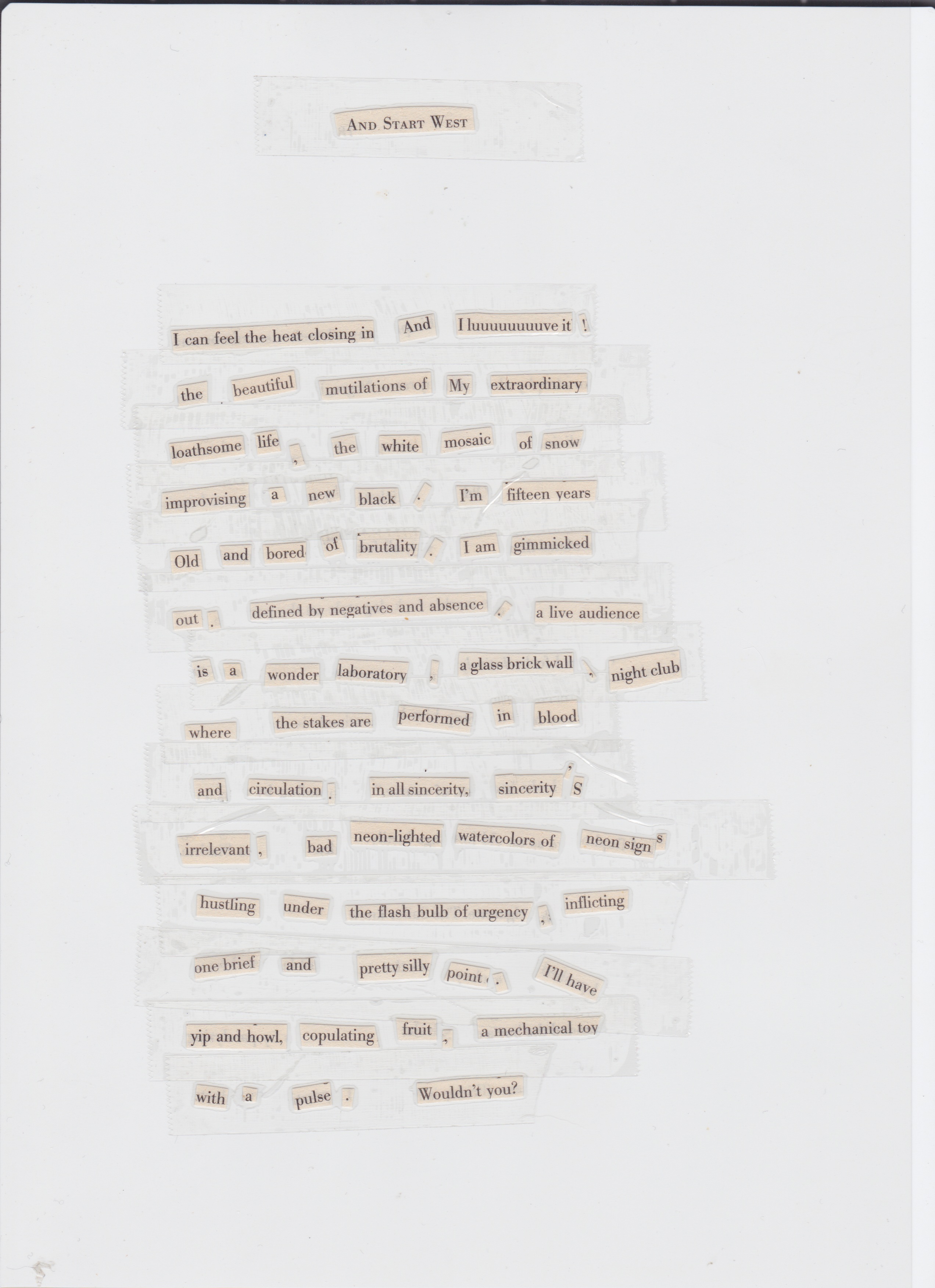
Annelyse’s note: “AND START WEST” is the first poem in a series-in-progress of centos (‘collage poems’) culled entirely from William Burroughs’ novel Naked Lunch. The project, ‘titled aw heck LaNd,’ is a reenactment of some of the cutup processes used in the making of the original book, and an experiment in voice, diction, character, text-as-image…. This first poem comes more from me (the author) than from any narrator; it’s about risk and renewal, choosing moth-hood over cockroach-dom.
Paula’s note: The constraints poets choose for themselves are fascinating. I once met a man selling envelopes of words at London’s Camden Market that you could compose into poems yourself. Christian Bök composed an entire collection of poems where in each chapter he limited himself to a single vowel. Mary Ruefle creates ‘poems’ by whiting out many of the words on a page of text. Interestingly, she doesn’t call what is left a poem, but such a constraint might be another poet’s avenue to writing them. Mary says: ‘An erasure is the creation of a new text by disappearing the old text that surrounds it. I don’t consider the pages to be poems, but I do think of them as poetry, especially in sequence and taken as a whole; when I finish an erasure book I feel I have written a book of poetry without a single poem in it, and that appeals to me.’ Alan Loney used the words on the erasure tape of his old typewriter as the vocabulary source for his collection, The Erasure Tapes. Annelyse’s poems leapt out at me. I loved the tactile sense of collage—of cut and paste by hand. Of shifting and shuffling words to find the lyrical links and the semantic bridges that delighted or puzzled. As I read this example, I was absorbing musicality despite her limited word palette and a sense of mesh-like, cut-up, hiccupy narrative. Knowing the original source, you go back and make new connections (the sharp edges acquire a new potency)—either way it is an exhilarating read.The sort of read that makes you want to write.
The Book Show is 97 per cent there in its hunt for funding via Boosted! This is wonderful news for Graham Beattie and Carole Beu, but they still need that 3 per cent to make it.
From Boosted:
Calling all book lovers!
Face TV, working with two of this country’s most well-known book people, wants to respond to audience demand; and produce & screen a weekly TV show. Called simply THE BOOK SHOW, it will be written and presented by Graham Beattie and Carole Beu.
Graham Beattie has the most widely read book blog in NZ and beyond; and Carole Beu runs the highly successful Women’s Bookshop in Ponsonby – and also beyond!
Both of them are chatty and charming and amazingly informed about the written word – whether it’s in print or on your Kindle or Kobo.
Each week the programme will feature author interviews, reviews and great reads from both NZ contributors and visiting international book people.
Face Television (formerly Triangle TV) is Sky’s non-profit public media contribution and started broadcasting early this year – filling a gap in the media landscape and allowing independent programme makers and communities the opportunity to create and broadcast content nationwide.
THE BOOK SHOW will be screened weekly on Face TV – prime time with a daytime repeat; as well as being made available online.
Because Face TV is a non-profit television service we are able to produce a 12 part series for $6,000 and we’re looking for donations to fund this.
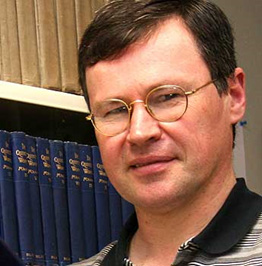
This recent news was picked up by the New Zealand Book Council in a terrific feature on Jack Ross and Poetry NZ. See below for link to rest of article.
Watching an Al Jazeera television item about a young Arab poet spraypainting words of protest on a wall somewhere on the West Bank struck a chord with Massey University English senior lecturer Dr Jack Ross.
In his new role as managing editor of the country’s longest-running poetry journal, Poetry New Zealand, he hopes to infuse something of the spirit and energy of that far-flung poet in future issues of his new literary baby.
In the spirit of his predecessors at the helm of the periodical, he intends to keep it youth-oriented, politically engaged, experimental, and culturally diverse – all necessary attributes for an international journal of poetry and poetics.
Ross – a poet, editor and critic who teaches fiction, poetry, and travel writing in the School of English and Media Studies at the Albany campus – replaces distinguished poet, anthologist, fiction-writer, critic and retiring editor Alistair Paterson, who held the role for 21 years.
See rest of feature here.
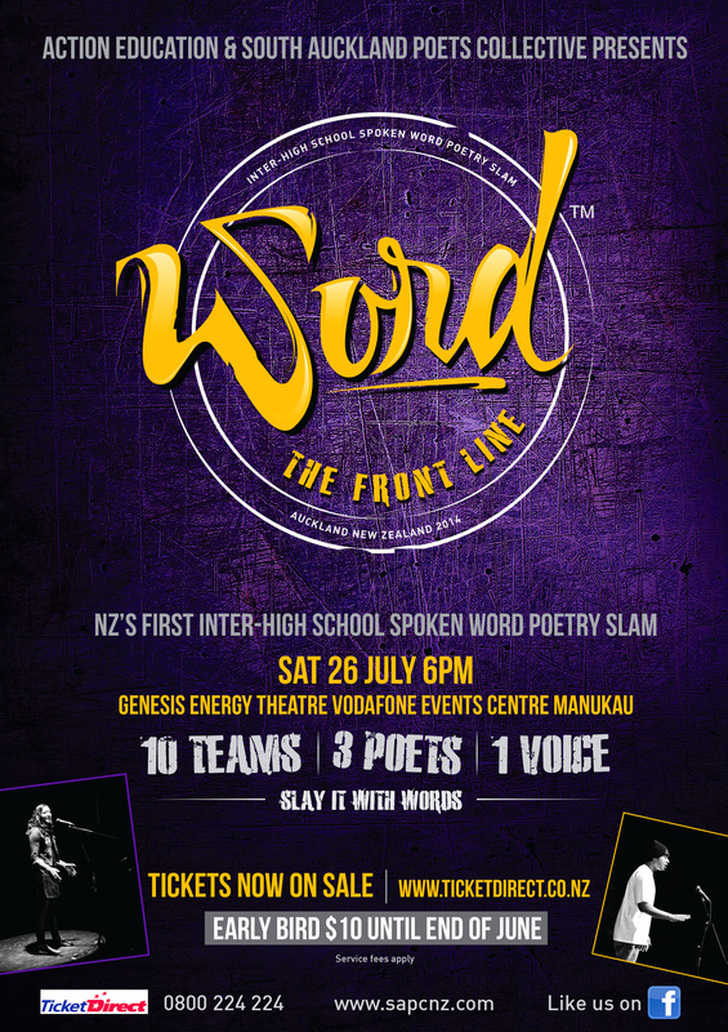
Hue & Cry Press invites you to the Auckland launch of
Autobiography of a Marguerite by Zarah Butcher-McGunnigle
and One Human in Height by Rachel O’Neill
6PM THURSDAY 12 JUNE 2014
RM GALLERY, 1st Floor, 307 K Road, Auckland, Entrance on Samoa House Lane
 NZ Poetry Shelf