Monthly Archives: May 2014

Poem Friday: Ashleigh Young’s ‘The bats’ resonates with such clarity

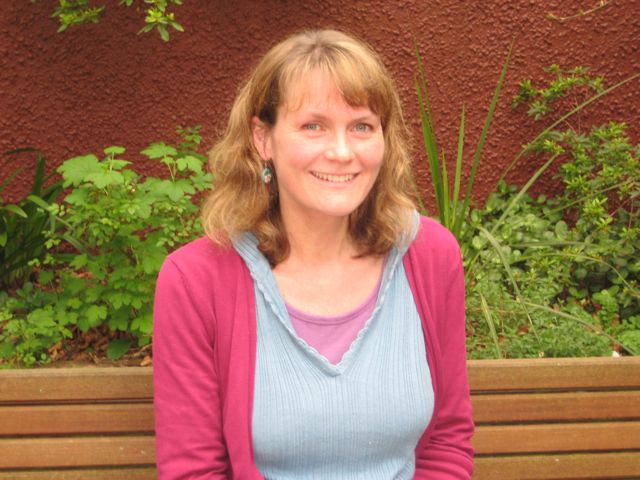
Ashleigh_Young (1)

Photo credit: Matt Bluett

Poetry Shelf now has a new feature. I always wanted to post poems on the site but I wanted to give everything else a chance to settle in first. I was on the judging panel recently for the Sarah Broom Poetry Award and assembled a list of suggestions for Sam Hunt. It seems fitting for an  award that honours such a fine poet as Sarah that I was so invigorated by the range and vitality of local writing from established writers to writers new to me. Moved in fact. I had around 65 names in my notebook under the heading : ‘want to read the book!’ Glorious. But in this tough environment for poetry publishing, I wondered how many would end up getting into print and getting the wider audience they deserve.

Poem Friday (like a sister to Tuesday Poem) is where I get to pick a poem that l have loved in my reading travels and with permission post it (so no submissions please). I am also taking a cue from Best New Zealand Poems and inviting the poet to write a sentence or two about their poem.

I have invited Ashleigh Young to launch the new feature (which seems apt in the light of her recent good news).


The bats

There is a kind of person who locks your shoes

inside of their house, and that is a person who is distracted


and who you see now through the window talking to his wife,

his face a protective shell grown fast around the phone.


The rush of not knowing someone at all lifts you

into the trees with the cicadas, your body too a bright clapping.


These are the situations through which you’ll get older

when you would like to walk home but your shoes are locked


in someone’s house, when you imagine sprinting down a driveway

as your back is pelted with rocks. These are unnecessary situations


because maybe you would have grown older anyhow, and likely

you do not need to cut your heart into two soft slippers to wear;


should need only to blot it with a paper towel as if it were

a bloody nose, all that blood turning to cold breath soon. Notice how


this person’s dog shows its affection by exploding into dangerous

shards in your arms. How much time do we have? None, very little


only some. But let yourself be lifted into the applause of the trees.

Let the applause be in anticipation of the slow motion


of him coming out of the house, quietly as a road cone

placed on a statue’s head at night.


Let his body be held, and graffitied, and prised apart.

Let the applause continue, even when it’s getting dark


even when it is dark

even when the bats come out.


© Ashleigh Young


Ashleigh works as an editor in Wellington and is currently working on a new collection of poetry and also a first collection of essays. Her debut collection was entitled Magnificent Moon. She has just been appointed Editor at Victoria University Press.

Author’s note: I have a fixation with cicadas, specifically with the way cicadas sound at the height of summer. It’s an urgent, panicky, overwhelming sound, always on the edge of total chaos. I was interested in how that sound might translate into a human feeling, and set out to write a scene about one possibility, when a kind of strange personal situation becomes amplified out of all proportion. And the bats? Well, I got to thinking about what the opposite of cicadas might be. I arrived at bats.

Note from Paula: Every now and then you fall upon a poem that fills you with such heart-stopping awe you just have to sit awhile and wait. That’s how I felt after reading this poem. Ashleigh’s poem leads you into the trees with the cicadas—into that glistening moment when the pitch of the cicada hits its summer zenith and all manner of subterranean feelings get to work on you. Yes, it leads you there, but then it leads you, surprisingly, lithely, into the jaw of difficulty. Where things go awry. And this is where the poem is glorious and light—in its movement into the enigmatic shade (an oxymoron I know). Its layers radiate out from the veiled situation, a bad situation you suspect. I love the gaps, the strangeness, the idea of someone locking someone’s shoes in their house. There were lines in this poem I wanted to hold in my mouth until they dissolved because they resonated with such clarity, beauty and deft phrasing (‘your body too a bright clapping’ ‘situations through which you’ll get older’). I also loved the lullaby-like repetition at the end that provided a point of solace along with a point of surprise (the bats).

Poetry Shelf interviews the finalists for the Sarah Broom Poetry Award: Today Emma Neale

IMG_1616

Photo credit: Danny Baillie

Emma is a Dunedin-based poet (four collections published), novelist, teacher, mentor and anthologist. She has a PhD in English Literature from London’s University College, received the inaugural Janet Frame Memorial Award for Literature (2008), the Kathleen Grattan Award for Poetry (2011) and was the 2012 Robert Burns Fellow at the University of Otago. She was the Summer Resident at the Pah Hometead in 2014 (supported by Sir James Wallace Arts Trust/ University of Otago). Her latest collection is entitled The Truth Garden.

My reaction to Emma’s poems: ‘Emma’s poems often find a starting point in her domestic life—with her exquisitely tuned ear and her roving mind producing lines of singing clarity. The musicality is enhanced by a sumptuous vocabulary, by single words that stand out in a line and a rhythm that gives each poem startling breath and movement. What struck us particularly is the way each poem is made more complex—through an unfolding pocket narrative, meditative strains of thought, aching confession, political sharpness, the rollercoaster ride of maternal feeling. These were definitely poems with an aftertaste that kept you wanting more.’


Did your childhood shape you as a poet? What did you like to read? Did you write as a child? What else did you like to do?

My sister and I were surrounded by books: my mother is a voracious and rapid reader; there had to be at least weekly visits to the library for her to maintain her supply. My father used to say she couldn’t possibly be reading at that pace; she was turning the pages too fast. She was not just bookworm but book termite. She read to us often — AA Milne and Beatrix Potter when we were preschoolers — and she also actively encouraged our participation in drama lessons, and ­— at our pleading — wrote us small items to perform for family. Theatre I think also helped to attune my ear to pace, variation in tone: many of the aural aspects of language. I was a slightly shy, slightly overweight child and had started at 6 different schools before high school: books of all kinds were a refuge from the inevitable ill-fit of new-girl/plump-girl.

I did write as a child. One of the ways I tried to stay in touch with a friend in Christchurch when we moved to San Diego was to send her a ‘novel’ (a few pages typed up from my wonky handwriting by my ever-patient mother) about horses. The friend and I had an ongoing imaginary game of horse-riding adventures with another friend, where we were some sort of horse and human hybrid, cantering all over the Spreydon school playground and our back gardens, and making up odd mixtures of talcum powder, perfume, grass, water and weeds at home to feed the horses…(this must have been unbeknownst to somebody’s mother: who would let kids splash perfume into buckets to feed invisible stallions?). I missed Nicola and the game so intensely that writing the story seemed a way of holding on to both friendship and game. I even tried to illustrate it, which is a woeful confession as I have the drawing skills of an eggplant. Other things I loved doing: I was a good swimmer, just about lived in the water in California, but didn’t have any interest whatsoever in competitive swimming. I loved music, but probably didn’t get lessons soon enough – or rather, had a regrettable gap of six years between recorder and clarinet. I like to fantasise that my potential fell through that gap like a necklace through a knot in the floorboards….I tried hard at clarinet, but was as average as average can be. I loved hooning around on roller skates; all the kids in my street in San Diego at one point had a grand scheme to perform Grease on wheels in the road…we practised, we choreographed; we entered school talent contests with our own dances… That sort of free, imaginative, almost wholly unsupervised play for primary school children was a lot easier in the 1970s: even, it seems, in urban California. I took various dance classes in San Diego too: Polynesian Dance; Jazz Dance; but as I said, I was an inelegant, dumpy, ordinary, slightly clumsy child – so almost everything other than swimming and reading seemed to have an element of struggle to it.

When you started writing poems as a young adult, were there any poets in particular that you were drawn to (poems/poets as surrogate mentors)?

When I read Hone Tuwhare as a 14- year-old, it was like discovering a new art form, even though I’d read a fair amount of narrative, nonsense, or Romantic poetry either consciously shaped for children or digestible by children — Eleanor Farjeon, Edward Lear, Kate Greenway, Walter de la Mare, John Masefield, Browning’s The Pied Piper of Hamelin… I thought I knew poetry but coming across Tuwhare’s poem ‘Rain’ in a fourth form English class felt like some fog had peeled away from the world: the very air had clarified. And then I was introduced to the poets of the Mersey Sound through an anthology I got for a class prize – and there were poems filled with humour and identifiable urban detail — fish and chip paper, denim jackets, neon lights, cups of tea, steamed up café windows, brown packing string: these poems too were a revelation. I suppose there was a transition from poetry that seemed to be set in the realm of myth and imagination to poetry that dealt with the realities I had to start confronting without the protective feather-down of family. I read Plath and TS Eliot at high school; Dylan Thomas; Cilla McQueen; Fleur Adcock; Alistair Campbell; and began to read independently over the school holidays as if it was some kind of secret vice – buying myself Faber and Faber editions of WH Auden and Wallace Stevens, more of the Penguin Modern Poets anthologies – reading them in a kind of uninformed, naïve way, trying to find that clarifying ‘hit’ again that Tuwhare and Plath had both given me.

 Hone had a similar effect on me. I likened it to putting on glasses for the first time. Did university life (as a student) transform your poetry writing? Theoretical impulses, research discoveries, peers?

I think it did. It probably led me even further away from the fantastical and science fiction, which were genres I absolutely loved reading as an adolescent. (John Wyndham, Ray Bradbury, Maurice Gee, Ursula Le Guin, Louise Lawrence, Penelope Farmer…)Taking courses in canonical literature, and striving to do them well, left little time for exploring outside the set reading lists. Yet an honours course in Modern Poetry, which Bill Manhire taught at VUW, was as important to me as the original composition paper I did there. Bill’s work as an academic teacher is perhaps mentioned less often than his work as a creative writing mentor: he could talk about various periods in literary history with an apparently casual, contemporary language that was still incisive and vivid. It made it all seem fresh, relevant, ripe with anecdote and choice morsels of quotation. He spoke without condescension or aloofness, which then, anyway, was actually still very rare in university professors towards undergraduates: these things have immeasurable impact on a very young scholar or writer.

The course in original composition taught me to try new forms, and it encouraged re-writing, rather than preciousness and weak defensiveness — the ‘Well that’s the way it really happened’ or ‘That’s just the way it came out’ bullishness that’s common in workshop situations. It encouraged stepping back from the work and testing it. It asked technical questions such as, why that tonal shift? Why that line break? Why so obscure? One of the most important things Bill said to me was about a syllabic poem, which was comparing psychological scars to physical scars, and doing so in that terribly abstruse, fraught, coded way that new writers often tackle the personal. The class went totally shtum, and Bill, who usually tried to hold back on commentary so that it was a student forum, finally said, with a serious frown, “I’ve got no idea what it means, but it sounds really good.” Everybody else in the room seemed to suddenly go limp with relief. They didn’t have to grapple with that recondite, contorted crocodile of a draft any more. That was a moment where I realised I actually might have some kind of poetic ear, but that I’d also inadvertently managed to write something that was almost purely sound, with no sense at all. When I re-read that poem now, more than 20 years on, I have no idea what some of it means either.

In some ways I think the lessons from a course like that only come to fruition many years afterwards: they really are just one step in a much longer process of self-education, and learning through doing. They help to set the clock running: but the clock has to keep being wound on.

For my PhD, I wrote on expatriation as depicted in the work of Katherine Mansfield, Robin Hyde, Janet Frame and Fleur Adcock — I could discuss ways in which I think their work has influenced mine, but I think it would only be of interest to me and my navel and even my navel is getting sick of me…

I love the way your poems abound in complexity. The first delight is the delight of music, the way each poem is a miniature musical score. The second and third delights are the way your poetry engages both heart and mind at a profound level. What are key things for you when you write a poem?

That’s a really generous critique. Yes, the way a poem sounds is key: though even after all these years of reading poetry and even teaching it, the rhythmic element is often done intuitively rather than according to a strict percussive rule or a classically constrained metrical scheme. But I do listen closely to pace; I think of the line break as a micro-pause; I think of white space as silence, or yes, articulate musical rests. All the other aural components are things I enjoy and crave when reading poetry: so I try to gently feed them into the work too.

What poets have mattered to you over the past year? Some may have mattered as a reader and others may have been crucial in your development as a writer.

Jack Gilbert; Tomas Tranströmer; Alice Ostriker: Siobhan Harvey; Ian Wedde; – I’ve only just read his Lifeguard poems, and was astonished at the combination of control and tenderness; the way the dreamy refrain ‘shadow stands up…’ accrues more and more eerie power as the poem proceeds.

In terms of the question who has been ‘crucial in your development as a writer’ over the past year, I’d say Michael Harlow, whose review of The Truth Garden was a turning point for me in terms of self-acceptance. Even as a 20-something, that decade which is always the decade of refining one’s public persona, of perfecting cool, whether you’re a writer, a student, a shop worker or an office clerk, I was, hmmm, temperamentally suspicious of what seemed a ubiquitous tonal irony in local poetry: of what I sometimes felt was dishonesty, or posturing, or a reserve that seems on some levels a failure to commit. There is a downbeat understatement in some contemporary poetry that very often tips over into the banal – where poets are so afraid of saying too much, or of seeming sentimental, of seeming uncool, that the default mode is a lack of affect; a ‘like, whatevs.’ I’d rather be accused of being too ornate, or ‘high octane’, or of making the emotional position of the poem too clear, rather than appear disengaged and numbed down. Harlow’s review felt like someone saying certain aesthetic risks are worth taking.

What New Zealand poets are you drawn to now?

I’ve been very excited by the young Joan Fleming’s work and by a young expatriate English woman, Loveday Why, who is studying at Otago and writing poetry also. These two young women seem to manage to infuse their work with an enormous amount of feeling and yet also to have technical control, an eye for a delectable oddness of imagery and phrasing, a way of bending the line and toying with syntax and white space in ways that seem psychologically expressive as much as academically or theoretically driven. I’m also intrigued by Ashleigh Young, and am keen to see what she does next. I’m struck by her prose as much as, if not more than, her poetry: she strikes me as a gifted essayist/blogger — she applies a poet’s microscopic attention to the sway of a sentence.

Do you think your writing has changed over time?

Yes. But I want to change it again. I’ve had a phase of the poems expanding, turning into 2-3 page mullings, and now I’m longing for the cool crisp ice cube; the tequila shot rather than the rambling lunch.

You write in a variety of genres (poetry, fiction, critical writing). Do they seep into each other? Does one have a particular grip on your heart as a writer?

They do infuse each other. Although I write reviews I don’t claim to be a critic – I think of myself as a practitioner reading other writers closely to see what I can learn from them. I think of a critic as someone who has the full weight of academia behind them; someone, in other words, with a full-time salary and regular hours to immerse themselves. It’s something of a shock to realise people consider me mid-career. I still feel like a novice. Every book, every poem, makes me feel like a novice. That’s part of the allure, I suppose. So I’m still trying to figure out, poetry or fiction? Which is my natural habitat? As a matter of fact, the 92,000 word novel I’ve been writing on and off over the past 3 years started off as a verse novel. Then it rebelled and the lines started refusing to break as I tried to build up my own understanding of the character dynamics. I’m trying to gird every part of my anatomy to go back to it and see if I can recast the entire thing as a verse novel again. It’s like arm wrestling with a stroppy Sumo-sized toddler. Sometimes it won’t even come and sit up at the table.

Michael Hulse recently queried the status of certain poems in a review he did for New Zealand Books. In his mind, some poems weren’t in fact poems. How would you define poetry?

Poetry is so broad – this is one thing that teaching creative writing constantly reminds me. It can be narrative, epic, lyric, patterned by numbers, patterned by wildly arbitrary constraints, it can be experimental, digital, anecdotal, it can be two words on a page, or even one word on a page that highlights its own typographical components, it can have a tight rhyme scheme, it can have a rolling freight train metre, it can merge into prose and call itself a prose poem; it can have a close relationship to visual sculpture. Even that list is not exhaustive. For my own practice, the musical elements are vital. The luminous moment is vital; sometimes the poem embodies the movement towards or away from that luminous moment. I also like the idea of a poem tracing the activity of a mind as it works out just what it thinks; of a poem transcribing the very process of realisation. But as a reader, I’m open to poems that do all the things my own work can’t, as well as to those that work in the same space. In fact, it’s often more exciting to read someone whose work is vastly different from one’s own: it’s like foreign travel.

You were recently The Pah Homestead Resident in Auckland. How did this new location and distance from home affect your writing?

There were acres and acres of time. That was the main difference. When I had the Burns Fellowship two years ago, I still had a very young child (a two-year-old), we moved house, and the fellowship itself involved a lot of public speaking, which meant that in some ways the year was quite stressful; in addition, my normal domestic responsibilities continued. At the Pah Homestead, I could write all day every day anywhere I liked: at the dining table, in the bedroom, at the desk, on the floor, legs waving in the air like a synchronised swimmer if I wanted. No having to drop everything to attend to family needs. I got a huge amount done: I managed to finish the draft I’d started on the Burns — and I’m still immensely grateful for that opportunity. My husband should be considered one of the co-sponsors of that stint: he solo-parented for the entire three months and he did a better job than I would have on my own. I absolutely loved the solitude and it felt like truly coming home in a very deeply reassuring, even empowering way.

Women writers have often had to manage a writing life along with domestic demands and have been denigrated for writing that embraces domestic concerns. You write some of the best domestic poetry in New Zealand and I say that partly because your poems take the reader into the aching and joyous gut of family life in ways that are poetically complex, moving, haunting. Any thoughts on this?

I’m less and less sure of where the domestic and the political drop hands – if ever. Sometimes the poetry comes out of a real struggle with all the roles I have to play. Sometimes the domestic is my subject because I don’t have the time to read, research and explore more arcane or erudite topics, or topics that actually interest me more than the fights over getting dressed in the morning, or where the red light sabre is, or what to cook for dinner. The psychic energy parenthood takes is enormous. I also think that another way of describing so-called domestic poetry is psychological poetry. It’s about mind, character, power dynamics, identity development, relationships, dependence, independence. Nearly every day we leave home for the world; nearly every day we come back home with the air of the world on our skin. Where does home end and the world begin? Is the ‘where’ a mythical line, an imaginary equator?

What irks you in poetry?

Self-conscious quirkiness and the posturing default irony mentioned above. (I don’t dismiss layered, witty, or dramatic or knowing irony of course.)

What delights you?

Musicality; crispness; an ear for the unintended double meanings in casual speech; innovators like Anne Carson; typographical experimentation; wit; multiple meanings; psychological depth.

Name three NZ poetry books that you have loved.

Only three? How cruel!

Cloudboy by Siobhan Harvey

Sheet Music by Bill Manhire

The Tram Conductor’s Blue Cap by Michael Harlow

Selected Poems by Lauris Edmond (An extra for the same price!)

The constant mantra to be a better writer is to write, write, write and read read read. You also need to live! What activities enrich your writing life?

Conversations with lively adventurous warm hearted friends, sleep, art galleries, theatre, film, teaching new young hungry energetic responsive students, conversations with my children, walking, running, looking out the window. Very important to look out the window.

Some poets argue that there are no rules in poetry and all rules are to be broken. Do you agree? Do you have cardinal rules?

The line break is a marvellous invention. It should be used consciously.

Do you find social media an entertaining and useful tool or white noise?

All three things, actually. They exhibit the best and the worst of humanity: ingenuity, the urge to connect. Yet they can be a shallow, addictive distraction, and a vehicle for spitefulness and vitriol. So I suppose they are only as good as we are.

What were some of the key elements of the poems you submitted for the award?

The immediate concerns of the intense ‘terrarium’ of my own small family; my ambivalence about various social movements/mind-sets or rapid technological change; anxiety about ecological crisis; the coded way dreams speak to us. I know that I’ve been working over maternal anxieties, fears and discomforts for several books now, fiction and poetry, and this subject won’t leave me alone, but I was also trying to consciously push myself to try something completely different – hence the social media poems, which have a visual/pictorial component too. I decided that my ambivalence about social media could be put to a more positive use than just a cyclical disgruntlement then attraction, and it could perhaps seed some poems instead.

Finally if you were to be trapped for hours (in a waiting room, on a mountain, inside on a rainy day) what poetry book would you read?

Definitely Wallace Stevens’ Collected Poems. I’ve owned it since I was 16, I think, and I still haven’t managed to read every single word, but I go back to it again and again. It’s a kind of atheist’s Bible: it’s technically supreme, musically audacious and exquisite, intellectually diamond cut, it offers enormous consolation, somehow, to an atheist who longs for transcendent meaning but just cannot hear a God who suffers the little lambs to come unto him.


Emma Neale’s blog

New Zealand Book Council page

University of Otago Press page

Steele Roberts page

New Zealand Electronic Poetry Centre page

Interview with Emma Neale published in The Listener, April 26-May 2 2008 Vol 213

Emma Neale’s Random House profile

Feature in Otago Daily Times

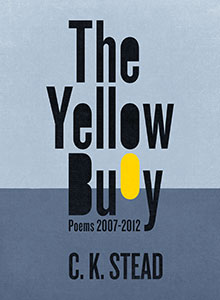
Nick Ascroft on CK Stead’s The Yellow Buoy at Landfall Review Online– this review is sizzling!

cp-yellow-buoy

Landfall Review Online is one of the best sources of poetry reviews currently available to us. Here, a reviewer gets to write in depth on a single volume of poetry, taking whatever style or manner of critiquing they like. Not all books get reviewed (understandably) but those that do get reviewed well. Nick Ascroft has just written a sizzling review on CK Stead’s most recent poetry collection. If someone were to write about my work with this keenness of engagement and propulsion of ideas I would be utterly flattered — whatever they thought of the my poetry. This is the sort of review that raises fertile questions but that also sends you to the most important thing at hand, the poetry itself. It is an exhilarating and stimulating read. Thank you!

I have posted a brief extract with a link to the full review below:

The Yellow Buoy: Poems 2007–2012, by C.K. Stead, (Auckland University Press, 2013), 144 pp., $27.99

The poems of C.K. Stead ‘get poetry’. If I could choose any archetype for all budding poets to emulate it would be he who is perhaps the last of the double-initials-and-surname poets. The kind of adjectives one attaches to his style sound unflattering: honest, sturdy, reliable, unembellished, intelligible, sober, unfestooned, humble, un-baroque-or-rococo. Words are used artfully, but not deferred to or privileged above sense. The sound of words is not forgotten, but the poems are never in search of euphony. Images and metaphor abound, but again are precisely observed. Nothing seems exaggerated; nothing tries overtly to be or seem impressive. The subject has been selected because the poet knows it is interesting as is. Avoid ambition, poets. Avoid – ugh – flash. Avoid post-modernism. Embrace discipline. Stead’s durable archetype is of a poet like a plumber, no self-importance attached, just another well-functioning toilet at the end of a day’s work.

But there is no one ‘poetry’ to ‘get’ of course. Instead, it comes in many forms, equally as deserving of the word ‘poem’, and is equally admired – by opposing groups of readers, often. Every attentive reader has a set of poems they have read and admired: a set of ‘poems that get it’. A set of poems they are prepared to promote and defend. To me this is what a critic does, defending as one braying voice in the wilderness, clutching a poem ‘set’ and asserting an opinion. I admire critics that speak to their vision of the truth. I think their judgements, often more sharply drawn and decisive than our own, help us to shape or frame our own thinking. We may vehemently disagree, and perhaps even be hoodwinked by rhetoric to agree when perhaps we shouldn’t, but either way the conversation shapes us. The best critics to my mind are both curmudgeons and creeps: challenging the reader all the way. Accordingly, I have defaced my way through Stead’s latest collection, The Yellow Buoy: Poems 2007–2012, drawing creepy and curmudgeonly faces in the margins.

Review here.

Poetry Shelf interviews the finalists for the Sarah Broom Poetry Award: Today Kirsti Whalen

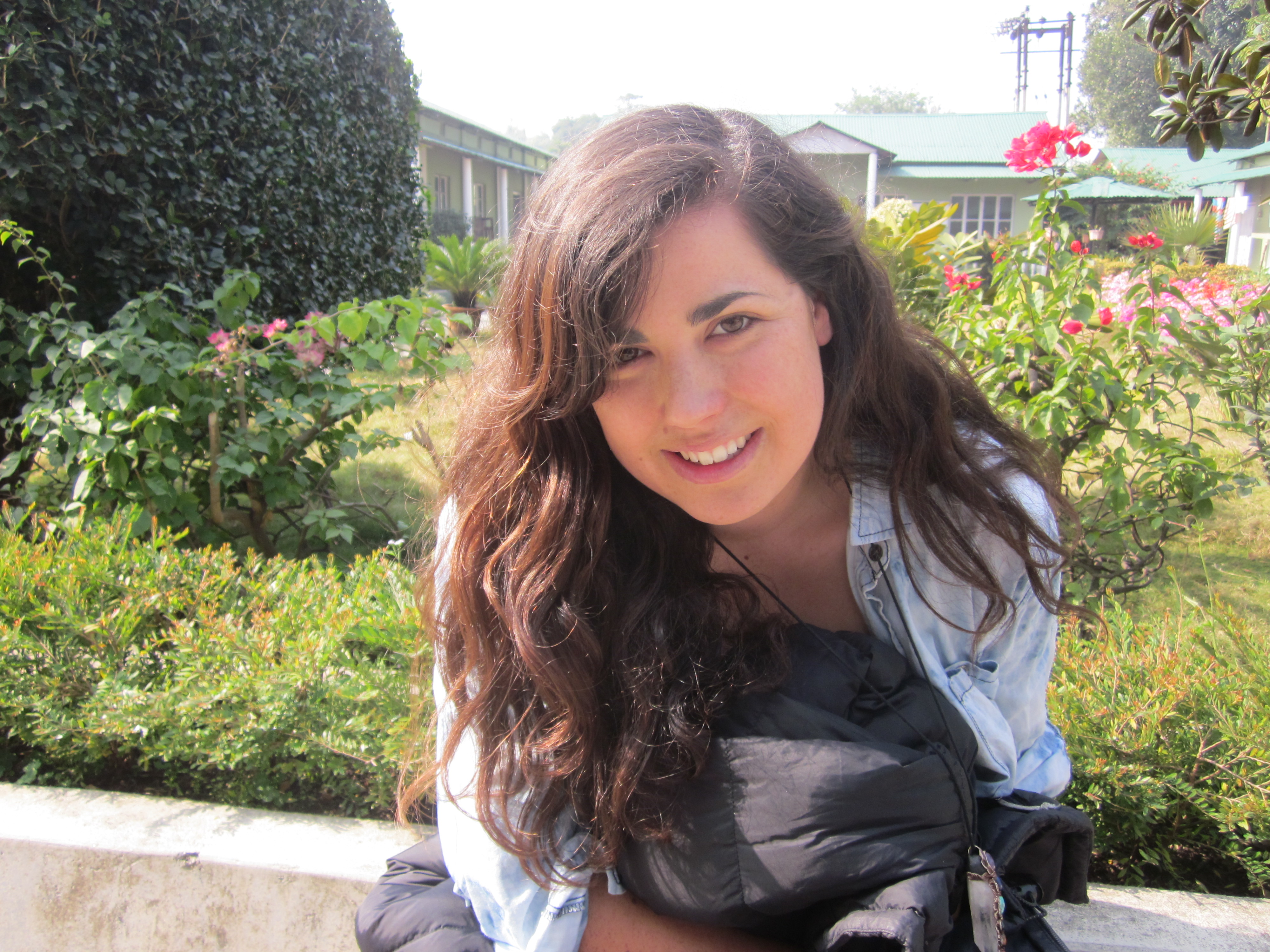
IMG_4591

Kirsti Whalen is a poet and disability advocate currently studying Creative Writing at Manukau Institute with Robert Sullivan and Eleanor Catton. She has written and read poetry since she was a child, and has won both the Katherine Mansfield Young Writers Award and the Bell Gully National Secondary Schools Poetry Award. She has published poems in various journals.

My reaction to Kirsti’s poems: ‘Kirsti is a fresh young voice on the poetry horizon line. Her submission indicates she has an astonishing ear for the way sounds soar on a line, the way they dip and fall. Her syntax is bold and on the move, but she is unafraid of neither simplicity nor silent beats. The poems take you into the heart of family from a mother’s x-rays to kitchen dinners to a grandmother’s quince trees. Each poem is brought alive to a startling degree with sensual detail, electric connections, canny ellipsis, judicious repetition. It is a voice that feels original, that is willing to take risks and that exudes a love of writing in every nook and cranny.’


Did your childhood shape you as a poet? What did you like to read? Did you write as a child? What else did you like to do?

I was lucky enough to be part of a writing group from primary school, run first by my principal and then, after he left the school, my mum, who was a teacher. So I was taught from the start that writing is important, and a valid way to be spending one’s time. My parents always emphasized the value of creativity and never questioned my whims, for which I am very thankful.

My grandparents lived on a farm in the King Country, and this was my haven. I spent all the time I possibly could there, even catching the bus on weekends and holidays when Mum wouldn’t drive me. I am, in fact, a prize winning chicken breeder, taking out the pet category at nine years old! I think poetry is the opportunity to study life and the intricate world in one’s own time; I spent many hours a day with the baby chicks, and many more hours with dying cattle, parched with drought, trying to ease them out of this world. I gardened beside my grandmother and ran with the dog pack, rode my horse bareback and swam with eels so old they turned into legends. I baked bread with my grandfather. I made paper and scrapbooked with my mum. I went for pre-dawn walks with my brother, and cracked the ice over the chickens’ water bowls. I picked wild mushrooms and stewed them and I mustered cattle all day with my uncle, who taught me that girls are strong too. A good education in poetry.

And yes, I read. I was a bookish little thing, and started primary school with few friends except those I found in books. The first book I truly obsessed over was Starbright and the Dream Eater, by Joy Cowley, which Mum ended up confiscating so I would read something else, after my twentieth re-read. And from my fifth birthday my parents would buy me a hefty poetry anthology, from which I read my bedtime stories. Poetry was always fiction’s equal, to me.

When you started writing poems as a young adult, were there any poets in particular that you were drawn to (poems/poets as surrogate mentors)?

I fell in love with Janet Frame from an early age, who was introduced to me by my creative writing teacher at high school, Ros Ali. I have always loved her poem ‘Rain on the Roof’ above all others, except maybe ‘High Country Weather’ by James K. Baxter. The first book of poetry I bought with my own money was The Adulterer’s Bible, by Cliff Fell. Probably an odd choice for a young teenager, but I think it taught me a lot about language, risk and experimental work. I have always been fed a healthy diet of New Zealand poets and writers, so my influences tend to be local, though I was also a pretty hard-core Keats fan, and my cat was called Shakespeare.

I love the way your poems take risks. Your syntax is fidgety, your poems have an electric pulse, there is a deep-seated feeling but it is not over-baked, you don’t give everything away. What are key things for you when you write a poem?

Thank you! A key part of my writing process is having just the right song on repeat, to lend consistency to the tone. And I read each work aloud, over and over again, and then examine the structure to see if the punctuation offers the same rhythm. But the most important thing is making sure that the imagery pinpoints my intentions precisely, in a way I’ve never read before. I try to surprise myself. And if I get sick of the poem, I ditch it. A good poem should last forever. And it has to open a door to something bigger, even if it’s only about something small. I imagine poems like rooms, and if I can’t walk through that poem and into an adventure, it’s not working.

What poets have mattered to you over the past year? Some may have mattered as a reader and others may have been crucial in your development as a writer.

The last year has been a big one for my writing as I moved back to New Zealand, with the intention of giving myself the chance to really focus on my work. So the main influences have been my tutors and lecturers, Robert Sullivan, Ellie Catton, Witi Ihimaera and Anne Kennedy. Despite my contention with his politics I’ve read a lot of Ezra Pound of late and have also had a renaissance of my love of Kerouac, who is a heavy, though possibly invisible, influence.

You are studying Creative Writing at Manukau Institute of Technology with Robert Sullivan and Eleanor Catton. What do you take from this experience? Has it changed your writing in any way?

I think the biggest lesson I’ve been taught is that I cannot rest on my strengths. Ellie is a highly perceptive and her influence has forced me to examine what is self-indulgent, and what is necessary for the reader’s experience. I have learnt that fortes must be challenged, and that pushing oneself and being pushed by others can uncover new fortes, which would remain hidden if friends and family continued to tell you how great you are.

I’ve also changed in my approach to my work, treating it as a profession, rather than a hobby. And I am grateful for the highly instructive workshop format of the programme, as well as the gift of such excellent mentors.

What irks you in poetry?

When poetry exists to serve the poet’s ego. Appropriation of stories that don’t belong to the poet. The presence of pity. The presence of the patriarchy. Cliché. Collections that haven’t been edited well.

What delights you?

When poetry exists to serve the reader’s experience of the world. Stories being told by voices that haven’t previously held a platform. The presence of empowerment. The presence of the strength of women and their stories. Originality. Collections so sleekly edited that they hold a better narrative that a young adult novel.

Name three NZ poetry books that you have loved.

There are so many! I love Brown Girls in Bright Red Lipstick by Courtney Sina Meredith, anything by Lauris Edmond and 99 Ways into New Zealand Poetry, which I have found incredibly instructive. I also really love New New Zealand Poets in Performance, which is a spectacular anthology. It really captures the voice of New Zealand’s contemporary poetic scene.

The constant mantra to be a better writer is to write, write, write and read read read. You also need to live! What activities enrich your writing life?

I’ve travelled a lot and lived in Scotland and Australia, as well as working as a camel farmer in Austria, a nudist laughing yoga instructor in the south of France and living with families in Tahiti, Nepal and India. I think being exposed to all kinds of lifestyles and engaging with things that take my breath away for both their beauty and their humanity is extremely important. I also work in the disability world, and am lucky to spend time with kids who see things in a very fresh way. One of my little boys told me my arms were like peaches and his tummy was made of lemonade, because he loved me. That’s poetry!

Some poets argue that there are no rules in poetry and all rules are to be broken. Do you agree? Do you have cardinal rules?

My mentor Robert Sullivan, in the words of Ezra Pound, has drilled my cardinal rule into me, by way of a bright poster on our workshop room’s wall. Make it new! And in the works of Katherine Mansfield: Risk. Risk anything. If I’m doing these two things, and not appropriating anyone else’s story in a way I consider disrespectful, then every other rule is there to be challenged. I don’t really draw a line between poetry and prose, either. I like to think that poetry is more a feeling that a set of rules, though I do like to honour the tradition of poetry, and the challenge of structure, metre and various other devices.

Do you find social media an entertaining and useful tool or white noise?

I find it very distracting! And I think social media has taught us to expect quite instant feedback and gratification, which is somewhat demoralising when working on a project which requires a private, long-term investment, like a book. I wish I was brave enough to leave social media, to be honest, but I also see its importance in terms of engaging with an audience, and building a network of like-minded people. I try to be very careful, however, to promote my work, rather than myself. Social media’s influence can shift this balance to a more ego-based place, so I try to be very careful. I am also careful not to underestimate social media’s influence and infiltration of our collective conscience.

How do you envision your debut book?

I like beautiful things, so I’d like to have a book that someone could hold in their hands, feeing like what they’re clutching is special. I think I have one story I need to tell before I am free to tell other stories. I was my mum’s carer for years during her battle with cancer, and I want to write something that other young carers can read, and feel less alone than I did. And if there’s one line in there that makes someone gasp, as if something has changed for him or her… well, that’s the dream!

That seems to me like an important book to write. I see that commitment to life and to humanity in your writing. What were some key influences in your submitted poems?

The women of my family are the crux of my submission, particularly their strength, and their absence. I’m a feminist, and I hope that my work has subtle echoes of the influence of Marilyn French; Eve Ensler; Kate Millett. I have also spend the last few years engaging with spoken word, and I do write my poetry to be voiced by the reader, so I am influenced by the musicality of poets like Ursula Rucker, and the idea of voice and resonance.

Brava! With overt and covert misogyny still at work, and a culture of bullying still entrenched in our society, it is refreshing to hear young women speak out (like Lorde for example).

Are you happy to talk about what you are currently writing and what you hope to write soon, or do you prefer not to?

I try to keep things close to my chest but I’m a pretty open book and tend to dish too quickly about the things I’m excited about! While I’m an atheist I also have this romantic notion of the universe, and that some things need to be released into the world to be realised. Sometimes speaking to something makes it real. I’m also very lucky to have two best friends, one of whom is a poet in Melbourne and the other completing her MFA at the Michener Center in Austin, Texas, so we talk work a lot!

Do you like performing your work?

I used to. I like reading my work, but I have recently ‘retired’ (at 25!) from performance poetry as a vocation, so to speak. I think that for me, personally, it encouraged complacency. There is something quite dangerous about the immediacy of feedback and the tendency towards cliché that large audiences inspire. I enjoy elements of performance but I’m trying to let the page be the stage, and the words hold the spotlight.

What gives you pleasure when you write and read poetry?

I think all good writing is in pursuit of a definition of what it means to be human. When I can understand that, read that, or write something that makes me feel like maybe we’re all the same, and maybe that’s beautiful, that’s where I find the pleasure in it all.

Do you write in any other genre? Why poetry?

I have a particular penchant for creative non-fiction (which any fiction I ostensibly write actually also is, if I’m honest). I’ve had a lot of strange and challenging things happen to me or around me, sometimes by accident, sometimes by choice. I think as a writer it’s almost a good thing to have a rather difficult life, because it fuels your work. It gives you stories to tell. And I enjoy the intellectual aspect of creative non-fiction, as it allows me to incorporate my readings and discussions into less of an experience, and more of a comment. It challenges me to be a little more perceptive and to think deeply, which I value.

But poetry, to me, is the closest thing I have to prayer. I wish I could say something profound about why I write poetry, but I do it because it doesn’t feel right not to. It’s a discipline: I have to put my poetry hat on daily to ensure that I am training my brain into accessing that other place that some people call a muse. But it comes, and I let it come, because it’s who I am. I wonder what would have happened if I hadn’t been introduced to poetry at such an early age, and instructed in it all through my schooling. I like to think I would have written poetry anyway.

Finally if you were to be trapped for hours (in a waiting room, on a mountain, inside on a rainy day) what poetry book would you read?

Probably Peter Bland’s Collected Poems. It’s a fairly hefty book, so it would keep me occupied, and his writing is so hopeful, somehow, that whatever drab place I might be trapped in would become gently infused with the magic of the every day.


Kirsti on YouTube

Poetry Shelf interviews the finalists for the Sarah Broom Poetry Award: Today CK Stead

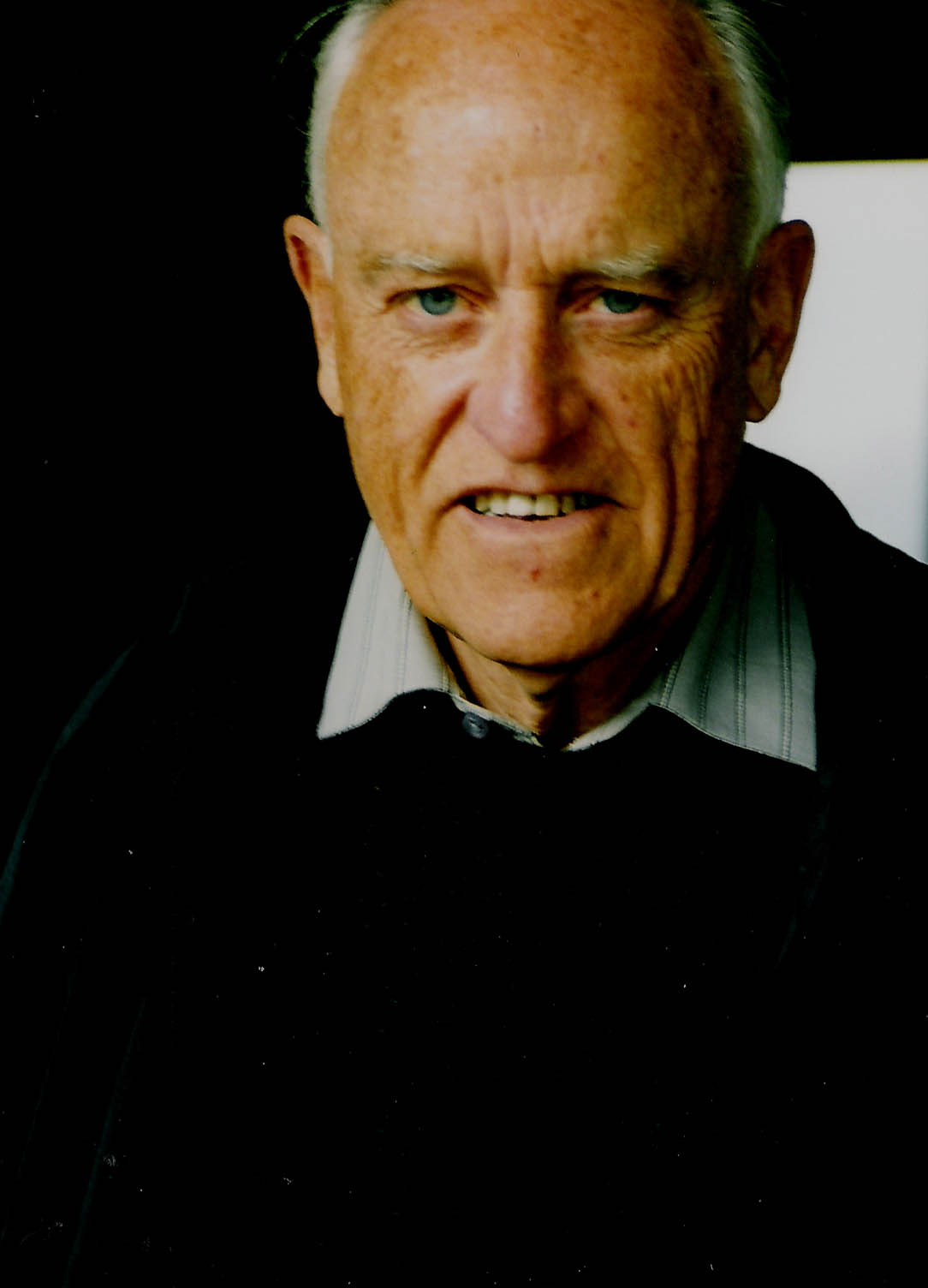
K4a

Photo credit: Marti Friedlander

To celebrate the inaugural Sarah Boom Poetry Award, Poetry Shelf has interviewed each of the finalists. First up is CK Stead.

Karl has published over forty volumes of poetry, fiction, memoir and criticism. Along with New Zealand’s highest honour (the Order of New Zealand), he has received the 2009 Prime Minister’s Award for Fiction, a 2009 Montana Book Award for his Collected Poems and the esteemed Hippocrates Prize for Poetry and Medicine in 2010, amongst numerous other awards. Karl’s latest collection is The Yellow Buoy (published by Auckland University Press in New Zealand and Ark in the United Kingdom).

My reaction to his poems: ‘Karl’s poems embrace a vision that welcomes both an intellectual life and an everyday life along with a joyful attentiveness to sound. There is the characteristic wit, reflection and irony, but there is also tenderness, empathy and acute insight. Karl’s poems radiate such a contoured experience for the reader through their layering of ideas, self-confession, musical agility and location within a history of reading and thought. The subject matter shifts from the intimacy of a love poem to his wife, Kay, to a cheeky eulogy to Derrida (‘the enemy of plain sense’) to a hilarious case of mistaken identity. These poems have an unwavering strength to pull you back again and again to fall upon new discoveries.’


Did your childhood shape you as a poet? What did you like to read? Did you write as a child? What else did you like to do?

Who said ‘the child is father to the man’? Wordsworth, probably, who has a lot to say about the shaping of the sensibility in childhood. Poetry itself didn’t figure much at all in my childhood; but I think the poetic sensibility was shaped in relation to the natural world – the bush, the beaches, the out-of-doors, the cousins’ farm at Kaiwaka where a lot of holidays were spent: a very NZ childhood.

When you started writing poems as a young adult, were there any poets in particular that you were drawn to (poems/poets as surrogate mentors)?


At the age of 13 or 14 my sister was given the poems of Rupert Brooke which I borrowed from her and never returned (and still have). He was the first poet I read seriously, and began at once to write poems more or less in imitation I suppose. That started me.

Your poems are delightfully complex packages that offer countless rewards for the reader—musicality, wit, acute intelligence, lucidity, warmth, intimacy, playfulness, an enviable history of reading, irony, sensual detail, humour, lyricism. What are key things for you when you write a poem?

It has to be a meeting of words and feeling, in which the words are at the very least equal in importance, and the feeling can be of any kind, not just one kind. I like wit, think laughter can be tonic, but of course it doesn’t fit all occasions.

There were a number of significant poets in NZ from the 1940s onwards and you have interacted with many of them (Curnow, Mason, Glover, Baxter and so on). Were there any in particular whose poetry struck a profound chord with you?

Curnow was always the most important for me. But when I was young Fairburn’s lyricism seemed very attractive; Glover at his rare best (the Sing’s Harry poems); Mason likewise (‘Be Swift O sun’); Baxter – especially in his later poems: they have all been important to me.

Do you think your writing has changed over time? I see an increased tenderness, a contemplative backward gaze, moments where you poke fun at and/or revisit the younger ‘Karls,’ a moving and poetic engagement with age, writerly ghosts and death. Yet still there is that love and that keen intelligence that penetrates every line you write.

You are very kind! I certainly feel ‘older and wiser’ in the sense that things don’t matter so much, one accepts the fact of human folly and one’s own share in it. Indignation doesn’t stop, but there is a kind of weary acceptance, and laughter. I still feel embarrassment – especially when looking back – but I recognize that as not only a safeguard against social mistakes, but also as another manifestation of ego, as if one feels one should be exempt from folly.

There have been shifting attitudes to the ‘New Zealand’ label since Curnow started calling for a national identity (he was laying the foundation stones that we then had the privilege to use as we might). Does it make a difference that you are writing in New Zealand? Does a sense of home matter to you?

When I was young I was a literary nationalist. Now I regard nationalism as a form of tribalism and the result of genetic programming no longer suitable or safe in the modern world. So I have changed a lot. But I still recognize regional elements as important, even essential, in the poetic process. I think Curnow himself became more a regional poet and less a nationalist one; but the arguments that had swirled around all that had had the effect of committing him to positions which he didn’t want to resile from, so he remained the committed nationalist, perhaps after the need had passed.

What irks you in poetry? What delights you?

I suppose any kind of excess, of language or of feeling; and solemnity – especially the sense that poetry is taking itself too seriously and asking for special respect.

There are many kinds of delight in poetry, but almost all of them involve economy. If an idea or an experience or a scene or a personality or whatever can be conveyed as well in 10 words as in 20, those 10 words will be full of an energy which the more relaxed and expansive version lacks. They will be radio-active.

Name three NZ poetry books that you have loved.

Singling out living poets might be invidious, but here are three by poets now dead: You will know when you get there (Curnow); Jerusalem Sonnets (Baxter); Pipe Dreams in Ponsonby (David Mitchel).

What international writers are you drawn to? Now and over time? A variety of writers make an entry in your most recent book, The Yellow Buoy.

I grew up at a time when T.S. Eliot was the dominant figure both as poet and critic, so my mind was partly shaped by his, though never in the sense of being a slavish follower – and in fact my temperamental differences, and intellectual distance from Eliot, have always been clear. Yeats was always important. Pound I came to an understanding with a little later. Wallace Stevens was an influence. Philip Larkin, a little closer in age, was admired, though his limitations were always recognized. But these are all 20th century poets. I have always read widely among the poets from Shakespeare and Donne through to the present. Among living poets I am now pondering Anne Carson (Canadian) with interest, admiration and sometimes impatience. I keep up a lively correspondence with Mike Doyle in Canada – a New Zealand poet for a period of 10 or 15 years – and we exchange and comment on one another’s poems. Similarly with Alan Roddick in the South Island. I read recently in London and Oxford with Fleur Adcock and Kevin Ireland and felt with them the kinship of more or less exact contemporaries.

The constant mantra to be a better writer is to write, write, write and read read read. You also need to live! What activities enrich your writing life?

In no particular order, interaction with family (Kay, our 3 children and 7 grandchildren – and a large extension beyond); friends and former colleagues; movies, swimming (almost daily through 7 or 8 months of the year), music (including opera where possible), travel abroad (France and Italy especially, London always); the bush at Karekare, politics… The on-going party that life is, and that I’ll be sorry to leave.

Some poets argue that there are no rules in poetry and all rules are to be broken. Do you agree? Do you have any private cardinal rules?

There are a few rules, none unbreakable. If you choose to write a sonnet you choose a rule and then may observe it strictly or loosely or in such a way as to make the nominated choice only ironic. Poems do not succeed or fail by observing rules.

Eleanor Catton recently suggested there is no reviewing culture in New Zealand in The Guardian. Do you agree?

No, I don’t think I do agree – but it’s not like the UK where if one paper gives you a tanning for sure the next will tell you you’ve written a work of genius. The papers that review here are too few and consequently each counts for too much. And there is not a strong sense of literary critical practice here; a kind of authoritative back-up (behind the reviews) of informed opinion such as the universities used to provide. Now (but this is probably typical of everywhere) we have breathless academic devotees of Mansfield or Frame or Hyde or Curnow (safe options), and… Creative Writing! Neither of these amounts to what I would think of as distinguished literary criticism.

In your entry letter you stated, ‘Poetry has been my life, and all the other literary endeavours, criticism, scholarship, fiction, circle around and out from it.’ Poetry is like your gold nugget. I love this notion, particularly as your endeavours in these other areas have been so strong. Take your wonderful novel, My Name Was Judas for example. What were the satisfactions in writing this daring and utterly engrossing work?

I do feel that any success I’ve had as a critic has been from understanding the creative process at its fundamental level, in having written poetry. Fiction has a range of possibility, narrative and sociological, beyond what poetry permits – so my novels have been (as A.S. Byatt says they are) ‘a poet’s fictions’. My Name was Judas was a novel that took me by surprise and was really an attempt to retell a story we all know, the Jesus story, in a way that made it intelligible and believable to a modern persona such as myself, apprised of scientific facts, which have encroached so far on religious faith that there is, in truth, no room left to share. But I wanted my Judas (who incidentally does not betray Jesus but does not believe he is divine and tries to save him from himself) to have an extra dimension beyond ‘fact and reason’ and he has that in being a poet – so I was able to mix whatever skills I have in fiction and poetry in a single book.

Is there a particularly poetry book of yours that matters more than the rest?

Usually the most recent is the one I like best. But looking back I think Geographies is one that comes at a good time in my life when I was beginning to shake off the pressures of being a University Professor, and range about the world both physically and intellectually – and I think that shows in the poems.

Do you find social media an entertaining and useful tool or white noise?

At 81 I come to these things rather late, and sceptically. White noise mainly.

Finally if you were to be trapped (in a waiting room, on a mountain, inside on a rainy day, waiting for a decision) for hours what poetry book would you read? Actually I think the context would affect which book to a large degree!

I might just resort to the poetry in my head – there’s a lot – I’ve always had that kind of memory, so there’s a bit of everything from Shakespeare and Donne, through Wordsworth, Coleridge and Keats, on up to Yeats and Gerard Manley Hopkins.

Sweet Mammalian: A new NZ literary journal seeks submissions

You are invited to send work to a new literary journal.  More details here. I am really intrigued and can’t wait to see their first issue. Check out their aims on the site. As they say, ‘We are all sweet mammalians.’

SUBMISSIONS

Send us your writing, be it a roar, purr or pip-squeak.

We will be launching our inaugural issue in early spring and are taking submissions of poetry and short prose work.

Send us your original, previously unpublished work, by June 21.

Submit up to 5 poems of any length, and/or up to 2 short prose pieces. Please send your work in a word doc attachment to sweetmammalian@gmail.com

Please include your contact information and a short bio note in the body of your email.

On the Shelf: May picks by Tina Makereti, Helen Rickerby, Bernadette Hall, Damien Wilkins


1. Tina Makereti:

large_97818696931901844712931book.qxd

Three Collections

I’m putting together the course reader for my Victoria University course, Te Hiringa a Tuhi – Māori & Pasifika Creative Writing Workshop, so I’ve been reading a fair bit of poetry, as well as non-fiction and fiction. Here are three that are particularly interesting me at the moment (I seem to be only part way through everything!)

1. Tapa Talk – Serie Barford (Huia Publishers, 2007)

There is something wonderfully rich in this exploration of tapa or siapo. I also find Samoan / Pasifika concepts of va powerful territory for creativity. This excerpt is a good example:

Connections

on Sunday the priest said teu le va

make presentable the distance

between you and the other


there’s no such thing as empty space

just distances between things


made meaningful by fine lines

connecting designs and beings

in the seen and unseen worlds


distances can be shortened

made intimate or dangerous


or lengthened

until the connection weakens

finally withers away […]


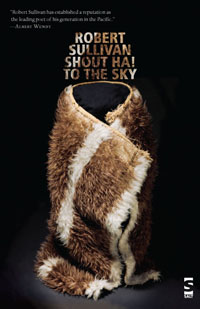
2. Shout Ha! To The Sky – Robert Sullivan (Salt Publishing, 2010)

I’m much more familiar with Star Waka, but have always wanted to look at this. It is full of Sullivan’s astute, witty, wry yet sensitive approaches to vast topics that range from academic and political to intimate. I often find his books, though poetry, are suited to being read beginning to end like a novel, and that some of the poems might be read almost like personal essays (which for me makes them even more enjoyable). This collection is full of references to books, histories and writers, and Sullivan’s trademark sharp humour:

15 Review

When I was a lot younger I was reviewed by someone

who said that I should stop paying homage to other writers—


you know what? I listened to that reviewer so for a long time

I wouldn’t pay my respects—I’d pretend I was writing in a vacuum,


That there was no history of reading inside me, that everything

Was original breath unaffected by the airs and graces of my elders […]


3. The Cartographer Tries to Map a Way to Zion – Kei Miller (Carcanet Press, 2014)

This collection by a Jamaican writer is very specific yet speaks universally, as does his other writing. I particularly like the way he calls the idea of knowing into question by having two speakers in this collection, the Mapmaker and Rastaman, who question each others’ reality. Both points of view are simultaneously true and not-completely-true. Seeing this poet in performance is also a moving experience.


Tina Makereti’s debut novel, Where the Rekohu Bone Sings, was published recently by Random House. I have so much to say about this glorious book, I am going to bend my rules and review it on Poetry Shelf as soon as possible!


2. Damien Wilkins:

NelsonIAWebsiteNelsonIAWebsite


I’d like to cheat on the brief slightly and recommend a critical work which I think poets should read: Women, The New York School, and Other True Abstractions by Maggie Nelson (University of Iowa Press, 2007). I tell my PhD students about this one because it’s a model of critical prose – accessible and enjoyable without stinting on knotty theoretical issues. With a focus on New York poets from the 1960s and beyond, including Barbara Guest, Bernadette Mayer, Alice Notley and Eileen Myles, as well as the blokes (Schuyler, O’Hara, Ashbery), the book offers engrossing readings of individual works but also a thrilling argument for rethinking what poetry is and does. One of Nelson’s triumphs is to revise the division between representation and abstraction in literature. ‘Abolishing partitions’ is how she describes it. Hers is a generous, capacious mind. Kim Gordon of Sonic Youth also blurbs it, so this book is really cool too.

Damien Wilkins is Director of Victoria University’s International Institute of Modern Letters. He will introduce rehearsed readings from his novel, Max Gate, by five actors (directed by Murray Lynch) at the Auckland Writers Festival (Friday May 16th, Lower NZ, Aotea Centre). He has several new poems in the latest issue of Sport.


3. Helen Rickerby:

Hoopla_covers_A4

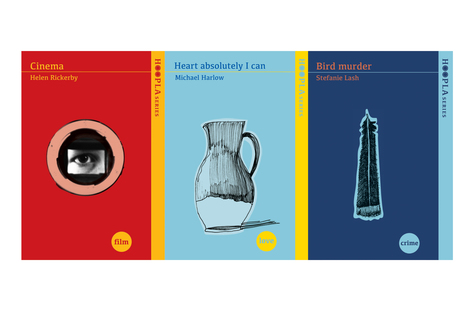
Bird Murder, Stefanie Lash (Mākaro Press, 2014) This debut collection was published in a set of three, along with my own Cinema and Michael Harlow’s Heart Absolutely I Can. I got to read it before it went to print, and was blown away by its originality and accomplishment – I’ve never read anything quite like it. It’s a gothic murder mystery set in the not-quite fictional West Coast town of Tusk, and features taxidermy, extinct birds, a cast of characters with extraordinary hair-colours and beautiful poetry. It manages to be, by turns, grim, funny, surreal, magical and historically accurate, but not all at the same time.

The Odour of Sanctity, by Amy Brown (VUP, 2013) This is still a work in progress for me – it’s a long book, but I’m enjoying it. It’s so ambitious – this isn’t just a book-length poem sequence – it’s a very-long-book-length poem sequence about six candidates for sainthood, from Aurelius Augustine to Jeff Mangum of the band Neutral Milk Hotel. The form and tone change with each section, each candidate. So far my favourite is the beautiful and surreal first, ‘The breakdown of the time machine’, about, and in the voice of, Jeff Mangum.

Bloodclot, by Tusiata Avia (VUP, 2009) I’m organising a conference on biographical poetry with Anna Jackson and Angelina Sbroma, and Anna had mentioned this automythographical book as one that would be interesting for someone to talk about at the conference. I don’t know quite how it is that I hadn’t read it before, but I’ve rectified that now. Like the two previous books I’ve mentioned, it has an overall narrative – in this case it’s about Nafanua, the Samoan goddess of war, who is also a ‘half-caste girl from Christchurch’.

Poems, by Anne Michaels (Alfred A. Knopf, 2000) This is actually three books in one: The Weight of Oranges (1986), Miner’s Pond (1991) and Skin Divers (1999). Michaels is a Canadian poet who is probably best known for her novel Fugitive Pieces (which I have to confess I have never read because I think it will be quite hard going, emotionally). I first read this book almost a decade ago, and I sought it out again because of the aforementioned conference, because I remembered being struck by biographical poems in here, particularly one about expressionist artist Paula Modersohn-Becker and another about astronomer Johannes Kepler. When I first read it, I remembered it being hard-going poetry, and it’s true that it’s rather serious, but it seems much lighter to me now, and just beautiful. It’s full of beautiful images and affecting and true lines: ‘desire/clinging like windy paper to legs’, ‘Only love sees the familiar for the first time’, ‘I wanted badly that truth be a single thing’. I’ve been reading the library’s copy, but I know I have to own this now – these are poems I’ll want to return to.


Helen Rickerby runs Seraph Press. Her most recent poetry collection, Cinema, was published by Mākaro Press. See my review here.


4. Bernadette Hall:

cov-wildparty   cov-wildparty   cov-wildparty   cov-wildparty

‘Queenie was a blonde, and her age stood still,

And she danced twice a day in vaudaville.’

These are the opening lines of ‘The Wild Party’, a lost classic by Joseph Moncure March (1928). Reprinted, uncensored, with drawings by Art Spiegelman (1994). It came my way, 111 pages of ‘hard-boiled, jazz-age tragedy told in syncopated rhyming couplets’, when I was in Iowa in 1997. It sizzles, it’s of its time, it could be a bit of a shock today. I should be ashamed to be so fond.

Bernadette Hall’s current project is ‘Maukatere: floating mountain’ – an experimental text with artwork by the Wellington poet/artist, Rachel O’Neill. An extract appears in the latest edition of Landfall.


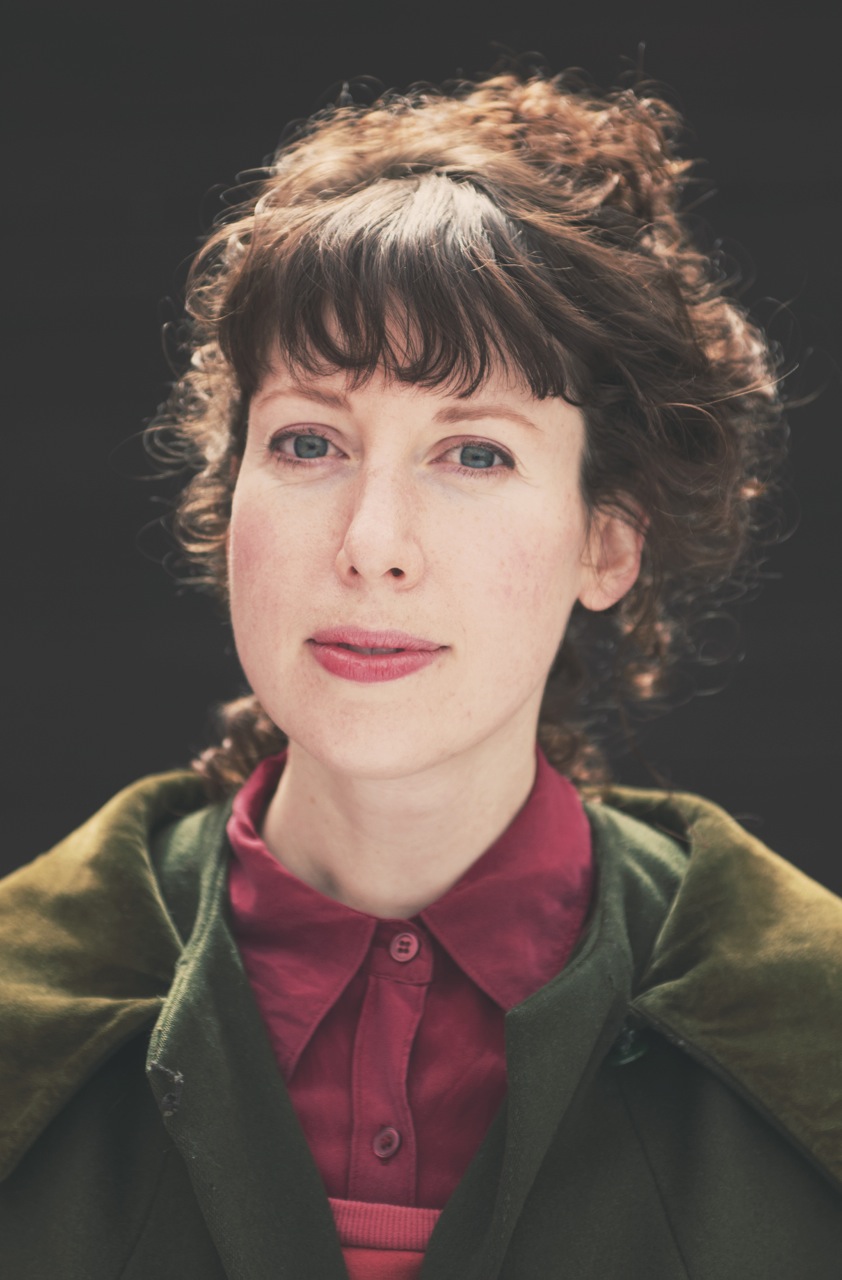
An Occasional Series on Poetry: Joan Fleming on poetry as a child on fire who is trying, and failing, to pronounce itself

joanfortuesdaypoem (2)  sameyes.9780864736987__33157.1347922933.140.215   sameyes.9780864736987__33157.1347922933.140.215

Photo credit: Kate van der Drift

Poetry as a child on fire who is trying, and failing, to pronounce itself.

My current relationship is so not a failure that I have to find ways to lie about it, poetically speaking. We have parallel occupations and preoccupations. We are the same age, at the same stage in our lives. And things with us are great. Really great. Things with us are gorgeous and brindled and hot and warm and lukewarm and cool, and often not perfect, and I guess I wouldn’t have it any other way.

But because I am writing a book of failed love poems, I have had to invent a set of constraints so that I can write about what is foremost in my life — this relationship, this successful love story — and still keep the project moving. So love becomes loss, pleasure becomes cruelty. I make the words switch places. I tell a lie, and I make a failed love poem.

It makes sense to lie, as what we have is not True Love, in the way I understood it when I was younger. When I was younger, I idealised love as a total, perfected, suited thrumming: two people so in tune, so in love, that any twinges of disconnection and doubt were disavowed. In my Disneyland romance-cosmos, these feelings were not okay. There was no place for them in forever. And if they ever came up so strongly that they demanded to be talked about, it meant I had failed, we had failed, the relationship had failed.

My poetry reflected this, and it was terrible. High abstraction married jumbled metaphors in a house of rigid metre, where I rhymed deep with weep and sleep and endowed the sea with an embarrassing number of abilities, including the ability to weep and to fall asleep, and none of it was ironic or subtle or interesting. I thought the poems I wrote were “true.” I thought I was being honest about how perfect and total my love-feelings were for the guy, and how utterly painful it was to be away from him. But the result could not have been more of a lie. Bad poetry on the page, no matter how sincere the intention, can never access the paradoxes and slant colourings of emotional truth.

Now, of course, I understand love to be a knottier and richer and more self-confronting thing than new relationship energy, where it seems the beloved can do no wrong. And now I wonder if my early hyperboles and my grand rhymes were another kind of lie: a way of trying to convince myself that I still felt for the guy what I had felt at first, despite the inevitable anxieties, disconnections, discomforts, and doubts.

I no longer believe in True Love. Instead, I believe in hard work, communication, and mistakes. I believe in wringing the joy out, in being giving and game. I am interested in writing about the gaps between people, the drifts, the miscommunications, the evasions, and the near-misses. At the moment, it feels more worthwhile to spend time with what is difficult, than with what works.

But now there are new problems. Some of my failed love poems are straight-up fiction. But many are based on my own experiences, or the experiences of those I am close to.When writing about my sister’s ten-year marriage, for example, or a difficult year I spent with an ex-partner, I experience crises of conscience: that I am not being fair, that my necessary selections and orchestrations will betray those who have trusted me with their stories, that a poem’s fierceness is overbalancing its tenderness, that my extreme subjectivity is a form of violence. I worry that I am not giving voice to the other. I worry that my inventions are musical but mean. I am no longer deceiving myself into a celebration of impossible perfection, but this is tricky territory. I don’t know what the rules are. Some poems have already offended people I care about, and I am heavy with the weight of that.

The kinds of poems I like are rich with ambiguity and grounded in intense situations. I like the feeling of language refracting the facts of experience and casting a spell made of itself. But even with a problematised understanding of the relationship between language and experience, there are ethical concerns in a project like this. The sign and the signified might not speak the Truth, but language is still powerful. It moves people. It tells their stories. It is a volatile and dangerous tool.

These are the things I am learning. I still have many questions. How to retain my poet’s naïveté, to follow an impulse along a charged path, while being sensitive to those who have gifted me the impulse? It’s a tightrope walk, a magic trick. How to make the lovely-and-talented assistant disappear, and keep the puff of smoke, the flash of light, make the audience gasp? For answers, I look to masters like Elizabeth Bishop, whose poem “Casabianca” remains one of my guides in the writing of the failed love poem. The poem is concrete, grounded in experience. It writes back to an earlier poem about a genuine historical event. And yet, it is perfectly mysterious. It is both a truth and a lie. It tells a kind of story, but more importantly, it resonates with something untellable. It is a portrait of a child on fire who is trying and failing to pronounce itself.

Joan Fleming is currently studying towards a PhD in ethnopoetics at Monash University, Melbourne, and working on her second book. Her debut poetry collection, The Same As Yes (2011), was published by Victoria University Press.  In my review in The New Zealand Herald’s Canvas magazine, I wrote that the poet is open ‘to the world in all its strangeness, absurdities, loveliness and wonder. The poems are a meeting ground for the surreal, the offbeat, the magical and the ordinary.’ It was one one of my favourite debut collections of the year. Joan won the Biggs Poetry Prize in 2007. She has recently started blogging here.

Victoria University Press page here

A poem on Tuesday Poem here

Poem in Snorkel here