Monthly Archives: August 2013

On Reviewing Poetry: I decided to go home

Having reviewed fiction and poetry for a number of years for The New Zealand Herald, and as I am about to embark on a new course of reviewing for Poetry Shelf, I have got to thinking about the whole practice. Unlike a number of reviewers in this country, I love reviewing New Zealand books and I actively seek out other reviews of New Zealand books. Why? Partly because I love reading New Zealand books and partly because my academic studies and degrees focused on all things Italian (There are still readers who resist reading and buying NZ books!). Once I walked over the academic threshold with my little box of things and my head full of Italian, I decided to focus on home for a change. I had spent so many years reading Italian from Dante to Calvino to Ramondino and Sereni, from poetry to narrative, and from the Renaissance to contemporary writers, I had missed out on a lot of local books. I decided to go home (in my head, in my reading).

I don’t think I have ever constructed a list of reviewer dos and don’ts to pin to my wall but, after all this time, I realise I have become quite opinionated on reviewing options. So I thought I would share my views and invite comment. This is a somewhat idiosyncratic list, I must confess.

1. I only ever review books that I might be interested in (oh I can’t stand detective novels but let me review this one — really?).

2. I only ever review the book (I can’t stand those reviewers that indulge in personal attack and allow some kind private prejudice against the author to seep into the review. I find this immensely unsatisfying and pointless).

3. My objective when I review a book is to open myself up to the poetry or the narrative and explore what the book is doing. When I did my doctoral thesis I felt slightly allergic to the governing decree that one ought to deconstruct, smash apart. I preferred to build a thesis based upon tenets of construction).

4. When I am reviewing I really don’t want to spend most of the review feeding back the plot (like those film trailers that give you the whole movie in a little pot). Short and sweet I say.

5. Some people have suggested that I am a very kind reviewer. I can see how this opinion might be taken up with poetry. I get to review so few poetry books now that I only pick ones that I have loved (even then I don’t get to review all the books I have loved). So it is not surprising this handful of reviews will be glowing. I write what I experience in the process of reading, and I am not going on the hunt for negative points for the sake of negative points. We produce so many fabulous poetry books here that are cause for celebration as both reader and critic.

6. I am not afraid, however, to make points of criticism when I see the need. I welcome someone who reviews my books in a thoughtful and intelligent way and is unafraid to signal weaknesses (Emma Neale is a case point).

7. We all have different relations to reviews as writers. I can remember my first review of my first book (Cookhouse — and it got some rather nasty reviews!). I was in a supermarket in West Auckland on a Sunday and was walking around going (oh my god! oh my god!) as I read. I was shocked that someone could brutalise my book so badly and get it all so wrong! But by the time I got home I saw this as a valuable lesson. I would never hold a review against someone. I would let my books have their own lives in the world. Years later strangers still come up to me saying they liked Cookhouse. I see the kerfuffle of Book Awards, reviews etc as white noise that can eat away at the process of writing. Unsatisfying and pointless and can only lead to bitterness. Books have lives greater than reviews and awards.

8. When I review poetry I want to be open to as wide a field as possible (and not be constrained by some arbitrary notion of what makes a good poem). In poetry all rules are rules to be broken and any poetry dogma ought to be banished to the garbage bin.

9. I welcome a climate of critical exchange on poetry (and in particular New Zealand poetry) but it seems in danger here of prompting toxic, smart-Alec responses. Unsatisfying and pointless.

10. Whatever I do, I do out of joy and love (maybe this is what happens to those who have had a life under threat). This is how I operate as a writer whether on my blog for children, or visiting schools, or writing poems or secret novels, or reviews. This is my impetus for Poetry Shelf. I review out of a joy for poetry. I will be unafraid to criticise books and I will be unafraid to celebrate them.
On Poetry: Elizabeth Smither is the witness of a mystery

Elizabeth Smither has contributed this piece as the first in an occasional series (On Poetry) from New Zealand writers. Elizabeth has written numerous collections of poetry, the most recent of which, The Blue Coat, I have just reviewed in the Herald. This collection shows Elizabeth at her very best — in the way she opens little doors onto tiny corners of the world and in the way she makes those corners hum and shimmer and shine. Elizabeth’s poems reflect craft, attention and an infectious engagement with the world. These skills are also at work in her fiction writing. I was particularly taken with her novel, Lola.

Night horse…. how a poem comes into being

My daughter-in-law, Kate has brought her horse, Alice, from Melbourne. Alice, who in Melbourne was stabled with other horses, made the solo journey with great nonchalance. The sea did not trouble her, the stable where she was quarantined, the new field where she was on her own with a glimpse of cows in the distance. The strangers bringing her carrots.

But one night when I had been visiting and was turning my car to drive home I saw a secret Alice. A mist was rising from the grass and Alice in her crusader’s coat with its hem that flared out like the stiffened band of a dress was moving in it. The car lights lit her for a moment but she did not look up. She was moving to a mysterious purpose, her eyes circled by light like a tournament horse in a mask. She had her secret life and I had the drive home.

I also had the poem which can never be a substitute for something that is seen – Alice goes on – and if she was still at sea she would be the horse breasting the prow of the Titanic on a night with no icebergs. All I had was a glimpse as the car turned and I raised the beam to full for the pitch-black country road – on Alice I had the good sense to have them dipped. I like to think that I was the witness of a mystery.


Night horse

In the field by the driveway

as I turn the car a horse

is stepping in the moonlight.


Its canvas coat shines, incandescent.

Around its eyes a mask

a Sienese horse might wear.


No banners stir the air, but mystery

in the way it is stepping

as if no human should see


the night horse going about its business.

The soft grass bowing to the silent hooves

the head alert, tending where


the moonlight glows and communes

in descending sweeps that fall

through the air like ribbons


as if the horse moves in a trance

so compelling, so other-worldly

it doesn’t see the car lights.

The own life of others, human, animal or plant, how mysterious it is. We go towards it – perhaps if I hadn’t been so astonished I should have parked the car, got out and had the temerity to enter the field (the open field of poetry) and investigate further. The wonderful thing is that this mysterious world which we are hardly capable of penetrating or understanding – but whenever has that stopped a poem from making the attempt?  – comes towards us too.  The Sienese horses came to me not because Alice is a speedster but because of their daring and the light, falling in sweeping circles put me in mind of a cheering crowd. Ultimately images may be nothing more than an attempt at homage.

I’ve never caught Alice in this mystery again but I still hope to, to see something more unfold. I’ve watched her roll and a friend told me she once fell over a horse sleeping in a field in the dark and they both cried out in shock.

Mysterious Alice: thank you for letting me witness a little of your secret life.

Elizabeth Smither

New Zealand Book Council author page

University of Auckland author file

Auckland University Press author page

Hamesh Wyatt review of The Blue Coat

Caitlin Sinclair review of The Blue Coat

The winner of the The New Zealand Post Book Award poetry prize pack is …..

Back home after a wonderful school tour of Christchurch thanks to the New Zealand Book Council.

I put the followers of this blog in a hat and pulled out Johanna Emeney. She will get the bundle of poetry books shorted-listed for The New Zealand Post Book Awards (including Best First Books) thanks to Auckland University Press, Hue & Cry and Victoria University Press.

Thoughts for this new blog were tinkering away in my head while I was away and I really like the idea of having a secondary-school day where I post poems from students. I am going to see how it goes but I want to post a few on the last Friday of every month. If you can forward this to English teachers or students who might be interested I would be most grateful.

NZ has a new Poet Laureate, now living in the Deep South

New Zealand has a new Poet Laureate: Vincent O’Sullivan. Congratulations to a poet who has produced an enormous variety of poetry over the past decades and some astonishing poems. I shall review his most recent book when I get home and provide various links for you.

The details of this news: http://beattiesblog.com

On celebrating NZ Poetry Day- some suggestions

It seems a bit crazy starting a blog when I am just about to head away for a week to visit schools in Christchurch — but I just wanted to get writing about books. I am not sure what my internet access will be like so may not be posting while I am away.

Next Friday (16th August) is NZ Poetry Day and I welcome a day of celebrations. There are lots of events throughout NZ which we can support but there are other things we can do as poetry fans.

1. Buy a poetry book and give it to a friend.

2. Buy a poetry book for yourself

3. Learn a poem by heart.

4. Write a poem and send it to a friend.

5. Write a poem in a form you have never tried.

6. Order a poetry book from a bookshop that stocks poetry.

7. Order a poetry book from a bookshop that doesn’t stock poetry.

8. Write a poem in chalk on a pavement near you.

9. Pour a glass of wine and drink it in the name of poetry.

10. Follow a poetry site on twitter.

11. Recommend a poetry book to someone.

12. Write a short piece On Poetry.

13. Make cake in the name of poetry and eat a slice.

14. Invite friends for dinner and have an informal poetry reading.

15. Carry a poem in your pocket thanks to here.

16. Check out poetry events here.

17. Share a poem here.

18. Add more suggests by commenting on this post ( I have a copy of 99 Ways into NZ Poetry by Paula Green and Harry Ricketts, Random House 2010, for my favourite suggestion).

Happy Poetry Day!

poetry-day-logo-2013-web

Leigh Davis’s final work is an extraordinary, experimental production

Leigh Davis (1955-2009)

Leigh Davis was awarded the National Book Awards Best New Zealand First Book of Poetry for Willy’s Gazette in 1983. He followed this with a feast of literary innovation in print, on line and in physical spaces (often in conjunction with artist Stephen Bambury). During his final months when he was undergoing treatment for a brain tumour, he completed work on Stunning Debut of the Repairing of a Life. This was posthumously awarded The Kathleen Grattan Award for Poetry.

From my Herald review: As you travel through the visual stutterings and the hiccupping sounds of the book, you fall upon lines that you just want to hold to the light and marvel at. Davis shows us what poetry might be: ‘Poetry is writing with space in it’ or ‘just tolerant’ or ‘bright beautiful surfaces’. He also shows us what he wants: ‘warmth,’ ‘speed,’ ‘mystery’, ‘love.’ Go to this link.

Leigh Davis’s final work (aided by artist Stephen Bambury) is an extraordinary, experimental publication – the most ambitious seen here in terms of scale and lavish production. The two books and DVD take the form of a play in five acts and a visual blueprint for its installation. The first book is a beautiful, hardcover, linen-bound object entitled NAMELESS. Various characters (actors) make an appearance: Duccio’s Madonna, George Wilder, Ludwig Wittgenstein). You enter a world of frailty, uncertainty, that is made more poignant not by the ‘phenomenon of thinking’ nor by the meaning that floats at one’s fingertips nor the quivering time (past and future) but by the things and actions that compound. Thus the broken cars or the soap that needs to be passed. There is, in this theatrical gathering, an insistent voice, a voice whispering in your ear, guiding you and here and there, on sailboat, to a corner to eavesdrop, to rivers and to Union Square. Beyond the fragility, though there is essential poetry, for these words are lush yet economical, mysterious yet clear. The poem (long but measured) is like a net, a beautifully woven silk net that catches and snags fleeting corners of the world (present, remembered, invented, adored).

The second book is entitled REDUX and is a visual interpretation that lays down a map for an installation of a performance of NAMELESS.

Michael Hurst and Jennifer Ward-Lealand read scenes on the DVD which also includes also a virtual animation of the installed work.

At this boxed set’s heart – the contagious joy of language.

Nameless/ Redux Leigh Davis Jack Books $120

Jack Books

Willy’s Gazette

nzepc entry

New Zealand Book Council entry


Poetry books I have enjoyed in the past year 2/2

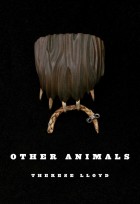
Therese Lloyd Other Animals Victoria University Press, 2013

otheranimalsfinal__41270.1361145516.140.215  otheranimalsfinal__41270.1361145516.140.215  otheranimalsfinal__41270.1361145516.140.215

Therese Lloyd’s debut collection, Other Animals, invites you into little moments, anecdotes and scenes, from which you surf the poetic ripples. Her understated drama (‘the pamphlet from the hospital/ face down on the pillow’) adds an edge. Poems enquire beyond the hum of everyday detail while her endings offer subtle surprises (‘This is the rib to arrive at/ the thin white bone where it all began/ The word on the door reads ‘home’). Her tropes are miniature bursts on the line that add flavour and zest (‘Thin gravy rain and sick-puppy trees’). I also liked her titles: Farmyards of the Mind, Split a Dream Of, Winter Scene with a Candy Floor. Lloyd is a fresh and welcome arrival.

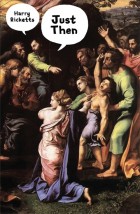
Harry Ricketts Just Then Victoria University Press 2012

justthen30dpi__25205.1351212828.140.215  justthen30dpi__25205.1351212828.140.215  justthen30dpi__25205.1351212828.140.215

Harry Rickett’s new poetry collection, Just Then, is a conversation with the world filtered through the contours of experience rather than the ping and zing of youth. His assured tone draws you to musical lines and miniature exposures of life and love that surprise and delight (‘The words seem to come from/ so far inside they don’t/ seem coloured by you at all’).

The collection is arranged with different notes sounding out — from the wit and sideways steps in Praying to St Anthony to the gentle resistance of a father’s facts-of-life speech in Talking in Cars.

I also loved the physical whiffs of times past that added a nostalgic layer (on my part!) to a collection that is intimate, harmonious, moving.

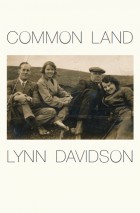
 Lynn Davidson Common Land Victoria University Press 2012

commonland300dpi__98930.1351470544.140.215  commonland300dpi__98930.1351470544.140.215  commonland300dpi__98930.1351470544.140.215

Lynn Davidson mixes essays and poems in Common Land, and for me, the essays shine out. Each perfectly crafted piece glistens with physical detail that heightens the emotional impact.

There is a degree of stream-of-conscious movement in these pieces, but at the core of them lie serious issues such as a mother with Alzheimer’s, the death of an ex-husband and the ability of a word (selah) to cause you to pause, to reflect and absorb. The end result is memorable.

The cluster of Along the River Road poems also stands out. Davidson draws you in and you definitely want to stay. In homage to Ruth Dallas, these poems acknowledge the loveliness of nature but that nature is also ‘strange and relentless,’ and the poet longs for ‘the settled grain of the page’. Personally, I see the grain of the page as never still, but this is a terrific collection.

 Michael Hulse and Simon Rae (eds), The 20th Century in Poetry Random House 2011

9780091940171  9780091940171  9780091940171  9780091940171

Edited by Michael Hulse and Simon Rae, The 20th Century in Poetry is a must have for your poetry shelf. With over four hundred poems from the English-speaking world it is a substantial and riveting read.

About eight New Zealand poets make an appearance (including Manhire, Baxter, Curnow and Mason). It’s a tough and subjective job narrowing a century to 400 poems, but I would have included more women and some Pacific and Maori poets (where is Tuwhare?).

The introduction is spot on and highly quotable. I have always said poetry has no rules — or if it does, any rule may be broken in order to get creating.

Two favourites: Manhire and Wedde

I will still do the occasional poetry review for The Herald and I will post links to them once they appear (I have a new review of about five books appearing this weekend).  I really appreciate those in print media who continue to support New Zealand poetry by publishing reviews. Thought I would post links to two of my favourite books that I have reviewed in The Herald in the past year (one of our inaugural Poet Laureate and one of our current Poet Laureate).

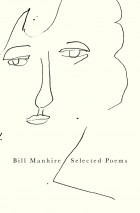
Bill Manhire Selected Poems Victoria University Press 2012

manhireselected300dpi__91470.1351471428.140.215  manhireselected300dpi__91470.1351471428.140.215  manhireselected300dpi__91470.1351471428.140.215  manhireselected300dpi__91470.1351471428.140.215

To mark the end of Bill Manhire’s directorship of the International Institute of Modern Letters, Victoria University Press have released his newSelected Poems, about a decade after his previous collected works.

This is the most gorgeous book of poetry I have held in a long time: hardback, beautiful paper stock, an internal design that allows the poems breathing space, a font that doesn’t distract and Ralph Hotere’s elegant drawing of Manhire on the cover.

Manhire is one of the standout poets of his generation – not beholden to trends, a prodigious reader of the poetry of others, with an ear attuned to the wide stretch of the world we inhabit. The poetic result is irresistible.

For the rest of the review go to this link.  

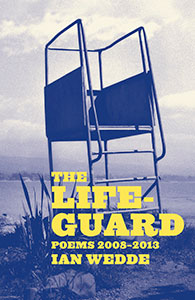
Ian Wedde The Lifeguard Auckland University Press 2013

cp-the-lifeguard  cp-the-lifeguard   cp-the-lifeguard   cp-the-lifeguard

New Zealand’s Poet Laureate, Ian Wedde, has written two of my all-time favourite poetry collections: The Commonplace Odes and Three Regrets And A Hymn To Beauty. Auckland University Press has released his laureate collection, The Lifeguard: Poems 2008-2013, and I was curious to see what would follow such poetic riches.

Wedde’s poetry is steered by an intellectual fascination with the world, but the poems are never shuttered in a way that prevents reader engagement. His prodigious reading is coupled with a strong connection to both the living and to living. His lines generate the music we associate with lyric poetry, and his heart draws the reader in, along with a generous scattering of sensual detail.

For rest of the review go to this link.

Hue & Cry need our support

Hue & Cry have turned to crowd funding again to publish their next collection of poetry. With Sarah Jane Barnett’s appearance as a poetry finalist in the New Zealand Post Book Awards (also funded via Pledge Me), the small press have got off to a terrific start. This is a great initiative and well worth our support.

The project:

One Human in Height is the debut poetry collection by Rachel O’Neill.

It will be published by Hue & Cry Press.

One Human in Height is a collection of dramatic, exuberant and at times irreverent prose poems that explore how we might describe the bewitching strangeness of ordinary experience. These poems aim to lend freshness to our habits of looking and thinking …

To pledge funds and read the rest of the piece use this link.