Tag Archives: NZ Poetry reviews

Poetry books I have enjoyed in the past year 2/2

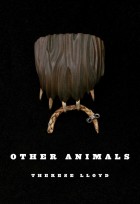
Therese Lloyd Other Animals Victoria University Press, 2013
otheranimalsfinal__41270.1361145516.140.215  otheranimalsfinal__41270.1361145516.140.215  otheranimalsfinal__41270.1361145516.140.215

Therese Lloyd’s debut collection, Other Animals, invites you into little moments, anecdotes and scenes, from which you surf the poetic ripples. Her understated drama (‘the pamphlet from the hospital/ face down on the pillow’) adds an edge. Poems enquire beyond the hum of everyday detail while her endings offer subtle surprises (‘This is the rib to arrive at/ the thin white bone where it all began/ The word on the door reads ‘home’). Her tropes are miniature bursts on the line that add flavour and zest (‘Thin gravy rain and sick-puppy trees’). I also liked her titles: Farmyards of the Mind, Split a Dream Of, Winter Scene with a Candy Floor. Lloyd is a fresh and welcome arrival.

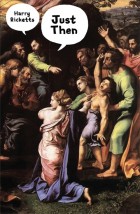
Harry Ricketts Just Then Victoria University Press 2012
justthen30dpi__25205.1351212828.140.215  justthen30dpi__25205.1351212828.140.215  justthen30dpi__25205.1351212828.140.215

Harry Rickett’s new poetry collection, Just Then, is a conversation with the world filtered through the contours of experience rather than the ping and zing of youth. His assured tone draws you to musical lines and miniature exposures of life and love that surprise and delight (‘The words seem to come from/ so far inside they don’t/ seem coloured by you at all’).

The collection is arranged with different notes sounding out — from the wit and sideways steps in Praying to St Anthony to the gentle resistance of a father’s facts-of-life speech in Talking in Cars.

I also loved the physical whiffs of times past that added a nostalgic layer (on my part!) to a collection that is intimate, harmonious, moving.

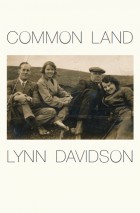
 Lynn Davidson Common Land Victoria University Press 2012
commonland300dpi__98930.1351470544.140.215  commonland300dpi__98930.1351470544.140.215  commonland300dpi__98930.1351470544.140.215

Lynn Davidson mixes essays and poems in Common Land, and for me, the essays shine out. Each perfectly crafted piece glistens with physical detail that heightens the emotional impact.

There is a degree of stream-of-conscious movement in these pieces, but at the core of them lie serious issues such as a mother with Alzheimer’s, the death of an ex-husband and the ability of a word (selah) to cause you to pause, to reflect and absorb. The end result is memorable.

The cluster of Along the River Road poems also stands out. Davidson draws you in and you definitely want to stay. In homage to Ruth Dallas, these poems acknowledge the loveliness of nature but that nature is also ‘strange and relentless,’ and the poet longs for ‘the settled grain of the page’. Personally, I see the grain of the page as never still, but this is a terrific collection.

 Michael Hulse and Simon Rae (eds), The 20th Century in Poetry Random House 2011
9780091940171  9780091940171  9780091940171  9780091940171

Edited by Michael Hulse and Simon Rae, The 20th Century in Poetry is a must have for your poetry shelf. With over four hundred poems from the English-speaking world it is a substantial and riveting read.

About eight New Zealand poets make an appearance (including Manhire, Baxter, Curnow and Mason). It’s a tough and subjective job narrowing a century to 400 poems, but I would have included more women and some Pacific and Maori poets (where is Tuwhare?).

The introduction is spot on and highly quotable. I have always said poetry has no rules — or if it does, any rule may be broken in order to get creating.
Two favourites: Manhire and Wedde

I will still do the occasional poetry review for The Herald and I will post links to them once they appear (I have a new review of about five books appearing this weekend).  I really appreciate those in print media who continue to support New Zealand poetry by publishing reviews. Thought I would post links to two of my favourite books that I have reviewed in The Herald in the past year (one of our inaugural Poet Laureate and one of our current Poet Laureate).

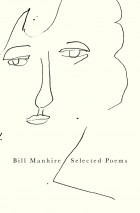
Bill Manhire Selected Poems Victoria University Press 2012

manhireselected300dpi__91470.1351471428.140.215  manhireselected300dpi__91470.1351471428.140.215  manhireselected300dpi__91470.1351471428.140.215  manhireselected300dpi__91470.1351471428.140.215

To mark the end of Bill Manhire’s directorship of the International Institute of Modern Letters, Victoria University Press have released his newSelected Poems, about a decade after his previous collected works.

This is the most gorgeous book of poetry I have held in a long time: hardback, beautiful paper stock, an internal design that allows the poems breathing space, a font that doesn’t distract and Ralph Hotere’s elegant drawing of Manhire on the cover.

Manhire is one of the standout poets of his generation – not beholden to trends, a prodigious reader of the poetry of others, with an ear attuned to the wide stretch of the world we inhabit. The poetic result is irresistible.

For the rest of the review go to this link.  

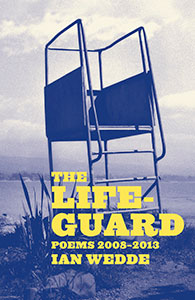
Ian Wedde The Lifeguard Auckland University Press 2013

cp-the-lifeguard  cp-the-lifeguard   cp-the-lifeguard   cp-the-lifeguard

New Zealand’s Poet Laureate, Ian Wedde, has written two of my all-time favourite poetry collections: The Commonplace Odes and Three Regrets And A Hymn To Beauty. Auckland University Press has released his laureate collection, The Lifeguard: Poems 2008-2013, and I was curious to see what would follow such poetic riches.

Wedde’s poetry is steered by an intellectual fascination with the world, but the poems are never shuttered in a way that prevents reader engagement. His prodigious reading is coupled with a strong connection to both the living and to living. His lines generate the music we associate with lyric poetry, and his heart draws the reader in, along with a generous scattering of sensual detail.

For rest of the review go to this link.

Poetry books I have enjoyed in the past year 1/2


As promised, I am launching this blog with a taste of some of the books I have enjoyed in the past year (it is coming in three parts). Part three I am linking to two books I reviewed in The  Herald.

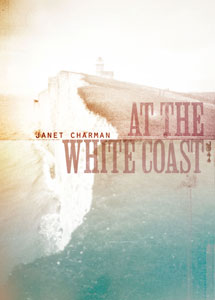
Janet Charman At the White Coast Auckland University Press 2012

cp-at-the-white-coast  cp-at-the-white-coast

An award winning poet, Janet Charman’s new collection is dedicated to her grandmothers and this book does seem like a gift for women. At The White Coast is a collection of travel poems – here, abroad and through the past, whether invented or true. Charman’s continual flair with words translates into enviable lines, sweet rhythms, elastic syntax, experience rendered into economical delights. She moves from bedsits to ferry stops, from trains to social work, from picket lines to boyfriends, from girlfriends to spaghetti-authentico (‘always in besidedness/ more than a couple’). Or ‘i think/ before sailing into orchard and paddock/ she had the breathless crush of metropolis’. This is my favourite Charman book to date – the poems are both moving and marvellous.

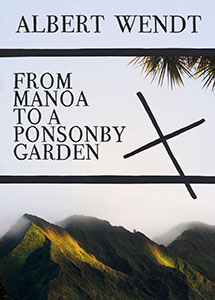
Albert Wendt From Mãnoa to a Ponsonby Garden Auckland University Press 2012

cp-from-manoa-to-a-ponsonby-garden  cp-from-manoa-to-a-ponsonby-garden

Albert Wendt’s latest collection, From Mãnoa to a Ponsonby Garden, is a joy to read. The poems reach out into the stretch of the Pacific with their heart very much in the present. They navigate birthdays, love, death and growth. The terrific sequence of garden poems is like a memoir or diary in the form of a garden narrative; the flowers, the vegetables, the family, the generations, the life cycles are hued with tenderness, vulnerability, strength, humour, wisdom. The love that the poet feels for his partner, Reina, is a poetic drumbeat –essential, moving, steady. These poems come out of quietness, contemplation, experience. Our poetic elder has delivered a masterpiece.

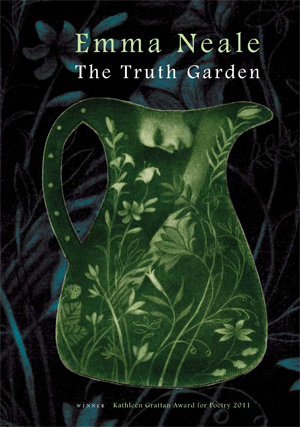
Emma Neale The Truth Garden Otago University Press 2012

Neale 2-1 Neale 2-1

Emma Neale’s collection, The Truth Garden, deservedly won the Kathleen Grattan Award for Poetry in 2011. The book features an exquisite cover image by Kathryn Madill, but I found the small, tight font didn’t do justice to the poems. If Neale’s poetry were a tapestry it would be cast in rich threads – luminous phrases catch your eye repeatedly and make you linger. Poems carry you through family, rivers, cycling, time, night, dreams and musings with tenderness, attentiveness and imagination (‘Night, and the study window burns/ not like a beacon, but as if to warn/ late travellers from some hidden reef/ of thought’). Or ‘how to stockpile time, how hoard its shine/ when time is the very stuff that seeps inside us.’ There is a magnificent sestina on fidelity that, with its repeating rhymes, echoes the tidal flux of trust and love.

Kerrin P Sharpe Three Days in a Wishing Well Victoria University Press 2012

wishingwell300dpi__97252.1351543335.220.220 wishingwell300dpi__97252.1351543335.220.220  wishingwell300dpi__97252.1351543335.220.220

Kerrin P Sharpe was awarded the New Zealand Post Creative Writing Teacher’s Award in 2008, and now this Christchurch-based writer has released her first poetry collection, Three Days in a Wishing Well. It was one of my top debuts for 2012. Sharpe brings a raft of poetic tools into marvellous play: economy, rhyme, omission, mystery. Reality corkscrews in a fairytale like manner; subjects range wide from hats to monks, from mother to father, from lighthouse keeper to sewing needles. Each poem is utterly flavoursome as it combines music, anecdote and emotional lift: ‘to hug my father was/ to know the sky: the/ voices of soldiers the/ families that squeezed/ him inside.’ Stunning.

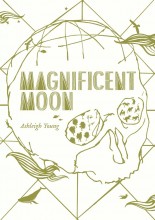
Ashleigh Young Magnificent Moon Victoria University Press 2012

magnificentmoon300dpi__43800.1351470952.220.220  magnificentmoon300dpi__43800.1351470952.220.220  magnificentmoon300dpi__43800.1351470952.220.220

Ashleigh Young, winner of the Landfall Essay Competition, also has a debut collection out (Magnificent Moon). Her poems bring together anecdote, an everyday that is off beat, stretching metaphors, gorgeous rhyme, swooping anecdote and the best found poem I have read in awhile (Buttons). For me it is a vibrant collection, and enough poems stand out to make it stick and flag this writer as one to watch.


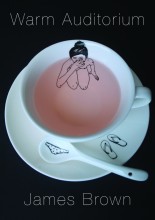
James Brown Warm Auditorium Victoria University Press 2012

warmauditorium300dpi__87807.1351542581.220.220  warmauditorium300dpi__87807.1351542581.220.220  warmauditorium300dpi__87807.1351542581.220.220

James Brown lets you into his workspace in his new collection (Warm Auditorium). It’s a great title that stands in for poetry if not life — his auditorium is packed with people, ideas, talk, wit, confession, story, aphorisms, provocations, warmth, sidetracks, playfulness. Brown likes to make things up, break rules, move you, challenge you, divert you. His poetry is so good you want to linger in the dark reading space and lean in towards the light and lift of his lines. As he says: ‘poetry/was running round my head like marbles over linoleum.’

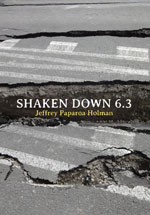
Jeffrey Paparoa Holman Shaken Down 6.3 Canterbury University Press 2012

shakendownmed  shakendownmed  shakendownmed

Jeffrey Paparoa Holman, like Fiona Farrell, has responded to Christchurch’s earthquakes in writing. His thoughtful endnote considers whether poems have any worth in the aftermath of catastrophe. He suggests that ‘a poem can send us back out into this troubled and marvellous world prepared to live more fully.’ A big claim, but his new collection, Shaken Down 6.3, does just that. These fine, troubling, beautiful poems are a window for us all. The photographs are a bonus.