Tag Archives: NZ poem

Poem Friday: Morgan Bach’s ‘In Pictures’ There is an electric current that strikes you as you read

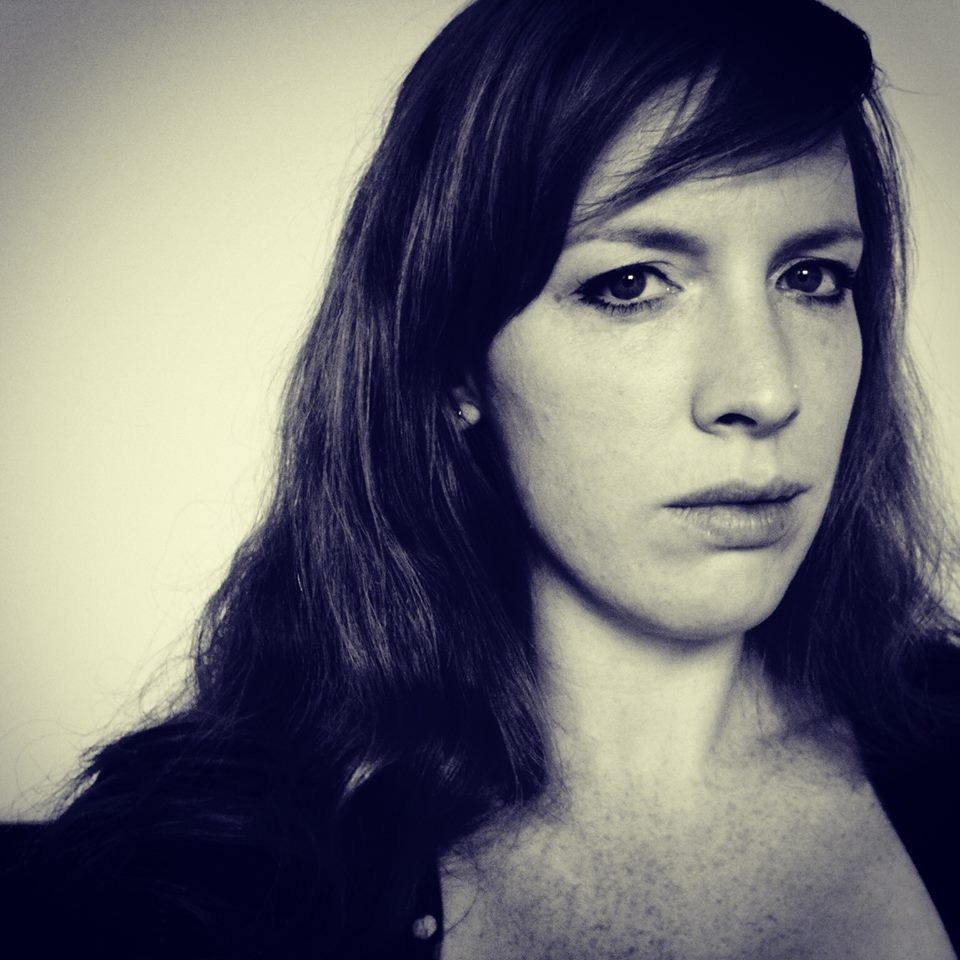
Morgan Bach

This Friday a previously unpublished poem from Morgan Bach.


In Pictures

The first time my father died, I was four.

A group of them emerged from their getaway train

into a grand room, in my head the walls are papered ornately

and the lights are chandeliers, and somebody shoots him.

Money flies around the room and he falls to his knees.

We see his face register the situation

before he falls flat on it.


The next time I am eight

and my father is in the tropics.

It’s World War Two, and his face is wet and dirty.

They have been walking through the jungle, when a Japanese soldier

shoots him just like the last guy did — right in the chest

and he falls to his knees, and then down.


When I am ten he dies peacefully in his sleep,

an old man who has had a long and busy life, inventing.


I can’t recall what got him when I was twelve,

but I do remember that he put a meat-hook through a man’s throat

before he was taken out.

It could have been a shot in the back.


When I am twenty-two he is set upon by flying beasts,

and takes refuge in a ruin.

But when the creatures come, tall, with skin

like freshly healed burns, their old cat teeth,

the pinkish one that leads them spears my father

through the gut. In this lingering death scene

I look around at the faces in the cinema

and am tempted to spoil the illusion.


When I am twenty-five he is consumed

by possessed ink.


When I am twenty-six he plays a game of politics,

watches the blood sports of the ancients

and on his fifth appearance has his throat cut.


When I am twenty–seven a friend tells me

my father was buried alive last night. This death I missed.

She says he begged, near the end.


When I am twenty-eight I get back from lunch

and my workmates say did you feel that?

I call my sister, and luck connects us.

Her voice shakes, she’s driving to get her boys.

She tries to sound calm when she says no,

we haven’t heard from him, I can’t get through

and asks me to try. Dad’s phone rings

through to voicemail. Which means it’s ringing.

I send a message – we’re not to overload the lines.

There is nothing, and nothing to do.


I sit at my desk and I hit refresh

on the photos of crumbling buildings coming through.

I’m looking for the Arts Centre, the theatre

in the bottom of the old stone building.

Why aren’t they showing it?

Is it good they aren’t showing it?

I check my email, and see the little green light

next to his name – online.

It’s green,

green,

green,

green,

orange.


Three and a half hours pass.

I do not think of all the times I’ve seen him die,

of his entrances and exits.

I count the minutes,

having no one to beg,

hitting refresh.


And then my sister sends a message

that simply says

he just walked in the door.

©Morgan Bach.doc


Morgan lives on Wellington’s south coast, and in 2013 she undertook the MA in Creative Writing at the IIML. She was the recipient of the Biggs Family Prize in Poetry, co-editor of Turbine 2013, and has work published or forthcoming in Sport, Landfall, and Hue & Cry.

Author’s note: This poem is about as factual and autobiographical a poem as it gets (my father, John Bach, is an actor). It was born out of a conversation I had in which I found myself saying ‘Oh I’ve seen my father die tons of times…’ and my realisation that this was an uncommon experience. Recounting this uncommon and strange element of my growing up led me to a point where real life interjected with an experience far too many of us have had in recent years. But, like it so often does in the movies (although, not for my father’s characters – as I’ve illustrated) this story turned out to have a happy, lucky ending.

Note from Paula: When I first read this glorious poem I had no idea of its genesis (as is the case when you read most poems), but what struck me as I read, was the way we carry numerous deaths with us (our own, our loved ones). Little pocket narratives that catch us by surprise and haunt or unsettle us. Morgan writes an assured line, where the narrating voice, with its steady rhythm, builds a mysterious momentum. Surprising. It becomes a list poem in its structure— each paternal death linked to a particular age, and death becomes a way of framing the narrator’s arc from child to young woman. What I loved, beyond the tantalising enigma, is the way at twenty-eight, the poem shifts gear. There is an electric current that strikes you as you read, as you realise the threat of death has moved from cinematic frame or theatrical stage to the threat of death in real life. The earthquake moment that now resonates so profoundly for so many. The simple lines (particularly ‘There is nothing, nothing to do’) catch you—and the way ‘his exits and entrances’ lead you back to the start. Morgan’s poem demonstrates so beautifully the way narrative drive becomes increasingly potent when matched with poetic economy and perfect line breaks. The end result, a poem that rewards at the level of language and then hooks at the level of emotional engagement—you enter the prolonged panic as if there, and then welcome the relief.

Poem Friday: Ashleigh Young’s ‘The bats’ resonates with such clarity

Ashleigh_Young (1)

Photo credit: Matt Bluett

Poetry Shelf now has a new feature. I always wanted to post poems on the site but I wanted to give everything else a chance to settle in first. I was on the judging panel recently for the Sarah Broom Poetry Award and assembled a list of suggestions for Sam Hunt. It seems fitting for an  award that honours such a fine poet as Sarah that I was so invigorated by the range and vitality of local writing from established writers to writers new to me. Moved in fact. I had around 65 names in my notebook under the heading : ‘want to read the book!’ Glorious. But in this tough environment for poetry publishing, I wondered how many would end up getting into print and getting the wider audience they deserve.

Poem Friday (like a sister to Tuesday Poem) is where I get to pick a poem that l have loved in my reading travels and with permission post it (so no submissions please). I am also taking a cue from Best New Zealand Poems and inviting the poet to write a sentence or two about their poem.

I have invited Ashleigh Young to launch the new feature (which seems apt in the light of her recent good news).


The bats

There is a kind of person who locks your shoes

inside of their house, and that is a person who is distracted


and who you see now through the window talking to his wife,

his face a protective shell grown fast around the phone.


The rush of not knowing someone at all lifts you

into the trees with the cicadas, your body too a bright clapping.


These are the situations through which you’ll get older

when you would like to walk home but your shoes are locked


in someone’s house, when you imagine sprinting down a driveway

as your back is pelted with rocks. These are unnecessary situations


because maybe you would have grown older anyhow, and likely

you do not need to cut your heart into two soft slippers to wear;


should need only to blot it with a paper towel as if it were

a bloody nose, all that blood turning to cold breath soon. Notice how


this person’s dog shows its affection by exploding into dangerous

shards in your arms. How much time do we have? None, very little


only some. But let yourself be lifted into the applause of the trees.

Let the applause be in anticipation of the slow motion


of him coming out of the house, quietly as a road cone

placed on a statue’s head at night.


Let his body be held, and graffitied, and prised apart.

Let the applause continue, even when it’s getting dark


even when it is dark

even when the bats come out.


© Ashleigh Young


Ashleigh works as an editor in Wellington and is currently working on a new collection of poetry and also a first collection of essays. Her debut collection was entitled Magnificent Moon. She has just been appointed Editor at Victoria University Press.

Author’s note: I have a fixation with cicadas, specifically with the way cicadas sound at the height of summer. It’s an urgent, panicky, overwhelming sound, always on the edge of total chaos. I was interested in how that sound might translate into a human feeling, and set out to write a scene about one possibility, when a kind of strange personal situation becomes amplified out of all proportion. And the bats? Well, I got to thinking about what the opposite of cicadas might be. I arrived at bats.

Note from Paula: Every now and then you fall upon a poem that fills you with such heart-stopping awe you just have to sit awhile and wait. That’s how I felt after reading this poem. Ashleigh’s poem leads you into the trees with the cicadas—into that glistening moment when the pitch of the cicada hits its summer zenith and all manner of subterranean feelings get to work on you. Yes, it leads you there, but then it leads you, surprisingly, lithely, into the jaw of difficulty. Where things go awry. And this is where the poem is glorious and light—in its movement into the enigmatic shade (an oxymoron I know). Its layers radiate out from the veiled situation, a bad situation you suspect. I love the gaps, the strangeness, the idea of someone locking someone’s shoes in their house. There were lines in this poem I wanted to hold in my mouth until they dissolved because they resonated with such clarity, beauty and deft phrasing (‘your body too a bright clapping’ ‘situations through which you’ll get older’). I also loved the lullaby-like repetition at the end that provided a point of solace along with a point of surprise (the bats).