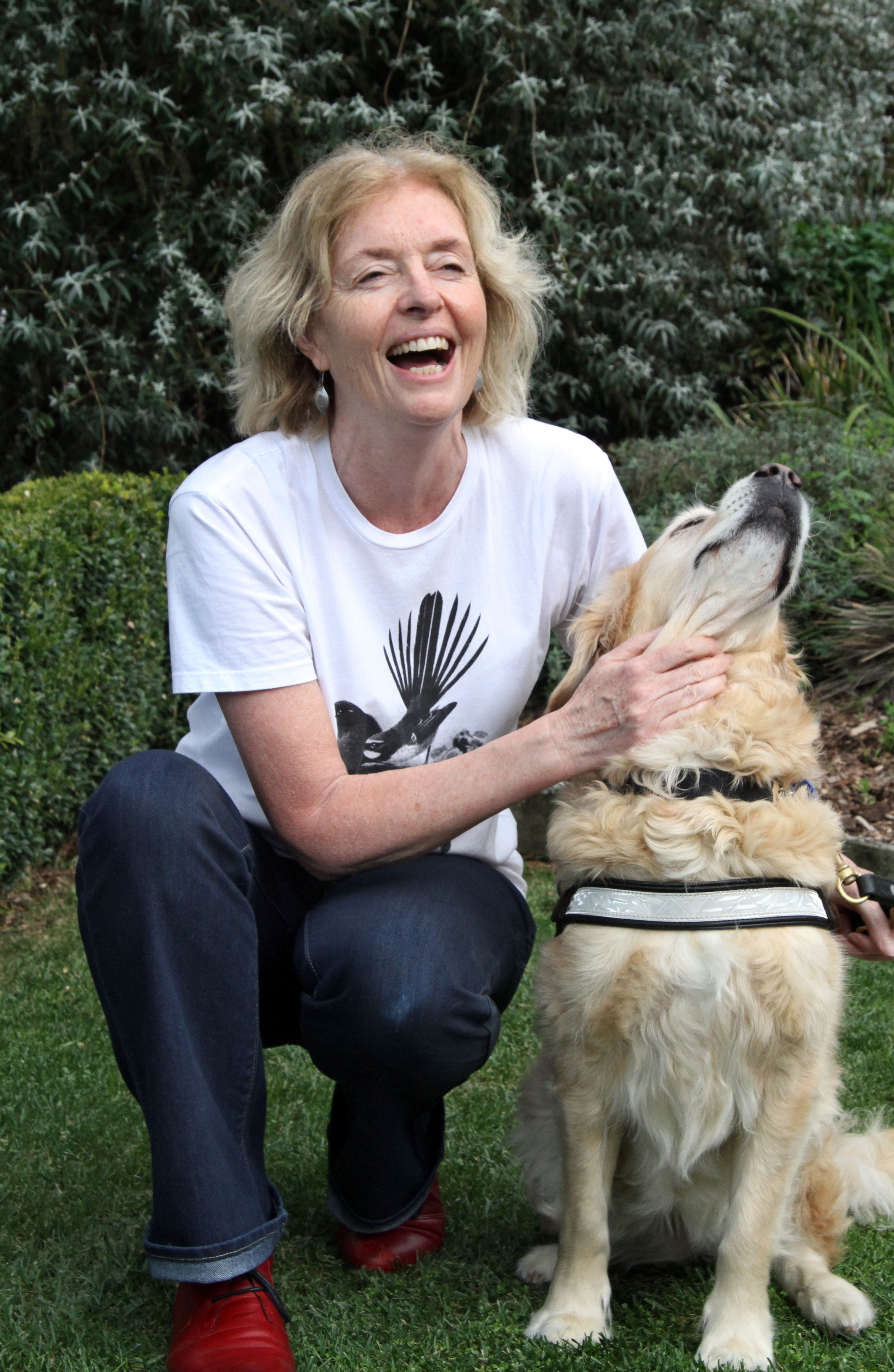
Photo credit: Tim Page
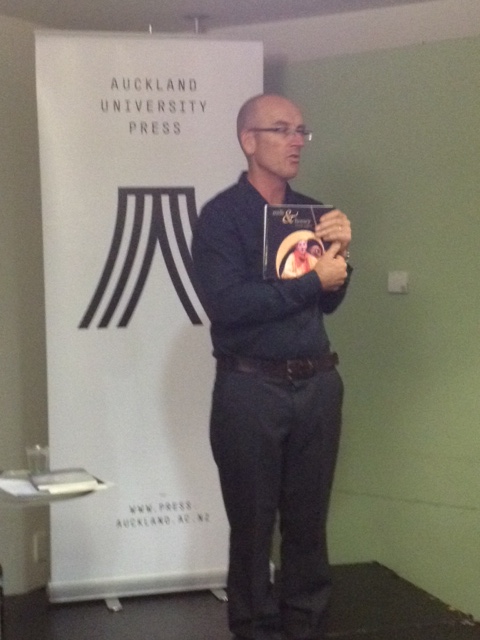
Michele Leggott was the inaugural NZ Poet Laureate under the National Library scheme (2007), was made a Member of the New Zealand Order of Merit for her services to poetry (2009) and last year received The Prime Minister’s Award for Literary Achievement in Poetry. She is an award-winning poet, was a founding director of the New Zealand Electronic Poetry Centre and is currently a professor in The University of Auckland’s English Department. She has published several anthologies (including the substantial edition of Robin Hyde poems). She has contributed much to New Zealand poetry, not just in the books she writes, but through the work she does in the wider, poetry communities.
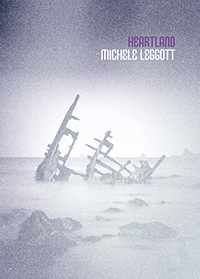
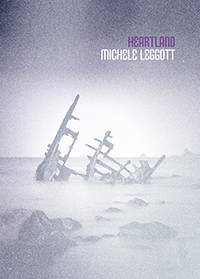
Michele’s new collection, Heartland, is a companion to Mirabile Dictu—same shape (marking a departure from the landscape format of her previous books) and same preoccupations. These two new books are inextricably linked to the poetry that comes before, but there is a shift in the way the poetry opens out to you. Her previous work was linguistically difficult, musically fluent and offered semantic lacework that drew you to sources signposting an astonishing range of reading and interests. These early collections have been amongst my all-time favourite poetry experiences in the New Zealand context. The difficulty was a lure for me, and once you entered the mesh of poetic possibilities, the rewards were immense. Her new books exhibit the same delight in language, a keenly tuned ear and an ability to stroll through worlds both physical and cerebral, and absorb points of fascination.
The blurb suggests ‘Heartland steps on from Mirabile Dictu, tracing the idea of family as a series of intersecting arcs, some boat-shaped, others vaults or canopies, still others vapour trails behind a mountain or light refracted through water.’ However family is shaped and traced by the poet, this book draws family from the shadows to centre stage—into the heart of the matter. Familial stories become the vital substance of a poem. Mythological sidetracks, traces of poet forbears, intellectual musings deliver the reader back to the intimate family fold. This is arms-open-wide poetry, that then draws you in close to the stories and legends that form and sustain a family (families). Voyagers, settlers, husbands and wives, men who went to war, women who stayed behind, missing relatives, rediscovered relatives, close family, extended family, the loving husband, the sons.
Yet, as with any poetry collection by Michele, the moment you begin to say it is this, is the moment you recognise it as more than this. What makes these poems settle beneath your skin is the way Michele writes the world. The critical role of the ear is evident, not just in the aural honey generated in each line but in the way the poet listens to the world. Poems arrive differently it seems, in the dark, before they become light. The very first poem leads you to the ear: ‘my friend you are a voice/ against a dark red wall.’ In a number of poems Michele is travelling, both at home and abroad, back in time, through the poetic lines of others, and as a traveller, she is highly attuned to sound of things, to dialogue, to the pitch of weather and the rhythm of an anecdote. Her poems are, in part, resonant soundtracks of the travelled world: ‘the grass ghosts singing/ in our ears,’ ‘black wings crying,’ ‘dog snuffling,’ ‘swans clattering/ into the sky,’ ‘soft sound of light on stone’ ‘shattering glass,’ ‘a museum flicking past my inattentive ear.’ Her poems are also traces of the visible world filtered through memory, and the eyes and archives of others: ‘the joker in the orange vest,’ ‘a line of fish skeletons at our feet,’ ‘late light on the cliffs,’ ‘the valley fell away/ in a green tilt,’ ‘hello to the brick veneer.’
Then there is the elegant beauty, that sweet aural treat, in the bare bones of the line, where sounds lift and connect as melody: ‘thick drift of leaves,’ ‘blood red or pitch black because of the ash cloud,’ ‘to look at heaven from the end of a dark wharf,’ ‘begin the talk that catches its tail.’ Repetition is like a refrain in several poems (‘experiments [our life together]’ and ‘talking to the sky’), where the repetition produces song and/or a sumptuous list poem. Rhythm shifts and settles like the moveable rhythms of the traveller in the magnificent sequence, ‘Many Hands.’ Line breaks hold you back at times, and then produce little startles with a shift in expectation. There are the abundant caesurae (takes me to Louise Glück and her love of interruption)—little pauses in the line that stall you or that signal tremors and trembles of the narrating self, and the self that has stepped into the shoes of others, of extended family. A moment of inward breath, breath held.
The rewards of these poems are multiple—from the acute observation to the infectious musicality and the internal beating heart. And to that you need to add wit and humour. You fall upon little jokes or wry twists on a line, surprisingly, wonderfully (the names of the train-wreck couple , or the dogs for example). There is, too, the open debt to the poets who have nourished her. Michele goes hunting for the graves of poet Lola Ridge’s parents, and, in that hunt, brings Lola to our attention again. Michele gets to see the statue of Henry Lawson, but there is no statue of Lola. Ah, that long line of invisible women. Michele is always ready with her torch.
The collection is replete with standout poems, poems that force you to stay awhile because you hit that spot where poetry is a conduit to joy—the way place is as evocative as people. ‘Olive’ is a poem that particularly resonated for me. The poem interlaces two events linked in time but that produce myriad connections. On the day of the Greymouth mine explosion, the delivery of Michele’s guide dog, Olive, is postponed. It is an utterly moving poem—poignant on so many levels. The subterranean terror and blackness is alongside the poet’s lack of vision; the guide dog that is a lifeline is alongside the tenuous hope of the outside world; lost in the dark reverberates both ways; the song that lifted from the valley alongside the song that is this poem, sits alongside the song that guides the poet’s heart, her ink and drive to write.
from ‘Olive’
my dog how can you move with such grace
through these days pulling sea and sky along
with you under the red-flowering trees mixing it
up and down the road with all comers this is not peace
but motion ten thousand people looking up
the valley to a dip in the ranges while someone sings
You’ll Never Walk Alone not peace but motion
what is her name they ask me and I say
she has been here since the start her name is Olive
Michele’s new collection is testimony to the powers of a poem to move and catch you in ways that can be as plain as day and as mysterious as night. You are caught on the musical coat tails of a line, lifted into the heart of what matters, taken outside and inside, into the slipstream of family, along the contours of home and nothome, within the beating pulse of story. This is a terrific reading experience.
nzepc page
New Zealand Book Council page
Auckland University Press
My review of Mirabile Dictu
Rachel Blau duPlessis on Heartland