Poetry Shelf Speaking Out For With: Michelle Elvy picks Bertolt Brecht’s ‘Vergnügungen / Pleasures’

Vergnügungen

Der erste Blick aus dem Fenster am Morgen
Das wiedergefundene Buch
Begeisterte Gesichter
Schnee, der Wechsel der Jahreszeiten
Die Zeitung
Der Hund
Die Dialektik
Duschen, Schwimmen
Alte Musik
Bequeme Schuhe
Begreifen
Neue Musik
Schreiben, Pflanzen
Reisen
Singen
Freundlich sein

Pleasures

First look from morning’s window
The rediscovered book
Fascinated faces
Snow, the change of the seasons
The newspaper
The dog
Dialectics
Showering, swimming
Old music
Comfortable shoes
Comprehension
New music
Writing, planting
Traveling
Singing
Being friendly

Bertolt Brecht

I first read Bertolt Brecht in secondary school German classes. Brecht, along with Herman Hesse, was among 20th-century German writers we were introduced to after all the grammar and conversational frameworks, most obviously for their accessibility of language. I read Mutter Courage and Siddhartha before I lost my virginity, and I think getting to know Brecht and Hesse had a more long-lasting effect. I am thinking now about our early teen selves, with our bewildering sense(s) of pleasure, how we have no idea of what we want, let alone what things really mean. Whatever I learned about sex back then was fleeting – but I did hold onto Brecht, Hesse and others; poetry and language burned deep. I grew up in the Cold War; what we read helped define our place in the bigger (and scarier) world. Brecht’s fight against fascism and capitalism lived in every cell of his being – his purpose and focus was partly what led me to Germany for my own purpose, and eventual focus.

This poem was written 1956, soon after Brecht’s return to Germany (East Germany), following a long period in Southern California after he fled Berlin in early 1933. It’s a late poem, and it may not appear typical of earlier Brecht, but it contains his complete worldview: intellectual curiosity, compassion, rigour, appreciation for complexity and, above all, intense interest in humanity.

The title suggests something light – frivolous, even, if you only skim. I’ve come across blog posts that take this poem as one of those calm-myself/inhale/exhale/meditate exercises, like a fast-app to happiness. And sure, there’s no harm in that. But look at the list again: every sense is engaged. Brecht is telling us: Be on alert. Think. Be good. Living is a whole-body experience, yes, but the poem demands more. Besides comfortable things, there are challenges. There’s the past and the present. And there in the middle: Begreifen / comprehension. Grounded in the everyday, Brecht constantly reinforced how the struggle was necessary. (How often do you see a poem about pleasure include the dialectic?) Comprehension was not lofty; it was work. Everything – even pleasure – was politics.

For me, ‘Vergnügungen’ is not an advice column for peaceful living, but a call to action. It cannot be understood without the echoes of chaos of Brecht’s world, the urgency of the times. At its heart is the question of how to live well despite growing forces against humanity (whether Nazi Germany or the rabid fearmongering of the McCarthy era). Every line is about living consciously, about being conscientious. It is far from passive. It opens with a simple notion of what’s just outside the window, but by the time we get to ‘Freundlich sein’ we recognise it’s harder than it looks.

We know this is harder than it looks.

I share below another Brecht poem, this one a lyrical poem written in 1935. I don’t have to say why I’m sharing it. Sharing is the easy part. Let’s keep doing that – and more.

When evil-doing comes like falling rain

Like one who brings an important letter to the counter after office hours: the counter is already closed.


Like one who seeks to warn the city of an impending flood, but speaks another language.  They do not understand him.


Like a beggar who knocks for the fifth time at the door where he has four times been given something: the fifth time he is hungry.


Like one whose blood flows from a wound and who awaits the doctor: his blood goes on flowing.


So do we come forward and report that evil has been done us.

The first time it was reported that our friends were being butchered there was a cry of horror. Then a hundred were butchered. But when a thousand were butchered and there was no end to the butchery, a blanket of silence spread.

When evil-doing comes like falling rain, nobody calls out ‘stop!’

When crimes begin to pile up they become invisible. When sufferings become unendurable the cries are no longer heard. The cries, too, fall like rain in summer.

Bertolt Brecht

Michelle Elvy is a writer, editor and creative writing teacher in Ōtepoti Dunedin. She grew up on the shores of the Chesapeake and arrived in 2008 in Aotearoa aboard her sailboat, her home for twenty years. In the years between the calm Chesapeake waters and open-ocean living, she was a German historian. michelleelvy.com
The Poetry Shelf Breathing Room: Dinah Hawken

Evening light

Her hands, long-fingered, freckled,
by sun and soil, rested quietly
on her thighs. She was sitting alone
by the window, admiring the agility of birds
on the branch of a plum tree. Suddenly
sunlight caught the face of her watch
as it can sometimes catch
the turquoise bowl on the bookshelf.
Place and time, time and place,
illuminated.

Dinah Hawken
from Peace and Quiet, Te Herenga Waka University Press, 2026

Dinah Hawken is one of New Zealand’s most celebrated poets. She was born in Hāwera in 1943 and trained as a physiotherapist, psychotherapist and social worker in New Zealand and the United States and has worked as a student counsellor and writing teacher at Te Herenga Waka—Victoria University of Wellington. Of her ten collections of poetry, four have been finalists for the New Zealand Book Awards. Her first book, It Has No Sound and Is Blue (1987), won the Commonwealth Poetry Prize for Best First Time Published Poet. Her latest poetry collection is Faces and Flowers: Poems to Patricia France (2024), and other recent collections are Sea-light (2021), longlisted for the Ockham New Zealand Book Awards, There Is No Harbour (2019), and Ocean and Stone (2015). Dinah lives in Paekākāriki.

Peace and Quiet will be launched at Unity Books Wellington on April 23rd.

The Poetry Shelf Breathing Room: A place to enter and pause and take a long slow breath and then another, as you absorb the beauty movement joy stillness wonder movement of a poem.

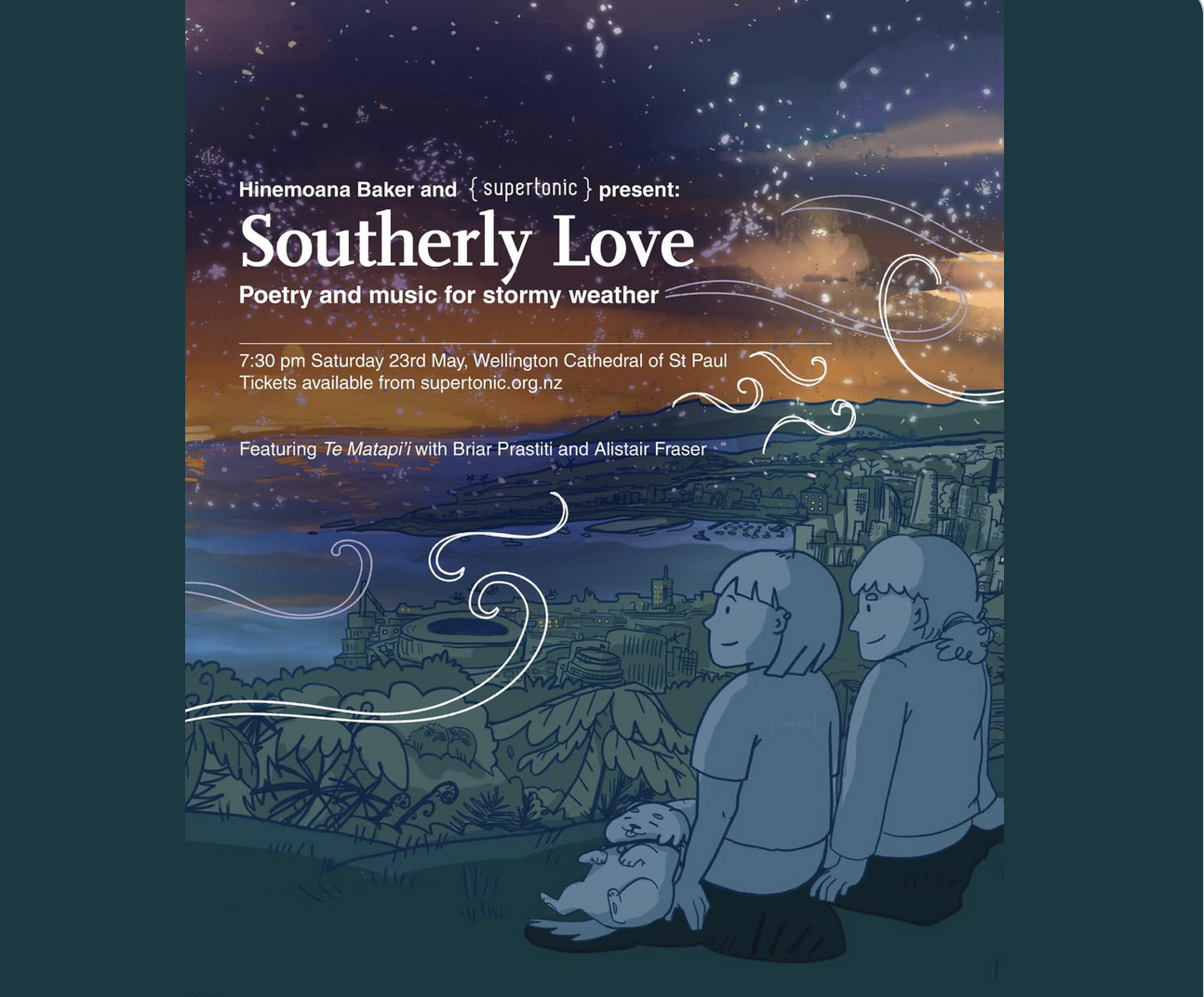
Poetry Shelf noticeboard: Southerly Love with Hinemoana Baker and supersonic

Hinemoana Baker is singing with the choir and also doing new poems to weave the music together — plus you another chance to hear Briar Prastiti’s beautiful work for the re-opening of Te Matapihi! She would love you to come join her for this, e hoa mā. One night only 🤩 get tickets now!

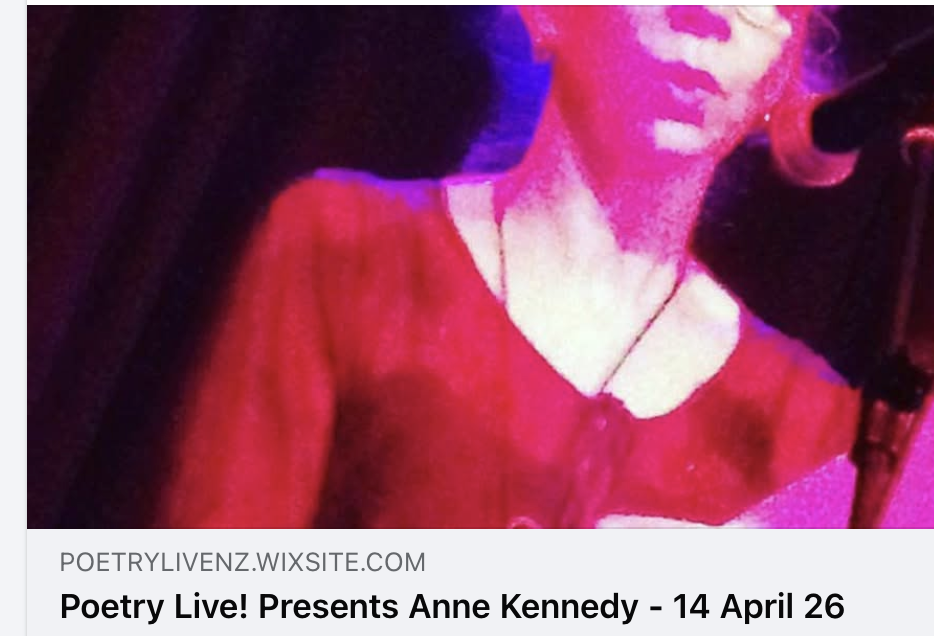
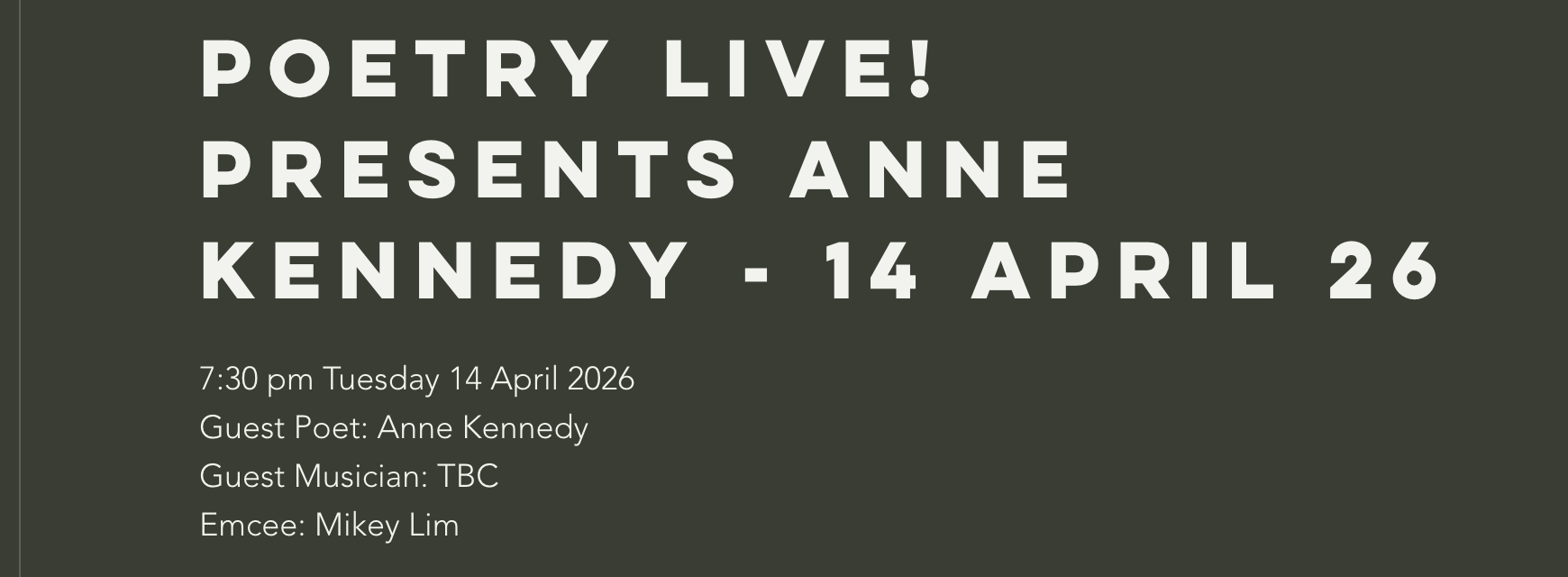
Poetry Shelf noticeboard: Poetry Live! Anne Kennedy

Coming up at Poetry Live this week (Tues April 14th) we have the fabulous Anne Kennedy as our guest poet. A night not to be missed.

Sign up for the open mic on the night (5 mins per person).

First time readers warmly encouraged.

Koha collected for our special guests.

Anne Kennedy’s most recent books are The Sea Walks into a WallThe Ice Shelf and, as editor, Remember Me: Poems to Learn by Heart from Aotearoa New Zealand. She is the current editor of AUP’s New Poets series. Awards include the Prime Minister’s Award for Poetry, the NZ Post Book Award for Poetry and the Montana Book Award for Poetry. Anne lives in Tāmaki Makaurau. 

Poetry Shelf Monday Poem: nation building by Janet Charman

nation building

there’s a shiny pink
cocktail onion
sticking out of my foot
my poor foot
and how i screamed
when the consultant
placed her steroid jab
into my aching hip
then came these spiderlings
from my pen release
the gold moon my gobstopper
while the chocolate bought for
David’s
birthday
caramel sea salt
has been completely
defeated
with to humiliate it further
a decaf coffee
as poured into the
uncomfortably
right-handed
clitoris cup
Julia gave to me
for summer solstice
though since my head
newly shorn
is emitting sound waves
received from
the streets of Afghanistan
where more and more
singing wrecked women
are gathering
i don’t expect to sleep

Janet Charman

Janet Charman’s 10th collection ’the intimacy bus’ was published in 2025 by OUP. Her creative memoir’28 days’, with illustrations by Elizabeth Anderson, appeared simultaneously from Skinship Press, Tamaki Makaurau, AK.

Poetry Shelf Breathing Room: Robert Sullivan

Rākaumatohi: E hoa

((((((((((High energy))))))))))))))))

How do I love you, my friends?
let me count the mountain’s ways,
the heightened plains that bend
up into snowy reaches, playing
on the mind out of sight to send
pillars of light, clouds, rains
on a grateful garden bed
pulling out rocks making lakes
with his tokotoko, with her cloaks sent
from our māra kai into our food basket
filled with sweetness and kōrero each
to each—we’re peaches, plums,
strawberries and yams, we’re
only the bumblebee’s hums 
aroha stumblefooting the air
in this flowering season.

Korekore Rawea (Low energy, be creative)

Q+A from a Shakti card.

Because korowai take
all the abilities
of their makers
they aren’t made
on hunches,
and the īnanga
(kōkopu, baby tuna)
rippling in pounamu
are active and best
with huge love
but I wasn’t ready
I lacked the insight
and went for a moon
launch when a go-cart
or a raft made
from recycled bottles
might have played
to my best abilities
plus I don’t have
a roof rack for a kayak
which is what I’d love
to do, go kayaking,
or hitch my bike
on my bike rack
and ride round
the Waitaki lakes
rather than 
moon shadows.

Oh, Shakti, I did
follow my hunch
but much better
to call beyond
the greenstone
on my chest
beyond this cloth
of knowing
that the veil
is going to lift
from the picnic
after all the games
of hide and seek,
the swings, seesaws
and slides
of birthdays
in the park.
Much better
to drink
the water.

Robert Sullivan
from Hopurangi | Songcatcher, Auckland University Press, 2024

Robert Sullivan is Aotearoa New Zealand’s 14th Poet Laureate. He belongs to Ngāpuhi (Ngāti Manu, Ngāti Hau / Ngāti Kaharau) and Kāi Tahu (Kāti Huirapa ki Puketeraki) iwi and is also of Irish descent. He has won many literary awards. His most recent books are Hopurangi / Songcatcher (AUP) which was shortlisted for the Mary and Peter Biggs Award at the 2025 Ockham Book Awards, Koe: An Aotearoa Ecopoetry Anthology coedited with Janet Newman (Otago University Press 2024) and a collection of essays coedited with Anna Jackson and Dougal McNeill, Te Whāriki: Reading Ten New Poets from Aotearoa (AUP 2025). Robert is Associate Professor in Creative Writing at Massey University. He lives in Ōamaru.

The Poetry Shelf Breathing Room: A place to enter and pause and take a long slow breath and then another, as you absorb the beauty movement joy stillness wonder movement of a poem.

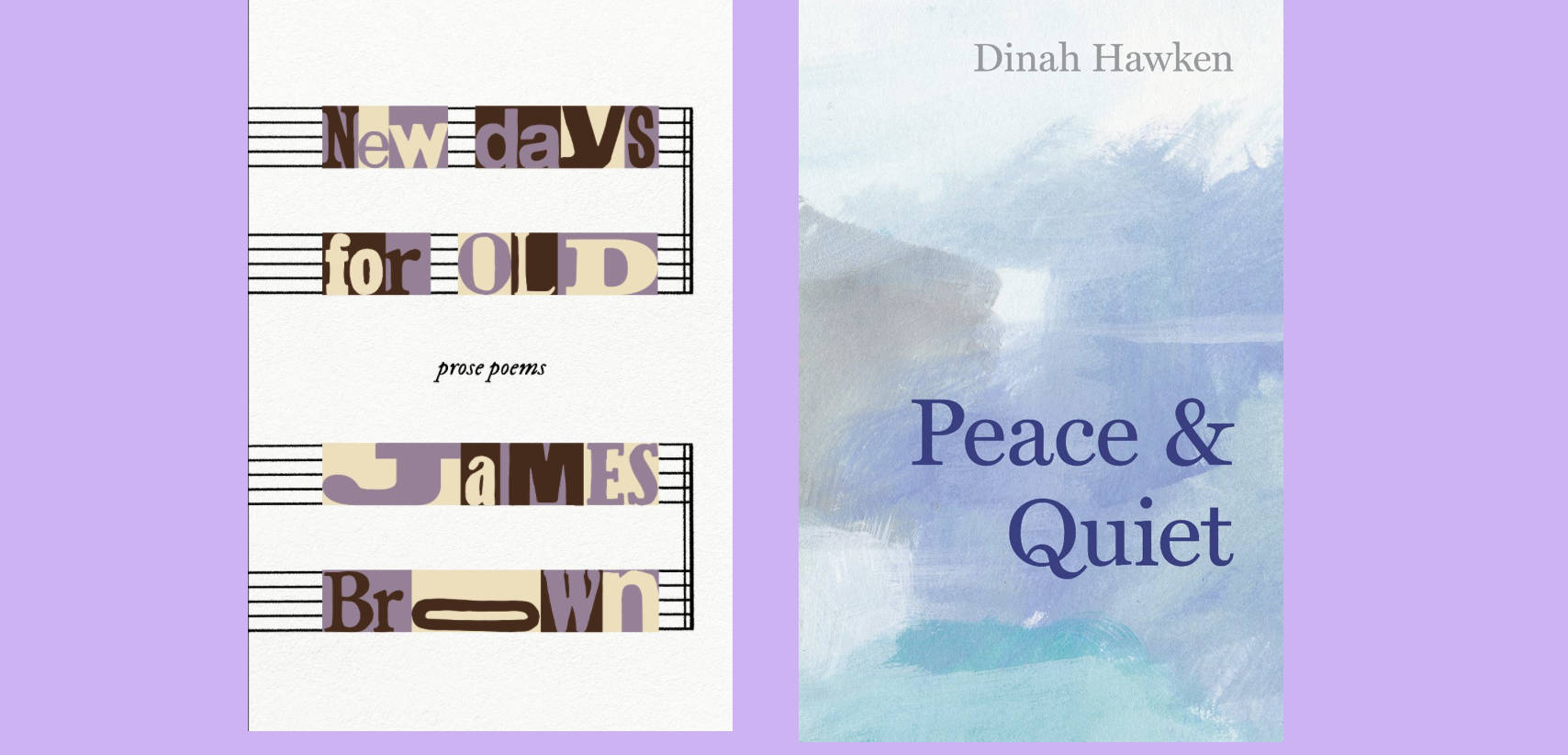
Poetry Shelf noticeboard: James Brown and Dinah Hawken launch

Join us to celebrate the arrival of two excellent new poetry collections: New Days for Old by James Brown and Peace & Quiet by Dinah Hawken. The books will be launched by Jenny Bornholdt.

Thursday 23 April, 6pm
Unity Books Wellington
All welcome!

James Brown’s New Days for Old is a delightful experiment in form.

Each scene in this book is like a 1-minute pop song: its depths are at first easy to miss. But as the story proceeds, the grand scheme of things hoves into view: we are born, we crawl and then are carried away, and everything is a-shimmer, even the disappointments

‘How does James Brown do it? Every page in this book is my favourite.’ —Bill Manhire

What use is poetry in times of ecological and political turbulence? Dinah Hawken’s Peace and Quiet grapples with this question, invoking both human voices and the voices — ‘the silt and the slash’ — of the natural world.

Powerful and illuminating, these poems show that peace, gentleness and reflection are a form of resistance.

‘This is poetry that digs deeply into existence, life and death, peace ahead of war, the power of silence and the power of the spoken.’ —Paula Green 

Poetry Shelf celebrates the Ockham NZ Book Awards poetry shortlist: Sophie van Waardenberg

No Good, Sophie van Waardenberg
Auckland University Press, 2025

The word I write in my notebook in my latest reading is bridge, the way poems become a bridge, establish vital bridges. Think sweet and sour crossings, fluid and awkward, here and there, good and not good. Not as a restrictive dichotomy but as a series of movements, like music, like the way personal experience resists pigeon holes. Traversing the myriad bridges in Sophie’s sublime collection makes me both think and feel the world. Yes I am thinking and feeling a version of her world, but also a version of my world. And this moves me.

Paula Green, from Poetry Shelf review

To celebrate placement on The Ockham NZ Book Awards poetry shortlist, I invited the four poets to choose some favourite things. Fourthly, Sophie van Waardenberg.

Sophie van Waardenberg
chooses favourites

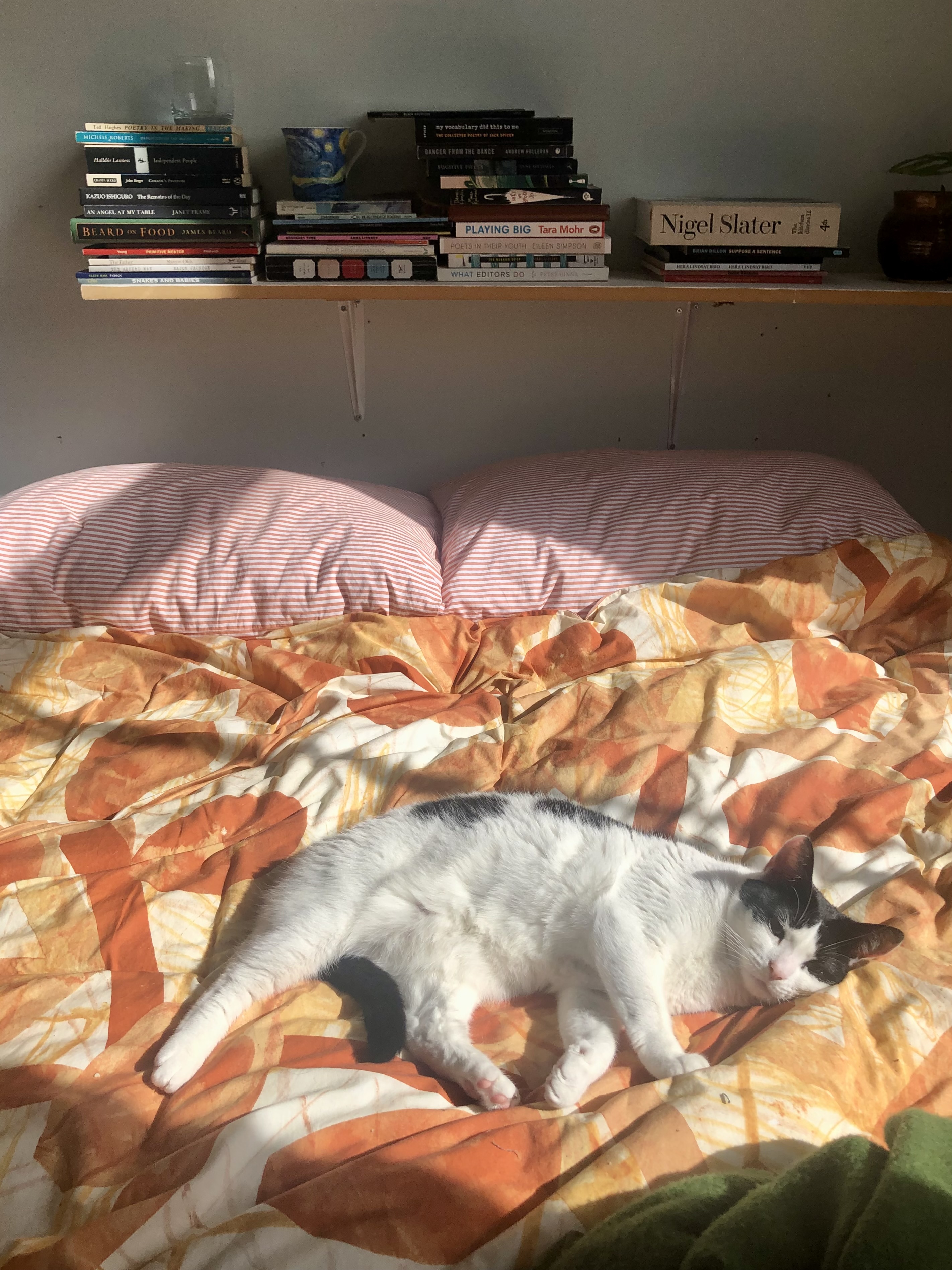
Four photos
(a favourite object, place, poetry book, album)

my bed! ideally with a cat on it and a pile of books nearby

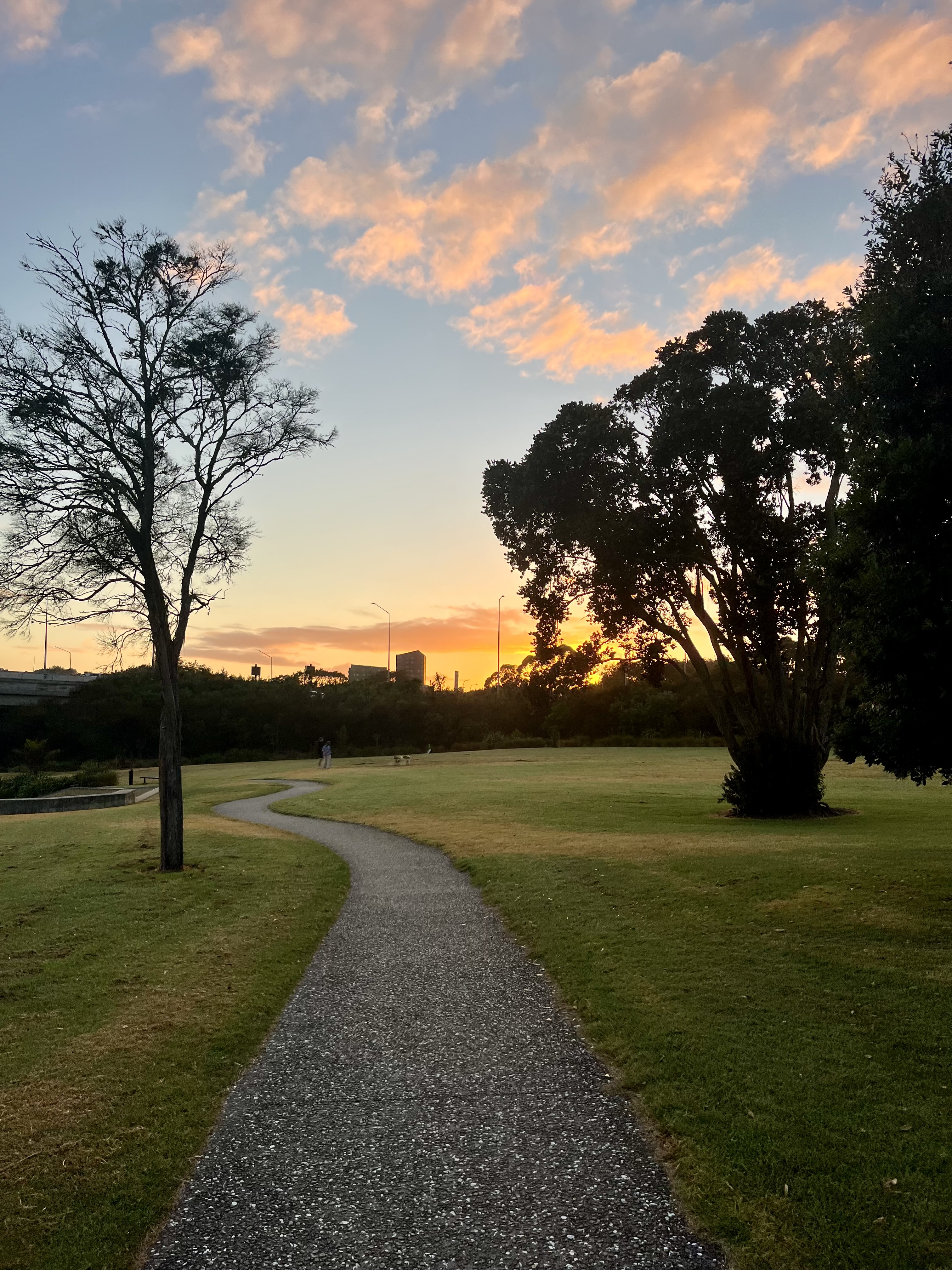
the park near my house where I do my boring walks at sunrise & sunset

Three sets of three

Three favourite words in your poetry toolkit
You, I, whatever.

Three things that matter to you when you read and write poems
A question being asked; a rhythm; the alive and weird and particular voice of a human being.

Three poets who have inspired you
Frank O’Hara, Mary Ruefle, Emily Berry.

One question

Why or how does your poetry book matter to you?

I only really have selfish reasons: because it’s my first book, it’s proof for myself that I can draw a line under something and call it finished despite its imperfections. It’s also a relief that it exists, because it means I never have to write my first book again.

One poem

Sticky

A girl can have a piece of everything
as a treat. A girl can call her mother
to ask for love. A girl will superglue
her medicine together. A girl shovels
strawberries into her mouth for juice.
The sugar is enough to fill the hour.
A girl would like to ask for other fruit.
The other fruit falls thickly from the clouds.
A girl is filth and bright. A girl is born
out of comparison. A girl can sing or can’t.
A girl is held inside a duck’s bill, weighed
against a slice of bread for softness.
What flour is a girl made of? Wheat or corn?
How can a girl get clean again?

Sophie van Waardenberg

Sophie van Waardenberg is a writer from Tāmaki Makaurau. She holds an MFA from Syracuse University where she was editor-in-chief of Salt Hill Journal. Her first chapbook, ‘does a potato have a heart?’, was published in AUP New Poets 5 (2019). Her poems about eating carbohydrates and kissing girls can be found in Cordite, Sweet Mammalian, The Spinoff and Best New Zealand Poems.

Listen to Sophie read two poems on Poetry Shelf: ‘Self-Portrait as Adolescent Covered in Flour’, ‘Hymn to the Insomniac in Fool’s Spring’

Sophie chooses a poem

Auckland University Press page

Poetry Shelf Playing Favourites: Frankie McMillan picks Kerrin P Sharpe

blue

your blue wooden house
still nestles in Niaqornat
                        Johanna

the washing line once
a bunting of towels and nappies
                        stands empty
the breathy songs of narwhals
dried by the wind

that last night in the front room
Johanna four tall candles
                        held stillness
around you an orchestra
of faith in light

and when morning arrived
with the sledge you were blessed
                        with herbs and moss
the whole village behind you
all the way to Chapel

do you remember saying
the ice would never change?
                        these days
it’s too thick for boats
too thin for sledges

some hunters shoot their dogs
unmended nets sleep on the beach
                        what happened
to elbow grease Johanna?
everyone’s on the internet

Kerrin P  Sharpe 
from Hoof, Te Herenga Waka Press, XXXX

This is one of my favourite Kerrin Sharpe poems. At first glance the elegy honours and laments an old woman Johanna, while also reflecting on the changes climate crisis has brought to her remote village in Greenland. Then the title, ‘blue’ with its associations of feeling down or depressed reflects on the high incidence of mental health related to the abandonment of cultural practices in the region. In the dark days of winter, instead of coming together in the evenings, ‘ Everyone’s on the internet.’ ‘ So many stay indoors/ forgetting/who they are.’

The traditional farewell to Johanna is conveyed in ten lines with a close up view … ‘four still candles held stillness /around you/ to the wide angle view of Johanna on the sled ‘ the whole village behind you/all the way to the Chapel.’ As with all Kerrin’s poems there is an astonishing agility and lightness of touch to the imagery.  The apt use of synesthetic lines,  ‘the breathy songs of narwhals/ dried by the wind.’ is another characteristic of her work that I admire. 

There is a power in the unanswered questions posed throughout but also a sense that the poet herself is baffled by the enormity of the environmental degradation.

‘Waves nibble away the cliffs.
What if the ice left
and never returned,
what then, Johanna?’

The shape of the stanzas, with their indented lines denote a kind of falling and for me, this juxtaposition of falling and grace or terror and beauty epitomize our extraordinary rich and fragile world.

Frankie McMillan

Frankie McMillan is an award winning poet and writer of short fiction. In 2019 her book, The Father of Octopus Wrestling, and other small stories(Canterbury University Press) was shortlisted for the NZSA Heritage Award and listed by Spinoff as one of the ten best fiction books of 2019. Her poetry has been selected for Ōrongohu  /Best New Zealand Poems 2012, 2015 and 2022, Landfall, Takahe and in international journals including Cincinnati Review, Shenandoah and Atlanta Review.   Her collection, Eddie Sparkle’s Bridal Taxi (CUP) was launched, October, 2025.

Kerrin P. Sharpe is the author of five poetry collections, most recently Hoof (2023) and Louder (2018). Her poems have appeared in local and international literary journals including Landfall, Turbine | Kapohau, Poetry Aotearoa Yearbook, POETRY (US), Blackbox Manifold, PN Review and Stand. Her work has been anthologised in Best New Zealand Poems six times, the anthology Best of Best New Zealand Poems, Oxford Poets 2013, 150 Essential New Zealand Poems and A Game of Two Halves: The Best of Sport 2005–2019. In 2021 she held a writing residency at the Michael King Writers Centre.


Poetry Shelf noticeboard: Michael King Australian Residency

The Michael King Writers Centre in association with Varuna, The National Writers’ House in Katoomba, NSW, Australia is pleased to announce for the fifth time, a residency in Australia for New Zealand writers.  
This three week residency is open to mid-career or established writers who have had a book published in the last two years.
The writer awarded the residency will receive return economy airfares to Sydney, accommodation with all meals included, plus the opportunity to present their work at the Blue Mountains Writers’ festival.
 
Applications close on Monday 27 April and the selection is expected to be announced in late May.

This programme is a partnership between the Michael King Writers Centre, Varuna, The National Writers’ House of Australia and the Blue Mountains Writers’ Festival, Katoomba.

Details here