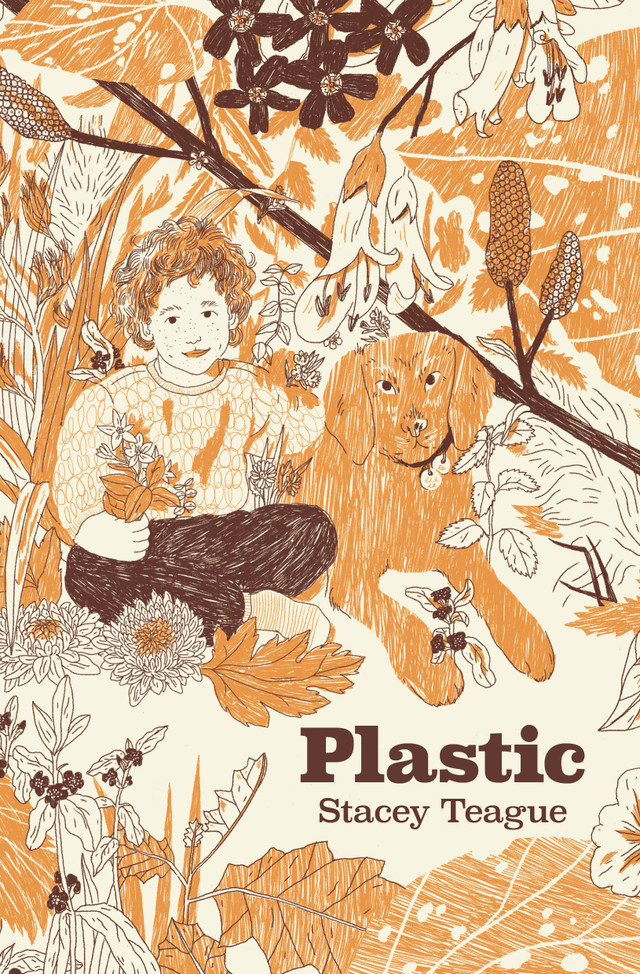
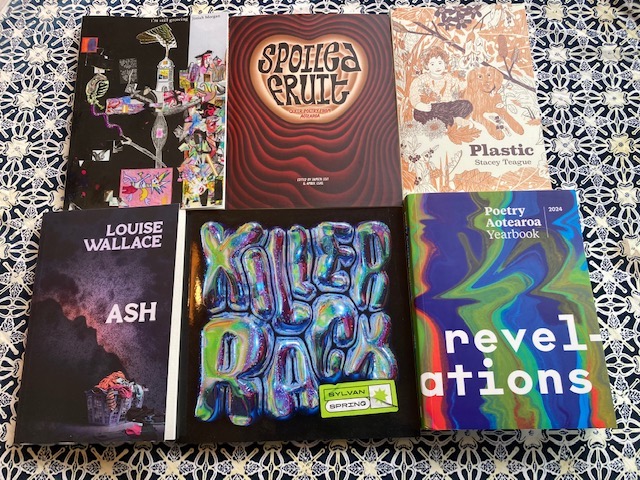
“In Plastic, Stacey Teague reaches beyond the frame of her known world to find a way back to te ao Māori. Hers is a complicated, joyful route, full of conversations with ancestors, old places and herself. In form these poems range from plain-speaking prose and concrete poetry to odes and spells; in mood they are just as restless, taking in those times when life feels as big as a movie screen and times when it is more like ‘a loose stone to kick down the path’.” Publisher blurb
‘Spell for Hilma af Klint’ from Plastic (Te Herenga Waka University Press, 2024)
Stacey Teague (Ngāti Maniapoto/Ngāpuhi) is a poet and teacher living in Te Whanganui-a-Tara. She is a publisher and editor at Tender Press. Her poetry collection Plastic came out in March 2024 with Te Herenga Waka University Press.
Each poem should be single spaced and typed in 12 pt. Times New Roman. Poems must be submitted together in a single Word document, with your name in the filename. PDFs and handwritten submissions will not be considered.
Poets@OneOneSix, April 18, 5.30 – 7.30pm, 116 Bank Street, Whāngarei Share your poems with a supportive group.
Poets@OneOneSix, May 16 will be held at Creative Northland, Railway Road, Whāngarei from 5.30pm and will feature Peter Bakowski, a well known touring Australian poet together with local Whāngarei poets.
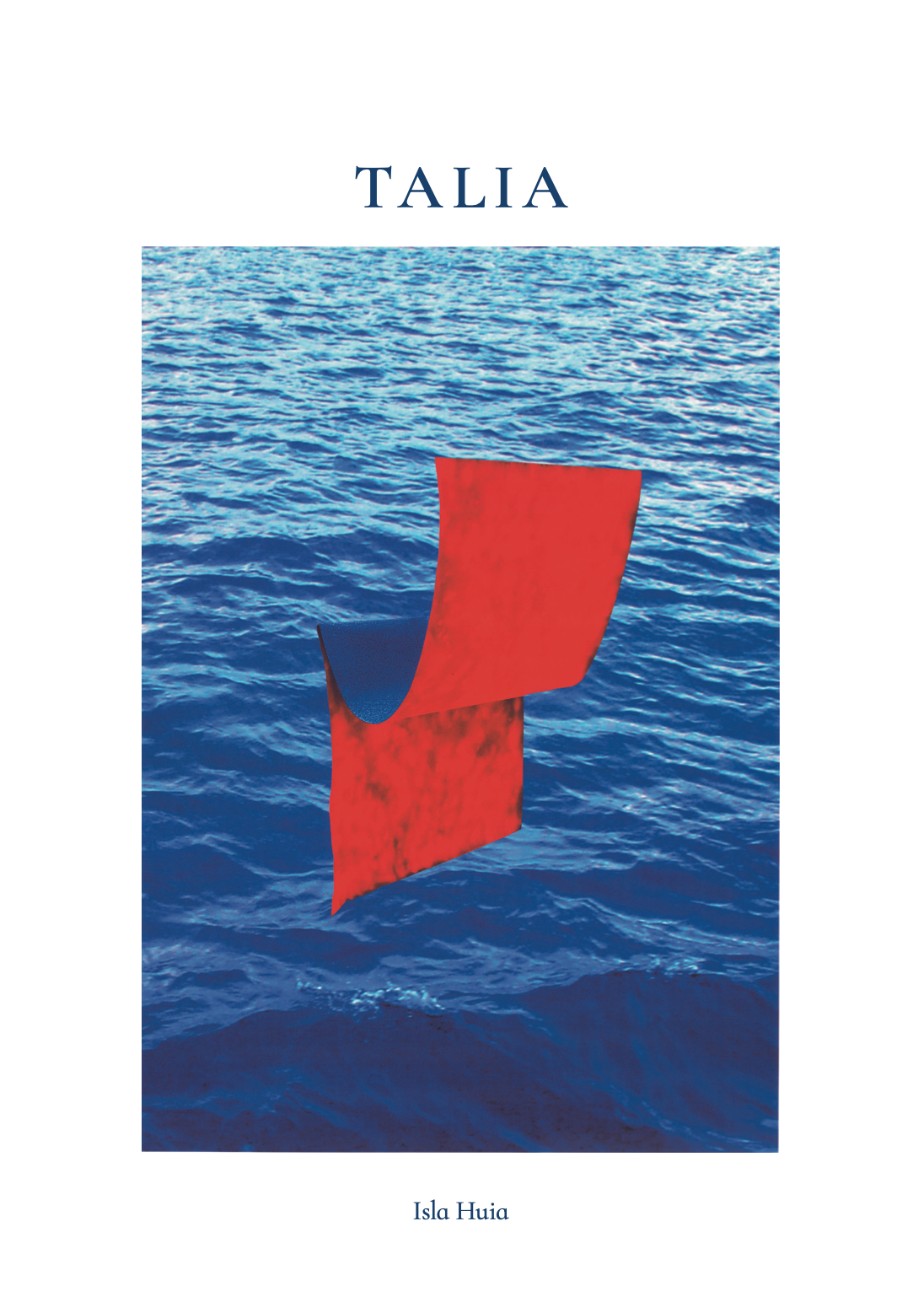
To celebrate the inclusion of Talia by Isla Huia (Dead Bird Books, 2023) on the Ockham NZ Book Award Poetry short list, Isla has read three poems from the collection and I have written a short review. Isla’s debut collection is a book to be celebrated. The awards will be announced at an Auckland Writers Festival Event on May 15th. In the meantime here is a taste of this sublime book, and if you get a chance to hear Isla read live, do!
The reading
‘Hiruhārama’
‘Pegasus’
‘Motuoapa’
Isla Huia (Te Āti Haunui a-Pāpārangi, Uenuku) is a te reo Māori teacher and writer. Her work has been published in journals such as Catalyst, Takahē and Awa Wāhine, and her debut collection of poetry, Talia, was released in May 2023 by Dead Bird Books. She has performed at the national finals of Rising Voices Youth Poetry Slam and the National Poetry Slam, as well as at writers festivals and events throughout Aotearoa. Isla can most often be found writing in Ōtautahi with FIKA Collective, and Ōtautahi Kaituhi Māori.
when you carried me to the bath / and to the chest where i sat / and pronounced myself very much alive again
to night ‘n day / where we married / over steaming hot potato / and it felt so native, so hāngi / so ancestor / to say the passenger seat is your mould now / love /
there is nothing i wouldn’t do for you / and i think we should keep this up forever /
a fact so irredeemable / and hot to the touch / that it slots better / into a cloud formation or penne pasta / than into language
from ‘eleven eleven’
Poetry books can be like favourite albums that demand repeated listening for all kinds of reasons. Reading Talia is so. The poetry soothes and tugs, unsettles and mesmerises. The poems are personal, intimate, revealing. They pull you into the sweet musicality of words and the magnetic power of storytelling. There are the resonant and connecting threads of place. There is the absolute need to connect with people: whanau, friends, loved ones, mother, whaea, wife, tīpuna, whakapapa.
Voice is paramount, within audible distance, necessary, singing in both te reo Māori and English, with epiphany, reflection, memory, challenge. Acknowledgement. Ah, there is a pulse of yearning, of writing one’s self close, of speaking health and the planet, cancer and virus and isolation. Of signposting division and injustice and rejuvenation.
There is a sense of urgency, a building momentum, like a whispered chant, or compelling list poem, with the surprise arrival of certain words (‘this wholegrain miracle of feast’), or the lyrical agility of a phrase (‘there’s a swamp beneath us all, a cathedral / in the abdomen, and rūaumoko’), or the physical tang and sweetness of detail (‘before the becoming, it was all body / bags of meatloaf, the lingerie, the storm.’)
You will fall upon Nina Simone, Keri Hulme, Audre Lorde, the isolation hotel, headlights, islands, suburbia, hospitals, love. Yes, this is a collection so movingly steeped in aroha, in the power and reach and traffic of love. It is a poetry collection to put on repeat, to lose and find your way in. I love it.
Paula Green
The poem
god-ly
“In some future day, when this generation is dead and gone, to those who look up inquiringly at this statue it will be told how the fathers of the colony left their homes and tamed the wilderness under the leadership of a man of heroic type; how, when he died, the representatives of the people, appreciating his character, determined to erect a monument worthy of his memory, and how a great sculptor in executing the work impressed it with the stamp of his genius. So shall some old man speak in the after time To all the people, winning reverence. And now I may congratulate the city that this statue is about to be handed over to its care, worthy as it is of admiration, like King Arthur’s sword of old, not only for the memory of a great man, but on account of its own intrinsic beauty not like that sword, to disappear from the eyes of men, but to be preserved by us and our successors as a possession for ever.” – C.C. Bowen, 7 Aug 1867
godley, you’re standing awful casual up there warmer layers slung in your crook lookin like your foot wants to accelerate something or stand or somethings neck
you’re balding now but have done well to love what’s left a blueprint of my own swelling curls framing eyes that are hungry, unyielding for the next swampland you may conquer another someplace hot and brown to be the founder of, frame this as experimental, or really good work, or home
godley, how’s it looking from up there since your recent resurrection you can see the birds, shitting in the rafters they want to fix that too, apparently we are all walking around gutted without a cathedral, headless, big bellies bleeding
hey, i’m still upright same as you, the first face of this land to be petrified in bronze, cast in forever the creation story of pākehā public art auē old koro, i see your oxygen
and your ships, and associations i don’t even want to patu you up or send you shaking at the whites of my eyes, i just want them to stop spending our money on your very dead face, freckled i imagine, and maybe cracked
i want to whakaiti you, wanna munch on your mana, wanna bark at you, wanna rip up the stone and the bins and the benches and plant a pā harakeke and whistle to my bird brothers and my tattooed sisters and my mobsters and my students and my knees and we can just all here sit on you like the weight of our great mother and hold your hand while the dust of your settler manhood does settle
e tau, e tau e tau, e tau
when the first four ships came to see what you had made and then live on it, your wife said you did not know whether to cry, or laugh, and so you did both
godley, did you know my ancestors? what were they like? what did they say? were you kind to them? did they dance for you?
in me they are immortalized like you in this square chest of the city i hold them up to the sun and say thank you, one by one to the bones interred in us just as the words of this plaque make memory of you
godley, why don’t you lay down just for a little while just sleep
Shells, pools, holes in the mudflat, edges, ledges, shelves and hollow places; homes: so utterly these are homes for each particular inhabitant. Each creature is its habitat, its space the locus of its movement.
I walk the waterline at dusk, the mud at low tide sucking at my feet, these little brown and olive crabs scuttling from me. Look. They scud across a broken image of the moon scattered over saturated land.
I’ve been away from here too long, so long required to live another life, so long an actor in a play who somehow got the stage-directions wrong. Now I just want to head for home, a home just where I just aim.
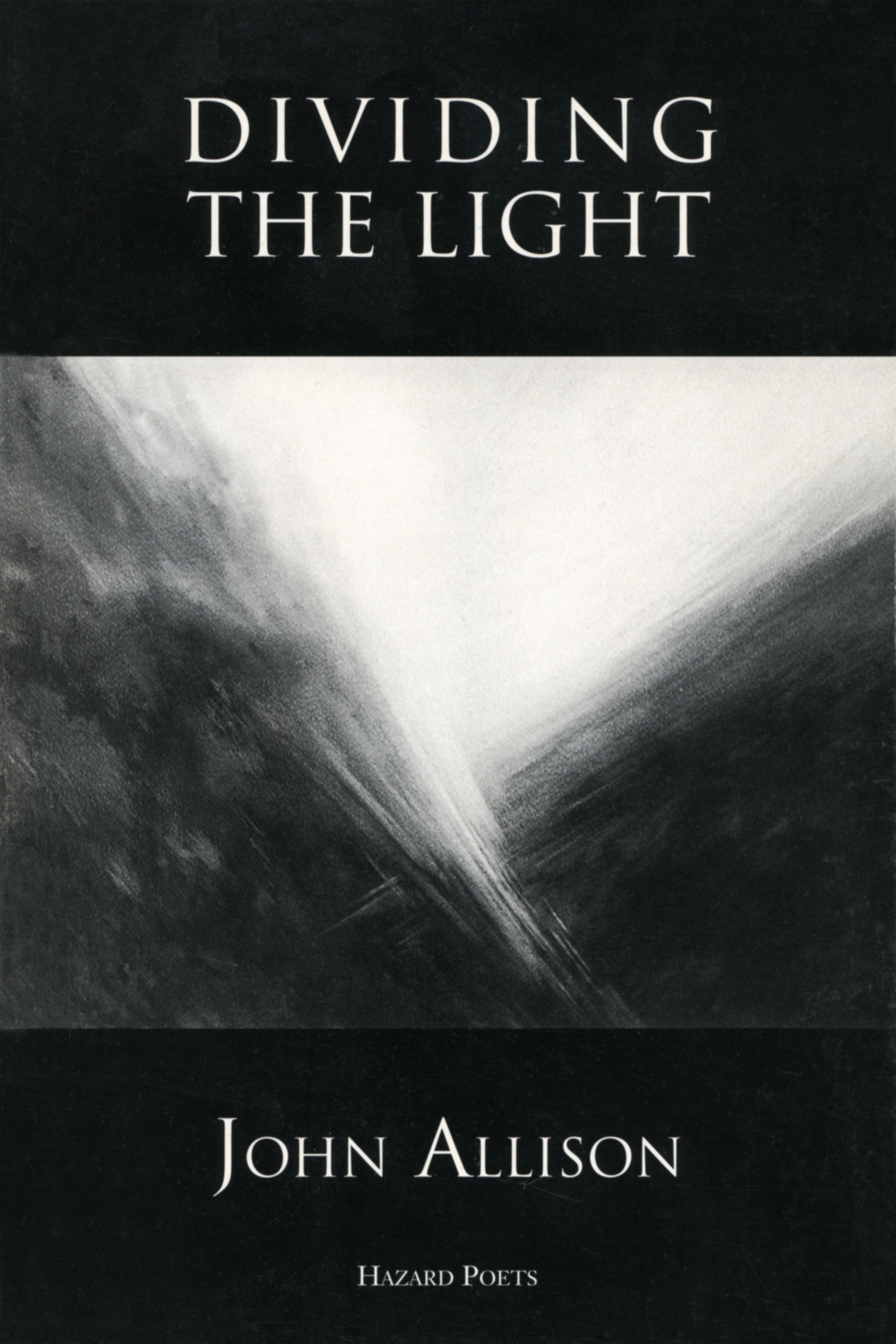
John Allison from Dividing the Light, Hazard Press, 1997
John Allison (1950 -2024), a poet and musician, lived in Heathcote Valley near Christchurch. His debut collection, Dividing the Light was part of the Hazard Poets series, edited by Rob Jackaman and Philip Mead. A Long Road Trip Home was his seventh and final poetry collection (Cold Hub Press, 2023). His previous book, Near Distance, was also published by Cold Hub Press in mid-2019. He was Poetry New Zealand 14’s featured poet, and his poem, Father’s axe, grandfather’s machete, was selected for the Best New Zealand Poems, 2020.
It’s time to register for Phantom Billstickers National Poetry Day 2024!
Mark your calendars! The date for this year’s nationwide celebration of poetry is scheduled for Friday 23 August. Registrations and seed funding applications are now open, and event organisers across the motu are encouraged to get involved and celebrate Aotearoa’s growing and vibrant poetry scene.
In its 27th year, Phantom Billstickers National Poetry Day has established itself as a prominent and popular event in the literary calendar that promises an explosion of poetry countrywide in late August.
Poetry has made its mark everywhere during previous events, from bricks to buses, sidewalks to sand, resonating through national parks, churches, hospitals, museums and city streets. “The possibilities are endless,” emphasizes NPD’s new national coordinator, Gill Hughes. “We invite organisers to don their creative hats and come up with unique and wonderful ways to celebrate poetry in all its forms”.
Phantom Billstickers CEO Robin McDonnell says, “Poetry is the beating heart of unity, inspiration, and endless imagination. From poem posters on the streets of Aotearoa to a verse that hits you right in the heart, it crosses every boundary. At Phantom Billstickers, sponsoring National Poetry Day for nine years, we’re still in awe of how it brings us all together.”
Gill urges interested organisers to register early for seed funding and to take advantage of the heavily promoted official schedule of Phantom Billstickers National Poetry Day 2024 events.
Registration forms, templates, planning and marketing resources are all available on the NPD website. Don’t miss out on the opportunity to showcase your love for poetry and engage with your community in a meaningful way. Join us in making Phantom Billstickers National Poetry Day 2024 a memorable and successful celebration of creativity and expression.
Applications for seed funding close at 5pm on 4 June 2024. The official Phantom Billstickers National Poetry Day 2024 calendar will be announced on 1 August.
For further information contact NPD national coordinator Gill Hughes at poetryday@nzbookawards.org.nz and to keep up with plans for NPD 2024, follow NZPoetryDay on Facebook, Instagram and X (formerly Twitter).
Ōrongohau | Best New Zealand Poems 2023 captures the spirit of the times
The latest edition of the online anthology Ōrongohau |Best New Zealand Poems is now live, featuring 25 poems chosen by Poet Laureate Chris Tse from nearly 4000 published in 2023.
“These are the poems that surprised and delighted me the most, that made me pause to sit in my own discomfort or revel in another poet’s joy. Above all, they’re the poems I thought other people need to read.”
His chosen selections, he says, are the “poems that stood out to me for the way in which they navigated inner and outer worlds, or gave life to the poets’ hopes for themselves and their communities.”
The fiery public debate around Tusiata Avia’s poem ‘The 250th Anniversary of James Cook’s Arrival in New Zealand’ that was unfolding when Chris Tse was editing the anthology speaks to the continuing power of poetry to provoke and challenge.
“Here and around the world, we are seeing creatives caught in campaigns of misinformation and bigotry, sometimes driven by those in power,” says Tse in his introduction. “The effects of this are concerning: for example, cultural institutions have cancelled events featuring writers who are outspoken against genocide, and tired anti-queer and racist rhetoric is being used to threaten writers and performers, and fuel the surge in book bans.”
The 2023 edition showcases established figures such as Michele Leggott, Sam Duckor-Jones, John Allison, and Tracey Slaughter alongside 2024 Ockham New Zealand Book Award Poetry finalist Isla Huia, and introduces newer poets such as Ruben Mita, Jessica Hinerangi, Geena Slow, and Loretta Riach, who are making their first appearance in Ōrongohau | Best New Zealand Poems.
The voices in this anthology engage with times past as well as looking to the future. They contain multitudes of experience and perspective, delight in moments of love and desire, confront the ongoing impacts of colonisation, show us the many ways in which the political is deeply personal, and in the process offer a mirror on the world as it is, along with tantalising glimpses of where we might be heading.
These are poets writing from the range and depth of human experience. Hannah Mettner offers a youthful experience of that infamous measure of fitness, the ‘Beep Test’, as a lens through which to view the adult world. Emma Shi considers the distances of immigration, what remains and what is lost, while Rushi Vyas uses a memory of a father’s Rolex to explore the work of facing our cultural inheritances, of choosing what we want to keep alive, and what we are prepared to relinquish. Hana Pera Aoake gives us a meditation on the anxieties she holds for her newborn daughter’s future, while harold coutts offers an exploration of passion, intimacy and lust. Dan Goodwin’s boy in Wyoming meets his dream man in a bar, while Stacey Teague unpacks the way pop culture, specifically Kylie Minogue’s gold hot pants, alters the chemistry of your brain.
Series editor and International Institute of Modern Letters (IIML) senior lecturer Chris Price says, “The poet laureate has given us a gathering of poems that are very much of this moment, recording the crises we are facing, reflecting the diversity of our culture, and celebrating the way human dreams and desires persist in the face of all obstacles.”
The International Institute of Modern Letters at Te Herenga Waka—Victoria University of Wellington has published the anthology annually since 2001, with support from Creative New Zealand. Every issue has a different editor, selected from Aotearoa’s literary world.
Ōrongohau | Best New Zealand Poems 2023 can be viewed online
Today there is the real wolf and the imagined wolf mixing up with an Airini Beautrais short story and missiles are dropping and children are starving and I can only do one day at a time, and The National is singing and there’s a midnight moon in the dead of the night with the window wide open
Paula Green from The Venetian Blind Poems (2023-2024)
After a fourth month hiatus to restock my small energy jar, I am keen to refurnish Poetry Shelf. In such planet-and-self-depleting times, it feels even more important to foster a connecting hub for readers and writers, booksellers and librarians, festival organisers and book reviewers. My aim is to host a shelter, a haven, a meeting space for poetry. It is a place for music, stories, ideas, relationships, beauty, conversation, heart and aroha. It is a place for celebration but it is also a place for the growing concern and protest we feel at global and local inequity, prejudice, conflict.
I aim to post something each day: Monday new poems Tuesday audio and videos Wednesday my reviews Thursday poets on other poems Friday various features and musings by and on other poets, interviews, thematic poem clusters PLUS an ongoing noticeboard.
I spotlight poetry but I may review fiction and nonfiction that catches my attention. In April I am posting features on each of the shortlisted poets for the Ockham NZ Book Awards.
I cannot promise to post every day as I am still on my recovery road and have daily patches when it is hard to function. Ironically the past week is the most challenging I have had for a long time. But I strongly believe in the power of doing things that build joy and wonder, focus on what we can do, make nourishing connections. In order to protect my small energy jar, I do not accept unsolicited poems and I cannot promise to review every book I get sent.
I am so grateful for the support you have given me over the past 18 months. Your kind emails. Your magnificent writing. And for the heart-boosting response to my recent invitations.
On Monday I am launching Monday Poems with a poem by John Allison (1950 – 2024), selected by James Norcliffe. This series usually hosts new work, but it felt fitting to pay tribute to a much loved poet. Poetry Shelf will also post a tribute feature.
Try to remember how the year began. Were you under a sky of your own choosing or one stripped from photographs you’ve only ever seen on social media? At what point did you realise you had lost the language to describe even the most simple of joys?
/
The party had been raging for months by the time I arrived in my silver. Cans and bottles blanketed the lawn while neighbours peeked through their curtains to sneer silently and mouth curses. I entered with a resolution and left with a mouth full of blood and extra teeth.
\
The history-makers abuse their well-worn templates, framing each year as business as usual. The media play along until business becomes personal. The storytellers sift through ash to find something to celebrate but all they find is another word fashioned into a weapon.
/
I have known this year and its versions, all measured in past lives and misdirections. Joy becomes a distraction. Sometimes the only escape I long for is a dancefloor— where I can keep my body moving under flashing lights and not worry about being ushered out into the cold.
\
The machines are programmed to show us how it ends. Blossoms bloom into fists. Sugar on the tongue sours. The radios talk back, the televisions stream and another old song goes viral as bodies become a spectacle on our screens. Erasure makes a deathly noise, floods our blood.
/
I want to believe the heart is more than a muscle— more than a faded metaphor for a contract that binds us, flaws and all. I press my ear against the year and hear a song with a lyric repeated until the music fades, leaving a ghostly chant in my head imploring: do not look away.
\
This year proves that borders are imaginary and they do more harm than good. Nothing can contain what little remains after devastation has swept through a city. The impulse to read the earth’s lines in the past tense even though those on the ground attest: is, now, forever.
/
A niece’s embrace. A pool in swampy heat. The gift of Knowledge. German brass band techno. Ponies prancing under mirrorballs. Cruel summers bring the sweetest stings. The Poet Laureate’s port. Northern storms and southern rainbows. My love’s love. Padam? Padam.
\
My hopeful poems wait in the wings—my highlights and golden hours are no match for our collective whiplash. Make a wish before we knot this year and let it slip out of our hands as another lesson we will never learn. Is it enough to summon the star that once called us home?
/
Somewhere there is a sky that rages in psychedelia— the shapeshifting breath of a benevolent god looking down at the legacy we have scorched into the earth. If the hand no longer feeds, bite. If kings and queens try to take our tongues from us, bite—and don’t let go.
Chris Tse
Chris Tse is New Zealand’s Poet Laureate for 2022-24. He is the author of three poetry collections published by Auckland University Press: How to be Dead in a Year of Snakes, HE’S SO MASC, and Super Model Minority. He and Emma Barnes edited Out Here: An Anthology of Takatāpui and LGBTQIA+ Writers from Aotearoa. He is the editor of The Spinoff’s Friday Poem and Ōrongohau | Best New Zealand Poems 2023.





 NZ Poetry Shelf