Poetry Shelf review: Wok Hei – Aphrodisiac poems and recipes in the year of the Wood Dragon

Wok Hei: Aphrodisiac poems and recipes in The Year of the Wood Dragon
editor Renee Liang, Intro Chris Tse
Monster Fish Publishing, 2024
contact: docrnz@gmail.com

                               whatever’s lacking or lost, you’ll find
                               among the ginger and the spring onion

                               Chris Tse, from ‘Warming’

Wok Hei: Aphrodisiac poems and recipes is a slender chapbook edited by poet Renee Laing, introduced by Poet Laureate Chris Tse, and published with the support of National Library of New Zealand Te Puna Mātauranga o Aotearoa.

Like Renee and Chris, I love cooking and I love writing poetry. Can we lay claim to the power of both food and poems to nourish heart and body? Poetry certainly activates my reading taste buds. Both food and poetry might have roots in tradition and tendrils in innovation. And I embrace that wholeheartedly.

In his introduction Chris writes: ‘Like poetry, food is best when it is shared with others, whether they’re new friends or family. I love reading about food as much as I do cooking and eating it. I love learning about other people’s family traditions and recipes, and tracing the history of how different foods and cuisines traverse the globe and evolve over generations.’

Renee introduces the practice of ‘wok hei’: ‘Wok hei translates a breath of the wok: a method evolved by cooks in Southern China to bring out the aromas and natural flavours of ultra-fresh ingredients.’ She then makes a connection between bringing out the taste and flavours of super fresh ingredients and writing poetry: ‘In many ways, this is what a poet does too: selecting the best words by applying their knowledge of its properties; marrying harmonious flavours together; balancing textures’.

The chapbook includes recipes (almond cookies, claypot rice, crispy roast pork, steamed whole fish, tong sun fun, cocktails) alongside poems that are steeped in flavour. The contents page is a menu, indicating the reading will be a form of meal. I am picturing the shared table, my taste buds pop as I read.

Ah. I am picturing a suite of chapbooks like Wok Hei that draw upon the food and poetry of the various cultures and homes of Aotearoa, that we may sit and share recipes, traditions, the flavour of words along with the comfort of cumin, the tang of verbs alongside the sweetness of honey. This book is a satisfying meal indeed.

afternoon sun spills in
lighting the faces around the table
all of us here because of these two,
enjoying the last crumbs of fortune cookies for the day,
the golden sky.

Renee Liang, from ‘Fortune Cookies’

Note from Renee

The poets are: Chris Tse, Lynda Chanwai-Earle, Cadence Chung, Nathan Joe, Maddie Ballard, Lee Murray, and myself.

The chefs are: Sam Low, Jennifer Yee Collinson, Shirley Ng, Eddie Lowe and Geoff Ngan. Cover design by Eric Ngan. 

Chris didn’t just write the introduction, he was also my sounding board for the curation and also personally helped assemble the books in the basement of the National Library before the reading (!), along with Lynda Chawai-Earle and her daughter.

We deliberately decided to include poets of Chinese (not Pan-Asian) descent – in line with the poets assembled by Chris for a reading at the National Library to celebrate the Chinese New Year of the Dragon, the most auspicious year of the 12 year cycle. I felt this occasion couldn’t go by without a permanent object so this sparked the idea to make the book. The reading was on the 14 February, midway into the two week celebration period, but since it was also Valentine’s Day I decided to use the theme of love – which in Chinese culture is often expressed through the making of special dishes. 

The chefs represent generations of diasporic food makers – Shirley Ng for example ran multiple restaurants in Akl in the 1970s-90s, as did Eddie Lowe in Chch,  while Jennifer Collinson and Sam Low are well known food commentators currently and known for their ‘translational’ work. The cocktails are from Tim Soh whom I met at a party making cocktails for fun for us – he is a ‘keen amateur’ but very much in the tradition of fusion and relationship to tradition and family. Geoff Ngan is a well known Wellington restauranteur but chose to gift us a humble family recipe because that was the one most important to him. 

Likewise the poets were chosen to represent different ‘generations’ of the arts community with Lynda being an established rangatira, myself, Lee, Chris and Nathan being mid career, and Cadence, Maddy and Vera rising stars. They are also chosen to represent different regions ( Nathan- Chch, Vera – Northland ). And we are all from slightly different migration waves ( Chris and Nathan are multigenerational from Southern China, I am second generation from Hong Kong, Vera is a recent migrant from mainland China and wrote her poem when she was visiting family back there).

Of course, as happens with tight knit communities there are many lines of connection between the participants. Two literary ones you might be delighted by: Kim Lowe, Eddie’s daughter, did the cover design for Lee Murray’s Fox Spirit on a Distant Cloud ( just released from Cuba press). And Chris and I first worked together when I took my first play, Lantern, to Wellington back in 2005

Renee Liang
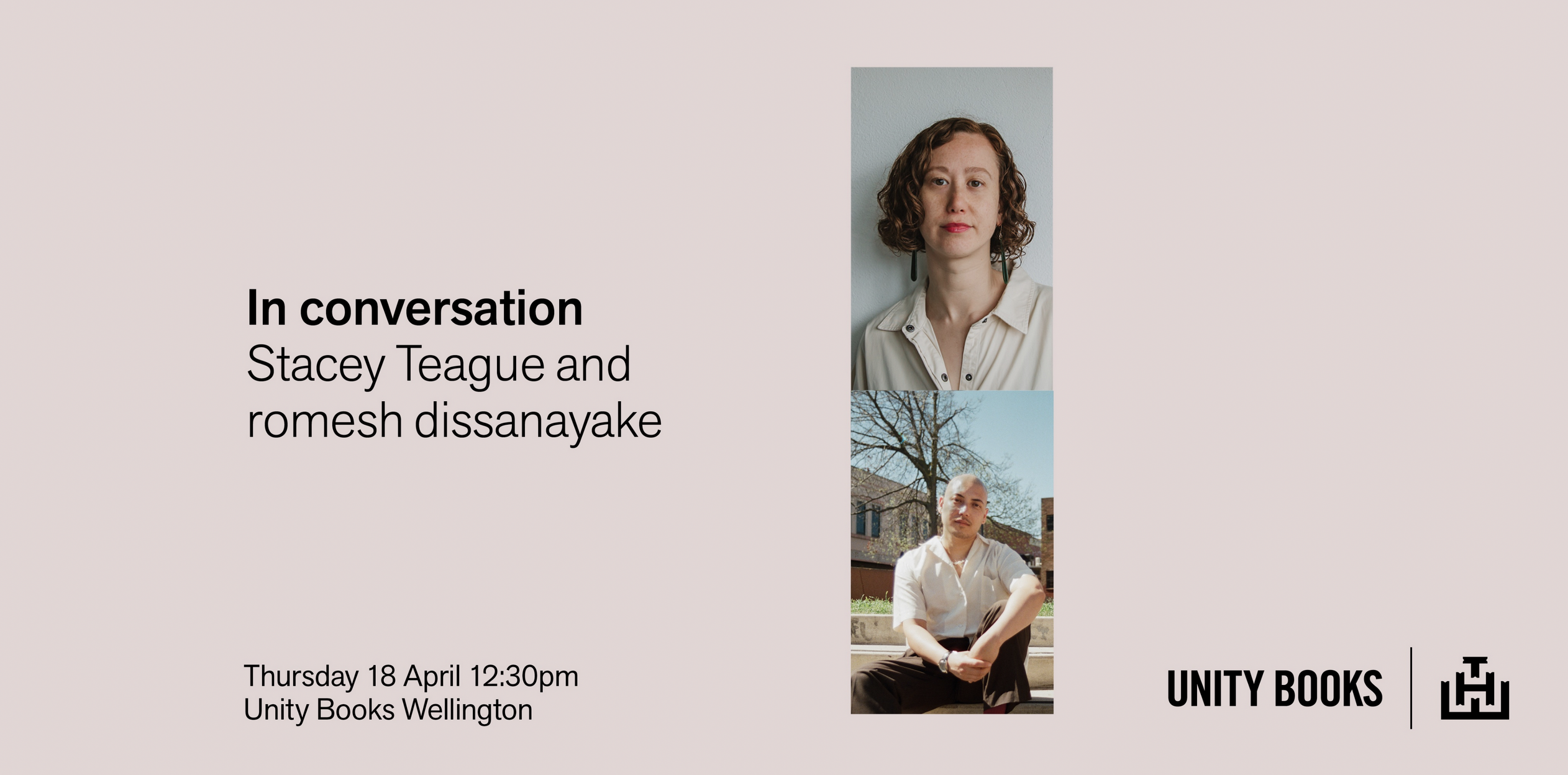
Poetry Shelf Noticeboard: Stacey Teague and romesh dissanayake in conversation

All welcome to a Unity Books lunchtime event this Thursday. A conversation between Stacey Teague and romesh dissanayake about writing and their latest books. Come along at 12:30pm! Celebrate two 2024 books from Te Herenga Waka University Press.

Poetry Shelf Ockham NZ Book Award Feature: Bill Nelson – a poem, a reading, a review

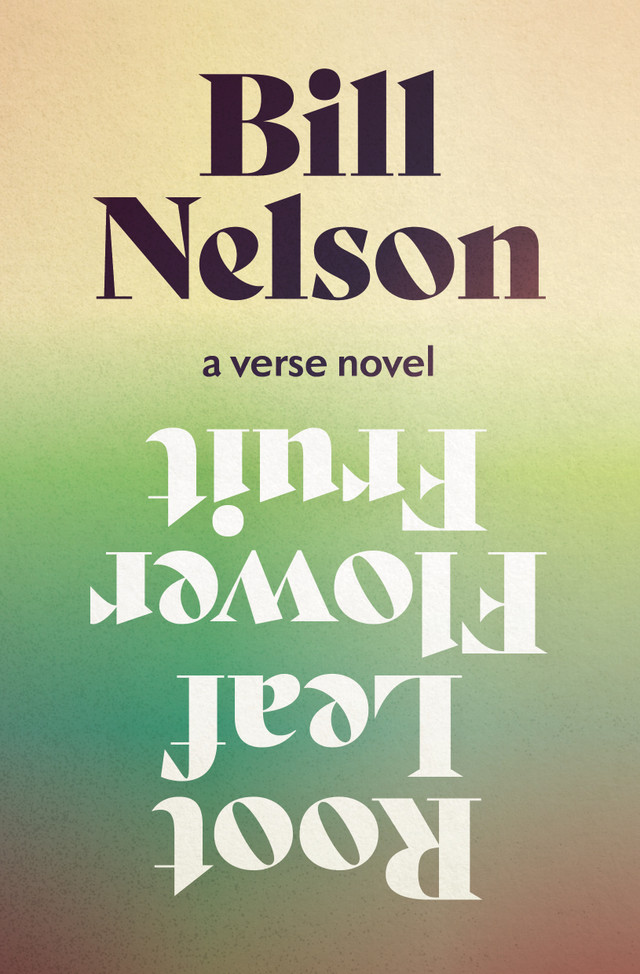
To celebrate the inclusion of Root Leaf Flower fruit by Bill Nelson (Te Herenga Waka University Press, 2023) on the Ockham NZ Book Award Poetry short list, I am reposting a reading Bill did for Poetry Shelf from his collection, the review I wrote, and an excerpt from the book. The book continues to haunt and move and delight me. The awards will be announced at an Auckland Writers Festival Event on May 15th.

The poem excerpt

The agent. A slim grey suit, his ankles showing,
white shirt, neatly parted hair,
I specialise in niche properties, he says.
Don’t worry too much about the garden,
people like a project. He flicks his hand,
without looking, toward the fields. The soil
is what people are here for. Put that
out front
. He presses a card
firmly into my hand.

Last week she heard her husband on the phone dismissing the
carer, and she rolled her eyes. Don’t tell me you’re not happy, he
said, you called her a bitch and an f’ing c-word, I can’t deal with that
anymore
, but she liked doing that, screaming and swearing, it
felt good, but she could see that he felt bad so that he had to
let the carer go, and now he felt bad that he felt good when
she was gone, as if he enjoyed the pain, the struggle, an old
hermit with a sick wife, holed up, locked in, and now after
dinner he reads her the paper, avoiding the stories about road
deaths and child violence, and when he accidentally starts to
read one about a baby tortured by its parents, her whole body
curls up, he notices and puts the paper aside, How about we go

for a walk to the top paddock, he says, she doesn’t answer and he
lifts her quietly into the wheelchair, her head lolls to the side,
she is getting lighter all the time, she can feel that too, how
he seems able to lift her with less effort, like with every step
she takes closer to death he’s getting stronger, younger, here in
the top paddock, where the soil is hidden by weeds, where she
remembers all the work she did, the aching and the dirt and
falling into a deep sleep after, waking renewed and fertile, and
now, the field overgrown, magnificent, luscious weeds reaching
for the sky, fuelled by beautiful soil.

The roller door slaps loudly against the stops
and I fumble for the light switch. Neon tubes
flicker and then catch, and there it is,
squat and industrial, green mudguards, green wheels,
green engine cover, KUBOTA embossed proudly
on the side. Smaller than I remember.
At eight years old, climbing it, struggling
to reach the first step, pulling the levers, pushing pedals,
buttons, dials, no idea what they did.
I search old boxes of mechanic’s tools, heavy and worn,
rifle through a cupboard, a box of pamphlets.
Manuals. One for the tractor, a couple for classic cars.
I flip past the safety warnings, the specifications,
straight to ‘Getting Started’. The brake pedals,
one for the left wheels, one for the right,
clutch and gears, throttle lever, speed-lock lever,
emergency brake, others to operate the attachments,
and lastly how to slide the seat forward.
The keys in the ignition. I wiggle the gear lever

turn the key – preheat – start.
Nothing, no whine, no stutter.
A page on jump-starting.
I nose the car into the garage and open the engine cover.
I connect the leads and leave the car running.
I turn the key, again, nothing. The manual, nothing.
I get out my phone and start typing, tractors for noobs,
tractors for beginners, Kubota tractor won’t start,
and finally, Kubota B6100 won’t start,
tractorbynet.com, eight pages of replies.
The clutch pedal needs to be pressed. I try again,
the engine turns, a slow raspy bark, over and over,
and finally, a chug of life, but then a splutter, a spit,
a fading hiss, and then it dies.

Bill Nelson, excerpt from Root Leaf Flower fruit

Bill Nelson, Root Leaf Flower Fruit, Te Herenga Waka University Press, 2023

The reading

Excerpt from Root Leaf Flower Fruit

The review

On reading a poetry collection or verse novel: first pick up the book and savour the title. Secondly, if you want to chart your own routes and sidetracks, read the blurb when you have finished the book. Maybe even reviews. Maybe even this review. That way reading becomes open and surprising travel. If you are reading Bill Nelson’s new verse novel, Root Leaf Flower Fruit, you will need to rotate the book to read the title, and that head spin is the perfect start to an affecting and inspiring read.

Such a tactile sensation as I begin reading – muddy and gritty and foaming – so mysterious with a ‘foreboding’ storm rolling in, with ‘no memory of what happened’. Pace and rhythm, this is what I jot down first. The way Bill deftly pulls you into the rhythm of the line, and how as you move along the currents, whether sweet or sour, it offers all manner of uplift, from the physicality of the poetry, to the cadence of music, to the tang of confession, to the anchor of everyday detail, to the shimmer of the gap.

This is poetry that builds a bridge between the land and family, the seasonal cyclic movement of both inhabited land and its inhabitants. Plough and spade and harvest. Feet in the earth. Compost and windbreaks. Hands planting seeds. A grandson returns to his grandmother’s farm to tidy up the house and land for auction as she is now in a rest home, his partner and children back home. The title triggers the calendar as gardening almanac, and we move into the idea of land as inhalation and exhalation, the acts of care and arranging, trimming and planting, along with the almanac ascension and waning of self.

This is also poetry as eulogy, the grandson is slowly unraveling a prismatic portrait of his grandmother. I want to talk about this extraordinary woman with you but I don’t want to spoil the unfolding portrait, your open road travel. Ah. But this is the woman who cared for her body as she cared for the land, so lovingly, so nourishingly. This is the woman who learned the value of lightness and lift. This is the woman who listens to what is not right. Ah, this is the woman who has taken up residency in my heart. This is the meeting of poetry and story, story and bloom.

This too is poetry as recognition of self. The grandson is recovering – ah I am agonising over what to tell you – but here is the gap, the impulse behind the narrative jumpcuts – he is recovering from a brain injury, fingertips barely grasping the accident. Floating, drifting, dreaming, aching.

Root Leaf Flower Fruit draws us deep into the heart of experience, fracturing and continuous, observational and reflective, imagined and lived, utterly refreshing the page of being human. It has a wow ending, the layered impact endures, and I wanted to start reading it again, instantly. Importantly for me, this sublime book, exquisitely crafted, fertilised with profound love and connection, is giving me routes back into my own writing. This is a book I simply must read again. Thank you.

Paula Green, September 2023

Bill Nelson is the author of Root Leaf Flower Fruit (2023) and Memorandum of Understanding (2016). His poems have appeared in Best New Zealand Poems, Sport, Landfall, Hue & Cry, Shenandoah, The Spinoff, Minarets and The 4th Floor, as well as in dance performances and art galleries and on billstickers. In 2009 he won the Biggs Family Prize in Poetry from the International Institute of Modern Letters, and he is a founding editor of Up Country: A Journal for the NZ Outdoors. He lives in Te Whanganui-a-tara Wellington with his partner, two children and his dog, Callimachus Bruce.

Te Herenga Waka University Press page

Poetry Shelf Monday Poem: Cadence Chung’s ‘Novelette’

Novelette
After Richie Hofmann

You were the other.
You had hands and feet like a prose poem.

When you stretched I was moved by movings
of denim, the morning light of jeans on the floor.

Nights were jacketless and starched, everything moved
with the logic of poetry, everything moved so

slow. That new blue perfume never lasted more
than an hour. I thought about buying better-tasting lipgloss.

Not everything feels like everything else. Your mouth
in mine was no more than an accidental rhyme, a slip

of speech. Coffee on Tuesday was nice. We were
civil, friendly, like the month after a divorce. I

didn’t say anything about anything.
I used my jacket to shield our heads from the rain.

I miss you like a paperclip in a back pocket.
I miss you like anything at all.

Cadence Chung

Cadence Chung is a poet, mezzo-soprano, and composer, currently studying at the New Zealand School of Music. Her nationally-bestselling chapbook anomalia was released in April 2022 with Tender Press. She also performs as a classical soloist, presents on RNZ Concert, and co-edits Symposia Magazine, a literary journal for emerging New Zealand writers. In 2023, she was named an Emerging Practioner by the Fund for Acting and Musical Endeavours. She likes to sing Strauss, write art songs, and buy overpriced perfume.

Poetry Shelf weekend newsletter

the backyard

COMMUNE

Every morning I open the blinds and let the light in.

I spend all day reading. The light changes its position in the
sky, falling yellow over different parts of my body as I sit
cross-legged on the bed.

Somewhere in the trees outside are tūī, kererū, ruru, kōtare.
They commune with one another as the sun gets low and
moves past the horizon. The sun sets over the Waitākere
Ranges, making way for new kinds of light. We rely on
artificial sources now.


Stacey Teague, from Plastic, Te Herenga Waka University Press, 2024


I thought it might be fun to do a roundup of posts on the blog over the week, and touch base with various poetry-related things that caught my attention.

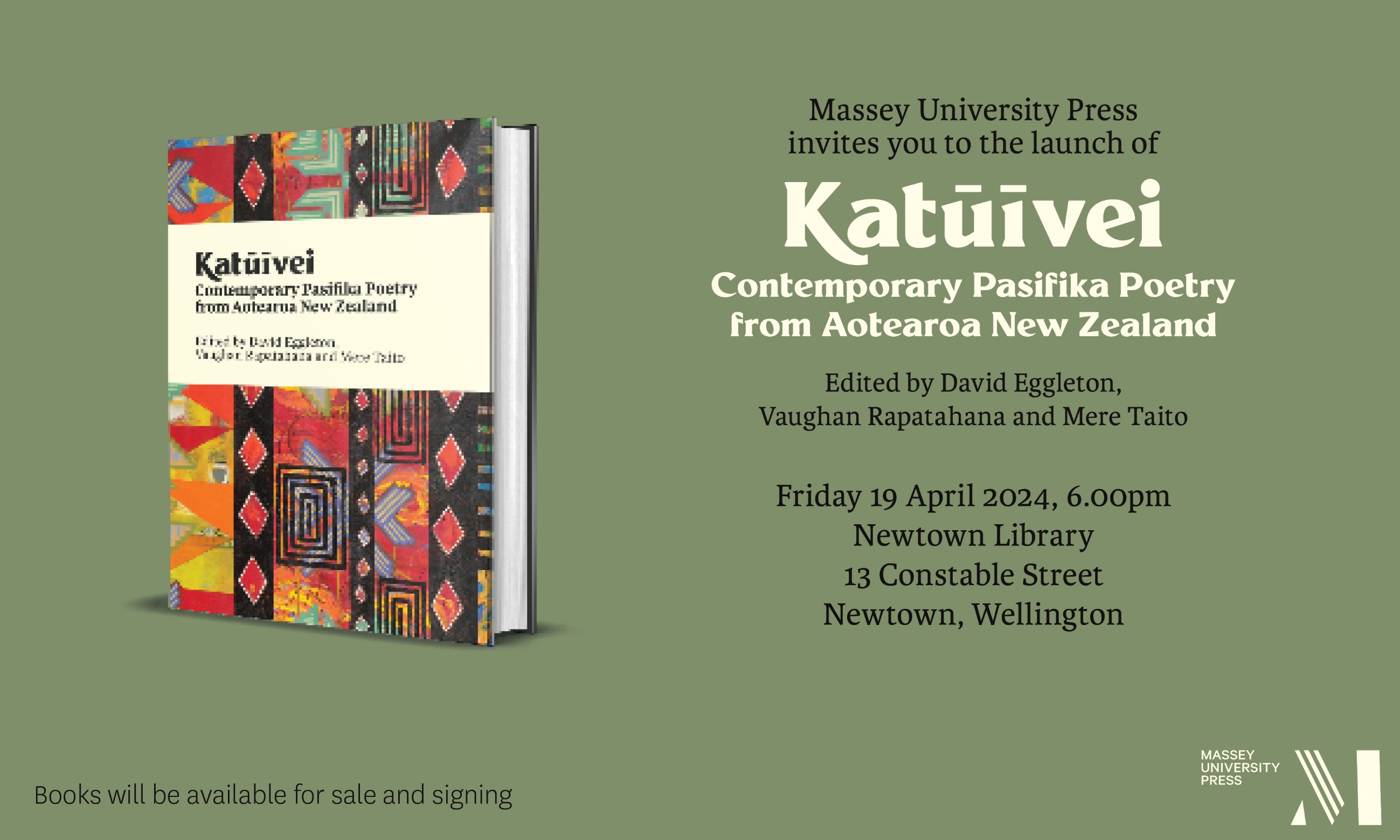
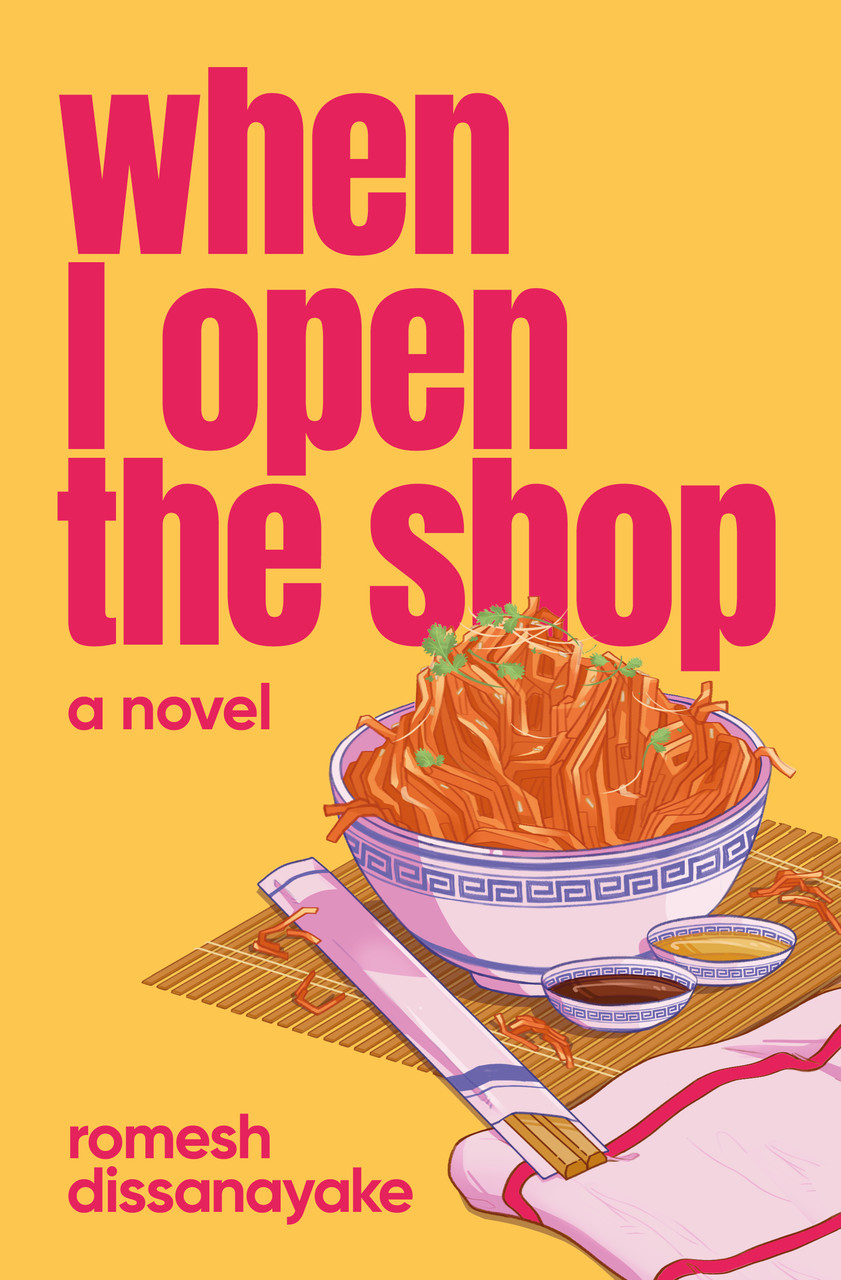
A cluster of new poetry books landed in my letterbox this week – from various publishers – so satisfying to see the range of voices and productions. Three new books from The Cuba Press – Robin Peace, Lee Murray, Peter Rawnsley); from Te Herenga Waka University Press – Airini Beatrais‘s essays The Beautiful Afternoon and romesh dissanayake‘s poetic novel when I open the shop. From Te Perehi o Mātātuhi Taranaki – Ngā Pūrehu Kapohau: A Literary Homage to Pātea, Waverley and Waitōtara, edited by Trevor M Landers, Vaughan Rapatahana with Ngauru Rawiri. And from Massey University Press – Katūīvei: Contemporary Pasifica Poetry from Aotearoa New Zealand, edited by David Eggleton, Vaughan Rapatahana and Mere Taito. Plus an advance copy of Claire Mabey‘s children’s novel from Allen & Unwin.

Our Poet Laureate Chris Tse has been singing the praises of poetry in various places. He shared three poems with Emile Donovan on Radio NZ National and talked about how to read a poem – and it got me thinking about why I love working in schools, sparking children from Y0 to Y13, to read and write poems, and enter fabulous word playgrounds where rules can be broken, invented and obeyed – and where ears and eyes and hearts go adventuring.

In a Q & A for AA’s latest Directions Ngā Ahunga magazine, Chris says of the Poet Laureate role: ‘How can I use the role to change perceptions of poetry to make it more visible to different groups of people?’

Chris has also selected 25 vital poems for Ōrongohau |Best New Zealand Poems 2023.

What struck the deepest chord this week was reading Claire Mabey’s Domestic Animals post at Substack. ‘An Autumnal Roundup and banging my drum’ (April 9th), nails exactly what I have been thinking over the past weeks, especially in the middle of the night. Each morning when I press ‘publish’ on a new Poetry Shelf post, and then get stuck into writing and assembling the next one, I shudder. There is such unbearable stuff going on in the world and here in Aotearoa, it feels off-key to celebrate poetry and books, from comfort poems to the melancholic, from beauty to the challenging, from food to climate change. See link below.

I would like to gift one annual subscription to Domestic Animals to a reader who is in need of an uplift. Message me.

I would also like to gift a copy of Grace Yee‘s shortlisted poetry collection, Chinese Fish, to another poetry fan. Message me. See my review/feature link below.

On the blog this week

Monday Poem: Fiona Kidman’s ‘My daughter makes quilts’

Tuesday: Ockham NZ Book Award feature: Grace Yee – a reading and a review
Harry Ricketts launches memoir THWUP

Wednesday: Review of Robyn Maree Pickens – Tung
On why I subscribe to Claire Mabey’s Domestic Animals at Substack

Thursday: James Norcliffe on ‘My thoughts are all of swimming‘ by Rose Collins
Compound Press launches Schaeffer Lemalu

Friday: Louise Wallace – ‘Even if we don’t know its name: On poetic form in romesh dissanayake’s novel When I open the shop

A poem

On a drive to an appointment this week I was reminded how awe inspiring the world can be, whether sky or harbour or bakery. Poetry settles like snow dust wherever I look, shifting in light and texture, on the move, in sleepy haze, miraculously warming.

appointment


memorise the light breaking through dark clouds
memorise the wind surfers catching the storm

memorise the tattered jacket on the stooping man
memorise the island its arms outstretched

memorise the bread and pastries at Wild Wheat
memorise the soundtrack on the journey home


Paula Green

Poetry Shelf musings: Louise Wallace – On poetic form in romesh dissanayake’s novel When I open the shop

Even if we don’t know its name:
On poetic form in romesh dissanayake’s novel When I open the shop
(Te Herenga Waka University Press, 2024)

I have spent the last few years thinking about the use of poetic techniques in narrative as part of my PhD at the University of Otago, where I wrote my first novel, Ash. On reading romesh dissanayake’s When I open the shop, I was struck by its similar meditations on form. Incorporating poetic elements into prose makes great sense for dissanayake, who writes in both genres (he is one of the three featured poets in the forthcoming AUP New Poets 10), and allows a tension between stasis and movement, as well as enhancing the book’s emotional core. While the narrative drives us forward, dissanayake’s poetic sensibilities allow for a closer view, zooming in to focus on a small moment or musing, then zooming back out again for the narrative push to take over.

The protagonist is a chef, running a small noodle shop in Wellington. As with poetry, cooking is the act of making, where ideally the process is relished as much as the result – a joy or passion that feels palpable in the novel’s craft. When dissanayake draws all of this together and combines it with the protagonist’s personal reflections especially around his late mother, it becomes particularly affecting:

     ‘We’re going to make morkovcha,’ she says. ‘Just you and me.’ She sets a plastic sheet on the floor and a pink plastic tub of carrots on top. There is a wooden chopping board, worn down in the middle. A knife. A grater. A garlic press.

     A container of Cerebos salt with a blue pour adjuster. On the label a boy with a neckerchief chases a chick. See how it runs.

     A clear DYC white vinegar bottle. A peanut butter jar filled with coriander seeds. A yellow screw-top lid. A bag of Chelsea white sugar. Everyday sweetness you can enjoy.

     I am in bed alone. I am with all of these things. These things I remember.

You can see dissanayake’s poetic hand not only in these descriptive snippets within the novel, but in the structure – the way he uses poetry to make switches between a sense of stasis and movement.

In the middle of the book, ‘The Island’ materialises – an extended poetry sequence. Its sudden appearance feels organic, in a novel that has already established its connection with a poetic use of language. It tells a known myth / a story inserted by the author / something the protagonist is thinking up themselves or remembering – it’s not clear, but it’s also not as important as what the sequence offers. 

THE ISLAND

1.

The moon is high.
The sky is freckled with stars.
The island is bright.

Manone wakes from his sleep.
He holds out his hand
and inspects it in the light.

Turning it over, flexing and bending
his long thin fingers,
making shadows slither across the ground.

Next to him, Mantoo is hunched in a ball,
breathing steadily and kicking her foot out.
Her habit to twitch –
to stop herself from falling.

The winds have changed.
Now, it is cooler.
Now, it is harder.

Now that Manone knows it can be collected,
he can never let them run out of salt.

from ‘The Island’ in When I open the shop

‘The Island’ follows straight after a narrative peak, and importantly, it provides a pause – a significant pause that I’m not sure could have been achieved with prose alone. It lifts us out of the immediate narrative of the text and slows the pace down, almost as though we are now in some kind of meditative state, existing on another plane. Movements in the sequence are slow – Manone turning his hand over, flexing his fingers – and the dailiness of survival is at its centre. Like a fable, ‘The Island’ itself is a complete narrative in minature – a story within a story – about a pair’s survival on an island during a storm, and Manone’s quest for salt. In ‘The Island’, and as in any good fable or myth, the narrative tone is suddenly confident, matter-of-fact and acts as allegory. We wonder what connections this miniature story has with the larger narrative. What it might help us to understand. dissanayake does not spell that out either – rather, he allows the poem to enhance particular themes: ancestors and heritage, survival, friendship, our reliance on food, and the joy of taste. In the middle of a novel, ‘The Island’ feels like a song, calling us back to something ancient – that in a state of grief, or in a place we can’t make sense of, might be something solid, something we can rely on, even if we don’t know its name.

Louise Wallace

Louise Wallace is the author of four previous collections of poetry, including This is a story about your mother (THWUP 2023). Her first novel, Ash, is available now.

romesh dissanayake (Sri Lankan, Koryo Saram) is a writer from Te Whanganui-a-Tara Wellington. His work has appeared in The Spinoff, Newsroom, Pantograph Punch,  Enjoy Contemporary Art Space and A Clear Dawn: An Anthology of Emerging Asian New Zealand Writers. His first novel, When I open the shop (2024) was the winner of the 2022 Modern Letters Fiction Prize from the International Institute of Modern Letters at Te Herenga Waka—Victoria University of Wellington.

Te Herenga Waka University Press page

Poetry Shelf Poets on Poems: James Norcliffe on Rose Collins’ ‘My thoughts are all of swimming’

My thoughts are all of swimming

the tide is a thing that moves
lean and sometimes hungry
for sand, silt or grit
the foam and the form of it
and you, mirrored there against the hills
your hands under me as I hang
on the rippled hide
of water, dear life

it won’t be long now until I’m back in the sea.

Rose Collins,
from My thoughts are all of swimming, Sudden Valley Press, 2022, reissued 2024 with a foreword by Rose’s mother Siobhan Collins

When we returned from our overseas holiday last year, we discovered that  Governor’s Bay’s impossibly long jetty had finally been repaired after sustaining earthquake damage during the Canterbury earthquakes more than a decade ago. It was such a pleasure to once again walk the its length, and it was a moving surprise to find that a stainless steel plaque had been secured on a Memorial bench at the end of the jetty. It was a simple plaque with the words of this poem and had been attached in memory of their author, Rose Collins, who died in May, last year.

Rose was raised in Governor’s Bay, and after she married she remained in the bay with her husband, Pete, and two children. Tragically, Rose’s life was cut short by cancer just as the wider world was beginning to recognise her formidable powers as a poet. Her first collection My Thoughts are all of Swimming deservedly won the inaugural John O’Connor Prize for an unpublished manuscript and was published by Sudden Valley Press not long before her death a few months later. Of the book, the judge, Elizabeth Smither, said inter alia: ‘This highly accomplished, beautifully ordered collection of consistently stunning poems, ranges from the wide-lensed beginning to a focus on the particular, from crater to soup bowl.’

I was so privileged, that for a number of years, Rose was a member of a small critique group I was also part of. We met monthly to work through the new poems we shared with each other. Rose’s poems, though, were inevitably fully formed and beyond criticism, really. It was apparent to all of us that we had a significant poet among us, one whose work could one day be an important part of Aotearoa New Zealand’s literary heritage.

The title poem was one Rose considered highly. At her funeral, a recording of her reading the piece was played and when just recently, the second printing of her book was launched at the Otoromiro Hotel in Governor’s Bay, this was the poem I asked to read.

It’s not difficult to see why. It is a haunting poem; though short, it is perfectly encapsulated. There is not a word nor an image wasted. I have described it as edgy, mysterious, brave, and beautiful. Like so many of the poems in the collection it is imbued with the bay and the hills Rose loved. The crater, Elizabeth referenced above is of course Te Whakaraupō, Lyttelton Harbour.

To gloss the poem, to tease out all of its ambiguities and layers, would be almost an impertinence.

It has to be said, though, the circumstances of its composition – that Rose put the poem together in the knowledge of her terminal condition – adds so much piquancy and such a frisson, that the poem has an emotional charge that shakes the reader each time it is read: edgy, mysterious, brave, and beautiful.

James Norcliffe

Rose Collins (1977 – 2023), was born in New Zealand and of Irish descent, was a poet and short fiction writer. She worked as a human rights lawyer before completing the MA in Creative Writing at the IIML in 2010. She won the 2022 John O’Connor Award and the 2020 Micro Madness Competition, and was shortlisted for the UK Bare Fiction Prize (2016), the Bridport Prize (2020) and the takahē Monica Taylor Poetry Prize (2020). Rose was the 2018 Writer in Residence at Hagley College. She was a some-time litigation lawyer, a beekeeper and a mother of two. She lived in Te Whakaraupō Lyttelton Harbour with her family.

Sudden Valley Press page

Tributes to Rose Collins on Poetry Shelf

Poetry Shelf review

Poetry Shelf Noticeboard: Compound Press Book Launch – Schaeffer Lemalu

Please join us to celebrate the publication of ‘the prism and the rose and the late poems’ by Schaeffer Lemalu (1983-2021).

Readings by confidants and collaborators.
Books available for purchase.
Refreshments provided.

Hosted by Compound Press and Lamplight Books.

Poetry Shelf on Claire Mabey’s Domestic Animals at Substack and doing a blog

I subscribe to Claire Mabey’s Domestic Animals at Substack and love it so much I want to share the link with you – Check it out as a free or paid subscriber. Claire is the Founder of Verb Wellington and the books editor at The Spinoff. Her first novel is out in July 2024.

On her posts, Claire discusses books she has read, festivals she has been to, people she has met, sometimes films, a birthday gift. Many of the books she reads are books I have also loved immensely – so am always keen to check out the ones new to me.

The latest arrival, ‘An Autumnal Roundup and banging my drum’ (April 9th), struck multiple chords with me because it nails exactly what I have been thinking over the past weeks, especially in the middle of the night. Every morning when I press ‘publish’ on a new Poetry Shelf post, and then get stuck into writing and assembling the next one, I shudder. There is such unbearable stuff going on in the world and here in Aotearoa, it feels off-key to celebrate poetry and books, from comfort poems to the melancholic, from beauty to the challenging, from food to climate change. Ah. This is what Claire writes:

I feel like crying. Like Claire, I am so grateful to the journalists and (some) politicians who are challenging how the wellbeing of people and the planet itself are under threat from deplorable decisions and actions. At a time of mounting injustice and inhumanity, it is indeed a time to speak up and out. Loudly. Together.

And I am also grateful to Claire because I savour the book, the poem, the email, the blog, the piece of writing, the music and the movie that gets me through the day. I am in the middle of assembling a tribute feature for John Allison, a poet who recently died. It feels important to bring together a community of voices, some of his poems, some poets reading his poems, written tributes, photographs. And I have reviewed The Long Road Trip Home that came out in 2023 with Cold Hub Press. In my patchwork sleep last night – yes it is on trend but two plus two is not filling my energy jar – I felt grief that I hadn’t managed to do the review late last year.

So I reread Claire’s post at 4 am.

And here is the epiphany. Here is the impulse to continue. We need Claire’s voice along with voices such as John Campbell, Helen Clark, Philip Matthews, Miriamo Kamo, Sharon Murdoch, The Spinoff, Simon Wilson, Chlöe Swarbrick to name a few. This morning I heard Ash Maindonald, the Principal at Western Heights School in West Auckland, speak with Nathan Rarere on RNZ National about the traffic light system being brought in by government to track school attendance. It was commonsense, it was empathy, it filled me with hope.

We need to challenge and we need to celebrate. In order to do the tough stuff, whether on a private level or a public one, whether as frontline worker stretched to breaking point (health workers, teachers, police, aid workers, emergency crews) or as critic across all media, we need to tend our daily energy jars. To replenish them with sources of comfort, nourishment, joy.

Thank you Claire, your writing and your mahi matters.