


Event by Unity Books Wellington and Saufo’i Press
You’re all warmly welcomed to join us for this special celebration to launch Rex Letoa Paget’s debut poetry collection, Manuali’i. In this dreamy debut, Rex Paget will have you reminiscing on past loves; dancing in the rain; and appreciating the depth and range of human emotion and connection.
Rex will be signing books on the night! All welcome.
October Morning
‘All clear, all clear, all clear!’ after the storm in the morning.
The birds sing; all clear after the rain-scoured firmament,
All clear the still blue horizontal sea;
And what, all white again? all white the long line of the mountains
And clear on sky’s sheer blue intensity.
Gale raved night-long, but all clear, now, in the sunlight
And sharp, earth-scented air, a fair new day.
The jade and emerald squares of far-spread cultivated
All clear, and powdered foot-hills, snow-fed waterway,
And every black pattern of plantation made near;
All clear, the city set, but oh for taught interpreter,
To translate the quality, the excellence, for initiate seer
To tell the essence of this hallowed clarity,
Reveal the secret meaning of the symbol: ‘clear’.
Ursula Bethell
from Day and Night, Poems 1924 – 1935 (Caxton Press, 1939).
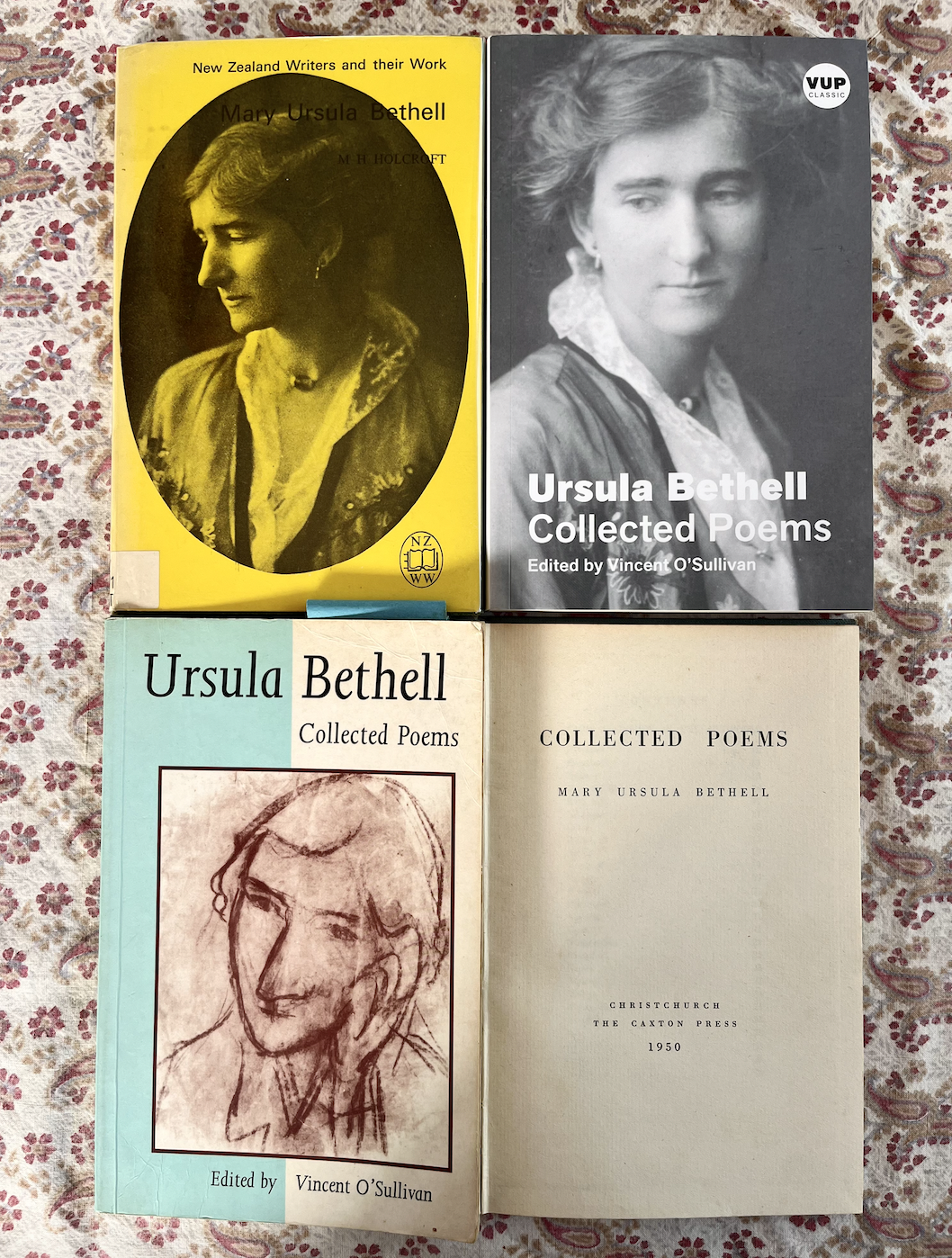
However, this version appears in Vincent O’Sullivan’s Ursula Bethell: Collected Poems (Victoria University Press, 1997, reissued 2011, 2021). Vincent explains in his endnote why the 1997 anthology includes corrections. The poem also appeared in Ursula’s Collected Poems (The Caxton Press, 1950).
Someone recently told me a garden poem might be just the medicine I need for the day, especially when steamrollered. So I picked up my Ursula Bethell books and fell into the delight of her poetry. She writes of seasons, weather, mountain ranges, the sky. She writes of gardening, and she writes of love, and then in the last years, after losing her beloved partner, Effie Pollen, writes of death. She also writes of the darker depths of humanity.
Like so many other people, the weight of the world rests upon my shoulders, the hunger, the poverty, the violence, the racism, the gender phobia, the injustice, the foolish decisions our Government and other world leaders are making, the utter inhumanity. It is unbearable. Yet it is a time, as it has been at other crucial moments in the past, when we need to voice our concerns, to register our protest, to speak together.
How does poetry fit with global and local catastrophe? What good is a poem? It can be a form of protest and it can be balm, and everything in between for both reader and writer.
And so I turn to Ursula Bethell, a poet who listened. She listened to the world and transcribed it into the word on the line, to a rendition of place, beauty scenes that were dear to her, from the distant horizon line to the garden she lovingly tended. I wrote about her aural attentiveness in Wild Honey, her ability to transport us through the arrival of both the musical and the physical.
In ‘October Morning’, I am reminded how I become embedded in her scenes, whether garden or wider view from a backdoor step. How I can smell, hear and feel place to the point reading the poem is a form of meditation, stillness, awe. And yes, this happens as I read ‘October Morning’, the words connecting musical notes and traces of intense beauty. Yet the poem also, fittingly, moves into the unease I feel as I write. How we move between storm and calm. How we translate versions of the world, whether it’s the ‘sky’s sheer blue intensity’ or the ‘powdered foot-hills’ or the resonant and slippery notion ‘clear’?
Ursula offers poetry, rich and resonant, for us to find our own routes through, our own clearings to linger within and beyond, our own ways of holding a poem as talisman, as poetry of darkness and poetry of light.
Paula Green
Ursula (Mary) Bethell (1874-1945) was born in England, raised in New Zealand, educated in England and moved back to Christchurch in the 1920s. Bethell published three poetry collections in her lifetime (From a Garden in the Antipodes, 1929; Time and Place, 1936; Day and Night, 1939). A Collected Poems appeared posthumously (Caxton Press, 1950). She did not begin writing until she was fifty, and was part of Christchurch’s active art and literary scene in the 1930s. Her productive decade of writing was at Rise Cottage in the Cashmere Hills, but after the death of her companion, Effie Pollen, she wrote very little. Vincent O’Sullivan edited a collection of her poetry in 1977 (Collected Poems, Oxford University Press,1985).
April 19th –
Garibaldi Club, 118 Tory St, Te Aro, Wellington 6011, New Zealand

Join us for an enthralling and illuminating literary event with The Cuba Press!
Get ready to dive into the worlds of Tihema Baker (Turncoat), Tim Jones (Emergency Weather), Jennifer Lane (Miracle) and Kate Mahony (Secrets of the Land) as they unravel the threads of their captivating novels 
 They’ll be joined by publisher and novelist Mary McCallum as they delve into the politics, events and personal experiences that breathe life into their stories and shape them into compelling narratives.
Novelists, bring your burning questions!
 Friday, 19 April, from 5:30 pm to 7 pm at the Undercurrent.
 Drinks and nibbles available, Koha entry

Wok Hei: Aphrodisiac poems and recipes in The Year of the Wood Dragon
editor Renee Liang, Intro Chris Tse
Monster Fish Publishing, 2024
contact: docrnz@gmail.com
whatever’s lacking or lost, you’ll find
among the ginger and the spring onion
Chris Tse, from ‘Warming’
Wok Hei: Aphrodisiac poems and recipes is a slender chapbook edited by poet Renee Laing, introduced by Poet Laureate Chris Tse, and published with the support of National Library of New Zealand Te Puna Mātauranga o Aotearoa.
Like Renee and Chris, I love cooking and I love writing poetry. Can we lay claim to the power of both food and poems to nourish heart and body? Poetry certainly activates my reading taste buds. Both food and poetry might have roots in tradition and tendrils in innovation. And I embrace that wholeheartedly.
In his introduction Chris writes: ‘Like poetry, food is best when it is shared with others, whether they’re new friends or family. I love reading about food as much as I do cooking and eating it. I love learning about other people’s family traditions and recipes, and tracing the history of how different foods and cuisines traverse the globe and evolve over generations.’
Renee introduces the practice of ‘wok hei’: ‘Wok hei translates a breath of the wok: a method evolved by cooks in Southern China to bring out the aromas and natural flavours of ultra-fresh ingredients.’ She then makes a connection between bringing out the taste and flavours of super fresh ingredients and writing poetry: ‘In many ways, this is what a poet does too: selecting the best words by applying their knowledge of its properties; marrying harmonious flavours together; balancing textures’.
The chapbook includes recipes (almond cookies, claypot rice, crispy roast pork, steamed whole fish, tong sun fun, cocktails) alongside poems that are steeped in flavour. The contents page is a menu, indicating the reading will be a form of meal. I am picturing the shared table, my taste buds pop as I read.

Ah. I am picturing a suite of chapbooks like Wok Hei that draw upon the food and poetry of the various cultures and homes of Aotearoa, that we may sit and share recipes, traditions, the flavour of words along with the comfort of cumin, the tang of verbs alongside the sweetness of honey. This book is a satisfying meal indeed.
afternoon sun spills in
lighting the faces around the table
all of us here because of these two,
enjoying the last crumbs of fortune cookies for the day,
the golden sky.
Renee Liang, from ‘Fortune Cookies’
Note from Renee
The poets are: Chris Tse, Lynda Chanwai-Earle, Cadence Chung, Nathan Joe, Maddie Ballard, Lee Murray, and myself.
The chefs are: Sam Low, Jennifer Yee Collinson, Shirley Ng, Eddie Lowe and Geoff Ngan. Cover design by Eric Ngan.
Chris didn’t just write the introduction, he was also my sounding board for the curation and also personally helped assemble the books in the basement of the National Library before the reading (!), along with Lynda Chawai-Earle and her daughter.
We deliberately decided to include poets of Chinese (not Pan-Asian) descent – in line with the poets assembled by Chris for a reading at the National Library to celebrate the Chinese New Year of the Dragon, the most auspicious year of the 12 year cycle. I felt this occasion couldn’t go by without a permanent object so this sparked the idea to make the book. The reading was on the 14 February, midway into the two week celebration period, but since it was also Valentine’s Day I decided to use the theme of love – which in Chinese culture is often expressed through the making of special dishes.
The chefs represent generations of diasporic food makers – Shirley Ng for example ran multiple restaurants in Akl in the 1970s-90s, as did Eddie Lowe in Chch, while Jennifer Collinson and Sam Low are well known food commentators currently and known for their ‘translational’ work. The cocktails are from Tim Soh whom I met at a party making cocktails for fun for us – he is a ‘keen amateur’ but very much in the tradition of fusion and relationship to tradition and family. Geoff Ngan is a well known Wellington restauranteur but chose to gift us a humble family recipe because that was the one most important to him.
Likewise the poets were chosen to represent different ‘generations’ of the arts community with Lynda being an established rangatira, myself, Lee, Chris and Nathan being mid career, and Cadence, Maddy and Vera rising stars. They are also chosen to represent different regions ( Nathan- Chch, Vera – Northland ). And we are all from slightly different migration waves ( Chris and Nathan are multigenerational from Southern China, I am second generation from Hong Kong, Vera is a recent migrant from mainland China and wrote her poem when she was visiting family back there).
Of course, as happens with tight knit communities there are many lines of connection between the participants. Two literary ones you might be delighted by: Kim Lowe, Eddie’s daughter, did the cover design for Lee Murray’s Fox Spirit on a Distant Cloud ( just released from Cuba press). And Chris and I first worked together when I took my first play, Lantern, to Wellington back in 2005
Renee Liang
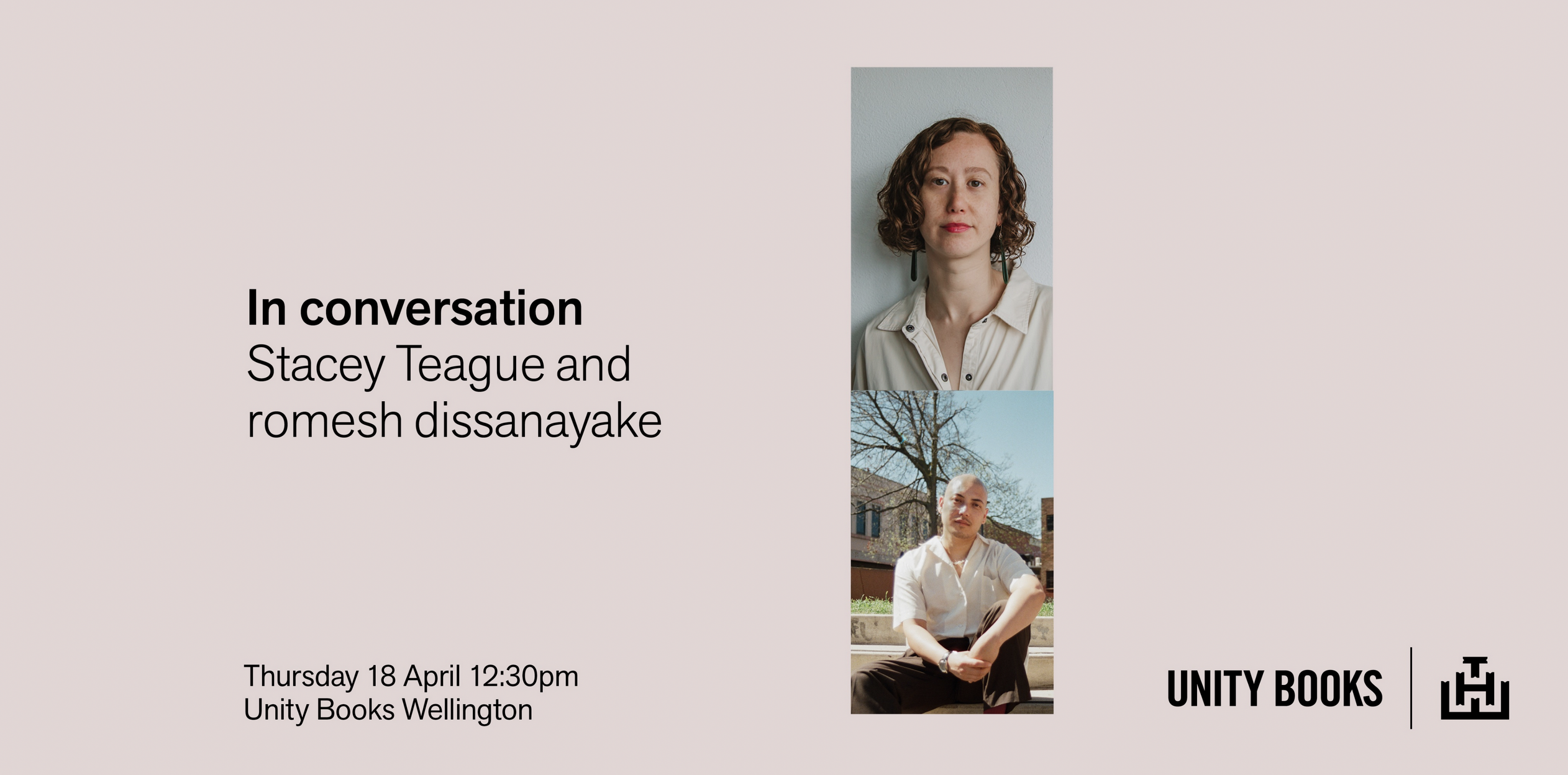
All welcome to a Unity Books lunchtime event this Thursday. A conversation between Stacey Teague and romesh dissanayake about writing and their latest books. Come along at 12:30pm! Celebrate two 2024 books from Te Herenga Waka University Press.

To celebrate the inclusion of Root Leaf Flower fruit by Bill Nelson (Te Herenga Waka University Press, 2023) on the Ockham NZ Book Award Poetry short list, I am reposting a reading Bill did for Poetry Shelf from his collection, the review I wrote, and an excerpt from the book. The book continues to haunt and move and delight me. The awards will be announced at an Auckland Writers Festival Event on May 15th.
The poem excerpt
The agent. A slim grey suit, his ankles showing,
white shirt, neatly parted hair,
I specialise in niche properties, he says.
Don’t worry too much about the garden,
people like a project. He flicks his hand,
without looking, toward the fields. The soil
is what people are here for. Put that
out front. He presses a card
firmly into my hand.
Last week she heard her husband on the phone dismissing the
carer, and she rolled her eyes. Don’t tell me you’re not happy, he
said, you called her a bitch and an f’ing c-word, I can’t deal with that
anymore, but she liked doing that, screaming and swearing, it
felt good, but she could see that he felt bad so that he had to
let the carer go, and now he felt bad that he felt good when
she was gone, as if he enjoyed the pain, the struggle, an old
hermit with a sick wife, holed up, locked in, and now after
dinner he reads her the paper, avoiding the stories about road
deaths and child violence, and when he accidentally starts to
read one about a baby tortured by its parents, her whole body
curls up, he notices and puts the paper aside, How about we go
for a walk to the top paddock, he says, she doesn’t answer and he
lifts her quietly into the wheelchair, her head lolls to the side,
she is getting lighter all the time, she can feel that too, how
he seems able to lift her with less effort, like with every step
she takes closer to death he’s getting stronger, younger, here in
the top paddock, where the soil is hidden by weeds, where she
remembers all the work she did, the aching and the dirt and
falling into a deep sleep after, waking renewed and fertile, and
now, the field overgrown, magnificent, luscious weeds reaching
for the sky, fuelled by beautiful soil.
The roller door slaps loudly against the stops
and I fumble for the light switch. Neon tubes
flicker and then catch, and there it is,
squat and industrial, green mudguards, green wheels,
green engine cover, KUBOTA embossed proudly
on the side. Smaller than I remember.
At eight years old, climbing it, struggling
to reach the first step, pulling the levers, pushing pedals,
buttons, dials, no idea what they did.
I search old boxes of mechanic’s tools, heavy and worn,
rifle through a cupboard, a box of pamphlets.
Manuals. One for the tractor, a couple for classic cars.
I flip past the safety warnings, the specifications,
straight to ‘Getting Started’. The brake pedals,
one for the left wheels, one for the right,
clutch and gears, throttle lever, speed-lock lever,
emergency brake, others to operate the attachments,
and lastly how to slide the seat forward.
The keys in the ignition. I wiggle the gear lever
turn the key – preheat – start.
Nothing, no whine, no stutter.
A page on jump-starting.
I nose the car into the garage and open the engine cover.
I connect the leads and leave the car running.
I turn the key, again, nothing. The manual, nothing.
I get out my phone and start typing, tractors for noobs,
tractors for beginners, Kubota tractor won’t start,
and finally, Kubota B6100 won’t start,
tractorbynet.com, eight pages of replies.
The clutch pedal needs to be pressed. I try again,
the engine turns, a slow raspy bark, over and over,
and finally, a chug of life, but then a splutter, a spit,
a fading hiss, and then it dies.
Bill Nelson, excerpt from Root Leaf Flower fruit
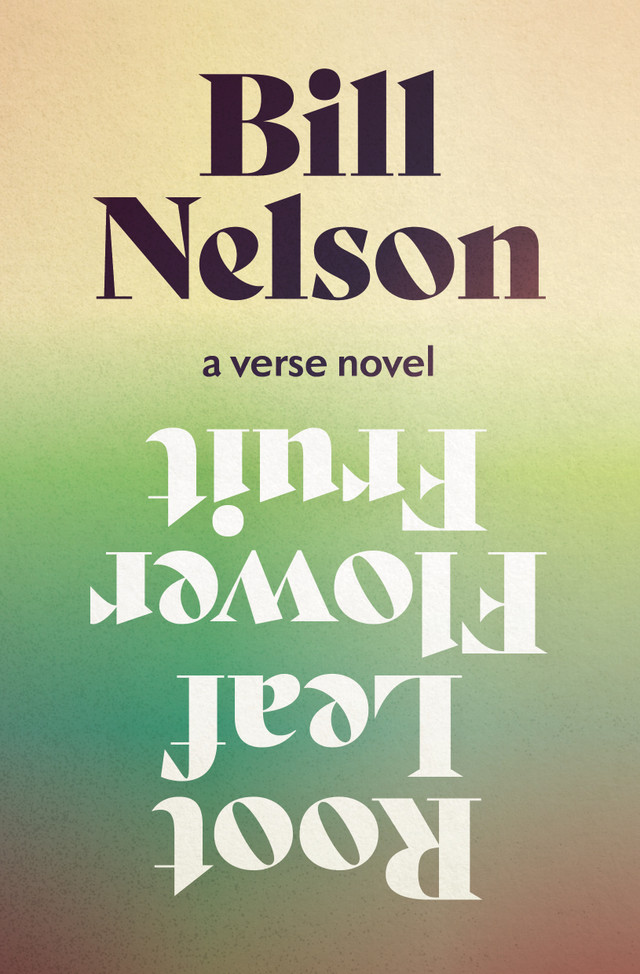
Bill Nelson, Root Leaf Flower Fruit, Te Herenga Waka University Press, 2023
The reading
Excerpt from Root Leaf Flower Fruit
The review
On reading a poetry collection or verse novel: first pick up the book and savour the title. Secondly, if you want to chart your own routes and sidetracks, read the blurb when you have finished the book. Maybe even reviews. Maybe even this review. That way reading becomes open and surprising travel. If you are reading Bill Nelson’s new verse novel, Root Leaf Flower Fruit, you will need to rotate the book to read the title, and that head spin is the perfect start to an affecting and inspiring read.
Such a tactile sensation as I begin reading – muddy and gritty and foaming – so mysterious with a ‘foreboding’ storm rolling in, with ‘no memory of what happened’. Pace and rhythm, this is what I jot down first. The way Bill deftly pulls you into the rhythm of the line, and how as you move along the currents, whether sweet or sour, it offers all manner of uplift, from the physicality of the poetry, to the cadence of music, to the tang of confession, to the anchor of everyday detail, to the shimmer of the gap.
This is poetry that builds a bridge between the land and family, the seasonal cyclic movement of both inhabited land and its inhabitants. Plough and spade and harvest. Feet in the earth. Compost and windbreaks. Hands planting seeds. A grandson returns to his grandmother’s farm to tidy up the house and land for auction as she is now in a rest home, his partner and children back home. The title triggers the calendar as gardening almanac, and we move into the idea of land as inhalation and exhalation, the acts of care and arranging, trimming and planting, along with the almanac ascension and waning of self.
This is also poetry as eulogy, the grandson is slowly unraveling a prismatic portrait of his grandmother. I want to talk about this extraordinary woman with you but I don’t want to spoil the unfolding portrait, your open road travel. Ah. But this is the woman who cared for her body as she cared for the land, so lovingly, so nourishingly. This is the woman who learned the value of lightness and lift. This is the woman who listens to what is not right. Ah, this is the woman who has taken up residency in my heart. This is the meeting of poetry and story, story and bloom.
This too is poetry as recognition of self. The grandson is recovering – ah I am agonising over what to tell you – but here is the gap, the impulse behind the narrative jumpcuts – he is recovering from a brain injury, fingertips barely grasping the accident. Floating, drifting, dreaming, aching.
Root Leaf Flower Fruit draws us deep into the heart of experience, fracturing and continuous, observational and reflective, imagined and lived, utterly refreshing the page of being human. It has a wow ending, the layered impact endures, and I wanted to start reading it again, instantly. Importantly for me, this sublime book, exquisitely crafted, fertilised with profound love and connection, is giving me routes back into my own writing. This is a book I simply must read again. Thank you.
Paula Green, September 2023
Bill Nelson is the author of Root Leaf Flower Fruit (2023) and Memorandum of Understanding (2016). His poems have appeared in Best New Zealand Poems, Sport, Landfall, Hue & Cry, Shenandoah, The Spinoff, Minarets and The 4th Floor, as well as in dance performances and art galleries and on billstickers. In 2009 he won the Biggs Family Prize in Poetry from the International Institute of Modern Letters, and he is a founding editor of Up Country: A Journal for the NZ Outdoors. He lives in Te Whanganui-a-tara Wellington with his partner, two children and his dog, Callimachus Bruce.
Te Herenga Waka University Press page
Novelette
After Richie Hofmann
You were the other.
You had hands and feet like a prose poem.
When you stretched I was moved by movings
of denim, the morning light of jeans on the floor.
Nights were jacketless and starched, everything moved
with the logic of poetry, everything moved so
slow. That new blue perfume never lasted more
than an hour. I thought about buying better-tasting lipgloss.
Not everything feels like everything else. Your mouth
in mine was no more than an accidental rhyme, a slip
of speech. Coffee on Tuesday was nice. We were
civil, friendly, like the month after a divorce. I
didn’t say anything about anything.
I used my jacket to shield our heads from the rain.
I miss you like a paperclip in a back pocket.
I miss you like anything at all.
Cadence Chung
Cadence Chung is a poet, mezzo-soprano, and composer, currently studying at the New Zealand School of Music. Her nationally-bestselling chapbook anomalia was released in April 2022 with Tender Press. She also performs as a classical soloist, presents on RNZ Concert, and co-edits Symposia Magazine, a literary journal for emerging New Zealand writers. In 2023, she was named an Emerging Practioner by the Fund for Acting and Musical Endeavours. She likes to sing Strauss, write art songs, and buy overpriced perfume.

the backyard
COMMUNE
Every morning I open the blinds and let the light in.
I spend all day reading. The light changes its position in the
sky, falling yellow over different parts of my body as I sit
cross-legged on the bed.
Somewhere in the trees outside are tūī, kererū, ruru, kōtare.
They commune with one another as the sun gets low and
moves past the horizon. The sun sets over the Waitākere
Ranges, making way for new kinds of light. We rely on
artificial sources now.
Stacey Teague, from Plastic, Te Herenga Waka University Press, 2024
I thought it might be fun to do a roundup of posts on the blog over the week, and touch base with various poetry-related things that caught my attention.
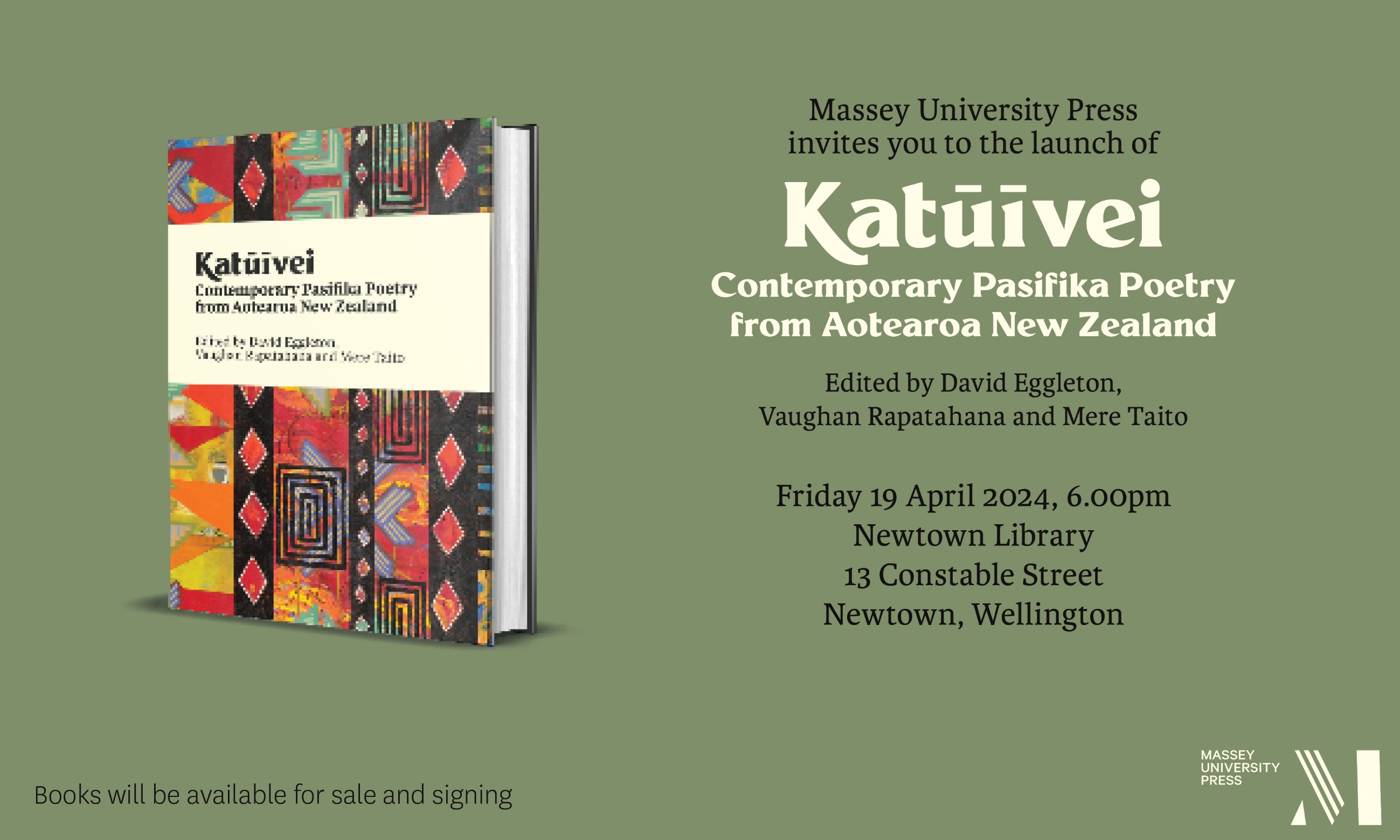
A cluster of new poetry books landed in my letterbox this week – from various publishers – so satisfying to see the range of voices and productions. Three new books from The Cuba Press – Robin Peace, Lee Murray, Peter Rawnsley); from Te Herenga Waka University Press – Airini Beatrais‘s essays The Beautiful Afternoon and romesh dissanayake‘s poetic novel when I open the shop. From Te Perehi o Mātātuhi Taranaki – Ngā Pūrehu Kapohau: A Literary Homage to Pātea, Waverley and Waitōtara, edited by Trevor M Landers, Vaughan Rapatahana with Ngauru Rawiri. And from Massey University Press – Katūīvei: Contemporary Pasifica Poetry from Aotearoa New Zealand, edited by David Eggleton, Vaughan Rapatahana and Mere Taito. Plus an advance copy of Claire Mabey‘s children’s novel from Allen & Unwin.
Our Poet Laureate Chris Tse has been singing the praises of poetry in various places. He shared three poems with Emile Donovan on Radio NZ National and talked about how to read a poem – and it got me thinking about why I love working in schools, sparking children from Y0 to Y13, to read and write poems, and enter fabulous word playgrounds where rules can be broken, invented and obeyed – and where ears and eyes and hearts go adventuring.
In a Q & A for AA’s latest Directions Ngā Ahunga magazine, Chris says of the Poet Laureate role: ‘How can I use the role to change perceptions of poetry to make it more visible to different groups of people?’
Chris has also selected 25 vital poems for Ōrongohau |Best New Zealand Poems 2023.

What struck the deepest chord this week was reading Claire Mabey’s Domestic Animals post at Substack. ‘An Autumnal Roundup and banging my drum’ (April 9th), nails exactly what I have been thinking over the past weeks, especially in the middle of the night. Each morning when I press ‘publish’ on a new Poetry Shelf post, and then get stuck into writing and assembling the next one, I shudder. There is such unbearable stuff going on in the world and here in Aotearoa, it feels off-key to celebrate poetry and books, from comfort poems to the melancholic, from beauty to the challenging, from food to climate change. See link below.
I would like to gift one annual subscription to Domestic Animals to a reader who is in need of an uplift. Message me.
I would also like to gift a copy of Grace Yee‘s shortlisted poetry collection, Chinese Fish, to another poetry fan. Message me. See my review/feature link below.
On the blog this week
Monday Poem: Fiona Kidman’s ‘My daughter makes quilts’
Tuesday: Ockham NZ Book Award feature: Grace Yee – a reading and a review
Harry Ricketts launches memoir THWUP
Wednesday: Review of Robyn Maree Pickens – Tung
On why I subscribe to Claire Mabey’s Domestic Animals at Substack
Thursday: James Norcliffe on ‘My thoughts are all of swimming‘ by Rose Collins
Compound Press launches Schaeffer Lemalu
Friday: Louise Wallace – ‘Even if we don’t know its name: On poetic form in romesh dissanayake’s novel When I open the shop‘
A poem
On a drive to an appointment this week I was reminded how awe inspiring the world can be, whether sky or harbour or bakery. Poetry settles like snow dust wherever I look, shifting in light and texture, on the move, in sleepy haze, miraculously warming.
appointment
memorise the light breaking through dark clouds
memorise the wind surfers catching the storm
memorise the tattered jacket on the stooping man
memorise the island its arms outstretched
memorise the bread and pastries at Wild Wheat
memorise the soundtrack on the journey home
Paula Green
 NZ Poetry Shelf