Over the past days I have been moved by the breadth and depth of tributes paid to Fleur Adcock (1934 – 2024); on social media, on the airwaves, in the press. At a time when we are saddened by news of Fleur’s death, I find myself drawing her poetry close, reflecting on what her poetry means to me, on certain poems that have resonated deeply. I heard publisher Fergus Barrowman sharing memories and poems with Emile Donovan (listen here Nights RNZ), read Dougal McNeill’s wee tribute to her poetry on Facebook – and that coincidentally, his students had been responding to Fleur’s Wellington poems in poems of their own. That matters so very much.
The effects of Fleur’s poetry are wide ranging; she wrote from a sustained history of reading and inquiry, from personal experience and sharp observation, from measured craft to conversational tones. Her poetry is poignant, witty, serious, physical, abstract, humane, cool, warm, personal. She assembled family and she looked back at New Zealand as she widened definitions of home.
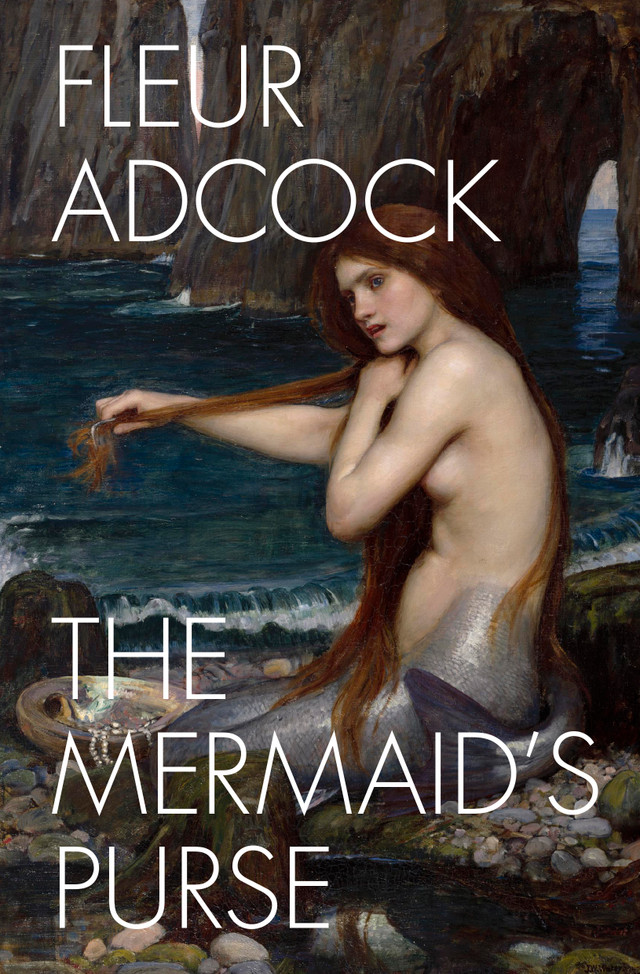
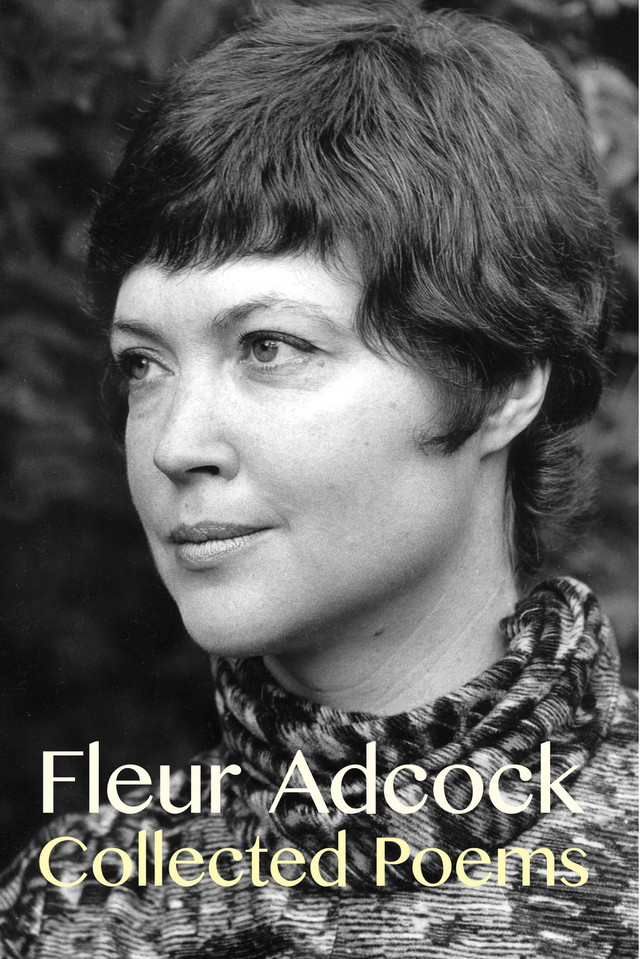
One of the many joys in researching and writing Wild Honey, my book on women poets, was reading Fleur Adcock’s poetry books – from The Eye of the Hurricane (1964) to Hoard (2017). Since then Victoria University Press/ Te Herenga Waka University Press has published The Mermaid Purse (2021) and Fleur’s Collected Poems. The anthology is a sumptuous, substantial tribute to a much loved poet: the book is beautifully designed, keenly edited and a perfect way to enjoy the scope of her poetry. I would like to gift a copy of this to one reader. Please leave a comment here or on my social media pages by Oct 15th if you would like a copy. I will put names in a hat and choose someone on 16th.
A poem
In May 2020, Fleur sent me a poem to post when we were in the thick of Covid, lockdowns and uncertainty. She included a note to go with it. I love the poem and I love the comment. I am reminded how precious memories and particular places are, how being in the garden or the woods or at the beach can furnish joy and balm in difficult times.
Island Bay
Bright specks of neverlastingness
float at me out of the blue air,
perhaps constructed by my retina
which these days constructs so much else,
or by the air itself, the limpid sky,
the sea drenched in its turquoise liquors
like the paua shells we used to pick up
seventy years ago, two bays
along from here, under the whale’s great jaw.
Fleur Adcock
from The Mermaid’s Purse, Te Herenga Waka University Press, 2021
Fleur: I wrote this poem when I was in New Zealand late last year. It feels unbelievable that I should have been able to walk freely along the coast of Island Bay basking in the sunshine and the wind, just because I felt like it; things are not like that here, and may never be again for someone of my age. But at least it’s spring, and I have my garden, and am allowed to go for walks in the local woods as long as I don’t travel on a bus to get there, or risk doing anything so audacious as my own shopping.
A conversation
To celebrate the arrival of Collected Poems (2019), Fleur and I embarked on a slow email conversation. The poems cited are included in the anthology, but I have added the original source here. This was a special and generous conversation, slowly unfolding over weeks not an hour.
At school I used to read, mostly,
and hide in the shed at dinnertime,
writing poems in my notebook.
‘Little fairies dancing,’ I wrote,
and ‘Peter and I, we watch the birds fly,
high in the sky, in the evening’.
from ‘Outwood’
(originally published in The Incident Book, Oxford University Press, 1986)
Paula: Can you paint a small snapshot of yourself as a young girl? Did books and writing feature?
Fleur: From the age of six I was always a passionate reader, somewhat to the annoyance of my mother as the years went by. One of my favourite childhood photographs of myself (there were very few, because photographic films were almost unobtainable during the war) is of me lying on my stomach on the grass in our garden when I was eight or nine, reading a book. When I was nearly seven I was given a book called Jerry of St Winifred’s, about a girl who wanted to be a vet and who when trying to rescue a puppy from a rabbit hole accidentally discovered an ancient manuscript. This was when Marilyn and I were living in the country, as unofficial evacuees on the farm of our father’s cousins George and Eva Carter. Auntie Eva told me reading was bad for the eyesight, and restricted me to one chapter a day. If she had wanted to encourage me this would have been the best thing she could have done – in these days of reluctant readers, parents are told that if reading were forbidden more children would want to do it. In my case there was absolutely no need.
At that time we were away from our parents, and therefore writing letters and little stories for them, or at least I was – Marilyn was still at the stage of sending pictures, but it was all useful practice in communication.
The following year, 1940, we were living in Salfords, Surrey, with our mother, just across the road from the small tin-roofed public library. I used to go and browse in it alone, to borrow books. Titles I remember are Fairies and Chimneys, by Rose Fyleman, and Tales of Sir Benjamin Bulbous, Bart, which involved naiads, water sprites, etc. You will observe a fairy theme.
In what seems no time at all we were settled in a house of our own and I was reading whatever I could lay my hands on: library books, books from school, occasional books I was given as presents. Because of the wartime paper shortage these were in rather short supply. I liked adventure stories: Dr Doolittle, books by Arthur Ransome, Robert Louis Stevenson, and inevitably Enid Blyton. When I was 10 my mother lent me her copy of Gone with the Wind, and the following year gave me a rather beautiful ex-library copy of Pride and Prejudice, which I read over and over again and still treasure.
I was also writing poems. When I was seven, at Outwood School in the Surrey countryside, I had a little notebook in which I wrote my compositions at lunchtimes. I was there for only three months, from early June to early September 1941, and had no friends. Marilyn was away for the first few weeks, with whooping cough. Poetry was my refuge.
(…) I was impatient
for Jerry of St Winifred’s –
my Sunday School prize, my first real book
that wasn’t babyish with pictures –
to curl up with it in the armchair
beside the range, for my evening ration:
‘Only a chapter a day,’ said Auntie.
‘Too much reading’s bad for your eyes.’
I stuck my tongue out (not at her –
in a trance of concentration), tasting
the thrilling syllables: ‘veterinary
surgeon’, ‘papyrus’, ‘manuscript’.
from ‘Tongue Sandwiches’
(originally published in Looking Back, Oxford University Press, 1997)
At my next school, St John’s, I won a gold star (see my poem ‘The Pilgrim Fathers’, and also the previous one, ‘Tongue Sandwiches’, re the earlier experience). I graduated to a slightly larger notebook and my subject matter expanded slightly, although one of my principal influences was still Enid Blyton – our mother thought her little magazine “Sunny Stories” was suitable reading matter for children, rather than the comics we swapped with our friends from school. I also liked ballads and melodrama. There were three more schools before the end of the war. At one we studied ‘The Lady of Shalott’: just my cup of tea, with its Tennysonian sound-effects and melancholy ending.
When I was 13 we went back to New Zealand, and I began writing nostalgic poems about such topics as “Spring in a Surrey wood”. The poems were rather fewer in my teens; some of them were carefully made, with rhymes and proper scansion, suitable for the school magazine, in which I won prizes for ‘The Bay’ and a poem about a seagull. My more private poems came under the influence of TS Eliot, whose work we studied when I was 15. World-weary disillusionment set in, together with free verse; I’ve just found one that ends with the two lines: “But what the hell does it matter? / Let’s go out and shoot ourselves.” The Waste Land has a lot to answer for.
But I’m afraid this is not a small snapshot but a sprawling album! I’ll stop.
Paula: I got goose bumps picturing the power of words and books for the young child making her way from girlhood to adolescence. Has poetry writing always been a refuge for you? Or has it developed other functions?
Fleur: Writing poetry has many functions for me; more than I can identify. It’s art, it’s therapy, companionship, a challenge, an indicator of health – I’ve always been aware that when I’m healthy I’m writing, and when I’m writing I’m healthy. It’s that much despised thing self-expression, as resorted to by generations of teenagers. It’s also, to some extent, my bread and butter. When I had a proper job, as a librarian in the civil service, time to write poetry was the unattainable ideal. Now that I’m retired I have a small pension from that ‘proper job’, but for a long time while I was freelance most of the work I did, in the form of poetry readings, broadcasting, book reviewing, translating, teaching on writing courses, going to festivals, writing libretti, etc, arose out of the fact that I wrote poetry. There’s less of that now – you don’t get quite so many commissions in your 80s – but still a certain amount. And I’m still writing the poems.
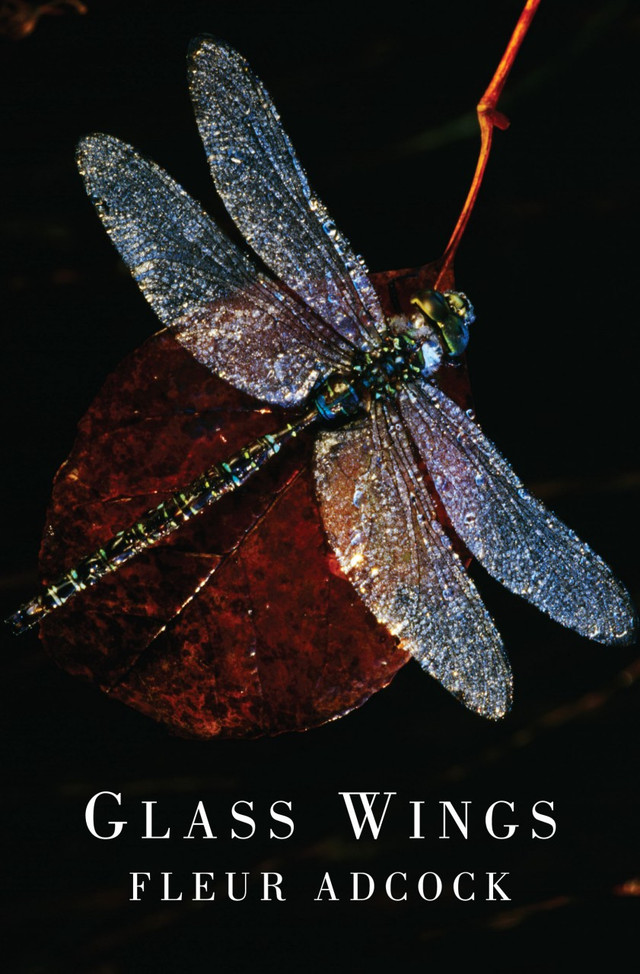
Poetry also has a social function. Some 18th century poets used to call their books ‘Poems upon Several Occasions’. I’ve written a number of those, too: poems for other people, for specific occasions or on topics that I hope they will be able to identify with. My poem ‘The Chiffonier’ about a particular habit of my mother’s (marking out special items for her children to inherit, long before she died) turned out to be common to a whole troop of mothers, I was pleased to learn from fan letters. I write a number of family poems: for birthdays, for Greg’s wedding to Angie, for the birth of my great-grandson Seth (a rare male among my hosts of female descendants), also elegies – for my parents and various ancestors, and one for Alistair that I managed to produce in time for Marilyn to read it at his funeral. There are elegies for friends, too, and increasing numbers of laments for doomed or extinct inhabitants of the natural world: birds, butterflies, insects of all kinds (my book Glass Wings contains examples), bats… It would be depressing to go on.
But now I see you in your Indian skirt
and casual cornflower-blue linen shirt
in the garden, under your feijoa tree,
looking about as old or as young as me.
Dear little Mother! Naturally I’m glad
you found a piece of furniture that had
happy associations with your youth;
and yes, I do admire it – that’s the truth:
its polished wood and touch of Art Nouveau
appeal to me. But surely you must know
I value this or any other treasure
of yours chiefly because it gives you pleasure.
I have to write this now, while you’re still here:
I want my mother, not her chiffonier.
from ‘The Chiffonier’
(originally published in The Incident Book, Oxford University Press, 1986)
Art: one of the enormous satisfactions of writing is constructing a beautiful or at least memorable and satisfying artefact. I believe that one of the essential elements of being human is wanting to create some kind of art. I remember having an argument with a friend about this, or perhaps just a misunderstanding – when I say “art” I include large areas of human creative endeavour such as gardening, growing plants, making clothes, furniture, jewellery, or anything that gives satisfaction to its creator. Some people (I’m not among them) find artistic pleasure in cooking. When my grandchildren Cait and Ella were small they spent hours of ingenuity constructing miniature items of furniture for their Sylvanian toys out of scraps of cardboard, Sellotape, fabric or whatever was around; that was art. So, I suppose, were the elaborate cakes their mother made for their birthdays; I remember one in the form of a swimming pool with blue jelly for water. For me the primary art-form is poetry. Very few things make me happier than finishing a poem I’ve been struggling with.
Paula: I love the way poetry emerges from the nooks and crannies of your life and thinking, the way it feeds and spurs. Your Collected Poems demonstrates this so clearly. Rereading the first two collections – The Eye of the Hurricane (1964) and Tigers (1967) – I am reminded how these early poems have travelled so well across the decades. Take the much-loved and anthologised ‘For a Five-Year-Old’ for example. What were your early preoccupations as a poet in view of both style and subject matter?
I see, then, that a kind of faith prevails:
your gentleness is moulded still by words
from me, who have trapped mice and shot wild birds,
from me, who drowned your kittens, who betrayed
your closest relatives, and who purveyed
the harshest kind of truth to many another.
But that is how things are: I am your mother,
and we are kind to snails.
from ‘For a Five-Year-old’
(originally published in The Eye of the Hurricane, AW Reed, 1964 and then in Tigers, Oxford University Press, 1967)
Fleur: I don’t think I can answer this in any meaningful way. I could look back through the early collections to see what I was writing about, but so could anyone; it’s not the same as being inside my feelings at the time, which I find it impossible to recall. I wasn’t setting out with any aim or objective; I just wrote about whatever topics suggested themselves, and my chief emotion was “Oh, good, I’m writing a poem!”
One of my first preoccupations, even as an adolescent, was my ‘exile’ from England. I wrote about this in my early teens, and also in the poem I called ‘The Lover’, in which I imagined a male persona trying to adapt to living in a new country. This ridiculous enterprise naturally misfired: everybody thought I was writing about Alistair. Serves me right, for not having had the confidence to write as a female.
Looking at The Eye of the Hurricane, I see that a number of the poems were about relationships with various men, one in particular – a natural preoccupation of a person in her 20s. One person they were definitely not about is Alistair. I was very surprised, in later years, to find that some people imagined he was the character represented in such poems as ‘Knifeplay’, when he was not at all like that. Most of those poems were written in the nearly five years between my divorce from him and my marriage to Barry Crump in 1962. I never wrote about Alistair while I was married to him. Most of my very few poems about him were written while he was dying or after his death in 2009 – my elegy for him was modelled stylistically on his famous Elegy in Mine eyes dazzle. My own early “battle of the sexes” poems (to use a Baxter phrase) were about my then current preoccupations. By 1959, Alistair was history.
As for the style, in those days I wrote in traditional verse forms, often rhymed, because it was easier to be convinced that I’d got a poem right if the rhymes and metre were correct. Free verse is far more difficult to judge (I don’t mean blank verse – unrhymed iambic pentameter, as in Shakespeare’s plays – which is another kettle of fish. I certainly used that from time to time.)
When it came to my next collection, Tigers, a new subject presented itself: culture shock. I was suddenly living in a wider society, in England, exposed to the harsh realities outside insular little cosy New Zealand. ‘Regression’ is a reflection of my new political anxieties, although I had also written about the nuclear threat earlier, in NZ. We were all convinced the world could end at any time, as seemed quite likely. But on the whole I rather cringe to open these two earliest collections. I think of what Katherine Mansfield wrote to JMM when he urged her to allow In a German Pension to be reissued: “It is far too immature, and I don’t even acknowledge it today. I mean I don’t ‘hold’ by it. I can’t go foisting that kind of stuff on the public” (quoted in his introduction to the Penguin Modern Classics edition).
All the flowers have gone back into the ground.
We fell on them, and they did not lie
crushed and crumpled, waiting to die
on the earth’s surface. (..)
from ‘Regression’
(originally published in Tigers, Oxford University Press, 1967)
Paula: You touch upon the way autobiography can both corrupt and enhance a reader’s pathways through a poem and the danger of making assumptions about both the speaker and subject of a poem. Some things in a poem stay secret and some are exquisitely open. As I read my way through your collections I relish the shifting tones, sharpness, admissions, contemplations. The way poems are both oblique and transparent. Two collections have particularly affected me, but before sharing these, are there one or two books that have been especially important in the making and published result?
Fleur: Once again, impossible to answer. For quite some time The Incident Book gave me particular pleasure to look back on, but inevitably it was overtaken by others. Every published collection that appears between covers and looks like a complete and separate entity is in fact just a bundle of individual poems. When my youngest granddaughter saw the size of my Collected Poems in New Zealand, she said to her father, “Wow! How could she write so many poems?” The answer is, one at a time. Each new poem is a world in itself, something to plunge into and be absorbed by for as long as the writing of it lasts. Only much later does it become part of a published book, if I decide to include it in one. Not every poem is chosen.
21
The fountain in her heart informs her
she needn’t try to sleep tonight –
rush, gush: the sleep-extinguisher
frothing in her chest like a dishwasher.
She sits at the window with a blanket
to track the turning stars. A comet
might add some point. The moon ignores her;
but dawn may come. She’d settle for that.
from ‘Meeting the Comet’
(originally published in Time-Zones, Oxford University Press, 1991)
My feelings about the various collections tend to be influenced by my memories of the circumstances and places in which they were written. For example, Time-Zones received its title from the travelling I was doing during that time I was working on it. It contains poems from my three months in Australia as writer in residence at the University of Adelaide in 1984, including the two long sequences at the end, ‘Mrs Fraser’s Frenzy’ (written for music, originally for Gillian Whitehead, but she decided it didn’t suit the commission she had in mind and it was subsequently set by the English composer George Newson instead), and ‘Meeting the Comet’, which I wrote in bits and pieces during my journey to and from the southern hemisphere, as a way of staying sane and having something to work on while I was in transition from one place to another. (The girl in the poem is fictional, but was originally inspired by the child of friends in Newcastle, who had the same disability although not the same history as the one in the poem.) The collection also includes poems about Adelaide, where I was living for a time, and Romania, which I had visited and where I had made good friends and had my eyes opened to a new political landscape. Altogether a bit of a ragbag – I was crossing time zones as the poems came to me.
How complicated these things are to explain.
Then there was Looking Back, which was short-listed for the T.S. Eliot prize in 1997. It gave me great pleasure to write, or at least the poems about my ancestors did, because of my obsession with genealogy, but shortly afterwards, oddly enough, I lost interest in writing poems for some years, and devoted myself to the ancestors in a big way.
Dragon Talk was important, by virtue of the fact that it marked my return to writing poetry after a gap of several years. However, I certainly wouldn’t call it my best collection; it was a necessary one, to get the wheels turning again, but afterwards I moved on in different directions.
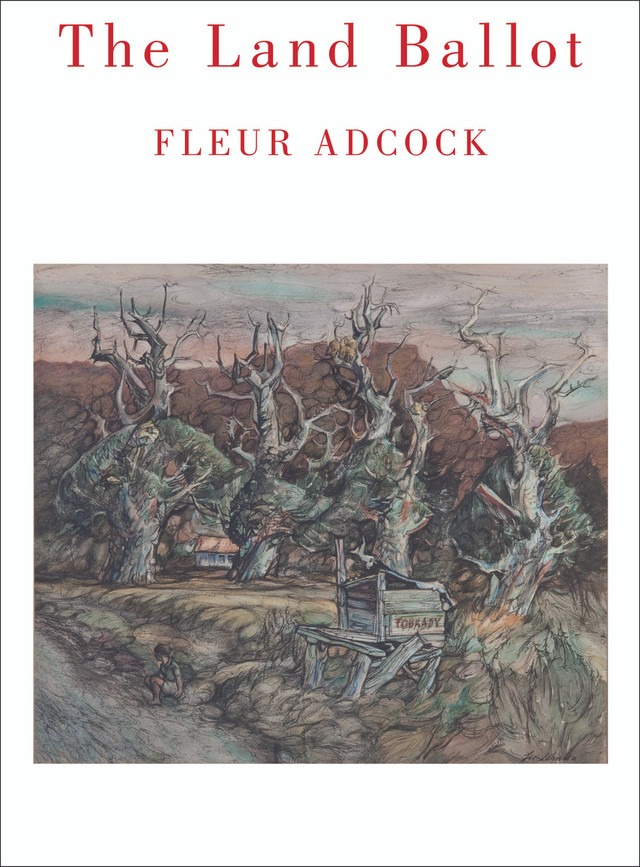
The only book I actually conceived and embarked on as a single entity, in the way you might embark on a novel, was The Land Ballot. I wrote three or four poems about my father’s childhood, and then it dawned on me that I might be able to produce enough for a book. I did enormous amounts of research for this, over a period of two years, 2012-2013, building up a picture of this remote community and its inhabitants, and was totally immersed in it. Two of the happiest years of my life as a writer. On the other hand, one of the happiest years of my life as a person was 1977-8 (September-June), living in the Lake District as writer in residence at Charlotte Mason College in Ambleside, surrounded by amazing scenery, with time to walk and explore and make discoveries, as well as making a quantity of new friends and spending more time than usual with many of the old ones: if you live in a famously beautiful place and have a spare bedroom you suddenly become very popular. But the poems that emerged from this time are scattered between more than one published collection.
As there was only one lamp
they had to spend the winter evenings
at the table, close enough to share
its kerosene–perfumed radiance –
his mother sewing, and he
reading aloud to her the books
he borrowed from Mr Honoré
or the Daysh boys on the next farm
from ‘Evenings with Mother’
(originally published in The Land Ballot, Bloodaxe Books and VUP, 2014)
Paula: I love the way a poem becomes a miniature absorbing world for both reader and writer, and the way the context of its making is important for the poet. Reading a book is akin to listening to a symphony; you absorb the composition as a whole with certain notes and melodies standing out. I also loved The Incident Book with its fertile movement, physical beacons and emotional underlay. I keep going back to ‘The Chiffonier’, both a conversation with and portrait of your mother. The ending never fails to move me.
But I also loved Looking Back and The Land Ballot, two collections that consider ancestors, the past and the present, an attachment (and detachment) to two places, the UK and New Zealand. I guess it gets personal; the fact I am drawn to the gaping hole of my ancestors with insistent curiosity and the fact your exquisite writing satisfies my interest as a poet. Heart and mind are both engaged. Questions might arise, I feel and think multiple things, the music holds me, the intimacy is breathtaking.
What attracts you in poetry you admire?
Fleur: Another impossible question. The simple answer is simply expressed in the last line of my poem ‘The Prize-Winning Poem’: “it’s got to be good.” Of course you will ask what is the nature of that ‘goodness’, or excellence? I could talk about the tone, the rhythms, the emotional resonances, the sense of mystery or wonder that poems sometimes induce, but what I always want a poem to do is surprise me. The only full answer would be a list of poems I have admired over the years, which would be impractical.
This afternoon I was listening to a performance of Britten’s Serenade for tenor, horn and strings, which includes the setting of Blake’s little gem ‘O rose thou art sick’, which I’ve known and admired since childhood, but because the musical setting (also familiar to me) slows the words down I was listening to them more carefully than usual, and particularly struck by them. A perfect poem. But then yesterday I picked up the latest copy of the TLS and found a poem by Helen Farish that was totally new to me, and found it striking in a different way, possibly because of its strangeness: it makes you want to know more about the situation she describes, although on the other hand knowing too much might spoil it.
Poems serve different functions in our lives, and how we respond to them is affected by the circumstances in which we read or hear them.
Paula: Indeed. Can you name three poetry collections you have admired in the last few years?
Fleur: The answer is that no, I can’t make any such choices. I don’t do “favourite poets” or “favourite books”. To do so would not constitute a considered judgement. Enthusiasms come and go; they are things of the moment. It takes me a long time to make up my mind about the value of any particular writer. For example, many of my friends have published books that were important to me, but that would be a judgement about friendship, not necessarily about literary worth. I’d rather pass on this question.
Paula: What activities complement your love of poetry?
Fleur: Walking (in our local woods or wherever I happen to be), watching plants grow, watching birds and other living creatures in my garden or elsewhere. The greater the destruction of our natural environment, the more important these things become. When I first bought my house in London, in 1967, huge crowds of birds came to the neighbours’ bird table; miniature froglets hopped around the grass verges when I tried to mow the lawn; the buddleia tree was smothered in butterflies; we used to hear owls in the night. Now that I have my own birdfeeders, and more time to watch and observe the population, I’m more and more aware of the sad losses. On the other hand, I’m grateful for my health and continued ability to look after my garden and get out and about.
Now that my eyesight is so much worse I find myself reading less and listening to music a lot more, but that doesn’t really belong in this interview – music is a completely different medium from literature.
Paula: Thank you Fleur, especially as I posed such difficult questions. I have loved this slowly unfolding conversation that has kept me returning to the joy and richness of your poetry. Thank you for your generous and engaging responses – it is now time for you to get back to what you love – writing poems!
Paths
I am the dotted lines on the map:
footpaths exist only when they are walked on.
I am gravel tracks through woodland; I am
field paths, the muddy ledge by the stream,
the stepping-stones. I am the grassy lane
open between waist-high bracken where sheep
fidget. I am the track to the top
skirting and scaling ricks. I am the cairn.
Here on the brow of the world I stop,
set my stone face to the wind, and turn
to each wide quarter. I am that I am.
Fleur Adcock
(originally published in Below Loughrigg, Bloodaxe Books, 1979)
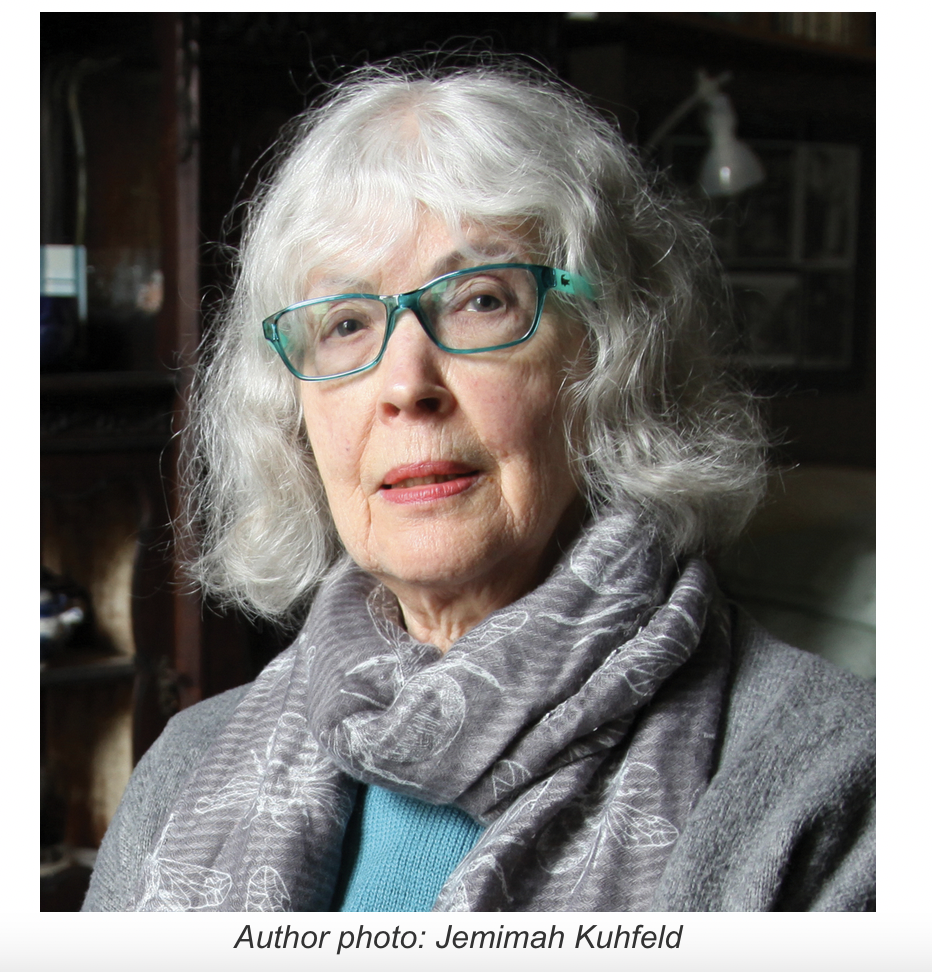
Born in New Zealand in 1934, Fleur Adock lived part of her childhood and adolescence here, had two children and two marriages before returning to live permanently in England in 1963. She spent most of her writing life in Britain; she was an editor, a translator and above all a poet. She published many poetry collections, including Glass Wings (2013), The Land Ballot (2014), Hoard (2017) and The Mermaid’s Purse (2021), along with several other Selected Poems and her Collected Poems (2019, 2024). She edited The Oxford Book of Contemporary New Zealand Poetry (1982); The Faber Book of Twentieth-Century Women’s Poetry (1987); The Oxford Book of Creatures, with Jacqueline Simms (1995). Her multiple awards include the Jessie Mackay Prize in 1968 and 1972, the Buckland Award in 1968 and 1979, a New Zealand Book Award in 1984. She received an OBE in 1986, the Queen’s Gold Medal for Poetry in 2006, was made a CNZM for services to literature in 2008, and The Prime Minister’s Award for Poetry in 2019.
Te Herenga Waka University Press page






 NZ Poetry Shelf