A watermelon with the mud washed off, round and green. Taking a knife I split it in two.
Ripples spreading outward. A shag surfaces at the centre of its circle. Nearby a terrier digs holes in the sand.
Could we go over what you just said? No, already you put down your cup and walk away.
2.
Now it’s midwinter. A cloud of steam from the Espresso machine drifts over my table and it begins to rain.
By the foreshore an oystercatcher strides through the water its breastbone just above the surface.
All those white objects passing before my eyes; small ghosts I used to entertain when I was a child.
3.
Agamemnon, did he really sacrifice his daughter? Add it to the list of things I disbelieve.
Low cloud at sunset, its shadow cast on a higher cloud. Traffic on the highway banked up for miles.
Distracted by news of the latest bombing, I try to wipe away a spot of sunlight on the kitchen bench.
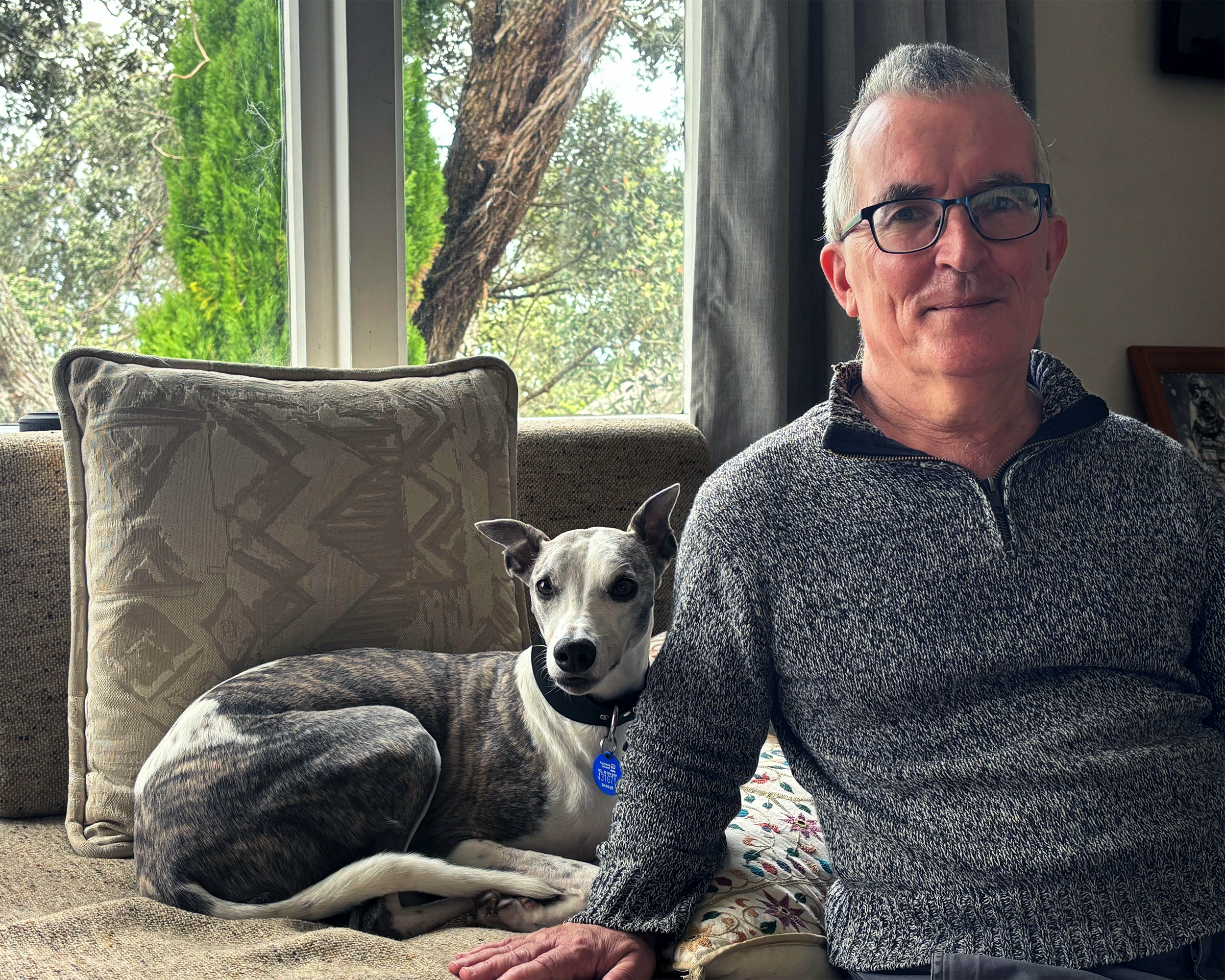
Richard von Sturmer
Richard von Sturmer is a writer, performer and filmmaker who is well known for having written the lyrics to Blam Blam Blam’s “There is No Depression in New Zealand”. He is a teacher of Zen Buddhism and the co-founder of the Auckland Zen Centre. Slender Volumes is his tenth collection of writings and is on the Ockham NZ Book Award 2025 Poetry Longlist.
The loveliest places of all are those that look as if there’s nothing there to those still learning to look
Brian Turner, from Just This, VUP, 2009
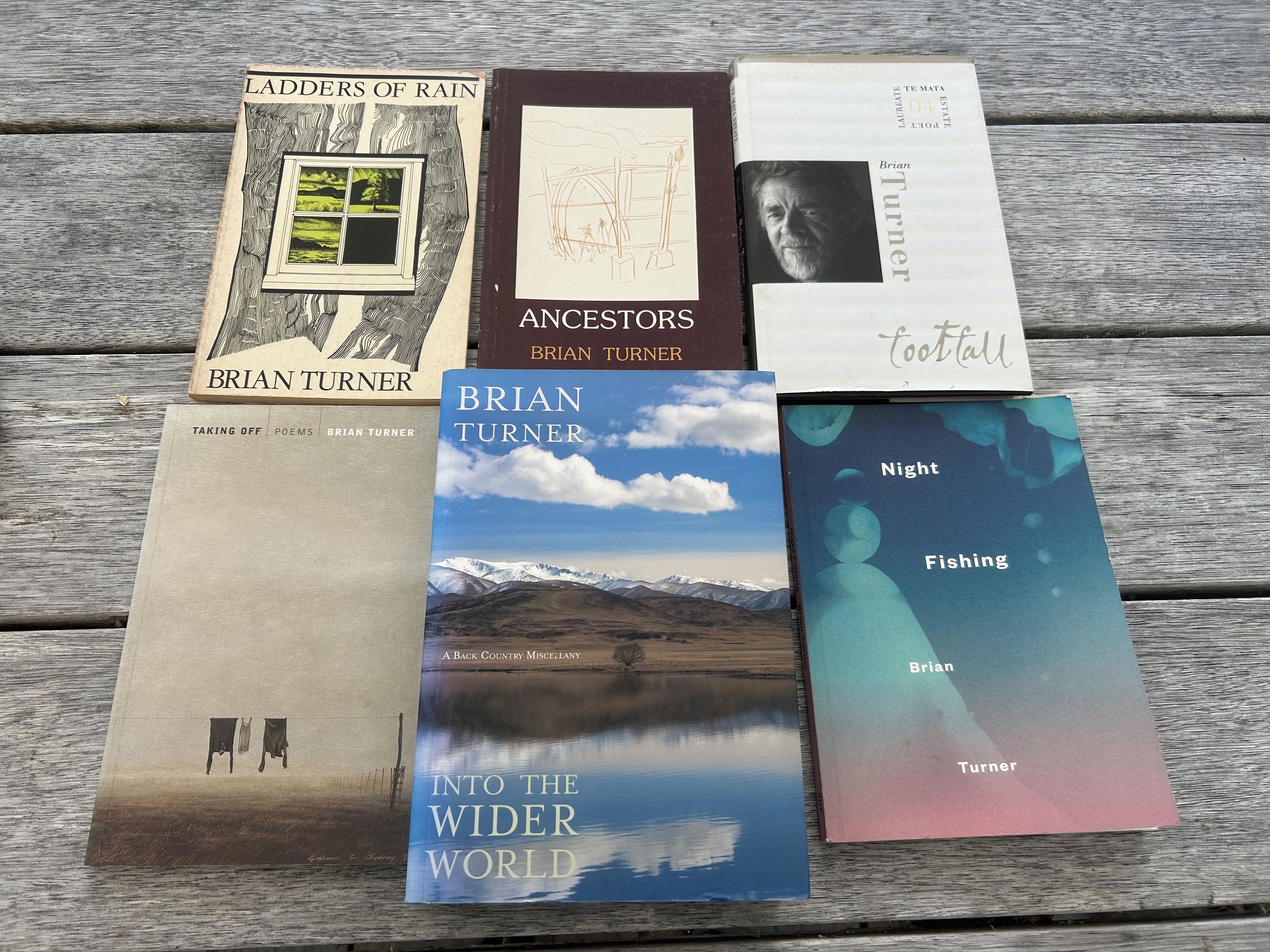
To read your way through Brian Turner’s poetry collections is to travel with open skies, shifting seasons, wide space, musical wind, rivers, stars, the precious land, a steadfast light. More than anything, to read your way through Brian’s poetry, from his debut collection Ladders of Light (John McIndoe, 1978) to his Selected Poems (VUP, 2019) is to savour the present participle, to be musing, absorbing, travelling, grounding, observing. With all senses on alert. With truth and fiction, fathers and sons, beauty and love, earth fire water air. With physical anchors and philosophical currents. With so many poems dedicated to friends, this is poetry as tender embrace.
If there is a vital core from which each poem lifts, it is an echoing question, what matters? And what matters is the way each poem is a conversation with, a link to, a rendition of home. Overtly, or less so. Home is where you stand, where you have stood, lay down roots, where you dream and love and die. It is experience and reality and dream. Questions. Connections. Epiphanies. In his introduction to Elemental: Central Otago Poems (Godwit, 2012), Brian underlines the primacy of belonging, the way the poet is both archaeologist and explorer. The way heart is woven from the blood and sinew of home, and home is formed from the blood and pulse of heart.
Poets — certainly poets like me — end up finding and revealing the self in where they come from, and hope to be able to say, eventually, this is where I most belong. All writers, not just poets, are explorers, archaeologists too; we grub, we dig, are often surprised by what we find. There is music, there is song, there is grace and, now and again, a place where peace of mind is at home; then one can feel confident and, for magical moments, comfortable and at ease. There, truly, is a wonderful place to be.
On such occasions I sense there’s something of the numinous, something sacred, in and about our surroundings. I mean this in a broad-brush spiritual sense. It’s as if the hills watch us, and ask if we are watching ourselves in them.
BrianTurner from ‘Foreword’, Elemental: Central Otago Poems, Godwit, 2012
And herein lies the joy of reading your way through Brian’s poetry. As readers we too are archaeologists and explorers, because reading like writing can get you digging and delving and yes, dancing into and within the myriad dimensions of home. In this fragile world, with its blinkered planet-smashing leaderships7, how restoring it is to hold poetry close that navigates what matters. To hold home, however we define it, close, to write it, it sing it, read it to heart.
This poetry, together we toast and remember this beloved poet.
Fact of Life
Home is not where the heart is it’s what the heart goes hunting for.
Brian Turner, from Night Fishing, VUP, 2016
Brian Turner was born in Dunedin in 1944 and lived most of his life in Central Otago. His first book of poems, Ladders of Rain (1978), won the Commonwealth Poetry Prize and was followed by a number of highly praised poetry collections and award-winning writing in a wide range of genres including journalism, biography, memoir and sports writing. Later poetry collections included Night Fishing (2016), Inside Outside (2011), Just This (winner NZ Post New Zealand Book Award for Poetry 2010) and Taking Off (2001). His Selected Poems were published in 2019. He was the Te Mata Estate New Zealand Poet Laureate 2003–05 and received the Prime Minister’s Award for Poetry in 2009. Brian died in February 2025.
Poetry Shelf invited twelve friends to choose a favourite poem by Brian and write a few words to go with their choice. I offer this tribute so you too may go travelling with Brian’s poetry, and may draw close to home and to heart.
A Tribute for Brian
Philip Temple
Ancestors (for Philip Temple)
I came this way to shed some care. Every stone I stumbled on, every
root that snagged my foot was bastard discontent. By the time
I’d reached the hut I was too tired to complain anymore. Shucking my pack
I lay in the grass that shimmered in the breeze. The blue sky
preened itself. Wheels of sunlight bowled along the valley. I dozed off
until evening crept over forest and mountain. I knew they would
find me sometime. My speechless ancestors played like mice among my dreams.
It grew cold. And colder. I woke to the river running over my bed
of stone. I have come to know that where a river sings a river
always sang. I listen. This much I have learned.
Brian Turner, from Ancestors, John McIndoe, 1981
This poem was the eponymous title to Brian’s second collection in 1981. It preserves forever a moment we shared, a year earlier, ‘until evening crept over forest and mountain’ and we woke to the ‘bed of stone’ beside the Top Forks Hut in the Wilkin Valley. It had been a long tramp on a hot day and we were both buggered by the time we got there, thankful to be able to drop our heavy packs and collapse on the grass. It was the beginning of our last real climb together. The next day we made the first ascent of a peak that was un-named despite its height and lowering presence 5000 feet above the joining branches of the river.
But the poem was more than commemorative or even marking, in its dedication, the unbreakable bonds of our friendship. It spoke for both of us of the wordless ancestors running in the rivers and embedded in the mountains. There is a universal understanding of this that is expressed in different ways in particular cultures but which transcends them all. Brian’s great contribution in his poetry and other writing was to express this so conclusively for everyone. His work will continue to give us the assurance we belong.
Philip Temple
Bridget Auchmuty
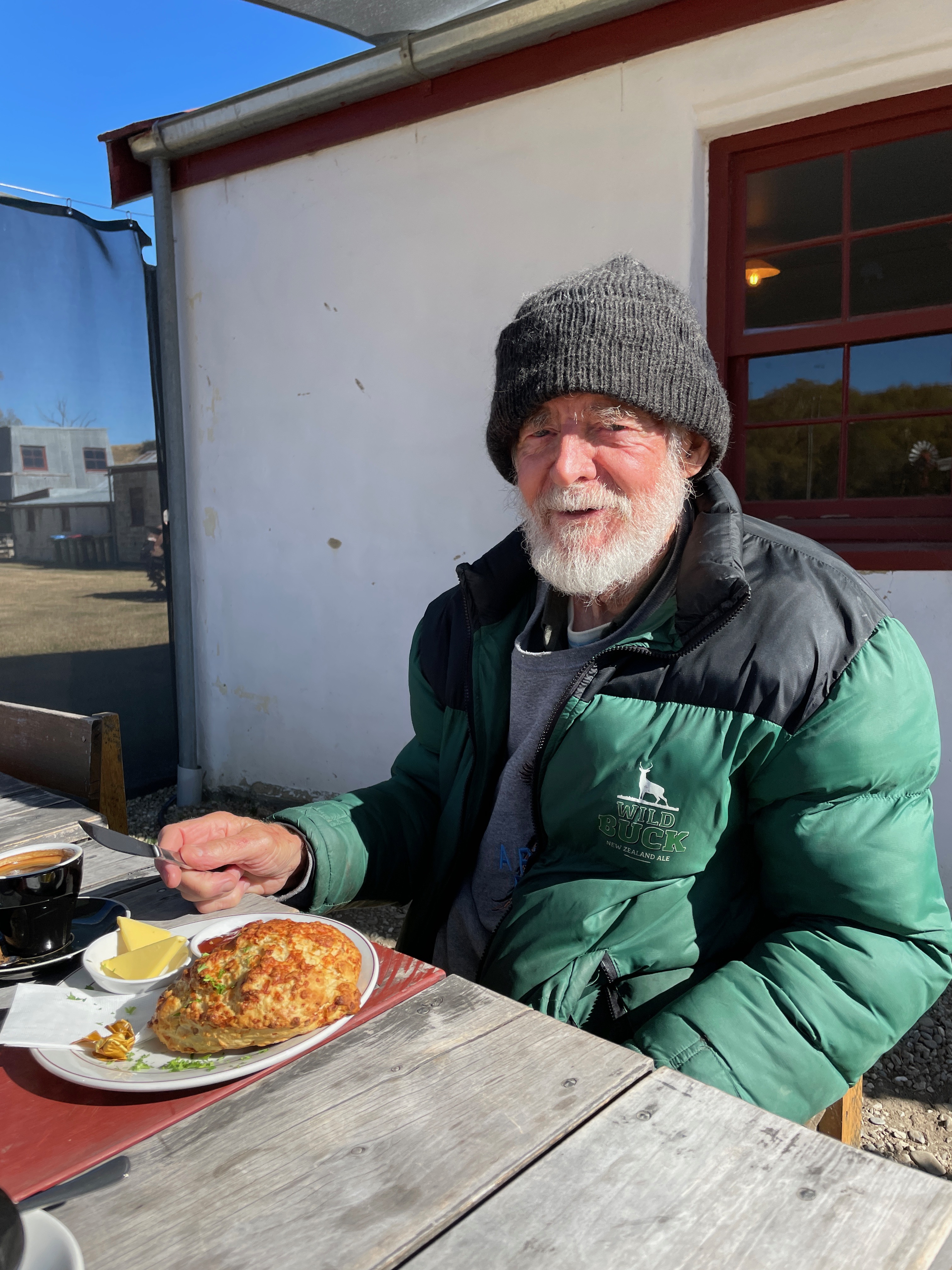
Hannah’s Kitchen, Hayes Cafe in Oturehua
The River in You (after W.S. Merwin)
The first thing you want to hear is the river sound
and then to see the source of that sound
for it’s never the same yet it’s always something like
what you think you remember from the time before
and the one before that and when you reach the bank
though you no longer hurry as you used to and look down
on the long reach that flows south and curves east like a wing
light and sound are one and you know the swirl
of having been there before though it’s not quite the same
as last time and the time before that and you sense the pull
that draws you back is the river in you racing to keep time with the river sound
Brian Turner, from Taking Off, Victoria University Press, 2001
One of the things I loved about Brian was his generosity: with his encouragement of other writers, with his tireless voice for wild places, with his time in helping out in practicalities. When I stopped being in awe of him and he became a neighbour and friend, we had numerous evenings in the village reading each other’s work over dinners at a variety of houses, countless coffees at the local café, where the staff always brought him the largest possible cheese scone or muffin, and conversations that ranged in breadth and depth but were never dull. In his poetry he was of course a master of nailing time and place, but the best of his work was so much more than just that, turning from the immediate to a universal comment on what it is to be alive. I miss seeing him as a yellow blur on his bike or trundling firewood in a wheelbarrow home from the domain, but mostly I miss his immense presence on the lit scene of Aotearoa.
Bridget Auchmuty
Owen Marshall
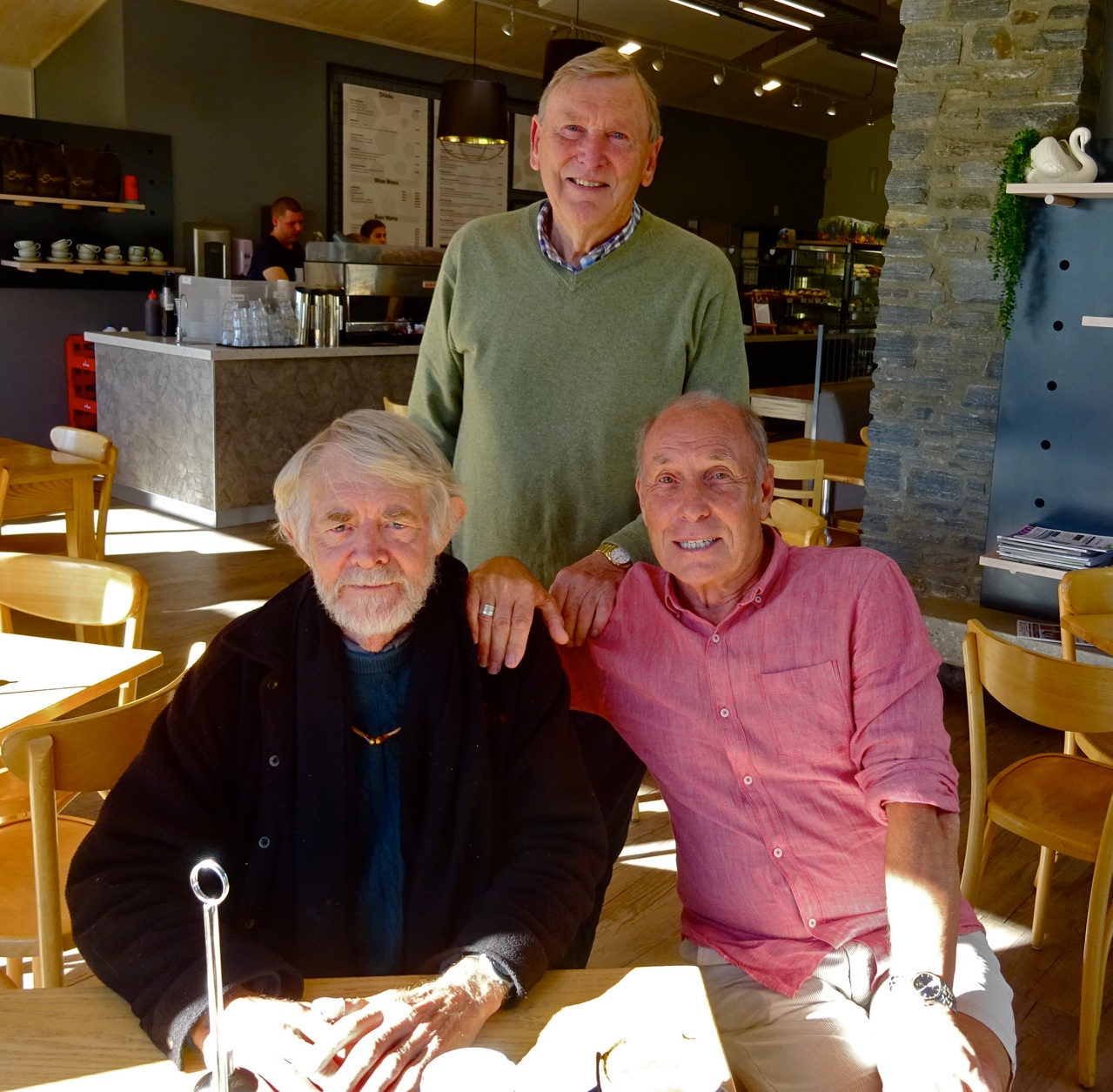
Brian Turner, Owen Marshall (standing), Grahame Sydney, Cromwell
Snow in September
Someone I’ve yet to meet is playing a violin in the snow in a field nearby and it sounds like Beethoven to me, and under the willows by the stream a young boy is weeping. When the music stops the boy will disappear as he does every time, every time.
Brian Turner, from Night Fishing, Victoria University Press, 2016
Brian and I were friends for 44 years, visiting each others homes and families, on book tours or at festivals together, walking in the hills, but my best memories are of our collaboration with mutual friend artist Grahame Sydney, on the illustrated books Timeless Land, Grahame Sydney, Brian Turner, Owen Marshall (Longacre Press, 1995) and Landmarks, Grahame Sydney, Brian Turner, Owen Marshall (Penguin, 2020), which celebrated Central Otago – Brian’s homeland. We three were on the same page, in both senses of the phrase. Brian felt deeply and thought deeply, although often disguising both behind a gruff exterior. In poetry he expressed himself without reserve and with impressive power and sincerity. I miss him, but the poems live on.
Owen Marshall
Peter Ireland
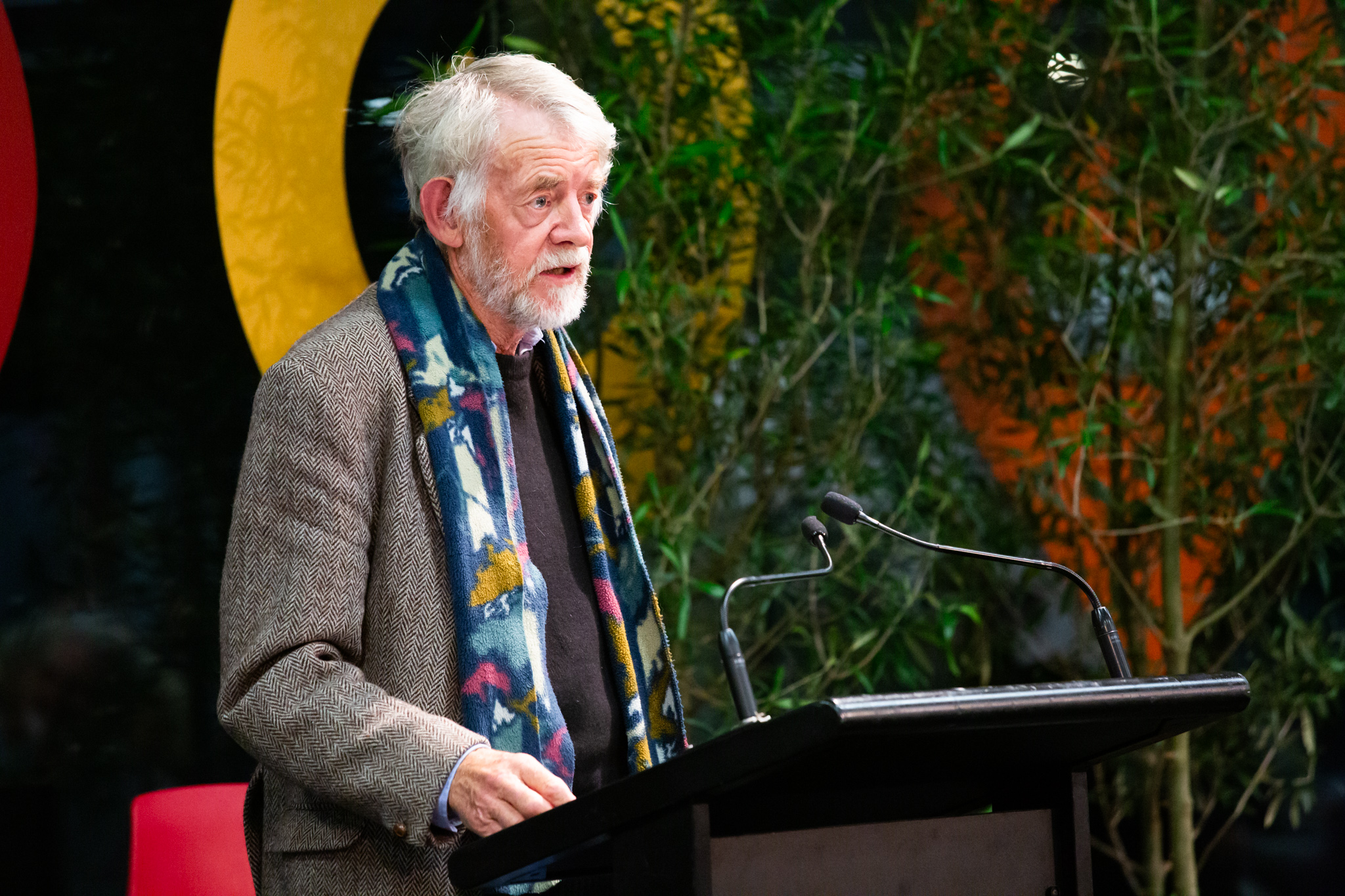
An evening of poetry was held at The National Library of New Zealand on Friday 11th March, with Poets Laureate Jenny Bornholdt, Michele Leggott, Bill Manhire, Cilla McQueen, Vincent O’Sullivan, Elizabeth Smither, C.K. Stead, Brian Turner, Ian Wedde and Rob Tuwhare, son of Hone Tuwhare. Brian Turner reading.
Photo credit: Mark Beatty, The Circle of Laureates Reading National Library, 11th March 2016
Place
Once in a while you may come across a place where everything seems as close to perfection as you will ever need. And striving to be faultless the air on its knees holds the trees apart, yet nothing is categorically thus, or that, and before the dusk mellows and fails the light is like honey on the stems of tussock grass, and the shadows are mauve birthmarks spreading from the hills.
Brian Turner, from All That Blue Can Be, John McIndoe, 1989
The poetry of Brian Turner is a paean to the local; poetry grounded in a particular setting, but redolent of universal meaning. As an epigram for his poem Just this, Turner quotes the American poet and environmental activist Gary Snyder:
Find your place on the planet, dig in, and take responsibility from there.
The ‘place’ for much of Turner’s poetry is the landscape of Central Otago, which is where he lived from 1999. The tiny settlement of Oturehua, in the Ida valley of the Maniototo river, was where Brian Turner dug in. An English translation of Oturehua is ‘the place where the summer star stands still’, a perfect setting for a poet whose lifelong quest involved trying to ‘find and hold on to anything that’s struck me as heartfelt and constant, something that seems durable and likely enduring.’ In poems of plain-speaking eloquence, which ‘crackled with the intensity of their sheer power of observation’ Brian Turner reminded us to pay careful attention to nature, to protect it from the depredations of the heedless and to be enchanted by the rhythms of rivers and hills.
The National Library acknowledges with sadness the passing of Brian Turner, a much-loved figure in New Zealand Literature and in the promotion of environmental awareness. Brian was Te Mata Estate Winery Poet Laureate between 2003 and 2005. In November last year he was made New Zealand Poet Laureate of Nature for his lifetime’s work in poetry and activism, fighting for and celebrating the natural world.
Peter Ireland
Kay McKenzie-Cooke
Blackbird
When a blackbird starts singing high in the silver birch and dark‘s hovering heartfelt beats heartless hands down. And it seems to those who hope to discern the difference between love and loveliness that the bird’s song may be as pure as any we’ll ever hear, and is part longing, part fulfilment, near unadulterated joy. And though one can’t say that a bird wonders if remorse will ever run its course, that blackbird sings in ways that assuage need in a voice that’s his alone until, miraculously, it feels as if I’m singing too, him to me and me to him. And both of us for all of us.
Brian Turner, from Night Fishing, Te Herenga Waka University Press, 2016
This is Brian Turner writing in a modern, unashamedly Romantic poet’s vein, unapologetically describing nature’s ability to transport us to another realm. The craft in order to attain the sublime is particularly satisfying as I remember attending a workshop of his back in the late ’80’s (when he still had red hair) where he spoke of how really hard a poet must work to compose poetry that appears effortless. I love the lines:
‘and dark‘s hovering heartfelt beats heartless hands down …’
Magic. Pure Turner. Pretty sure I heard him read this poem at a reading and I can still hear his gravelly voice. I hope I can keep hearing it through his poetry for a long time yet. Encased in the last lines is Brian’s absorption into the pure, unifying aspect of nature and its reach into his innermost being. The lines reflect how circular, open-ended, inclusive and all-encompassing nature can be if we allow it to enthral us, as Brian Turner surely did, ’For all of us’.
Kay McKenzie-Cooke
Grahame Sydney
Grahame and Brian, 2014
After for Grahame
The dead do sing in us, in us and through, us, and to themselves under their mounds of earth swelling in the sun, or in their ashes that shine as they depart on the wind.
See how the grass sways to the sound of their voices under, singing the beautiful eternal sadness of before relieved of the resolve of after.
Brian Turner from All That Blue Can Be, John McIndoe, 1989
In late 1986 my father died. A mis-diagnosed prostate cancer had invaded his bones and his decline was remorseless, painful and heartbreaking, a full year of undeserved distress borne with courage. He was a man I admired immensely. Whenever anyone remarks on how like my father I am, I take it as the greatest possible compliment.
Brian and I spent hours every week on our road bikes, training together for races and events on the roads around Dunedin and he was following closely my dear Dad’s decline, fully aware of how it was impacting on me.
My family were at the hospital bedside the night Dad breathed his last long gasp, and I left a message on Brian’s phone to tell him. When I made it home a few hours later the sun was rising and I automatically, unthinkingly checked the mailbox as I walked past. There was was an envelope with my name , and inside an A4 sheet with this poem. “After” inscribed in Brian’s cramped, cursive hand.
A small gift from a mate. It appeared in the collection All That Blue Can Be in 1989.
Grahame Sydney
Richard Reeve
Ida Valley, January
This is the time when the windows rattle in the nor’wester, scotch thistles prepare to seed and the lucerne’s waving acres of violet and green. Young thrushes and blackbirds risk their lives on the ground. My neighbour’s cat, gingery, austere, is meant to protect the raspberries from the avians and doesn’t. I go to bed only half-pie sound in mind and body and the mind starts roving, wars with sleep, always finds something else to take issue with.
Brian Turner, from The Six Pack, Whitireia Publishing, 2006
What I like about this poem is its shape, and the counterpoint of that defined word-sculpture with the loose commentary that forms the poem’s content. What does the shape represent – a cloud, schist, wind-bent branches, the waving crop? All of these and none of them. No express link is made, yet we are invited to consider the text as an artefact of the composite phenomena that have given rise to the poet’s unease. Whereas the commentary captures dramas in the lives of various mortals affected by the gale – grounded thrushes and blackbirds risking their lives, the neighbour’s cat in dereliction of his duty to protect the raspberries, the poet unable to sleep – the indented left edge of the poem asks us to frame those dramas in a wider context, that of an elemental universe inextricably bound up with our day-to-day affairs.
Richard Reeve
Dougal Rillstone
October on the Otamita to Dougal, who knows it best
Walking upstream it’s as if the water’s flowing through me, jigging my heart and telling me this is the best I’ll be.
The wind breathes on the river, lightly and the hot October sun bastes a glaze on the water that shines like shellac. Great shaggy tussocks
bend and nod in the breeze. Some have shambled to the stream’s edge where they dip their heads to drink.
The white wild flowers are love letters, unaddressed, and cast upon the hillsides.
Beneath the earth is where the uncomplaining people lie irrespective of what was said and done.
So there’s no justice, they say, and furtively pluck each other’s sleeves while the water tap dances and sings Look at him, look at him, wasting his heart here and he doesn’t seem to care.
The shadows of fleet clouds cover me like wings and pass on.
Brian Turner, from Bones, John McIndoe, 1985
I said goodbye to Brian towards the end of January, not realising it would be for the last time. Dementia had erased most of his memories, and on that visit he struggled to remember me. And then, over coffee, he cocked his head to one side, fixed me in his stare, and said, “You and I, we’ve cared about rivers for a long time.” I looked back through teary eyes and said, “We have, Brian.” Later, I recalled the first time we met, back in the 70’s, when we also talked of rivers: about how much they meant to us, and the fears we held for their right to run free and clean. Rivers and the trout that inhabit them ran through our friendship for almost fifty years.
I chose ‘October on the Otamita’because it explores the connection moving water has for those caught in its thrall. The original copy of the poem Brian handed to me four decades ago is one of my most valued possessions.
Dougal Rillstone
David Eggleton
Weekends
They hammer they saw they mow they dig and weed they wed someone or other for better rather than worse though it doesn’t always work out that way when heartlands are heartless
But for now they mow it’s the song of the weekend the world’s at their feet for this is a civilized place and we believe in grass
A sun-glassed babe pilots a ride-on and across the road a mother of two pushes something less superior back and forth on the roadside verge
When the mowers stop you can hear trilling again melodies in the shrubs and trees and tulips like goblets full of sunlight shine in gardens entrusted to us
Who knows impermanence may not be permanent after all if you find time to take stock think of what a place could be when it’s not what we possess that counts most but what we are possessed by
Brian Turner, Landfall 231
I’ve chosen a poem that I have selected from a sheaf Brian Turner sent me when I was editor of Landfall, and it was first published in Landfall 231 in 2016. This poem ‘Weekends’ is hard, bright and clear – joyous and yet intrinsically comical as it celebrates the industry of the Kiwi weekend. Other poems in the sheaf, name-drop variously Wallace Stevens, Fernando Pessoa and A.R. Ammons. As poems, they tend to feel a bit too diffuse, part of Brian’s personal philosophical project, ruminating about how to live a good life or make existence meaningful – and if it’s possible to actually achieve that. I read with Brian at events multiple times, and I remember him telling me on one occasion a while back that I looked as if I was dancing, skipping about while I read. He added, quoting from a poem by the Australian poet Les Murray: ‘I don’t do that. I’m like Les Murray: “I only dance on bits of paper.”‘ But what a lyrical dancer he was as a poet, with a lyricism grounded in the body, as when he writes of throwing himself on the mercy of the morning and floating like thistledown across the landscape on his bicycle, or catches skeins of wind with his ear: ‘I saw tussock, heard it/ speaking in tongues/ and chanting with the westerly’. He was someone girded about with laconic utterances and sawn-off proverbial sayings that might be waved like farmers’ shotguns to ward off trespassers. He was a poet of place, a poet of Otago, channelling topography as morality, while ever alert and open to the grace-notes of landscape : the fog that sits ‘on the river/ like a marquee’; butterflies that are ‘bright cloth/ caught in webs of sunshine’.
David Eggleton
Alexandra Balm
Brian holding up the skies, September 2022, Blue Lake, Central Otago
Sky
If the sky knew half of what we’re doing down here
It would be stricken, inconsolable, and we would have
nothing but rain
Brian Turner, Just This, VUP, 2009
Six years into my Kiwi adventure, I learnt of Brian Turner from Jillian Sullivan, then a friend of a friend. Kiwi American writer Garry Forrester had introduced Jillian via emails as a “fine writer.” I was completing a PhD on metamodern literature and was on the lookout for writers who expressed the metamodern paradigm of authenticity, interconnections, self-transformation, and care (for others, for the environment, etc). Jillian was in the process of building her strawbale house in Oturehua while editing her poetry collection parallel. During the ensuing email conversation, she mentioned a kindly neighbour, Brian Turner, himself a writer, who’d turn up with snacks of sliced oranges for the builders.
I started reading Brian’s work, first the fishing, mountaineering and ecological prose vignettes about Central Otago, then the poems. We exchanged a few messages, each of them an encouragement, an empathetic nod, or a nugget of wisdom: “We as humans talk about others, and other creatures; we talk to ourselves and to others; we seek enlightenment and various forms of fulfilment. We are a phenomenal species that wrestles with rights and wrongs… we find it easier to talk than to listen carefully to what others say and think.”
I tried to listen. My favourite is the poem ‘The Sky’ (Just This, 2009), which I had listened to online prior to meeting BT for the first time in Dunedin 2014, at Jillian’s book launch. I read it again in Glenn and Sukhi Turner’s home on the shore of Lake Wanaka. It was Valentine’s Day 2015. Instead of having a quiet day by themselves, Brian and Jillian had decided to share a few hours with people who loved poetry. A most generous gift to a ready audience.
After the reading, Jillian, who’d become a close friend, extended an invitation from Brian to have a cuppa at his brother’s house. In the hallway, behind a pan of framed glass, Brian’s poem presided over the quiet summer afternoon. It stayed with me after years. The poem speaks of the tension between superior levels of existence and the mundane, between what we should be doing and what we actually do. It gestures towards a living, breathing universe of which we are part and for which we should care. But which we disregard and insult every day. It also speaks of the poet’s ability to capture truth beyond the obvious and to express the interconnectivity of all things.
Alexandra Balm
Michael Harlow
Jillian Sullivan, Michael Harlow, Brian Turner
Dream
If you were here beside me now, the fire cackling like my grandmother used to, the sky soaked in stars, there’s a whole bucket of words and phrases I would sing: garden, bloom, memories, river, sky, tenderness, valley, tulip, japonica, rose, your fair skin, breath, happy smile, Stingo, varoom, sweetie darling, a love of art and style and a hunger for a fairy tale world without end.
Brian Turner, from Inside Out, Victoria University Press, 2011
A love poem so characteristic of Brian, combining all those animated images. All of which are framed by Nature. Like so many of Brian’s poems love and nature are One. Brian’s language is so alive since feeling is first. How well I remember those occasions when Brian, Jillian, and myself were together either at the Muddy Creek Café or out-of-doors. Brian inevitably gave his attention to the things of the world. He once said to me as we were sitting outside his house in Oturehua gazing at the landscape: When I talk to the mountain the mountain talks back. Brian and Nature One. The Poet Laureate of Nature.
Michael Harlow
Sue Wootton
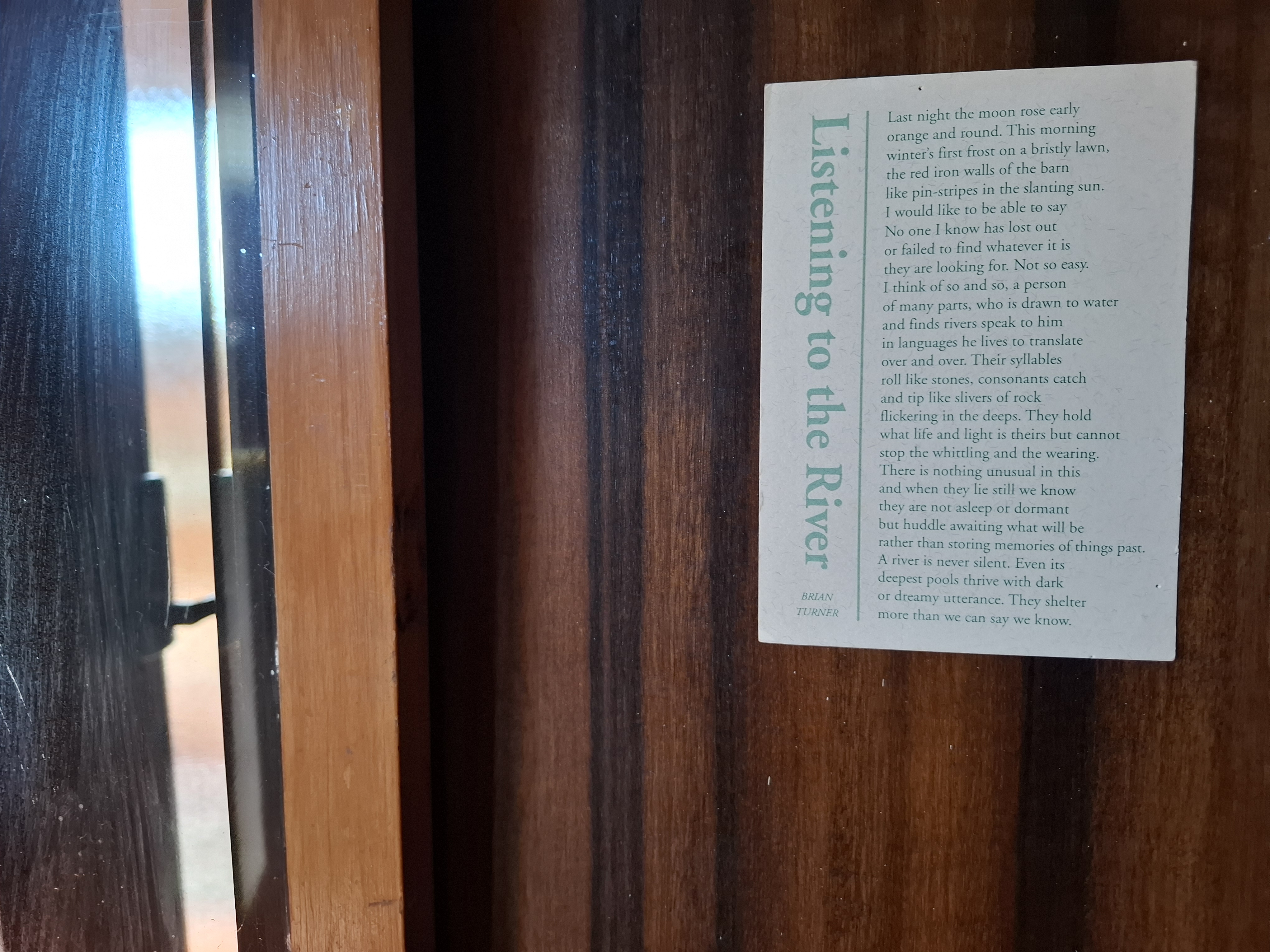
Listening to the River
Last night the moon rose early orange and round. This morning winter’s first frost on a bristly lawn, the red iron walls of the barn like pin-stripes in the slanting sun. I would like to be able to say No one I know has lost out or failed to find whatever it is they are looking for. Not so easy. I think of so and so, a person of many parts, who is drawn to water and finds rivers speak to him in languages he lives to translate over and over. Their syllables roll like stones, consonants catch and rip like slithers of rock flickering in the deeps. They hold what life and light is theirs but cannot stop the whittling and the wearing. There is nothing unusual in this and when they lie still we know they are not asleep or dormant but huddle awaiting what will be rather than storing memories of things past. A river is never silent. Even its deepest pools thrive with dark or dreamy utterance. They shelter more than we can say we know.
Brian Turner, Listening to the River, John McIndoe, 1983
For years, a postcard with Brian’s poem ‘Listening to the River’ printed on it has been blu-tacked to the wall, above the hall table just inside the front door. For years, as I’m rushing in or out of the house, dropping my keys into or grabbing them from the key-bowl on that table, I’ve clocked in my peripheral vision those green words on the cream card. In the way of things that have been around ‘for ever’, I rarely pause to see it afresh or in detail. But it is there, a green river of a poem, the quick sight of it always a cooling moment, a reminder. A reminder of what? Of rivers, obviously, and for me of a particular river, the Manuherikia, carving its ancient path through Central Otago, near Brian’s home in Oturehua. Every so often over the years, keys in hand, I’ve stopped on the banks, as it were, of this poem to read it closely again, word by word, and every time I’ve done this it has settled even deeper in my heart. Their syllables / roll like stones, consonants catch / and tip like slivers of rock / flickering in the depths. I live on the coast, far from this river. I love many of Brian’s poems, but this one in particular for bringing me close to the river on a daily basis, reminding me to listen.
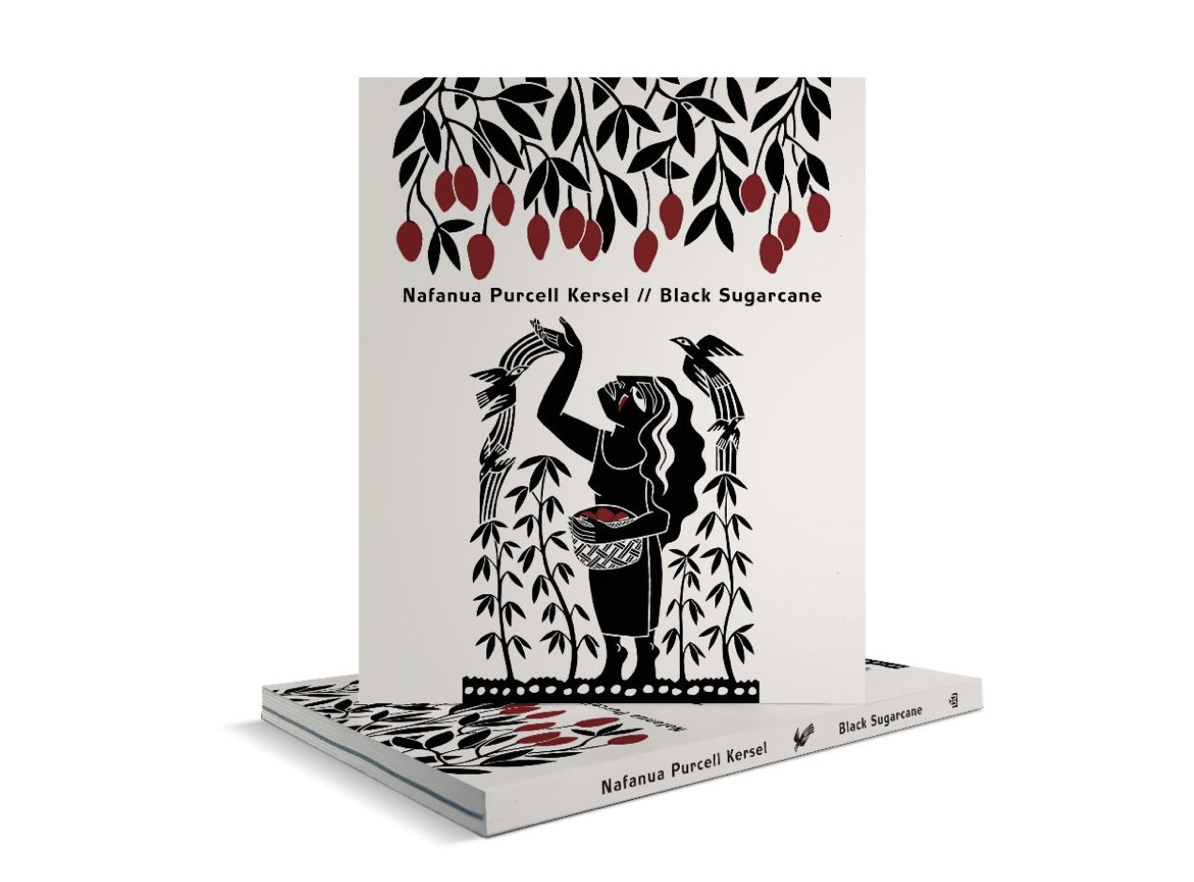
Please join Te Herenga Waka University Press, Nevertheless and Wardini Books for a celebration of Black Sugarcane, a landmark debut poetry collection by Nafanua Purcell Kersel.
Wednesday 19 February 6pm Wesley Community Centre, Hastings
🍃 🍂 🍃
A soft worrier, I’m Nua-No-Myth speaking in centipede, with a sweet hiding in the dark of my cheek.
Restless in form and address, these engaging and generous poems ricochet from light to dark, quiet to loud, calm to violence. We meet a loved twin sister as she dives towards the Sacred Centre, a grandmother who knows everything by heart, a shrugging office clerk, and Nafanua herself, an enigmatic shapeshifter.
At the heart of Black Sugarcane is a sequence of erasure poems arising from the seminal essay ‘In Search of Tagaloa’ by Tui Atua Tamasese Ta‘isi Efi. From the worlds contained in the text, these poems rise as if inevitable. Another sequence responds to the devastating tsunami that stuck between the Samoan islands of Upolu and Tutuila in September 2009. Within the line, within the word and even the letter, these poems speak to creation and translation, destruction and regeneration.
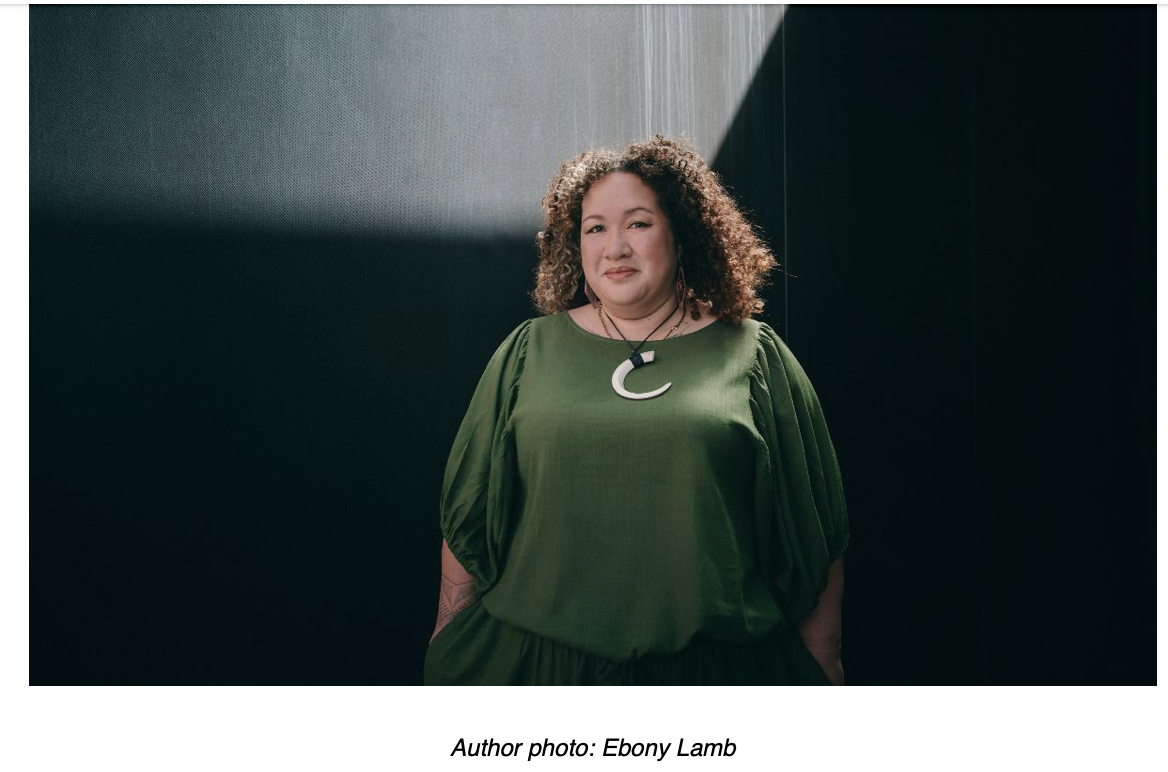
Nafanua Purcell Kersel (Satupa‘itea, Faleālupo, Aleipata, Tuaefu) is a writer, poet and performer who was born in Sāmoa and raised in Te-Whanganui-a-Tara, Aotearoa. Her poetry has been widely published. She has an MA from the IIML and won the 2022 Biggs Family Prize in Poetry for Black Sugarcane. She lives in Te Matau-a-Māui Hawke’s Bay.
The New Zealand Poetry Society Te Rōpū Toikupu o Aotearoa and The New Zealand Entomological Society combined to create the poetry competition running alongside voting for the New Zealand Bug of the Year
Judge’s report here 2025 NZ Bug of the Year Poetry Competion, judged blind 12 Feb 2025
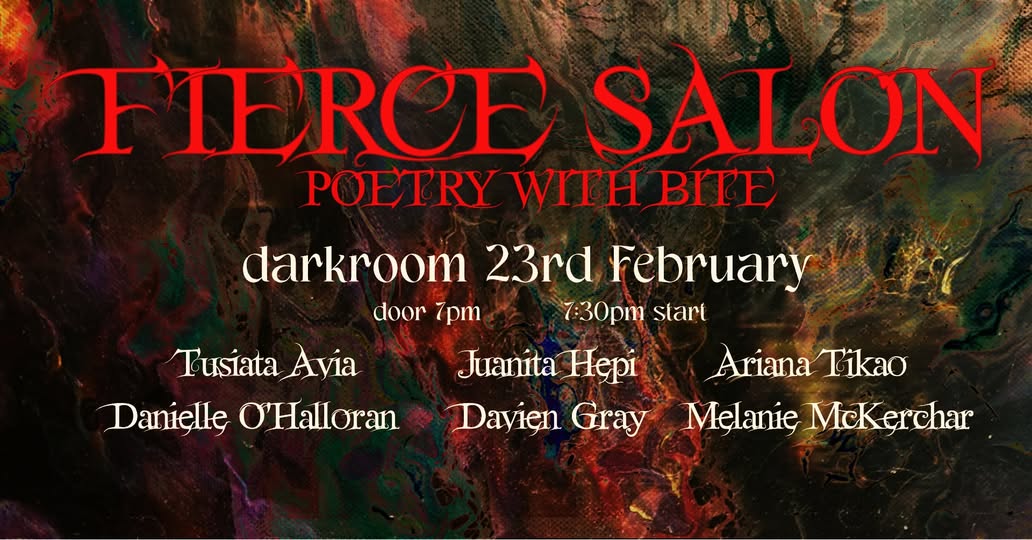
Set your Sunday night on fire with some of the fiercest poets Ōtautahi has to offer, with all proceeds going to the Palestine Solidarity Network Aotearoa. The current government’s favourite poet Tusiata Avia heads up a line up of poets that speak truth to power; Juanita Hepi, Ariana Tikao, Danielle O’Halloran, Davien Gray and Melanie McKerchar; all doing feature length sets. Join us at the darkroom for a night of powerful performance, that will fill your cup, and heat your blood. This government can try and keep the arts down, but we will keep fighting!
R18. R.O.A.R.
Please note the building is only accessible by stairs. For accessibility assistance please email info@darkroom.bar
darkroom 336A St Asaph St, Christchurch Central, Christchurch 8011, New Zealand
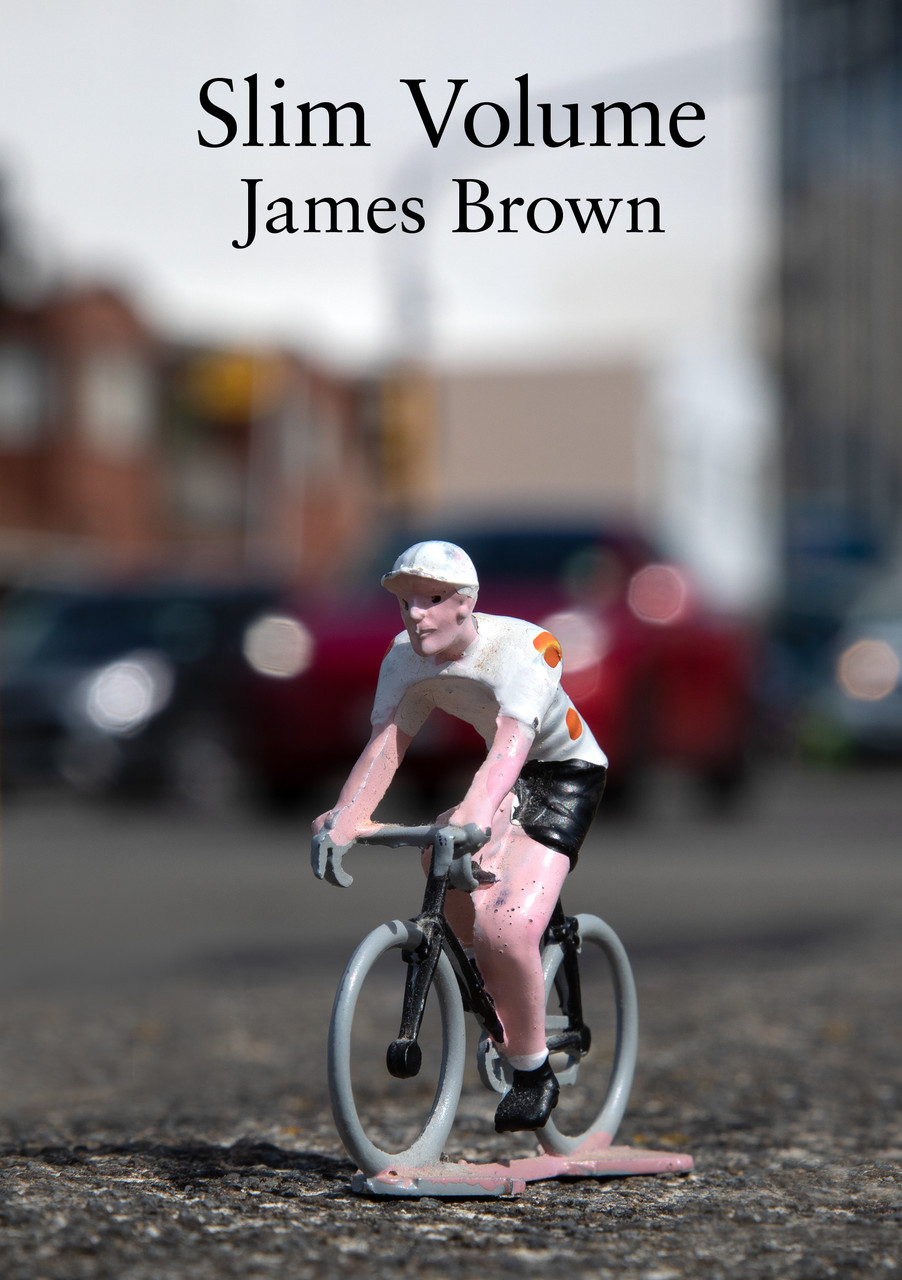
Slim Volume, James Brown, Te Herenga Waka University Press, 2024
Love Poem
A chair is a good place to sit. You spend a week with a poem. Then another week. Not your poem. Somebody else’s.
You become friends, then very good friends. You like the poem a lot. Maybe you are a little in love with the poem.
Every morning, the poem washes its limbs in a mountain spring. You close your eyes and watch. Then you talk to one another like water.
This probably goes without saying but you say it anyway.
James Brown
What better delight than to open James Brown’s eighth poetry collection, Slim Volume. The blurb on the back provides a perfect invitation to enter the collection’s cycling trails, its widening itineraries: ‘A slim volume of verse, like a bicycle, offers us fresh and joyful and sometimes troubling ways of seeing the world.’ In a nutshell, it’s why I love turning to poetry in states of emergency or dillydally and seek the electric currents of words.
Begin with notions of travel, the ever-shifting multifaceted view from cycle saddle, train window or pedestrian stroll. Whether cycling or walking, things catch the eye and ear, thoughts compound and connect, disintegrate and startle, and you move with the hum and whizzing wheels of memory and anticipation. Similarly poetry, whether reading or writing, is an exhilarating form of travel. Especially reading James Brown, especially savouring the sweet whirr of the line, the turning back for a second look to see things afresh, the unmistakable accumulation of physical joy.
Slim Volume draws you into the intimacy of letting things slip, of layering and leavening a collection so that in one light it is a portrait of making poetry, in another light the paving stones of childhood. The presence of people that matter glint, and then again, in further arresting light, you spot traces of the physical world. Try reading this as a poetry handbook and the experience is gold. There is an invitation to see any subject matter as ‘worthy’ of poems (for example, cheese in pies), musing on who wants to read angry poetry or wayward words or making poems your own. And am I stretching the communal art of making sandcastles to consider poetry as a communal art (oodles of theory on this)? Perhaps the poem that stuck the firmest is ‘Love Poem’ (poem above). It’s the best ode to reading a poem I have read in ages.
And that is exactly why I love this book so much. I am sitting back in the chair of reading and taking things slow, and then whizzing in downhill glee, and then it’s back to travelling slow. Savouring the wit, the power of looking, listening.
The readings
‘The Wedge of Light on a Chair’ from Slim Volume
‘This isn’t buying …‘ unpublished
James Brown‘s previous poetry collections are The Tip Shop (2022), Selected Poems (2020), Floods Another Chamber (2017), Warm Auditorium (2012), The Year of the Bicycle (2006), which was a finalist in the Montana New Zealand Book Awards 2007, Favourite Monsters (2002), Lemon (1999), and Go Round Power Please (1996), which won the Best First Book Award for Poetry. James works as an editor and teaches the Poetry Workshop at the International Institute of Modern Letters at Te Herenga Waka—Victoria University of Wellington.
u never wantd to go to australia leave cat-pig behind with friends bk to the river away from the sun the sky on their tongue caught in yr throat burning bye into yr ancestral wings let them go hun they’d never make it thru customs anyways crammed into yr suitcase like a whakapapa happy meal kiss me good-bye too go live with mum under the circling planes louder than dragon flies they wont be around for long them open spaces will lick em up clean show u how to sketch trips in & out of yr hometown away from the weddings the wendys the house flipping bullshit paint yr forever home in melting shades of lunar the mexico trips thru the desert (& the pink deep crevices of the old man’s face) will be the best thing to ever happen
pukekohe
ur calling in to sort the whenua & calm the cousins while yr at it u travel all the ways from whangarei aunties swooping in like kahu from a waking sky
u weaves in & out of matua’s shelves just how tane does breaking code n kete in a tropical low u says who’s this white guy & tf does he know?
u knew that nen we all knew her she never recoverd they really put the boot in we remember pukekohe with its fukd up colour bars
cinema hellscape stores porn lovin bishops pukekohe with its head- less angels grieving schools nothing 2 see here fukboys mayors of mediocracy
pukekohe the kahu in the sky sees u as do i (the ancient trees of tane) we all knows what u r&weallknowatudid Ae
we knows where u live
we was only around for yr market gardens sustenance n five spice life but even we left after that we never went back eh whaea survival of tha aunties
once upon a time u says we wāhine had mana and we was treatd as such but not now eh pukekohe fuk u we only want land bk we jus want our mokos feel welcomed
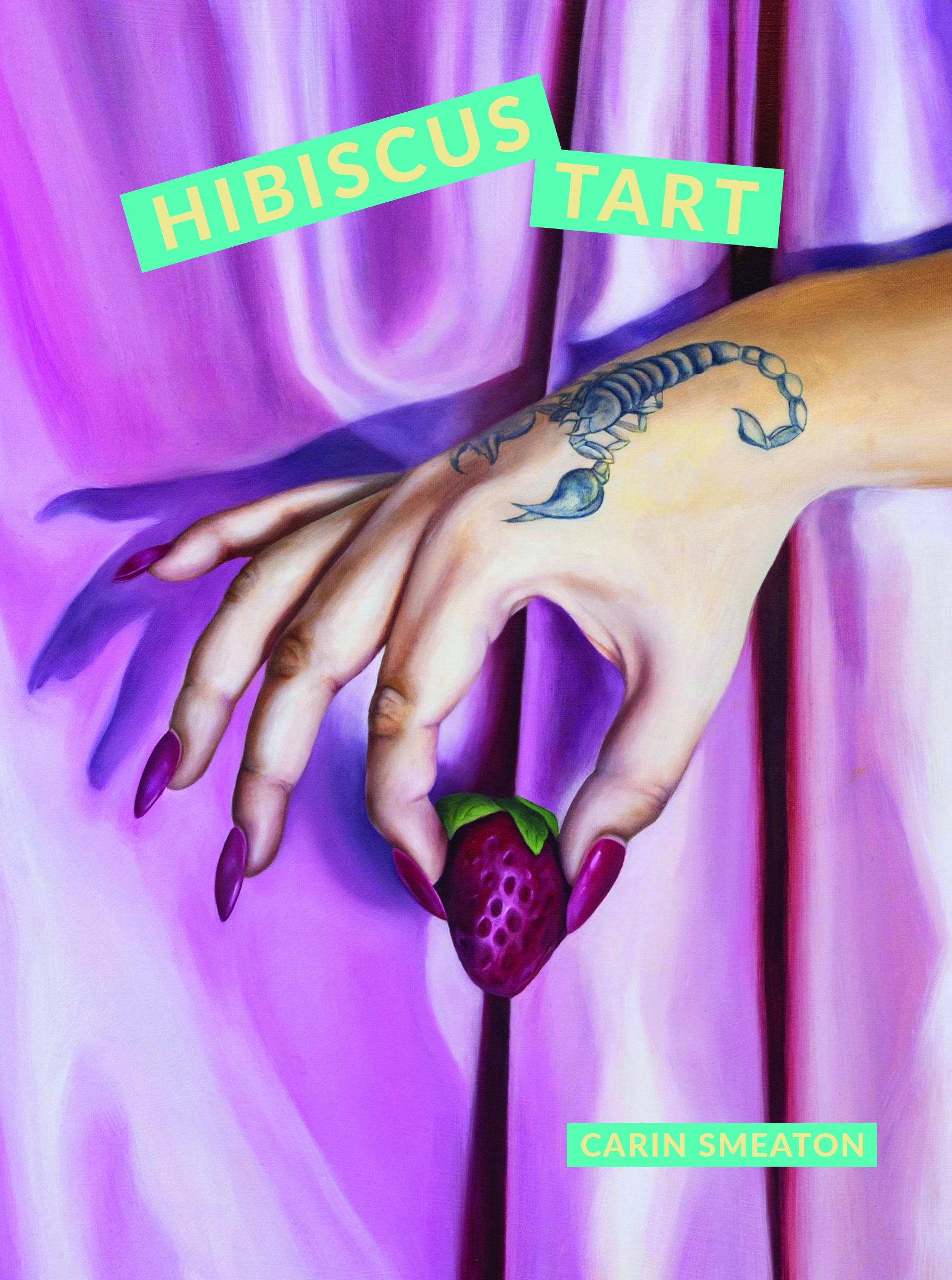
Carin Smeaton
Reading Carin Smeaton’s collection is to step out of the straightjacket label, the demeaning tag, ‘tart’, placed upon women, into a tribute to mana wāhine: mothers aunties grandmothers sisters. This album of women is speaking poetry, poetry speaking. Women speaking, speaking women. It is poetry as making language your own, challenging the status quo on how a poem ought to be, how woman ought to be, how the world ought to be.
Call it poetry in the vernacular, slang poetry, read it as electrifying performance on the page, this peppery poetry wave. Heck yes. I’m talking poetry as gathering shopping scavenging stinging flying needing falling questioning singing. For this is what the women do. This is what the poems do. You will linger under moonlight, book-dally in libraries, listen to the collection’s subterranean soundtrack with its whiffs of songs.
Call it body poetry. It’s so physically present, it is the body birthmarked moko-ed yearning feeding lonely embraced. It’s poetry with succulent word openings, repeating motifs and connections that forge pulsating rhythms.
Call it poetry as challenge, like a protest banner drawing attention to the sharks, the hungry, the dispossessed and the abused. Heck yes. It’s poetry as women arm-in-arm on the street marching.
Call it poetry as aroha – the poet’s love of whanau, whenua, mahi, language, life, reading, writing. This is a love of poetry, and it is so very infectious.
Paula Green
“Carin Smeaton’s Hibiscus Tart goes down many paths, she is cheeky, gives respect to slang and holds in her hands different ways of loving the whenua and offering an honest appraisal of what it means to be Indigenous in a colonised world. Sometimes I think I’m going down one wormhole only to be jolted down another only to be bitten around the corner of another. She grasps complicated and disparate ideas and forms of languages and sculpts them into porous poems that swim in your head for days afterwards. I want to read more poetry like this that doesn’t give a shit about the rules and flips images on their head and spit roasts them with fire spitting out of her fingernails one word at a time.”
Hana Pera Aoake, Poetry Shelf, 2024 highlight collage
A reading
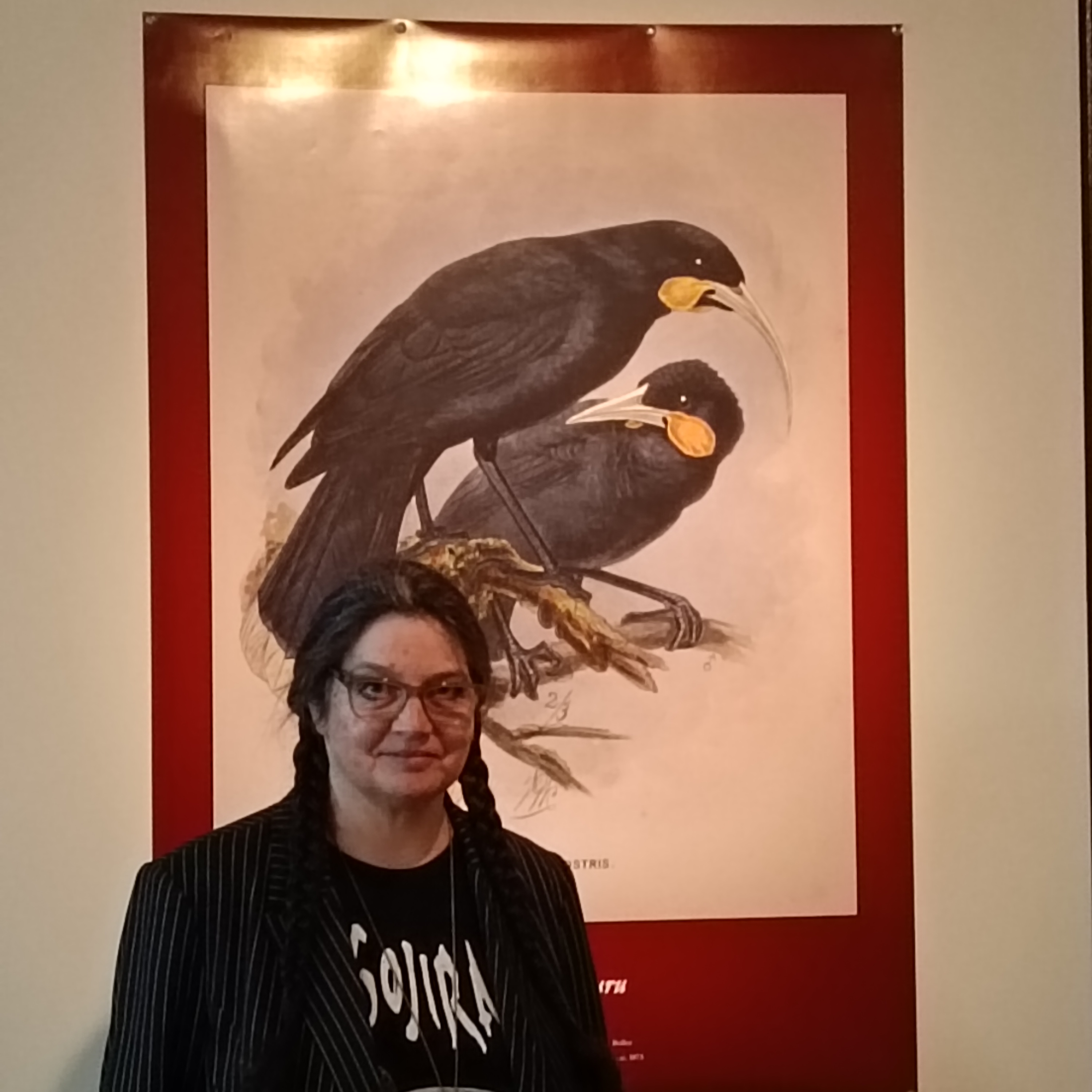
Photo credit: Robert Eruera
‘a musical is only 10% of the revolution’
Carin Smeaton lives in Tāmaki Makaurau with whanau. She’s working in a research centre in the city and in Manukau. Her third collection “Death Goddess Guide to Self Love” is forthcoming in May 2025 via Titus Books. If you want to help her raise funds for its publication please visit here.
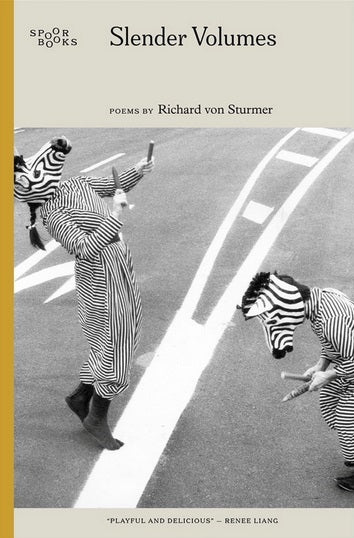
Slender Volumes, Richard von Sturmer, Spoor Books, 2024
17. Xiangyan’s Great Enlightenment
For centuries cutlery was kept higgledy-piggledy in a wooden box with knives scratching forks and forks jabbing spoons. Then, during the Age of Enlightenment, this situation changed with the invention of the cutlery drawer. Knives, forks and spoons could now live peacefully in separate compartments. Hands no longer ran the risk of being cut or pricked when reaching for a desired utensil. Some believed this to be progress, others were not so sure.
19. “Ordinary Mind is the Way”
When my glasses become dirty, I reach for a cloth to wipe them clean. When my mind turns dull or distracted, I go outside and study the clouds. How many clouds can fit inside my skull? A whole sky-full! You could pack them in like stuffing a cushion. I shake my head – this is too fanciful. The clouds today, in the clear blue sky, have flexed their cloud muscles and are moving at a leisurely pace high above the trees and houses.
261. Yunmen Composes a Verse
It’s like you’re standing in the ocean and you feel the pull of a big wave and know that you have to write. Then the wave breaks over you and everything is just fragments of surf and billows of sand. No verse could be composed, certainly none by Yunmen. And the pull is always there; it draws you away from your desk, scatters your papers and lets the words wander by themselves, shedding their letters, one by one, as you enter unknown territory.
Reading this collection is to savour the gift of slowness, a slowing down to absorb the world, the things we hear see smell feel, back in the past, here in the present. And yes, it becomes a form of slow travel, reading these 300 poems, strengthening feet on the ground, hearts and minds set to uplift. Yes. Reading this exquisitely crafted collection is to travel with roadmap still in the pocket, to fall upon egg-whisk clouds in the sky hot water bottle Buddha Plutarch Dante a washing machine coffee with a drop of milk. It is to travel to Bologna Sydney New York Venice Poor Knights Islands Honolulu Auckland Mount Wutai Yumen Gate.
For me it is neither source nor destination but the travel itself. I am falling into the utter joy of writing and reading as travel. As discovery surprise wonder. A world in ruins and a world in repair. Richard is translating the koan within his own time and place, his own narrative, and I find myself doing this I read.
And that is what poetry can do. This book. These poetic vibrations, these wisdoms. Openings. Autobiography. Meditations. Poetry as an intimately and intricately woven cloth of both experience and imagining. Personal. Resonant. Anchored and anchoring.
The readings
’99. Layman Pang’s Stringless Lute’
‘105. The Hands and Eyes of Great Compassion’
Richard von Sturmer is a writer, performer and filmmaker who is well known for having written the lyrics to Blam Blam Blam’s “There is No Depression in New Zealand”. He is a teacher of Zen Buddhism and the co-founder of the Auckland Zen Centre. Slender Volumes is his tenth collection of writings.
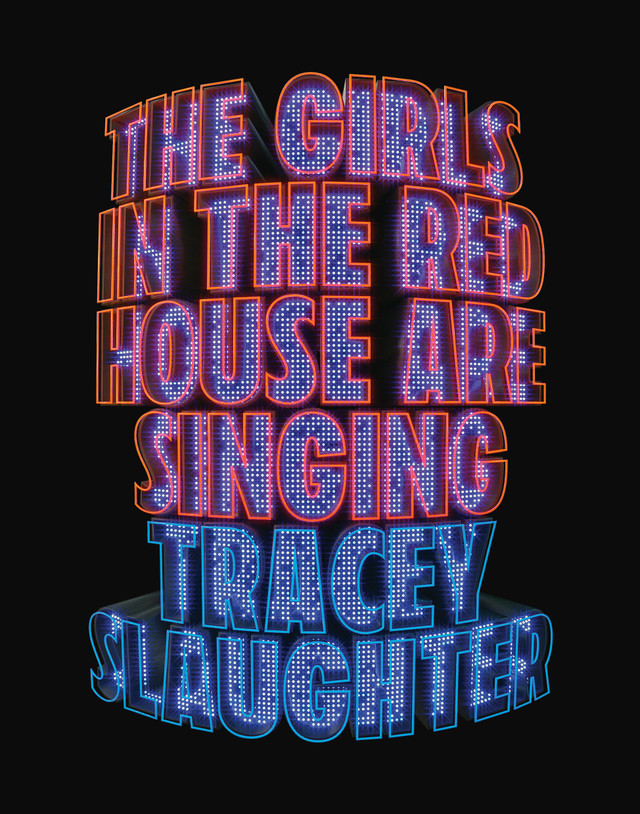
The Girls in the Red House Are Singing, Tracey Slaughter Te Herenga Waka University Press, 2024
from opioid sonatas
# [allegro]
I crashed. It was choral. The glass formatted the light. She was driving a scream into distance. The gravel doubled over. Halt this. It was illustrated. Let the scalpel tell you what happened. That was a trickle of mercy from her ear. Many revolutions. Steer with the thorax. Sunlight belts you to the ambulance. She bleeds on the blue nurse. Asleep in needles. The car is a seven pointed flower. She was singing in the blindspot. The red line holds a nocturne. It was metal. It was god. It was weightless. I misspelt collision with my wrists. Please radio. He stood on the right, observing the passenger tendons. Swung a corona through the windshield. She was dropping. It was filigreed. He smashed the screen like a recital. I was just out of town. It was quartz. I needed. Sparkles on the gurney. Conjoined. I bruised the rearview. An eyeful. It was dressage. She was singing from the glovebox. Tell the doctor what didn’t. Aluminium can swim. The lid. The back of your thoughts are sticky. Staunch this. Four door. Intravenous. Admitted. Singing deuteronomy. Reversible in her red jacket. Her laughter tied at the back. Inserted. Facedown floating to the next prescription. Sunlight welds you to errata. That was the cathedral. Tell the doctor you’re an article. His crowbar smashed the scheme of things. Regain a mouthful of memory in water. The white believes in minimalism. It was solitude. The fenceline blessed us. It shattered. Erasure scrapes chairs. Open all sides. Her angels birthed against disposable plastic. Solve this. She was singing to the haemorrhage in waiting. The nurse made a red head or tail of it.
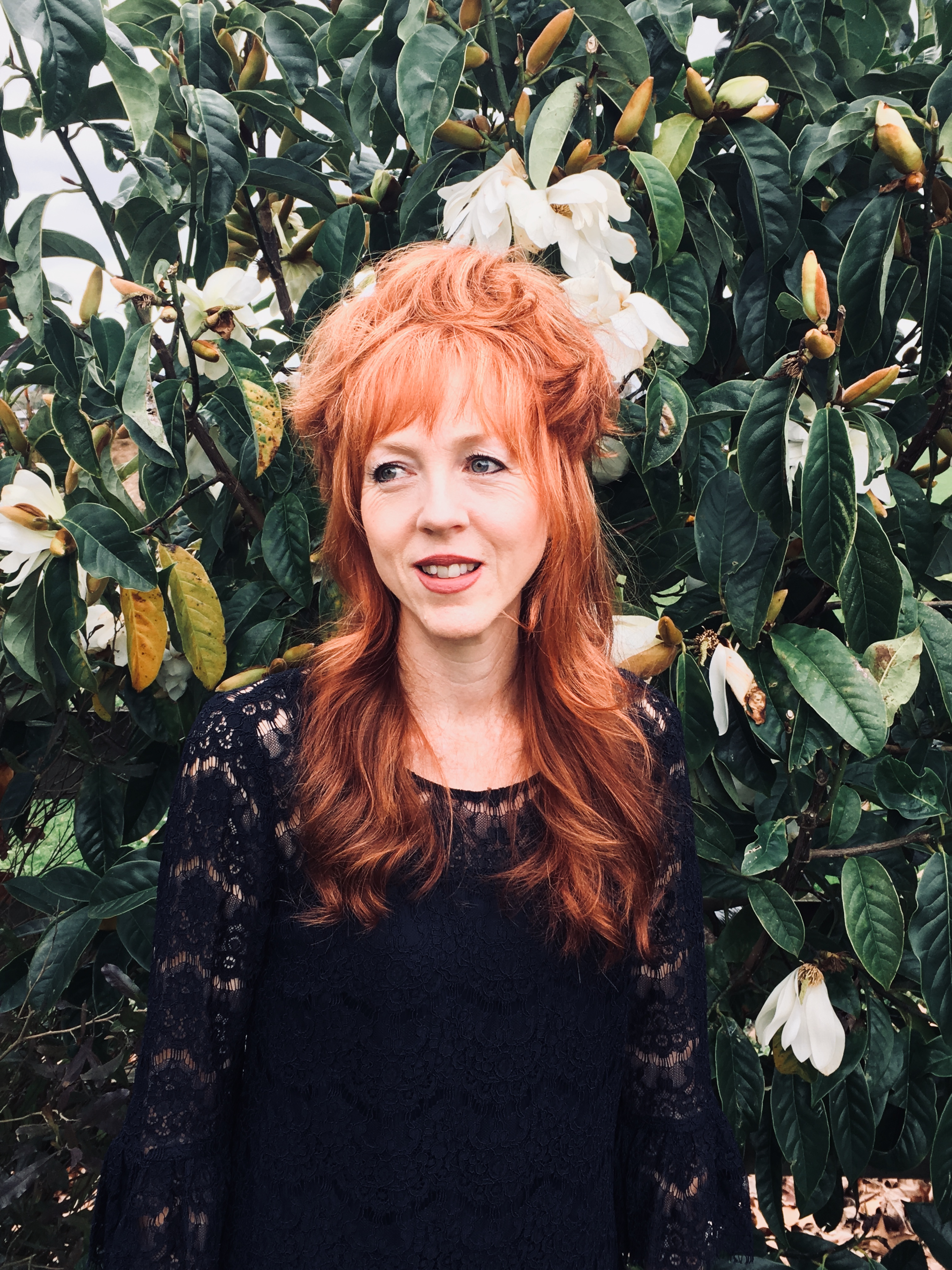
Tracey Slaughter
Reading Tracey Slaughter’s The Girls in the Red House Are Singing, is to traverse multiple routes into the human heart, body, experience, to track an anatomy of pain, the legacy of wound. Subject matter eyeballs difficulty: from the aftermath of a devastating car crash with its opiate relief, grief and suicidal thoughts, to elusive balm in hotel adultery, to drawing to the surface sexual violence endured as a teenager.
The first sequence, ‘opioid sonatas’, won the Manchester Poetry Prize in 2023, and the judges mentioned how they kept reading the poems aloud. And I can see why. As I listened to Tracey read for this feature, I just wanted to hear the whole book. The entire collection offers language at its most elastic vibrant electrifying sizzling playful serious razor-edged. The sonic interplay of words astonishes, mesmerises. It is like turning an extraordinary album up loud loud loud and feeling it in every pore of your being. It is like the most melodic dark with different instruments singing out, chords connecting, harmonies and disharmonies overlaying.
The Girls in the Red House Are Singing could be written as chapter-book narrative, sentence-based memoir, but Tracey’s poetic language produces music of cut slice bruise. The rhythm, the swings and heightening what is to live, to be alive, to experience the edge and ravine. This collection sets my nerve endings sparking. Here I am, on my own spiky road of pain and recovery, persistent dark and light, and this extraordinary gift of a book is a form of restoration. I absolutely love it.
The readings
Photo credit: Joel Hinton
‘lifetime prescription (for the chronic)’
‘psychopathology of the small hotel’
Tracey Slaughter is the author of The Girls in the Red House are Singing (Te Herenga Waka, 2024), Devil’s Trumpet (Te Herenga Waka, 2021), if there is no shelter (Ad Hoc, 2020),Conventional Weapons (Te Herenga Waka, 2019), deleted scenes for lovers (Te Herenga Waka, 2016), The Longest Drink in Town (Pania Press, 2015) and her body rises (Random House, 2005). Her poetry, short stories and personal essays have received numerous awards including the 2024 Moth Short Story Prize, the 2024 ABR Calibre Essay Prize, the 2023 Manchester Poetry Prize, the 2020 Fish Short Story Prize, the 2015 Landfall Essay Prize, the 2014 Bridport Prize and BNZ Katherine Mansfield Awards in 2004 and 2001. She lives in Kirikiriroa Hamilton, where she teaches Creative Writing at the University of Waikato. She was founding editor of Mayhem Literary Journal, and is the editor of Poetry Aotearoa. Most recently she has been collaborating on a screenplay adaptation of The Longest Drink in Town with writer Liam Hinton, and working on a book of personal essays.
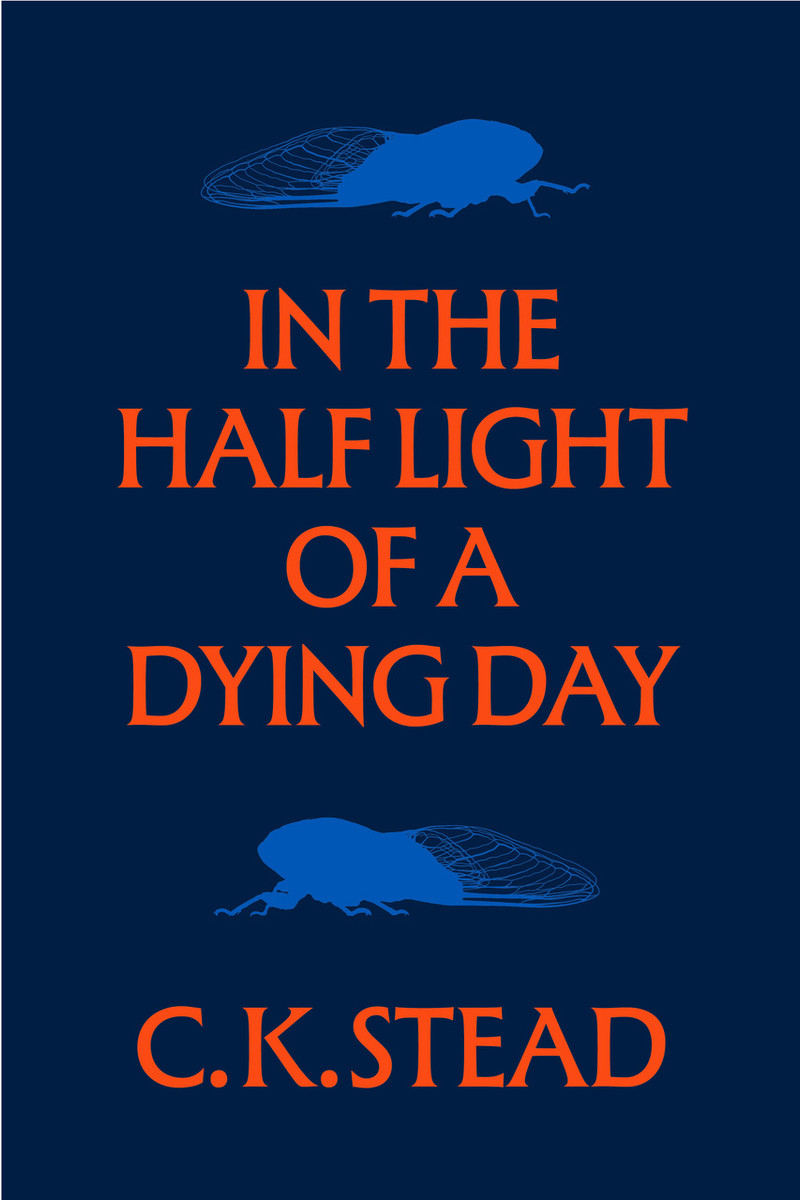
In the Half Light of a Dying Day, C.K. Stead Auckland University Press, 2024
First light
Kezia’s funeral Catullus was yours too no need for another. Fine weather forecast and an early tide you are up at first light to swim at Kohi remembering days when Kezia swam with you there to the yellow buoy in a sea that looked like glass and felt like silk and the vast beautiful harbour under the enigma of Rangitoto felt like forever.
Talking to the cat
To Nico Catullus tries to speak only Māori which has been recommended as a way of learning te reo. Nico replies volubly (he was always a talkative cat) in his own first language almost certainly Siamese. When the nights are cold he occupies your space Kezia and Catullus sometimes half-wakes to the sensation of a small rough tongue licking his hand. It’s Nico’s way of saying I know you miss her Catullus. So do I.
C. K. Stead
Author C. K. Stead in London
C. K. Stead has been writing versions of Catallus poems since 1979, also drawing upon Clodia, the woman believed to be the origin of Catallus’s Lesbia. Karl introduces a new figure, Kezia, borrowing the name from a child in Katherine Mansfield’s Burnell stories, a child believed to based on herself. Karl suggests his new collection, In the Half Light of a Dying Day, might be ‘read as a work of fiction’.
For me, this deeply affecting book, offers an album of bridges. I traverse the bridge from Caesar and his men away at war to ‘the lantern light / around the kitchen table / the women talking’. I cross the bridge between the farm up North with the calling morepork and another bloody battle. I am stalling on the bridge between Kevin and Karl sharing a wine or a poem and Catallus and Sappho penning verse. There is the bridge between our vulnerable world teetering on ruin and a world of hope and resourcefulness. I walk the bridge between the deeply personal and the imagined/documented past. More than anything, there is the bridge between love and grief, illness and death.
The poet is speaking in the ear of Catallus, the ear of Kezia, in the ear of the reader. He is speaking with heart on sleeve, sublime music rippling along the line, music that enhances the slow-paced revelations, the acute observations, poignant hypotheses, the building talk. In this lyrical unfolding, in this Calvinoesque city of bridges, poetry becomes a form of attentiveness, for both reader and writer.
There are many ways to travel through this extraordinary collection. To savour the contemporary references and locations along with those from the past. To see this as a personal navigation of loss, grief, love. To move from beloved to the wider reach of humanity. This is story. This fiction. This poetry. This is a book of love that I will carry with me for a long time.
C. K. Stead is an award-winning novelist, literary critic, poet, essayist and emeritus professor of English at the University of Auckland. He was the New Zealand Poet Laureate from 2015–2017, has won the Prime Minister’s Award for Fiction and is a Member of the Order of New Zealand.






 NZ Poetry Shelf