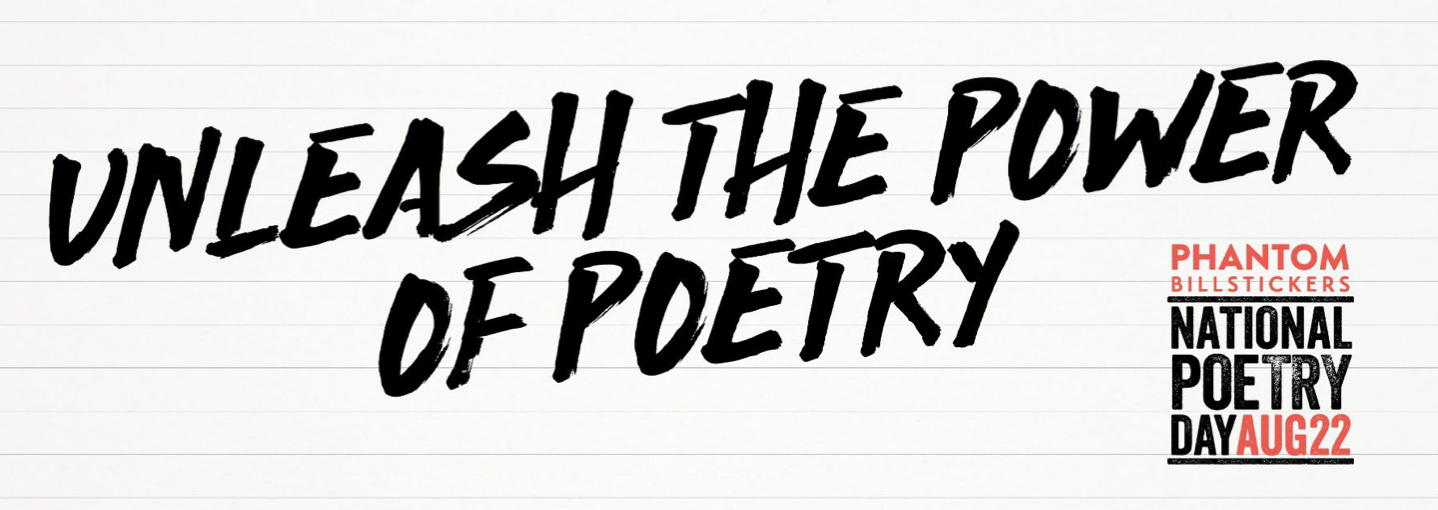
Friday 22 August 2025 is set to be a day where words take flight and poetry pulses through the streets, libraries, parks, bookshops, and unexpected corners of Aotearoa. Now in its 28th year, Phantom Billstickers National Poetry Day invites communities nationwide to create, share, and celebrate the power of poetry. Registrations and seed funding applications are now officially open.
Event organisers throughout the motu are invited to begin imagining creative ways to bring people together through poetry events, from open mic nights and school initiatives to public displays, live performances, or small, contemplative gatherings. “We’re inviting you to craft something memorable for your community this August. Whether it’s quietly powerful or joyfully bold, traditional or completely unexpected, we’re excited to see what you create” says National Coordinator Gill Hughes.
“Poetry is the heartbeat of our language, a constant, accessible rhythm that belongs to everyone,” says Robin McDonnell, CEO of Phantom Billstickers. “We are dedicated to amplifying that rhythm, through our ongoing series of poems on posters and our support of National Poetry Day – ensuring it pulses throughout our communities. We believe in its power to resonate in the open, to bridge gaps between individuals, and to breathe unexpected beauty into the everyday moments we often overlook.”
With over 100 events expected to take place nationwide, Phantom Billstickers National Poetry Day 2025 promises another extraordinary showcase of creativity, diversity, and community spirit.
Organisers wishing to apply for seed funding are encouraged to do so early, with applications closing at 5pm on Tuesday 3 June 2025. All the resources needed to plan and promote an event – including registration forms, funding guidelines, and helpful templates – are available now on the National Poetry Day website.
The official 2025 event calendar will be published on Thursday 31 July, building excitement for a nationwide celebration where poetry takes centre stage.
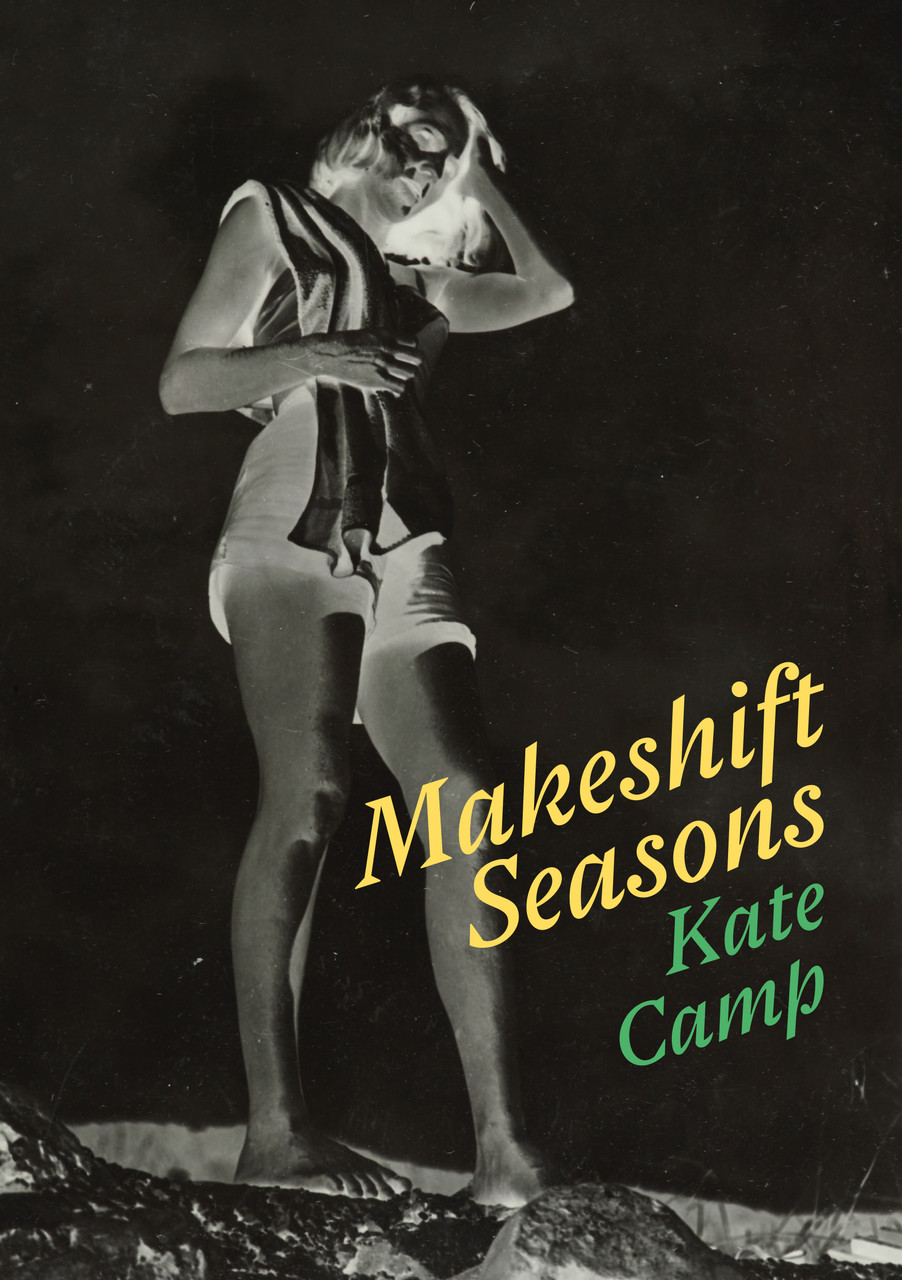
Makeshift Seasons, by Kate Camp Te Herenga Waka University Press, 2025
Kate Camp’s new collection, Makeshift Seasons, opens with ‘Kryptonite’, a surprising, wonderful poem that features Superman and unfolds into notions of existence. The speaker is speaking and I am listening. I am on the edge of my chair listening as the speaker’s words touch upon what might deliver energy, strength, hope, power, visibility. The poem feels open and vulnerable and necessary. Face to face with danger damage devastation. I read:
I am gathering fragments of my humanity like dull crystals and throwing them into the sea
from ‘Kryptonite’
Ah. The ache. The shuffle between light and dark, gleam and memory-thud. At one point, the speaker borrows lines from Lawrence Ferlinghetti to suggest they ‘revolve like a beacon / in the midst of dangers // as a lighthouse moves its megaphone / over the sea‘. Such a mesmerising image I carry as I read. Almost as if this collection becomes lighthouse poetry, where writing is a navigation aid for both reader and writer, where reading and writing carry the potential of both beauty and storm.
I am drawn into Kate’s rhythm of writing, the surprising arrival of words, where you do a sweet word pivot: ‘In the Stonehenge of the house’ and ‘your hand Napoleoned in your shirt’ (from ‘Equinox’). I am drawn into the rhythm of the subject matter, the recurring locations and motifs, the insistent beat of the sea, the harbour, especially Island Bay. Or the uplift from terra firma to astral plains: the moon, cloud, sun, comets, light.
Poetry has the ability to make a moment in time exquisitely reachable, a place that is threaded with past and present, a song an attitude a joy. Kate does exactly this. I am caught up, stalled let’s say, in the moment of the poem. Take ‘Autumn’, where I am hitching a ride to the seaweedy coast, and I am in that Berlin bar singing ‘You’ve got a friend’. It’s ragged past rubbing against ragged present:
I come home past Chappies Dairy, it’s been closed a while I think, the name painted over in a mid-blue, still legible. All the dairies are closing now we don’t need the things anymore we went there for. Cigarettes and newspapers, I used to carry with me everywhere a source of fire now it’s just my phone, it’s startling torchlight, smooth warmth of its glass and all its memories, it sets them sometimes to music, like I do.
When the world outside is in such cruel upheaval, when ‘kryptonite’ might stand in for a thousand threats and vulnerabilities, when life feels so brittle, to fall into the body of the poem—or let’s say the poem of the body because beneath and above the surface is stuttering health—is nourishing. So open. Reverberating. Resonant. This:
The failings of the body can be a form of company a trapped nerve ringing in the night like music.
from ‘In the bathroom rubbish bin’
I return to my madcap notion that this is lighthouse poetry, a beacon in the pitching world of pain and dark, for this is what words can do, what we can do as we make our daily choices, as we get through the brittle and the shards of humanity. We can be that light. I want to quote you a thousand stanzas. I want to listen again to Kate read, and then pick up the book and find my way through the ‘makeshift seasons’. Thank you.
A reading
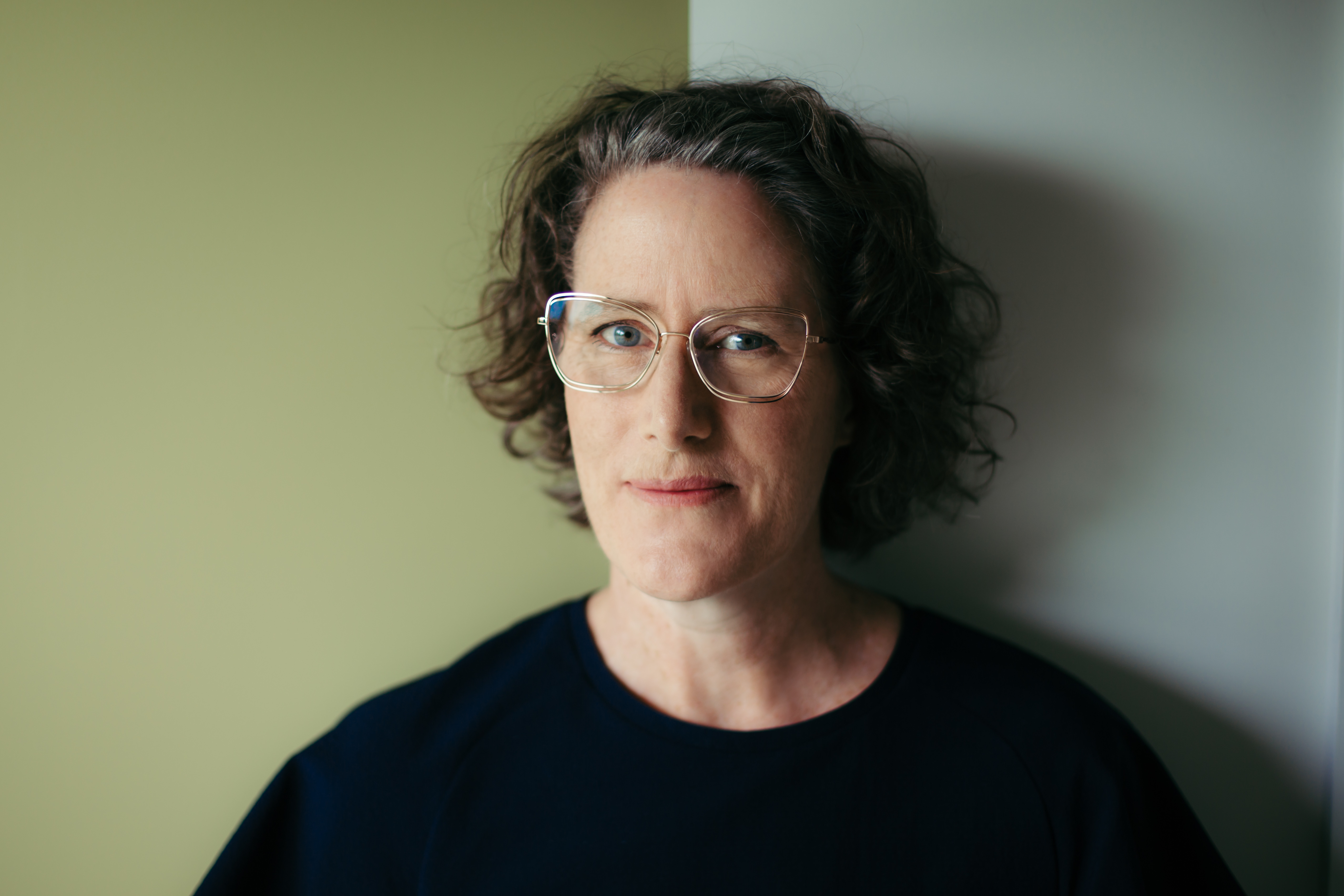
Photo credit: Ebony Lamb
Kate reads ‘Towards a working definition of global warming’, ‘Island Bay’ and ‘Extra-large geometry’
Kate Camp is the author of eight collections of poems, including The Mirror of Simple Annihilated Souls (winner of the 2011 NZ Post Book Award for Poetry) and How to Be Happy Though Human: New and Selected Poems (2020), and a collection of essays, You Probably Think This Song Is About You (2022). Her most recent book is Makeshift Seasons (2025), a new collection of poetry. Kate was born in 1972 and lives in Wellington.
This morning as I walk our dog Maxi through streets silenced not by apocalypse but by the indulgent early hour of the summer holiday, a car backfires making her cower, shake, and press against my sympathetic leg, so that out of my early Al Jazeera news items (forty-six thousand Palestinians killed in Gaza since that October 7, 2023) I hear myself utter the words I heard often on any day back in 1969, in Amman, Jordan, a greeting but also a kind wish for peace, As-salamu alaykum, and as if cued in by that memory, Mahmoud Darwish’s Diary of a Palestinian Wound, his Rubaiyat for Fadwa Tuqan, poet sister of my friend Fawwaz who didn’t bother to restrain his tears when reading the Arabic but quenched while translating its many verses, starting with this one that I didn’t know I recalled until keeping sympathetic pace with Maxi:
We’re free not to remember because Carmel’s within us & on our eyelashes grows the grass of the Province of Galilee. Don’t say: I wish we were running to it like the river/ Don’t say this. We exist in the flesh of our country & it in us.
2: Baqa’a
Absurd and self-indulgent to think of the fetch and carry of Max’s frisbee in the tranquil early morning parkland just down the road from our cosy place in Three Lamps as trigger to the memory of dead and wounded being transported to overcrowded hospitals in Amman from the refugee camps on the outskirts of the city where I worked years ago … but away it flies, the trajectory, landing with uncertain precision whence its consequence must be borne back to mark memories of repeat detonations, the intermittent yowling rise and fall of air-raid sirens and then silence that was soon broken by barking dogs and the anguished blare of many car-horns racing from Baqa’a camp fifty-six years ago when I used to catch a bus out to the UN relief and works agency for Palestinian refugees camp school where I and twenty destitute students tried to find the place where whatever we had in common could accommodate their desperation and my comfortable return to a city home at day’s end.
Ian Wedde
Ian Wedde was born in Blenheim, New Zealand, in 1946. He’s lived and worked in various parts of the world including the Middle East in Jordan in 1968-69 where he collaborated with Fawwaz Tuqan, brother of the Palestinian poet Fadwa Tuqan, on a book of selected poems by Mahmoud Darwish, published by Carcanet Press, England, in January 1973. He’s published seven works of fiction, thirteen of poetry, and a collection of essays, Making Ends Meet, in 2005. In the 1980s he coedited The Penguin Book of New Zealand Verse and The Penguin Book of New Zealand Poetry. He lives in Auckland with his wife the screen-writer and producer Donna Malane.
The two poems published here are from a new book in preparation, Being Here – Selected Poems 2007 – 2025.
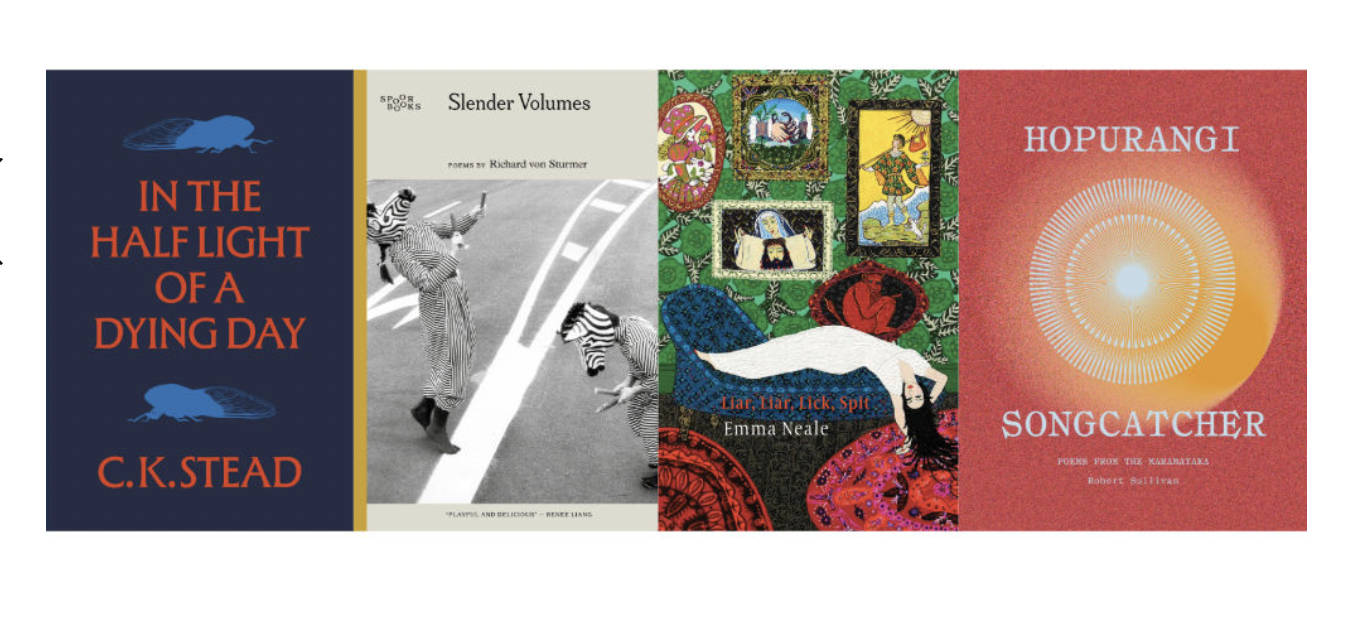
To celebrate the Ockham NZ Book Award Poetry Shortlist I invited the four poets to answer a handful of questions, and to select a favourite poem from their book and one by another NZ poet.
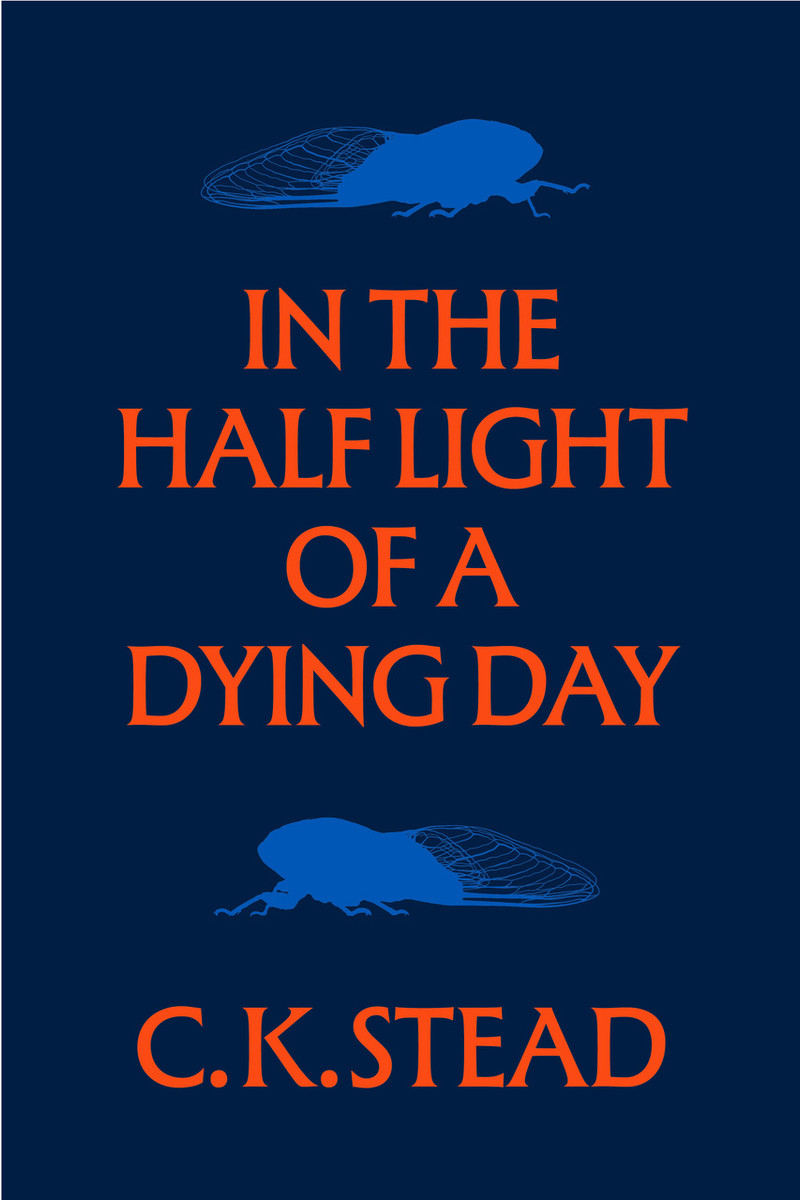
In the Half Light of a Dying Day, C. K. Stead Auckland University Press, 2025
C. K. Stead has been writing versions of Catullus poems since 1979, also drawing upon Clodia, the woman believed to be the origin of Catullus’s Lesbia. Karl introduces a new figure, Kezia, borrowing the name from a child in Katherine Mansfield’s Burnell stories, a child believed to based on herself. Karl suggests his new collection, In the Half Light of a Dying Day, might be ‘read as a work of fiction’.
For me, this deeply affecting book, offers an album of bridges. I traverse the bridge from Caesar and his men away at war to ‘the lantern light / around the kitchen table / the women talking’. I cross the bridge between the farm up North with the calling morepork and another bloody battle. I am stalling on the bridge between Kevin and Karl sharing a wine or a poem and Catullus and Sappho penning verse. There is the bridge between our vulnerable world teetering on ruin and a world of hope and resourcefulness. I walk the bridge between the deeply personal and the imagined/documented past. More than anything, there is the bridge between love and grief, illness and death.
The poet is speaking in the ear of Catullus, the ear of Kezia, in the ear of the reader. He is speaking with heart on sleeve, sublime music rippling along the line, music that enhances the slow-paced revelations, the acute observations, poignant hypotheses, the building talk. In this lyrical unfolding, in this Calvinoesque city of bridges, poetry becomes a form of attentiveness, for both reader and writer.
There are many ways to travel through this extraordinary collection. To savour the contemporary references and locations along with those from the past. To see this as a personal navigation of loss, grief, love. To move from beloved to the wider reach of humanity. This is story. This fiction. This poetry. This is a book of love that I will carry with me for a long time.
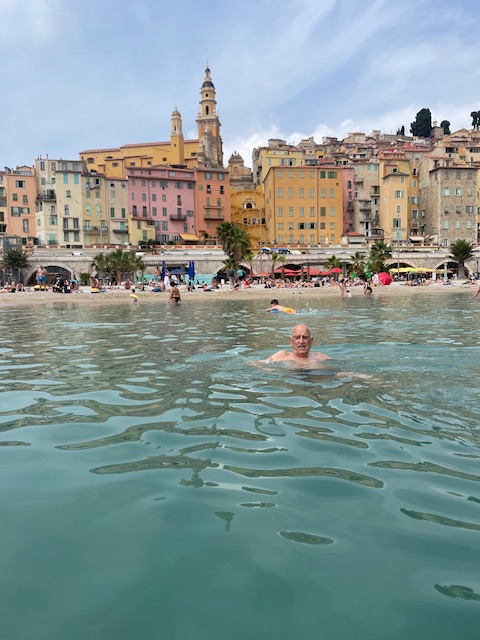
Swimming at Menton
Were there any highlights, epiphanies, discoveries, challenges as you wrote this collection?
They began just as a return to my old ‘poems in the manner of Catullus’ device, a way of using one’s own experience and half concealing its origin behind the persona of the Roman poet, so the reader could not be sure whether or not it was autobiography. But it was at just this time that my wife of 68 years, Kay, was diagnosed with cancer. The illness and her death occurred over several months so Catullus needed another lover than the ‘Clodia’ of my earlier poems. I gave her the name Kezia, and the poems became an account of her illness and death and of Catullus coping with the loss, the bereavement, the memories of their long past together, and the new reality of life alone. As in all my Catullus poems he never speaks in the first person – he is spoken to, or about, so these are not poems in the confessional manner, they keep a certain cool, a certain distance, the emotional demands on the reader are not heavy, which is why I think they work, if they do.
The poems seemed to write themselves, fluently. They were all written in one year, and then they stopped. I wrote the last one, and knew it was the end of the book and almost certainly the last poem I will ever write.
Is there a particular poem in the collection you have soft spot for?
Possibly ‘Now more than ever seems it rich…’ which might be the longest single-sentence poem in New Zealand poetry. But I’m especially fond of ‘First light’, a swimming poem involving the yellow buoy at Kohi and the time when both Kezia and Catullus would swim all the way out to it in the early light.
‘Now more than ever seems it rich …’
Last night Kezia Catullus called up his ever-ready Keats nightingale ode and remembered how in the same bed when you were dying you’d asked for the same poem and he’d had to stop at the sixth stanza because you were weeping at those lines that displayed so poignantly how the Muse could call forth out of the nowhere of a poet’s inner self words so precisely placed on the cliff-edge between beauty and death that poet and reader alike must pause and weep.
First Light
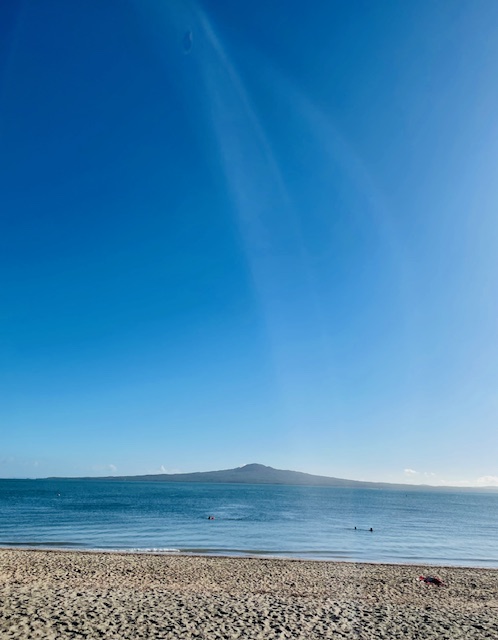
Kezia’s funeral Catullus was yours too no need for another. Fine weather forecast and an early tide you are up at first light to swim at Kohi remembering days when Kezia swam with you there to the yellow buoy in a sea that looked like glass and felt like silk and the vast beautiful harbour under the enigma of Rangitoto felt like forever.
What matters more than ever when you are writing a poem? Or to rephrase, what do you want your poetry to do?
I can only reply to this by quoting what I wrote in the Foreword to my Collected Poems 1951-2006: ‘I think of writing a poem as putting oneself in the moment at the moment – an action more comprehensive, intuitive and mysterious than mere thinking, governed partly by history (the poet works in a tradition), but equally by individual temperament and voice, and by a feeling for what is harmonious, fresh, surprising and even, occasionally, wise.’
I would find this impossible to narrow to one example, but is there a poem by a poet in Aotearoa that has stuck with you?
There are so many of course but a good example would be Curnow’s ‘You will know when you get there’ which I quote in my final poem in the collection.
You Will Know When You Get There
Nobody comes up from the sea as late as this in the day and the season, and nobody else goes down
the last steep kilometre, wet-metalled where a shower passed shredding the light which keeps
pouring out of its tanks in the sky, through summits, trees, vapours thickening and thinning. Too
credibly by half celestial, the dammed reservoir up there keeps emptying while the light lasts
over the sea, where it ‘gathers the gold against it’. The light is bits of crushed rock randomly
glinting underfoot, wetted by the short shower, and down you go and so in its way does
the sun which gets there first. Boys, two of them, turn campfirelit faces, a hesitancy to speak
is a hesitancy of the earth rolling back and away behind this man going down to the sea with a bag
to pick mussels, having an arrangement with the tide, the ocean to be shallowed three point seven metres,
one hour’s light to be left and there’s the excrescent moon sponging off the last of it. A door
slams, a heavy wave, a door, the sea-floor shudders. Down you go alone, so late, into the surge-black fissure.
Allen Curnow From Collected Poems by Allen Curnow edited by Elizabeth Caffin and Terry Sturm, Auckland University Press 2017 permission courtesy of the copyright owner Tim Curnow, Sydney.
Are there particular poets that have sustained you, as you navigate poetry as both reader and writer?
Too many. I have always been a compulsive reader of poems and poetic drama, over the whole range, though in olde age I’m not good at ‘keeping up’ with what’s going on in the present.
We are living in hazardous and ruinous times. Can you name three things that give you joy and hope?
I could just reply ‘poetry’ – three times. But a better answer might be to refer to the poem ‘World’s End’ (p.22) where Catullus’s affirmative temperament acknowledges the terrible things ahead for the human race but seems to see better times beyond them, but then has to acknowledge ultimate extinction.
C. K. Stead is an award-winning novelist, literary critic, poet, essayist and emeritus professor of English at the University of Auckland. He was the New Zealand Poet Laureate from 2015–2017, has won the Prime Minister’s Award for Fiction and is a Member of the Order of New Zealand.
Last held in 2023 in front of a packed-out and spellbound room, Poetry and Music makes its return to the Festival, once again pairing the four finalists in the poetry category of this year’s Ockham New Zealand Book Awards with the brilliant musicians of the Ockham Collective (a charitable trust devoted to fostering creativity and connection in Tāmaki Makaurau).
The poets read and the musicians interpret, making for a mesmerising performance.
Fri, 16 May 2025
2:30pm – 3:30pm
Herald Theatre, Aotea Centre
Earlybird $24 Standard $29.50 Patrons $19.50 Students $13
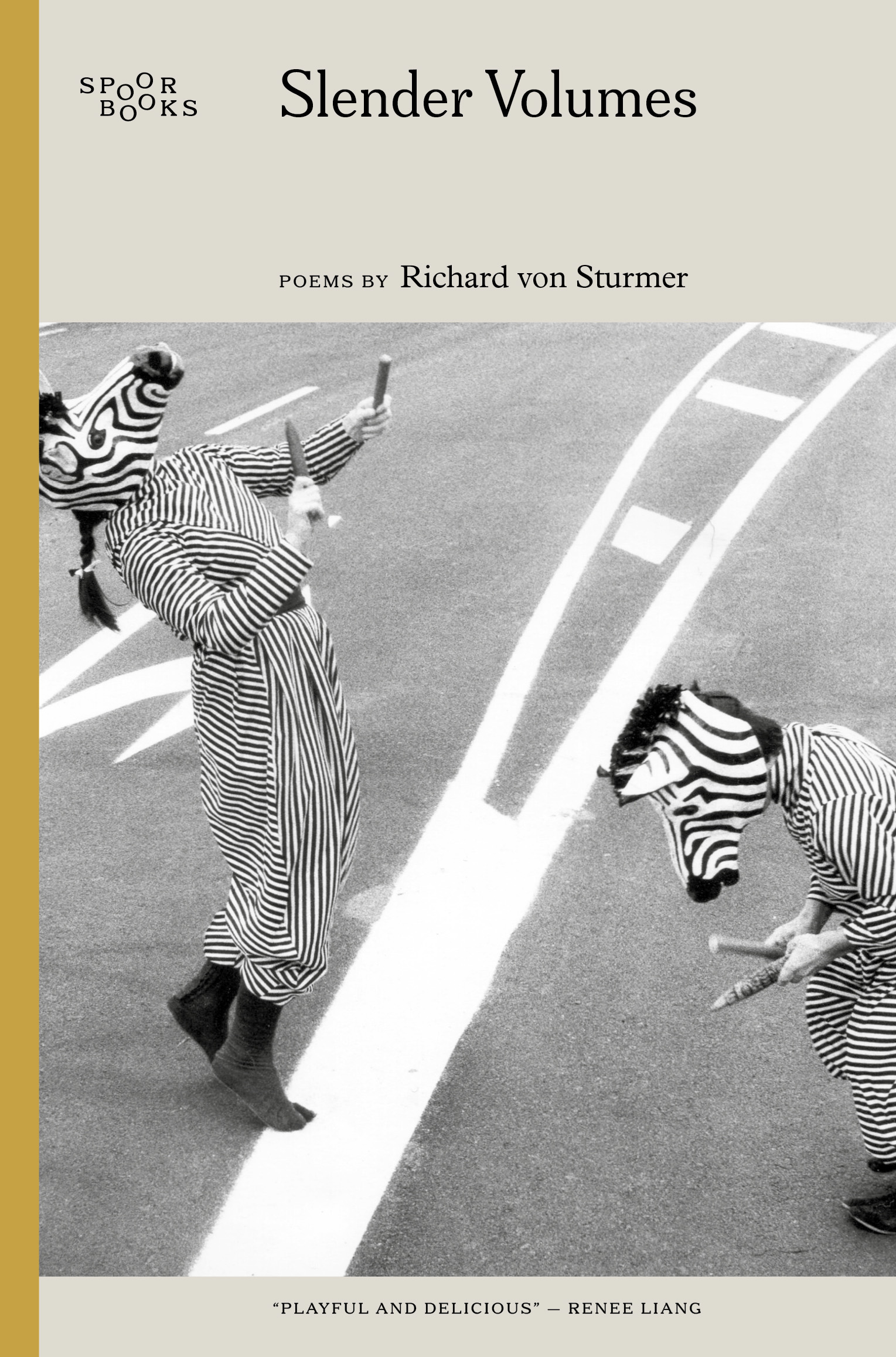
Slender Volumes, Richard von Sturmer, Spoor Books, 2024
To celebrate the four collections on the Ockham NZ Book Award Poetry Short list I invited the poets to answer a handful of questions, and to select a favourite poem from the book and by another NZ poet.
Reading this collection is to savour the gift of slowness, a slowing down to absorb the world, the things we hear see smell feel, back in the past, here in the present. And yes, it becomes a form of slow travel, reading these 300 poems, strengthening feet on the ground, hearts and minds set to uplift. Yes. Reading this exquisitely crafted collection is to travel with roadmap still in the pocket, to fall upon egg-whisk clouds in the sky hot water bottle Buddha Plutarch Dante a washing machine coffee with a drop of milk. It is to travel to Bologna Sydney New York Venice Poor Knights Islands Honolulu Auckland Mount Wutai Yumen Gate.
For me it is neither source nor destination but the travel itself. I am falling into the utter joy of writing and reading as travel. As discovery surprise wonder. A world in ruins and a world in repair. Richard is translating the koan within his own time and place, his own narrative, and I find myself doing this I read.
And that is what poetry can do. This book. These poetic vibrations, these wisdoms. Openings. Autobiography. Meditations. Poetry as an intimately and intricately woven cloth of both experience and imagining. Personal. Resonant. Anchored and anchoring.
Were there any highlights, epiphanies, discoveries, challenges as you wrote this collection?
Just to let everything drop (thoughts, expectations) and to see what appears.
Is there a particular poem in the collection you have soft spot for?
As there are 300 poems it changes. At the moment:
Linji Sees Huangbo Reading a Sūtra
Linji believed that a true Zen master should ignore the written word. But didn’t he know that The Lankavatara Sūtra states: “Things are not as they seem, nor are they otherwise”? The clouds read the wind, and their shadows read the fields. The large clock in the hall of the railway station reads the moving escalators. Waves scroll across the surface of the sea. And in their caves and crevices crabs turn over pages of seaweed, deciphering each grain of sand.
What matters when you are writing a poem? Or to rephrase, what do you want your poetry to do?
To open a door.
I would find this impossible to narrow to one example, but is there a poem by a poet in Aotearoa that has stuck with you?
The Darkness
My father had a plan to float down part of the Waikato River on a lilo through the darkened canyons seeing things that you could never see from up above
The plan was for my mother (They were newly courting not yet married Junior Hospital House Surgeons in Hamilton) to let him off at one reserve
then drive downriver & pick him up at the other end She drove downstream & waited for hours (it seemed)
She worried that he might have fallen off The airbed gotten tangled at a bend When he finally floated out of the darkness he was soaked to the skin chilled to the bone “I don’t remember anything about it”
“No, but I do,” she says to him
Jack Ross A Clearer View of the Hinterland: Poems and Sequences 1981-2014 (Wellington: HeadworX, 2014)
Are there particular poets that have sustained you, as you navigate poetry as both reader and writer?
Rainer Maria Rilke
We are living in hazardous and ruinous times. Can you name three things that give you joy and hope?
Getting out of bed each morning, sunlight, the company of a beloved.
Richard von Sturmer is a writer, performer and filmmaker who is well known for having written the lyrics to Blam Blam Blam’s “There is No Depression in New Zealand”. He is a teacher of Zen Buddhism and the co-founder of the Auckland Zen Centre. Slender Volumes is his tenth collection of writings.
Richard von Sturmer is a writer, performer and filmmaker who is well known for having written the lyrics to Blam Blam Blam’s “There is No Depression in New Zealand”. He is a teacher of Zen Buddhism and the co-founder of the Auckland Zen Centre. Slender Volumes is his tenth collection of writings.
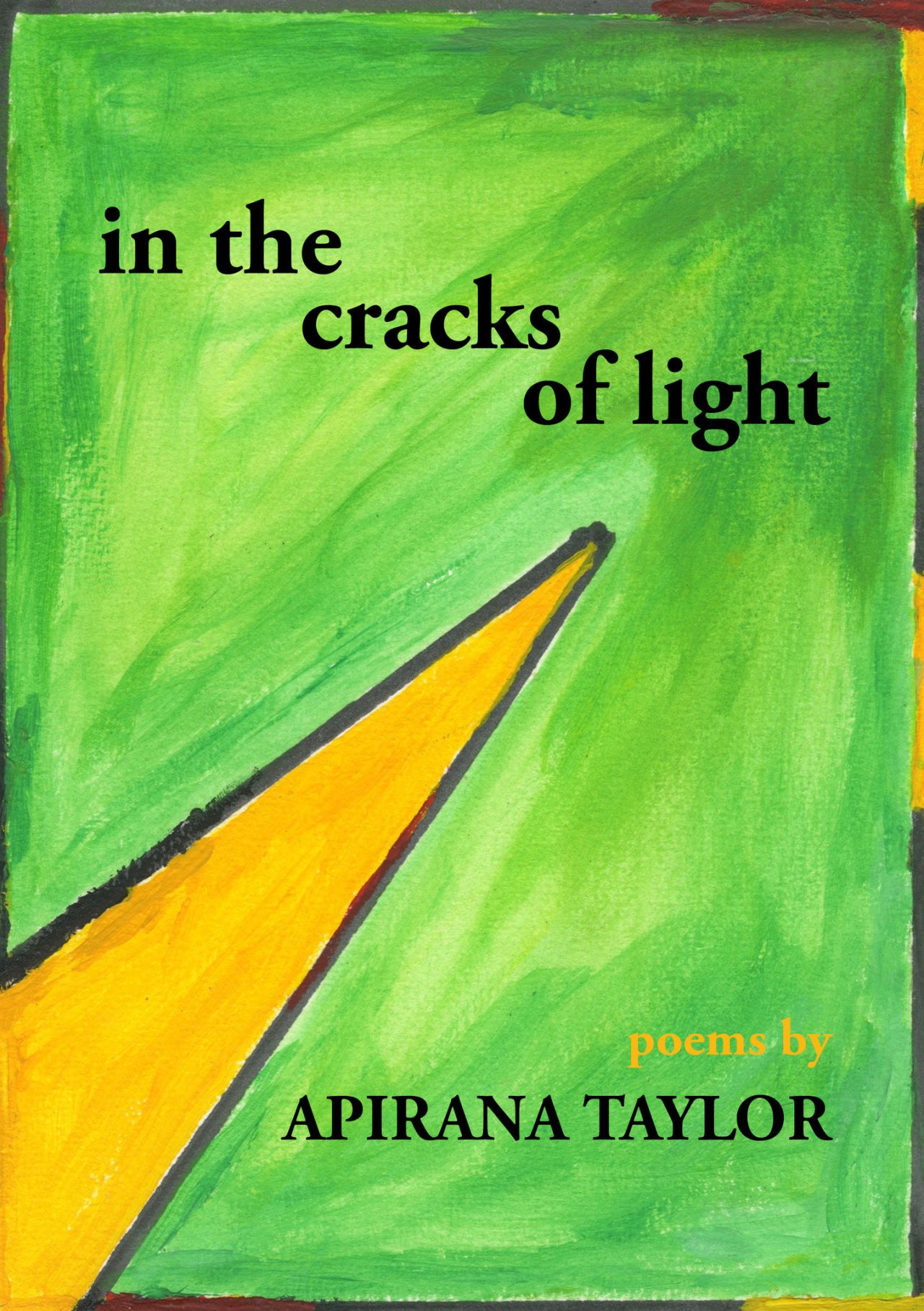
in the cracks of light, Apirana Taylor Canterbury University Press, 2024
bud
the poet tree buds forever
Apirana Taylor
in the cracks of light is an apt title for Apirana Taylor’s collection of poems, a book that begins with the idea that poetry is born out of light and dark. It is a perfect book to pick up this week, when life itself clings desperately to cracks of light, when words, against all odds, are a way of building light across the globe.
Apirana begins with a wahine’s call on the marae, with the welcoming ‘karanga mai, karanga mai’, and I am hearing that call. I am hearing that call with everyone together.
the people weave the light from threads of memory stories stitching weaving everyone together with laughter tears and kōrero
from ‘karanga’
This is a collection of wonder, acknowledgement, aroha, home, descendants. It is a book of protest and it is a book of plantings. It is a book of the land and the people, of listening looking reflecting.
Apirana’s lyrical craft exemplifies the way spareness on the line can open out into a lingering richness. The poems, some short, some longer, become song. A flower that slowly opens as we read. A poetic bloom. An album in the key of hope.
I am musing on how the stories we carry with us over generations shape us, from times of protest and challenge to the time of planting kūmara, fingers in the life-enriching soil. Sharpness and edge, tenderness and wisdom.
Think too of this book as a handbook, a guidebook on writing. The poet is ‘raining poems’. He will write of rivers, mountains, lakes, seas, the land, the poor, ‘for that is the dream’ (‘to write’). He will write of beauty and wonder (‘microscope’), and I am wondering, let’s say wandering, into the realm of miniature detail in the wide expanse of a view.
Pick up Apirana’s sublime collection and like me, you might weep, feel and celebrate the power of words connect, heal and pay attention. This collection, penned in the key of love, is a gift, a taonga.
catch the wind
oh poem
raise your sail catch the wind
Apirana Taylor
Apirana Taylor was awarded the 2024 Prime Minister’s Award for Literary Achievement in Poetry. He is a poet, playwright, novelist, short story writer, storyteller, actor, painter and musician. His prose and poems have been translated into many languages and are included in many nationally and internationally published anthologies. Api travels to schools, tertiary institutions and prisons throughout New Zealand to read his poetry, tell his stories and take creative writing workshops. He has now published seven collections of poetry, three collections of short stories, two novels and three plays. Api is of Māori and Pākehā descent, with proud affiliation to Ngāti Porou, Te Whānau-ā-Apanui and Ngāti Ruanui.


 NZ Poetry Shelf