

Poetry Shelf has invited poets to choose a poem from their longlisted collections and to write a few comments on the poem and poetry. Today Erik Kennedy:

Sick Power Trip, Erik Kennedy
Te Herenga Waka University Press, 2025
Animals on Leads
We entered the town and the first thing we saw
was a woman taking her ferret for a walk.
‘Nice day for it,’ I said significantly. The ferret
was going everywhere at once, an absolute possibility engine
producing the energy of a ten-man brawl in a two-man toilet.
And us, should we visit the town’s oldest church
with its medieval eagle lectern and greensand voussoirs,
or should we ramble to the squinty, stony seafront, walled in
by white gin-palace-style hotels? Let’s let the twitchy ferret
be our compass needle, straining against its bonds,
the confident quadrupedal scamperer pulling its minder along
until she’s going north and south, finding nothing and God.
Erik Kennedy
‘Animals on Leads’ is perhaps not a typical Sick Power Trip poem. It doesn’t lean into the collection’s preoccupations with things like illness and politics and war. It is explicitly not set in Aotearoa. And there is barely any glumness to it; it is almost chipper. But I like it a lot because I like poems that tell true stories, and I wish I had more of them. (The problem is that I don’t lead an interesting enough life to generate reams of fascinating ‘true story poems’.)
The setting of the poem is Eastbourne, East Sussex. There are two solid clues as to the location. ‘The town’s oldest church / with its medieval eagle lectern and greensand voussoirs’ is St Mary the Virgin, which is an absolutely stonking Grade I listed building. I lifted the language in that second line directly from the leaflet about the church’s architecture. And ‘the squinty, stony seafront, walled in // by white gin-palace-style hotels’ is a feature of Eastbourne more than any other South Coast resort town. I rate Eastbourne surprisingly highly. On looks it is at least an 8 out of 10. On culture it is becoming more like Brighton. The sea itself is pretty clean, which is a luxury in twenty-first-century England. And it has a wonderful collection of Eric Ravilious works at the Towner gallery.
And of course a third way we know the poem is not set here is the presence of a pet ferret. A ferret is an animal that certainly doesn’t belong in New Zealand, given that its great passion in life is eating birds and eggs. But in England, being walked on a lead, a ferret is a different proposition altogether. It stands for chaotic exuberance. The lines ‘The ferret / was going everywhere at once, an absolute possibility engine // producing the energy of a ten-man brawl in a two-man toilet’ have probably earned me more compliments for their deranged splendidness than any other lines I have ever written. Something in this image speaks to people.
It might be obvious to say this, but the ferret is not the only animal ‘on a lead’ in the poem. The owner of the ferret, dragged about according to her mad mustelid’s whims, is in my view also an animal on a lead. I mean, we all are, in one way or another. A lead always connects two animals, and the hierarchical relationship between them may not be what you would expect. I think there is some joy in the serendipitous meanderings of creatures without meaningful plans. Quite a lot of joy, in fact. When I said ‘Nice day for it’ to the woman in line 3 of the poem, I really meant it.
Erik Kennedy
Erik Kennedy (he/him) is the author of the poetry collections Another Beautiful Day Indoors (2022) and There’s No Place Like the Internet in Springtime (2018), both with Te Herenga Waka University Press, and he co-edited No Other Place to Stand, a book of climate change poetry from New Zealand and the Pacific (Auckland University Press, 2022). His poems, stories, and criticism have been published in places like berlin lit, FENCE, The Florida Review, Los Angeles Review of Books, Poetry, Poetry Ireland Review, the TLS, and Western Humanities Review. Originally from New Jersey, he lives in Ōtautahi Christchurch.
From Poetry Shelf review:
“Erik’s collection has stuck with me for a number of reasons. I have never read a collection quite like it and I love that. It feels like there are two significant settings. Firstly, an extraordinary band of wit and humour, with unexpected scenarios, shifting angles and points of view. Secondly, the necessary and imperative knottiness of humanity, from exposed self to a wider global reach. Not an either or view, but an incredible shifting light on how to live and how to survive. A poetic prism on the contemporary world that might be sharp, jagged, wise, personal.” Full review here and reading by Erik here
Te Herenga Waka University Press page

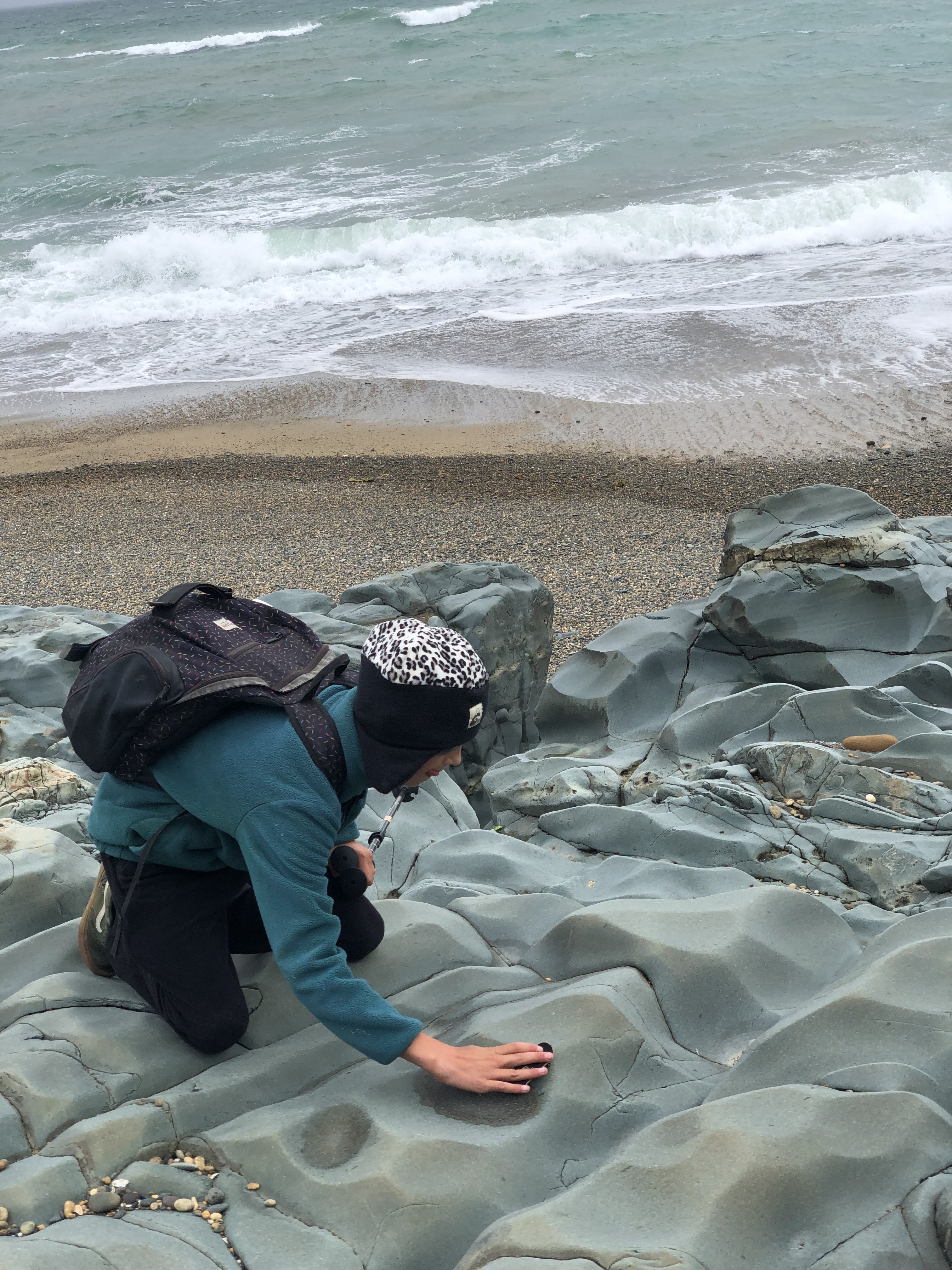
Riverton to Colac Bay
There are ways to walk the trail
I hadn’t imagined. Thanks
to grandsons: use your poles to
Mario dance, vault up on
rocks, jump off again, use
tree roots to twirl 360
degrees, run off track to
investigate boulders, use wave-
smoothed rocks as a half-pipe for
the tech-deck always carried
in your pocket. Choose the deep
shingle to walk on instead
of taking the firmer path.
I stop under a ponga
tree to write instructions down.
Longwood Forest
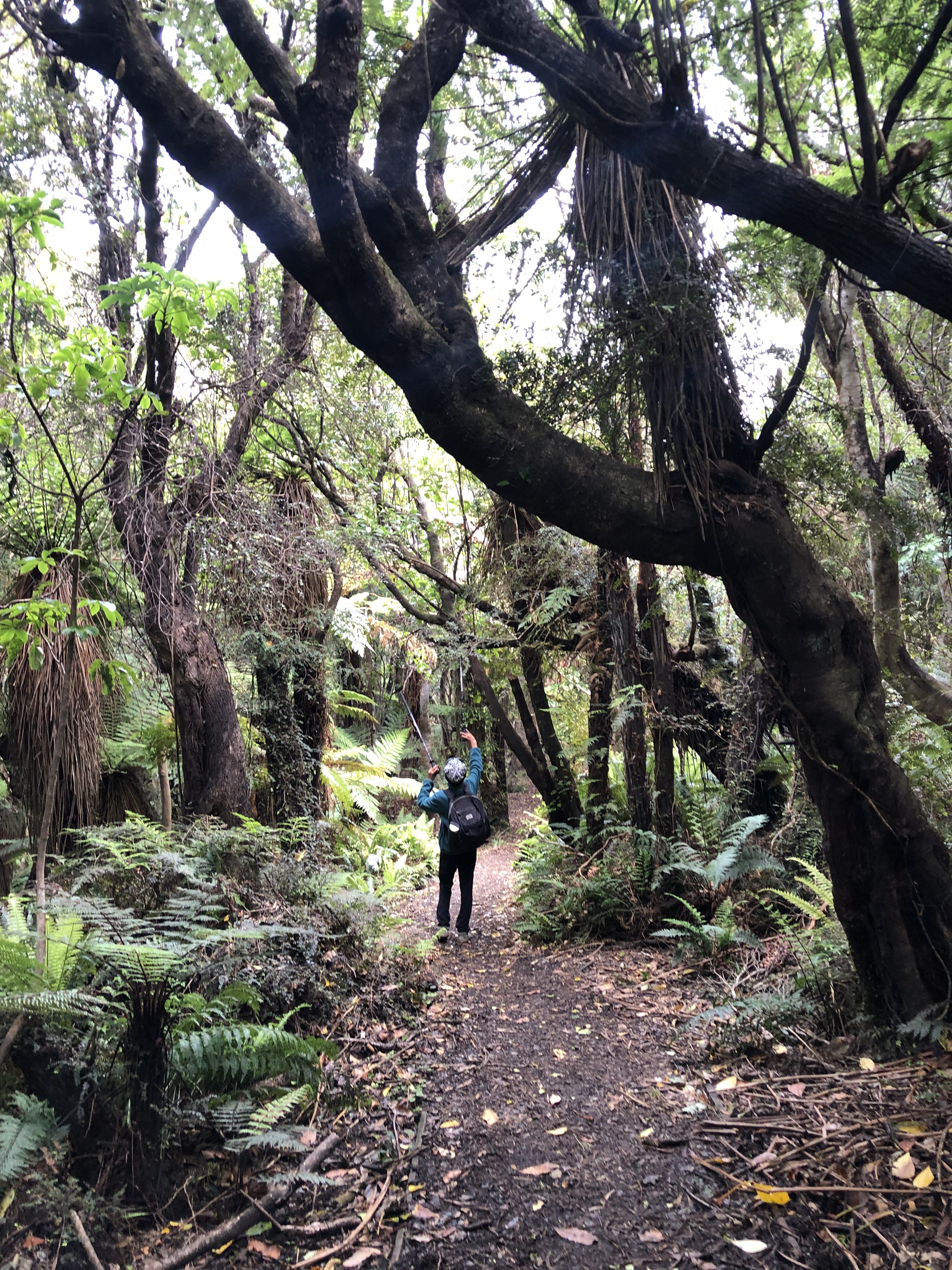
When the long strand of bush lawyer
wrapped my face, hooked so slightly
my lips, I greeted the plant as one who
greeted me; touch in a forest where I am
the only one moving, all day today
and yesterday and the day before. I don’t know
this life, only the trees, who are silent too,
hung about with lichen and moss,
mud at their heels. I follow footsteps – who slipped,
who sank, skirt the dangers as far
as possible. When I fall, I fall safely, pack
holding my face to the ground:
hello bush, moss, stone. But not
mud, deep and viscous and sucking.
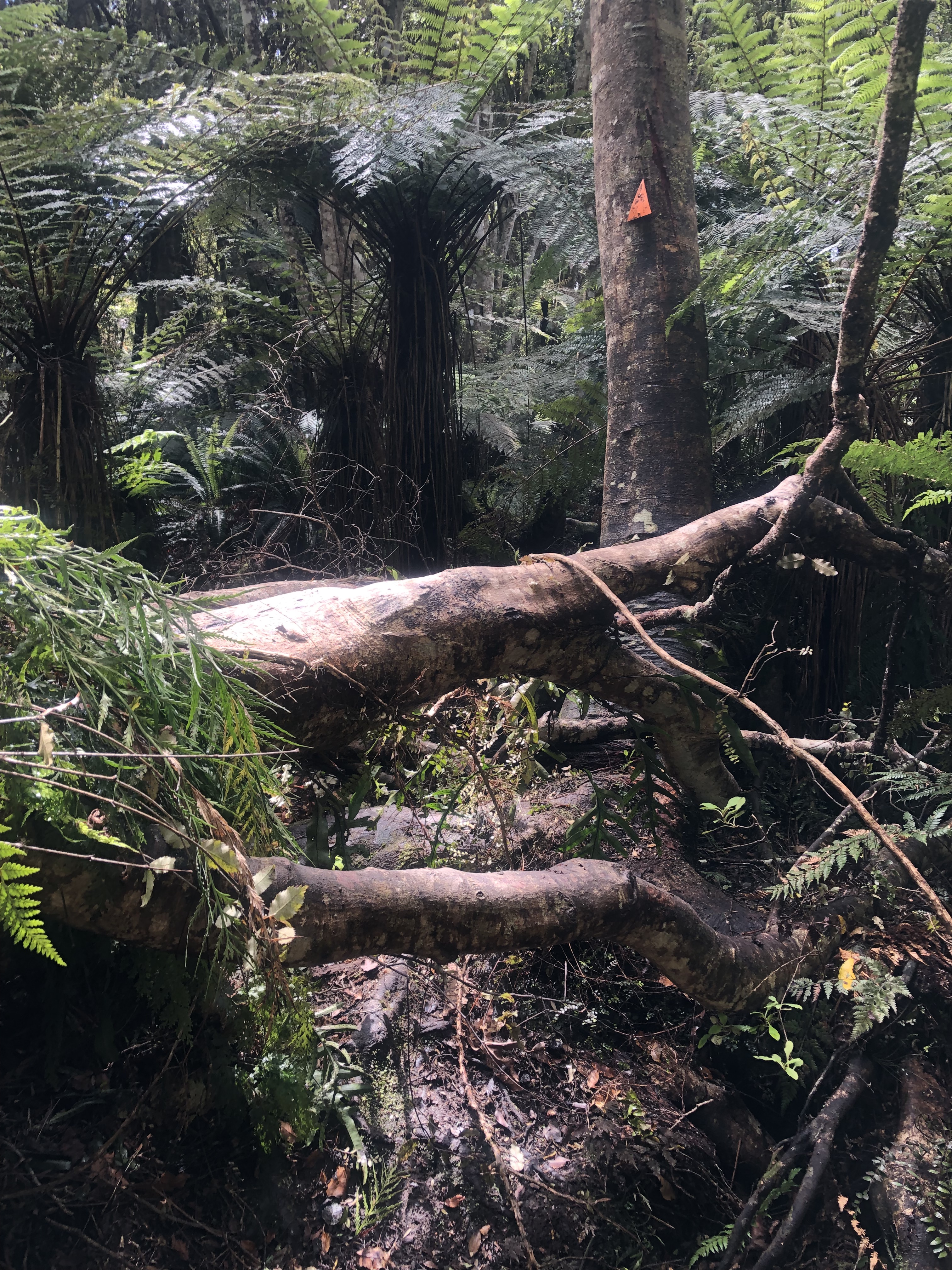
So, I am safe (wet, encrusted). Darling,
I say to the orange marker. This way.
This way. I touch the trunks. In the dimming
forest, there is no more welcome
light than one that tells you: turn here,
turn here, straight ahead.
A 39 km day
There are no strangers in this hut
though I wish there were, someone
tall and loud, someone unfitter than
me, who yesterday walked fifteen
hours, the last two in darkness,
reading my way up the wrong path
by pebbles and rocks. How they
shone though the night was dark.
One star, a broken lamp.
And having taken the wrong road
entirely, I was at last
felled, lay like that on some unknown
damp hillside, yet knew enough
to take off wet boots, socks, pull on
dry ones, burrow into the
bag, wrapped in the tent, and ask
the sky not to rain.
It rained. Water fell from my
eyelids like tears. How long a night
is waiting for light – and then,
bird call, enough sky to pull on
wet boots, wet socks, roll wet tent,
wet bag in wet pack, retrace
my path, looking for the orange
markers, which, after an hour,
flare like small sunrises, until,
more lessons learned, I take the right
trail to Duggie’s Hut.
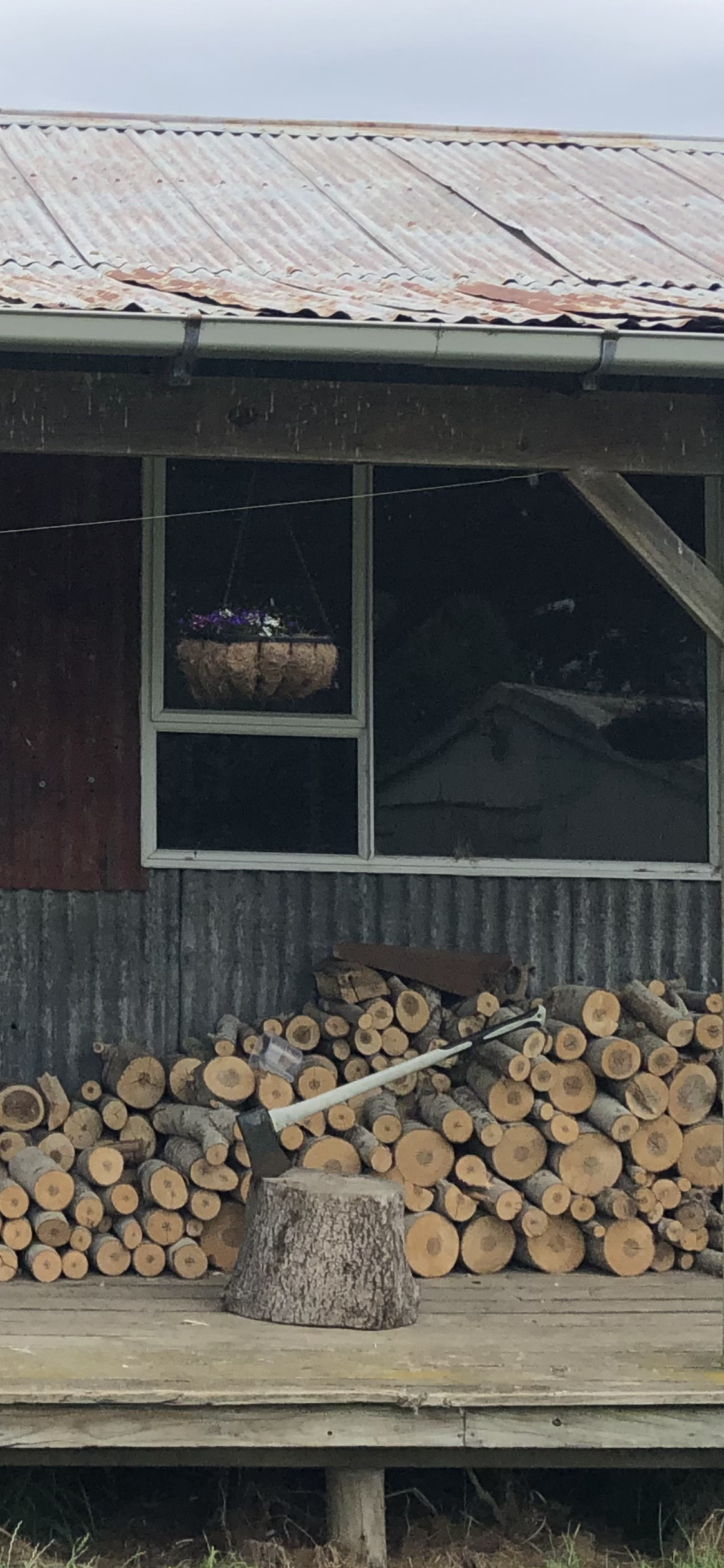
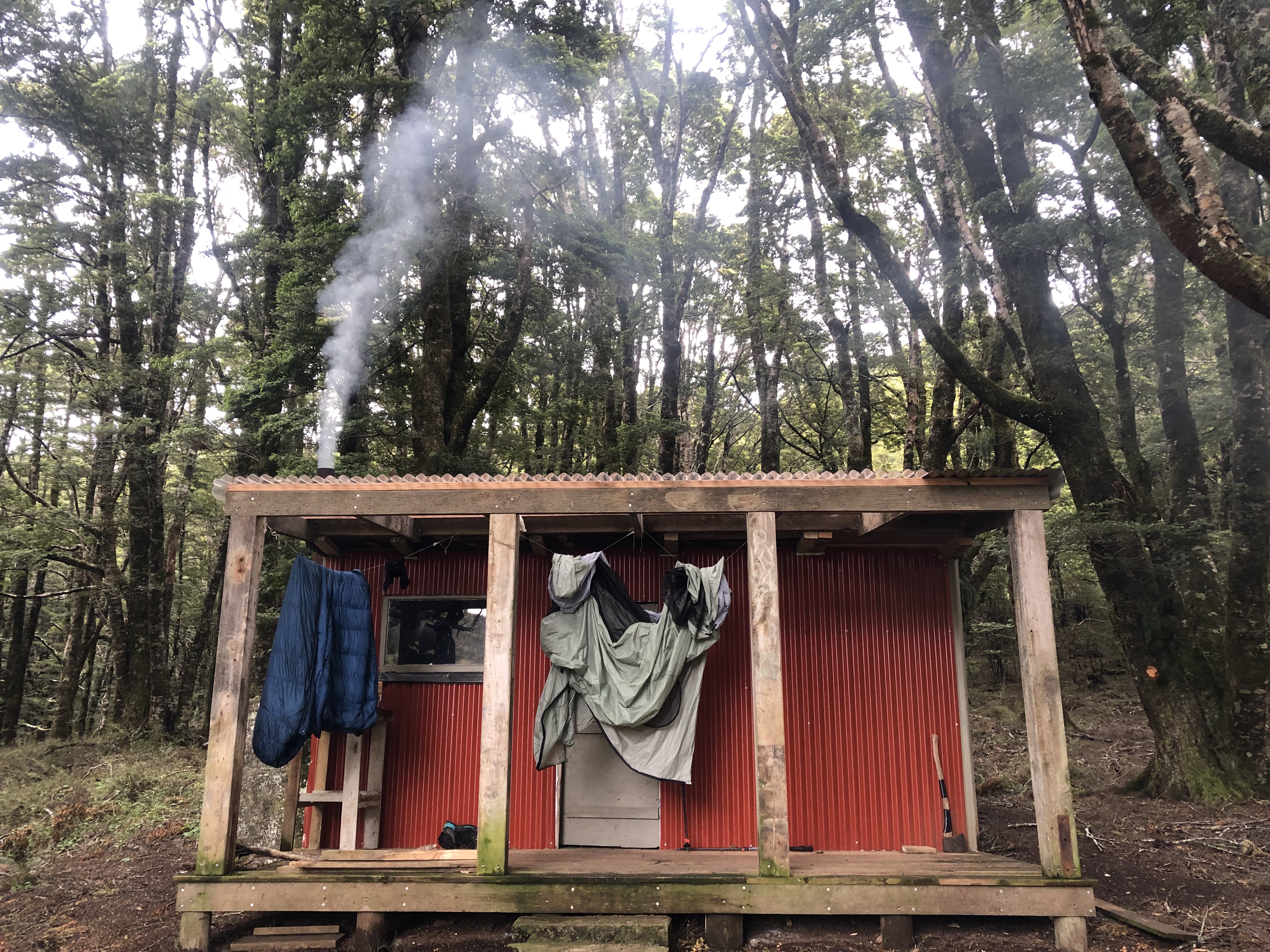
Duggies Hut 2.
Overnight it rained again.
I lay in my blue sleeping bag, socks,
gloves, hat (the fire out), pictured
the river rising. My only way out.
Phone set for six am to cross the icy
gush and boulders. But my foot
still swollen, water bag ruptured, night
light flat. In the dark, considering options. Forward
or back? You can turn back, Mum,
daughter Evie had told me. Another white
feather on the path yesterday, my
signs from Brian. And I did find
the hut, where I rest, rebuke the mouse,
rest, read. It is gentle here, all paths
covered in golden leaves, the stream
pouring. If Brian had survived
would we have tramped to a hut
such as this? The dilemma
to go forward or back, to cross
or not. He, being experienced,
would have made those decisions.
Even without a feather,
I have decided, this time,
to turn back.
Visitors
Just like I wished, two trampers
walk up to the hut – Martin from
Munich, Mike from Utah. There’s firewood
gathered, chopped, stacked, fire lit, and
time for stories, firewall and hot chocolate
(hut toddy). This would be enough, yet three
shepherds arrive and six dogs. Young
Charlie fills the door frame. He
shakes our hands, passes us cans of
Speights. All I know about Utah
is Charlie Kirk, he says.
The young men light cigarettes, the dogs,
with their collars and antennas,
mull about, run wide after pigs.
We say, Come in, the fire’s warm, but they
keep their boots on, their eyes on their receivers.
We join them and drink on the verandah.
They’re happy work’s finished now for
Christmas. They have hunting, and
heaps of beer.
The hut feels right with bunks filled,
food bags hanging from the rafter,
packs on the floor, boots and poles
outside. Mike broke both his poles
extricating his length from the mud.
The poles taped with splints; an old
spoon and fork flattened by a rock.
In the bush there are no power bank
top ups, no chances to call home, no
food restocks, no new laces, no pole
replacements but sometimes,
unexpectedly, cold beer.
Christmas Eve
To take my pack in for repair
I lift out the pieces of my life (heart):
water treatment pills (to survive),
power bank (to find maps), dry
socks (for wet hillsides); unpacking
histories, small decisions, enough
nuts for a week. Tent. Last thing,
sleeping bag. Empty, the pack
breathes again. Full of fantasies
of tramping like a cartoon voice
bubble – have fun!
I unclip my trail pass. Is this significant?
Foot x-ray this morning. The pack and I
in need of repair. I limp in the throng
of Christmas shoppers on Shotover Street,
a tramper, deconstructed.
Sienna
I cannot leave yet. Eight
to ten days more rest, no more
than ten minutes walking.
The physio, Rion, is surprised
there are no broken bones, so
all’s good. Back to reading
What’s App – the vertiginous
track to Stody Hut, the Arrow
angry in the gorge, tree fall
taking out the markers.
My body knows these terms. First
Introduction, earth and I didn’t get off
to a great start. I had expected
a calmer character, someone who
agreed with everything I thought,
not up in my face like a warrior,
staunch, not backing down. On
persevering with our relationship
(because what can you do when you
are the only ones in this world)
one day there’s a smile, another,
a hand held out, some tacit
understanding between
the land and me. And then, a long
wide ridgeline of sienna
grass under a cobalt sky.
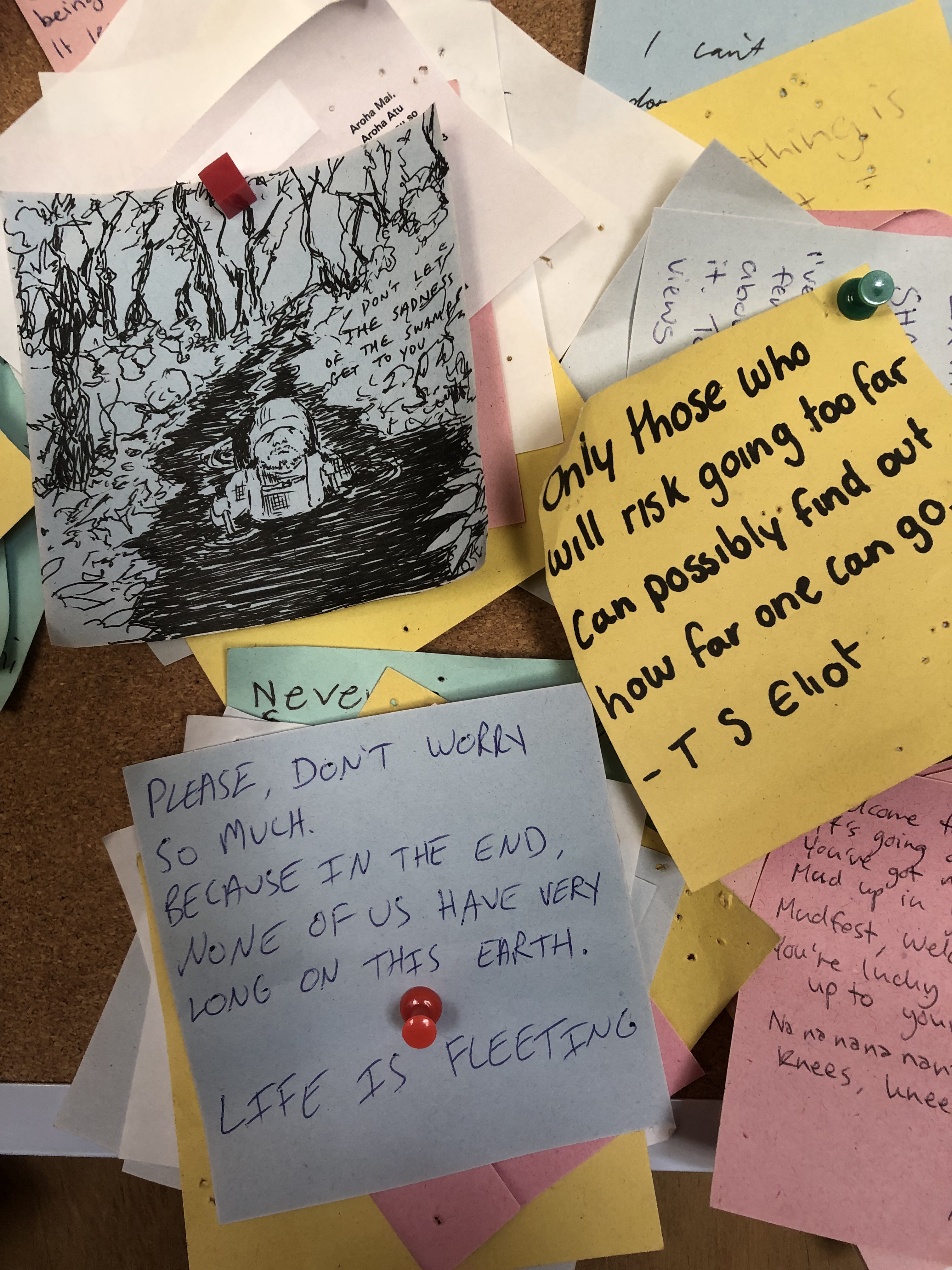
A slack-jawed shifting spanner
A yellow tape measure
that pulls out stiffly
and won’t retract
A small white pill
A fishing knife, stain-blotched wood,
line of triangular fangs
A piece of heavy wire bent into a hook
The key to a long-lost lock
Pliers and wire-cutters,
red vinyl grips worn dull
by years of hands
A seven-sided Irish silver coin
dating from the year I left home
A wrench
whose name I don’t know
A World War Two Australian penny,
verdigris film on wide brown disc,
an unshot kangaroo, the head
of a long-dead king
A new set of screwdrivers,
square-heads, sealed
in their blister pack
A sturdy green-handled Phillips …
The Honeymoon Screwdriver!
(Did little me name it?)
Translucent golden resin handle
fifty-years-later smooth
Nothing in this torn carton
will help me dig out the stubborn screw
inside his left-behind closet,
release the mildewed shelf
I have to get in a man
with corded forearms
like my father
used to have
Jackson
First published in Westerly
Jackson lives in Ōtepoti Dunedin. In 2021, they moved to Aotearoa from Australia, where Recent Work Press published their fourth poetry collection, A coat of ashes, based on their award-winning PhD thesis. In New Zealand, their poems have appeared in takahē, A fine line, Poetry Aotearoa Yearbook and other journals. They are on the committees of the New Zealand Poetry Society and Dunedin’s monthly poetry reading group Octagon Collective.
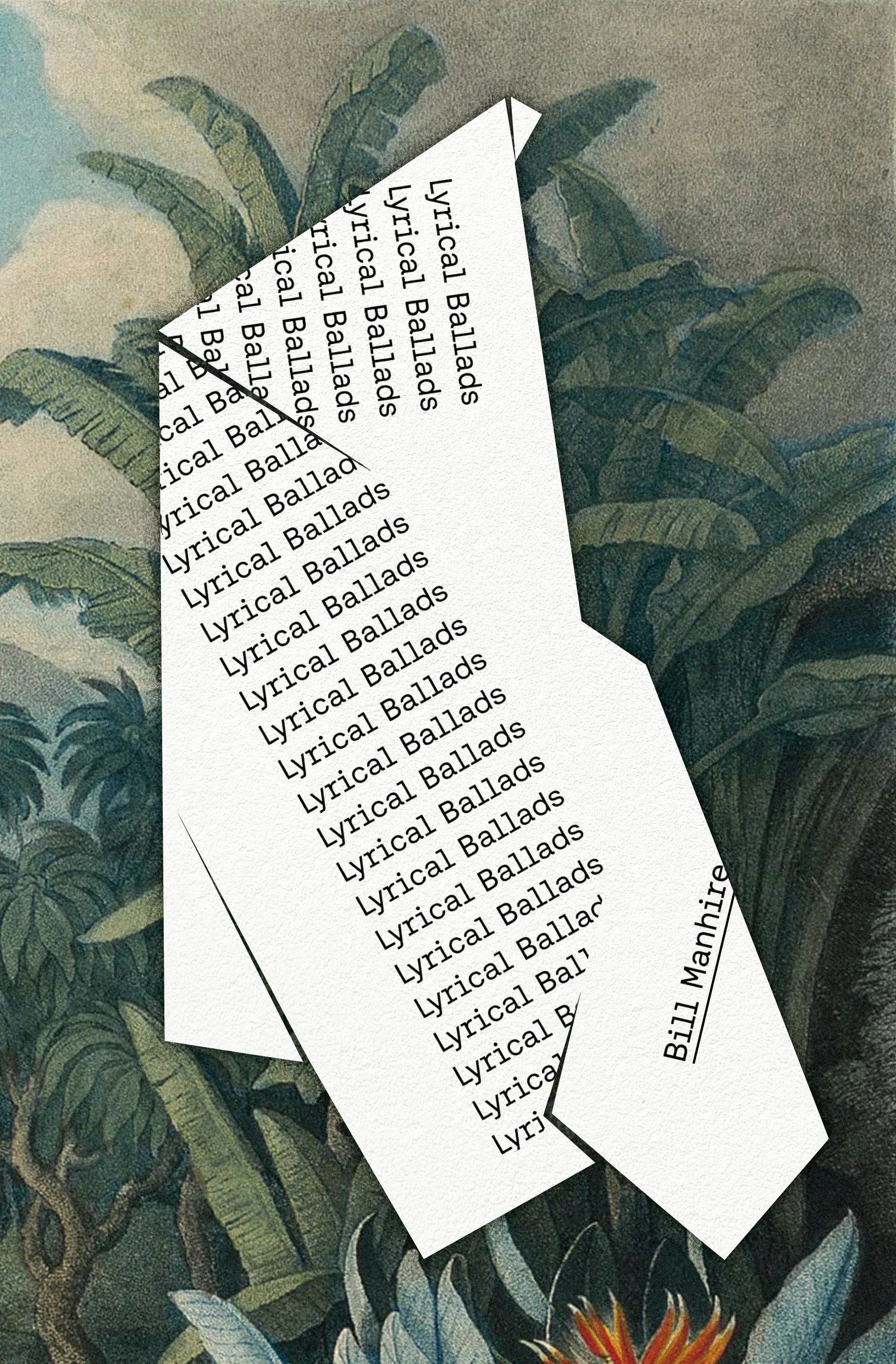
Lyrical Ballads, Bill Manhire
Te Herenga Waka University Press, 2026
Lyrical Ballad
I bought a bend in the river. It was a good,quiet bend.
You couldn’t see around the corner and after a few
steps you could. The water flowed round the bend, which
is essentially what you want. Everything else was doing its
thing. The Lost Hills were there in the distance. The river
was slow as it entered the bend, and maybe just a little
faster after that, I don’t know why. For a while I wondered
about getting a little boat, maybe a raft, but it was walking
around the bend that really made me happy. I liked the
reliable surprise. It’s gone now anyway, that bend, washed
away in the last big rains. Now it’s just a patch of land: a
channel and some structural damage. I suppose I should
sell it, but I can’t quite make myself. It was everything I
ever wanted.
Bill Manhire
In 2017, I chaired ‘Words and Melody’, a session with Bill Manhire and Norman Meehan at Going West. We discussed their collaboration, Tell Me My Name, and how they worked together to reach a place where, to quote Bill, “the music doesn’t overpower the words; but neither does it defer to them”. You can listen to the podcast here. And yes, there was music in the room. The best session I have chaired ever.
Bill has now written a collection of lyrical ballads dedicated to Norman. One part of me wants to hold the book out to you all, and simply say read this glorious collection, find a cosy reading nook and snuggle into the poetry to read in one slow and sweet sitting. Then put the book to one side for a few days before reading it again, even more slowly. I would stay on a hooked on poem, read it a number of times before turning the page.
But that said, I want to find a few words that will catch specks and glimmers of why I love this book so much. Last year I read all of Bill’s collections before writing a paragraph on his poetry to go in a new book and decided he was my Desert Island poet. His writing, over the course of decades, has offered everything I love about poetry, what makes me want to write poetry, read poetry, and yes review poetry. A word that has lifted to the surface in my week of roaming and reflecting within and beyond Lyrical Ballads, even above the beloved musicality and surprise arrivals, is “openness”. Poetry in Bill’s care, foregrounds the open poem. Dump prescriptions, formulae on the compost heap where they might transmute into open settings.
So here goes. The cicadas are at late summer screech. The west coat wind is nipping. The coffee is waiting. I want to write my way in and out of Bill’s glorious collection without closing windows and doors, paths and bridges for you, you the potential reader.
The first poem, ‘Come On In’, is an open invitation. We are invited into a room, “the kissing room”, and the four-couplet poem forms a labyrinth of possibilities. The poem (the room) might be a miniature narrative, anecdote, postcard from elsewhere or a home doorstep, an invention or a confession. A fable. A song. A lyrical ballad. It’s an open invitation to fill in detail with coloured pencils, if we so desire. Here is the room (the poem) that fills with talk and maybe heartbreak, braveness and maybe recitations.
When I roll the word “open” about in my mind, it picks up on ambiguity, the way a poem might swivel meaning, favour cloudy edges. The cast of characters feeds into this, relishing ambiguity and openness, along with Bill’s characteristic wit. We get to meet Mr Crimson from the Ministry of Health, Mr Doormat, Mungo, a girl called Daffodil Paddock (wow!!!) who wanted to be a character in a Margaret Mahy story, the recurring Alexander and Raewyn. This assembly of characters augments the ballad, advances the accumulation of story, the openness of story, as we get to picture and imagine, and add our own details. More than anything, the awkwardness, the ragged edges of existence, the difficulties (and ease) of fitting in and not fitting in, sing out.
Part of the joy of openness in poetry, is the way it promotes travel, and that is a significant and satisfying feature of the collection. We encounter roads and rivers and canals and bridges. We contemplate beyond, ins and outs, distance and proximity. It may be the known, it may be the unknown. It might be softening edges. Tough climbs. Watching the dawn or the dusk. Moving into older age. And wonder, yes above all wonder. I am reminded of the poetry of Vincent O’Sullivan where a poem infused with his ink might be an occasion of being there/here, or as one of Bill’s title says, “Getting There’.
After a time
After a time, my writing began to take a new direction.
Left after you cross the bridge, and then down what people
used to call the stumble-path – steps cut in the bank,
occasional big stones – to the water’s edge. You go down in
daylight and wait till it’s dark and there’s absolutely no one
there. After a while you aren’t there either. You feel truly
alone, fully neglected. I write all that down – you know,
in my head – then start on the difficult climb, no moon,
back up to the road. I need badly to return to the house,
even though it is empty now, windows open and curtains
billowing, still the place where everybody sits up waiting.
Ah. So many things to hold out to you in delight. I now want you to read the poem ‘Some Other Words They Sang’, where we are walking in the same direction as the insects when they sing in the night.
Some Other Words, I Think They Sang
Insects singing in the night.
We were all walking in the same direction.
Be careful. Be strong. Be kind.
That’s what they sang.
Sing when the world is worn away.
Some other words I think they sang.
Insects singing in the night.
We were all walking in the same direction.
Or read and re-read, and hold close Bill’s Gaza poem that has already moved us so deeply. Many of us are struggling with how to write within a matrix of global and local catastrophes, and abominable leaderships, climate change. How to live.
I am drawn to the talisman words and mantras I might carry in my pocket through the day (a bit like the words of the insects singing). I loved what the student took away from the History lecturer’s blackboard covered in difficult language: “‘It’s not the facts,’ he / said. ‘It’s what we do with the facts.'”
And of course there is the ink steeped in music, with rhyme and repetitions, loops, the exquisite lyricism that audio-marks each ballad. My dream is to sit in the Titirangi hall again and listen to Bill read us the whole book as we sit spell bound, before moving to the side room to the spread the locals have put on, to return with plates of food balancing on our knees, and to talk poetry and life until our voices are hoarse.
Is it possible to consider this collection in the light and possibilities of tracing paper, where each poem is a set of overlaid sheets, where story is overlaid upon song, which is overlaid upon the personal, which is overlaid upon philosophy and contemplation, and where every layer is embued with humanity, what it means to be human and humane, kind and caring, and every layer is shining through and adding myriad possibilities. What will the insects sing next? What will I hear in the kissing room? What do I picture when I picture the bend in the road?
In the acknowledgement page Bill thanks several people for their “encouragement, wisdom and rescue”. These words strike deep with me just as this book does. It feels like the poetry gives me encouragement, offers wisdom and rescues my frozen pen. There you go, I am holding this book out to you, so that you too may find your own gleams and shimmers.
Bill Manhire’s previous books include Wow (2020), Some Things to Place in a Coffin (2017), Tell Me My Name (with Hannah Griffin and Norman Meehan, 2017) and The Stories of Bill Manhire (2015). He has won the New Zealand Book Award for Poetry five times, and was New Zealand’s inaugural poet laureate. He founded and directed the International Institute of Modern Letters at Te Herenga Waka—Victoria University of Wellington. He has edited major anthologies of New Zealand literature, including, with Marion McLeod, the now classic Some Other Country: New Zealand’s Best Short Stories (1984). In 2018 Bill was awarded an Icon Award Whakamana Hiranga from the Arts Foundation.
Te Herenga Waka University Press page

 A Pōneke Poetry Showcase
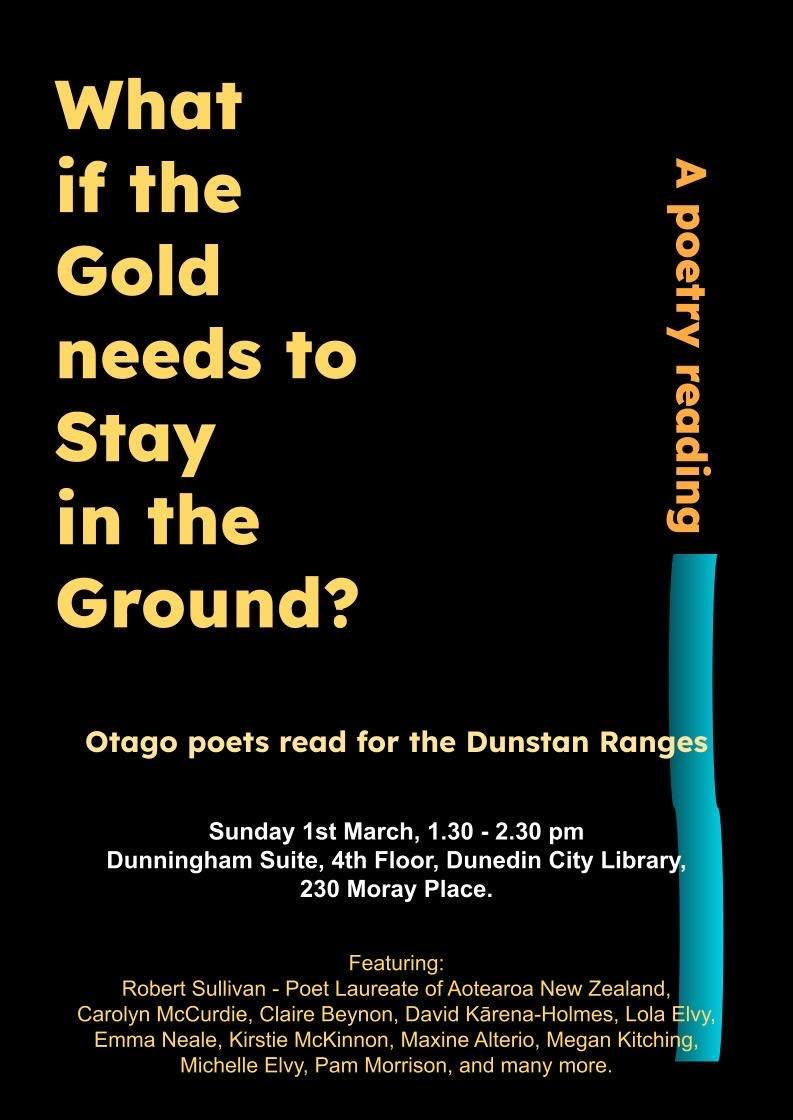
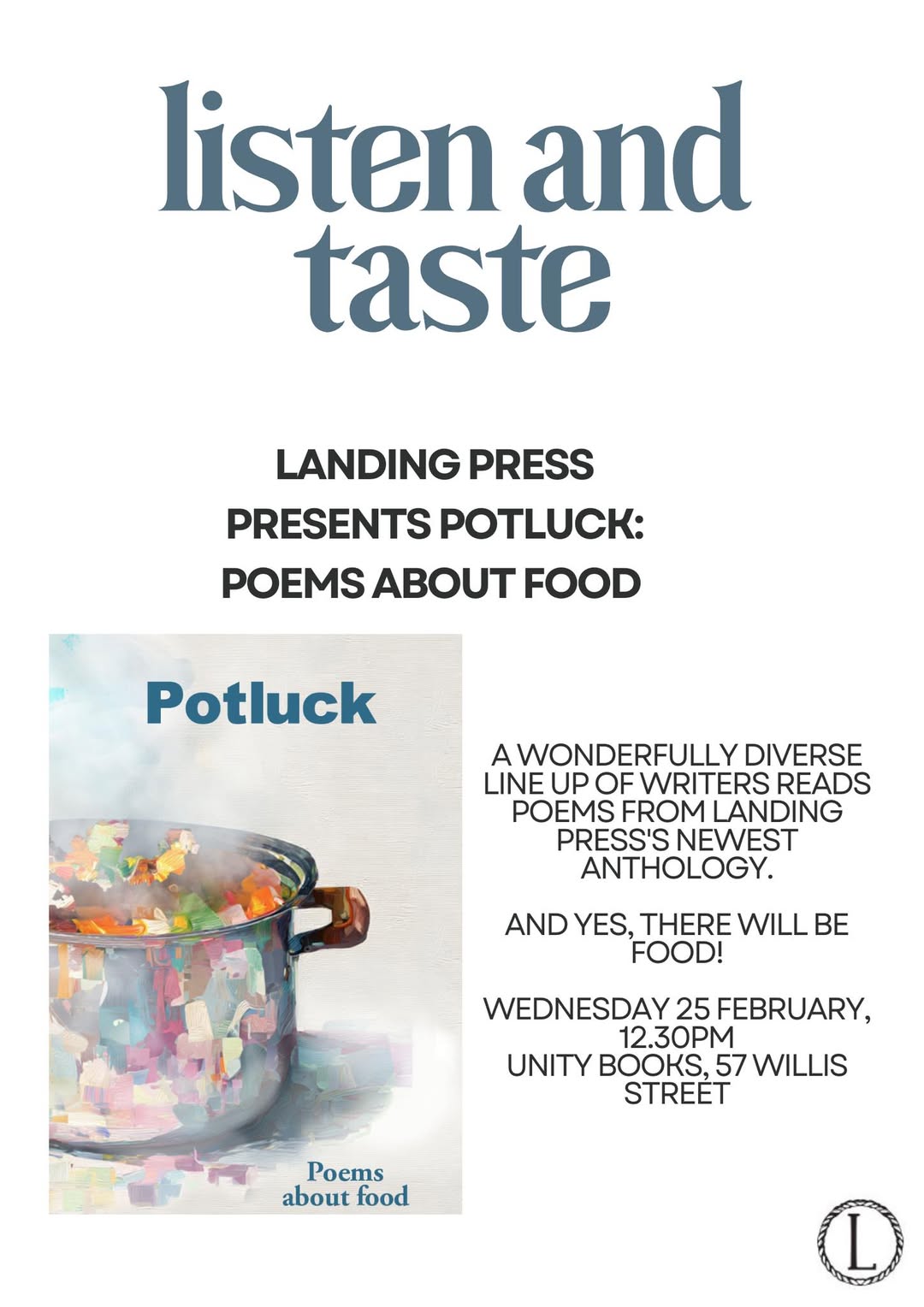
Pōneke poetry lovers rejoice! Our new Poet Laureate, Robert Sullivan (Ngāpuhi, Kāi Tahu) welcomes poets including Arihia Latham (Kāi Tahu, Kāti Māmoe, Waitaha), Matariki Bennet (Ngāti Pikiao, Ngāti Whakaue, Ngāti Hinerangi, Amber Esau (Ngāpuhi / Manase), Jordan Hamel, Nick Ascroft, Rebecca Hawkes, Anne-Marie Te Whiu and more to the stage to demonstrate the unmissable power and beauty of poetry in live performance.
Sunday 8 March, 2pm (NZSL Interpreted event)
Tāwhiri Warehouse, Newtown
 Tickets on sale now at festival.nz/writers
Writers Double Take Pass: Enjoy 20% off when you book two or more events in a single transaction!
 NZ Poetry Shelf