Hotel Theresa, Doc Drumheller, Cold Hub Press 2024
‘I planted my root in the hills like a hermit’
from ‘The Second Coming’
Doc Drumheller’s latest collection of poems was inspired by a visit to Hotel Theresa in Harlem, New York. An iconic hotel where legends such as Josephine Baker, Duke Ellington, Malcom X and Muhammad Ali stayed. The resulting poetry navigates multiple travels and multiple belongings. A dual citizen of USA and Aotearoa, Doc has also spent time in Asia, Europe and Central America. The poems themselves are seasoned travellers, having appeared in a terrific range of international journals.
What draws me deep into the collection, where home is as vital as a captivating elsewhere, is the way travel is a mesh of experience. Each poem is a set of seven couplets. I felt like I was on board a train with its mesmeric beat on the tracks, a visual beat say, that carries a sequence of fascinations. Every time you look into, and out of the window of the poem, the physical detail and musings resonate. If the poem is an excellent vehicle for travel, and yes it is, it includes foraging, shimmering, transforming, planting. There is suffering and there is singing. There are eulogies and there are odes. There are history markers and childhood memories.
I love the feel of this book in the hand, the paper stock and the internal design, and especially the nostalgic hotel postcard on the cover. I love how I travel from a lollipop man reciting poetry to a two-legged carrot and vegetable waste in the supermarket. You move from traces of the Christchurch earthquake to the legacy of slavery and of war, and to the final resonant poem, where the word you carry away with you is kindness. And that matters, in this collection that draws personal musings and belongings, local whanau and distant family, close.
‘You said to me: “Poetry is the shadow cast by our streetlight imaginations.”‘
from ‘Via Ferlinghetti’
The readings
‘Via Ferlinghetti’
‘Hotel Theresa’
‘Viva la Vida’
Doc Drumheller is an award-winning poet, musician, dramatist, and has published 11 collections of poetry. His poems are translated into more than 20 languages, and he is the editor and publisher of the New Zealand literary journal Catalyst. He was elected to represent New Zealand on the Executive Board of the World Congress of Poets, and is the editor in chief of the World Congress of Poets literary journal Fuego. He has represented New Zealand at poetry festivals all over the world, and widely throughout NZ. His latest collection is: Hotel Theresa, Cold Hub Press, 2024.
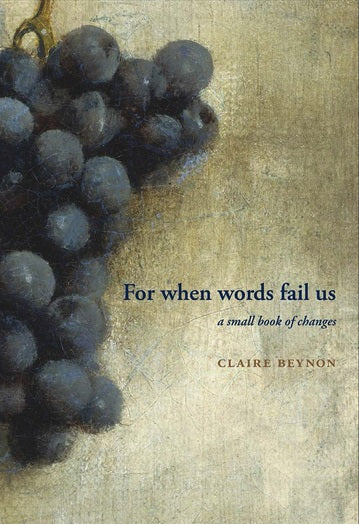
For when words fail us: a small book of changes Claire,Beynon, The Cuba Press, 2024
They agree, it’s not so much that we put down roots in a place.
It’s that a place puts down roots in us.
Claire Beynon from ‘Scrambled eggs & straw for the fire’
One of the many joys of poetry is how it is an open field of possibilities: how we score a poem’s music, interlace its subject matter, play with its form, reveal and conceal, draw upon other genres, invent and philosophise. As poets we become so many things. In Claire Beynon’s haunting new collection, poetry enters the terrain of memoir, narrative, travel, conversation, imagination. It is a book of here, and a book of there, a book that sends me back to the poetry of Pablo Neruda, Keith Jarrett’s extraordinary Köln Concert, Lewis Hyde’s The Gift.
A woman meets a man at an exhibition opening in New York, she from New Zealand, he an American, and their conversation continues online over the ensuing decade. They talk about paintings, poems, writing, books, sharing here and there by emails, over the internet. But a visit to New Zealand, and what lies under the skin of conversation, becomes more unsettling.
The shifting fonts in the sections of the book reflect the shifting seasons, the way the narrative refracts, prism-like, to touch upon different states. Trust, obsession, estrangement, entanglement, jealousy, storm, gentleness, the unrecognised, the unspoken.
Certain words are crossed out, making the internal editing process of the poet deliberately visible, as though we are shadow-tracking the poet’s need to find enough clarity to write knots fractures schisms epiphanies. To speak of the movement between his ‘beloved’ and his ‘obsession’.
(..) She’s grateful to the oceans and continents for defending defining the distance between them
from ‘Scrambled eggs & straw for the fire’
In her endnote, Claire tells us the book is ‘a work of memory and the imagination’, that the anonymous man is real, and some of his words are included with his permission. As I read slowly, I am haunted by the way the poetry is navigating distance and gap, yes the space between USA and New Zealand, but also between man and woman, knowing and unknowing, attaching and detaching, repairing and restoring. Perhaps I read this as bridge writing. Between the sections, Claire quotes a stanza from ‘The Waking’ by Theodore Roethke, and includes a mirror image of the stanza. And here I am gain, musing on how a poem might be a means of refracting experience, seeing it in multiple surprising lights. And if I return to Theodore’s poem, writing a poem might also be: ” I learn by going where I have to go.’
This gentle, slow-paced reflective collection is both leaving and arriving, holding close and letting go. A haunting of bridges indeed.
All that remains is this— this concentrate of poems drawn tight around the heart.
from ‘What falls away is always’
Claire Beynon is an artist and writer living in Ōtepoti Dunedin. Her poetry, flash fiction and short stories have been widely pub-lished and anthologised in Aotearoa and abroad. She has been a runner-up in the Sunday Star Times Short Story Competition and in 2002 was the winner of the NZ Poetry Society’s International Poetry award. In 2021 her poem ‘Today’s Sky’ was awarded the Takahē Monica Taylor Poetry Prize. Claire combines the contemplative rhythms of writing and art-making with a range of interdisciplinary collaborations. Two summer research seasons in Antarctica continue to inform her work. Her first collection was Open Book: Poetry & Images. Website
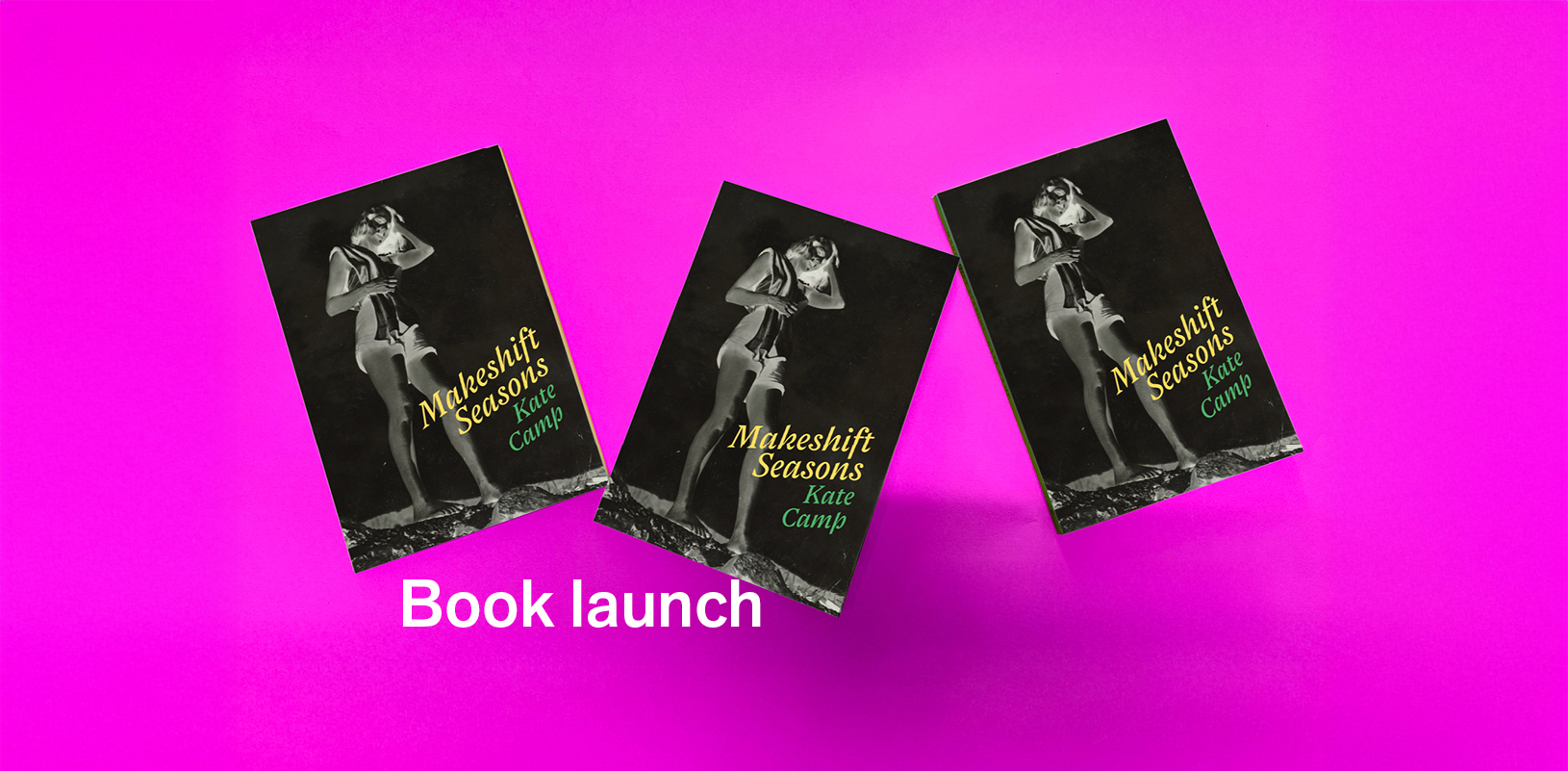
Please join Te Herenga Waka University Press for the launch of Makeshift Seasons, an extraordinary new poetry collection by Kate Camp. An avid sea swimmer, Camp sets many of her poems at Wellington beaches. The launch event will feature a reading of sea-centred poems, including a number featuring her local swim spot, Island Bay. There will be refreshments, poetry, and an optional evening sea swim!
The failings of the body can be a form of company a trapped nerve ringing in the night like music.
Kate Camp’s poetry has been described by readers as fearless, affable and ‘containing a surprising radicalism and power’. In her new collection, she is ever alert to the stories unfolding all around us and inside our own bodies. As she is striding away from hope, she is also holding on tightly to the promise of morning. The poems move between distant planets and Chappies Dairy, between Mont-Saint-Michel and the lighthouse in Island Bay, with every moment, every feeling, every conviction on the edge of becoming another.
Like the plumber who can hear water running deep underground, Makeshift Seasons is a book of extraordinarily sharp sensing and knowing.
Now and Then: Poems about generations, editors: Adrienne Jansen, Joan Begg, Lonny Carey, Rebecca Chester, Wesley Hollis, Roman Ratcliff, Riah Tahana-Dawson, Michelle Strand, Landing Press, 2024
Editing poetry – Is there an imbalance?
Is there a power imbalance in the relationship between a writer and an editor? Do writers feel free to refuse an editor’s suggested changes?
Near the end of 2024, Landing Press conducted a survey on editing poetry with poets featured in our new anthology Now and Then. We were prompted by a panel discussion on this subject in the Verb Festival; during the discussion the question of a power imbalance between writer and editor came up. This question is of particular interest to us at Landing Press so we decided to pursue it further.
For some people, poetry is seen as a personal and subjective form of writing to which the editing practice does not apply. However, most writers, ourselves included, see poetry as a form which generally can be strengthened with careful, or maybe rigorous, editing. We see editing as being as valuable for poetry as it is for prose.
Landing Press publishes anthologies of accessible poems, with a social justice edge. We’re committed to including a wide diversity of voices, and particularly voices rarely heard. So we publish the whole range from well-known established writers to first time writers. But this means that we need to be willing to invest a large amount of time working, particularly with new writers, in an editing or mentoring capacity.
Also, our criterion for selection is not simply ‘the best’. We may want to include a poem because of its unique perspective, while recognising that it may need substantial work to bring it to a publishable standard.
We are unapologetically hands-on and often rigorous editors. And although we have a number of new writers, we treat all writers the same. We are always clear that we are offering suggestions only, and that the final decision always remains with the writer.
But we also know that there’s an emotional punch in the editing process. No matter how experienced we are, receiving feedback on our work can require a deep breath, a step back from a default defensive position, and time to consider the suggestions.
The panel discussion at Verb made us realise that we were in a unique position to gather data on the editing process – because we had just published an anthology which involved a lot of editing, because we have such a wide range of writers, and because we maintain communication with the writers, so we have a relationship with them.
We set up a survey through SurveyMonkey, to which 34 writers responded anonymously. The survey asked three simple questions. Underlying them were two questions that we were asking ourselves: is there a power imbalance that might affect the way writers respond to us, and can we do better?
The questions, and responses, were:
Was the editing process helpful? Yes – 30 (88%) No. 1 (3%) Not sure 3 (9%)
Did you feel you could say no to editing suggestions for your poem? Yes 24 (71%) No 3 (9%) Not sure 7 (20%)
If changes were made to your original poem, do you believe your poem was better after the editing was completed? Yes 23 (74%) No 2 (6%) Not sure 6 (20%).
So there was a high level of satisfaction (88% seeing the editing process as helpful) but there was obviously room for improvement.
The survey also provided an opportunity to comment, and 24 writers did so. This was probably the most valuable part of the survey.
The comments were generally very positive, and a number of writers mentioned how the editing process would help them with future writing.
Obviously for some writers we didn’t make it clear enough up front that we were offering suggestions only. We need to state this more than once, especially for writers not familiar with the editing process.
The comments underlined how important it is for us to explain why we are suggesting certain editing changes. Several writers observed how useful/essential that is.
One writer was clearly unhappy with the editing process, which they found too intrusive, although they concluded that their poem was stronger for it!
There was a comment that more time would be useful: this is always tricky, because publishing runs to such tight deadlines, yet we know that the whole editing process requires a generosity of time.
We respond to writers as ‘The Landing Press team’. One writer felt that it would be better dealing with a named individual. We’ll think about that. We work as a team, under the oversight of a very experienced editor, and we also employ a consulting editor as an extra pair of eyes on challenging or unresolved questions. The editing of many of the poems is a consultative process.
This has been a very valuable exercise for Landing Press. We see ourselves as building a community of writers, and we certainly don’t want some imbalance of power, or any ‘us and them’ feeling. In 2025 there is a team of nine running Landing Press, and we are all writers ourselves. We also describe Landing Press as a learning press, where hopefully everyone – the team, the writers – is on a learning path. This survey will help shape the way we respond in the editing process to contributors to the next book (which will be about food!)
A watermelon with the mud washed off, round and green. Taking a knife I split it in two.
Ripples spreading outward. A shag surfaces at the centre of its circle. Nearby a terrier digs holes in the sand.
Could we go over what you just said? No, already you put down your cup and walk away.
2.
Now it’s midwinter. A cloud of steam from the Espresso machine drifts over my table and it begins to rain.
By the foreshore an oystercatcher strides through the water its breastbone just above the surface.
All those white objects passing before my eyes; small ghosts I used to entertain when I was a child.
3.
Agamemnon, did he really sacrifice his daughter? Add it to the list of things I disbelieve.
Low cloud at sunset, its shadow cast on a higher cloud. Traffic on the highway banked up for miles.
Distracted by news of the latest bombing, I try to wipe away a spot of sunlight on the kitchen bench.
Richard von Sturmer
Richard von Sturmer is a writer, performer and filmmaker who is well known for having written the lyrics to Blam Blam Blam’s “There is No Depression in New Zealand”. He is a teacher of Zen Buddhism and the co-founder of the Auckland Zen Centre. Slender Volumes is his tenth collection of writings and is on the Ockham NZ Book Award 2025 Poetry Longlist.
The loveliest places of all are those that look as if there’s nothing there to those still learning to look
Brian Turner, from Just This, VUP, 2009
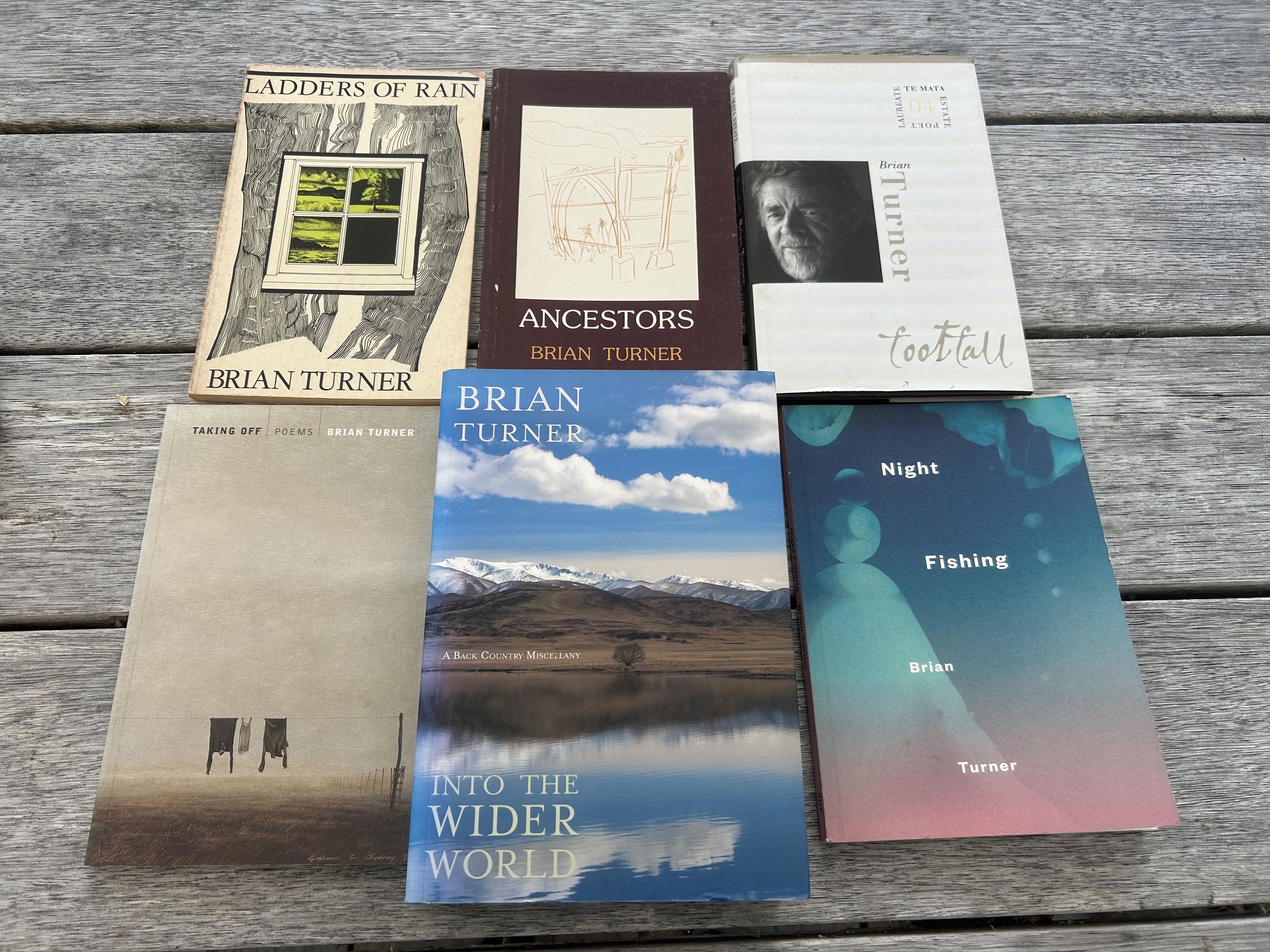
To read your way through Brian Turner’s poetry collections is to travel with open skies, shifting seasons, wide space, musical wind, rivers, stars, the precious land, a steadfast light. More than anything, to read your way through Brian’s poetry, from his debut collection Ladders of Light (John McIndoe, 1978) to his Selected Poems (VUP, 2019) is to savour the present participle, to be musing, absorbing, travelling, grounding, observing. With all senses on alert. With truth and fiction, fathers and sons, beauty and love, earth fire water air. With physical anchors and philosophical currents. With so many poems dedicated to friends, this is poetry as tender embrace.
If there is a vital core from which each poem lifts, it is an echoing question, what matters? And what matters is the way each poem is a conversation with, a link to, a rendition of home. Overtly, or less so. Home is where you stand, where you have stood, lay down roots, where you dream and love and die. It is experience and reality and dream. Questions. Connections. Epiphanies. In his introduction to Elemental: Central Otago Poems (Godwit, 2012), Brian underlines the primacy of belonging, the way the poet is both archaeologist and explorer. The way heart is woven from the blood and sinew of home, and home is formed from the blood and pulse of heart.
Poets — certainly poets like me — end up finding and revealing the self in where they come from, and hope to be able to say, eventually, this is where I most belong. All writers, not just poets, are explorers, archaeologists too; we grub, we dig, are often surprised by what we find. There is music, there is song, there is grace and, now and again, a place where peace of mind is at home; then one can feel confident and, for magical moments, comfortable and at ease. There, truly, is a wonderful place to be.
On such occasions I sense there’s something of the numinous, something sacred, in and about our surroundings. I mean this in a broad-brush spiritual sense. It’s as if the hills watch us, and ask if we are watching ourselves in them.
BrianTurner from ‘Foreword’, Elemental: Central Otago Poems, Godwit, 2012
And herein lies the joy of reading your way through Brian’s poetry. As readers we too are archaeologists and explorers, because reading like writing can get you digging and delving and yes, dancing into and within the myriad dimensions of home. In this fragile world, with its blinkered planet-smashing leaderships7, how restoring it is to hold poetry close that navigates what matters. To hold home, however we define it, close, to write it, it sing it, read it to heart.
This poetry, together we toast and remember this beloved poet.
Fact of Life
Home is not where the heart is it’s what the heart goes hunting for.
Brian Turner, from Night Fishing, VUP, 2016
Brian Turner was born in Dunedin in 1944 and lived most of his life in Central Otago. His first book of poems, Ladders of Rain (1978), won the Commonwealth Poetry Prize and was followed by a number of highly praised poetry collections and award-winning writing in a wide range of genres including journalism, biography, memoir and sports writing. Later poetry collections included Night Fishing (2016), Inside Outside (2011), Just This (winner NZ Post New Zealand Book Award for Poetry 2010) and Taking Off (2001). His Selected Poems were published in 2019. He was the Te Mata Estate New Zealand Poet Laureate 2003–05 and received the Prime Minister’s Award for Poetry in 2009. Brian died in February 2025.
Poetry Shelf invited twelve friends to choose a favourite poem by Brian and write a few words to go with their choice. I offer this tribute so you too may go travelling with Brian’s poetry, and may draw close to home and to heart.
A Tribute for Brian
Philip Temple
Ancestors (for Philip Temple)
I came this way to shed some care. Every stone I stumbled on, every
root that snagged my foot was bastard discontent. By the time
I’d reached the hut I was too tired to complain anymore. Shucking my pack
I lay in the grass that shimmered in the breeze. The blue sky
preened itself. Wheels of sunlight bowled along the valley. I dozed off
until evening crept over forest and mountain. I knew they would
find me sometime. My speechless ancestors played like mice among my dreams.
It grew cold. And colder. I woke to the river running over my bed
of stone. I have come to know that where a river sings a river
always sang. I listen. This much I have learned.
Brian Turner, from Ancestors, John McIndoe, 1981
This poem was the eponymous title to Brian’s second collection in 1981. It preserves forever a moment we shared, a year earlier, ‘until evening crept over forest and mountain’ and we woke to the ‘bed of stone’ beside the Top Forks Hut in the Wilkin Valley. It had been a long tramp on a hot day and we were both buggered by the time we got there, thankful to be able to drop our heavy packs and collapse on the grass. It was the beginning of our last real climb together. The next day we made the first ascent of a peak that was un-named despite its height and lowering presence 5000 feet above the joining branches of the river.
But the poem was more than commemorative or even marking, in its dedication, the unbreakable bonds of our friendship. It spoke for both of us of the wordless ancestors running in the rivers and embedded in the mountains. There is a universal understanding of this that is expressed in different ways in particular cultures but which transcends them all. Brian’s great contribution in his poetry and other writing was to express this so conclusively for everyone. His work will continue to give us the assurance we belong.
Philip Temple
Bridget Auchmuty
Hannah’s Kitchen, Hayes Cafe in Oturehua
The River in You (after W.S. Merwin)
The first thing you want to hear is the river sound
and then to see the source of that sound
for it’s never the same yet it’s always something like
what you think you remember from the time before
and the one before that and when you reach the bank
though you no longer hurry as you used to and look down
on the long reach that flows south and curves east like a wing
light and sound are one and you know the swirl
of having been there before though it’s not quite the same
as last time and the time before that and you sense the pull
that draws you back is the river in you racing to keep time with the river sound
Brian Turner, from Taking Off, Victoria University Press, 2001
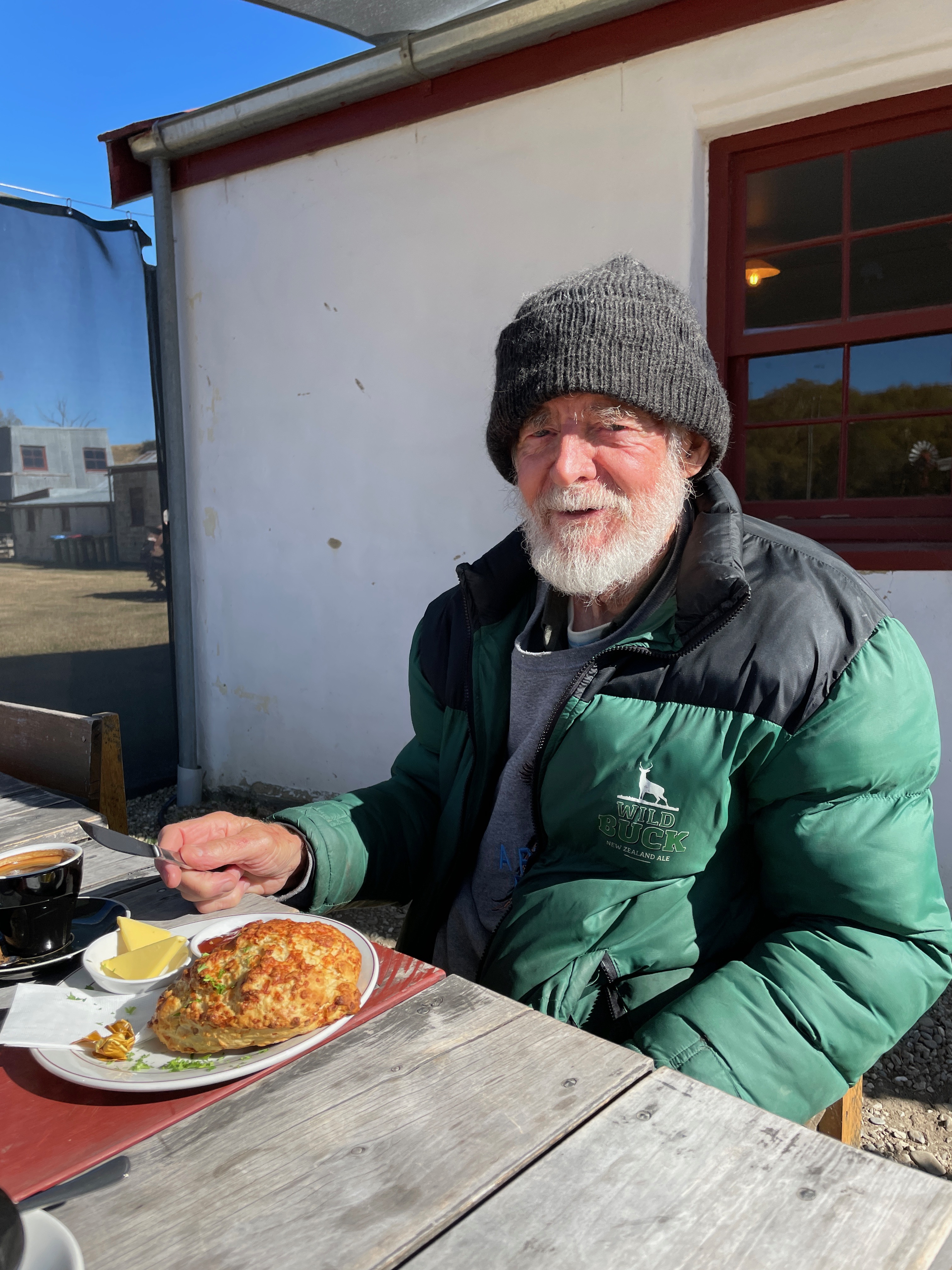
One of the things I loved about Brian was his generosity: with his encouragement of other writers, with his tireless voice for wild places, with his time in helping out in practicalities. When I stopped being in awe of him and he became a neighbour and friend, we had numerous evenings in the village reading each other’s work over dinners at a variety of houses, countless coffees at the local café, where the staff always brought him the largest possible cheese scone or muffin, and conversations that ranged in breadth and depth but were never dull. In his poetry he was of course a master of nailing time and place, but the best of his work was so much more than just that, turning from the immediate to a universal comment on what it is to be alive. I miss seeing him as a yellow blur on his bike or trundling firewood in a wheelbarrow home from the domain, but mostly I miss his immense presence on the lit scene of Aotearoa.
Bridget Auchmuty
Owen Marshall
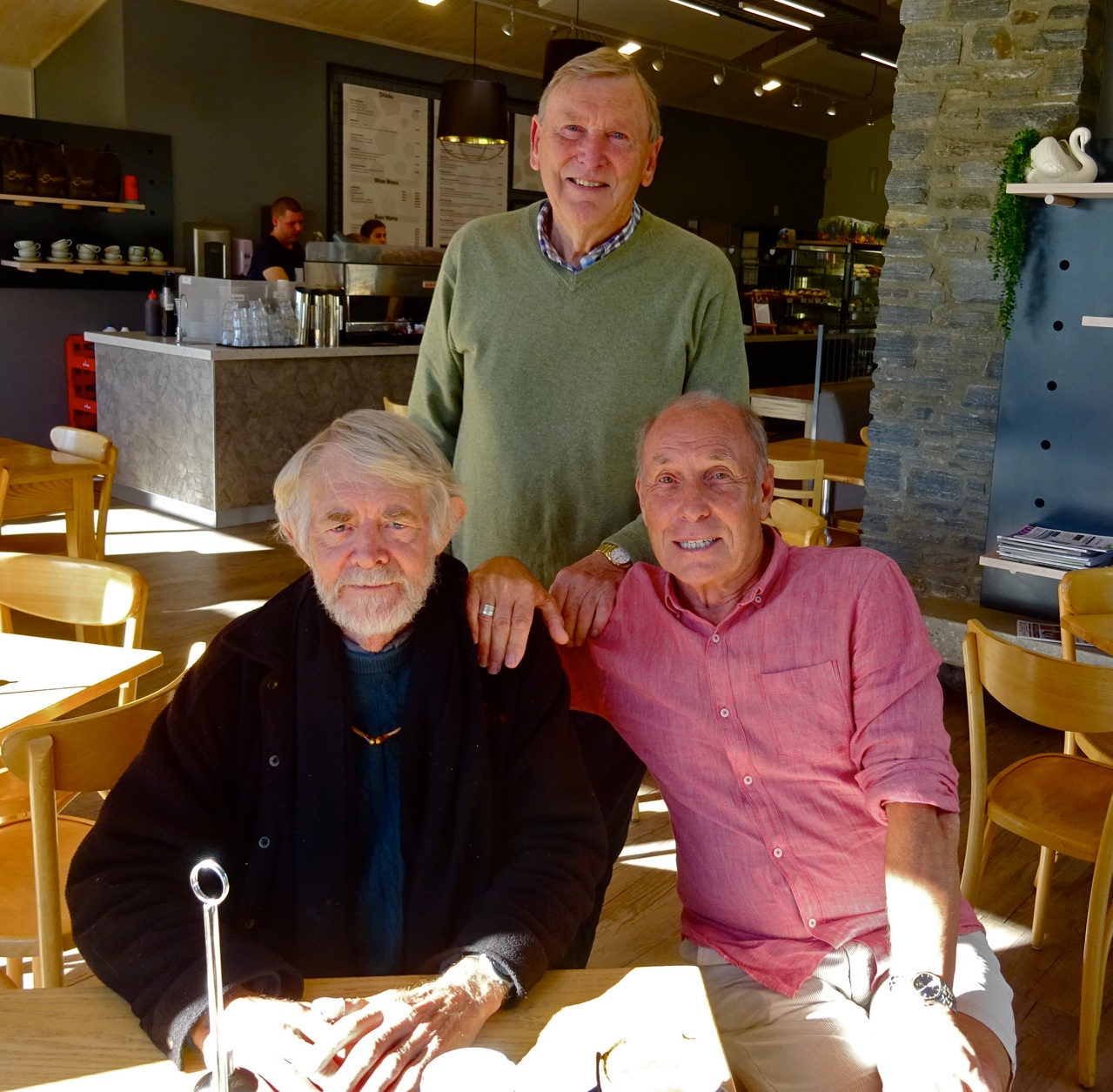
Brian Turner, Owen Marshall (standing), Grahame Sydney, Cromwell
Snow in September
Someone I’ve yet to meet is playing a violin in the snow in a field nearby and it sounds like Beethoven to me, and under the willows by the stream a young boy is weeping. When the music stops the boy will disappear as he does every time, every time.
Brian Turner, from Night Fishing, Victoria University Press, 2016
Brian and I were friends for 44 years, visiting each others homes and families, on book tours or at festivals together, walking in the hills, but my best memories are of our collaboration with mutual friend artist Grahame Sydney, on the illustrated books Timeless Land, Grahame Sydney, Brian Turner, Owen Marshall (Longacre Press, 1995) and Landmarks, Grahame Sydney, Brian Turner, Owen Marshall (Penguin, 2020), which celebrated Central Otago – Brian’s homeland. We three were on the same page, in both senses of the phrase. Brian felt deeply and thought deeply, although often disguising both behind a gruff exterior. In poetry he expressed himself without reserve and with impressive power and sincerity. I miss him, but the poems live on.
Owen Marshall
Peter Ireland
An evening of poetry was held at The National Library of New Zealand on Friday 11th March, with Poets Laureate Jenny Bornholdt, Michele Leggott, Bill Manhire, Cilla McQueen, Vincent O’Sullivan, Elizabeth Smither, C.K. Stead, Brian Turner, Ian Wedde and Rob Tuwhare, son of Hone Tuwhare. Brian Turner reading.
Photo credit: Mark Beatty, The Circle of Laureates Reading National Library, 11th March 2016
Place
Once in a while you may come across a place where everything seems as close to perfection as you will ever need. And striving to be faultless the air on its knees holds the trees apart, yet nothing is categorically thus, or that, and before the dusk mellows and fails the light is like honey on the stems of tussock grass, and the shadows are mauve birthmarks spreading from the hills.
Brian Turner, from All That Blue Can Be, John McIndoe, 1989
The poetry of Brian Turner is a paean to the local; poetry grounded in a particular setting, but redolent of universal meaning. As an epigram for his poem Just this, Turner quotes the American poet and environmental activist Gary Snyder:
Find your place on the planet, dig in, and take responsibility from there.
The ‘place’ for much of Turner’s poetry is the landscape of Central Otago, which is where he lived from 1999. The tiny settlement of Oturehua, in the Ida valley of the Maniototo river, was where Brian Turner dug in. An English translation of Oturehua is ‘the place where the summer star stands still’, a perfect setting for a poet whose lifelong quest involved trying to ‘find and hold on to anything that’s struck me as heartfelt and constant, something that seems durable and likely enduring.’ In poems of plain-speaking eloquence, which ‘crackled with the intensity of their sheer power of observation’ Brian Turner reminded us to pay careful attention to nature, to protect it from the depredations of the heedless and to be enchanted by the rhythms of rivers and hills.
The National Library acknowledges with sadness the passing of Brian Turner, a much-loved figure in New Zealand Literature and in the promotion of environmental awareness. Brian was Te Mata Estate Winery Poet Laureate between 2003 and 2005. In November last year he was made New Zealand Poet Laureate of Nature for his lifetime’s work in poetry and activism, fighting for and celebrating the natural world.
Peter Ireland
Kay McKenzie-Cooke
Blackbird
When a blackbird starts singing high in the silver birch and dark‘s hovering heartfelt beats heartless hands down. And it seems to those who hope to discern the difference between love and loveliness that the bird’s song may be as pure as any we’ll ever hear, and is part longing, part fulfilment, near unadulterated joy. And though one can’t say that a bird wonders if remorse will ever run its course, that blackbird sings in ways that assuage need in a voice that’s his alone until, miraculously, it feels as if I’m singing too, him to me and me to him. And both of us for all of us.
Brian Turner, from Night Fishing, Te Herenga Waka University Press, 2016
This is Brian Turner writing in a modern, unashamedly Romantic poet’s vein, unapologetically describing nature’s ability to transport us to another realm. The craft in order to attain the sublime is particularly satisfying as I remember attending a workshop of his back in the late ’80’s (when he still had red hair) where he spoke of how really hard a poet must work to compose poetry that appears effortless. I love the lines:
‘and dark‘s hovering heartfelt beats heartless hands down …’
Magic. Pure Turner. Pretty sure I heard him read this poem at a reading and I can still hear his gravelly voice. I hope I can keep hearing it through his poetry for a long time yet. Encased in the last lines is Brian’s absorption into the pure, unifying aspect of nature and its reach into his innermost being. The lines reflect how circular, open-ended, inclusive and all-encompassing nature can be if we allow it to enthral us, as Brian Turner surely did, ’For all of us’.
Kay McKenzie-Cooke
Grahame Sydney
Grahame and Brian, 2014
After for Grahame
The dead do sing in us, in us and through, us, and to themselves under their mounds of earth swelling in the sun, or in their ashes that shine as they depart on the wind.
See how the grass sways to the sound of their voices under, singing the beautiful eternal sadness of before relieved of the resolve of after.
Brian Turner from All That Blue Can Be, John McIndoe, 1989
In late 1986 my father died. A mis-diagnosed prostate cancer had invaded his bones and his decline was remorseless, painful and heartbreaking, a full year of undeserved distress borne with courage. He was a man I admired immensely. Whenever anyone remarks on how like my father I am, I take it as the greatest possible compliment.
Brian and I spent hours every week on our road bikes, training together for races and events on the roads around Dunedin and he was following closely my dear Dad’s decline, fully aware of how it was impacting on me.
My family were at the hospital bedside the night Dad breathed his last long gasp, and I left a message on Brian’s phone to tell him. When I made it home a few hours later the sun was rising and I automatically, unthinkingly checked the mailbox as I walked past. There was was an envelope with my name , and inside an A4 sheet with this poem. “After” inscribed in Brian’s cramped, cursive hand.
A small gift from a mate. It appeared in the collection All That Blue Can Be in 1989.
Grahame Sydney
Richard Reeve
Ida Valley, January
This is the time when the windows rattle in the nor’wester, scotch thistles prepare to seed and the lucerne’s waving acres of violet and green. Young thrushes and blackbirds risk their lives on the ground. My neighbour’s cat, gingery, austere, is meant to protect the raspberries from the avians and doesn’t. I go to bed only half-pie sound in mind and body and the mind starts roving, wars with sleep, always finds something else to take issue with.
Brian Turner, from The Six Pack, Whitireia Publishing, 2006
What I like about this poem is its shape, and the counterpoint of that defined word-sculpture with the loose commentary that forms the poem’s content. What does the shape represent – a cloud, schist, wind-bent branches, the waving crop? All of these and none of them. No express link is made, yet we are invited to consider the text as an artefact of the composite phenomena that have given rise to the poet’s unease. Whereas the commentary captures dramas in the lives of various mortals affected by the gale – grounded thrushes and blackbirds risking their lives, the neighbour’s cat in dereliction of his duty to protect the raspberries, the poet unable to sleep – the indented left edge of the poem asks us to frame those dramas in a wider context, that of an elemental universe inextricably bound up with our day-to-day affairs.
Richard Reeve
Dougal Rillstone
October on the Otamita to Dougal, who knows it best
Walking upstream it’s as if the water’s flowing through me, jigging my heart and telling me this is the best I’ll be.
The wind breathes on the river, lightly and the hot October sun bastes a glaze on the water that shines like shellac. Great shaggy tussocks
bend and nod in the breeze. Some have shambled to the stream’s edge where they dip their heads to drink.
The white wild flowers are love letters, unaddressed, and cast upon the hillsides.
Beneath the earth is where the uncomplaining people lie irrespective of what was said and done.
So there’s no justice, they say, and furtively pluck each other’s sleeves while the water tap dances and sings Look at him, look at him, wasting his heart here and he doesn’t seem to care.
The shadows of fleet clouds cover me like wings and pass on.
Brian Turner, from Bones, John McIndoe, 1985
I said goodbye to Brian towards the end of January, not realising it would be for the last time. Dementia had erased most of his memories, and on that visit he struggled to remember me. And then, over coffee, he cocked his head to one side, fixed me in his stare, and said, “You and I, we’ve cared about rivers for a long time.” I looked back through teary eyes and said, “We have, Brian.” Later, I recalled the first time we met, back in the 70’s, when we also talked of rivers: about how much they meant to us, and the fears we held for their right to run free and clean. Rivers and the trout that inhabit them ran through our friendship for almost fifty years.
I chose ‘October on the Otamita’because it explores the connection moving water has for those caught in its thrall. The original copy of the poem Brian handed to me four decades ago is one of my most valued possessions.
Dougal Rillstone
David Eggleton
Weekends
They hammer they saw they mow they dig and weed they wed someone or other for better rather than worse though it doesn’t always work out that way when heartlands are heartless
But for now they mow it’s the song of the weekend the world’s at their feet for this is a civilized place and we believe in grass
A sun-glassed babe pilots a ride-on and across the road a mother of two pushes something less superior back and forth on the roadside verge
When the mowers stop you can hear trilling again melodies in the shrubs and trees and tulips like goblets full of sunlight shine in gardens entrusted to us
Who knows impermanence may not be permanent after all if you find time to take stock think of what a place could be when it’s not what we possess that counts most but what we are possessed by
Brian Turner, Landfall 231
I’ve chosen a poem that I have selected from a sheaf Brian Turner sent me when I was editor of Landfall, and it was first published in Landfall 231 in 2016. This poem ‘Weekends’ is hard, bright and clear – joyous and yet intrinsically comical as it celebrates the industry of the Kiwi weekend. Other poems in the sheaf, name-drop variously Wallace Stevens, Fernando Pessoa and A.R. Ammons. As poems, they tend to feel a bit too diffuse, part of Brian’s personal philosophical project, ruminating about how to live a good life or make existence meaningful – and if it’s possible to actually achieve that. I read with Brian at events multiple times, and I remember him telling me on one occasion a while back that I looked as if I was dancing, skipping about while I read. He added, quoting from a poem by the Australian poet Les Murray: ‘I don’t do that. I’m like Les Murray: “I only dance on bits of paper.”‘ But what a lyrical dancer he was as a poet, with a lyricism grounded in the body, as when he writes of throwing himself on the mercy of the morning and floating like thistledown across the landscape on his bicycle, or catches skeins of wind with his ear: ‘I saw tussock, heard it/ speaking in tongues/ and chanting with the westerly’. He was someone girded about with laconic utterances and sawn-off proverbial sayings that might be waved like farmers’ shotguns to ward off trespassers. He was a poet of place, a poet of Otago, channelling topography as morality, while ever alert and open to the grace-notes of landscape : the fog that sits ‘on the river/ like a marquee’; butterflies that are ‘bright cloth/ caught in webs of sunshine’.
David Eggleton
Alexandra Balm
Brian holding up the skies, September 2022, Blue Lake, Central Otago
Sky
If the sky knew half of what we’re doing down here
It would be stricken, inconsolable, and we would have
nothing but rain
Brian Turner, Just This, VUP, 2009
Six years into my Kiwi adventure, I learnt of Brian Turner from Jillian Sullivan, then a friend of a friend. Kiwi American writer Garry Forrester had introduced Jillian via emails as a “fine writer.” I was completing a PhD on metamodern literature and was on the lookout for writers who expressed the metamodern paradigm of authenticity, interconnections, self-transformation, and care (for others, for the environment, etc). Jillian was in the process of building her strawbale house in Oturehua while editing her poetry collection parallel. During the ensuing email conversation, she mentioned a kindly neighbour, Brian Turner, himself a writer, who’d turn up with snacks of sliced oranges for the builders.
I started reading Brian’s work, first the fishing, mountaineering and ecological prose vignettes about Central Otago, then the poems. We exchanged a few messages, each of them an encouragement, an empathetic nod, or a nugget of wisdom: “We as humans talk about others, and other creatures; we talk to ourselves and to others; we seek enlightenment and various forms of fulfilment. We are a phenomenal species that wrestles with rights and wrongs… we find it easier to talk than to listen carefully to what others say and think.”
I tried to listen. My favourite is the poem ‘The Sky’ (Just This, 2009), which I had listened to online prior to meeting BT for the first time in Dunedin 2014, at Jillian’s book launch. I read it again in Glenn and Sukhi Turner’s home on the shore of Lake Wanaka. It was Valentine’s Day 2015. Instead of having a quiet day by themselves, Brian and Jillian had decided to share a few hours with people who loved poetry. A most generous gift to a ready audience.
After the reading, Jillian, who’d become a close friend, extended an invitation from Brian to have a cuppa at his brother’s house. In the hallway, behind a pan of framed glass, Brian’s poem presided over the quiet summer afternoon. It stayed with me after years. The poem speaks of the tension between superior levels of existence and the mundane, between what we should be doing and what we actually do. It gestures towards a living, breathing universe of which we are part and for which we should care. But which we disregard and insult every day. It also speaks of the poet’s ability to capture truth beyond the obvious and to express the interconnectivity of all things.
Alexandra Balm
Michael Harlow
Jillian Sullivan, Michael Harlow, Brian Turner
Dream
If you were here beside me now, the fire cackling like my grandmother used to, the sky soaked in stars, there’s a whole bucket of words and phrases I would sing: garden, bloom, memories, river, sky, tenderness, valley, tulip, japonica, rose, your fair skin, breath, happy smile, Stingo, varoom, sweetie darling, a love of art and style and a hunger for a fairy tale world without end.
Brian Turner, from Inside Out, Victoria University Press, 2011
A love poem so characteristic of Brian, combining all those animated images. All of which are framed by Nature. Like so many of Brian’s poems love and nature are One. Brian’s language is so alive since feeling is first. How well I remember those occasions when Brian, Jillian, and myself were together either at the Muddy Creek Café or out-of-doors. Brian inevitably gave his attention to the things of the world. He once said to me as we were sitting outside his house in Oturehua gazing at the landscape: When I talk to the mountain the mountain talks back. Brian and Nature One. The Poet Laureate of Nature.
Michael Harlow
Sue Wootton
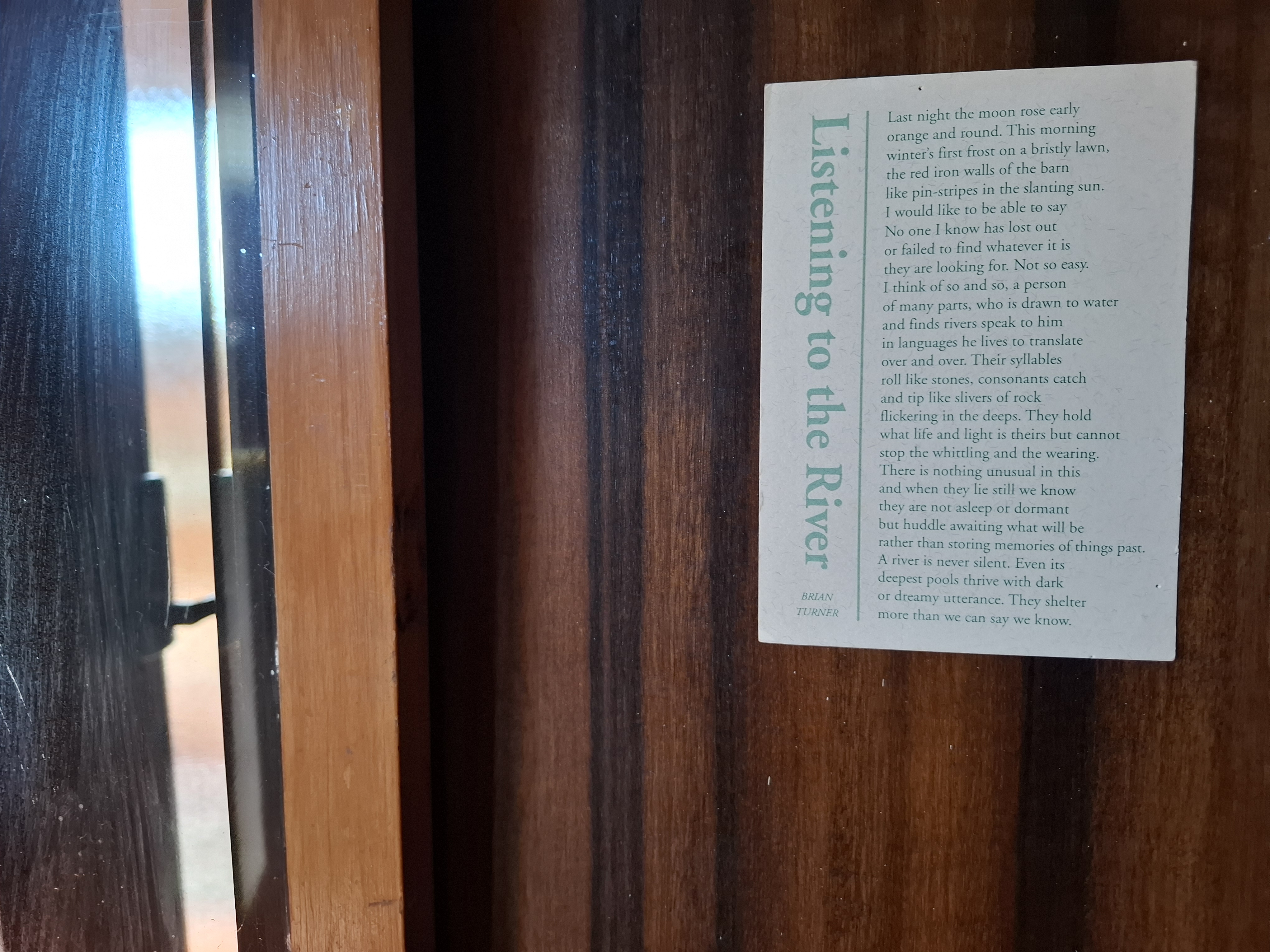
Listening to the River
Last night the moon rose early orange and round. This morning winter’s first frost on a bristly lawn, the red iron walls of the barn like pin-stripes in the slanting sun. I would like to be able to say No one I know has lost out or failed to find whatever it is they are looking for. Not so easy. I think of so and so, a person of many parts, who is drawn to water and finds rivers speak to him in languages he lives to translate over and over. Their syllables roll like stones, consonants catch and rip like slithers of rock flickering in the deeps. They hold what life and light is theirs but cannot stop the whittling and the wearing. There is nothing unusual in this and when they lie still we know they are not asleep or dormant but huddle awaiting what will be rather than storing memories of things past. A river is never silent. Even its deepest pools thrive with dark or dreamy utterance. They shelter more than we can say we know.
Brian Turner, Listening to the River, John McIndoe, 1983
For years, a postcard with Brian’s poem ‘Listening to the River’ printed on it has been blu-tacked to the wall, above the hall table just inside the front door. For years, as I’m rushing in or out of the house, dropping my keys into or grabbing them from the key-bowl on that table, I’ve clocked in my peripheral vision those green words on the cream card. In the way of things that have been around ‘for ever’, I rarely pause to see it afresh or in detail. But it is there, a green river of a poem, the quick sight of it always a cooling moment, a reminder. A reminder of what? Of rivers, obviously, and for me of a particular river, the Manuherikia, carving its ancient path through Central Otago, near Brian’s home in Oturehua. Every so often over the years, keys in hand, I’ve stopped on the banks, as it were, of this poem to read it closely again, word by word, and every time I’ve done this it has settled even deeper in my heart. Their syllables / roll like stones, consonants catch / and tip like slivers of rock / flickering in the depths. I live on the coast, far from this river. I love many of Brian’s poems, but this one in particular for bringing me close to the river on a daily basis, reminding me to listen.
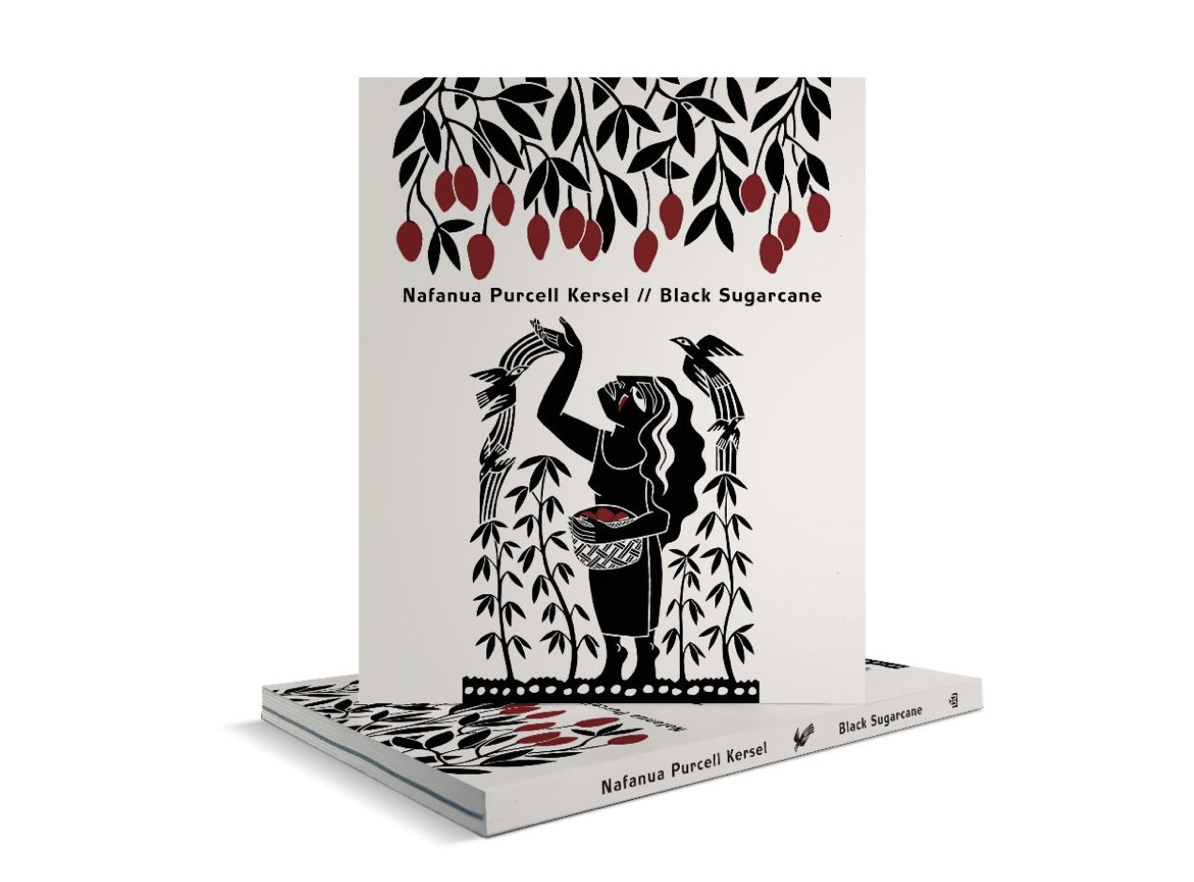
Please join Te Herenga Waka University Press, Nevertheless and Wardini Books for a celebration of Black Sugarcane, a landmark debut poetry collection by Nafanua Purcell Kersel.
Wednesday 19 February 6pm Wesley Community Centre, Hastings
🍃 🍂 🍃
A soft worrier, I’m Nua-No-Myth speaking in centipede, with a sweet hiding in the dark of my cheek.
Restless in form and address, these engaging and generous poems ricochet from light to dark, quiet to loud, calm to violence. We meet a loved twin sister as she dives towards the Sacred Centre, a grandmother who knows everything by heart, a shrugging office clerk, and Nafanua herself, an enigmatic shapeshifter.
At the heart of Black Sugarcane is a sequence of erasure poems arising from the seminal essay ‘In Search of Tagaloa’ by Tui Atua Tamasese Ta‘isi Efi. From the worlds contained in the text, these poems rise as if inevitable. Another sequence responds to the devastating tsunami that stuck between the Samoan islands of Upolu and Tutuila in September 2009. Within the line, within the word and even the letter, these poems speak to creation and translation, destruction and regeneration.
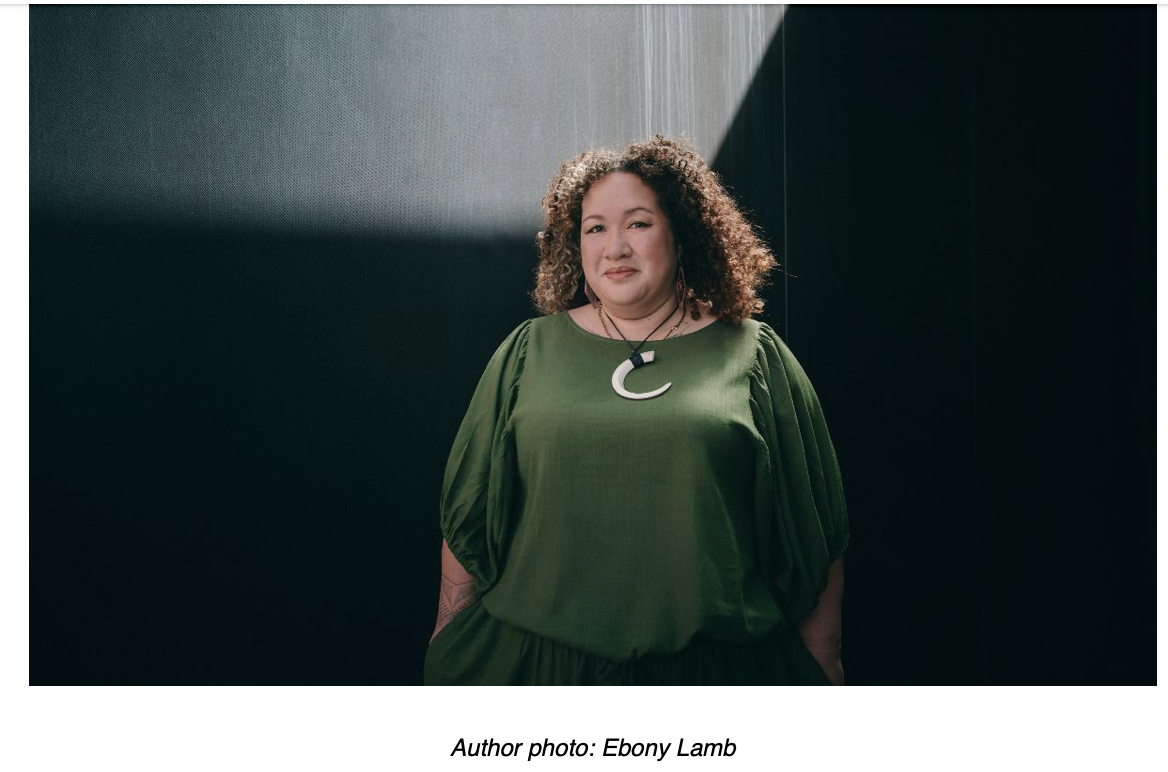
Nafanua Purcell Kersel (Satupa‘itea, Faleālupo, Aleipata, Tuaefu) is a writer, poet and performer who was born in Sāmoa and raised in Te-Whanganui-a-Tara, Aotearoa. Her poetry has been widely published. She has an MA from the IIML and won the 2022 Biggs Family Prize in Poetry for Black Sugarcane. She lives in Te Matau-a-Māui Hawke’s Bay.
The New Zealand Poetry Society Te Rōpū Toikupu o Aotearoa and The New Zealand Entomological Society combined to create the poetry competition running alongside voting for the New Zealand Bug of the Year
Judge’s report here 2025 NZ Bug of the Year Poetry Competion, judged blind 12 Feb 2025
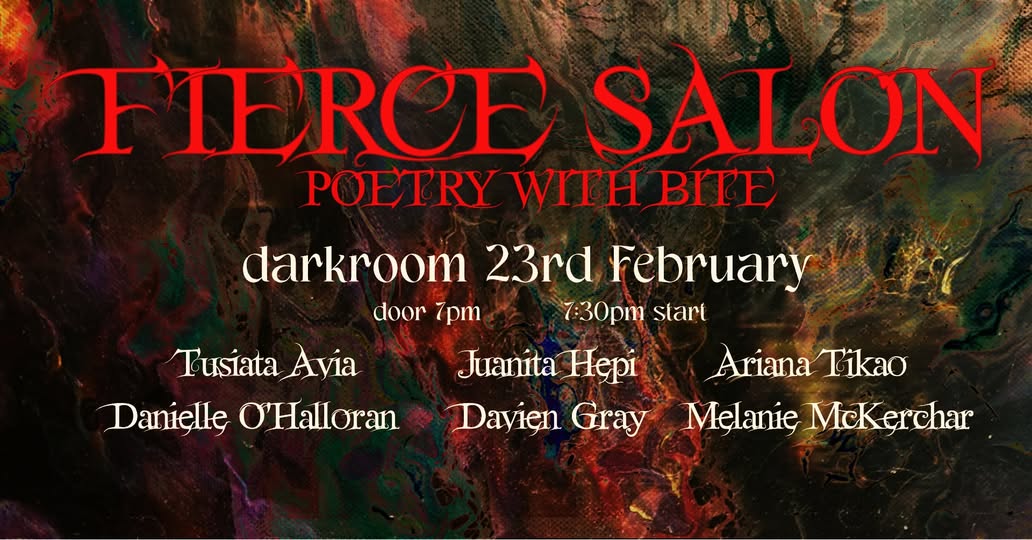
Set your Sunday night on fire with some of the fiercest poets Ōtautahi has to offer, with all proceeds going to the Palestine Solidarity Network Aotearoa. The current government’s favourite poet Tusiata Avia heads up a line up of poets that speak truth to power; Juanita Hepi, Ariana Tikao, Danielle O’Halloran, Davien Gray and Melanie McKerchar; all doing feature length sets. Join us at the darkroom for a night of powerful performance, that will fill your cup, and heat your blood. This government can try and keep the arts down, but we will keep fighting!
R18. R.O.A.R.
Please note the building is only accessible by stairs. For accessibility assistance please email info@darkroom.bar
darkroom 336A St Asaph St, Christchurch Central, Christchurch 8011, New Zealand






 NZ Poetry Shelf