Sometimes you reach a point tipping breaking where you’re wound too tight rope pulled fraying and about to break. A fern frond folding back on itself curling in instead of out moving in the wrong direction.
Listen carefully.
Get yourself a fresh fry-bread. A hot one that burns the soft skin of your fingertips and oozes oil onto the plate. Split it open down the middle and find an air-pocket inside. Lay down in that doughy cave. Rest your head against the velvet floor. Eat yourself into a comfortable nook. Watch the light filter through its thin skin and take belly breaths of yeasty air.
You have to slow down sometimes It’s just the way you’re built. Wait for the flood. A glossy golden wave of salted butter streaked with strawberry jam. Don’t panic as it fills the cavity. A gentle grip caressing your body, lifting you upward. Stay a while and drink.
ArohaWitinitara
Aroha Witinitara (Ngāti Kahungunu ki Wairarapa) is a poet in their third year of study at Victoria University. They grew up in Masterton but live in Wellington now. You can find more of their work in Starling, PŪHIA, Takahē and elsewhere.
Poetry Aotearoa Yearbook 2025 is entitled “breath”. It is a potent theme for an anthology of poems because it generates multiple possibilities for the reader. Breath is a key component in writing a poem, just as it is a key player in our mind and body partnerships. Breath stretches into a broad-ranging field of human experience: relationships, politics, moods, self care. Breath is the vital sign of life, and that is exactly what the anthology delivers, signs of life: distinctive, diverse, captivating.
Reading the 141 poems underlines poetry cannot be forced into square boxes that limit how and why we are writing across communities in Aotearoa in 2025. There is no singular setting for style, politics, the personal, recurring motifs. Both subject matter and mood are eclectic. As I read, I have a heightened awareness of shifts in my own breathing: slow and steady, gasps, skin prickling fast. The journal will affect and attract each reader in different ways – depending upon our own predilections, our favoured reading routes.
The poems draw me into haze and blur, proximity and distance, silence and disquiet, illness and death, yearning and resignation, life love sustenance. Some poems, perhaps many of the poems, are introspective, with the writer gazing inwards and drawing out an anecdote, reflection or story that may be deeply personal or utterly invented. There is a deep vein of anxiety, a walking on broken glass kind of feeling or balancing on tight rope that might signpost the world or self or both. There is a concatenation of surprise wonder delight. Where will this poem take me?
Take Chrys Anthemum’s astonishing poem ‘Ballad of the Ancient Laundry Woman’, for example. She infuses her poem with a surreal mix of inside-outness that catches the way a dream might tilt tiny anxiety kinks in the every day to something incredibly strange and skewing. Here is the first stanza:
I saw a woman dressed in pearls sneak in my laundry room last night, she put ovaltine in my washing machine and left a note about
a wedding I was late for so I tossed my sparkling eyes in,
Take the intensity of connection that builds in Bella Sexton’s ‘Lady in green’, with the uplift of detail grounding a relationship, and carrying us to an ending that imparts surprise and wonder in its pulsating intimacy.
In a year or two these things will be closer than they are now waiting at the front door shadows against the glass
You can find me here pressed between water-marked pages in the soft opening of the warmest ‘hello’
Hebe Kearney backtracks a city, reverse-reels Tānaki Makaurau in the glorious ‘Princess Young and the Prince Young the’. You simply need to read the whole poem to get the you-and-I reverse haunting. Gail Ingram’s terrific ‘Owning up’ is also a curling poem that is jittery at its edges of return, and looking inwards and outwards. Jitters and judders across a journal and yet the recurring patches of stillness, the utterly satisfying moment of pause, of observing sky, ‘a divine view’, Kupe’s sail. Take Emma Phillips’ extraordinary poem ‘When I leave’, for example, where a particular morning and where home, are linked to an artwork in vibrant detail. It’s a rich symphony of sound and image etched on the heart.
When I leave I see the lights of home blurring into the river / everything stretched and warped across the water / and Van Gogh made this moment / subtle brushstrokes and home is light in the dark / and you don’t see the graffiti anymore / the cracks in the pavement / and all that is compelling me to push the pedal to the floor is forgotten
/ I only see the stars in the review mirror / guiding me home
The more I read local poems, the more I am convinced poetry in Aotearoa draws upon eclectic voices, stylistic tracks, ways of breathing. So many poems in the anthology and I am holding my breath, hairs stand on end moment and I am blasted apart, physically and emotionally. Take Ash Davida Jane’s extraordinary poem, ‘visitors’, that renders death as a physical presence, a disconcerting character in the narrative. Here are the opening lines:
The death follows us down to the river. We sit on flat stones with the death cross-legged between us. Crack cans of beers and cheers being sure to make eye contact with the death. The death dips its feet in the warmth. We strip off and plunge ourselves in. We eye the strength of the current as the death wades out.
Poetry Aotearoa Yearbook includes breathtaking poems from familiar voices (Bob Orr, Sue Wootton, Fiona Kidman, Emma Neale, Erik Kennedy, Jack Ross), new favourites such as Cadence Chung and Jackson McCarthy, and also a significant range of voices new to me that I want to read more of. I wanted to invite a couple of poets to read a poem, but in the end wanted to hear the whole anthology as an audio. Ha! I have selected ten poets whose poems I loved, so you can have an audio taster and find your own listening rhythms.
In her introduction, editor Tracey navigates how breath infuses her selection, from the rhythm of writing to its connecting possibilities to sharp rage at the state of the world (here and abroad) to the oxygenating possibilities of the human and the humane. Breath is a vital tool for us as both readers and writers; it is the rhythm of the day, shadowing and guiding us through the tough, the quotidian, the awe-inspiring, offering multiple nourishments. Poetry is the breath upon the glass window – we make our own patterns, forage our own insights as we peer through a poem to worlds both intimate and external. This Poetry Shelf feature barely scratches the surface of the poem treats on offer, the featured poet, Mark Prisco, and extensive poetry reviews. Tracey has curated the best issue yet, an issue that will get you hunting down the work of a poet, or picking up a pen and writing your next poem. Let me finish with the final lines of Amber French’s ‘a love poem’ (you can hear her read the whole poem below):
The streets in this city are a garden where flowers are made of crumbled tissues and greasy paper it is very busy and the seeds spill everywhere
Laundry is tumbling at the laundromat and everyone’s clothes are so happy
Nathaniel Calhoun works on biodiversity and board governance. His projects focus mostly on the Amazon basin or Aotearoa New Zealand. His poems have featured or will soon feature in the Iowa Review, Oxford Poetry, Lana Turner, DIAGRAM and many others. He reads for Only Poems and tweets @calhounpoems
Amber Abbott
‘Rest stop’
Amber Abbott is a PhD student and writer who recently completed her first poetry collection and Master’s in Professional Writing at the University of Waikato. She enjoys sad poems, complex metaphors, and trains.
Shivani Agrawal
‘we’re just collecting some info, and then we’ll restart for you’
Shivani Agrawal is a creative writer from India, based in Hamilton, New Zealand. She has completed her Master’s in Professional Writing from the University of Waikato and works as a communications advisor. Her work has been nominated for Sundress Publications’ Best of the Net 2026 and appears in Poetry Aotearoa, The Bombay Literary Magazine, Flash Frontier, Overcomm, Mayhem, Mister Magazine and The Alipore Post.
Adrienne Jansen
‘The tent’
Adrienne Jansen has published four collections of poetry, and her poems have appeared in several publications and anthologies. She also writes fiction and non-fiction. She is co-founder of small Wellington publisher Landing Press, which publishes accessible poetry with a social edge. She lives in Tītahi Bay, north of Wellington.
Amber Esau
‘Muse’
Amber Esau is a Sā-Māo-Rish (Ngāpuhi / Manase) writer from Tāmaki Makaurau. She is a poet, storyteller, and professional bots. Always vibing at a languid pace, her work has been published both in print and online.
Victor Billot
‘Necessary’
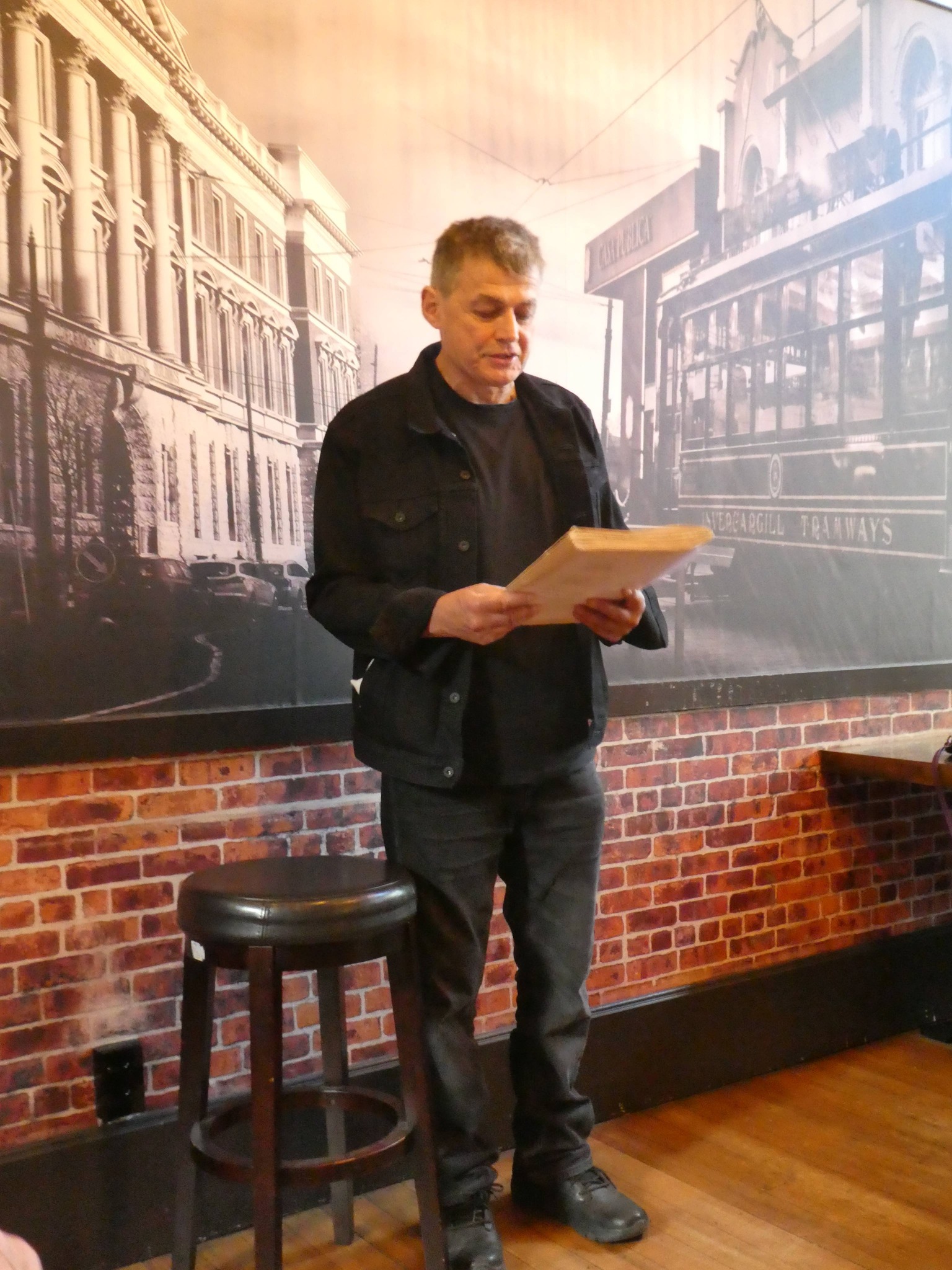
Victor Billot is a Dunedin writer. He is the editor of The Maritimes, the journal of the Maritime Union. His poetry has appeared in Breath: Poetry Aotearoa Yearbook 2025 (Massey University Press), Perch (At the Bay, 2024), and A Kind of Shelter Whakaruru-taha (Massey University Press, 2023). He has work appearing in the forthcoming Landfall Tauraka 250th issue (Otago University Press, October 2025.)
David Eggleton
‘Below Te Ua’
David Eggleton lives in Ōtepoti Dunedin and was the Aotearoa New Zealand Poet Laureate between August 2019 and August 2022. He is a former Editor of Landfall and Landfall Review Online as well as the Phantom Billstickers Cafe Reader. His The Wilder Years: Selected Poems, was published by Otago University Press in 2021 and his collection Respirator: A Laureate Collection 2019 -2022 was published by Otago University Press in March 2023. He is a co-editor of Katūīvei: Contemporary Pasifika Poetry from Aotearoa New Zealand, published by Massey University Press in 2024. His poetry collection Lifting the Island was published by Red Hen Press in Los Angeles, California in September 2025.
Teresa Hakaraia
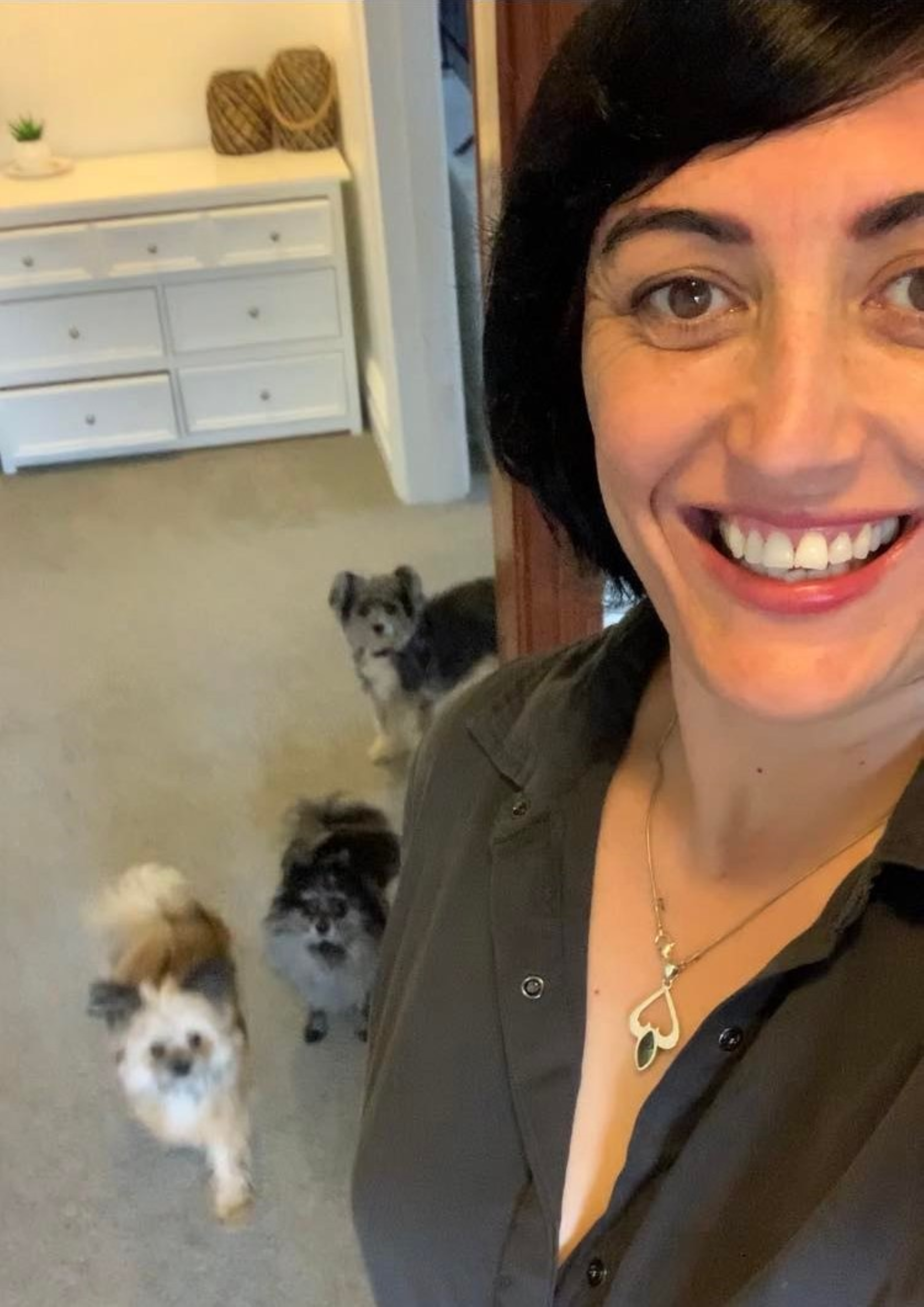
Teresa Hakaraia is of Ngāti Toa, Ngāti Raukawa, and Ngāi Tahu descent. She gained her Master of Writing with Distinction at the University of Canterbury. Having lived and travelled abroad, she now resides on the West Coast of the South Island, where she writes, collects rocks, and shares her home with her three small dogs- or rather- they share their home with her.
Zephyr Zhang 张挚
‘What was Built Over’
Zephyr Zhang 张挚 is an ex-geotechnical engineer based in Tāmaki Makaurau. They like half of the ingredients in a Jägerbomb. You can find more of Zephyr’s poetry in Starling, Landfall, Sweet Mammalian, Ōrongohau | Best New Zealand Poems, and on their website.
Amber French
‘a love poem’
Amber French grew up in Waitakaruru, Hauraki Plains. Her ancestors came to Aotearoa from Somerset in England. A lover of books and reading, she lives in Sydney now, where she writes poetry and works in a school library. Her writing can be found in Takahē, Landfall, and Poetry Salzburg Review.
Zephyr over water (the last move of zephyr outside a zoo) so light, unseen to move a liquid stroke over liquid beneath.
Skin could do this to skin and find fish within or heavier breathing aggrieved bears without ice holes to speak.
Stay, the moving fingers semaphore to bear or maggot, herring or swan pushing their snouts towards us. Touch is our deepest theology.
Elizabeth Smither
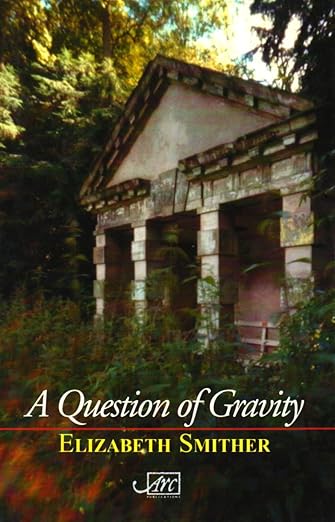
A young man at a reading asked if he could request this poem and I’ve always felt sorry I disappointed him, not being a memoriser of poems. It was published in A Question of Gravity (Arc Publications, 2004) and is about the French word, effleurage, for a light gliding stroking touch on the skin; it is useful for headaches before they get too severe and it is also used at the beginning or end of a massage session.
Zephyr means a soft gentle breeze, hardly perceptible (deliberately confused with zebra in the poem) and bears are too heavy. The effleurage touch is as light as you can make it but it is surprisingly comforting.
Elizabeth Smither’s four novellas, Angel Train, will be published in November by Quentin Wilson.
Playing Favourites is a new series on Poetry Shelf. Invited poets pick a favourite poem from their backlist and write a small (or longer) piece to accompany the poem. The written accompaniment may be anecdotal, consider the poem itself, the context in which it was written (whether the times or personal), shifting relationships with the writing, even the times in which the poet is reading it now, or whatever takes the poet’s fancy.
Object defined by activity (then), 2009 (Olafur Eliasson Your Curious Journey exhibition Auckland Art Gallery 2025)
The trees are a green presence writ large in our eyes & we talk about them how sad crappy food is served in this setting where wrap around glass lets us imagine a rustle of leaves against our skin these trees deserve better we agree & we agree the exhibition we’ve just seen has startled our senses blown us apart I fashion a casual voice to ask did you first see it as glass fragments suspended in the air light transformed diamonds or tears yes I saw glass you reply & add it was of course a small water fountain why do I suspect you read the exhibition notes before we went in & I did not standing in the dark room with you just a shadow to my right glass a scatter of tears lit from above enters my eyes my brain I want to know did you see this then erase it with knowledge you standing beside me thinking about the illusion while I fill slowly with glass glitter & light.
Sue Fitchett
Sue Fitchett is a conservationist, volunteer fire fighter & Waiheke Islander. Authored Palaver lava queen (AUP: 2004) & On the Wing (Steele Roberts: 2014). Co-author or editor of several poetry books & anthologies. Work has appeared in various publications in Aotearoa/New Zealand & overseas & exhibited in art shows. Louis Johnson Bursar 2001-2002. A new collection Between (Cuba Press) will be launched October 17th, 2025 on Waiheke Island.
Sick Power Trip, Erik Kennedy Te Herenga Waka University Press, 2025
Mujaddara
I know. I know what’s happening elsewhere. While I mess around with my kitchenware.from
‘Autumn Couplets’
Every time I review a new poetry collection, it feels like I am holding poetry itself to the light, discovering things about how poems might work, what they might deliver, what they might spark in a reader.
Erik Kennedy’s sublime new collection, Sick Power Trip, got me musing on how poetry might stand as a prism. A poem might be held to get a view, then swivelled to get a different view, and then another, and then again. Each time I turn a page in Sick Power Trip, it’s a prismatic surprise. Unexpected. Utterly fertile. I love it.
Erik’s collection has stuck with me for a number of reasons. I have never read a collection quite like it and I love that. It feels like there are two significant settings. Firstly, an extraordinary band of wit and humour, with unexpected scenarios, shifting angles and points of view. Secondly, the necessary and imperative knottiness of humanity, from exposed self to a wider global reach. Not an either or view, but an incredible shifting light on how to live and how to survive. A poetic prism on the contemporary world that might be sharp, jagged, wise, personal.
Even the pronouns, particularly the ‘I’ and the ‘you’ are multi-tendrilled. The voice speaking is prismatic, drawing us into a stretching field of possibilities, vulnerabilities, recognitions. Nothing is set concrete here. I love this.
Let me shift the prism again for you, in a collection that reveals both the positives and negatives of situations, poetry that is mindful of an impulse to decipher, to muse upon sides, to navigate the good and the bad and the inbetween. There’s involvement and not involvement. Darkness and lightness splintering, merging, resisting clear borders.
And always, let me underline this, there is always the ripple of surprise, in turning each page, within the poem itself. I love this. For example, going shopping after illness:
I thought about the things that are abut me.
And I went to look for the aisle where they keep the fully realised lives, doubtless alongside the wax food wraps and the fancy vinegars.
from ‘Shop Floor Layout Algorithm’
Another stunning example, the notion (or experience) of consolation. Wit and wisdom again refracting. Self fragility and collective strength. The poet holds the prism poem along the degree to which one can understand what someone is going through. Here is the final stanza, it resonates so deeply:
That’s why I can picture it but can’t imagine what it feels like to be a phone, delicately poised on the arm of a chair, that gets one message too many and vibrates onto the floor.
from ‘Consolations’ 73
I want to share so many of the poems in the book with you, so you too can experience the glorious settings. I like how a word or idea might pose like a mise en abyme – inside this thought (word) another thought (word), inside this light refracting, another light that surprises startles delights. Take the poem offering an analogy on thinking, poised on the moment in a fable when the thorn pulled from a lion’s paw turns out to be a little lion, and the whole progression and stability and expectation of thought or story is in jeopardy.
And then, most importantly, how to deliver and absorb the poem prism in a time when the world is so damn awry. I keep swearing I won’t mention this in a review, but it’s the monster in my kitchen. As I read, I pick up on how doing is in partnership with thinking, how in one poem protest might be deflating tyres of SVUs and in another poem caring might be hugging trees like a 70s hippy. Again the vital oscillation. I am thinking this. Writing poems might be a form of protesting, sharp insistent necessary protesting (listen to the three poems below), but it is also a form of caring. I love this. I love this so very much.
On multiple occasions, a single poem stalls (shadows?) me with its prismatic effects. Surprise turns alongside shards of wisdom alongside physical detail alongside acute global and local concern, with every effect housed within writing that is sublimely fluent. Read ‘How a Year Ends’ for example. This poem. This magnificent poem. Try this stanza:
A year is a road that ends at the sea in an afterthought of a town, just a few weatherbeaten houses, some indifferent trees, a small picnic area, and a one-eyed cat wandering around proprietorially. You drive here because it is here.
from ‘How a Year Ends’
Maybe reading this collection is akin to a snow globe effect. Every time I hold a poem to the light and dark of my reading, and let the poetry shake and settle in my mind, I feel the sharp sweet delight of surprise and wonder. On the back of the book (always the last thing I read), it states “Kennedy reminds us that some things remain true and vital: self-care, empathy and solidarity”. And that is exactly why I love this collection so very much. Let us put these words in our pockets and carry them over close the coming months: self-care, empathy, solidarity.
I went out into the day with my symptoms. The sun made the swans look like harps. I appreciated the silhouettes of buildings. I scrumped apples from over a fence. My symptoms were still with me but also not with me. I was loving them. I was setting them free.
from ‘Self-Affirming Mantra’
a reading
Erik reads: ‘Bildungsroman’, ‘I Like Rich People, but I Couldn’t Eat a Whole One Myself’ and ‘The $6 Pepper Song’
Erik Kennedy is the author of two previous books of poems, both with Te Herenga Waka University Press: the Ockham-shortlisted There’s No Place Like the Internet in Springtime (2018) and Another Beautiful Day Indoors (2022). Originally from New Jersey, he lives in Ōtautahi Christchurch.
Cover design: Todd Atticus Te Herenga Waka University Press page
The first time I weighed myself I was a teenager. I was worried I was underweight for a blood drive. People told me I was pretty in high school. Thinking back all I hear is skinny. Being diagnosed with depression at 20, I was prescribed Lexapro. I gained close to 20kg. Being diagnosed with PCOS at 22, I was prescribed weight loss. I starved myself. It didn’t work. I went off Lexapro & starved myself again. This time the weight came off like limbs. See how I did that? A poem can survive things a body can’t. I hacked off my arms, my legs, my extra chin just to see the scale drop. This was always my destiny, being born in the year of the snake, to become all torso.
And I did, I did change my life.
I snapped the neck of gravity itself & called it
enjambment.
What do bodies become in a poem but symbolic against their will?
Look here — I set a cello on fire
& call it a woman.
Xiaole Zhan
Xiaole Zhan (詹小乐) is a Chinese-Aotearoa writer and composer based in Naarm. Their work features in Auckland University Press’s New Poets 11. They are a 2025 Creative New Zealand Fellowship recipient, a 2025 Red Room Poetry Varuna Fellowship recipient, the 2024 Kat Muscat Fellow, as well as the winner of the 2023 Kill Your Darlings Non-Fiction Prize. Their name in Chinese means ‘Little Happy’, but can also be read as ‘Little Music’.
Well I thought I was going on a short hīkoi but I reckon this is turning out to be more of a haerenga, eh? Auē, auē, auē.
from ‘Left on Read’
Nicola Andrew’s terrific debut poetry collection navigates her experience being here and there, traversing bridges between living in both Tāmaki Makaurau and San Francisco, holding close being Māori, as her hīkoi widens to haerenga.
Poetry is the resonating bridge, the anchor, a form of home.
How to describe reading this book, the way it pulls you in with its sweet and sour simmer of wit and pain and acumen. Listen to Karl the San Francisco god doing a mihi in te reo, with his mantra of return. Or enter the abrasive rub of the gap between the powdered milk of a Henderson childhood, the chalky vase collectibles on Herne Bay shelves and the poet’s drive to scroll for vintage porcelain. Ah, how that blue butter dish the poet bids for is a repository of stories. And here I am again in the sweet and sour and crackle of here and there.
I bid on a blue butter dish, and consider my whanaunga, carving corridors through the sky, the flight path perhaps resembling the gently curved neck of a white swan.
from ‘Te Toi Uku’
Words substituted from Zoom transcriptions of interviews with Māori peers discussing Tino Rangatiratanga steer the poem, ‘Colonisation Via Transcription Algorithm’. Here is the heart of the book: it’s whānau, it’s “the whakapapa held close”, the “inherent sovereignty”. And it’s these vital words: “In fact, to be born Māori is a gift”. On the other side of the page, there’s a translation that splinters whānau and taonga and kaupapa to produce a different portrait of the modern, think pop-up blockers, digital data and pissing on the past. My heart is breaking.
And then I love love love reading ‘I Didn’t Come Here to Make F.R.I.E.N.D.S’, a poem that blasts the white saturation of Friends with a nod to fierce poems by Hera Lindsay Bird and Tim Grgec. How timely (when is it not?) to be reading of the hierarchical boxes that divide the dreams of children according to the colour of their skin. The poet is confessing that as a young girl she wanted to be a paleontologist but that too was a white saturated (male?) domain. So her mother took her out into the West Auckland garden to dig in the clay.
As I leaned the spade against the weathering fence I think I mumbled something about the improbability Of a dig succeeding without major grant funding But truthfully, I had just come to recognise That everything we claim as a discovery Is someone’s dear, once beloved
This book. This poetry. It’s poetry that’s laying down roots, stretching roots, recognising roots. Poetry as a way of opening more windows onto the insistent and continual habits of exploitation, inequity, hierarchies, stealing what is not ours, disrespecting degrading disenfranchising. It’s there in the Māori name Jeff Bezos gave his yacht. It’s there in the marae set ablaze.
And then, in this heart reading this mind travel, I am holding lines close, especially at a time when global and local darkness is intense:
[ . . .] The karanga is coming from inside, the whare that is your body / of water / of knowledge / of work— The karanga is coming from inside the whare, and I reach outwards to pry the door of you open, and remake myself, at home.
from ‘the tsunami warning is cancelled’
I turn the book sideways to read the middle section, the small bridge between Section One ‘Overseas’ and Section Two, ‘Experience’. And it’s the border patrol, the departure lounge, the safety video between here and there, And that is what reading this extraordinary book can do: send us sideways, startle, soothe, delight and ignite us, keep us reading and writing and speaking out. So many lines I want to quote to you from poetry that sends tendrils into both experience and wisdom, that opens windows wider onto a world that is personal, global and at unforgivable risk.
Nicola writes with her poetic ink infused with the pulse of her own heart, her whakapapa, and of the wider world both past and present, and it is utterly compulsive reading. I am so grateful for its existence and for Āporo Press.
A reading
‘Te Toi Uku’
‘Departure Lounge’
‘Defence Mechanism’
Nicola Andrews (Ngāti Paoa, Pākehā) is a poet, librarian and educator who grew up in Waitākere and currently works as a librarian in San Francisco. Their poetry has been nominated for the Pushcart Prize, Best of the Net, and Best New Poets anthologies, and they are the grateful winner of the 2023 AAALS Indigenous Writers’ Prize in Poetry. Most of their poems were written in the company of a very spoilt Siamese cat, with Overseas Experience being their first full-length poetry collection.
At night we leave scraps out in the garden for the fox. I sit in the study with the lamp off for hours, forehead against cold windowglass, willing him to appear –
quiet wanderer, sharp-toothed ghost, red coat black in the flat of the moon and
nothing.
Only me, darkness sitting heavy on the roof of the house, and the lights of the town down the valley over the fields, reflecting off the sky.
Niamh Hollis-Locke
Niamh Hollis-Locke was born in England, but now lives in Pōneke. She holds a BA in English and History, a BA(Hons) in English Literature, and a Master’s degree in Creative Writing. Her work has been published widely in Aotearoa, as well as in the UK and Australia, and in 2023 she was shortlisted for the Ginkgo Prize Best Poem of the UK Landscape Award. She was the guest editor of Minarets 14 (Compound Press). In 2025, Niamh was awarded a mentorship by the New Zealand Society of Authors to work on a children’s fantasy novel.








 NZ Poetry Shelf