Category Archives: Poetry

All Tomorrow’s Poets at Time Out Bookshop on NZ Poetry Day is a must-go-to event in my view

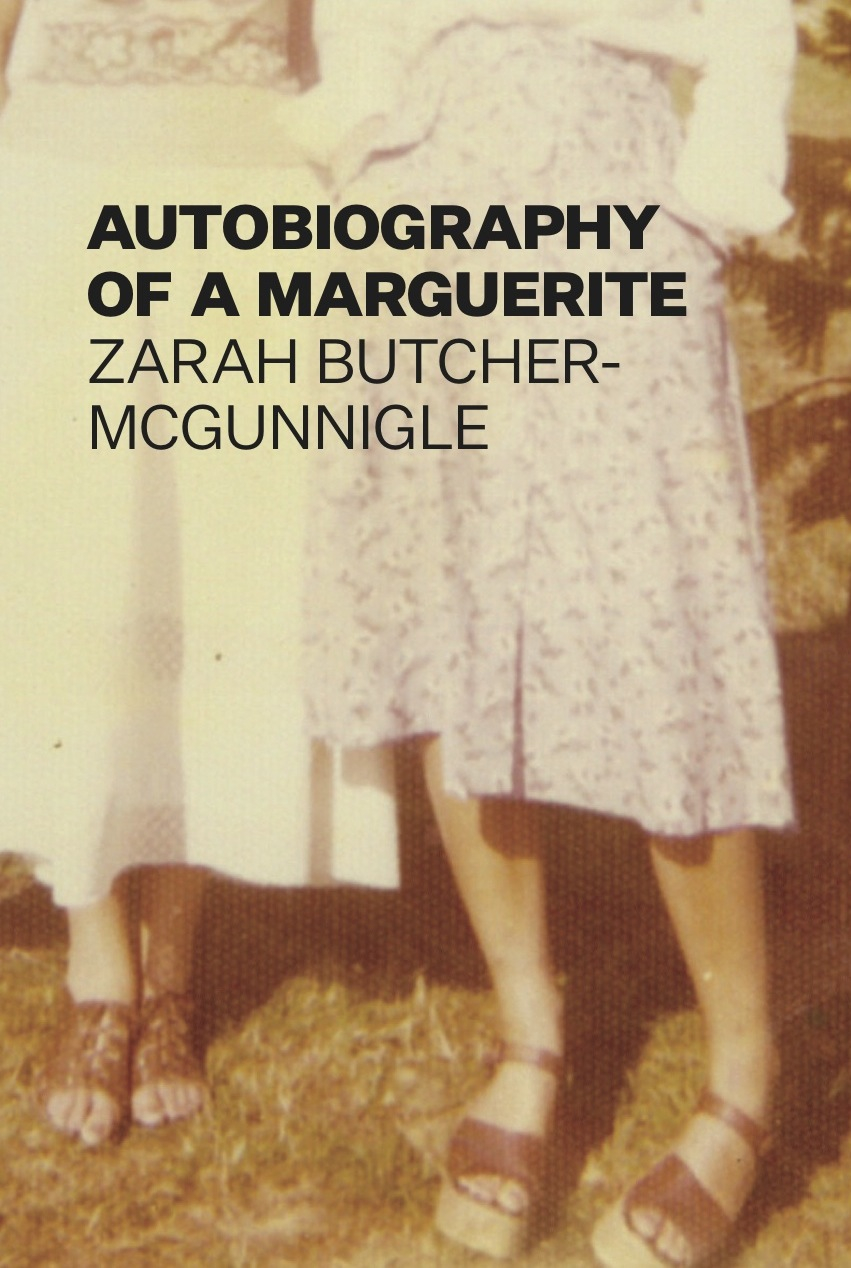
AutobiographyofaMarguerite_cover

This event looks terrific! I picked Manon as the winner when I judged The New Zealand Post Secondary School Competition a number of years back (I would so love to hear what she is doing now!) and shortlisted Kirsti for the Sarah Broom Poetry Award this year and and raved about Zarah’s book at her launch and here (and Steven’s). This is some line up. And I love the fact there are people here I have never heard of.

If I wasn’t doing a swag of things in Hamilton for Poetry Day I would be there with bells on. Anyone want to write about this event I will post it on Poetry Shelf. Cheers!

All Tomorrow’s Poets will be a unique and exciting event, showcasing cutting-edge New Zealand poetry and situating it in the context of Aotearoa New Zealand’s literary history.

MC’d by Gregory Kan and Steven Toussaint, the event will feature:

Ross Brighton
Kirsti Whalen
Craig Foltz
Isobel Cairns
Zarah Butcher McGunnigle
Jessica Hansell aka Coco Solid
Gregory Kan
Steven Toussaint
Alex Wild
Manon Revuelta

…reading their own work alongside a New Zealand poem which they have found inspirational.

All Tomorrow’s Poets will take place in the reading room, upstairs at Time Out Books, in an informal atmosphere with copious food and drink.

Come along from 6.30pm on August the 22nd to explore the expanding possibilities of poetry.

Location: Upstairs at Time Out Books, 432 Mt Eden Rd, Mt Eden, Auckland

Entry Details: Free

Contact Details: please direct any questions to Time Out Books at books@timeout.co.nz

Poem Friday: Nicola Easthope’s ‘Standing’ a metaphor that is open and pliable

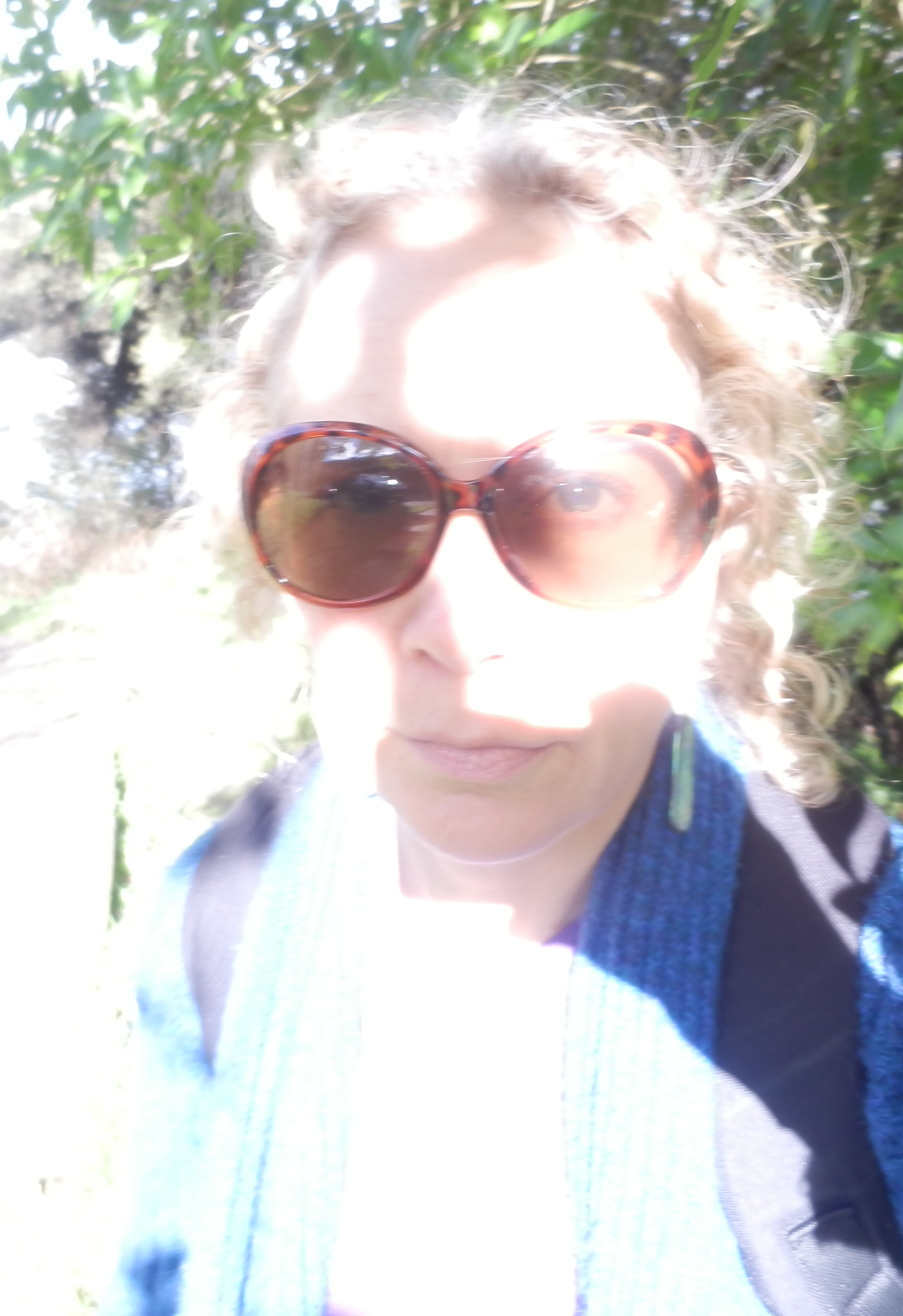
OLYMPUS DIGITAL CAMERA

Standing

They say I am rock in matters of work

that the holes I dig are smooth-sided and honest

my shovel tip sharp, and handle engraved

with the flank-lines of gneiss, the green hold of forests.


But today I wake as pelvic-pink soapstone

with a ditch to shoulder, my buckling knees

tip me crown to the bottom of this infinite fissure

the litter of night time, the folding of trees.


Author’s note: This poem was fuelled by bare legs on hot concrete, the traditional Japanese garden at Pataka Museum and Art Gallery on Waitangi Day, and my return to full time work. Here, I’m exploring the baffling twin-set self I experienced in the early days of Term 1 last year: the coexistence of my reputation as an authentic, confident teacher, with my private anxieties at meeting 120 teen strangers’ needs – and being liked by them – along with a seemingly unscalable workload. Working out the worry!

Author bio: Nicola is a poet, activist, and teacher of English and Social Studies at Kāpiti College in Raumati, where she also coordinates the Eco Action Group. Her first poetry collection, leaving my arms free to fly around you, was published by Steele Roberts Aotearoa in 2011. She is currently completing her second manuscript, entitled Working the tang.

Links: http://www.creativecoast.co.nz/nicola-easthope-poet

http://www.steeleroberts.co.nz/books/isbn/978-1-877577-57-4

Paula’s note: I loved the gracefulness of each line in this poem. The enigma and the restraint. I loved the contrasting verses and the way image resonates so profoundly. If the images function as metaphor, and indeed they do, they are open and pliable. I love the literal presence of tools that can then ignite the dual sides of self. The title too is enigmatic, potent. I was lead from the place where one stands to the regard of others and then oscillated between these two meanings as the image took me from keenness and capacity to doubt and incapacity.  The final face is striking, ‘the folding of trees,’ and is a perfect, effervescent tablet to leave at the end. It sets the whole poem sparking again.

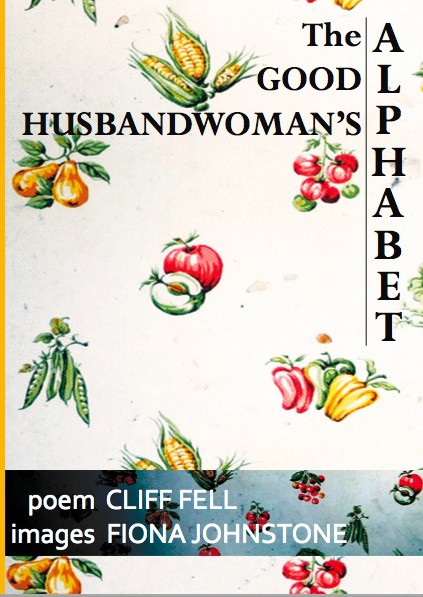
Cliff Fell’s The Good Husbandwoman’s Alphabet This gorgeous sequence holds you within its frame

TGHWA cover for Paula     TGHWA cover for Paula

Cliff Fell, The Good Husbandwoman’s Alphabet, Last Leaf Press, Motueka, 2014


Cliff Fell has published two previous poetry collections, The Adulterer’s Bible (Victoria University Press, 2003) and Beauty of the Badlands (Victoria University Press, 2008). His debut book gained the Adam Prize in Creative Writing and the 2004 Jessie Mackay Prize for Best First Book of Poetry. He currently lives on a farm near Motueka and teaches at Nelson Marlborough Institute of technology.

His new book, The Good Husbandwoman’s Alphabet is a team effort, as Cliff has worked in conjunction with artist, Fiona Johnstone and photographer, Ivan Rogers. The book is both slender and aesthetically beautiful. The images are alluring hooks that can either be read as self-contained visual poems or as part of an alternative narrative thread that forges subtle connections with the arc of Cliff’s text. Exquisite.

The poem takes the alphabet as its framing device. Each letter pirouettes upon the possibility of words, the power of words, the shimmering vulnerability of words. The voice of the husbandwoman gives us glimpses, only ever glimpses as we discover in ‘G,’ yet she accumulates, piece by piece, in the relations she unveils. Signals of self in ambiguous traces. You get to the end and hold a trembling portrait that flips and twists to become a portrait of the husbandman. Or is it. The ‘he’ and the ‘you’ slip and slide so you are not sure where husband ends and adultery begins (this poem has its origins in The Adulterer’s Bible).

This gorgeous sequence holds you within its frame. The mysterious code on the final page sends you back to see the portrait in a new light. An intense and aching light and I am not spoiling the hit of the revelation by speaking of it here. The lines are deft and bereft (ah the ache) and befit the narrating woman. Little pockets of confession, reflection and quiet. It is a joy to read.


Bridle

These words: throat-lash, brow band, bit—

how a horse gets broken in.

Each night I am unbridled.

Never try to understand a marriage.

It’s beyond the knowing of all but the finest

gentleman: how the bridle’s said to fit the bride.


NZ Book Council page

Victoria University Press site

NMIT page

ROADWORDS: A LITERARY TOUR OF SOUTHERN TOWNS BY FOUR AWARD-WINNING WRITERS

This looks great! You will get to hear the author of one my top novels from the past year, Tina Makereti — the other writers are tremendous too. I would be there in a shot if I wasn’t all over the place myself. Bravo whoever thought of this, planned it and put it into action. We need more of it.

9781775535188    9781775535188    9781775535188


Four award-winning authors will read from new work and speak about their passion for writing this October. Calling at Ōamaru, Dunedin, Gore and Te Anau before finishing in Wanaka, the tour will feature informal events to encourage and inspire local readers. Taking part in the tour are Wellington novelist and short story writer, Pip Adam; Dunedin based novelist Laurence Fearnley; Kāpiti fiction and non-fiction writer, Tina Makereti; and Kāpiti fiction writer Lawrence Patchett.

The tour hopes to encourage the experience of high-quality literature in southern communities that are sometimes excluded from major literary festivals and events. As Laurence Fearnley notes: ‘Distance and cost can make it difficult for people from smaller communities to access literary festivals in urban centres like Auckland, Wellington and Christchurch. As writers we want to be proactive, tour the south and introduce audiences to new and exciting work.’

‘By holding free events in libraries and public galleries, we hope to create an informal atmosphere where readers and writers from all age-groups and backgrounds can not only hear our work being read but engage in open and stimulating dialogue about the writing process and what it means to be a writer in Aotearoa/New Zealand today.’

The authors met while completing PhDs in Creative Writing at the International Institute of Modern Letters at Victoria University, in Wellington. ‘The course was supervised by Bill Manhire — a poet with strong Southland connections — so in a way there is a nice symmetry in being able to acknowledge his support and influence on our careers by bringing our work down south.’

All events are free and made possible through the support of Creative New Zealand.

South Island towns.


For more information, please contact:

Laurence Fearnley, (mobile) 021 212 3235

pounamu@gmail.com

http://roadwordsblog.wordpress.com/


Roadwords Tour dates:

Oamaru Public Library, Thursday 2nd October – 6pm

Dunedin Public Library, Friday 3rd October – 6pm

Eastern Southland Art Gallery, Gore, Saturday 4th October – 4.30pm

Te Anau Public Library, Sunday 5th October – 2pm.

Wanaka Public Library, Tuesday 7th October – 7pm


About the Writers

Pip Adam is author of Everything We Hoped For (VUP) and I’m Working on a Building (VUP) and has received the 2011 NZSA Hubert Church Prize for Best First Book of Fiction and an Arts Foundation of New Zealand New Generation Award in 2012. She teaches creative writing at the IIML and Arohata Women’s Prison and is writing a new novel about the ocean.

Laurence Fearnley is a novelist and non-fiction writer. In 2011 she won the fiction category in the NZ Post New Zealand Book Awards for her novel, The Hut Builder. Her novel, Edwin and Matilda was runner-up in the 2008 Montana New Zealand Book Awards. Her latest novel Reach will be published by Penguin in late September.

Tina Makereti is the author of Once Upon a Time in Aotearoa and Where the Rēkohu Bone Sings. In 2009 she was the recipient of the Pikihuia Award for Best Short Story in English, and the RSNZ Manhire Prize for Creative Science Writing (non-fiction). In 2011 she received the Ngā Kupu Ora Award for Fiction. She is currently the CNZ Randell Cottage Writer in Residence.

Lawrence Patchett is the author of the short-story collection I Got His Blood On Me: Frontier Tales, which was awarded the 2013 NZSA Hubert Church Prize for Best First Book of Fiction. In 2014 he was awarded the Creative New Zealand Todd New Writer’s Bursary, and is currently writing a dystopian adventure novel.

Friday Poem: Rachel O’Neill’s ‘Almost exactly the love of my life’ Its knots and overlay render me curious

RachelO'Neill


Almost exactly the love of my life

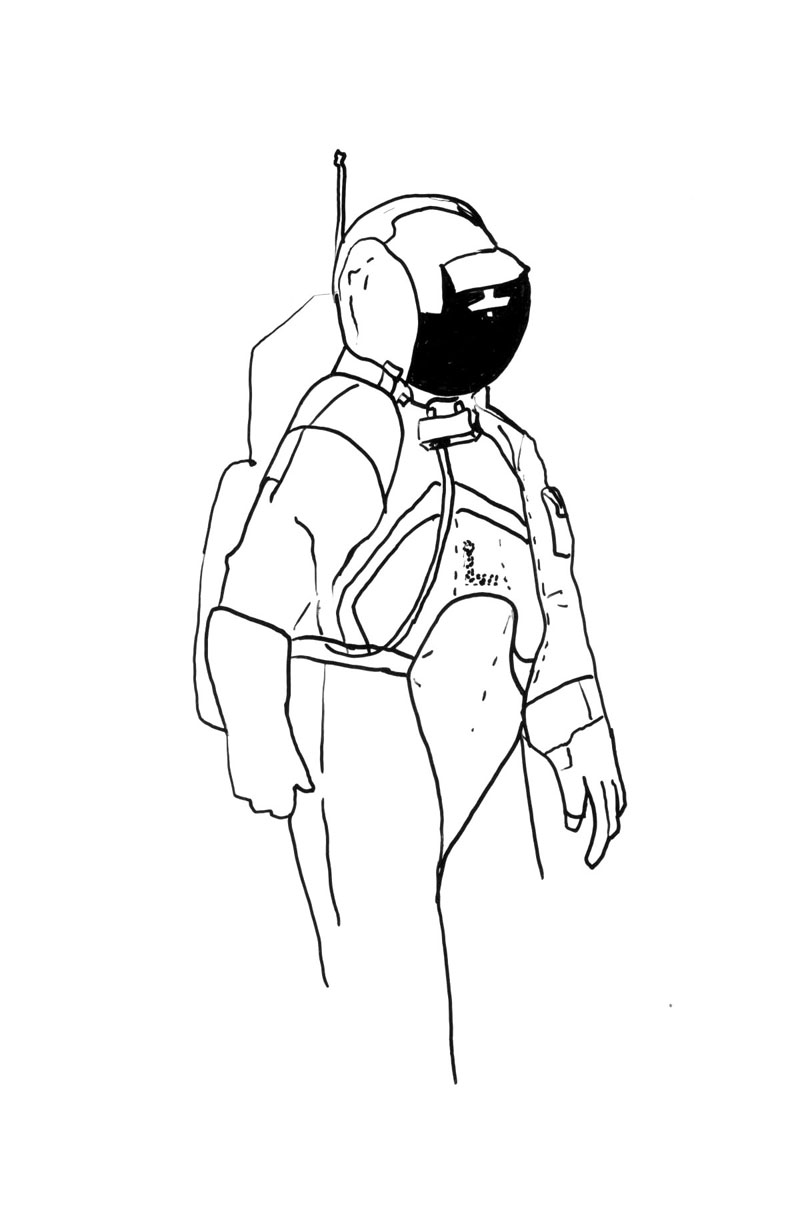
On slow days at the office I wrote love letters to myself from the woman who was almost exactly the love of my life. In these letters I, or she – well, ‘we’ – wrote of our desire for me as a passionate explorer might. ‘Once you bring back footage of the moon’s farside,’ she said, ‘there’s no telling what miracles it will perform on the diseased parts of our relationship.’ In these letters she promised not to leave me and was happy to put our life on hold for a year or two of probing research. ‘Why jump into the next phase with reckless abandon?’ she wrote one week. ‘Just because we broke into seventy six terrible pieces last time doesn’t mean we shouldn’t try again.’ I came to love the heart and mind that wrote me these messages, overwhelmed at times by their quiet and unobtrusive undercurrent of encouragement. Even now I feel bound to this correspondent as if to a great abiding mystery, such as the inexplicable shifts in our planet’s poles that can push ships onto rocks or that can draw whales as if by leashes onto shore.


Astronaut sm


Author’s note: This poem is from a series I’m beginning about a character living in an Aotearoa very like ours except that there is considerable Unmanned Moon Exploration activity. The character is engaged in secret work and struggles with not being able to disclose details about the day job to their girlfriend. The character would like nothing more than to debrief, especially about the pressure the team is under to navigate ice fields and bring back soil samples. Over the arc of the sequence the Unmanned Moon Exploration corporation in question goes under and this leads to some disgruntled worker-type protests and raiding of the ‘stationery’ cupboard, which houses pens and pulsating spheres. Oh, and someone frees the Lunar Clones! This poem was recently published in Minarets journal with a host of fantastic poetry by the likes of Hinemoana Baker, Zarah Butcher-McGunnigle and Alex Mitcalfe Wilson. Check it out here. There is so much exciting New Zealand writing coming out at the moment and it’s a pretty inspiring time to be a poet.

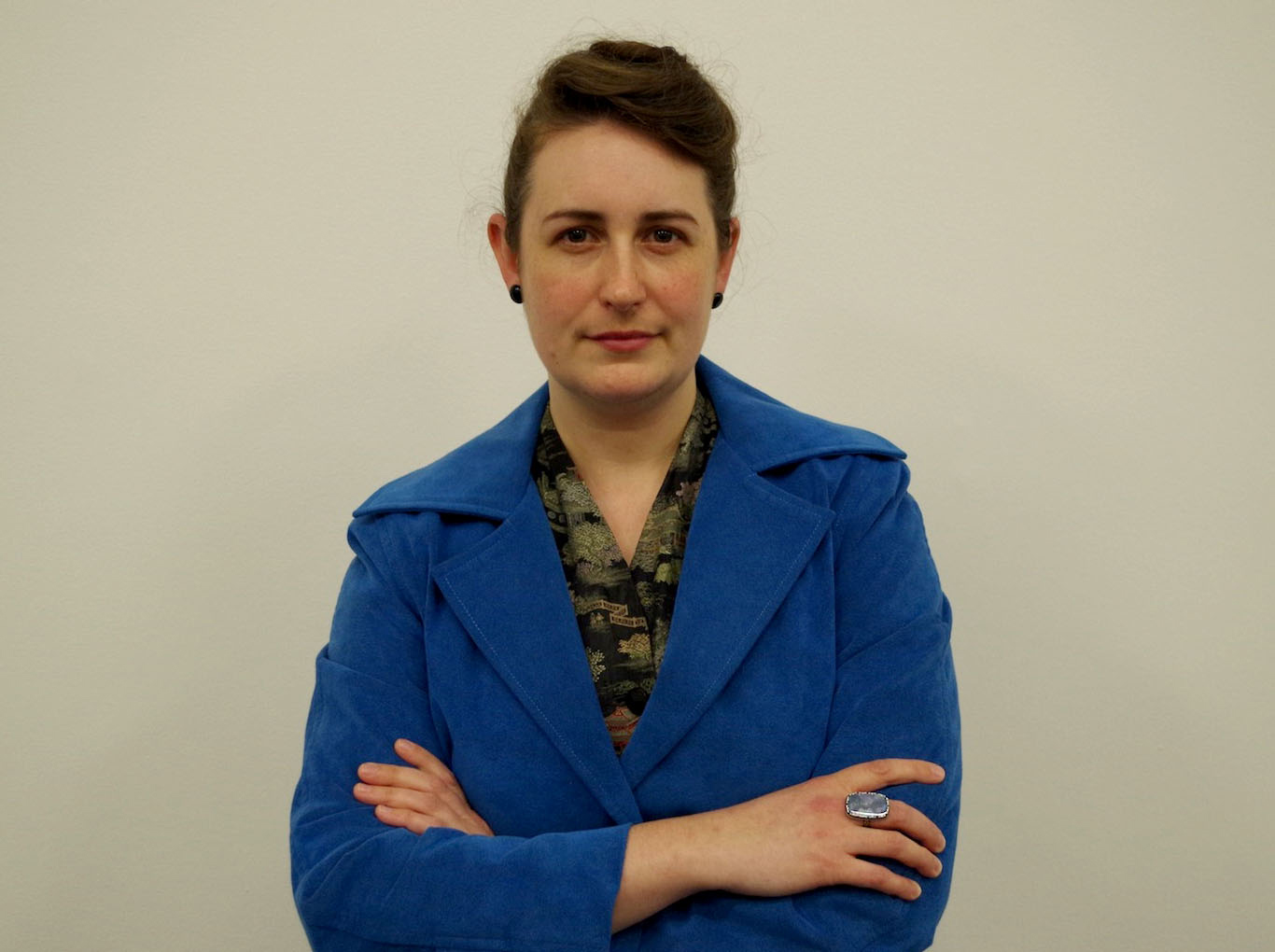
Author bio: Rachel O’Neill is a writer, artist and filmmaker who lives in Paekākāriki on the Kapiti Coast. Her debut collection of poetry One Human in Height was published by Hue & Cry Press in 2013. You can find out more about what she’s up to on her blog.

Paula’s note: I am reading this piece in isolation—splintered from the series in which it plays a part, but that makes scant difference. It hums and resonates with a fullness of belly, surrealness, questions (is this human?) and a lightness of touch, along with knots and overlay that render me curious. I see this piece as a stack of tracing-paper figures laid one upon each other until they gain surprising life. They merge and separate; they merge and separate (she she she she she). There is a surety of touch in each line. There is an undercurrent of ideas (the power of greater invisible forces, the impact of the big upon the miniscule, the multiplication of ‘me’ through an inked pen, the love of self and the self of love, the recognition and misrecognition of self, the nurturing, fragmentation). Is this flash poetry? Sharp, sudden, luminous? It’s a delight to read so I am hungry for the sequence. I had no idea about Lunar Clones as I read this!

Landfall 227 Vital Signs Autumn 2014 I really appreciate picking up a journal that places critical thinking alongside the telling of tales and the musical lift and surprise of poems.

9781877578465     9781877578465     9781877578465


Landfall 227 Vital Signs Autumn 2014

The latest issue of Landfall does indeed celebrate vital signs of life in our writing communities. This is a writing smorgasbord that not only offers tremendous fiction and poetry but that also presents writing that defies genre. There is writing here that sits in the non-fiction category but that veers in other directions. I really appreciate picking up a journal that places critical thinking alongside the telling of tales and the musical lift and surprise of poems. And that that critical thinking is full of welcome signs as opposed to the by-products of gated cul-de-sacs.

There were few poems that couldn’t hold my attention, some of the very best writing was near the back, and my accumulation of standout poems just grew and grew. Bouncing off the title, clichés abounded; New Zealand poetry is in good and diverse heart, there is vital blood pumping through our poetic veins. Ahh! I loved the way this selection made links to past and present, mainstream and offbeat, familiar and unfamiliar, and satellite poetry endeavours.


Here is a wee tour of my stallings:

Morgan Bach’s eye-catching moment in ‘Postcards,’ provides a sweet, melodic lull, vibrant detail and a catchy miniature narrative.

The delicious, nostalgic drive of Philip Armstrong’s ‘Portolan’ takes you right back to ‘when.’

There is the heady dislocation in a heritage library courtesy of Airini Beautrais’s ‘Finding the Dead.’

In Annalyse Gelman’s ‘My Legacy’ I loved the syncopated pattern of long and short lines.

Murray Edmond’s ‘Solomon’s Throw: Memoir of a Name’ is an inventive and agile response to the stunning tie between the West Indies and Australian cricket terms in 1960. Murray bounces from Allen Ginsberg’s ‘Howl’ to the childhood Solomon-Grundy chant to ‘The Song of Solomon’ in his surprising musings.

One of a number of poignant poems in the issue, Angela Andrews’s ‘Grandfather reacts to the way death and almost death are great prompters of story, of roads back into the past. Her detail is acute.

Each poem Sarah Jane Barnett writes just gets better and better. In ‘Relief,’ each line is nimble, the story fablesque, the poem rich in direction.

Carin Smeaton’s ‘Wishing Bone’ is like dialect in short snappy lines, with urban edge, getting into the head and ache of a woman/mother dispossessed.

Peter Black’s photographs, ‘Simple Beauty,’ are luminous poems.

Gregory O’Brien and Robin Kearns converse in ‘A Weekend on the Chathams’ (a geographer and a poet reflect back). Gregory’s poem-paintings (or painting-poems) are one response to how poet and geographer found it difficult to find ‘a voice to inhabit the elusive and often contested reality of the Chathams.’ Both looking for ‘crossed circuits, connections, conversations, rhymes and assonances.’ This lightness of touch from Gregory:


If there is

a moon

it is carved into

a dark tree. If

there is

a tree. But

there is always

an ocean.


Lynley Edmeades’s ‘Faute de Mieux’ offers musicality of detail and momentum.

Some of my favourite poems were sheltering near the back. Bernadette Hall’s piece, an extract from ‘Maukatere: Floating Mountain’ defies compartments. It is like a floating memoir that hooks imagination as much as recollection. It is poetry, and in that poetry, promotes curiosity. I want to read more!

I stalled on the moving twinges, revelations and contours of Vivienne Plumb’s ‘Nothing Trivial.’

I have already sung the praises of Zarah Butcher-McGunnigle’s Autobiography of a Margurite (there is an extract) here.

Alice Miller shows she is an exquisite wordsmith in ‘Observatory.’ Here is a taste:


Night comes for the ten thousandth time, sky growing

muddy with cloud, light squeezed out.

Are you there, a man says into his phone.

A storm is coming.


At the back are the results of The Caselberg Trust International Poetry Prize 2014. Sue Wootton’s comments include ‘eight [terrific] ways to make a poem that proved robust enough for my shortlist.’ Her final comment on the winning poem is equally astute: ‘[it] goes on giving up a little something new no matter how many times it’s read.’ I read Brian Turner’s winning ‘Mulching’ and I totally agreed. It quietly keeps creeping up on you. Runner-up was Annalyse Gelman’s ‘Auden.’


Submissions for Landfall 228 now closed. Due November 2014.

Submissions for Landfall 229 close January 10th 2015 (there is no theme). Due May 2015.


Congratulations The giveaway copy of Maria McMillan’s Tree Space

TREE_SPACE__40939.1398819236.220.220     TREE_SPACE__40939.1398819236.220.220

Thanks to VUP,  I have randomly selected Jane Arthur to receive a copy of Maria McMillan’s Tree Space. Thanks for your comments.

My review here.

The interview here.

On the hunt for children and classes to interview authors in A Treasury of NZ Poetry for Children

You might know just the child or class for this job!

To celebrate the arrival of A Treasury of NZ Poetry for Children in October (Random House), my own poems in The Letterbox Cat in August (Scholastic) and NZ Poetry Box, I am doing masses of things.

A Hot Spot Poetry Tour of NZ for about a month is the main act.

But I am also looking for children and classes to devise an interview for and write a short bio of an author in the Treasury. I will give help where needed!

I am assigning names to children and classes who get in touch. So some are already taken!

I then send the questions to the author.

I will post interviews in October.

I will give a copy of The Treasury to my favourite interview by a child and my favourite by a class.

More details here.

Launching Essential NZ Poems to a capacity crowd

Good to see so many Auckland poets and fans of poetry turn up to the launch of this updated anthology. A new anthology! It was a lively reading with a mix of poetry elders and new voices. Each poet read their own poem plus one other. Some chose to read one by someone else in the anthology. Albert Wendt read Tusiata Avia’s edgy ‘Wild Dogs Under My Skirt. ‘ CK Stead read Allen Curnow’s terrific ‘You Will Know When You Get There. ‘ two highlights plus Riemke Ensing’s gorgeous love poem that I had never heard before. I picked Bill
Manhire ‘Kevin’ to read. Just love this poem and have a strange anecdote about the first time I read it.

This is a beautiful book to hold in the hand. I have loved falling upon favourite poets and favourite poems and then those I am less familiar with. This is book of myriad doors and windows. A chocolate box of reading treats.

It was a lovely occasion and it reminded me how much we continue to open arms to poetry. To a hubbub of poem talk.

Cheers Siobhan Harvey, James Norcliffe, Harry Ricketts, and Nicola Legat and her dedicated team at Penguin Random House.

Happy to post accounts of the other two events. Dunedin and Wellington.

Congratulations!

Poem Friday: Lynley Edmeades’ ‘Imperial’ Sometimes an object in a poem reverberates with such exquisite frisson


s200_lynley.edmeades


Imperial

There goes London with its scattered lights.

Like a bag of marbles spilt out onto concrete,

they’ve rolled towards fissures, pooled together

in conduits. They are the arteries

of this land-bound leviathan.

From the air, I can see it’s almost finite,

and feel the way a child might,

when her marbles have been counted, put away.


Author’s bio: Lynley Edmeades is currently writing a doctoral thesis on sound in avant-garde American poetry, at the University of Otago. Her poems, reviews and essays have been published in New Zealand and abroad. She lives in Dunedin.

Author’s note: I wrote this poem while I was living in Belfast. It was prompted by a conversation with poet Sinead Morrissey, in which she applauded the power of first lines. Put your readers straight in there, she said. No ideas but in things.

Paula’s note: Sometimes an object in a poem reverberates with such exquisite frisson the hairs on your arm do stand on end. In Lynley’s poem, marbles promote a grid of shivers—from the allure of the physical toy to the dips and peaks of childhood. That time of endless summers and wild darings. To overlap the potential of this ‘thing’ with the aerial view of London at night is genius. Magic slips from one to the other. The allure of night. The way a city’s particulars are soaked up into the unknowable dark (or apprehended from a different point of view). The way the city borders are at the edge of psychological unease. Then you get taken back to the moment of the child where the smallest moment can be utterly sharp. The game is over. Fleeting yet intense. What I love about this poem (and indeed other poems by Lynley) is the way ear, heart and mind are in harmony—words are deft on the line, images are fresh, simplicity partners complexity.  And the way, in this example, one word, ‘Levethian,’ can unsettle and add to the subtle discomfort (the engagement with the long-ago child, loss, larger-then-life cities, the unknown). Or the the way the poem catches hold of that child trespassing on the glittering lights of night. The complexities and possibilities of this small poem are enormous. I have barely started.