My mother’s voice crackled and deepened on the tape recorder.
She spoke to me only yesterday, but already the effort to speak across such great
distance, from her twenties to me in my thirties
stretched the tape like the whirr of static ghosts.
Transcribing her disembodied words how I want her here to hold my body to her breast.
Ingrid Horrocks from Mapping the Distance, Te Herenga Waka University Press, 2010
Over the coming months, the Monday Poem spot will include poetry that has stuck to me over time, poems that I’ve loved for all kinds of reasons.
Poetry is of such vital comfort at the moment. It might be the way the musicality of words strikes the ear or the subject matter catches the heart. It might be intricate or economical in effect, or both. The first time I read Ingrid’s mother poem I did an inward gasp. It is utterly moving, haunting, in both musicality and content. It’s a poem to read, and read again, to enter the poetic clearings and linger, as is the arc and reach of Ingrid’s poetry. Ah, the poetry I love is so often absorption ahead of explanation, nourishment ahead of body skewing. I have been musing on how a sublime poem can carry you beyond words. Extraordinary.
Ingrid Horrocks is the 2024 Kaituhi Tarāwhare, Creative New Zealand Writer in Residence at the IIML. She is the author of two poetry books, Natsukashii (1999) and Mapping the Distance (2010). Her most recent book, Where We Swim (2021), is a blend of essay, memoir, travel, and lyric nature writing, and her first book of fiction, Nine Lives, is forth-coming with THWUP in 2025. Sometimes, she misses being a poet. Her wonderful mother is alive and well.
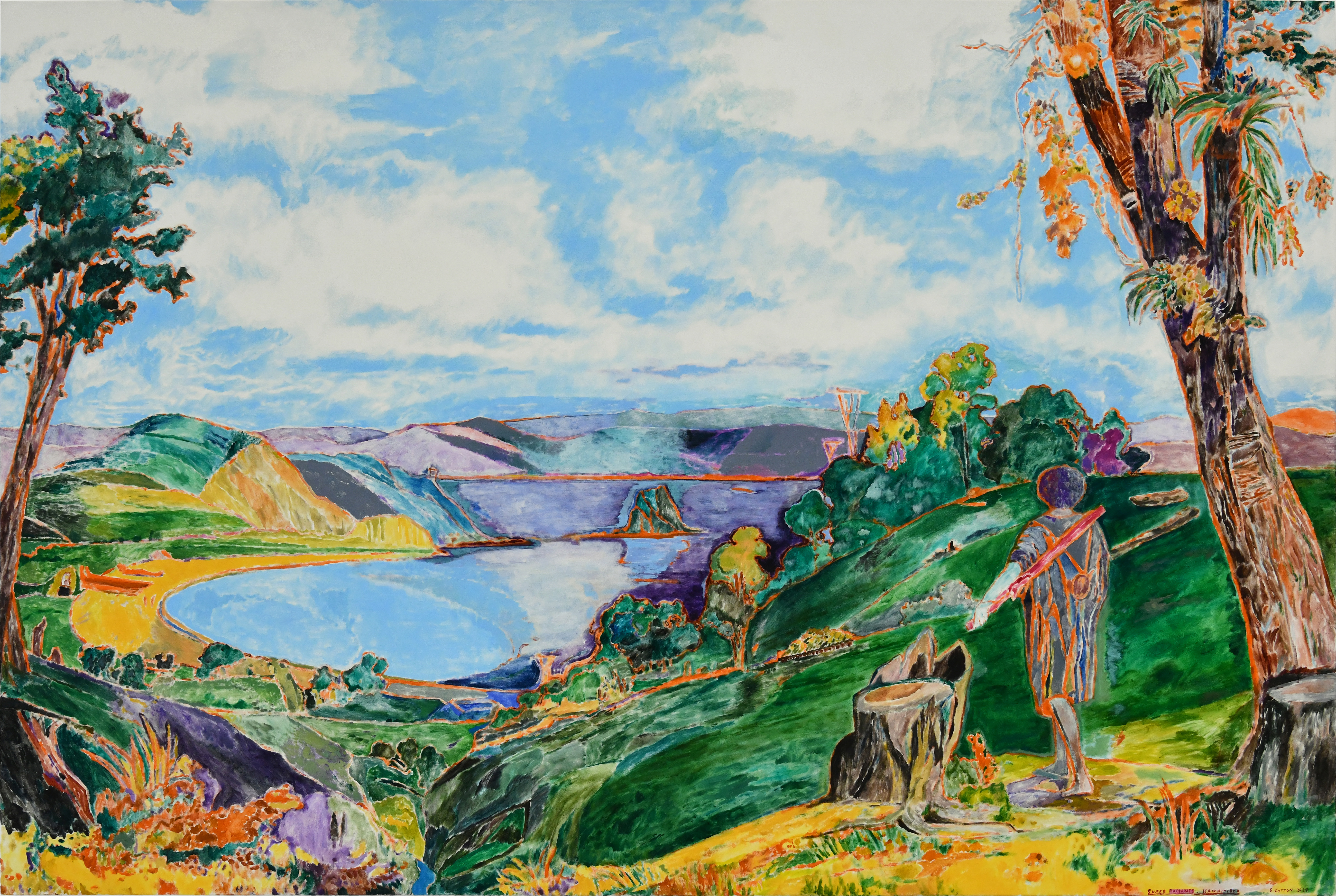
New Paintings, Shane Cotton, 12 October to 16 November 202 Gow Langsford Gallery, Onehunga
For the first time in over two years, I stood in a gallery, masked up, and absorbed art. It was my first visit to the fabulous space Gow Langsford Gallery has created in Onehunga. They still have the gallery in Kitchener Street but their new creative venture includes exhibition spaces, studios for promising artists, and an extensive visual arts library.
I had spotted Shane Cotton’s new paintings on the gallery website and decided they were essential viewing. It was time to tag along with Michael as he dropped off work for his upcoming show and to view the new space.
In my bag, I had a book I am currently reading, Pictures and Tears by James Elkins (2001), a book that prompts travel to artworks that have profoundly moved me. I am, for example, back standing in the Rothko Room at the Tate Gallery, seeing the yellow pollen mountain of Wolfgang Laib at Musee d’Art Moderne Paris, and the Vincent Van Gogh Gallery in Amsterdam. More than anything I am returned to Renaissance Art in Italy where I was moved transfixed transported rebooted.
In Florence, I wrote a letter to the Uffizi Gallery requesting permission to view Artemisa Gentileschi’s paintings in storage, for my doctoral thesis. I was in the gallery two hours before the public, there in front of Botticelli’s ‘The Birth of Venus’, nobody else in the room bar a young ragazzo with his bunch of keys. I sat on the floor in the Gentileschi storage room, mesmerised. When I stood up, il ragazzo rattled his keys, saying, che altro?, and took me to the Caravaggio works in storage. I am almost weeping to be back in this moment. Postscript: that night the gallery was bombed, and those paintings were damaged.
Ah. How to experience art? Some people do a show, do a gallery, do a painting. Maybe that is an all encompassing word, because art is something we can see think feel memorise navigate. Both ethereal and physical. Surprising challenging intoxicating.
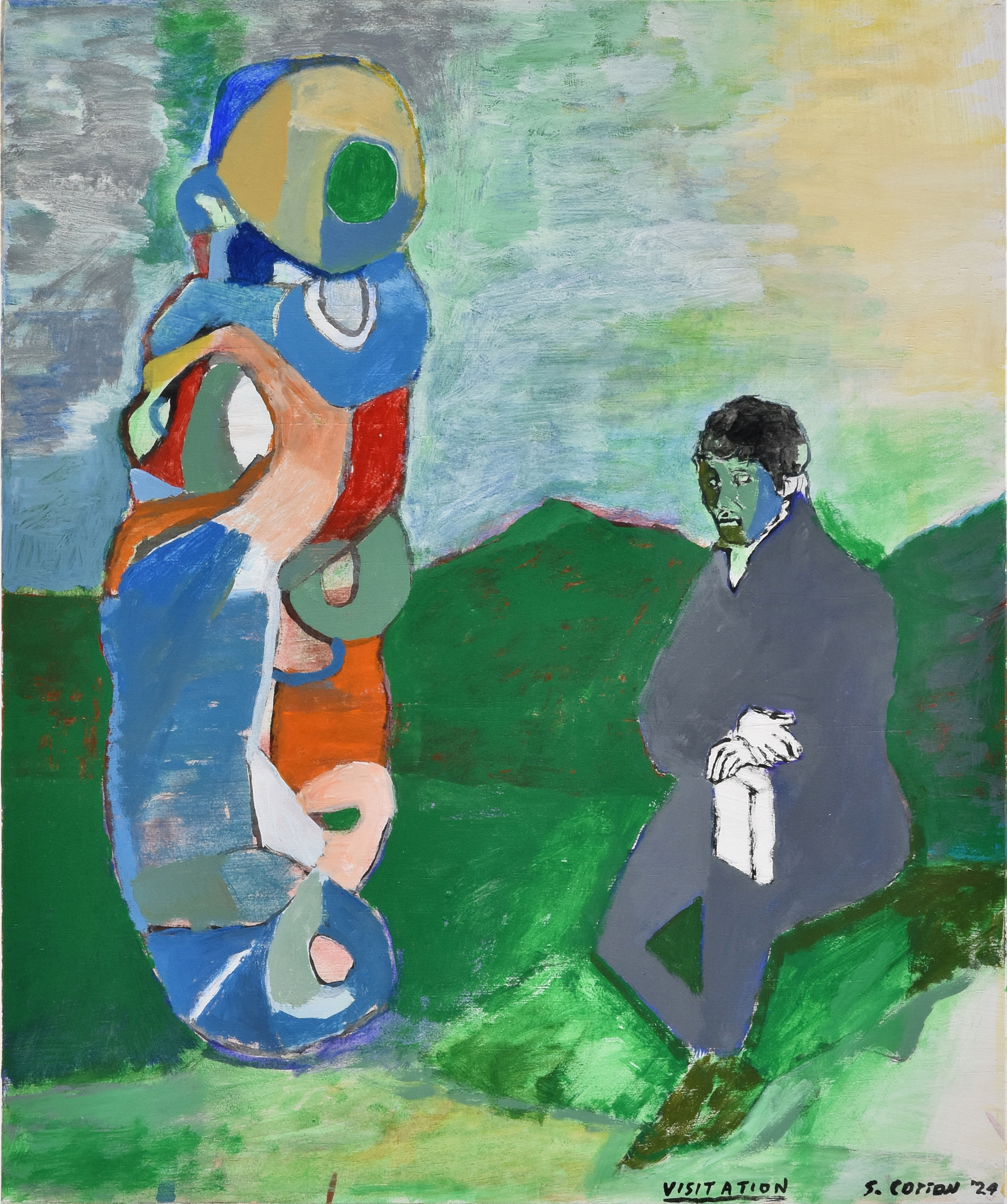
The Visitation, Shane Cotton, 2024
Tears. James Elkin’s book, as the title suggests, is a exploration of tears, on how art can prompt and promote feeling. Every now and then I walk up the hill to Michael’s studio and find myself in a state of awe, astonishment, wonder. I am not weeping but I am experiencing the electric fields of looking, contemplation, uplift.
Standing in Shane Cotton’s new show is a similar experience. I am not standing here as an art critic or reviewer, with my back catalogues of university studies, but as a poet. As a poet who sees writing as an open field of connections, possibilities, travels, techniques, innovations, traditions, conversations, challenges, protest, reverie, ideas, memory, experience, heart. I often ask poets which words matter as they write and, for me, the two I hold close, are connections and heart. I savour poetry that has heart, that forges myriad connections.
I also bring these two words, heart and connection, to art that catches me, and Shane’s sublime exhibition does exactly that. I feel these paintings like I feel a poem. The exhibition is a little different from his previous shows, but there are echoes, bridges, vital links. For me, this is art of entwinement; from personal traces to public narratives, intimate revelations to global concerns. Motifs, landscapes, people.
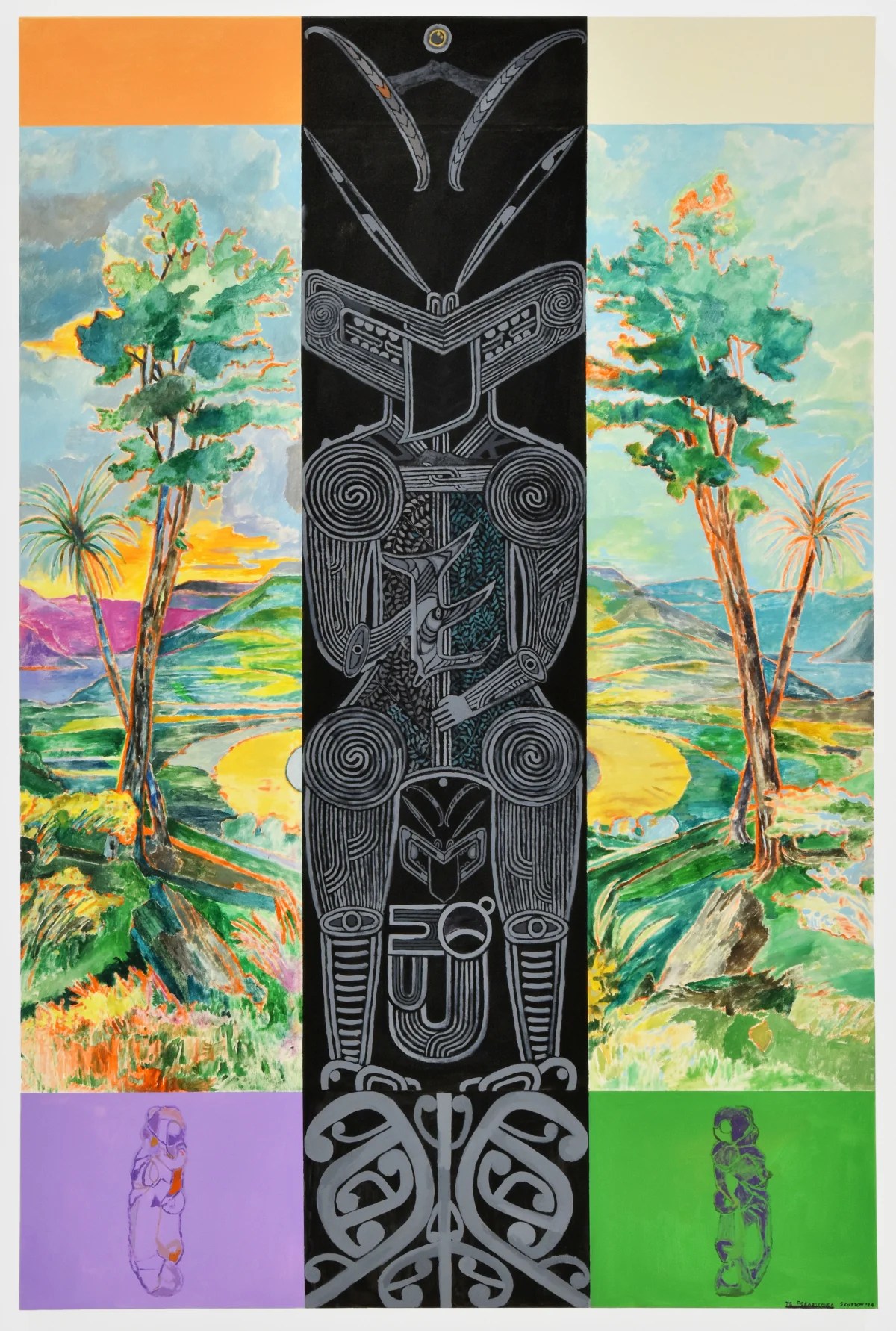
I begin with colour (Shane uses acrylic on board or linen), just as I might begin with the musicality of a poem. Not that there is ever a single formula for reading or viewing. Even on the website Shane’s use of colour strikes surprisingly, invigoratingly. It is scintillating, sheening, off-real, hyper-real. Think of how a piece of music might set you tingling, that is what colour can do. It generates colour hum, vibrations, psychological rhythms . . . let’s say vibes. A degree of word muteness, embedded in a moment of image trance. And Shane’s use of colour has edge, suspension, harmonics, it both elates and unsettles.
Narrative. After colour you might enter narrative. Each work carries story, close to the surface, deep set, woven, threaded, refracting, colliding, Indigenous, European, inhabited by ancestral figures. Personal. Intimate. The titles of the paintings underline the narrative scope. For example: ‘Up the Creek’, ‘Internal Visitor’, ‘The Will of the Devil’, The Laughing Tree’, ‘Sunset Gate’, ‘Rahiri’s Light’. I recommend reading Anthony Byrt’s terrific accompanying essay as it opens up the narrative richness, from colonial collisions, Ngāpuhi ancestors, the foregrounding of whakapapa, metaphorical possibilities, slippages, hybridity, visual and thematic chords. I see the exhibition as planting roots and tendrils in both new and old ground, navigating how and why we tell stories, have told stories, and must continue to tell stories in whatever form.
Movement. Shane’s art generates incredible movement. The figure painted in contemplation, walking or meditation renders me still, for an exquisite pause, until the prolonged moment slips and shifts into an acute awareness of body breath, heart beat, light, darkness, and again light.
On so many levels I am weeping. And in this catastrophic time, at home and abroad, with an inherited and ongoing smash of cruelty and greed, to breathe in strength and fragility, to spy anchor and exploration, is self fortification. It’s an aversion to explication. The way art and poetry can reside within and beyond framings. The way art and poetry are nourished by risk taking and by human care. And for me, there’s the vital impulse of never letting go of heart or a need to connect.
It feels like a miracle I could stand in the heart of this show, feel these paintings, take them home to view and revisit in my head gallery over the coming weeks.
Te Pokatūpanga, Shane Cotton, 2024
Shane Cotton (Ngā Puhi, Ngāti Rangi, Ngāti Hine and Te Uri Taniwha) is as an internationally renowned New Zealand artist, who has exhibited extensively in New Zealand and abroad. In 2008, he received a Laureate Award from the New Zealand Arts Foundation and, in 2012 was made an Officer of the New Zealand Order of Merit for services to the visual arts. Lives in Kororāreka, Russell.
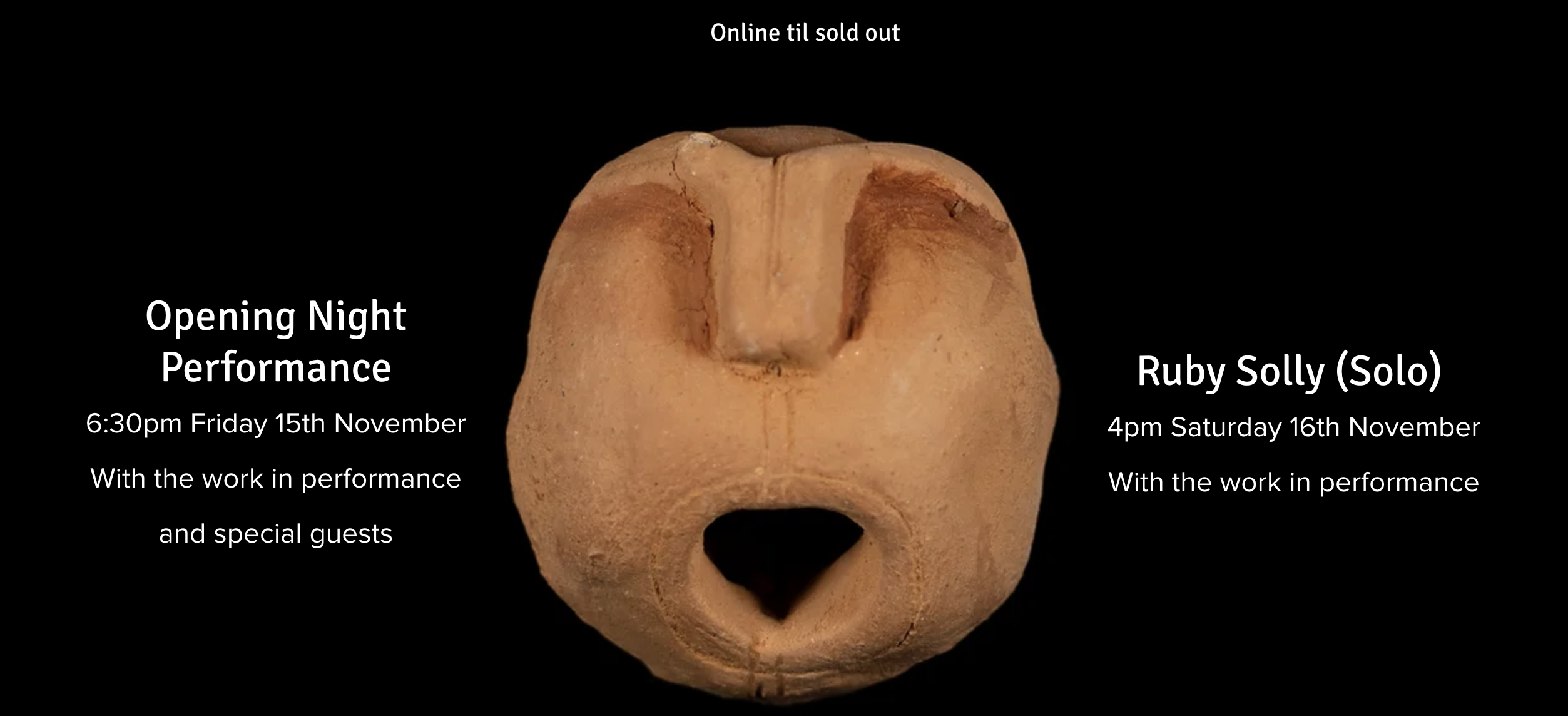
Urban Dream Brokerage, 17 Tory Street, and online November 15th – 17th
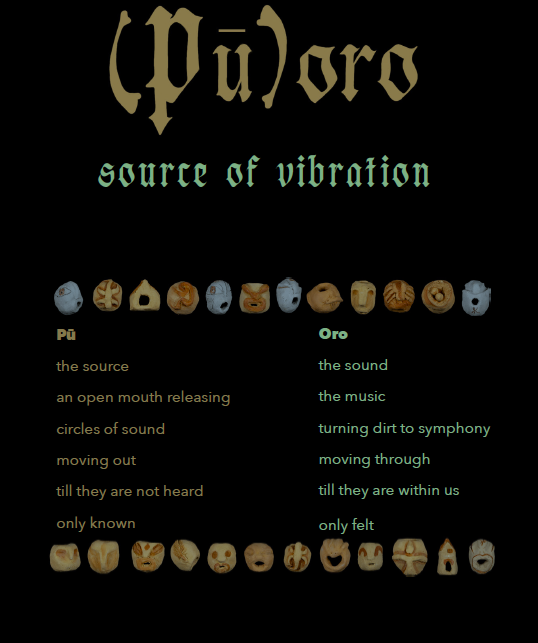
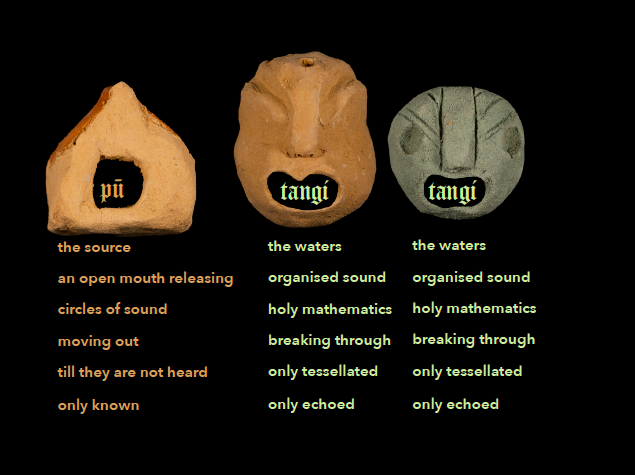
Poet and musician Ruby Solly has an exhibition coming up to help her fund raise to write a book version of her doctoral thesis on the use of taonga pūoro in hauora / health.
“Pūoro is often referred to as music, but really it is so much more. It is the origins of sound in all its forms, it is the resonation of sound through all things until it can no longer be heard, only felt. It is a continuous mihi oro to the song that began our world. It is so many things intertwining, so many sounds that have the potential to help, to heal, to uplift, and to release. It is a music that weaves together the ‘musical’ and what comes before, the primal melodies and rhythms of our survival as Māori. Our sounds hidden in the music, our reo purified to sound.”
The exhibition website. It includes a free download of the soundtrack which includes all 248 pūtangitangi from the exhibition.
Friday 15th November 10am-4pm Friday 15th November 6:30pm *Opening Night*Saturday 16th November 10am-4pmSunday 17th November 10am-4pm
Ruby Solly (Kāi Tahu, Waitaha, Kāti Māmoe) is a writer, musician and taonga pūoro practitioner living in Pōneke. She has been published in journals such as Landfall, Starling and Sport, among others. In 2020 she released her debut album, Pōneke, which looks at the soundscapes of Wellington’s past, present and future through the use of taonga pūoro, cello, and environmental sounds. She has recently completed a PhD in public health, focusing on the use of taonga pūoro in hauora Māori. Tōku Pāpā (THWUP, 2021) was her first book, and The Artist (THWUP, 2023) her second.
His mouth a small red hearth we huddle around: forest creatures drawn to its light and warmth.
When its suck and flicker at the breast stops we blow cool breath on the soft black coal of his head to make its wet spark dart again.
A scarlet trapdoor with tiny clapper that knocks and knocks at our dreams and enters,
his mouth springs open like the lid of a surprise to loosen translucent birthday balloons of
Ah, ah. I, I.
We stand here and watch them rise; the night crowds at fireworks make of our own mouths a kind of mirror:
Oh. Oh. You.
Emma Neale from Spark, Steele Roberts, 2008
Over the coming months, the Monday Poem spot will include poetry that has stuck to me over time, poems that I’ve loved for all kinds of reasons.
I have a poetry room in my house and a poetry room in my head, both excellent places to go travelling. The room in my head stores poems and collections that have stuck with me, whether it is the subject matter, the craft, musicality, an unfolding and enduring sense of awe and wonder. A visiting poet recently admitted (on the radio) they disliked the word ‘inspire’. I dug my heels in, and decided I like a word that evokes an intake of breath, an outtake of creativity. I guess that is what happens when I read poems I love, that delicious intake of breath and that creative trigger. More than anything, heart is always there.
Emma Neale’s poetry collections have struck multiple chords with me – so am delighted her new collection is to be launched on November 14th. A very happy coincidence indeed. So much to admire and celebrate in Emma’s writing. I am drawn into the exquisite craft, poetic rhythms, acute observations, miniature narratives. Her poems are rich in heart, lithe in movement between the domestic and the imagined, the past and the present, personal threads and political challenges. Love is the key.
I picked ‘Newborn’ to go in Dear Heart: 150 New Zealand Love Poems (2012) because the poem catches a maternal moment so perfectly, so surprisingly. The poem exemplifies Emma’s ability to layer a poem like an artichoke, to offer it to the reader to peal back and delight in each petal, and on each reading, take a slightly different route to reach a state of reading wonder. How I love this poem. This heart. Ah.
Emma Neale is the author of six novels, seven collections of poetry, and a collection of short stories. Her sixth novel, Billy Bird (2016) was short-listed for the Acorn Prize at the Ockham New Zealand Book Awards and long-listed for the Dublin International Literary Award. Emma has a PhD in English Literature from University College, London and has received numerous literary fellowships, residencies and awards, including the Lauris Edmond Memorial Award for a Distinguished Contribution to New Zealand Poetry 2020. Her novel Fosterling (Penguin Random House, 2011) is currently in script development with Sandy Lane Productions, under the title Skin.
Emma’s first collection of short stories, The Pink Jumpsuit (Quentin Wilson Publishing, 2021) was long-listed for the Acorn Prize at the Ockham New Zealand Book Awards. Her short story, ‘Hitch’, was one of the top ten winners in the Fish International Short Story Prize 2023 and her poem ‘A David Austin Rose’ won the Burns Poetry Competition 2023-4. Her flash fiction ‘Drunks’ was shortlisted in the Cambridge Short Story Prize 2024. The mother of two children, Emma lives in Ōtepoti/Dunedin, Aotearoa/New Zealand, where she works as an editor. Her most recent book of poems is Liar, Liar, Lick, Spit (due out from Otago University Press in November 2024).
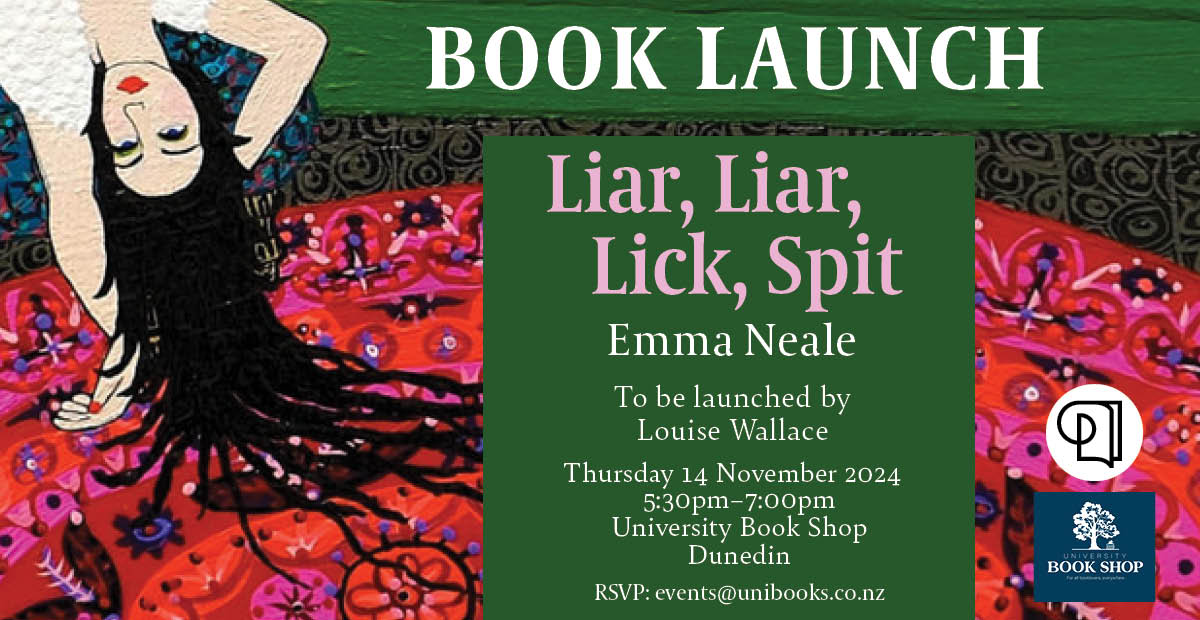
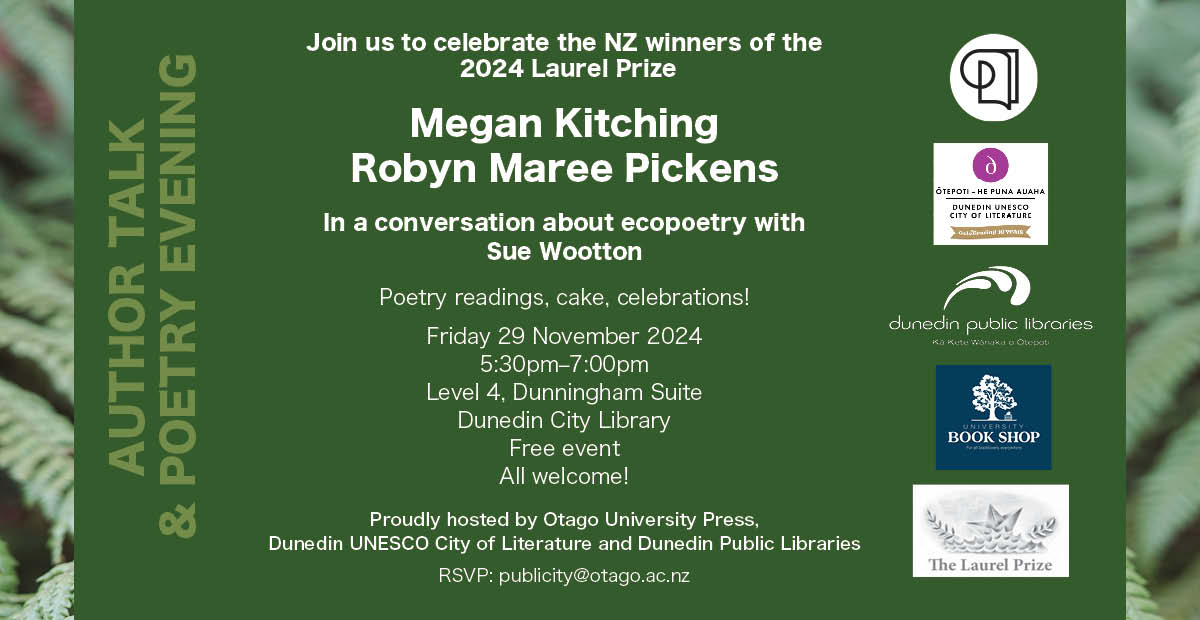
Emma Neale, University Book Shop Otago and Otago University Press warmly invite you to the launch of Liar, Liar, Lick, Spit, the new poetry collection by Emma Neale. To be launched by Louise Wallace.
5:30pm–7:00pm Thursday 14 November 2024 University Book Shop Otago Dunedin All welcome! Please RSVP to events@unibooks.co.nz for catering purposes
Fibs, porkies, little white lies, absolute whoppers and criminal evasions: the ways we can deceive each other are legion.
Liar, Liar, Lick, Spit, the new collection by Ōtepoti poet and writer Emma Neale, is fascinated by our doubleness. Prompted by the rich implications in a line from Joseph Brodsky — ‘The real history of consciousness starts with one’s first lie’ — it combines a personal memoir of childhood lies with an exploration of wider social deceptions.
From the unwitting tricks our minds play, to the mischievous pinch of literary pastiche; from the corruptions of imperialism or abuse, to the dreams and stories we weave for our own survival, these poems catalogue scenes that seem to suggest our species could be named for its subterfuge as much as for its wisdom. Yet at the core of the collection are also some tenets to hold to: deep bonds of love; the renewal children offer; a hunger for social justice; and the sharp reality that nature presents us with, if we are willing to look.
Emma Neale is a novelist and poet. Liar, Liar, Lick, Spit is her seventh poetry collection, following To the Occupant (Otago University Press, 2019). Recognition for her work includes the 2008 NZSA Janet Frame Memorial Award for Literature and the 2011 Kathleen Grattan Award for Poetry for The Truth Garden (Otago University Press, 2012). In 2020 Neale was awarded the Lauris Edmond Memorial Prize for a Distinguished Contribution to New Zealand Poetry. A former editor of Landfall, she lives in Ōtepoti Dunedin and works as a freelance editor for publishers in New Zealand and Australia.
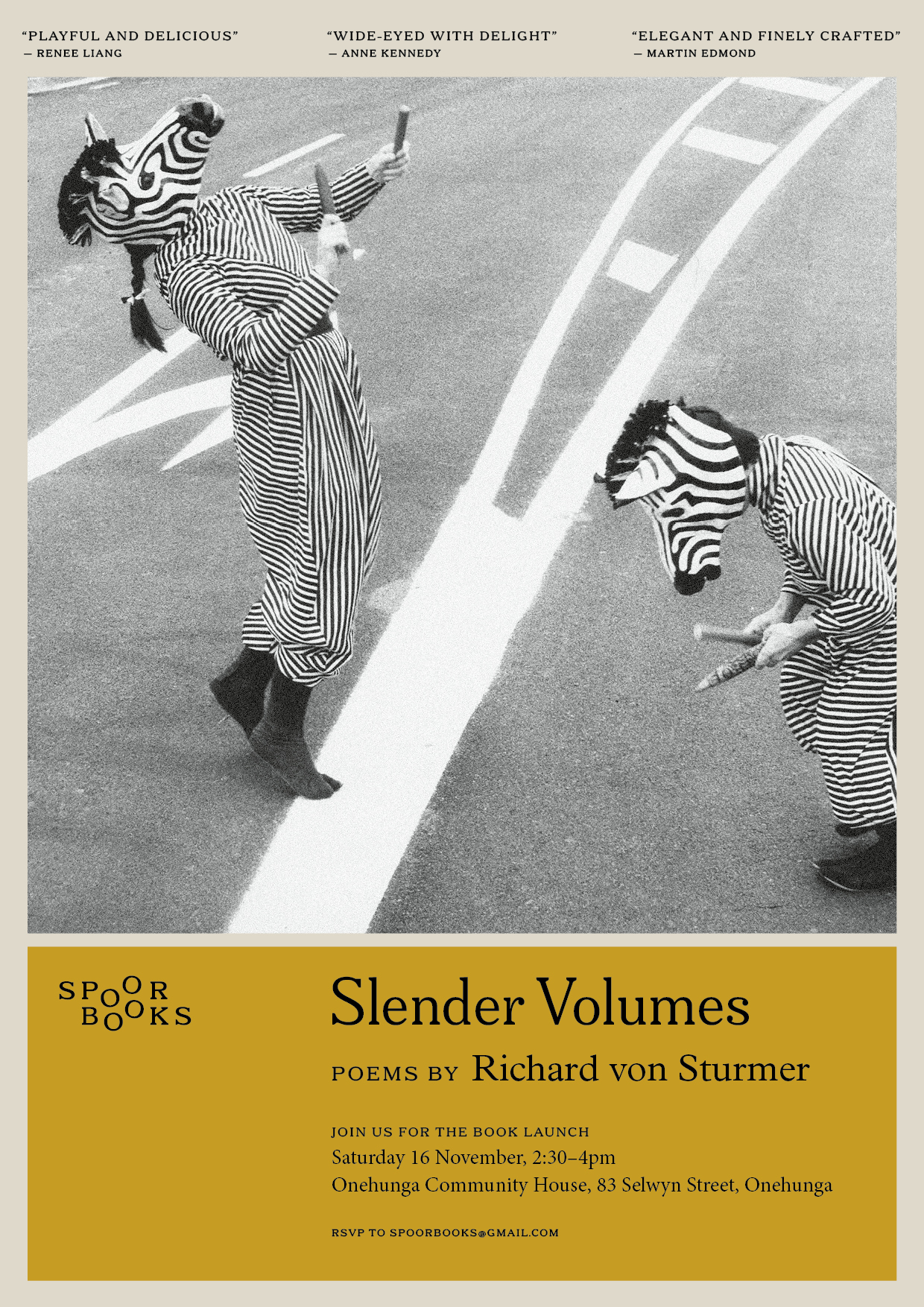
Join us for the launch of Slender Volumes by Richard von Sturmer, Saturday 16 November, 2:30–4pm at Onehunga Community House, 83 Selwyn Street, Onehunga. This is the first release from new independent publisher, Spoor Books.
Slender Volumes locates the cypress trees of Buddhist folklore in Onehunga and the teachings of the Zen tradition along its foreshore. Elaborating on kōans collected by poet-philosopher Eihei Dōgen, each poem fastens centuries and distances together to find insight in everyday things: seagulls on a handrail, insects drinking from a pan of water, sump oil glistening in a white bucket.
Richard von Sturmer is an artist-activist turned Zen teacher, whose lyrics for punk bands formed the soundtrack to the nationwide protests of the ’80s, including Blam Blam Blam’s “There is No Depression in New Zealand.”
Spoor Books is an independent publisher, a community-oriented platform, and a bookshop featuring radical publishers from India and elsewhere. Based in Titirangi, Aotearoa New Zealand, we aim to connect readers with left-field inquiries and non-Western imaginaries. Spoor Books is led by Balamohan Shingade and Erena Shingade.
at the pā nō rātou te mana nō ngā wāhine e mau panekoti ana
my father stands to speak
I am a needle of bone on my aunty’s knee I have cut my hair
handled gently I am a thatched weapon a flake of obsidian
something skirting the boards of the house as if it were property
what he says is like bread or a bruise
there is a rushing to the edges the scent of kawakawa releases into the dark-fleshed home
Hinemoana Baker from mātuhi | needle, Te Herenga Waka University Press, 2004
Over the coming months, the Monday Poem spot will include poetry that has stuck to me over time, poems that I’ve loved for all kinds of reasons. Poems that comfort or delight or challenge. Poems that strike the eye, ear, mind or heart.
I have loved this poem for twenty years, the first poem in Hinemoana’s debut collection, mātuhi | needle, a book that sings and weaves with aroha, agility and self navigation. I think of this poem welcoming us to the poetry that follows, and indeed, to the sublime collections that follow. Here, on the first page, whanua. Here in the first lines, wahine. Te reo Māori, the first breath. The healing balm of kawakawa, a wafting scent for speaker and reader. This layered poem is heart, the kind of vital heart that travels with you, as bridge, as anchor, lifeblood. Here the notes of an agile musician poet draw us into the chorded melodies to come, aural economy and aural richness, the sweet and sour intricacies of the world, the magnetic pull of story, memory, ancestors, home. Ah, such joy, returning to this poem and this collection, this poet.
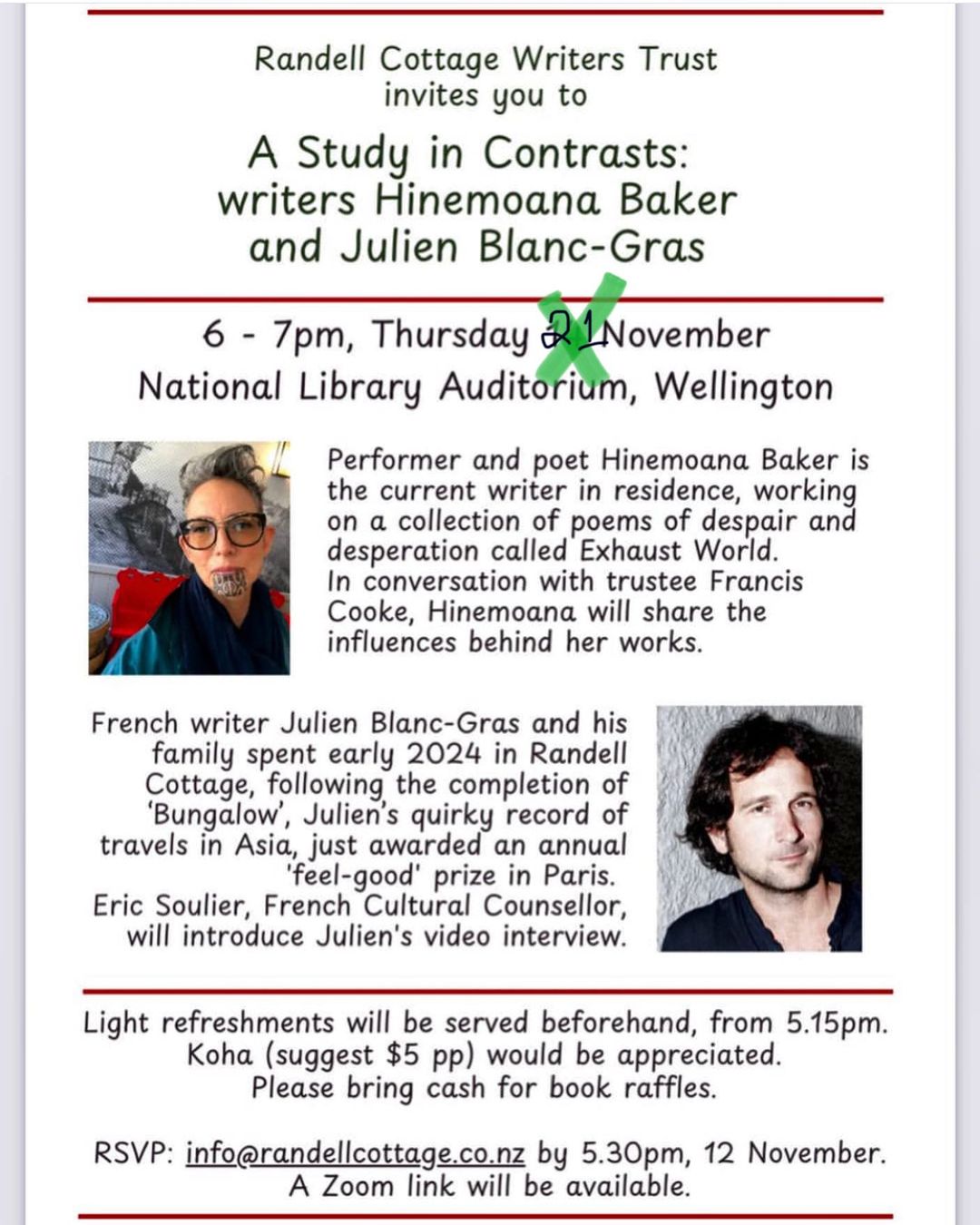
Poet and performer Hinemoana Baker traces her ancestry from Ngāti Raukawa, Ngāti Toa Rangatira, Te Āti Awa and Ngāi Tahu, as well as from England and Germany. Her four poetry collections, several original music albums and other sonic and written work have seen her on stages and pages in many countries around world for the last 25 years. With Maria McMillan, she co-edited Kaupapa: New Zealand Poets World Issues (2007). Her most recent poetry collection, Funkhaus (THWUP 2021) was shortlisted for the Ockham New Zealand Book Awards. It was published in German translation (AZUR Voland & Quist) in 2023 and in Polish (Wydawnictwo Ha!art) in July 2024.
Hinemoana was the Arts Queensland Poet in Residence (2009); one of thirty-eight writers in residence at the University of Iowa International Writing Programme (2010); the writer in residence at Victoria University in Wellington (2014); the Creative New Zealand Berlin Writer in Residence (2016). She is currently Randell Cottage Trust’s writer in residence at the historic homestead at the base of Ahumairangi in Te Whanga-nui-a-Tara.

 NZ Poetry Shelf