
Some thoughts on Rilke’s ‘Panther‘
Rainer Maria Rilke, a young Czech-German poet, moved to Paris in 1902. He worked there for a while as the great sculptor Auguste Rodin’s secretary. It was a difficult time for Rilke, a time he later tried to recreate in his autobiographical novel The Notebooks of Malte Laurids Brigge., about a Danish student adrift in the immense, alien city. Rilke, too, was dissatisfied with most of the work he’d done to date, but couldn’t yet settle on a new direction for his poetry.
Paris, in the early 1900s, was a hotbed of Modernism. Exposure to these new ideas had both a stimulating and a paralysing effect on Rilke. At Rodin’s atelier he met artists and writers of all kinds, but their own certainties only left him more in doubt.
One day (or so the story goes) he was bemoaning his fate to his boss Rodin – in particular his inability to write anything of substance. Rodin replied, “Why don’t you do what I do? When I get stuck on something, I go for a walk with my sketchbook, then just sit down and draw something. You should try it.”
“But I’m a poet,” complained Rilke. “Poets don’t do sketches. We wait for inspiration to come, then write a poem.” Rodin shrugged his shoulders. “Why wait? Go out and sketch something with words.”
What did he have to lose? Why not give it a go? Rilke, already – in his late twenties – a bit set in his ways, reluctantly agreed to go out with a pad and pencil, and try to find something to describe.
Eventually he found his way into the Jardin des Plantes, the zoological gardens. The first cage he sat down in front of held a panther. This was the result:
Der Panther
The Panther
Im Jardin des Plantes, Paris
In the Botanical Gardens, Paris
Sein Blick ist vom Vorübergehn der Stäbe
His gaze is from the passing of the bars
so müd geworden, daß er nichts mehr hält.
grown so tired, that it can hold no more.
Ihm ist, als ob es tausend Stäbe gäbe
It seems to him, as if there were a thousand bars
und hinter tausend Stäben keine Welt.
and behind the thousand bars no world.
Der weiche Gang geschmeidig starker Schritte,
The soft passing of supple strong strides
der sich im allerkleinsten Kreise dreht,
which draw him in the smallest of circles
ist wie ein Tanz von Kraft um eine Mitte,
is like a dance of might around a centre
in der betäubt ein großer Wille steht.
in which a great will stands stunned.
Nur manchmal schiebt der Vorhang der Pupille
Only sometimes does the curtain of the pupil
sich lautlos auf –. Dann geht ein Bild hinein,
lift itself silently – then a picture enters,
geht durch der Glieder angespannte Stille –
passes through the tense stillness of the limbs –
und hört im Herzen auf zu sein.
and comes to an end in the heart.
Rainer Maria Rilke, 1903
[literal version: Jack Ross]
It may well be the most famous poem Rilke ever wrote. The intensity with which he described the panther’s frustration at being locked up in such a narrow space, with no possible escape, pacing round and round forever, must surely have had something in it of his own feelings at being penned in a foreign city, unable to write, unable to form real connections, at a complete loss.
After that, he went out every day and wrote down descriptions of what he saw. There was no more waiting at home for inspiration. The result, eventually, was a collection called simply Neue Gedichte [New Poems], which helped to revolutionise not only his own poetry, but European poetry in general.
But, through it all, that sense of imprisonment, of melancholy, of the need to escape from confinement still speaks through his poem. There are many translations of it, in many languages. Some reproduce the original rhymes and pentameter lines precisely; others take a freer approach: concentrating on what they themselves can draw from the poem, how it intersects with their own lives.
I, too, have been a stranger in a strange land, have felt that sense of loneliness, confinement, and loss. But the suffering of the Panther dwarfs all that, putting it in brutal perspective.
Here’s my own attempt to get across something of Rilke’s poem:
The Panther
in the Jardin des Plantes, Paris
His eyes have grown so tired of watching
bars they can’t see anything
beyond them bars a thousand bars
no world no rest outside him nothing
the narrow circle of his steps
carries him around again
dancing to the silent beat
that pins his will inside this pen
once in a while the pupils open
take a snapshot pass it through
the shuttered stillness of his body
to the heart it answers to
Jack Ross, 2026
Jack Ross’s latest book of short stories, Haunts, came out from Lasavia Publishing in 2024. A new poetry collection, Tesseract, is due out later this year. He lives with his wife, crafter and art-writer Bronwyn Lloyd, in in Tāmaki Makaurau Auckland.
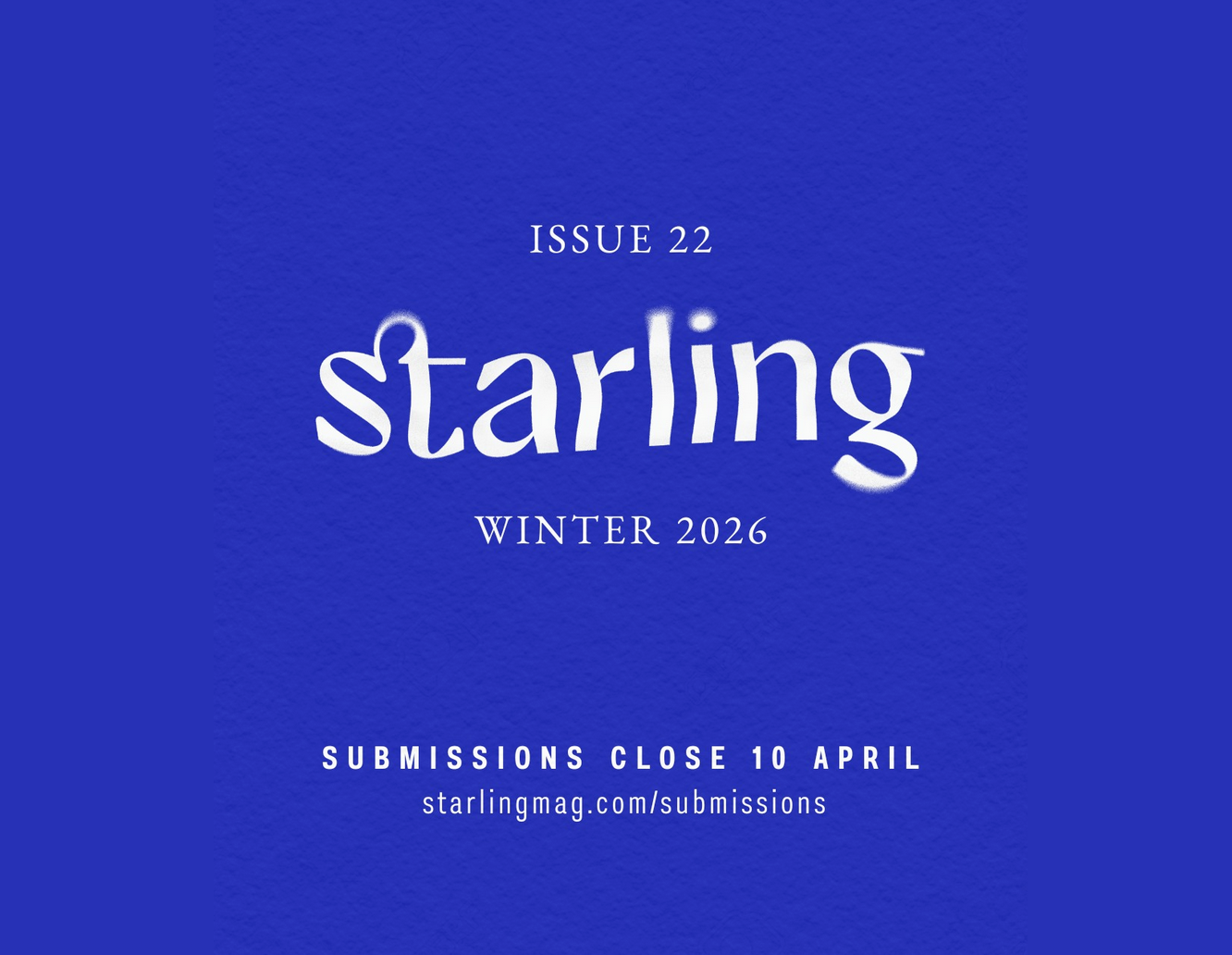
 If you’re an Aotearoa writer under the age of 25, we would love to hear from you.
 Submissions close Friday 10 April. Further detail around how to submit can be found

 NZ Poetry Shelf