Scorpio Books and Te Herenga Waka University Press warmly welcome you to an author talk featuring Harry Ricketts in conversation with Erik Kennedy. This author talk comes on the eve of publication day for Harry’s new poetry collection Bonfires on the Ice. Pre-order your copy today!
All welcome, this is a free event. No RSVP required as this event is not catered.
Harry Ricketts is a poet and literary scholar and has published around 30 books. He has lived in Wellington, Aotearoa New Zealand, since 1981. Until his retirement in 2022, he was a professor in the English Programme at Te Herenga Waka—Victoria University of Wellington. His books include the internationally acclaimed The Unforgiving Minute: A Life of Rudyard Kipling (1999) and Strange Meetings: The Lives of the Poets of the Great War (2010). His recent books include the poetry collections Winter Eyes (2018) and Selected Poems (2021), and the memoir First Things (2024). With historian David Kynaston, he is the co-author of the award-winning Richie Benaud’s Blue Suede Shoes: The Story of an Ashes Classic (Bloomsbury, 2024).
Erik Kennedy is the author of the Ockham-shortlisted There’s No Place Like the Internet In Springtime (2018), Another Beautiful Day Indoors (2022), and Sick Power Trip (2025), launched at Scorpio Books earlier this year! Originally from New Jersey, he lives in Ōtautahi Christchurch.
What an incredible lineup for this must-see annual event. I am currently loving Tracy Farr’s novel, am big fan of Fiona Kidman and Emma Neale’s most recent poetry collections and am itching to get a copy of Frankie McMillan and Josie Shaprio’s’s new books. Oh and loved Sonya Wilson’s novels.
Sunday 2 November 2025, 1pm to 5.30pm Raye Freedman Arts Theatre, Epsom Girls Grammar
1pm Tracy Farr – Wonderland In a ’wonder-ful’ leap of imagination, this glorious novel brings Marie Curie to Aotearoa to recuperate with a joyous, loving family, including 3 delightful little girls. Utterly original & life-affirming, this book, like radium, shines like sunlight.
1.20 Nadine Hura (Ngāti Hine, Ngāpuhi, Pakeha) – Slowing the Sun These wise, enlightening essays explore climate change through the lens of whakapapa, highlighting the intersectional impacts on whānau, communities & the environment. In beautiful writing, they demonstrate the urgent need for an anti-colonial action that affirms & activates indigenous knowledge, Te Tiriti o Waitangi & te reo Māori.
1.40 Vanessa Croft – Where In All the World This epic saga based on real events moves from Aotearoa to England to Africa, capturing the language, style, & mores of the Victorian era. Harriet is a bold and determined young woman whose marriage to a charismatic but controlling adventurer soon reveals a darker truth, & forces her to fight for her own voice beneath the shadow of Empire.
2pm Emma Neale – Liar, Liar, Lick, Spit Winner of the 2025 Ockham NZ Book Award for Poetry, these clever poems explore subterfuge, from little fibs to porkies to whoppers to serious social & political deceptions. A novelist & freelance editor, Emma also writes poetry that is both tender & astute.
2.20 Josie Shapiro – Good Things Come and GoThis poignant, redemptive second novel, deals with grief & regret, friendship & betrayal, lost dreams & ambitions, but also moments of bliss & risk-taking & renewal. Subtle, brilliant writing from the author of Every Is Beautiful and Everything Hurts.
2.40 Kirsty Senior & Sophie Gilmour – Fatimas From our ‘local’ Middle-Eastern just down Ponsonby Road, more than 100 recipes from 30 years of business. For any day of the week & for cooks of all skill levels, this gorgeous book will inspire you with zesty flavours & fill you with satisfying sighs!
3pm Afternoon Tea & book signing in the foyer. With lammingtons, melting moments, savouries & more!
3.50 Kaarina Parker – FulviaTake a lively chariot ride to Ancient Rome to meet vivid, audacious Fulvia who dared to take on the men at their own power games. The parallels with many of the maniacal manipulating male leaders of today are illuminating!
4.10 Lucy O’Hagan – Everything But the Medicine: A Doctor’s Tale In her long career as a GP Lucy has come to understand that consulations involve a clash between biomedical science & human experiences. Tackling health inequity requires us to understand peoples’ stories first. Lucy works in a Pasifika Māori practice in Porirua & this superb memoir is candid, wise & moving.
4.30 Frankie McMillan – Eddie Sparkle’s Bridal Taxi These dextrous, inventive prose poems & small stories explore the unusual in the everyday with curiosity & sharp insight. From angels & thieves, to drownings & infidelities, to reclusive aunts & nuclear warfare, Frankie reveals the absurdity of life, with all its brokenness & beauty.
4.50 Sonya Wilson – Spark Hunter & The Secret Green In the densely beautiful bush of Fiordland, Nissa & Tama urgently need to assist the Sparks to preserve their precious natural environment. For ages 9 to 90, these enthralling novels are written by the organiser of the brilliant charity Kiwi Christmas Books.
5.30 Dame Fiona Kidman – The Midnight Plane: Selected and new poems What an honour to celebrate the long, illustrious writing life of this remarkable woman, in the same year as the film about her, The House Within, has been released. Poet, novelist, activist, feminist, her contribution to the literature of Aotearoa and to our lives as women, is enormous. Her writing ‘has the power to shake the heart’.
5.30 Authors signing in the foyer
Warm thanks to: Allen & Unwin, Bateman Books, Beatnik Books, Bridget Williams Books, Canterbury University Press, Cuba Press, Echo Press, Massey University Press, Otago University Press
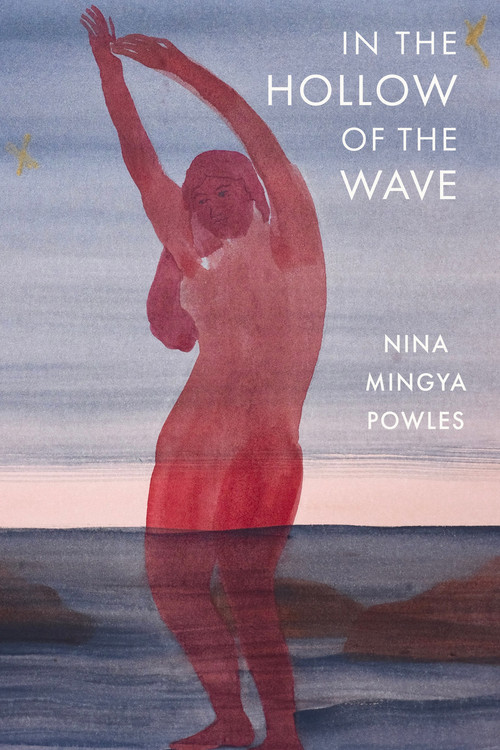
In the Hollow of the Wave, Nina Mingya Powles Auckland University Press, 2025 first published, Nine Arches Press, UK, 2025
handiwork
People asked me where I learned and I said I taught myself the slow work of making.
But memory is a house with scraped white walls. I step inside and choose what to take, what to leave behind.
My hands feel their way through the gathering, the careful pulling apart.
The work of particular poets can strike you so deeply, so resonantly. Poets who produce collections that satisfy your hunger to read so keenly, with books that take up residency in both your mental and physical poetry rooms. Nina Mingya Powles has been that kind of poet for me, from her terrific debut collection Magnolia 木蘭, through her various other published offerings. Her new collection, In the Hollow of the Wave, is one of the most gorgeous poetry books I have held this year – a sweet combination of heavenly paper stock, generous size, lovingly-tended internal design and vital breathing room. Nina has also created textile works that add to the visual beauty and allure of the book.
Textile is a key word. I experience the book as multiple loomwork: a weaving of memory, experience, language, cottons and fabric. Weaving as a way of observing the world, feeling the world, observing the object, feeling the object, observing the past, feeling the past. It might be the sewing machine upon which her grandfather stitched quilts from garments belonging to her siblings, mother and grandmother. It might be a gown, a pleat, or a sheet of white paper or fabric.
And now, with In the Hollow of the Wave, the granddaughter is herself stitching quilts; inside the stitched poem the stitched cloth, and inside the stitched cloth the stitched poem. I experience contemplation pockets tucked with memory pleats, and inside memory pleats, I threads of slow contemplation: andante, largo, adagio.
The book title is borrowed from a line in Virginia Woolf’s To the Lighthouse. It gains its own life as Nina ponders Virginia’s use of orientalism and Kitsushika Hokusai’s woodblock print, ‘The Great Wave off Kanagawa’. The poem haunts, the hollow in the wave haunts, the recurrent pulse of existence and non-existence haunt. The poem is skin-prickling reading:
beyond the frame I saw a distant city / a place I used to know / where rain falls in the foreground / all day and all night / I took out my sketchbook / sharpened my pencil / drew a line across the sea / asked the mountain / what does it mean to see and be unseen / it did not answer
So many echoes across the collection. So many threads to follow and pause on(slip stitch, ladder stitch, cross stitch). There is the scent of plants and plantings, herbal remedies, the reminder of the women in poverty who stitched the garments we wear, the reflection of self in a stirred pan on the stove, the way dreaming seeps into making, the way the language, chores, hopes and the lives of women still matter. The way poetry can be a way of asking questions.
Inside the hollow of a wave is a poem. And inside that poem is a book. A book such as this one. Stitched with aroha and luminous threads. I want you to read it for yourself and get absorbed in its beauty and craft. It has already found spots in my poetry rooms.
Nina Mingya Powles is a poet and writer from Aotearoa New Zealand, currently based in London. Her debut poetry collection, Magnolia 木蘭, was published in New Zealand, the UK and the US, and was a finalist in the Felix Dennis Prize for Best First Collection and the Ockham New Zealand Book Awards. Powles won the inaugural Women Poets’ Prize in 2018 and the inaugural Nan Shepherd Prize for under-represented nature writers in 2019. Her resulting book of essays Small Bodies of Water was published in 2021 by Canongate. She has also published a short food memoir, Tiny Moons: A Year of Eating in Shanghai (The Emma Press, 2020).]
The verb to be is not, in Māori. How, then, would we translate that soliloquy?
We had the choice. We said not. Is this why they (me) tried so hard to
kill us (we)? We need be not. We live, which is a dark disguise
a river which itself swims. Beauty which flies into nets and tropes.
This is a warning and we all hear it: our wheels rumble and hum high strung
before we veer (volcanic) left or right towards the grimacing witness.
*
Look at me posing like this! Like that! A mother in a tizz with salt sea hair struggles not to stray.
Later a bodied wine will warm her glass and mine, the chamber of my voice, my rising
chest. Like mine her verbs and nouns resist. Her troubles, like the unforgiving
childgod, sometimes break the plates. Volcano in a fortification. Mirror in a mirror.
At any time at least one of us is looking straight ahead, no fraying, no strays. Look at me kneeling like this!
Look at me holding all fine things towards you! The deep blood beat of my music. Be, it sings. Be. Be.
Hinemoana Baker
Takatāpui poet and performer Hinemoana Baker traces her ancestry from Ngāti Raukawa-ki-te-Tonga, Ngāti Toa Rangatira, Te Āti Awa and Kāi Tahu, and from England and Germany. Her four poetry collections, several original music albums and other sonic and written work have seen her on stages and pages nationally and in many other countries around world in the last 25 years. Her most recent poetry collection, ‘Funkhaus’ (THWUP 2021) was shortlisted for the Ockham New Zealand Book Awards, and has been translated into German and Polish. Having lived in Berlin for 9 years, Hinemoana has now returned home, and recently finished a term as Randell Cottage Trust’s 2024 writer in residence, living and writing at the historic homestead at the base of Te Ahumairangi (Thorndon) in Te-Whanga-nui-a-Tara.
Currently Hinemoana is working towards a Creative Writing doctorate at IIML (Te Herenga Waka Victoria University), for which she is writing a new collection called ‘Exhaust World’. As a long-time teacher and mentor for other writers, Hinemoana is also involved in facilitating poetry sessions for takatāpui and LGBTQI+ Māori writers, through Mana Tipua Trust in Ōtautahi. These sessions, called ‘Ruri Rongoā’, are also part of Hinemoana’s doctoral research, facilitating poetry wānanga as a form of rongoā, repair, solidarity and community. In this work she draws on the model of Te Whare Takatāpui, a framework created by Dr. Elizabeth Kerekere.
Welcome to the new Cafe Reading series on Poetry Shelf. Listening to poets read and talk poetry in cafe settings is a joy. To share a taste of this, I have invited some poets to read and talk poetry over the coming months. Enjoy!
Richard von Sturmer reads two tankas
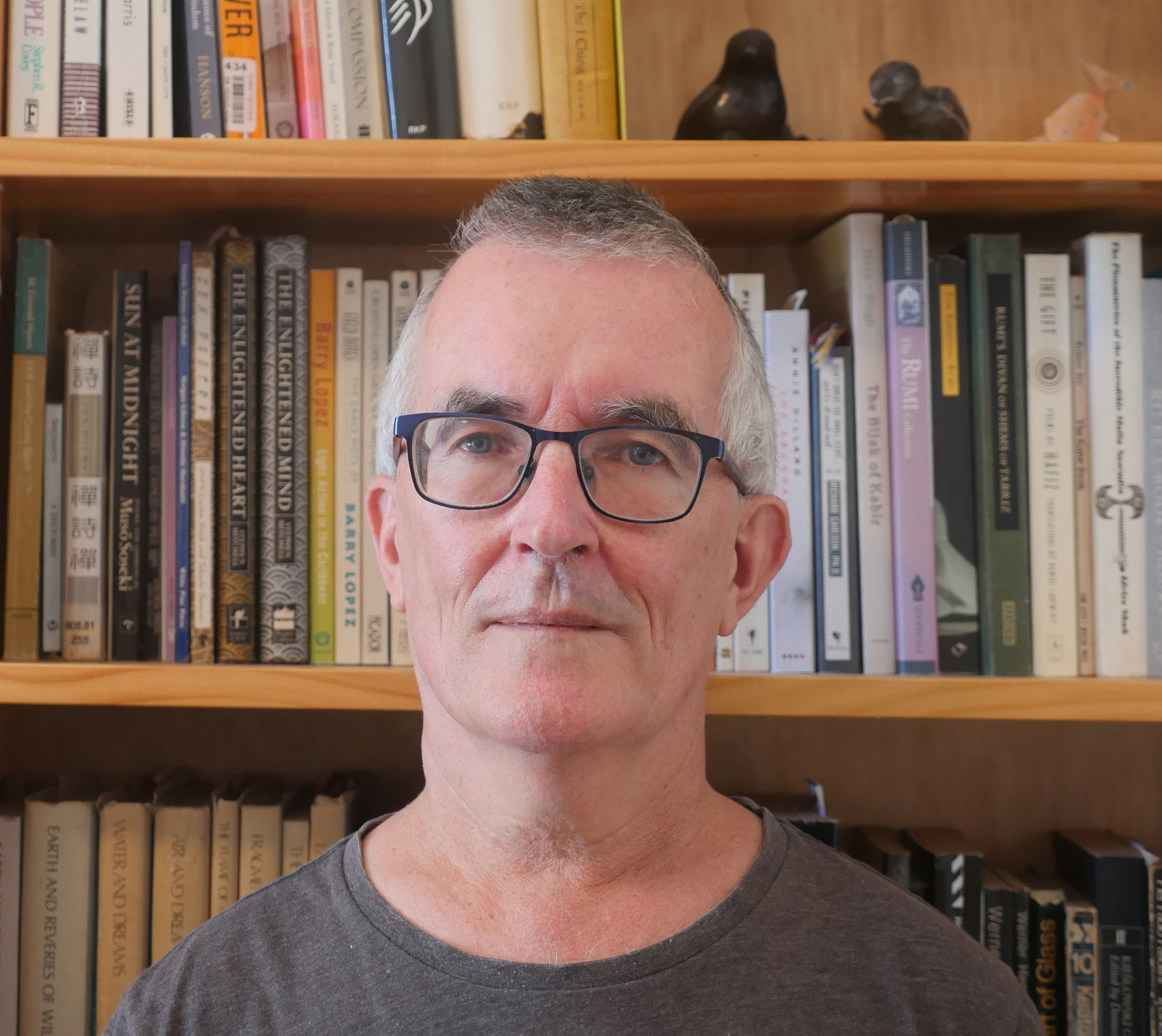
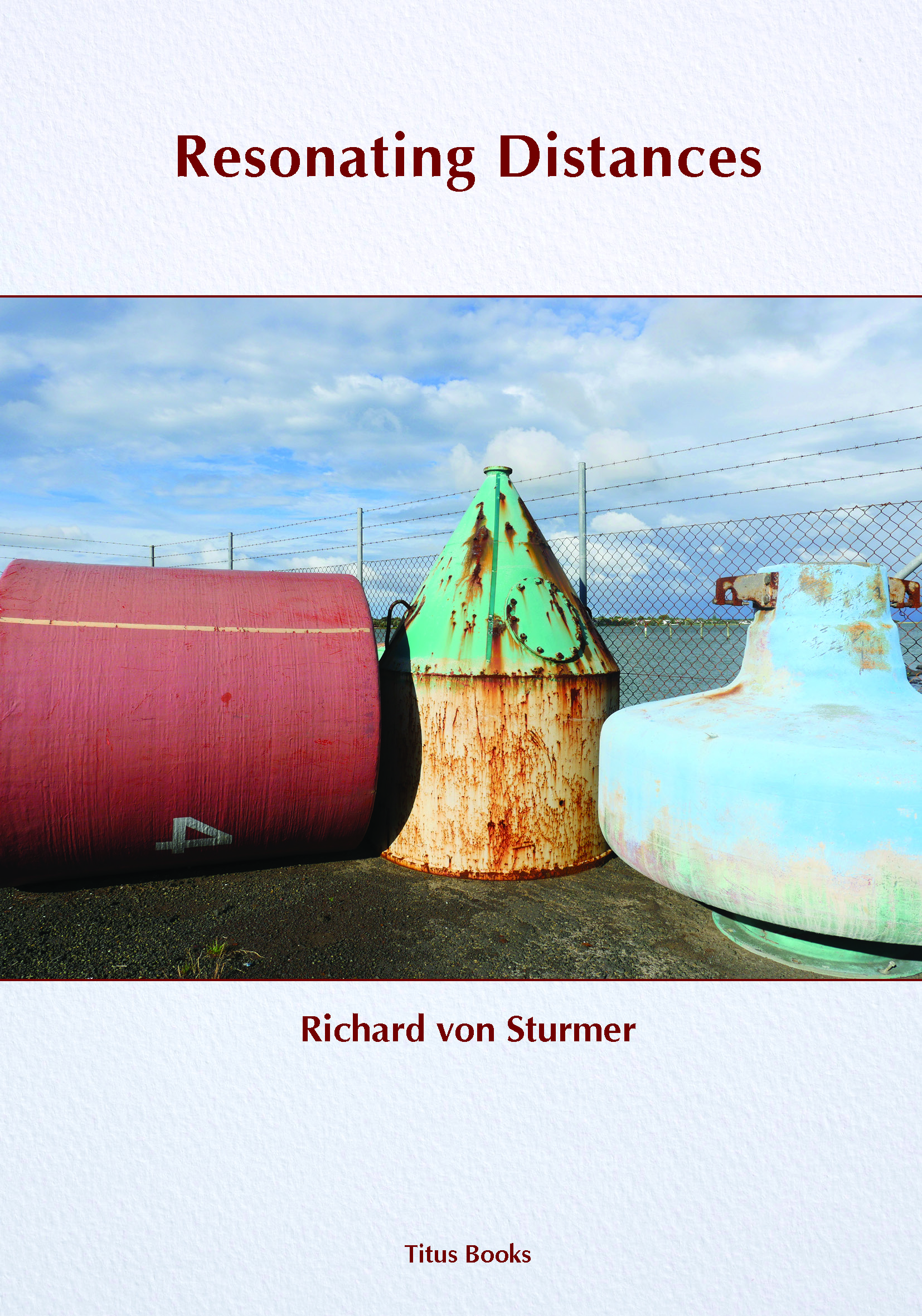
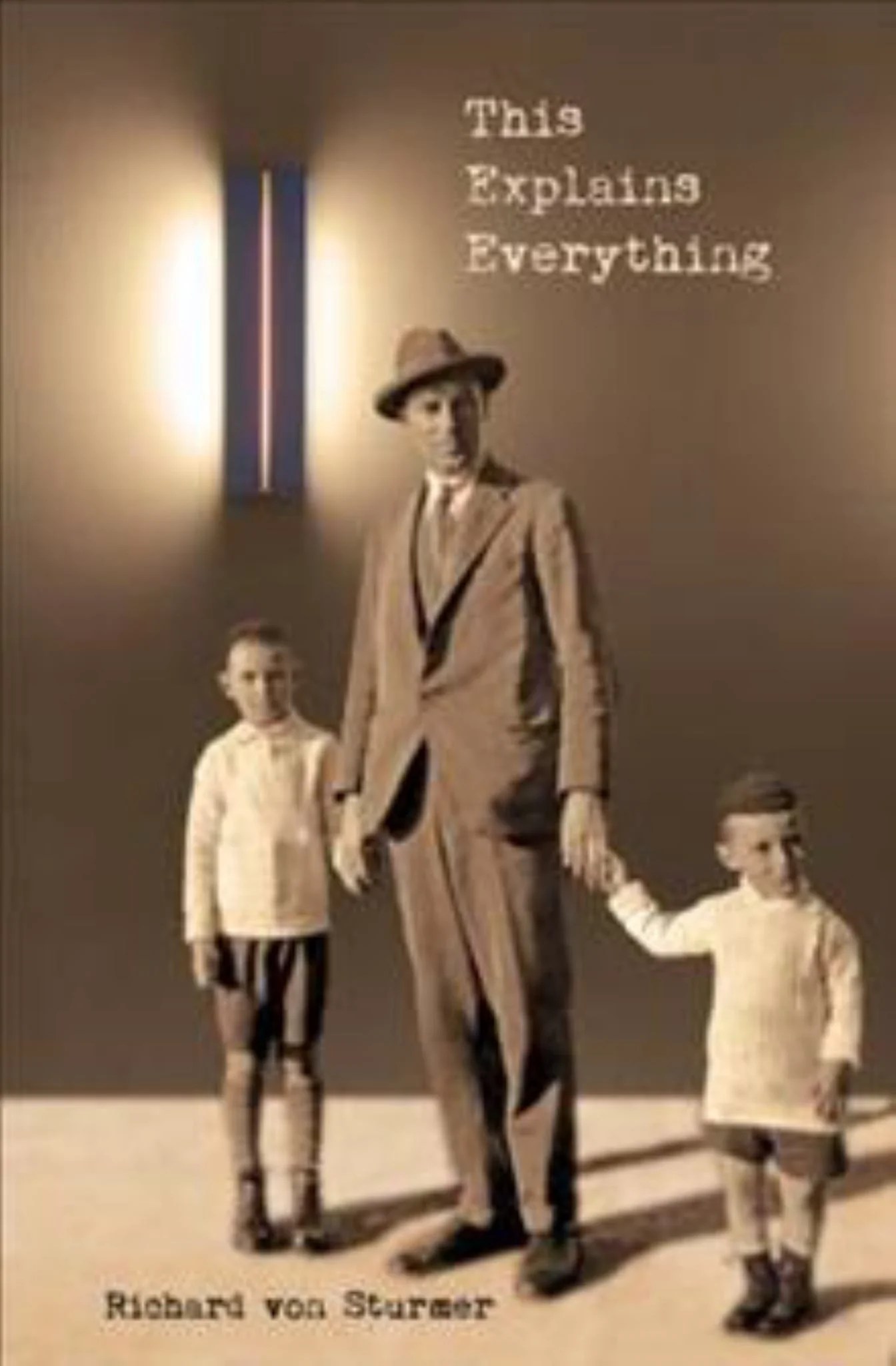
Richard von Sturmer is a New Zealand writer. He was born on Auckland’s North Shore in 1957. His recent works are the acclaimed memoir, This Explains Everything (Atuanui Press, 2016), Postcard Stories (Titus Books, 2019), and Resonating Distances (Titus Books, 2022).
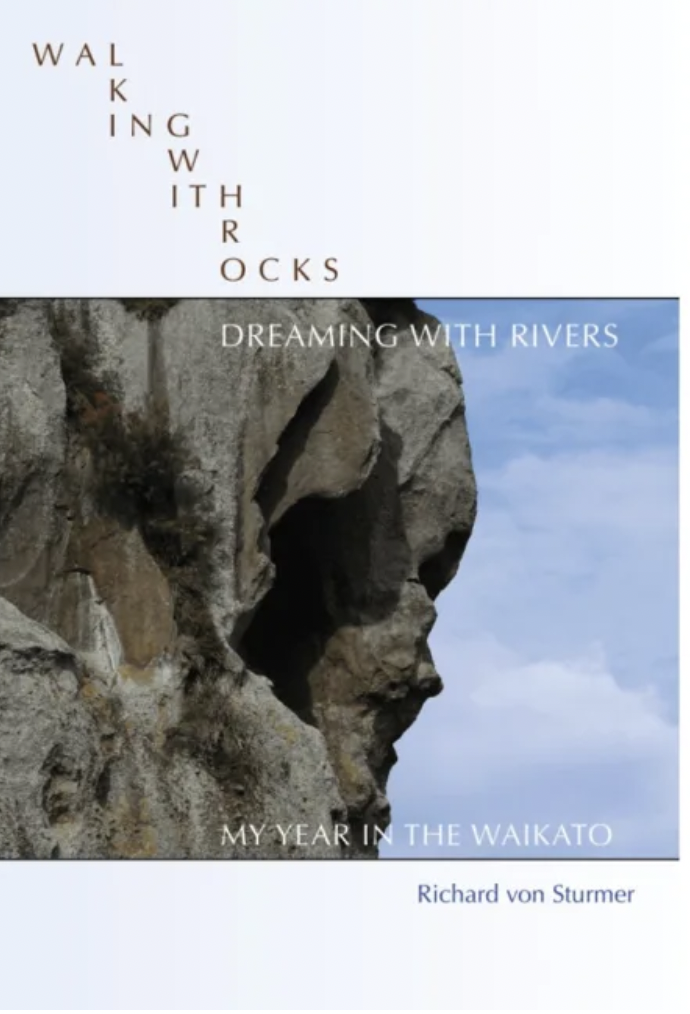
In 2020 he was the University of Waikato’s writer-in-residence. His book Walking with Rocks, Dreaming with Rivers: My Year in the Waikato (Titus Books, 2023) was written during his residency.
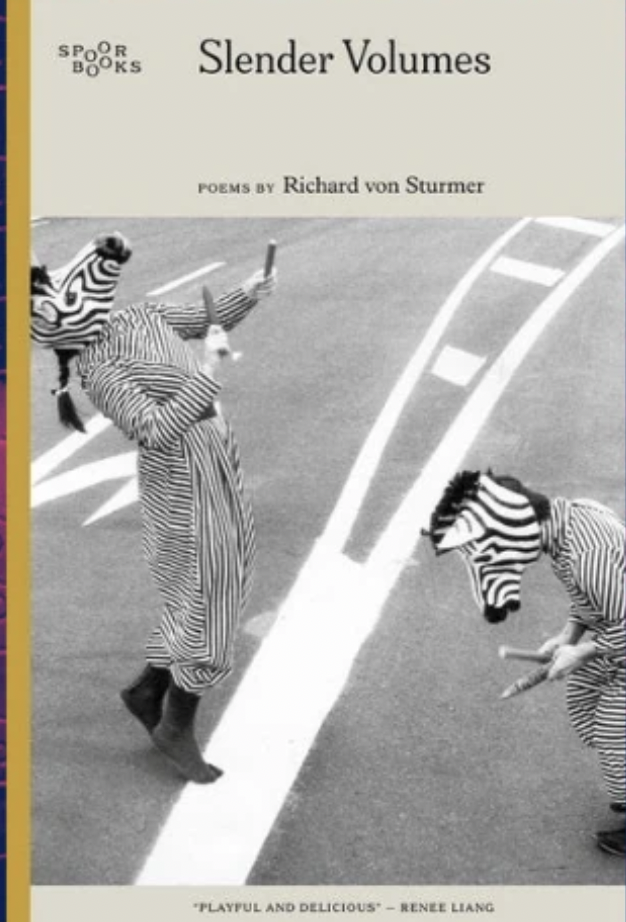
In 2025 his new collection of poetry, Slender Volumes (Spoor Books, 2024), was shortlisted for the Mary and Peter Biggs Award for Poetry at the 2025 Ockham Book Awards.
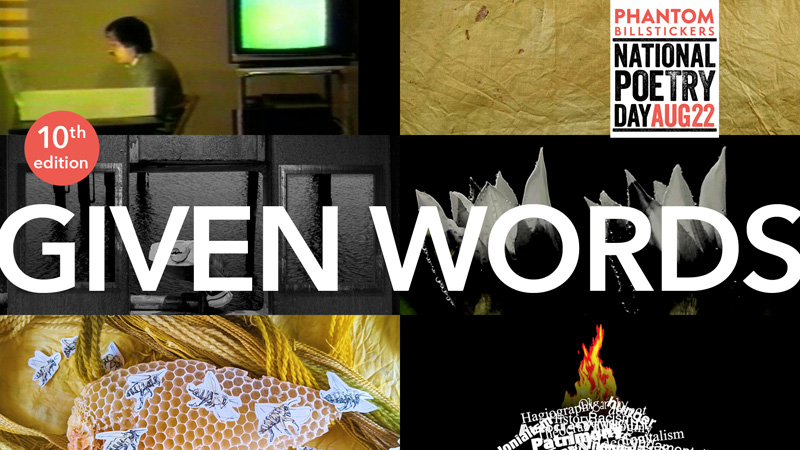
Given Words, established and curated by poet Charles Olsen for ten years, has been a regular feature of Phantom Billstickers National Poetry Day. After deliberating alongside Pat White and Sophia Wilson, Charles recently published the winning poems and a selection of special mentions in both the adults’ and under-16s’ categories. Over 160 poems were received this year, and the judges have chosen 64 to publish here on Given Words.
This year the ‘given words’ were supplied by five filmmakers: Ebba Jahn, Tom Konyves, Cindy Stockton Moore, Ian Gibbins and Colm Scully. Here are the five words: justice, endure, pair, lightfast, hold.
The winner of Best Poem is Sadie Yetton for her poem ‘Venus, Don’t You Laugh At Me ‘and the winner of Best Poem by Under-16s, for the second year running, is Miranda Yuan for her poem ‘The Menu’.
For this 10th edition, and because there were so many wonderful poems, the judges awarded Special Mentions in the adults category to Gail Zing for her poem ‘Lightfast’, Cindy Kurukaanga for her poem ‘Nō Te Paruparu, Nō Te Purapura | Of the Mud, Of the Seed’, and to Renee Liang for her poem ‘Pinhole’. In the under-16s category, Special Mentions go to Sabrina Li for her poem ‘Photos taken the day they said it was over’, Gia Beckett for her poem ‘My Purple Life!’, and Lily Richards for her poem ‘Thread of Reality’.
Congratulations to all on behalf of Given Words, The Cuba Press and Massey University Press. You can read the judges comments and all the winning poems on the Given Words website, but here are the two winning poems.
Venus, Don’t You Laugh At Me
Venus, don’t you laugh at me I’m your daughter, it appears you made a crooked one Stilted in manner, steadfast in mania Unjust in justice, your infinite amusement Venus, you birthed a brute You spat out a savage You knew I’d fall on the way of love Just as wolves fall on rabbits Making a mess of how I eat it; blood, bones, brain Clueless how to clean up after myself What have I ever been if not your doing? I was a child, then a child with a woman’s voice I was lightning, lightfast, then lightless I was a person, then somehow only parts of one But I’ve always been of your blood And you can’t bleed it out of me A creature is still a child if it claims to be A freak is due her worth if she endures Venus, I know why you laugh at me Because not feigning hilarity At your own incompetence is worse than being so Even with your back to me, we’re a pair of siamese souls Because this rabid thing resembles its mother And she wants you to hold her like you mean it Look at who you made Love it
Sadie Yetton Tāmaki Makaurau Auckland
The Menu
Tonight’s Special: The Final Feast
Appetizer Bread And circuses to entertain the masses. Elevated rations of what the poor had to endure. Olive A single fruit offered from the branch. Starvation is minimalism, and minimalism is art.
Main Lamb From the slaughter with flesh that tastes like still-warm blood. Pair it with red wine lightfast on the lips. Whose feet had juiced the grapes? Let’s raise a glass to justice.
Dessert Pomegranate Six seeds to hold you– sweet as the promise of love. Brûlée The world burns with a hint of orange.
Image: Poet Selina Tusitala Marsh. Photo by Mark Beatty, 2021.
Event by National Library of New Zealand Corner Molesworth and Aitken Streets, Thorndon, Wellington, New Zealand 6011 Duration: 2 hr
Eleven New Zealand Poets Laureate line up for poetry, with Fergus Barrowman as MC, in a key event for the National Library’s 60th birthday celebration.
A rare gathering of our most celebrated poet. Come along to a poetry reading featuring nearly all living New Zealand Poets Laureate.
It’s been almost 30 years since John Buck created the Te Mata Estate Winery Laureate Award and Bill Manhire became our first Laureate. Both will be there to support an outstanding line-up of poets: Elizabeth Smither, Jenny Bornholdt, Michele Leggott, Cilla McQueen, Ian Wedde, Karl Stead, Selina Tusitala Marsh, David Eggleton, Chris Tse, and Robert Sullivan.
Fergus Barrowman, publisher at Te Herenga Waka Victoria University Press, will MC the event. There will also be special readings to honour the late Vincent O’Sullivan and Brian Turner, shared by Vincent’s son Dominic and Brian’s partner, writer Jillian Sullivan.
This free, public event promises to be a highlight of Wellington’s poetry scene in 2025.
The winners of the 2025 Caselberg Trust International Poetry Prize have been announced. The competition is now in its fifteenth year, and this year attracted 150 poems from New Zealand, the USA and Germany. This year’s competition was judged by poet Robert Sullivan.
This year’s winner is Helen Williford-Lower from Te Matau-a-Māui (Hawkes Bay) for her poem “Tōku Kōhine o Waikouaiti”. Runner up is Ura TeĀta (Kuki Airani Māori, Mitiaro, Penhryn, Manihiki, Rakahanga, e Atiu, Ngāti Toa, Ngāti Maniapoto, Waikato Tainui, Ngāti Raukawa, Ngāpuhi hoki, Tahiti, Ra ‘iātea, Samoa, Malie) from Waitangirua, Porirua for her poem “Grammar is Right?”.
The winner receives $600 and a week’s stay at the Caselberg House. The runner up poet receives $300. The winning poem and Robert’s judge’s report will be published in October in Landfall 250 – Spring 2025, and subsequently on our Caselberg Trust website along with the runner up and Highly Commended poems.
The judge also recognised two poems with Highly Commended awards – ”The strength of water” by Gail Zing (Ōtautahi Christchurch), and ‘How to pop a bottle with another bottle’ by Jordan Hamel (e Tihi o Maru, Timaru).
In his judge’s report Mr Sullivan noted that “I’m delighted to report that “Tōku Kōhine o Waikouaiti” has won this year’s Caselberg Poetry prize. For those who do not read te reo Māori, this poem in six stanzas is a praise poem celebrating the speaker’s relationship with a young woman from Waikouaiti and her southern ancestry and the continuum of the indigenous frame of reference there.”
He went on further to say that Ms Williford-Lower’s poem “makes many allusions to the local knowledges of the land and its people including spiritual creatures associated with the whenua, its flora and coastline, and its pastoral landscape. It is both a love poem for an unnamed woman, and for that woman’s homeland. This love, the speaker seems to be saying, grows for the land through the young woman’s freely given unconditional love for both the speaker and the land.”
The Caselberg Trust would like to thank the University Bookshop (UBS) for its continued sponsorship of the Caselberg Trust International Poetry Prize, and for supporting poetry in Aotearoa New Zealand.
I can see it all already: sitting up long after the kiwi and cat have gone to bed to do whatever it is they do when the screen scrambles to noisy snow.
I’ll hear you shut the front door with a soft click that makes me jump – just time to fix a welcoming smile before you bound into the kitchen (perhaps for a drink) blooming with your secret life.
What shall we say? Will I blurt out, “Do you know what time it is!”, angry with relief that you’re home at last and apparently unharmed from that film, that party, that lover?
Would that be better or more likely than a ‘Had a nice time, sweetheart?’, poured out with an oh-so-casual cup of tea? ‘Sorry, Dad.’ ‘Yes, Dad.’ Not now, not soon, but sometime it will happen.
Harry Ricketts First published in Coming Here (Nagare Press, 1989)
I wrote ‘Your Secret Life’ one Sunday afternoon in late 1986. I was sitting at my desk, on one side a line of roll-up cigarettes, on the other a half-drunk cup of coffee. I was making notes for a first-year poetry lecture which would include two of my favourite Fleur Adcock’s poems, ‘For Andrew’ and ‘For a Five-Year-Old’. I could vaguely hear my six-year-old daughter Jessie and four-year-old son Jamie outside on the trampoline. They sounded happy.
Above the first Adcock poem, I scribbled ‘self-deflating’ and alongside the second ‘rhyme’, ‘shape’, ‘tone’: hooks that might help with the lecture. I started thinking about the effect of the delayed rhyme in ‘For a Five-Year-Old’, the quiet pulse of the iambic pentameters before the shortened eighth line, the apparently easy conversational tone, the admission of past acts, unkindnesses, betrayals, the raised eyebrow (amused? wry? rueful?) at the conclusion: ‘But that is how things are: I am your mother, / and we are kind to snails.’
I thought about the son reflecting back to the mother a trusting version of herself, which gives her pause. This pause, I saw, was the poem. My mind bumped to an early scene in Edge of Darkness, an apocalyptic TV series I’d been avidly watching. The camera pans slowly round a student bedroom as a policeman goes through his dead daughter’s possessions, pauses as he looks numbly at her things. These two pauses fused in my mind. I thought of Jessie outside on the trampoline. I imagined her as a teenager. I’d be in the kitchen, waiting up for her. It would be late. She would be late. I’d hear the front door click. She would come in; the phrase ‘blooming with your secret life’ jumped into my head. I jotted down phrases, bits of imagined dialogue, a possible ending: ‘Not now, not soon, / but sometime it will happen.’ The poem seemed, half-involuntarily, to write itself, and I felt (really for the first time) that it sounded like me.
Soon afterwards at a reading, I’d usually open with ‘Your Secret Life’. It seemed to strike a chord. I still often begin with it. But, for me, the poem has long taken on quite a different meaning. Within five years, my marriage had broken up, and Jessie and I lived in different hemispheres. That imagined late-night encounter happened only in the poem, never in real life. Instead, I’d receive bulletins on the phone (the previous night for her, the following morning for me). Sometimes the line wobbled with echoes; sometimes it was clear as a bell, and I wrote poems about those heart-turning calls.
Harry Ricketts lives in Wellington. He is a poet, biographer, essayist, editor, anthologist and literary scholar and has published 34 books, most recently First Things: A Memoir (Te Herenga Waka University Press, 2024). His thirteenth collection of poems, Bonfires on the Ice (Te Herenga Waka University Press), will appear in November.




 NZ Poetry Shelf