It is plain to see we’re in a terrible situation Sufferin’ in the land Nearly half of the world on the verge of starvation Sufferin’ in the land And the children are crying for more education Sufferin’ in the land They’re singin’
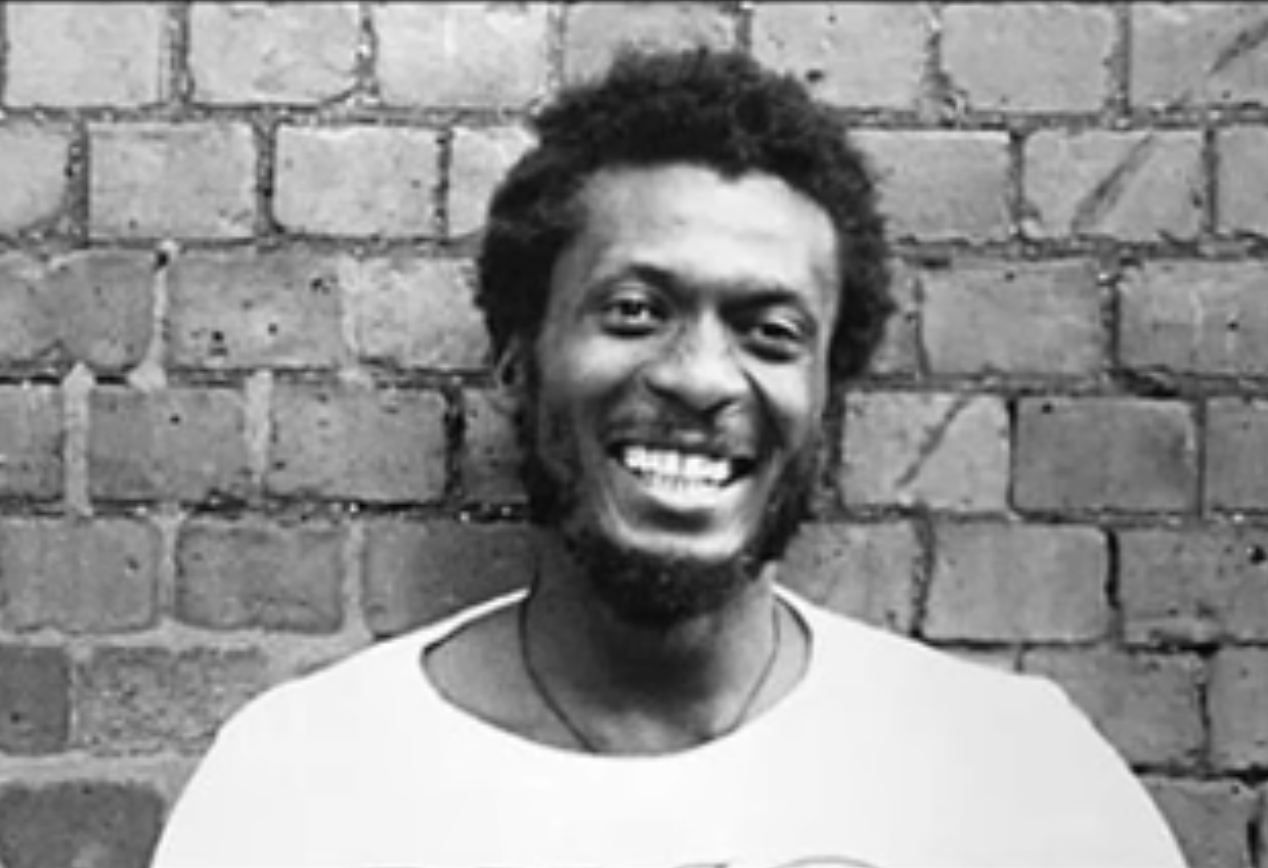
It is 1969 and Jimmy Cliff is mourning warning protesting grieving because the world is damaging and damaging, he is singing of wealth and poverty, guns and bombs. Bob Dylan claimed Jimmy’s ‘Vietnam’ as the best protest song of all time. And here we are fifty-six years later and the suffering in the land is every which way we look. How to hold onto the light when the world helplessly watches Gaza bombed and starved to smithereens. How to hold onto the light when Ukraine is also suffering through the choices of a neighbouring war criminal. How to hold onto the light when our Government listens to the wealth of the few rather than the multiple needs of the many. How to hold onto the light when our health system is at breaking point, and patients, nurses and doctors suffer. How to hold onto the light when our children are forced into little learning boxes that have no vision of the whole child. How to hold onto the light when our first language, te reo Māori, is the target of Government abuse. How to hold onto the light when our native flora and fauna are under increased threat. How to hold onto the light when white skin (usually male) becomes (again) a ticket of privilege, how to hold onto the light when the dark patches are smashing on our windows and doors.
Today I’m looking at damp patches of Waitākere sky with Jimmy Cliff on full volume, the words of beloved sixties and seventies song writers streaming in my ears, think Bob and Joni and Neil. And yes, it is a wide wide world, it’s a rough-puff pastry road, and it’s still inhumane fighting, greed and abuse. Are we sitting in limbo? Waiting for dice to roll. Today even my morning is a dense dark heavy patch, but I’m thinking of Helen Clark and Anne Salmond, the frontline workers, journalists, songwriters, politicians, poets, caregivers, forest and ocean guardians, who are working against all odds across the globe to hold onto the light.
IN MEMORY OF JANET FRAME WHO WAS BORN 101 YEARS AGO ON THIS DAY.
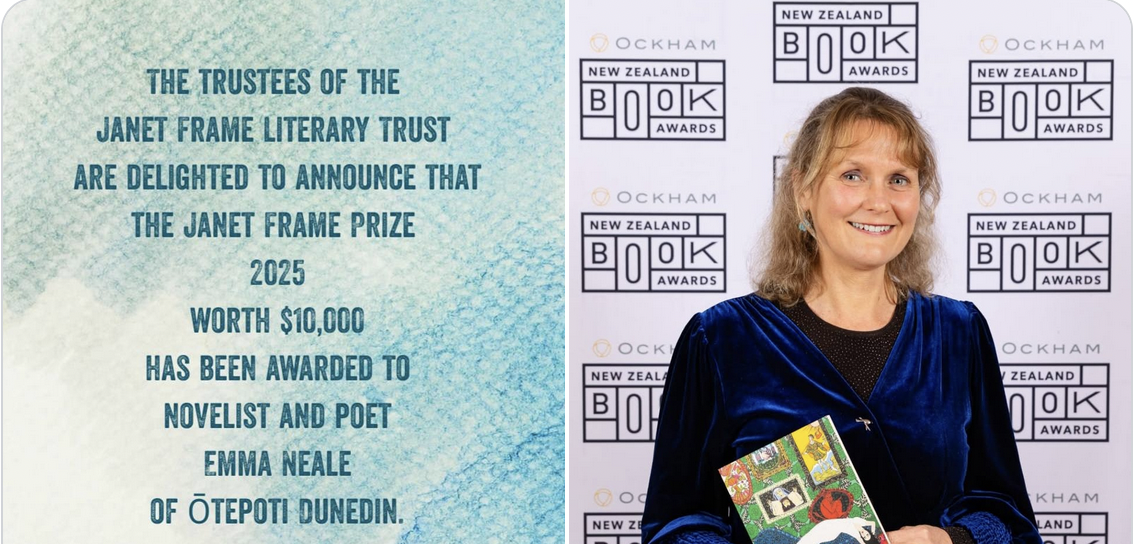
The Trustees of the Janet Frame Literary Trust are delighted to announce that the 2025 recipient of the Janet Frame Prize is acclaimed Ōtepoti Dunedin novelist and poet Emma Neale, who will receive a gift of $10,000 from an endowment fund that Janet Frame established in 1999 to support and encourage her fellow New Zealand writers.
Emma Neale is the author of fourteen works of fiction and poetry, the most recent of which, ‘Liar, Liar, Lick, Spit’ (Otago University Press) won the Peter and Mary Biggs Prize for Poetry at the 2025 Ockham New Zealand Book Awards.
Emma works as a freelance editor for publishers in Aotearoa New Zealand and Australia. She said: “The award has come at a time just when my editing workload has meant I wondered if I’d ever manage to find headspace to explore a longer fiction project again. This generous gift will allow me to set time aside early next year to really read attentively and experiment more with approaches to that project.
“To hear that the trust has awarded me this prize has been nothing short of astonishing. Janet Frame’s work and example has helped to shape my private thoughts, my life, and my writing ever since I studied her fiction, autobiography and poetry in my twenties. Her poetic, complex, experimental work, with its richly figurative language that explores the interior life so deeply, still stands as a beacon for many creative artists.”
The Midnight Plane: Selected and new poems, Fiona Kidman Otago University Press, 2025
It’s the same again this weekend, wild weather, rain and delays, and a long way south, suspension on a cloud, books take you everywhere.
from ‘On small planes’
Reading your way through the poetry collections by a particular poet can be such a rewarding experience. I recently read Chris Tse’s poetry books and felt utterly moved. I sat at the kitchen table thinking this is why I write my own poems, and read, review and blog all-things poetry. Poetry is the ultimate prismatic experience for heart and mind, eye and ear. It is sustenance, it is challenge, beauty and balm, multiple-toned music. It is deep-rooted aroha.
For a number of years, I read and researched every possible woman poet who had published poetry in Aotearoa. It was illuminating, heartbreaking and felt utterly necessary to shine a light on the women who have written and published poems for over 150 years, to question their scant representation in anthologies, in publishing and award lists, in public appearances. The visibility of and attention paid to women poets has changed to a remarkable degree, but I am always suspicious of any critique or review that promotes a hierarchy of style or subject matter, that dismisses the domestic, the personal, the tricky-and-impossible-to-define feminine.
In the 1970s, women poets were finally catching the attention of readers. In an interview with me in 2016, Fiona mentioned some of the women who were publishing poetry and performing at venues together: Lauris Edmond, Elizabeth Smither, Marilyn Duckworth, Meg Campbell and Rachel McAlpine among others. A handful of women joined the young men countering the poetry traditions that had preceded them with calls for the new, but others, such as Fiona, advanced the rewards of the domestic in poetry. Rachel made it intoBig Smoke: NZ Poems 1960 – 1975 (AUP, 2000), while Fiona, with her attention to the domestic, did not. Yet in my view, both women liberated words for women, inspired women to write. Like Fleur Adcock and Rachel, Fiona has favoured the first person pronoun. It is personal and intimate, and I feel like I’m sitting in the same room as the poem, entering the terrain of autobiography. The relationships, the acute observations and anecdotes, carry me within and beyond a domestic setting.
In her preface to The Midnight Plane, Fiona tellingly writes: ‘I am a plain poet; some critics would describe my early work as ‘confessional’, others as ‘domestic’. Perhaps I was such a poet, and at heart still am, although I am not given much to such labels. What I know is poetry still has the power to shake the heart.” And that is exactly what Fiona’s poetry does for me. It shakes my heart.
Let’s listen to Fiona read:
Fiona Kidman at home
Photo credit: Robert Cross
‘The midnight plane’
‘What I do’
Otago University Press has gathered a selection of poems from Fiona’s books, along with some new ones. The beautiful production, with a hard cover, lovely paper stock, and a gorgeous cover, acknowledges the work as a national taonga.
Fiona’s debut collection, Honey & Bitters (1975), is one of my all-time favourite poetry collections. It is a series of both actual plantings and memory plantings, a matrix of movement and stillness, physical views and revealed feelings, where what is not said rubs alongside what is said. The writing is agile, surprising, holding out the rhythm of slow-paced observation. I read a poem, I stall and have to read it again, and again.
In the field the sheep are scattered like hail, this pale dun landscape with small quaint cottages we’ve driven miles to find, for sale, near trees
whose scribble branches wait for spring, scratch barren messages across the sky. But a man, a boy, a girl and I are here.
from ‘Wairarapa Sunday’
The poem, ‘Kohoutek’ is dedicated to the comet, but draws our attention to the preciousness of each day, to the ‘voyages of discovery’ in a new house, to the trees bursting in green, and the sunlight patches. Fiona writes: ‘These are the miracles of the everyday’, and this for me is a miniature poetry manifesto. It is one I hold close to my heart, sitting at the kitchen table where I have written so many books, celebrated so many books by other poets, shared so many meals.
I like the way you stand, fingers trailing over the back of a chair before a velvet curtain looped with braid, your eyes fierce and direct, a hat like a guardsman’s helmet tilting on your brow, a telltale ruffle of lace at the wrists because you are my grandmother fluted silver vases stand poised above my bookshelves because you are my grandmother I wear old fine gold and mother-of-pearl because, because of this, I wear this hair shirt of guilt the settlers’ shame
from ‘Speaking with my grandmothers’
In Where Your Left Hand Rests (2010), another collection I adore, there is a poem I would love to post in its entirety on Poetry Shelf. ‘Speaking with my grandmothers’, is a poem that threads past and present, that forms a braid of spike and silk as Fiona reflects upon the grandmother ancestors she never met, and the stolen land she stands upon. Here are the final lines: “Tonight I want to sit quietly by this window. There is so / little silence, so many voices.” Ah, we can take this moment and hold our line of grandmothers close, and for some of us, the stolen land we stand upon.
This Change in the Light (2016) is another go-to collection for me, with its haunting portrait of Fiona’s mother in ten sonnets, its travels from Paris to Provence to Singapore to a cancer ward. The poem, ‘What I do’, is one I could pin to the wall; it navigates mornings devoted to writing books, afternoons to preparing food, suggesting the mornings may not be cut and dried like food, but how love seeps though the whole day. It feels like I see myself in the poem’s mirror, with my endless hoard of cookbooks, my love of cooking and writing every single possible day. And then, and then movingly then, the exquisite final poem, ‘So far, for now’, a loving tribute to her beloved husband Ian. I am holding this poem to my heart. I wanted to share lines but it felt wrong to take a handful out, you need to read it in full, and let it unfold in you over the course of a day.
On the cover of the book, a photograph shows Fiona sitting in her lounge looking out the window at the Wellington sky and harbour. A perfect image for poetry that embraces both lounge and sky, that depends upon slow observation and the dailiness of living, a mind that goes travelling. Sitting at my kitchen window looking out across the ever-changing expanse of bush and sky, as I pick my way along a road thatched with spike and sweetness, I am crying, strangely crying, because somehow, I know that for so many of us, poetry is a gift, a gift we do and a gift we share. Fiona’s poetry winds about me, I gather it in, the shifting lights and the vital substance, knowing in her work there is always heart, her fingers on the pulse of humanity, and that is why the poetry of Fiona Kidman matters so very much.
Dame Fiona Kidman is a poet, fiction writer and memoirist. She has also written for the screen industry. Her internationally published work has won numerous prestigious literary awards, and her honours include a damehood (DCNZM), an OBE and the French Legion of Honour (La Légion d’Honneur). She lives on a cliff top in Wellington.
The door to your room is open to the corridor. Unused. I am alone with you and as flat as a car battery in lockdown. Yet all that is required of this moment is for me to sit by your bedside, hold the space for your leaving. How many ancestors have sat like this for their loved ones after death? Behind us;fear, doubt, grief. And yet still I sit, surrender to love and only my hands are cold.
Philomena Johnson
Philomena Johnson graduated from The Hagley Writers’ Institute in 2017 where her portfolio was short-listed for the Margaret Mahy Award. Her poetry has appeared in The Quick Brown Dog, The London Grip, takahē, Fuego & a fine line; in the anthologies broken lines / in charcoal, Voiceprints 4 and The New Zealand Poetry Society Anthology 2024. Philomena won The John O’Connor First Book Award in 2024 for her manuscript not everything turns away, published by Sudden Valley Press. She lives where the river meets the sea right beside Te Ihutai Avon-Heathcote Estuary where she gets to walk by water every day. Philomena tutors at the Write On School for Young Writers.
Later in the year I want to launch a series of Poetry Shelf Live events around the country because I want to get back out in the world, and work offline as much as I do online. In the meantime, assembling poetry readings on Poetry Shelf gives us all a chance to hear poetry off the page. I will be doing more of this over the coming months!
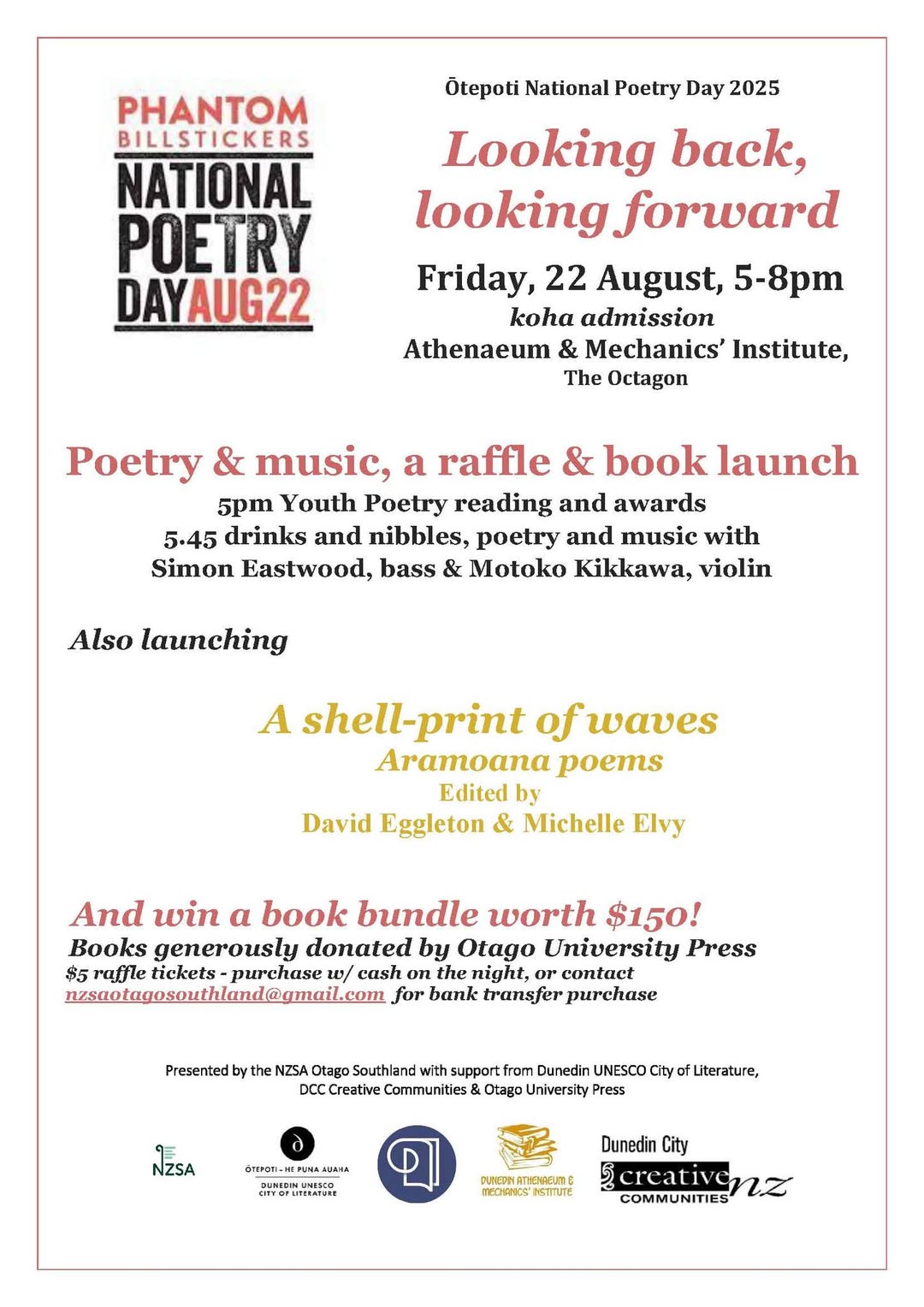
To celebrate National Poetry Day, I offer you a suite of nine readings, not quite the same as being in a cafe or bookshop and getting a live poetry experience, but hearing poets read is such a heart-nourishing treat.
Poetry Shelf offers heartfelt congratulations to our new National Poet Laureate, Robert Sullivan. Robert is a terrific choice. His debut collection Star Waka (1999) was a groundbreaking arrival and the subsequent collections have added extraordinary threads, light and aroha to our poetry kete. Robert is also an anthologist, editor, festival participant in Aotearoa and overseas, currently President of the New Zealand Poetry Society / Te Rōpū Toikupu o Aotearoa and is Associate Professor in Creative Writing at Massey University Te Kunenga ki Pūrehuroa. He belongs to Ngāpuhi Nui Tonu (Ngāti Hau, and Ngāti Manu), and Kai Tahu (Kāti Huirapa ki Puketeraki), with affiliations to Ngāti Raukawa, and Ngāi Tai, and is also of Irish, Scottish and English descent. He lives in Oāmaru on the coastline known as Te Tai o Āraiteuru.
This news is the poetry cream on our national poetry celebrations.
Happy Poetry Day to poetry readers and writers across Aotearoa!
excerpts from Some Helpful Models of Grief (Compound Press, 2025)
Xiaole Zhan
‘{Untitled}’ and ‘Learning the character for soul (靈) contains the character for rain (雨)’
Jackson McCarthy
Three Southern Songs: ‘Punatapu’ ‘Arrowtown’, ‘Kawarau’. Then ‘Happiness’, ‘Song’
Sophie van Waardenberg
‘Self-Portrait as Adolescent Covered in Flour’, ‘Hymn to the Insomniac in Fool’s Spring’ from No Good (Auckland University Press, 2025)
Nadezhda Macey
‘Uranga’, ‘Syntax’ (from Starling Issue 18), ‘Victoria Park’, ‘Capsicum is a New Zealand Word?’
Josiah Morgan
three untitled poems from ‘act three’, in i’m still growing, Dead Bird Books, 2025
Erik Kennedy
‘Individualistic Societies’, ‘Notes Towards a Theory of Fun’ and ‘We’ve All Been There’ from Sick Power Trip, Te Herenga Waka University Press, 2025
Grace Yee
‘with two black dates for sweetness’ and ‘my father was not a gardener’ from Joss: a History, Giramondo Poetry, 2025
Anne Kennedy
‘The Black Drop: My History of Ugly’, from The Sea Walks into a Wall (AUP, 2021)
The poets
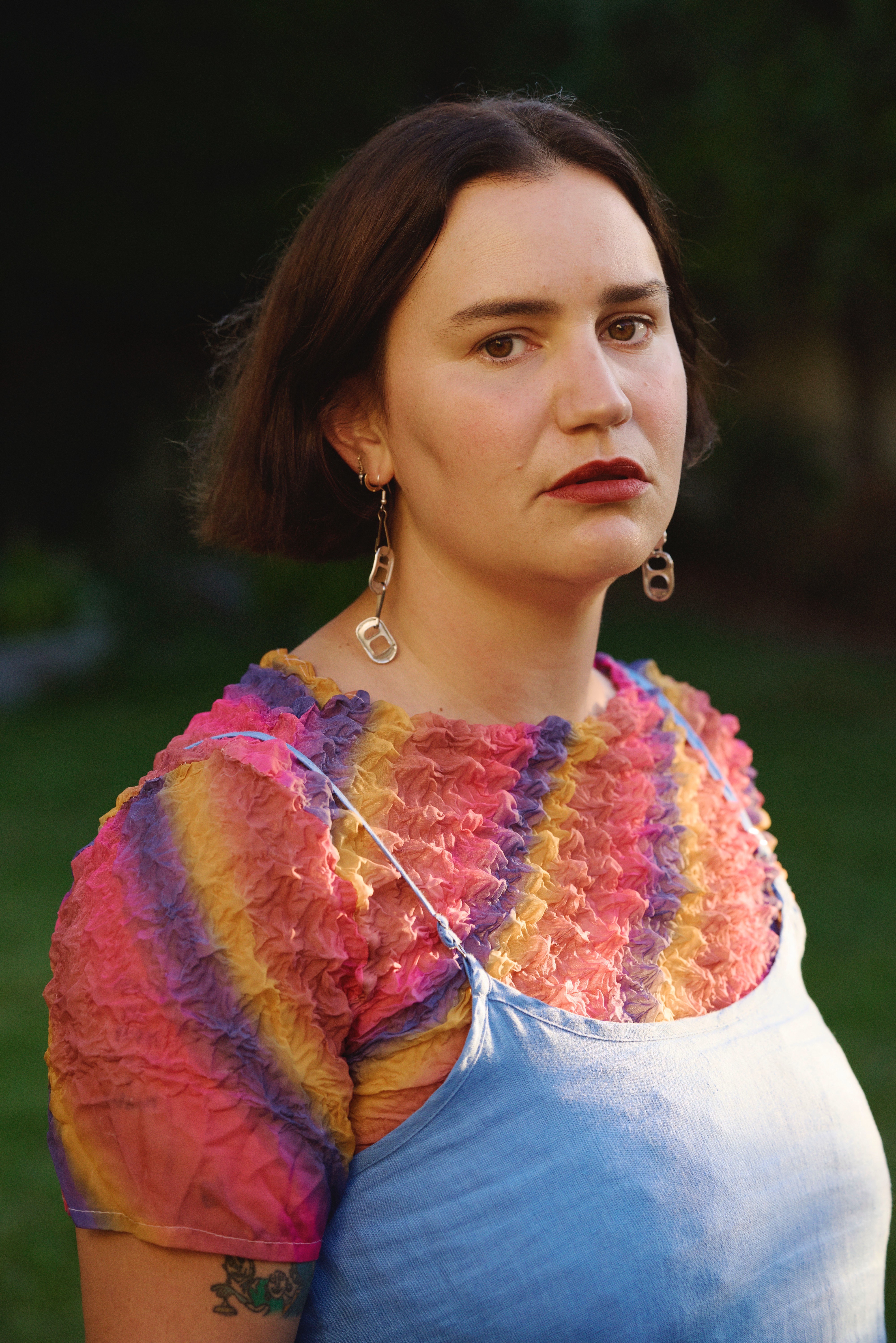
Hana Pera Aoake (Ngāti Mahuta, Ngāti Hinerangi, Tainui/Waikato) is an artist, writer, and sweaty milf from Aotearoa. Hana’s first book, a bathful of kawakawa and hot water, was published with Compound Press in 2020. Their second book, Blame it on the rain was published in 2025 with no more poetry (Australia). They just released a third book, Some helpful models of grief with compound press and are also publishing a fourth book of essays, On how to be with Discipline (Australia) in 2026. Hana is edging through a PhD at Auckland University of Technology.
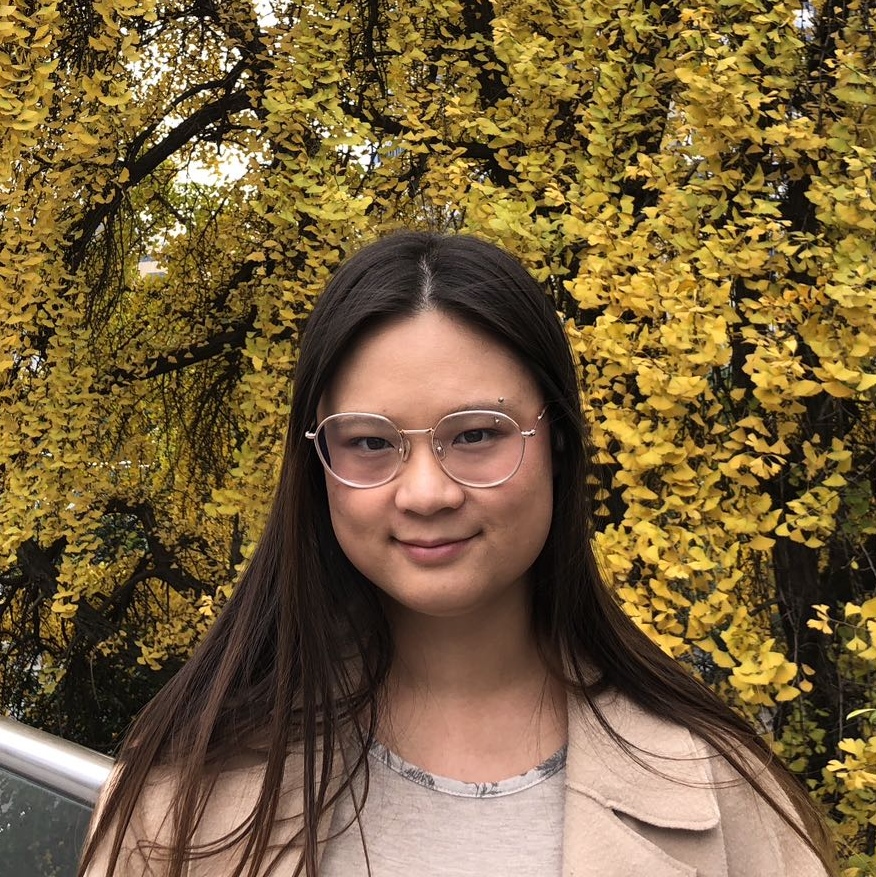
Xiaole Zhan (詹小乐) is a Chinese-Aotearoa writer and composer based in Naarm. Their work features in Auckland University Press’s New Poets 11. They are a 2025 Creative New Zealand Fellowship recipient, a 2025 Red Room Poetry Varuna Fellowship recipient, the 2024 Kat Muscat Fellow, as well as the winner of the 2023 Kill Your Darlings Non-Fiction Prize. Their name in Chinese means ‘Little Happy’, but can also be read as ‘Little Music’.
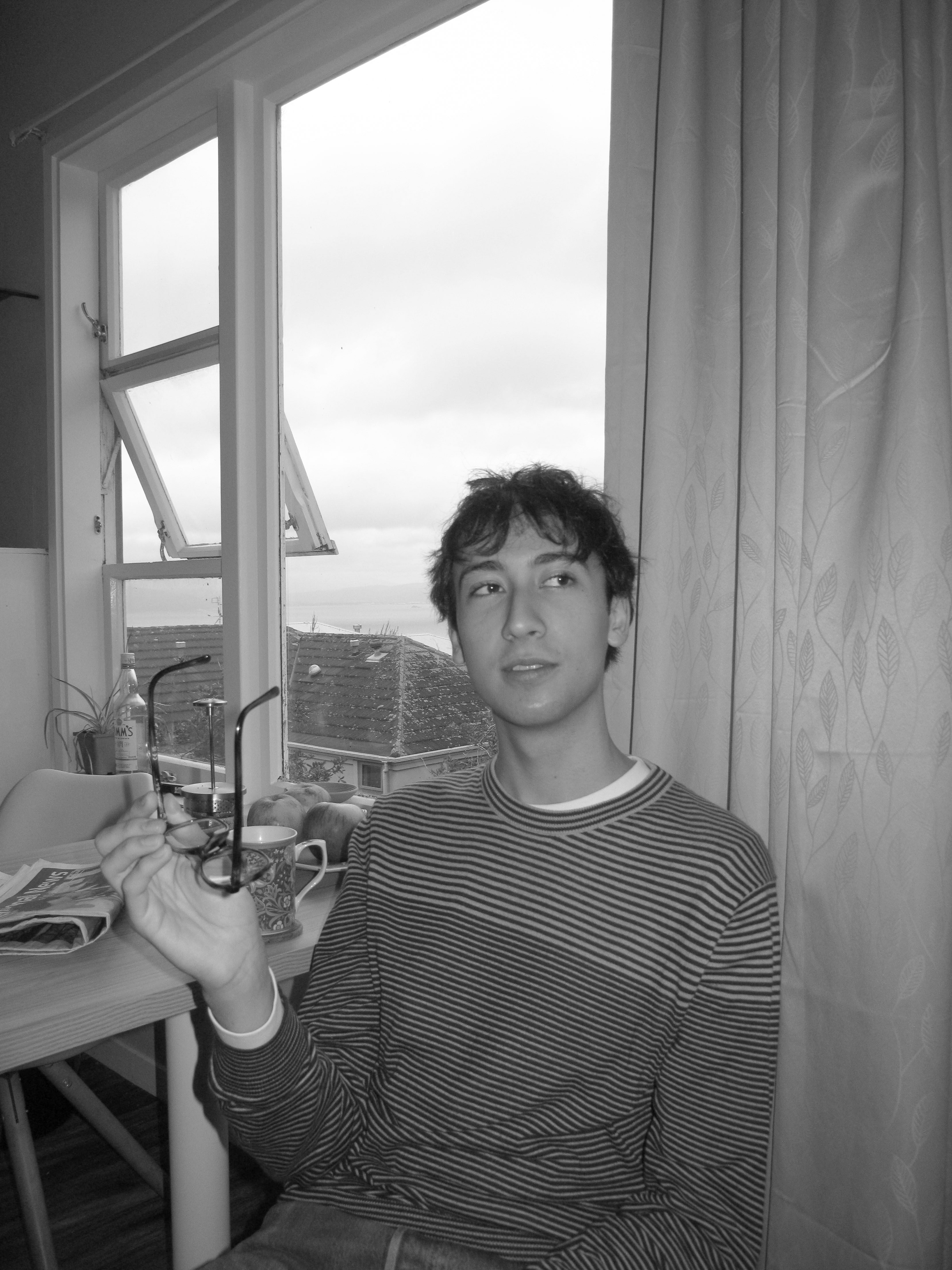
Jackson McCarthy is a poet and musician from Auckland currently studying in Wellington. He is of mixed Māori, Lebanese, and Pākehā descent. His work has been published in Ōrongohau | Best New Zealand Poems, Landfall, Starling, The Spinoff, and elsewhere, and he serves as an editor at Symposia. You can read more of his work at https://linktr.ee/jacksonmccarthy.
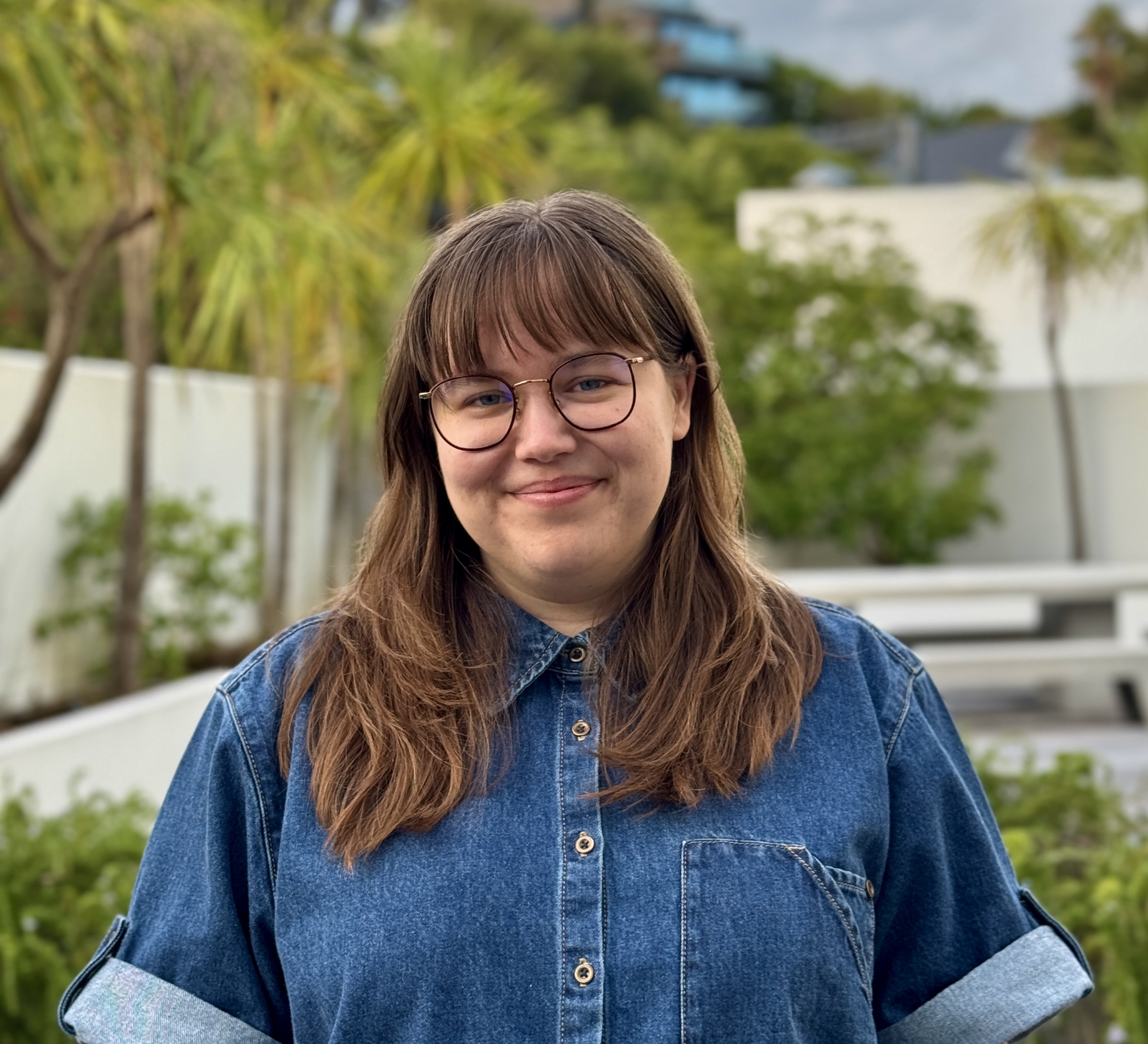
Sophie van Waardenberg is a writer from Tāmaki Makaurau. Her work can be found in Cordite, Starling, Ōrongohau | Best New Zealand Poems, Takahē and elsewhere. Her debut poetry collection is No Good (AUP, 2025).
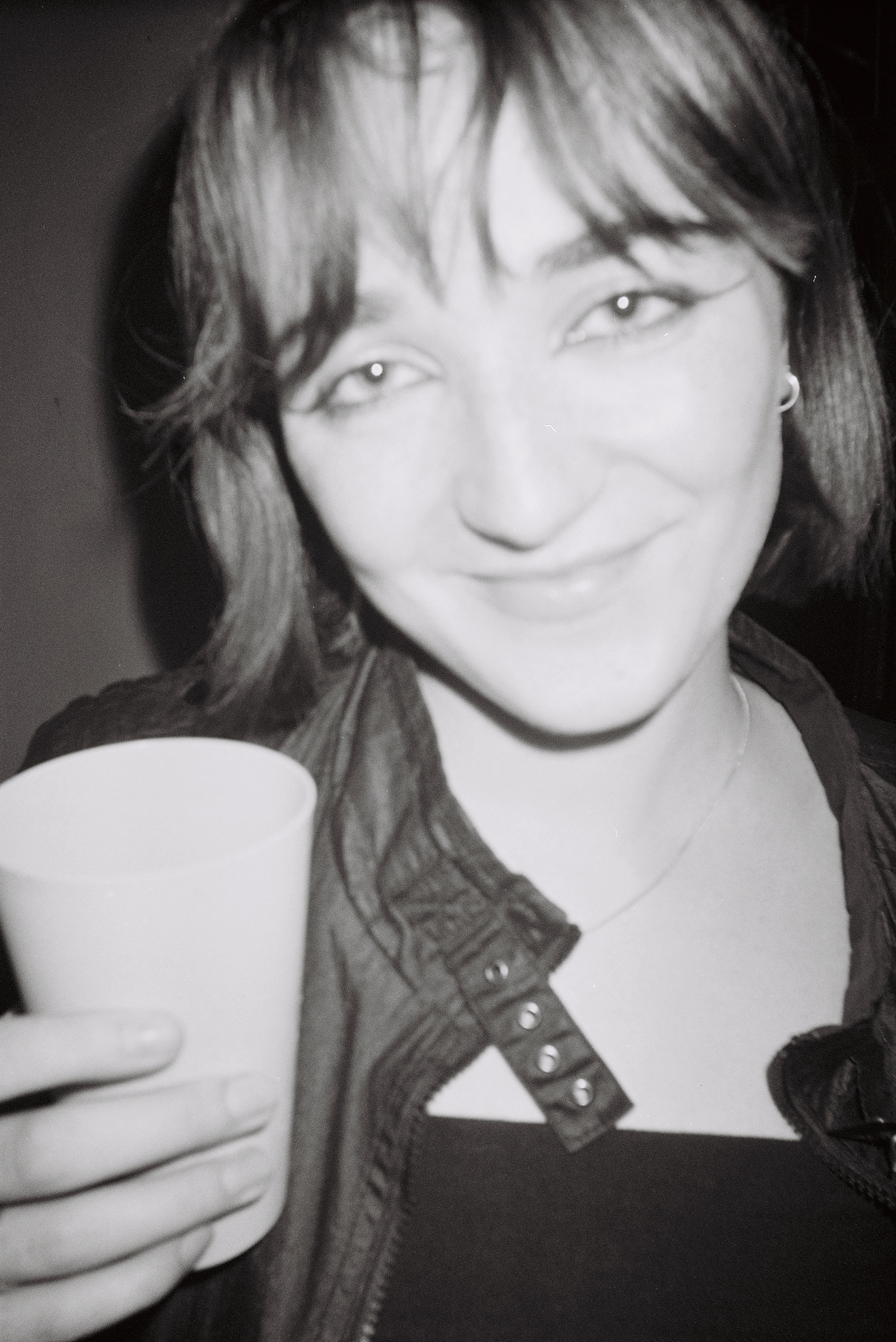
Nadezhda Macey (she/her) is a student of English Literature and French at Te Herenga Waka. She is also a poet and artist, you can find more @nadezhda.4rt, and in magazines starting with ‘S’: Starling, Salient, and Symposia.
Josiah Morgan (Kāi Tahu, Ngāti Maniapoto) is an interdisciplinary artist based in Ōtautahi. His latest book i’m still growing is out with Dead Bird Books now in all good bookstores. His other books were all released in the United States, including his hybrid text The Texas Chainsaw Massacre, which was performed as a six-hour-long performance artwork in Auckland Pride 2024. He believes in magic and the power of words to transform. He is currently working on a chapbook called Black Window, a new full-length book, and a theatrical adaptation of Faust in collaboration with Hagley Theatre School.
Grace Yee is the author of Chinese Fish (Giramondo), which won the Victorian Prize for Literature in Australia, and the Mary and Peter Biggs Award for Poetry at the Ockham New Zealand Book Awards. Chinese Fish will be published by Akoya in the UK in 2026. Her second book Joss: A History (also Giramondo) was released in June 2025. She lives in Melbourne, on Wurundjeri Land.
Anne Kennedy is a Tāmaki Makaurau poet, novelist and teacher. Awards include the Prime Minister’s Award for Poetry, the NZ Post Book Award for Poetry. Recent books are The Sea Walks into a Wall, The Ice Shelf and, as editor, Remember Me: Poems to Learn by Heart from Aotearoa New Zealand. Anne is the current editor of AUP’s New Poets series.
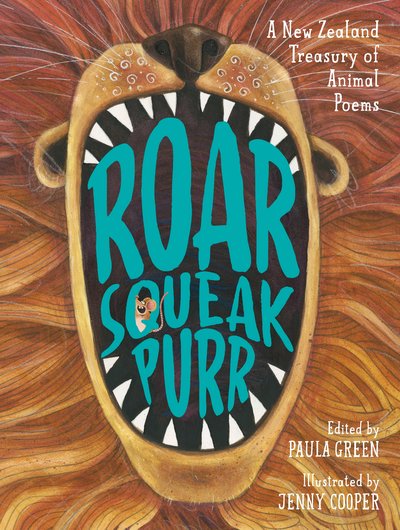
Roar Squeak Purr: A Treasury of Animal Poems, ed Paula Green, Illus Jenny Cooper Penguin, 2022
The Muddy Cat
Squelch! Squilch! Squolch! The mucky muddy cat is so muddy mucky she looks like a mucky mud puddle with two green eyes
and there is too much muddy mucky muck for her dainty little pink cat tongue to lick clean.
Paula Green, 2025
Today is National Poetry Day so to celebrate I am offering you a popUp poem challenge. For childreen from Y0 to Y8 in Aotearoa New Zealand.
I challenge you to write some cat poems.
Your poems can be funny, based on your family cat, your nana’s cat, anyone’s cat (!), tell a story, use your eyes, use your ears, use your imagination, use a cat fact or two!
Over to you! And if you want you can illustrate your poem.
The deadline is 9 am on Monday 25th August
Please include name, age , year and name of school
I will post some poems on Tuesday 26th August
I will give away one copy of Roar Squeak Purr: A Treasury of Animal Poems.
Don’t forget to write CAT POEM in the email subject line.
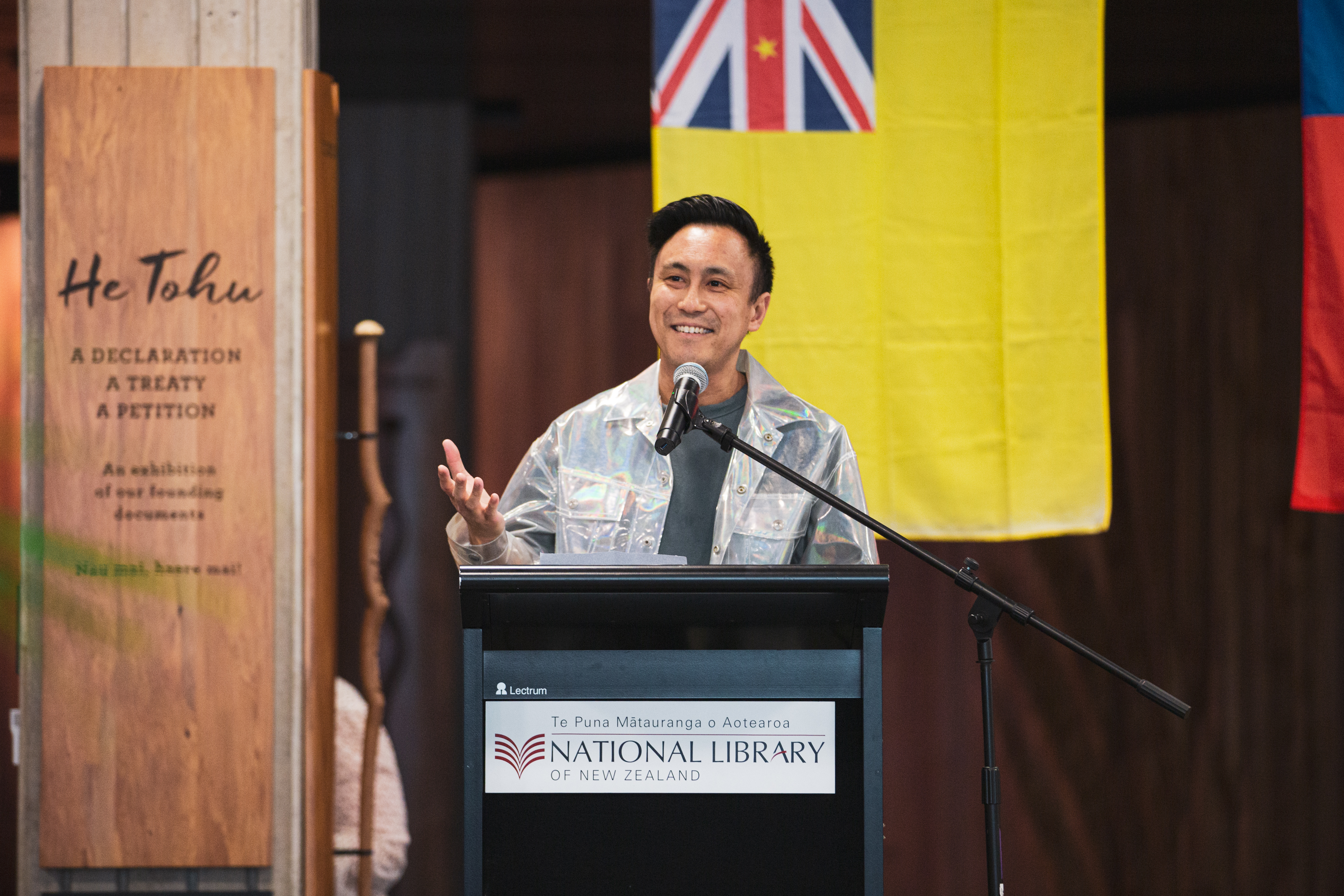
Today Chris Tse is stepping down from his role as National Poet Laureate, and it felt extremely fitting to acknowledge his vital contribution to poetry in Aotearoa and overseas. He has staged a range of poetry events around the country, drawing in voices, inspiring younger writers, contributing to inspiring poetry conversations in various settings.
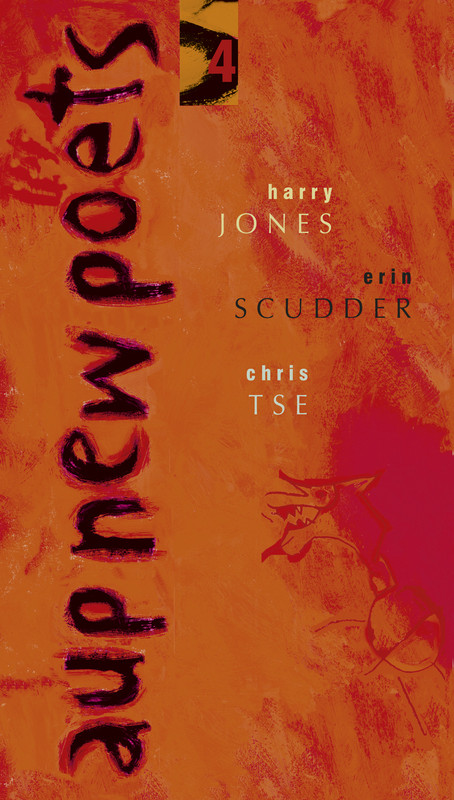
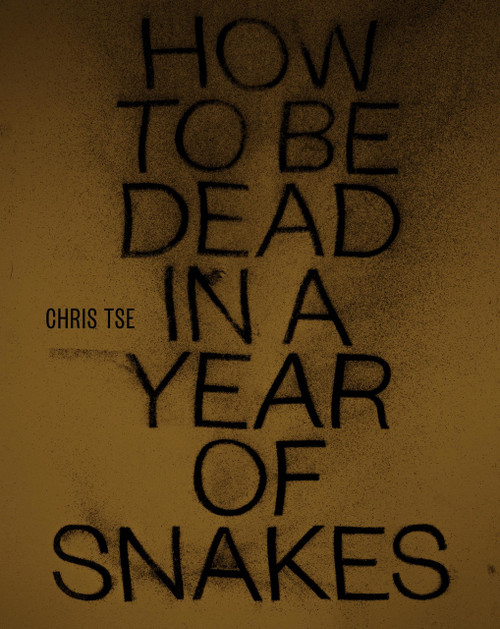
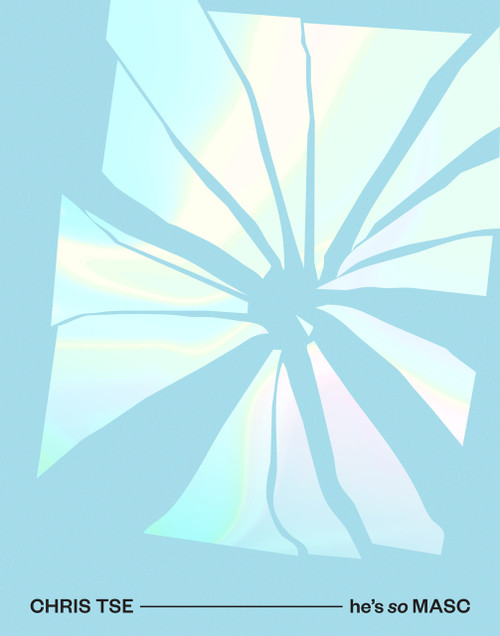
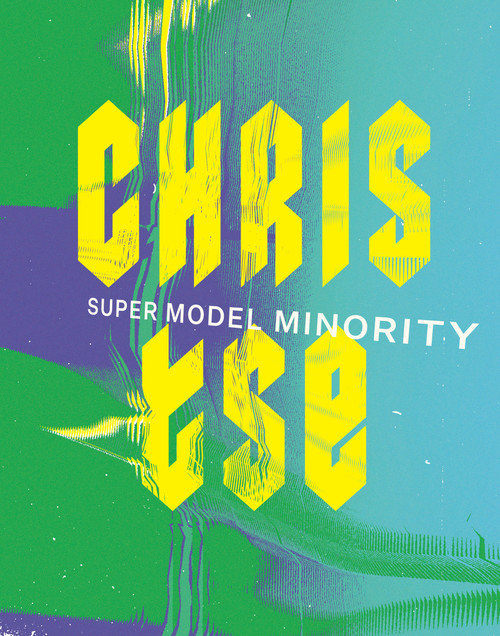
Having always been a big fan of Chris’s poetry — from his debut in AUP New Poets 4 (AUP 2011) to Super Model Minority (AUP, 2022) — I decided I would pick one poem from each of his books as a celebration of his tenure. Chris kindly answered a couple of questions from me and contributed a recent poem. To reread my way through his collections was utterly moving: from How to be Dead in a Year of Snakes (2014, AUP), a collection that returns to the tragedy of murdered goldminer, Joe Kum Yung, to his next two, he’s so MASC (AUP, 2018) and Super Model Minority (AUP, 2022). His books navigate sexuality and race, sky and mountain peaks, revolution and imagining, speech and peace. Ah, take the time and spend a long weekend absorbing his extraordinary poetic ink.
Thank you, Chris thank you.
five poems
Dig after Seamus Heaney
Our first back yard hugged the prickled slopes of Kelson.
I watched my father dig and tear his way through bush and clay to find that richer soil.
That spicy scent of gorse, the path he zigzagged.
And beyond him, decades and oceans away, his father stooping to dig gathering ginger and spring onion; dreams of richer days.
•
Between my finger and my thumb the sticks rest.
•
Below the surface lies a history of chopsticks. In the days of new sight we clung to comfort as a sign of success.
Eight treasure soups, the finest teas ivory and bone over wood and plastic.
•
I’ll dig with them.
from Sing Joe, in AUP New Poets 4, Auckland University Press, 2011
•
They peer through me as if I were dead. My hands are tired now, fading to mist.
•••
I’ve held out for luck and fortune like a stony fool,
•••
but sometimes the heart must gracefully accept defeat.
•••
These days it feels like I am digging my own grave.
from How to be Dead in a Year of Snakes, AUP, 2014
Heavy Lifting
Once, I climbed a tree too tall for climbing and threw my voice out into the world. I screamed. I hollered. I snapped innocent branches. I took the view as a vivid but painful truth gifted to me, but did not think to lay down my own sight in recompense. All I wanted was someone to say they could hear me, but he tree said that in order to be heard I must first let silence do the heavy lifting and clear my mind of any questions and anxieties such as contemplating whether I am the favourite son. If I am not, I am open to being a favourite uncle or an ex-lover whose hands still cover the former half’s eyes. I’ll probably never have children of my own to disappoint so I’ll settle for being famous instead with my mouth forced open on TV like a Venus fly-trap lip-synching for its life. The first and last of everything are always connected by the dotted line of choice. If there is an order to such things, then surely I should resist it.
from he’s so MASC, AUP 2018
Wish list—Permadeath
I wish I didn’t feel compelled to write about racism, but there it is patrolling my everyday thoughts like a mall cop drunk with power.
I wish people didn’t ask me how to solve a problem like racism, as if it is a cloud they cannot pin down. I am not an expert spokesman
holding an elusive truth. I wish I could predict when racism would exit stage right to wherever bad things go to die rusty
non-biodegradable deaths, but I can’t predict the death of something with a robust business continuity plan that involves moving from
host body to host body. I am not an exorcist—I am a sympathetic vomiter. Is it predictable for me to write this poem? I suppose so.
What I really want to write about are things with promise, to offer up whiskers on kittens when the outlook is for Nazis on Nazis. I wish
I could sing my way out of this while the man I love applauds from the front row, our adorable Jack Russell terrier Rocket sat by his feet.
I wish I could start a love poem with a line like ‘He thumbs me like the Oxford Dictionary‘ and consider it a job well done. I wish
I didn’t always feel this way—always tired of explaining why I am tired and why writing this poem is more need that want.
I never felt the need to be the gunshot during a knife fight until they told me there was no such thing as ‘let’s finish this once and for all’
from Super Model Minority, AUP, 2022
How to edit a poem
Let the poem approach you first. Don’t point; don’t scare it.
Encircle the poem with broken lines and half-hearted rhymes to reverse any spell that may cause the reader sorrow.
Ask yourself: is the poem merely camouflage for the poet’s desires?
All persons, real or imagined, are questions and aphorisms double-crossing each other in pursuit of a revelation.
Inside this poem there are two poets: one is literal and the other is metaphorical.
Ask yourself: is the poet a secret carried in a whale’s mouth?
Capitalise every word that reminds you of your childhood.
Strike out every verb that will make the reader feel guilty for not living a wholesome and virtuous life.
Inside this poem there are two poets: one tells the truth and theother got away with it.
Ask yourself: when did you last trust a poem?
Interrogate each line as if it were a co-ordinate plucked from a map.
A crooked staircase halfway to the moon. A wolf cries in the dark.
The margins seesaw as you pull yourself into the poem for a better view, to take it all in.
(There is no way out.)
Use the poem as a mirror.
Use the mirror as a sucker punch.
Attack the mirror with a mallet.
Hide the broken shards in the feathers of birds and instruct them to land on rooftops when the night is at its softest.
The townsfolk’s sleep is disturbed by the crackle of crystal rain.
Record their reactions.
Respond, respond, respond.
from Everything I Know About Books: An insider look at publishing in Aotearoa, edited by Odessa Owens and Theresa Crewdson (Whitireia Publishing, 2023)
three questions
What draws you into a poem, whether as writer or reader?
As a reader, I want to get a sense that the poet is writing from a place of curiosity and isn’t afraid to let the reader get a glimpse behind the curtain as they work through their thinking or daydreaming. I don’t necessarily need anything to be resolved – an open end is just as good as any. I try to apply this to my own work as well because a big part of my writing process is to seek understanding about myself or the world. The poem is the result of that exploration.
Have you discovered any poets new to you in the course of your physical or reading travels over past couple of years?
So many! Editing Ōrongohau | Best New Zealand Poems 2023 was a voyage of discovery of new-to-me poets, like John Allison, Isla Huia, Geena Slow and Marjorie Woodfield. This week I’ve been dipping in and out of the 2025 edition of Aotearoa Poetry Yearbook and there are lots of unfamiliar names, so I can’t wait to get to know these poets’ work. I’ve also had the good fortune of working or performing with poets from other countries, either online or in person. Some of the poets whose work I’ve really enjoyed are Hasib Hourani and Panda Wong from Australia, Péter Závada from Hungary, and Amanda Chong from Singapore.
Can you share a couple of highlights from your tenure as Poet Laureate?
For National Poetry Day 2023, I invited students from Te Whanganui a Tara for a day of poetry workshops and activities at the National Library. The poems that the students wrote that day were great and demonstrated how fearless and creative young minds can be. Another highlight was the Poetry International Festival in Rotterdam, where I appeared in an event with Poets Laureates from around the world. It was a really special performance bringing poetry and dance together. I was very proud to be able to represent Aotearoa on stage that night alongside some poetry legends.
National Poet Laureate page Auckland University Press page
Join Chris at the National Library to mark the end of his time in the role with his reflections on the future of Aotearoa New Zealand poetry and readings from special guests.
Chris will be joined by poets Ken Arkind, Cadence Chung, Gregory O’Brien, Chris Price, and Ruby Solly.
“I left the doors to the past and the future unlocked …”
Chris Tse’s three-year term as Aotearoa New Zealand Poet Laureate ends on Phantom Billstickers National Poetry Day, when the next Poet Laureate will be announced.
Date and Time: Wednesday 20 August 2025, 6pm to 8pm
Location: Te Ahumairangi Ground Floor, National Library of New Zealand
1. That morning I read some poems 2. Could not walk far because of my surgery 3. A wholegrain roll I filled with chicken and coleslaw for lunch 4. Thought about the fridge being a silver coffin we carry around 5. Listened to Jim Morrison singing ‘The End’ 6. Thought of tubular bells making a comeback 7. Falling into water then rising up: my heart dipped with the tabla drum 8. …the world, a brief dream under a summer moon 9. Decided on Earl Grey 10. Stood at the window and thought how quiet the street is 11. Wiped sticky fingerprints from the handle of the fridge 12. Stared at the packing cases in the hallway 13. Texted my husband: ‘We had a dream and we made it happen we should be proud of ourselves’ 14. Stared at the pale yellow slipper orchid, newly opened; large and quiet and perfect 15. Read some poems 16. Remembered the one I wrote about cormorants nesting in the huge macrocarpa at Brendan Beach 17. Thought about looking it up but remembered it was packed away 18. Asked Google the question: How long does a stone take to round off in a riverbed? 19. It depends; some take a few weeks and some 100,000,000 years or more 20. Looked up the actor Mandy Patinkin 21. Noticed his wife, Kathryn, looked the same age 22. Wondered if he was still friends with Claire Danes? 23. Marvelled at the trivia I “knew” 24. Thought of my mother dying in the afternoon, falling asleep with a book 25. Glanced at the bed and wondered but lay down anyway.
Wes Lee
Wes Lee lives in Te Whanganui-a-Tara Wellington. She has four poetry collections — her latest, Wearing Today, was shortlisted for The Kathleen Grattan Poetry Award 2023 (Otago University Press), and has been launched this month in Wellington. She has received a number of awards for her writing, including, The BNZ Katherine Mansfield Literary Award and The Bronwyn Tate Memorial Award. Most recently she was awarded the Magma Editors’ Prize 2024/25; The 2024 Free Verse Prize, by the Poetry Society, in London; The Heroines/Joyce Parkes Women’s Writing Prize 2022, in New South Wales; The Poetry New Zealand Prize 2019. Placed in The Plaza Poetry Prize 2025 and The Fish Poetry Prize 2025. She was selected as a finalist for The Fool for Poetry Chapbook Prize 2023, in Ireland (Munster Literature Centre); shortlisted for the Poetry London Pamphlet Prize 2023, and The Alastair Reid Poetry Pamphlet Prize 2024, in Scotland.




 NZ Poetry Shelf