Monthly Archives: May 2025

Poetry Shelf noticeboard: The DANZ Book Award Winners

Twenty-nine books made the longlist for the 2025 ASLA DANZ Children’s Book 
Awards, selected by over 110 children and teenagers from across Australia and New Zealand.
 The longlist came from an outstanding field of 135 books made up of Graphic Novels, NonFiction, Poetry, and Young Adult Novels celebrating diverse people and communities in a balanced and authentic way. 

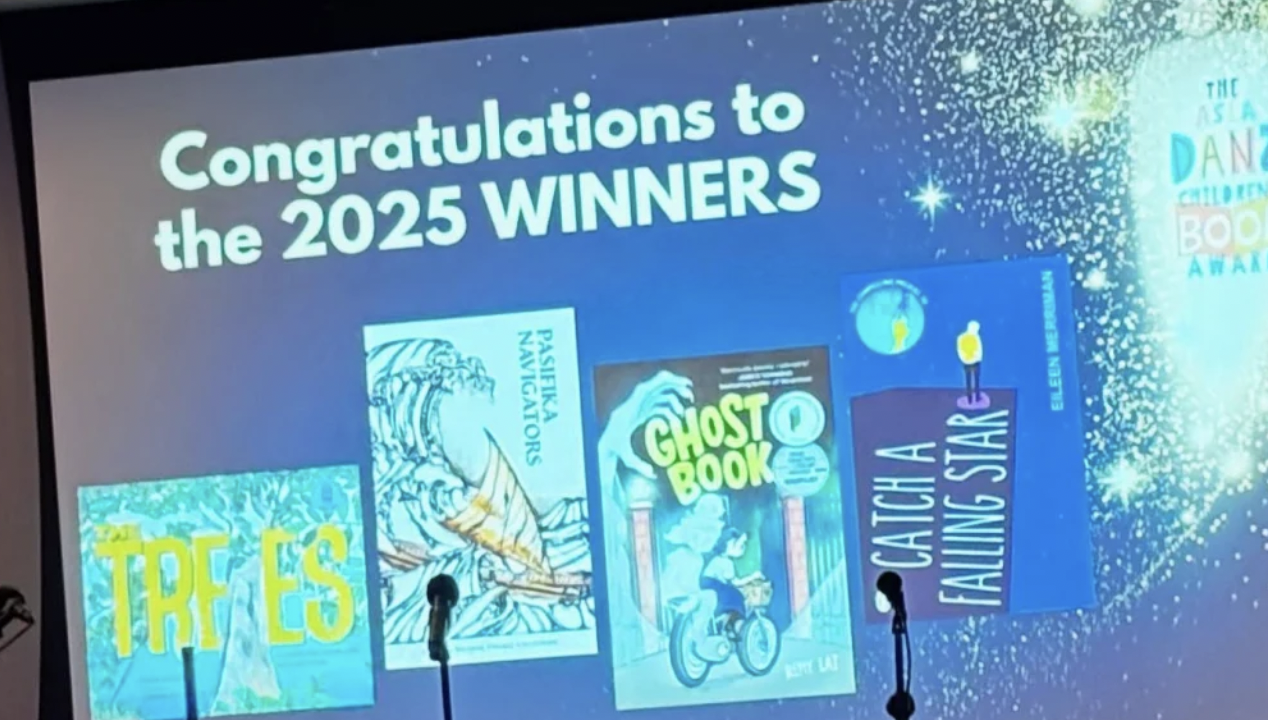
Here are the winners:

Nonfiction: The Trees by Victor Steffensen and illustrated by Sandra Steffensen (Hardie Grand Explore) 

Poetry: Pasifika Navigators by 52 Pasifika Student Authors (Mila’s Books)

Graphic Novel: Ghost Book by Remy Lai (Allen & Unwin) 

Young Adult: Catch a Falling Star by Eileen Merriman (Penguin Random House New Zealand) 

I am delighted to see Eileen Merriman has won the YA category with her novel To Catch a Falling Star (Penguin, 2023). The book, with both nuance and complexity, navigates tough issues. Aged fifteen, Jamie Orange participates in school musical productions, is secretly in love, but faces persistent and crippling mental health challenges. The story and the characters are utterly moving. The novel is an unforgettable, thought-provoking read, so I am pleased to see it get this recognition.

In my Poetry Shelf review I wrote: “Ah. Triple ah. Quadruple ah. Catch a Falling Star is a sad, contemporary, thought-provoking, must-read story that revives you no matter how little sleep you have had! The word I take with me is hope, the image I hold is two teenagers bonding over books and coffee. Utterly riveting! Utterly humane.”

You can read my review here.

I look forward to celebrating Pasifika Navigators by 52 Pasifika Student Authors on my blogs.

Poetry Shelf: ‘Tomorrow’ an Aotearoa dispatch by Michelle Elvy

Tomorrow
an Aotearoa dispatch

at the end of the phone call
I say
I’ll ring you tomorrow
and mean it but know
it’s a luxury, a sweet promise
that may
     or may not
come to pass

it is spring for my mother, autumn here
and cheap tricks are still
the news, this man with his crowns
fake gilding everything
making mockery of good
taking time and more
from the world
because he can

*

we are built forward-looking
time, we hope, the giver of something
better
something different from today
we steel ourselves
for tomorrow
     seeing
if we can hold
– I think of āpōpō, this word, this
sense of soon

in German, tomorrow is a promise
of morning; in French and Spanish, too
handed down
from Latin mane
– there it is again, time
     tumbling
through centuries

*

in places where I have loved
we said à demain with a kiss
a cheerful bis morgen
or a nod and mañana
language confident
    morning 
on our tongues

*

a journalist told of a girl
who, when rushed on a stretcher
from a mound of broken
everything, asked, “رايحة على المقبرة؟”
Am I being taken to the cemetery?
 – that was six months ago
that today is this day
in Gaza, there is today after today after today

in Gaza language is dangerous
is death, is covered in dust
what is tomorrow in Gaza?

*

in Tanzania, when we said kesho
it meant something less certain
not ‘tomorrow’ but
     ‘not today’
and Bahasa’s besok offered
forward motion over days or weeks
time like water, finding
its path
       not clearly mapped
language keeping us
waiting
unspoken       space

*

I left my mother’s house
a suitcase of uncertainty
ziptied and checked
    my baggage
at its limit, carried
from Maryland to here

we spoke our vows to tomorrow
despite the weight of things
     rolled with my shirts
      tucked in a drawer
     folded in this poem

now I’m across
the international dateline
       my mother’s tomorrow my today
skipping through time, living
a small miracle
   – see? I said when I landed
     safe
it’s Wednesday already 

*

I ask a friend about tomorrow
in Ukraine
she says the word: завтра
but also tells me
it could be завтрашній день
        tomorrow-days

I think about
living in two places, tomorrow-days
there and here
time zones meaningless
simultaneity of loss

*

I send an email, promising
this poem tomorrow
and I mean it but turn over
the notion of
     not today
because that much
is certain

“رايحة على المقبرة؟”- Am I being taken to the cemetery?
from an article by Pacinthe Mattar, in The Walrus, 13 Nov 2024

Michelle Elvy

Michelle Elvy sent a series of weekly poem dispatches from the USA to post on Poetry Shelf. This poem is the final in the series and is sent from Aotearoa, her second home.

Michelle Elvy is a writer, editor and teacher of creative writing. Her books include the everrumble and the other side of better, she has edited numerous anthologies, including Te Moana o Reo | Ocean of Languages, edited with Vaughan Rapatahana (The Cuba Press), and the forthcoming Poto! Iti te kupu, nui te kōrero| Short! The big book of small stories, edited with Kiri Piahana-Wong (MUP).

Poetry Shelf celebrates Nafanua Purcell Kersel

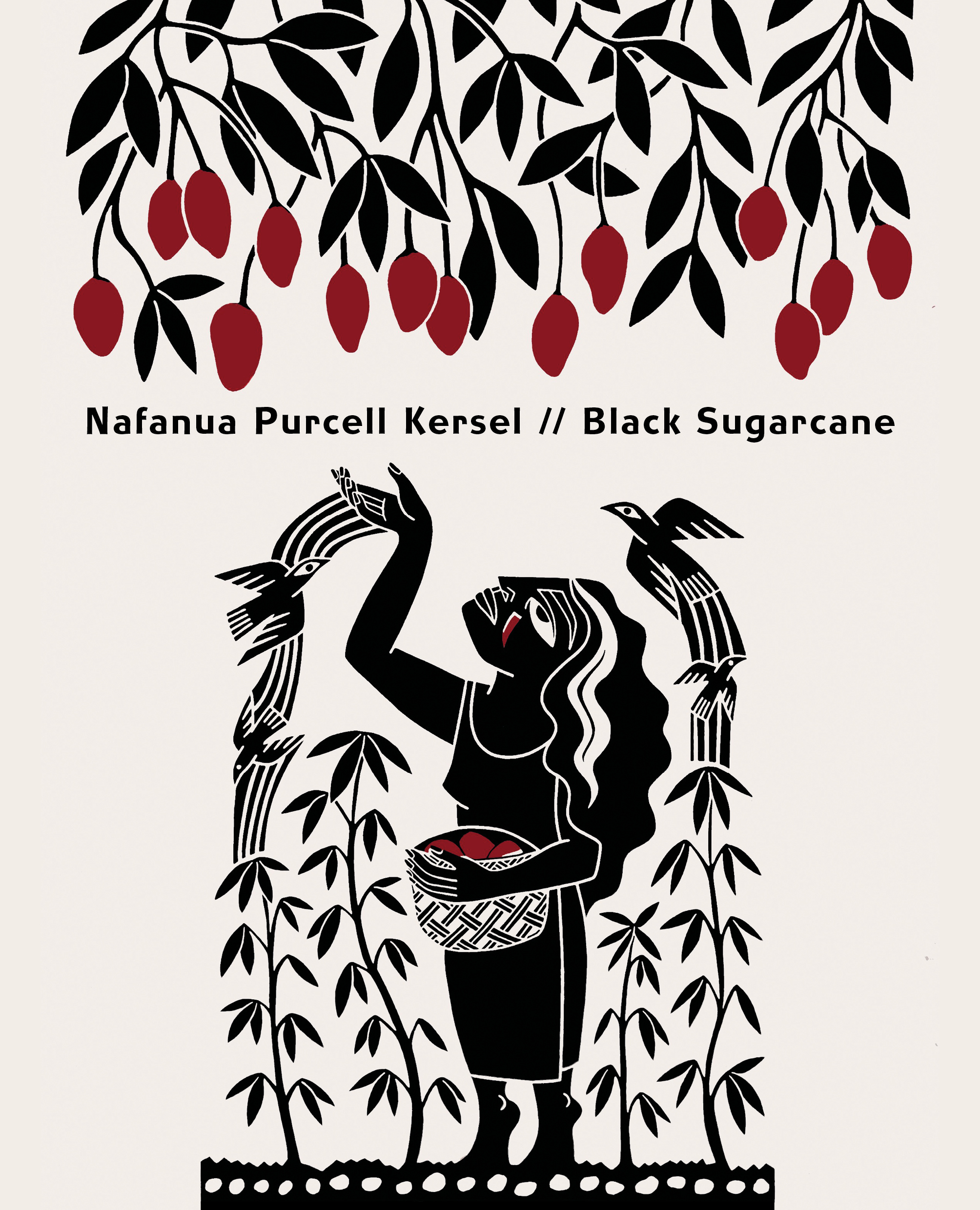
Black Sugarcane, Nafanua Purcell Kersel
Te Herenga Waka University Press, 2025

Moana Pōetics

We build a safe around our birth stones.
Craft it with a dream, a gourd, a drum-made
chant.

Pile it high with frigate bird bones,
song bones, bones of
cherished names.

We rub sinnet along our thighs and lash
our cache. Our stories kept sound, where words
and names and songs are not forgotten.

One day before, now, or beyond, something
with a heart drops a hank of its flesh
before us. It sounds like a drum and we know

it’s time
to undo the rope, iron-rock and bone-sand.
The stories, they tell us

that if we are the dark blue seas then we are
also the pillowed nights and days, soft with
clouds, spread half-open.

We are a tidal collection, hind-waters of the
forever we rally on, to break the staple
metaphors from the fringes.

Safe.
We sound together on a dance or
bark an intricate rhyme.

We, are the filaments of a devoted rope. We,
who contain a continuance and

call it poetry.

Nafanua Purcell Kersel

Nafanua Purcell Kersel’s debut poetry collection, Black Sugarcane is a book to savour slowly, with senses alert, ready to absorb the aroha, the myriad pathways, the songs, the prayers, the dance of living. The first line of the first poem, ‘Moana Pōetics’, is a precious talisman: ‘We build a safe around our birth stones.’ It is a found poem that uses terms from the glossary in Mauri Ola: Contemporary Polynesian Poems in English, edited by Albert Wendt, Reina Whaitiri and Robert Sullivan (Auckland University Press, 2010). The poem draws us deep into the power of stories, night and day, the ocean, safety, the power of rhythm. And that is exactly what the collection does.

The book is divided into five sections, each bearing a vowel as a title (ā, ē, ī, ō, ū), the macron drawing out the sound, as it does in so many languages like an extended breath. When I read of vowels in the poem, ‘To’ona’i’, the idea and presence of vowels lift a notch, and poetry itself becomes a ‘sweet refresh’, a warm aunty laugh: “Aunty Sia’s laugh is like a perfectly ripe pineapple / a sweet refresh of vowel sounds”.

Let me say this. There is no shortage of poetry books published in Aotearoa this year to love, to be enthralled and astonished by. We need this. We need these reading pathways. Sometimes I love a poetry book so much I transcend the everyday scene of reading (yes those bush tūī singing and the kererū fast-swooping) to a zone where I am beyond words. It is when reading is both nourishment and restoration, miracle and epiphany . . . and that is what I get with this book.

Begin with the physicality of a scene, a place, an island, a home. The scent of food being prepared and eaten will ignite your taste buds. Pies filled and savoured, luscious quince, the trickster fruit slowly simmered, a menu that is as much a set of meals as a pattern of life. Move into the warm embrace of whanau, the cousins, aunties, uncles, parents, grandparents, offspring. And especially, most especially, the grandmother and her lessons: ‘”If you want to learn by heart, / be still and watch my hands” (from ‘Grandma lessons (kitchen)’).

Find yourself in the rub of politics: the way you are never just a place name and that where you come from is a rich catalogue of markers, not a single word. The question itself so often misguided and racist. Enter the ripple effect of the dawn raids, or the Christchurch terrorist attack, or poverty, or climate change, crippling hierarchies. And find yourself in the expanding space of the personal; where things are sometimes explored and confessed, and sometimes hinted at. I am thinking pain. I am thinking therapist.

Find yourself in shifting poetic forms, akin to the shifting rhythms of life and living: a pantoum, a found poem, an erasure poem, long lines short lines, drifting lines. Find yourself in the company of other poets, direct and indirect lines to the nourishment Nafanua experiences as a writer: for example, Lyn Hejinian, Kaveh Akbar, Karlo Mila, Tusiata Avia, Selina Tusitala Marsh, Serie Barford, Konai Helu Thaman, Dan Taulapapa McMullin. So often I am reminded we don’t write within vacuums. We write towards, from and because of poetry that feeds us.

Bob Marley makes an appearance so I put his album, Exodus, on repeat as I write this. It makes me feel the poetry even more deeply. This coming together, this ‘One Love,’ this getting together and feeling alright, as we are still fighting, still uniting to make things better in a thousand and one ways.

I give thanks for this book.

a reading

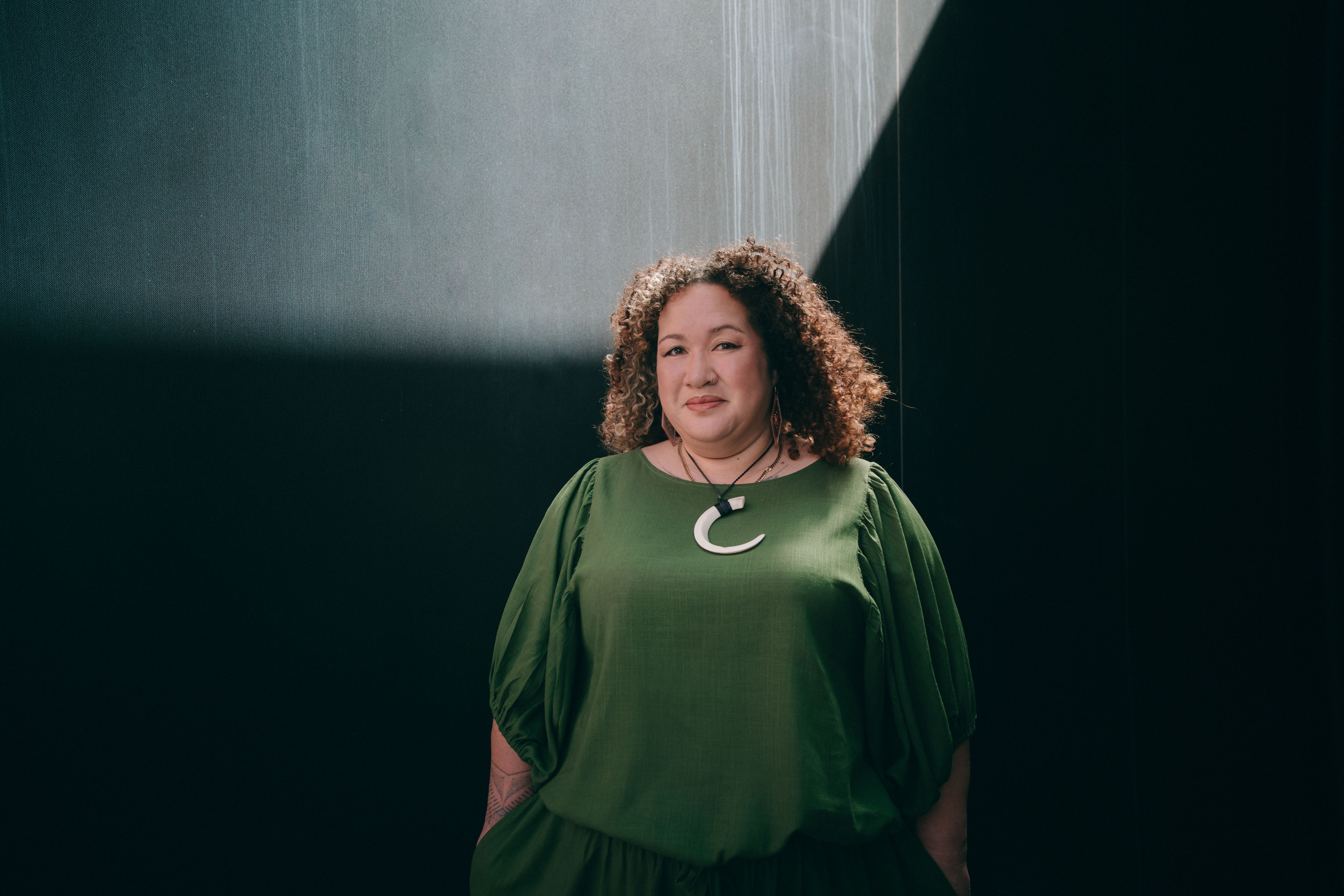
Author photo: Ebony Lamb

‘Moana Pōetics’

‘Grandma lessons (kitchen)’

a conversation

Were there any highlights, epiphanies, discoveries, challenges as you wrote this collection?

In a way, I guess the whole collection was a bit of a discovery process and the poems are little epiphanies. This is not the book I thought I would write at all. I had other ideas to really ‘brain’ my way through to a book but, in the MA workshop process I found that I needed to lead with heart and let the stories that have been waiting in my heart and family have the page. This sounds deep, and it was, but it was also faster so it’s one of the ways I coped with the pace of that year. 

I had many challenges writing this collection, many physical and logistical but I had such incredible support which is why my acknowledgements page is so long! The whole process of showing up—to the page, to my workshop group, to my supervisor, to myself and my family expanded my potential, and so the collection. Creatively, the acceleration of the MA year intensified my decision making and focus, but the time I took afterwards to dial down the intensity, rest and discover what the collection needed to be in the long-run brought many epiphanies, one being the structure of the collection using the long vowel sounds ā ē ī ō ū.

What matters when you are writing a poem? Or to rephrase, what do you want your poetry to do or be?


I want my poetry to make me feel something. I started writing poetry in my youth to be able to explain or process my own feelings and observations. So my first draft is always to myself. Of course, I also want my poetry to make the reader feel something, as well as understand the words, concepts, perspectives. So that’s my wish at a macro level, feeling. When I write a poem, I feel a sense of play, and unfiltered curiosity which I hope comes across, even subtly as interesting or inviting to the reader. 

Are there particular poets that have sustained you, as you navigate poetry as both reader and writer?

My Grandmas, obviously, and the poetry of their love and prayers. Also, I think almost every moana poet, storyteller, writer, playwright, orator whose words I’ve come across have kept me going in some way—as well as many more, moana or not, who I’ve not named in my acknowledgements! I will always, always be in awe of poetry and it will always fuel me.

We are living in hazardous and ruinous times. Can you name a few things that give you joy and hope?

Art, theatre, drag, music, old photographs, pets, karaoke, books, the Mana Moana concert (Signature Choir & NZSO), Tinā the movie.

Hang time with family, even if we’re not doing anything, being together is a blessing.

Working in community, I see joy and hope and potential every day in my mahi at Nevertheless NZ, a Māori, Pasifika and Rainbow mental health organisation where I have the honour of helping people through these ruinous times with connection, creativity and poetry! 

Rangatahi, I have three teens of my own and work with many young people so I’m kept engaged in the chaos and energy and ultimate blessing that is our youth. In April, I helped out at NYDS/Taiohi Whakaari-a-motu, a week-long performing arts programme for ages 14-19. Being with the students as they learned and lived through the arts for a whole week topped up my joy and hope tanks no end.

Nafanua Purcell Kersel (Satupa‘itea, Faleālupo, Aleipata, Tuaefu) is a writer, poet and performer who was born in Sāmoa and raised in Te-Whanganui-a-Tara, Aotearoa. Her poetry has been widely published. She has an MA from the IIML at Te Herenga Waka—Victoria University of Wellington and won the 2022 Biggs Family Prize in Poetry for Black Sugarcane, her first book. She lives in Te Matau-a-Māui Hawke’s Bay.

Te Herenga Waka University Press page

Poetry Shelf Monday Poem: ‘Evil Intensified’ by Karlo Mila

Trigger warning: suicide, racism

This poem is offered in the spirit of fierce love, justice, historical accuracy and statistical clarity. It is offered at a time when:

  • The latest UNICEF Innocenti Report Card 19: Fragile Gains – Child Wellbeing at Risk in an Unpredictable World, placed Aotearoa firmly at the bottom for child and youth mental health with the highest suicide rate out of 36 OECD and EU countries.
  • The Whakatika Report: A survey of Māori experiences of racism (2021) found that 96 percent of Māori felt racism was a problem for them and/or their wider whānau to at least some extent.
  • The current Youth2000-2019 survey series shows that experiences of racism and mental health inequities have increased over the 20 years of Youth2000 surveys. Current youth statistics for self-reported suicide attempts among high school secondary students: Māori 12.7%, Racialised non-migrants 7%, Racialised migrants 7.4%, Non-racialised migrants 3.5%, and descendants of settler colonial Europeans (Pākehā) 3.5%
  • Over a quarter of Pacific students reported serious thoughts of suicide in the last year (26.4%) in 2019, increasing from 18.8% in 2007
  • The Youth 2000-2019 report notes: “Embodiment of Whiteness that affects everyday interpersonal interactions; those perceived as White had better social experiences than those perceived as non-White. • Disadvantage among racialised migrants persisted intergenerationally; it can take several generations before disadvantages begin to abate, particularly for Pasifika populations.”

This poem is a response to this data. And a response to the coalition government budget that cut $9 million of Ministry of Pacific Peoples budget under David Seymour’s leadership, he who made public statements about blowing up the Ministry referencing Guy Fawkes. This poem is a response to the current coalition government and its attacks upon Te Tiriti o Waitangi, as well as blatant misrepresentation of the country’s founding document. It is a response to the whakamomori, suicide, of a tāne Māori public servant two days before the budget was announced, amongst targeted attacks on Māori and Pacific jobs in the public service. This poem is a response to our whānau experiencing three suicides in the first half of this year and the toll that this widespread despair and harm is having in our communities.

E V I L      I N T E N S I F I E D

“Bad as the Chinese are, the South Sea savages are worse, and any extensive importation of them would have … a most pernicious effect, even were the country solely occupied by Europeans; but, when we consider what a large native population of our own we have, the evil is intensified.”
31 May 1870, Evening Post, Dunedin, New Zealand

We came,
So many centuries
later,
#tongantime
cheap labour
on banana boats,
ready for factory floors,
when they opened the doors
during the big boom.

We fuelled the dirty engine rooms
of the economy,
then cleaned them.
Then, the end of the golden weather
oil crises, over reliance on England,
high inflation, wage stagnation,
structure, policy,
a problem
population.

Overstayers.
Oversize.
Overweight.
Excess.
Coconuts.
Taking jobs.
Last on, first off,

No surprises
about whose jobs
were lost.

When I found that stats
that showed,
that before the end of the golden weather,
we (Pacific peoples) were MORE likely to be employed
than the general population…
it made some *noise* inside me…
Us?
Lazy, overstaying
leeches and moochers,
so fat, on the public purse.

We… were harder working?
This truth
worked its way
through me.

We were not
the dead-weight
long brown tail
slowing down
an otherwise fine
upstanding beast?

But the story goes,
we overstayed
our welcome,
we were described as violent,
yes, the adverts on TV
were paid for
with National Party money.
And the fine print of the exit clause
was whispered out of the mouths of babes
in school yards…
bunga, black, coconuts,
the N-word.
My six year old pig-tailed self,
I heard it all.

How did the words fall?
Heavy. Horrible.
Scary. Unsafe.

Sickening.

The research says
racism…
is…

demeaning, disregarding, humiliating, demands submissiveness, makes disposable, degrading, hostile, emboldened, psychologically aggressive, invasive, nonchalant and contemptful, gloating, flaunts power and success, overjoyed by dominance, a false sense of superiority, looking down upon, excluding, it sees itself as having a superior work ethic, more merit, being self-made, self-entitled, self-centred, and more worthy of a “good life”

It is unaccountable, taken for granted, embedded deep…
And how does it feel when it falls?

One hundred and ten empirical studies say:

stress, emotional distress, distaste, fear of rejection, rumination on previous experience, defence mechanisms, avoidance strategies, intrusive thoughts, rejection sensitivity, anxiety, vigilance, scanning for threat, stereotype threat, self-doubt, internalised negative perception, depression, fear of future, panic attacks, aggression, hyper-awareness of surveillance, the hyper-and micro-aggression, criminalisation, dangers of incarceration, exhaustion, adrenaline from the adrenals of constant fight and flight, cardiovascular impact (heart race pumps more), hyperventilation (rapid shallow breathing), cortisol, drop in carbon dioxide (dizziness, light headed), digestion system suppression (dry mouth, sensory sensitive), cognitive emotional fear, dysregulates the stress response system, shame affects the limbic system, the prefrontal cortex is enables rumination, impairs executive functioning, upsets emotional regulation, disregulates the hormonal axis, affects the automatic nervous system, weakens the immune system…

It has a crushing
effect on communities of colour,
“racial battle fatigue.”
Exhausting.

Researchers use the word,
“weathering”
to describe the relentlessness
of the breaking down, eroding
wearing down
and dissolving of the
human spirit.

Researchers note
that individuals
have a differential exposure
to racially based stressors.

It is NOT racist to say,
that it is mostly NOT white people
who experience the
relentless stress
of “weathering”.

But maybe,
weathering is a word
that disproportionately
includes white people,
who have been determined “other”
“crazy”, “mental”, “insane”,
“retards”, “spastic”, “handicapped”,
“queer”, “gay”, “homo”,
faulty, less than,
not whole,
not same,
but
*different*.

Not
normal
enough.

And they also
face
daily, crushing
discrimination,
corrosion
caused
from the
highest,
horrible,
and most holy
of places.

This is similar,
but not the same
as being ethnically *marked*
visibly, in ways you can’t unskin,
inescapably
associated with dark black,
yellow peril,
red indian,
or the savage sea brown of
“evil intensified”.

Every country in the Anglosphere
has a living breathing target.

Here: Māori,
followed by Pacific peoples,
although let’s be real,
we are the “colourful”
inconvenient “cousins”
better if we just went home
but we are not
the bullseye eye
target
of disgust.

My Pacific family,
can we be honest,
from the churchgoing,
polite seats,
we watch the
arrows
flying mostly
in their direction.

Especially
the swarming attacks
in the hive minds
led by the Beehive.

In this region, yes,
it is us.
Polynesians.

For so long,
the word Polynesians here,
did not include Māori.

Why?
Because Māori can’t overstay.
Because they can only be in the way.
You can’t Dawn Raid Māori.
Because they can’t: “Go back to where you came from!”
Because they are the people whose home,
has been taken
as *our* own.

In 1856, The physician and New Zealand politician, Dr Isaac Featherston, said it
was the duty of Europeans to ‘smooth down … [the] dying pillow’ of the Māori race.

1881 the prominent scientist Alfred Newman pronounced that, ‘the disappearance of the race is scarcely subject for much regret. They are dying out in a quick, easy way, and are being supplanted by a superior race.’

But, they’ve survived
the genocide
that was predicted.

They’ve survived the wars
we don’t talk about,
or teach about,
of European occupation.

Now, we see a slow
conquer and divide
of evil intensified.
A daily day,
Newstalk A to Z,
a weekly weathering
the Media Works
with poisonous prejudice,
seeping toxic Stuff
Heralding intolerance
from the highest on high,
self-titled Dominion,
into the smallest of small,
New Zealand Media and Entertainment
in every hall,
of our cities.

Politicians dishing toxic
doses of
demoralising despair,
seeding superiority,
speaking with
irradiated tongues,
tricking our young,
our men,
our women,
our whānau
into feeling
unworthy.

Knowing, somehow,
even if it’s too late
to take
the lives
of evil intensified,
our
society,
us,
we,
together,
relentlessly
unkind,
can
make
them
want
to
take
their
own.

Karlo Mila

Dr Karlo Mila (MNZM) is an award-winning poet of Pākeha and Pasifika descent (Kolofo’ou, Tonga, Ofu, Vava’u, with ancestral connections to Samoa). For seven years, Karlo ran the leadership programme Mana Moana at Leadership New Zealand. Mana Moana was based on her postdoctoral research on the ancestral intelligence of Pacific peoples in the region, indigenous Pacific languages, knowledge, and understandings of how to heal. She has worked in suicide prevention and been a researcher of mental health and wellbeing among Pacific peoples in Aotearoa, New Zealand. Karlo’s work is widely anthologised. She has three books of poetry. She is currently writing two books, one non-fiction and a new book of poetry. Karlo lives in Whanganui-a-Tara with her partner and three of their five children.

Poetry Shelf celebrates Michael Fitzsimons

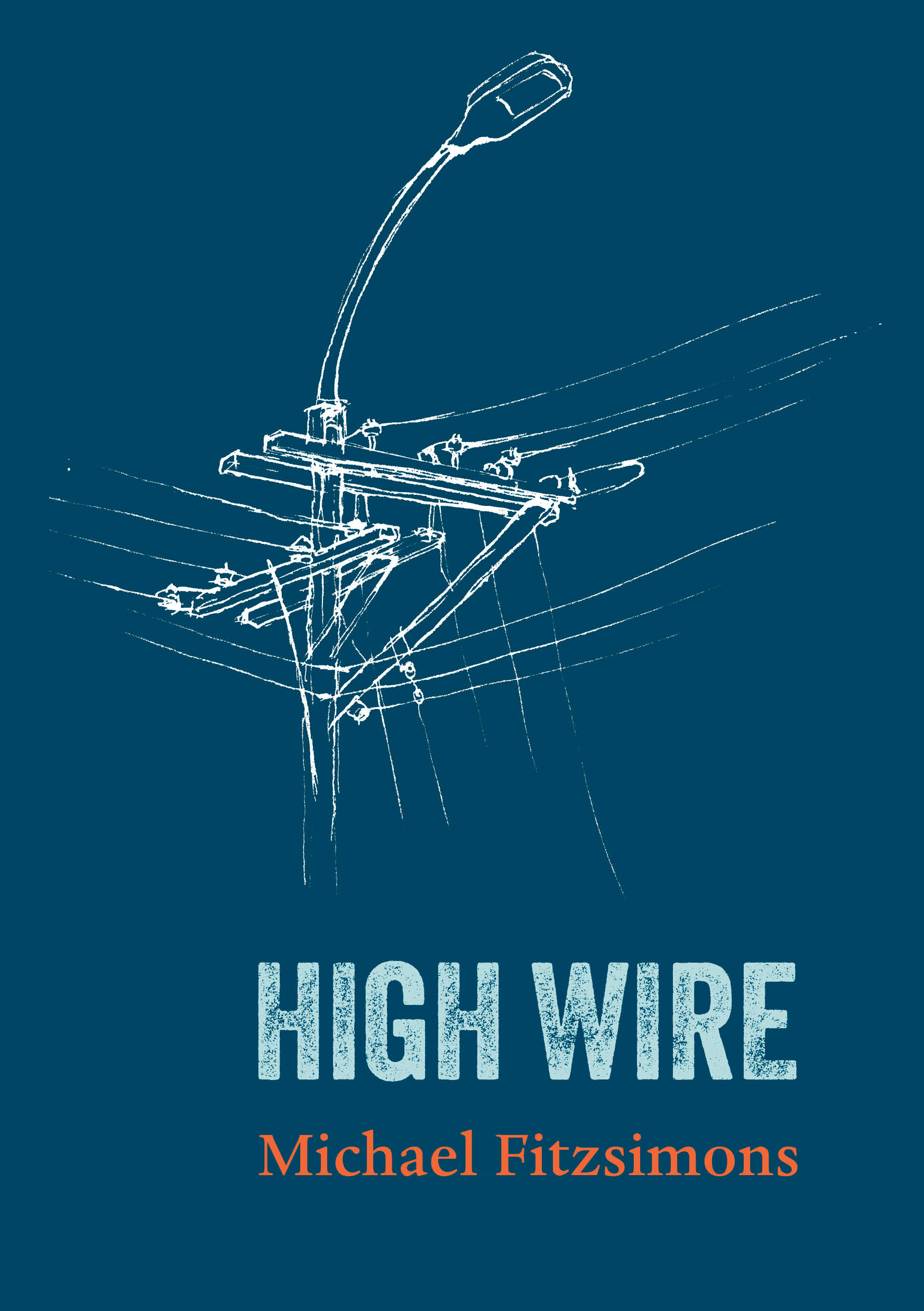
High Wire, Michael Fitzsimons, The Cuba Press, 2025

Now turn around
and see whitebaiters at the river mouth
and the puka leaf in the corner of the garden,
a rim of green brilliance,
and your home filled with homeliness,
noise and kids in every room,
and a woman with a voice like a bell,
singing a mountain hymn
right there in the kitchen.
And you far above the earth,
singing along.

Michael Fitzsimons
from ‘Remission’

Michael Fitzsimon’s new collection, High Wire, is a celebration of life: evocative, intimate, reflective. Home is a vital anchor as we absorb entwined threads of childhood, mythology, illness, recovery, reading, writing, routines and sidepaths.

The first section, a longish sequence entitled ‘All This’, offers the reader vital breathing space, a sweet slowness of arrival. In this current smash of global upheaval, when to pause and refresh feels like a necessity, Michael’s precious book is a gift. I am sitting here, in a zen-like state, the pīwakawaka dancing outside the bedroom window, a helicopter circling overhead, and I’m emptying my mind, falling into the sublime space of contemplation. Falling into this poetry uplift.

I slip into lines that are pinpricks upon the skin, sometimes pungent, sometimes tender, sometimes delicate: “Many are the things, she says, that can run a plough / through your heart.” The lines might expose a personal chord or the wider, collective wounds we face:

“If I don’t listen to Morning Report
it’s going to be a good day,
full of bounce and soft foliage.”

At one point, the poet lists the people in pain who surround him, at another times figures such as Bart Simpson, Henry VIII, Heraclitus, Parmenides, his yoga teacher, make an appearance. The circumstances of living and reading and writing are jagged and miraculous and everything in between. It’s high wire and it’s rejuvenating.

The second section, ‘And More’, comprises individual poems, a pocket-book suite of images and thoughts, and again, as with the first sequence, I am reminded of the exquisite breathing space, the spareness and physicality of Vincent O’Sullivan’s poetry. Again we are entering the varied rhythms of living, the acute epiphanies, the rewards of observation, the ebb and flow of memory.

When I put this precious book down, the pīwakawaka is now still, the helicopters now quiet, the missing dog walker found, and I feel like crying. It’s that curious and sublime mix of joy and wonder and delight. It’s intoxicating. It’s restoring. I am mindful how the rhythm of writing is so important, whatever the genre, because the rhythm of living is so very important. How words can sing and shine in our hearts when we most need them. And that moment is now.

I think about your struggle
to get it down,

your doggedness
in the quiet afternoon,

one more cup of coffee,
one more seagull drifting by the window,

your search for the hidden thing,
patient as an angler.

from ‘The writer’

A reading

‘Credo’

‘Four Square philosophy’

‘The fin’

A conversation

Were there any highlights, epiphanies, discoveries, challenges as you wrote this collection?

I wrote many of these poems in the long aftermath of a cancer diagnosis. As the months and years ticked by I felt increasingly over the moon for simply being here, for all the people around me and the beautiful natural world I inhabit on the edge of Wellington harbour. I hope the collection reflects an acute appreciation for the most simple things in life, and also an awareness of how precarious life is.

The first half of this collection is a series of short pieces / poetic fragments. This loose form gave me the freedom to try and capture poetically the rambling thoughts and feelings from that time of recovery. The mind is roaming widely but I think and hope there is a cohesion there.

What matters when you are writing a poem? Or to rephrase, what do you want your poetry to do?

I want my poetry to be honest to the thoughts and feelings I am having. I want there to be a core of emotional truth underlying the words which the reader might recognise in their own lives. To convey that truth in an interesting poetic form, in fresh images and story and metaphor, is always the challenge.

For me writing a poem is an interplay between the things I set out thinking I want to say and the things that arise unexpected in the writing of the poem. My best poems come as something of a surprise to myself.

I have found there are many different starting points for a poem. It might be an image or an idea, an object or a phrase, a memory or a strong emotion. It might be something someone said, it might be something I have read. The seeds of a new poem lie everywhere.

I value simplicity and accessibility in poetry. I would like my poetry to contain elements of surprise, gratitude and wonder.

Are there particular poets that have sustained you, as you navigate poetry as both reader and writer?

There are many poets I love. Particular favourites are Billy Collins, Mary Oliver, William Stafford, Charles Simic, Carol Ann Duffy and Wisława Szymborska. On the local scene I like Geoff Cochrane, Jenny Bornholdt, Peter Bland, Brian Turner, Elizabeth Smither and many others.

I am inspired by the work of other poets but I have learned not to try and copy them. I am always learning from them but the goal is to speak in my own voice, reflect my own experience of what it means to be human.

I am sustained by the dedication of other poets to the craft (I am not alone in this addiction to writing!) and I am sustained by so many knock-out poems that take my breath away.

We are living in hazardous and ruinous times. Can you name three things that give you joy and hope?

My friends and family – all three generations.

The beauty of the natural world that surrounds me. I live by the sea and walk the coastline most days.

The nourishment of the spirit – reading, singing, meditation, yoga.

Michael Fitzsimons has published three books of poetry. His first collection Now You Know was recommended in RNZ’s annual poetry highlights. His second collection, Michael, I thought you were dead, dealt with a cancer diagnosis and was described by Joy Cowley as ‘a feast for the soul’. His third collection, High Wire, was published in February this year.

Michael is a professional writer and member of the three-person South Wellington Poetry Society. He was co-founder of the Wellington communications and publishing company, FitzBeck Creative. He has co-written two books with Nigel Beckford: With a Passion, the extraordinary passions of ordinary New Zealanders and You Don’t Take a Big Leap Without a Gulp – finding the courage to change careers and live again.

He lives with his wife Rose in Seatoun on a hill overlooking the harbour. They have three children spread from Wellington to Warsaw to upstate New York.

The Cuba Press page

Poetry Shelf: Michelle Elvy’s Poem Dispatch from the USA

The six stages of these 100 days

we used to cry    
a lot
we cried about [                              ]
and [                                   ]
and [                                              ]
(you know)

we used to ask how
and who on earth
we asked [                                      ]
and [                                      ]
and [                                ]
(so many questions)

we used to rant and rave
megaphones to our mouths
we yelled about [                              ]
and [                                                  ]
and [                                                              ]
(can’t they hear us?)

we used to comfort each other
bottom’s up, we’d say
we’d say [                                       ]
and [                                                           ]
and [                                                                    ]
(don’t they care?) 

we are in the middle of it now     
it’s for real
we are numbed from [                              ]
and [                                           ]
and [                                   ]
(they’re not listening, they don’t care)

we can’t cry anymore
so we make fun
we tell jokes about [                                                  ]
and [                                                                                                      ]
and [                                                                                                                         ]
(loud as love, louder than bombs)

we laugh and we laugh and we laugh

Michelle Elvy
20 April 2025; day 90 of the first 100 days of the 47th presidency of the US

  Note: There is no seventh stage, because there is no acceptance

Michelle Elvy is a writer, editor and teacher of creative writing. Her books include the everrumble and the other side of better, she has edited numerous anthologies, including Te Moana o Reo | Ocean of Languages, edited with Vaughan Rapatahana (The Cuba Press), and the forthcoming Poto! Iti te kupu, nui te kōrero| Short! The big book of small stories, edited with Kiri Piahana-Wong (MUP).

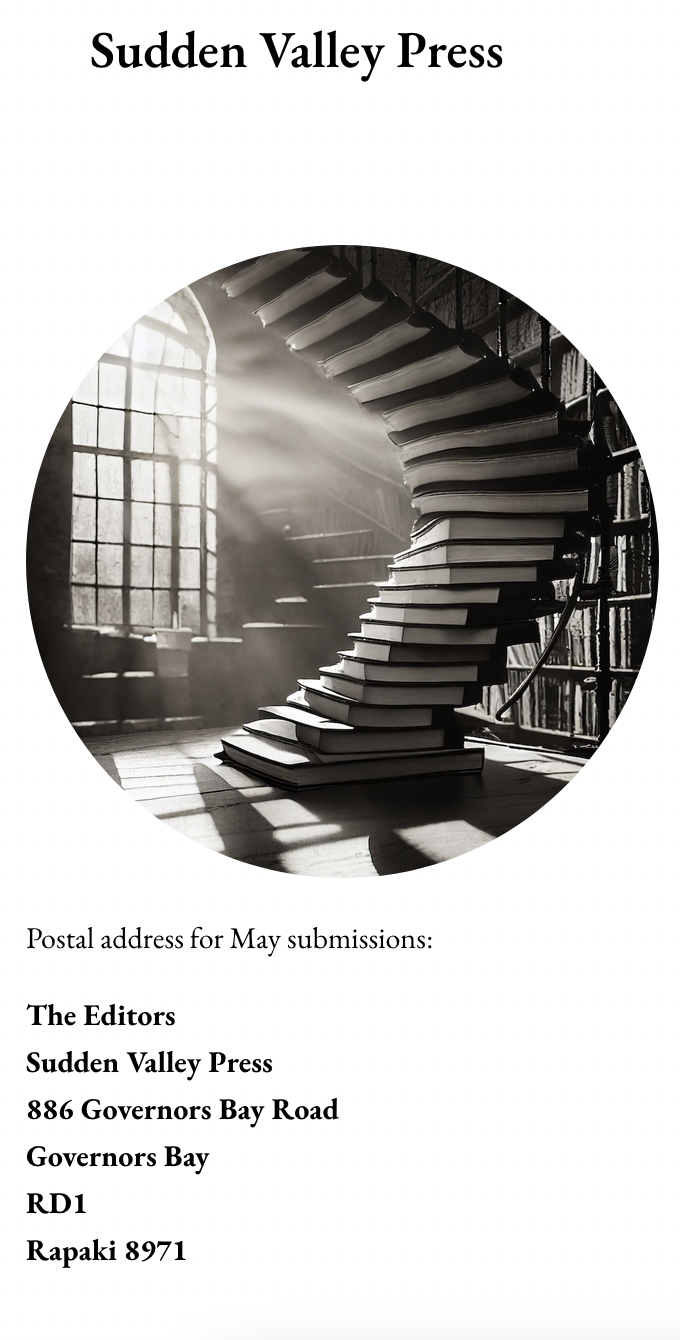
Poetry Shelf noticeboard: Sudden Valley Press open for poetry manuscript submissions in May

Sudden Valley Press is OPEN for poetry manuscript submissions until 31 May 2025. (They are only open for unsolicited submissions during the month of May each year.)

Details and guidelines here

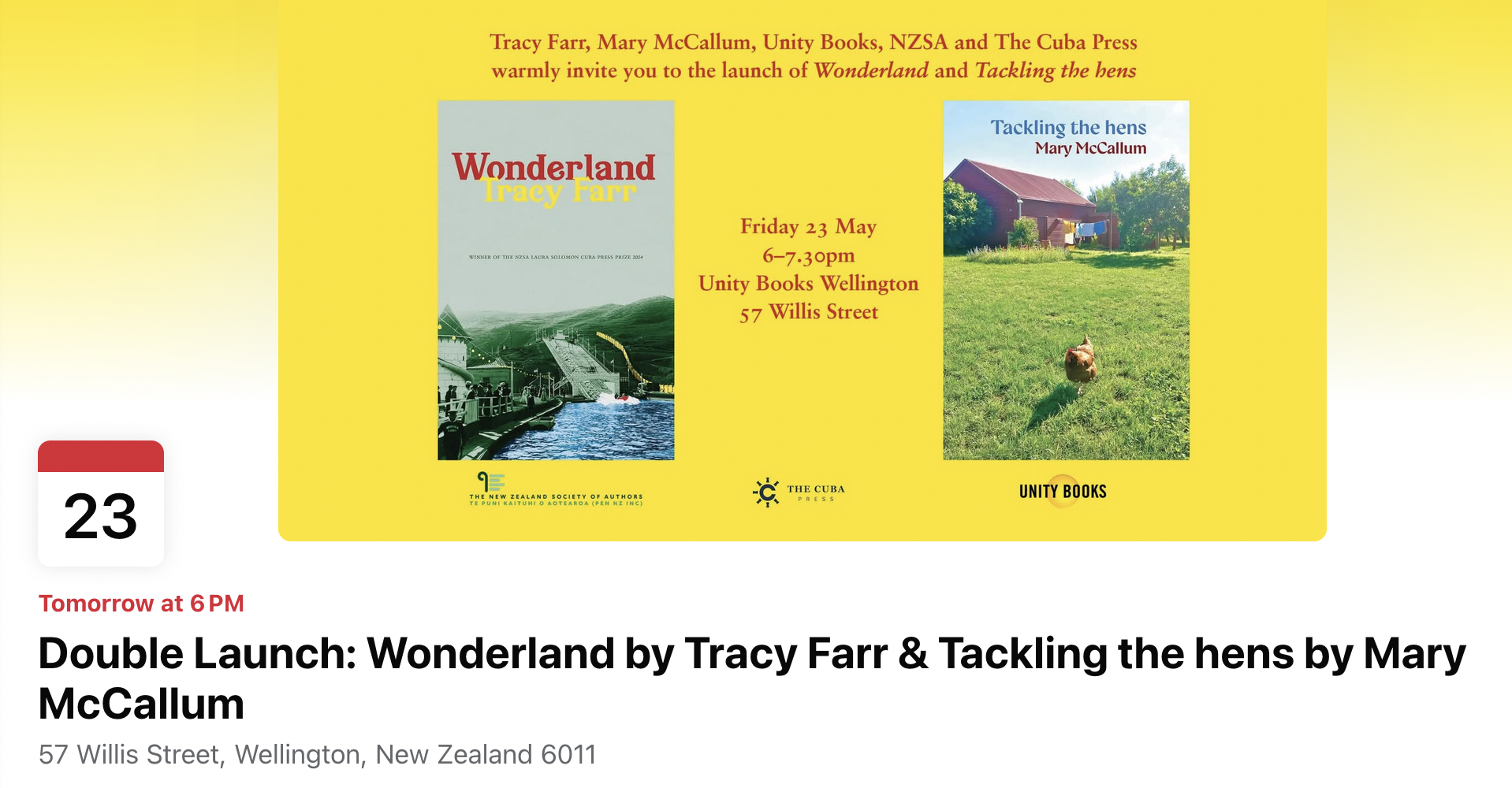
Poetry Shelf noticeboard: Tracy Farr and Mary McCallum launch

Unity Books Wellington

57 Willis Street, Wellington, New Zealand 6011

23 May at 6 pm

Join us for this special celebration with The Cuba Press. We’ll be launching Wonderland by Tracy Farr and Tackling the hens by Mary McCallum.

Wonderland by Tracy Farr was the winner of the NZSA Laura Solomon Cuba Press Prize 2024 that’s already received high praise;
‘Passionate, beautifully constructed, sorrowful and yet immensely hopeful.’—Fiona Kidman.

‘Mesmerising. A book that leaves you filled with wonder, and deeply moved. I loved it.’—Gigi Fenster.

Mary McCallum is a writer and publisher who lives in the Wairarapa and Pōneke. Tackling the hens is her new poetry collection. Her own published work includes award-winning novel The Blue, a poetry book XYZ of Happiness and a children’s novel Dappled Annie and the Tigrish.

All welcome to celebrate these two new, wonderful books.

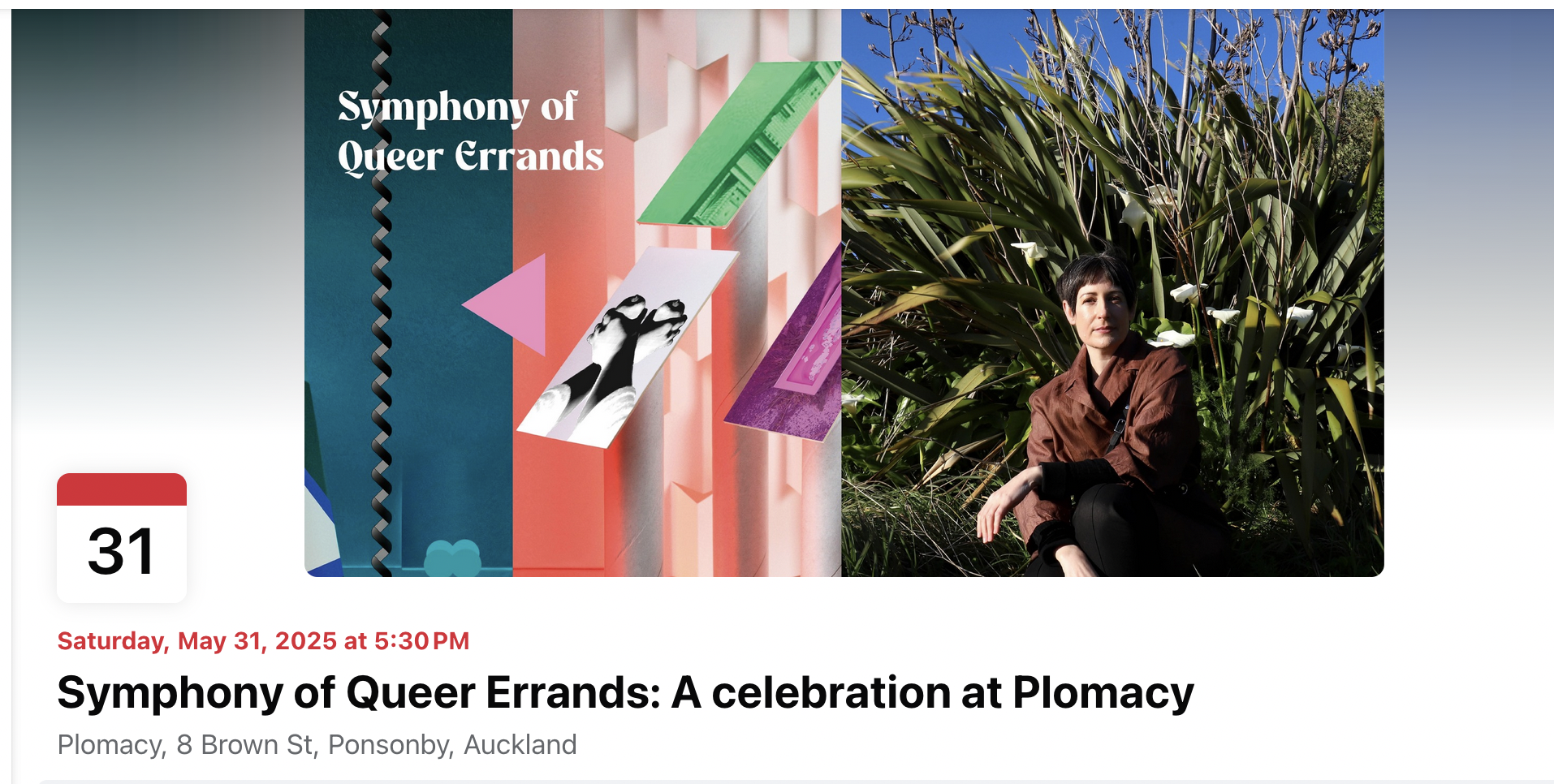
Poetry Shelf noticeboard: Symphony of Queer Errands celebration

Please join Tender Prss on Saturday 31 May to hear readings from Rachel O’Neill’s new book, Symphony of Queer Errands, accompanied by a musical performance by Lucky Pollock!

Celebrations will kick off at 5.30pm at gallery and bookstore Plomacy, located at 8 Brown Street, Ponsonby.

Poems on Poetry Shelf: Gaza by Bill Manhire

Gaza

The dead boy tries to open his eyes.
He wants to see the world he is leaving.
But there is nothing to see here,
nothing and nothing, and anyway he is gone.
His parents held him while he died
but they are both dead, too.
Or he held them, no one remembers.

Bill Manhire

Bill Manhire’s most recent books, all published by Te Herenga Waka University Press / Victoria Press, include Wow (2020), Some Things to Place in a Coffin (2017), Tell Me My Name (with Hannah Griffin and Norman Meehan, 2017) and The Stories of Bill Manhire (2015). He was New Zealand’s inaugural poet laureate, and founded and for many years directed the International Institute of Modern Letters at Victoria University of Wellington. He has edited major anthologies, including, with Marion McLeod, the now classic Some Other Country: New Zealand’s Best Short Stories (1984).