Monthly Archives: February 2025

Poetry Shelf celebrates the Mary and Peter Biggs long list: Alison Glenny

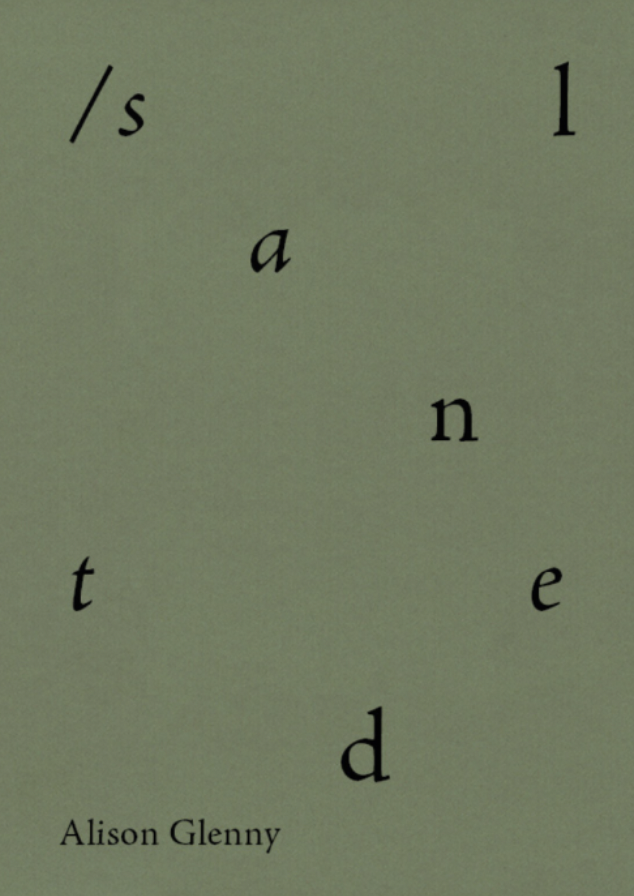
/ slanted, Alison Glenny, Compound Press, 2024

        from APPENDIX: SÉANCE NOTES


S2.1

Small volume bound in dark

~

sheets brittle heavy
to the touch

~

astral tables ocean steamships
Gold letters gilt-edged

~

thin spines cracks

 from THE MOUNTAIN LOVER

. . . ] a perfectly good damper. Dipped
in demerara, pineapple pleases in slices.
Peaches from a tin slip down easily with
syrup. Breakfasts in darkness, swallowed in
haste, alpine starts require second repasts.
Luke-warm, sipped from a spoon, an
infusion soothes swollen lips. An ounce of
cocoa and quart of tea gives strength for
superfluities. Meals at strange hours means
forcing and nibbling, sometimes gorging
and a feast [

. . . ] a handkerchief of silk, so useful. Leg
of mutton sleeves beneath pelisses. Fur of
fox or lynx is garnish for a neck preserved
with creams. A complexion spoiled, spilt
milk. Hot water foments, no Cleopatras or
asses. Only a cheek that once was tender [

Alison Glenny

Alison Glenny’s longlisted collection is inspired by Edwardian mountaineer Freda Du Faur (1882-1935), an Australian who was the first woman to summit Aoraki Mount Cook. Alison borrows from Freda’s memoir, The Conquest of Mount Cook and other Climbs: an account of four seasons’ mountaineering in the Southern Alps of New Zealand (1915) and unpublished correspondence to Otto Frind.

You can listen to an abridged version of Freda’s book on RNZ.

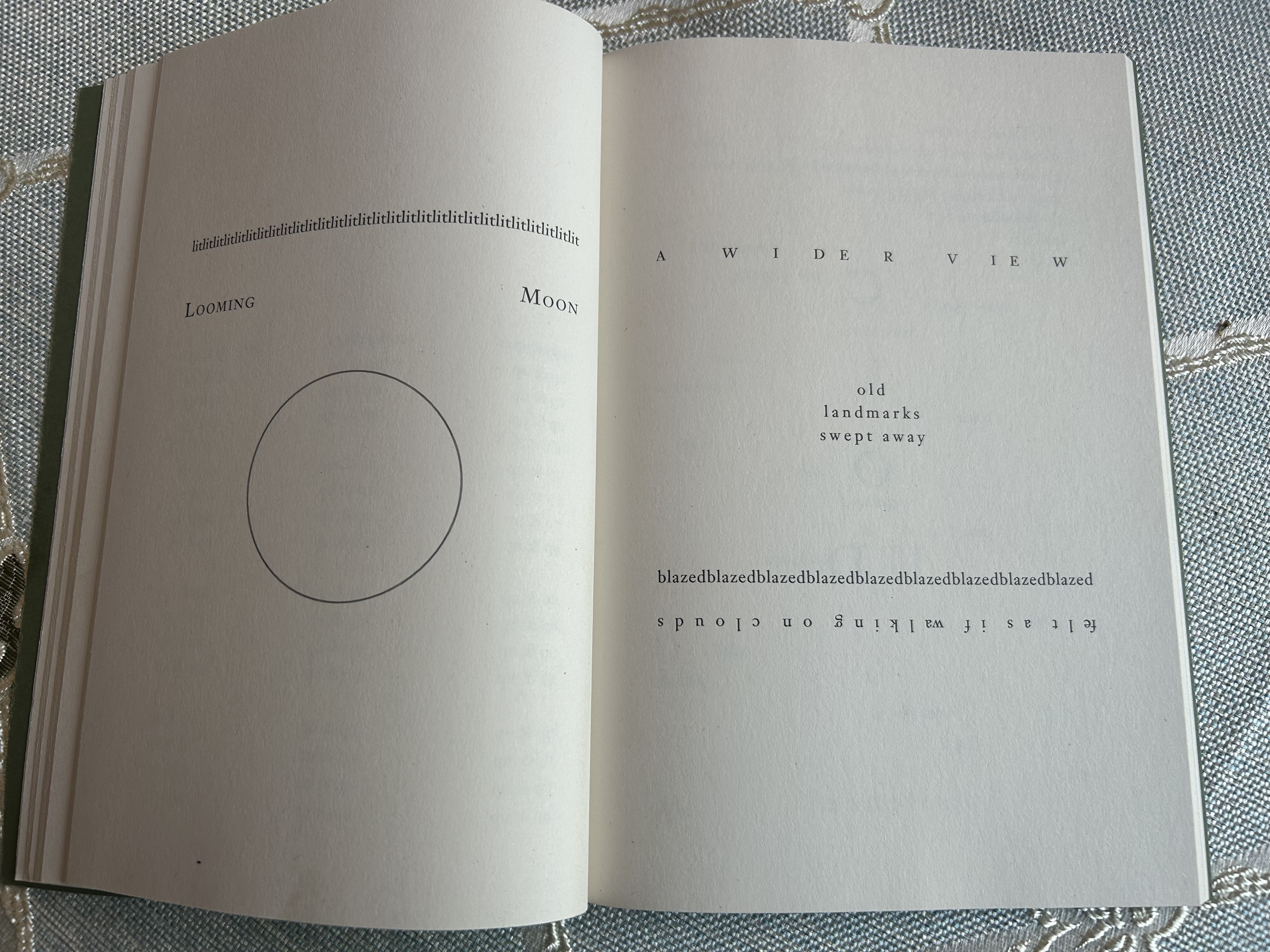
Enter this sublime poetry, and you enter the terrain of light and peak, edge and step, avalanche and bouquets. The words form a soundtrack, a gift for the ear, a visual track, a gift for the eye, and a heart track, the mesmerising movement in the white space between, the silence, the icy snow. Reading becomes surrogate climbing walking ascending slithering transitioning contemplating. I stall on this book. I get lost and astonished within the book’s crevices and footprints. I am in the archives and I am in the mountains, wandering and wondering and absorbing. A insistent question. What do we scavenge and retain from the view, whether from alpine mountain side or buried archival file?

There are five distinct sections: a prelude, the archival borrowings, concrete poems, correspondence quotations, an appendix and a coda. Haunting movement on the page. Haunting travel in the mind. Resonant travel in the heart.

This book, this handbook of infinite travel.
The readings
‘under canvas’

‘conjured from thin air’

Alison Glenny is the author of The Farewell Tourist (Otago University Press, 2018), Bird Collector (Compound Press, 2021), and /Slanted (Compound Press, 2024), which responds to the queer life of the Edwardian mountaineer Freda du Faur. In 2019 she was an Ursula Bethell writer in residence at the University of Canterbury, and in 2024 the Caselberg Trust Margaret Egan City of Literature resident. She lives on the Kāpiti Coast.

Compound Press page
Poetry Shelf celebrates Mary and Peter Biggs Poetry Long List: Robert Sullivan

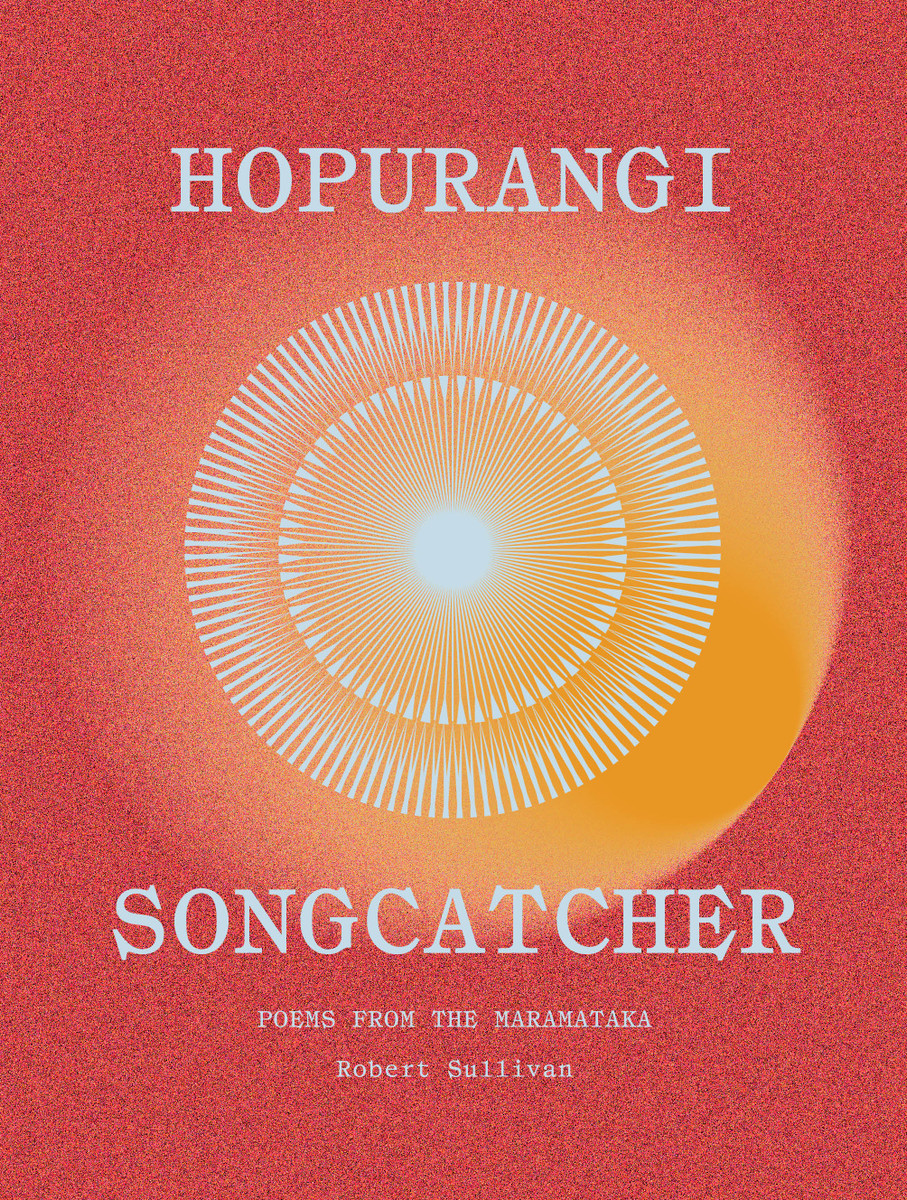
Hopurangi -Songcatcher Poems from the Maramataka,
Robert Sullivan, Auckland University Press, 2024

Ōrongonui 1: ‘Breezy vibes’ (((((((((((((((High Energy)))))))))))))))

Breezy vibes, says the podcast Taringa. I’m one of ‘those
people’ who says ‘hauhū’ instead of ‘hauhunga’
in the karakia ‘Whakataka te hau’ ’cause
I didn’t know better. Every version I found
says that, then I learn from Taringa it isn’t a word at all.
Auē taukuri ē! And then I learn that ‘aroha mai’
generally doesn’t mean ‘sorry’, that it’s clearer
to say ‘nōku te hē’. Then the panel on Taringa
talked about intensifiers like ‘rirerire’,
‘pohapoha’ and ‘mārika’. If you say
someone is ‘ātaahua rirerire’ it means
they are exceptionally beautiful. ‘Mārika’
also has that effect to mean ‘absolutely’.
‘Pohapoha’ does too, and also ‘crammed’
like in the phrase ‘ka kī pohapoha taku kete’
which means ‘my basket is full to the brim.’
Tērā pea, ōrite ki te manawanui nē?
I hope I’m keeping my vibes breezy here.
I listened driving into Puketeraki.
It was afterwards driving home that I found out about ‘hauhū’.
Yesterday was an exceptionally beautiful day.
Inanahi, he rā ātaahua rirerire.

Robert Sullivan

I often use the word ‘breathtaking’ when I am tagging a poetry collection I love, and yes, poetry can take your breath away but, after reading Robert Sullivan’s sublime new collection, Hopurangi -Songcatcher Poems from the Maramataka, I am musing on the idea, ‘breath-enhancing’. I am in the luxurious position of being able to slow read, to wind the reading pace down to country road rambles, so I may savour and absorb and delight. I do want to add that I am huge fan of beach running, of getting into a sweet rhythm that gets mantras flowing, and I relish the jumpstart of crime fiction and exhilarating breakneck poetry.

Robert’s new collection is inspired by Maramataka, the Māori lunar calendar. After a long absence from Facebook, over a three-month period, he posted a poem a day, attuned to the lunar cycle energies, drawing upon what he was learning about Maramataka. Each poem is tagged with an energy meter – low, medium, or high. The resulting poetry is a testimony of whanau, language, the natural world and aroha.

How Robert’s poetry resonates alongside the current political edicts, prescriptions and alarming descriptions of what the Coalition Government pledges for the child, the adult and our planet. In Robert’s sublime and breath-enhancing collection, I am finding seeds of hope. Of te reo Māori growing alongside English, both languages vital on our tongues, of tending our relationships, whether human or planetary, with care as opposed to greed, of acknowledging our spikes and our difficulties, of never ceasing to learn new things. I hold this collection out to you as a book of freshness, of reassessing and finding one’s place, a book of experience, wisdom, friendship, hope. And above all, a book of aroha.

The readings

‘Continuous Positive Airway Pressure Machine’

‘Pupurangi Shelley’

‘The Paper Chase’

Robert Sullivan (of Ngāpuhi, Kāi Tahu, and Irish descent) is the author and editor of fifteen books. He co-edits The Journal of New Zealand Literature with Dr Erin Mercer, and is President of the NZ Poetry Society. Among his awards is the Lauris Edmond Memorial Award for a distinguished contribution to New Zealand poetry. Hopurangi | Songcatcher: Poems from the Maramataka is his ninth collection of poetry and is published this month by Auckland University Press. The three recorded poems are “Pupurangi Shelley,” “The Paper Chase” and “Continuous Positive Airway Pressure Machine” from his new collection.

Auckland University Press page


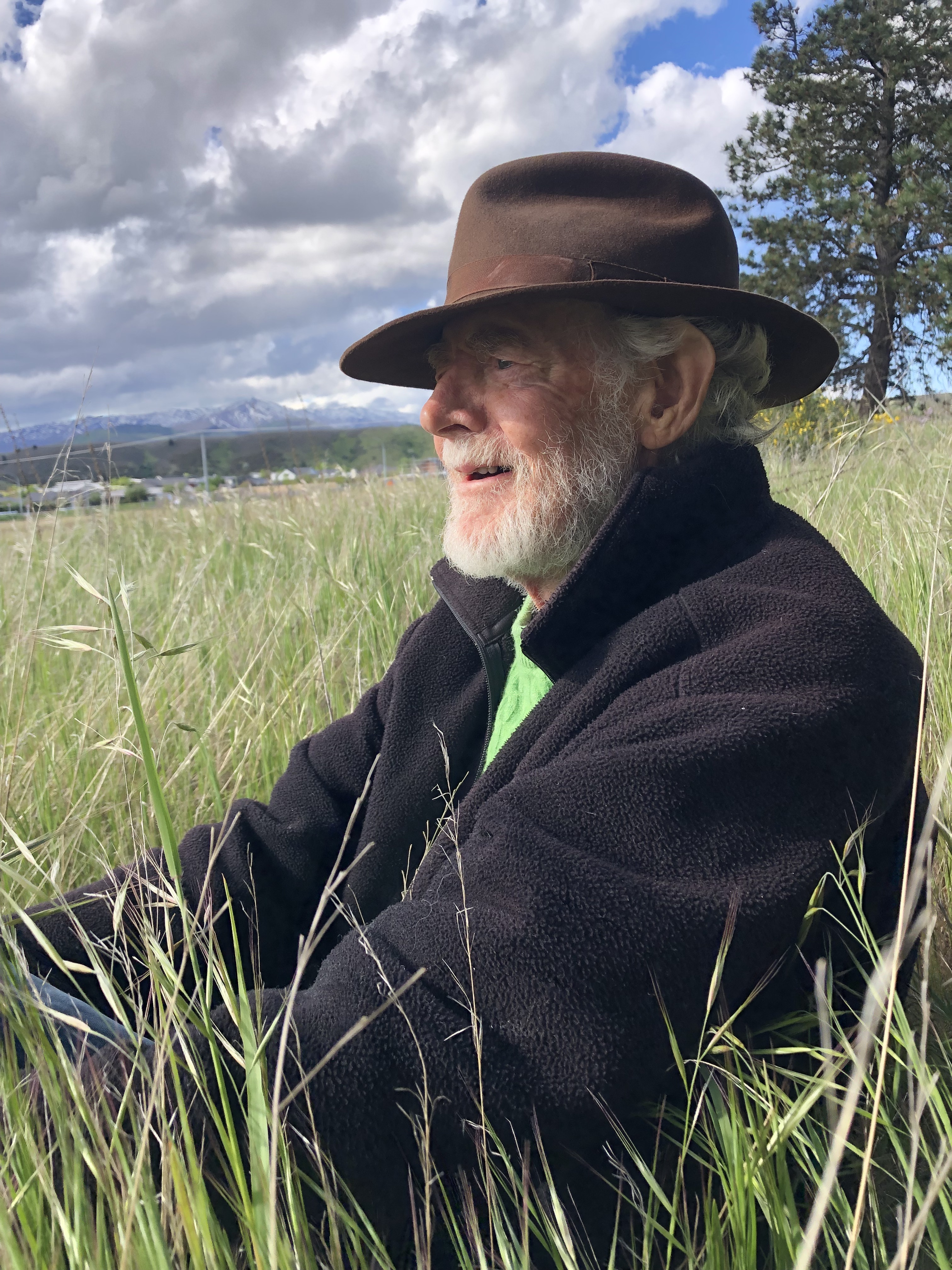
Poetry Shelf: Brian Turner (1944 – 2025)

Just This

Find your place on the planet, dig in,
and take responsibility from there.
_ Gary Snyder

Affecting without affectation, like these sere hills
then the early evening sky where Sirius dominates
for a time, then is joined by lesser lights,

stars indistinct as those seen through the canopies
of trees shaking in the wind. There’s this wish
to feel part of something wholly explicable

and irreplaceable, something enduring
and wholesome that supresses the urge to fight …
or is there? Ah, the cosmic questions

that keep on coming like shooting stars
and will, until, and then what? All I can say
is that for me nothing hurts more

than leaving and nothing less than coming home,
when a nor’wester’s gusting in the pines
like operatic laughter, and the roadside grasses

are laced with the blue and orange and pink
of bugloss, poppies and yarrow, all of them
swishing, dancing, bending, as they do, as we do.

Brian Turner
from Just This, Te Herenga Waka University Press, 2009

With much sadness, with collective sadness, we are mourning the loss of Brian Turner, a poet, writer, conservationist, who gifted us much, whether we are writers, readers, guardians of the earth, lovers of nature.

Over the coming weeks, Poetry Shelf will assemble a tribute, but today my heart goes out to family and friends, to our writing communities, and in particular to his beloved partner, Jillian Sullivan.

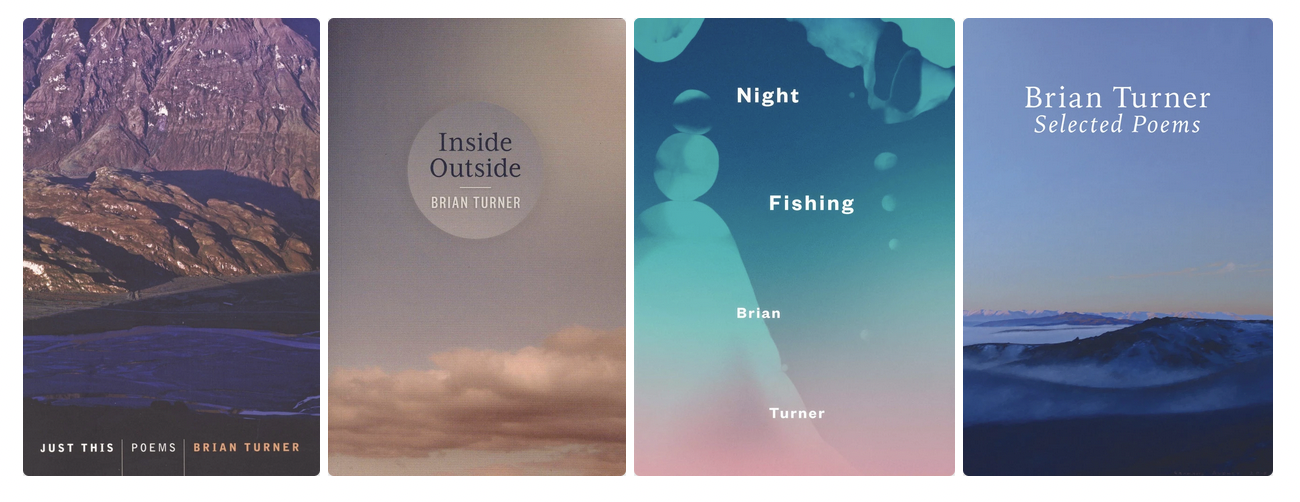
Brian Turner was born in Dunedin in 1944. His first book of poems, Ladders of Rain (1978), won the Commonwealth Poetry Prize and was followed by a number of highly praised poetry collections and award-winning writing in a wide range of genres including journalism, biography, memoir and sports writing. Recent and acclaimed poetry collections include Night Fishing (VUP, 2016), and Just This (winner of the New Zealand Post Book Award for Poetry in 2010). He was the Te Mata Estate New Zealand Poet Laureate 2003–05 and received the Prime Minister’s Award for Poetry in 2009. In 2024, The Central Otago Environmental Society, COES, awarded Brian Turner the NZ Poet Laureate of Nature for his lifetime’s work in poetry and activism, fighting for and celebrating the natural world. He lived in Central Otago.

Poetry Shelf celebrates the Mary and Peter Biggs Poetry Long List: Lee Murray

Fox Spirit on a Distant Cloud, Lee Murray, The Cuba Press, 2024

from 婦 Woman

When you were born here in the land of the long white cloud, in the savage bushlands of New Zealand; when you were born at the turn of the century, you were a little strangeness, an alien olive strangeness with mysterious almond eyes.

You do not recall your mother, a woman of this country, because you were ripped from her post- partum. She is a stranger to you, because before you could protest you were taken by ship to the Middle Kingdom to dwell in the home of your ancestors. You were still a sapling then, when you were parted from your mother, uprooted from these moody bush-clad cloud-lands and carried across the sea to the golden country. You were one-part willow and one-part mānuka, an out-of-place unbelonging strangeness.

Your father had high hopes, though, that you might bloom pure and pink as a lotus, if only your feet were planted in the mud of the old country. A mysterious strangeness, you might yet become a golden landscape, if only you could be shaped and tended. You might even become a sacred penjing, a tiny landscape, grotesque yet beautiful. If only you could be contained.

my bonsai / cracks / the china tray

So you grow up in China, speaking the silk- slipper tongue of your father’s ancestors, your strangeness pinched and nipped and contained so you might become a golden filial daughter.

bush walk / pushing aside the mānuka

Lee Murray
From Fox Spirit on a Distant Cloud

What a heart embracing collection this is. Such writing poise. Every line sings out with linguistic freshness, a feast of visual and aural conjunctions: “your heart shrivels to a rotting black walnut, the sweet sonata halts”. Every musical phrase leading to the jagged edge of living: “apples and flutes will always be parallel lines”. Every lyrical cadence twisting the blade: “the girl is a typhoon of want, a perfect symphony of longing”.

Lee draws upon: “the invisible Chinese fox women who came to make their home here in Aotearoa, who trod this cloud-land before me and who lived and died and suffered in these pages, though you are many and nameless, I want to thank you for allowing me to slip on your skulls, share in your lives and give voice to your stories.” from ‘Acknowledgements’

In her ‘Author note’, Lee admits the “poetry-prose work has been one of the most difficult pieces of writing I have ever completed, possibly because I was writing it during the global pandemic and was plagued with interruptions and anxiety, but also because as a New Zealand-born Chinese Pākehā, the tragedy of these narratives filled me with sadness and anger.”

Indeed. And out of this difficulty, out of this complicated and resonant stretch into the personal and the imagined, Lee has produced an extraordinary collection, a chorus of voices that will unsettle and unnerve and are utterly necessary to be heard. This is a book to be shared.

The reading

Lee reads from Fox Spirit on a Distant Cloud

Lee Murray ONZM is a writer, editor, and poet from Aotearoa New Zealand, a Shirley Jackson Award and five-time Bram Stoker Award® winner, including for poetry for Tortured Willows. With more than forty titles to her credit, she holds a New Zealand Prime Minister’s Award for Literary Achievement in Fiction and is an Honorary Literary Fellow of the New Zealand Society of Authors. She is a judge of the 2025 World Fantasy Awards. Read more here

The Cuba Press page

Poetry Shelf celebrates the Mary and Peter Biggs Poetry Long List: Rex Letoa Paget

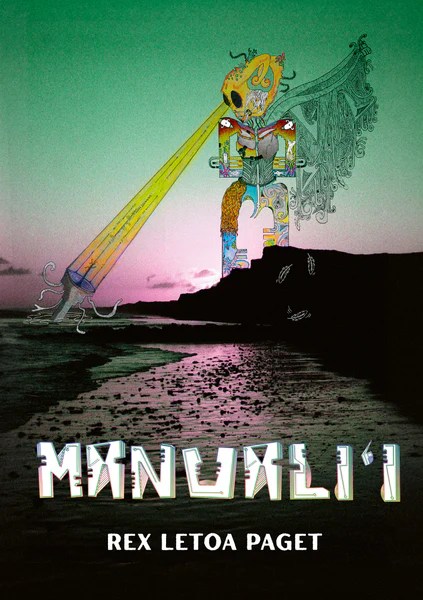
Manuali’i, Rex Letoa Paget, Saufo’i Press, 2024

DARLING I KNOW YOU SUFFER AND I’M HERE FOR YOU.

we laugh like we used to.
before the kids.
before the house.

back when debts were settled with
two coloured cats eye marbles
and my only pokémon card
i bought with my lunch money
off my rich palagi mate.

when ceilings were creaking floorboards
humming girl power anthems and
ain’t that just the way that life goes
down
down

down
down.
like mike splitting free throw lines.
i wanted to be the paekākāriki express.

chipping and chasing wild watercress
shotgunned under rooftops of punga eels
who sheltered clay soil paths dad spent a summer digging.

he carved our names into tree roots staircased to a creek
where we’d wash our legs scraped with blackberry.

we ran through maize he grew
chasing mystic moon views rising
at the edge of his green thumb.

he planted his seeds with
bootstraps
calloused hands and
we don’t need no education.

survived in
motor oil
whiskey breath
rothman cigarettes.

half his mates didn’t survive
asbestos or asphalt.

a few sit round his lounge now
broken boned road workers
fingers twisted in carpal tunnel
gifting bags of greenery.

cancer scares
cancer skin
four hundred dollars
a week in pension. 

gettin up
getting high

gettin down
gettin no-no-nowhere.

i sit across a table in remuera where
white collars popped discuss
what to do with their third property.

i stare at perfect crooked teeth dipped
in italian red wine
gnawing chipped paint off their beach house
in a town

they can’t even pronounce.

reclined in a railroad home
dads bones rattle and radiate
we throw our hands up to celebrate
him eating the first solid thing in weeks.

Time spins on a record player
our wishes crackle into dust.
can we pause for a moment?
can we go back to the start?

i missed my favourite part.

i visit dry creeks wishing for the same thing.
sandalwood burns through hallways and yeah

ain’t that just the way that life goes
down.
down.
down.
down.

Rex Letoa Paget

There is so much to love about this collection, I want it to remain an open field of possibilities for you. It is self portrait and it is family gatherings, it is prayer and testimony, it is grief and it is love. How it is imbued in love. The presence of grandmothers signals the importance of familiar anchors, of nourishment and nurturing, of roots and self growth. There is music on the line, music on the turntable, music recalled. In the opening section, ‘Manuali’i’, the eclectic movement of words and lines on the page offers sweet shifts in visual and aural rhythms, as though there is no one way to pin sky-gazing or family relationships or writing poems to a singular form. The lower case letter at the start of sentences enriches the music.

The second section, ‘Icarus’, initially conjures the Greek myth, and I find myself sidestepping into notions of life as labyrinth, the risk of burning up, of plunging down and of drowning. More than anything I am revelling in Rex’s language, because, in both subject matter and lyricism, this is poetry of becoming. Verbs favour the present tense, writing exists in the moment of living, writing is a vital form of connecting. But the verbs do more than this, these tools of action, whether physical emotional or cerebral, stall delight and surprise me within the wider wordcape of a poetic language that is succulent and sense rich.

At times there is a profound ache, contagious, human, humane, and we are in the ‘Elysian plains’, there with the poet’s grief as he remembers his father. This is writing as inhalation as much as outward breath, not explaining everything, tracing threads to the Gods or ancestors, to the places we become, the connections that matter. And yes, I keep returning to the idea of poems as sustaining breath.

To travel slowly with this sublime collection is to enter poetry as restorative terrain, to encounter notions and parameters of goodness, fragility, recognition, to link the present to both past and future, to question, to suggest, to travel, to connect. Oh! and Manuali’i has the coolest illustrations.

The Readings

‘La Douleur Exquise’

‘Shine on You Crazy Diamond’

‘Darling I’m Here for You’

Rex Letoa Paget (Samoan/Danish) is a fa‘afatama crafter of words born in Aotearoa, now living on the unceded lands of the Wurundjeri people. His poetry and storytelling are his compass through space and time. His works are giftings from his ancestors and have been published in Tupuranga, Te Tangi A Te Ruru, AUNTIES, Overcom, No Other Place to Stand: An Anthology of Climate Change Poetry from Aotearoa New Zealand, Rapture: An Anthology of Performance Poetry from Aotearoa New Zealand, Spoiled Fruit: Queer Poetry from Aotearoa, and Australian Poetry Anthology Vol 10. His offerings are lessons, learnings, and acknowledgments for the timelines and traditions of yesterday, today and tomorrow.

Saufo’i Press page

Poetry Shelf: What do I want my blog to be?

What do I want Poetry Shelf to be?


This question resonated at dawn because, even when I step back from news feeds, toxic political voices, both global and local, hierarchical and hegemonic, make their way in to fuel thoughts and images of a world on the brink of catastrophe.

Do I want Poetry Shelf to be a clearing in the disheartening thicket that comforts, inspires, nourishes, celebrates, offers myriad connections across myriad poetry communities in Aotearoa?

Do I want Poetry Shelf to be a patchwork of light and dark, a composition which reflects how my life is at the moment, and how it is for so many people? My mornings are light, my afternoons dark. Today my morning hits a dark patch and everything tilts.

Do I want the blog to offer respite, to provide channels for joy, contemplation, restorative breathing, or do I want to offer space to challenge the selfish choices of leaders and individuals that foreshadow dangerous consequences . . . or both?

This morning, I just don’t know. I have started reading Talia Marshall’s glorious memoir, Whaea Blue, and it is doing the trick. It is splintering the dark. She writes with such care and craft, such wisdom and humanity, I am reminded why books matter, why books of all genres matter.

Honestly, I don’t know how my spiky recovery road is proceeding, whether I will ever escape my daily challenges, but I do know that joy is the key. I do know that holding tight to the things that deliver joy each day, no matter how small, are essential aides: cooking, gardening, reading, writing, blogging, breathing in bush song and sea air. Touching base with friends. And I do know that so many people are navigating incredibly tough times. Across all ages, across the world.

So yes, my blog is a tapestry of dark and light. I want to provide space for challenge and wound and despair, but more than anything, I want to offer Poetry Shelf as balm, a wee retreat, a place to connect and find aroha, to share the joy we harness and harvest when we read and write.

Poetry Shelf celebrates the Mary and Peter Biggs Award for Poetry 2025 Longlist: Emma Neale

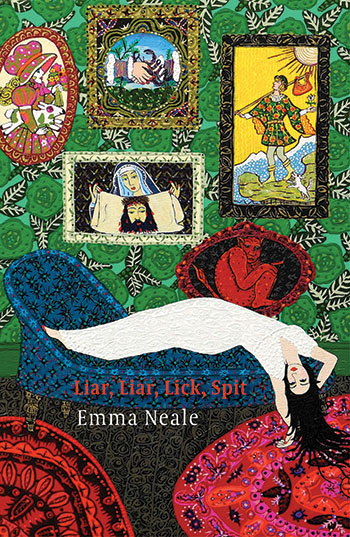
Liar, Liar, Lick, Spit, Emma Neale, Otago University Press, 2024

Spare Change

New to London, maybe I carried the scent Naïve
to the ragged man who shuffled

along the tube train aisle
where I stood gripping the pole

amid the massed bodies of rush hour crush;
each face, it seemed, averted in disgust.

Like the small-town citizen I really was
when the man said, ‘Can you help me, love?’

I met his gaze then looked down
to see what he wanted to show me:

his forearm split open, swollen, 
infection swarming like red wasps.

‘I need some change to get to hospital.
Spare a couple of quid?’

I didn’t know local custom. How to draw a blank
down over the mind, or how to give a pound

as indifferently as if our hands held slots for cash.
Instead I cried out, ‘What happened to you? Oh my God.’

He stalled, his stare a flame held too close,
then rolled down shirt and jacket sleeves.

‘Never mind.’ He pushed through the throng
as our train hurtled to the next stop.

A second stranger tapped my shoulder. 
‘Forget him. He’s a con artist.’

But the fire-swarmed gash. 
The pomegranate gasp of it.

The man shrugged. ‘Doesn’t let it heal.
I’ve seen it. Uses pocket knives, tin lids.

‘Grifter. Scabber. Shows wounds for sympathy.
Don’t encourage him with money.’

One man, that strung out, he’d self-harm for cash.
Another, that jaded, he’d cauterized compassion.

Decades on, the memory opens 
and reopens in the same raw place

so as if I could heal anything
as pernicious as indifference

I am at it again, with the sutures and saline
of these ink-black glyphs:

needle and stitch
needle and stitch.

Emma Neale

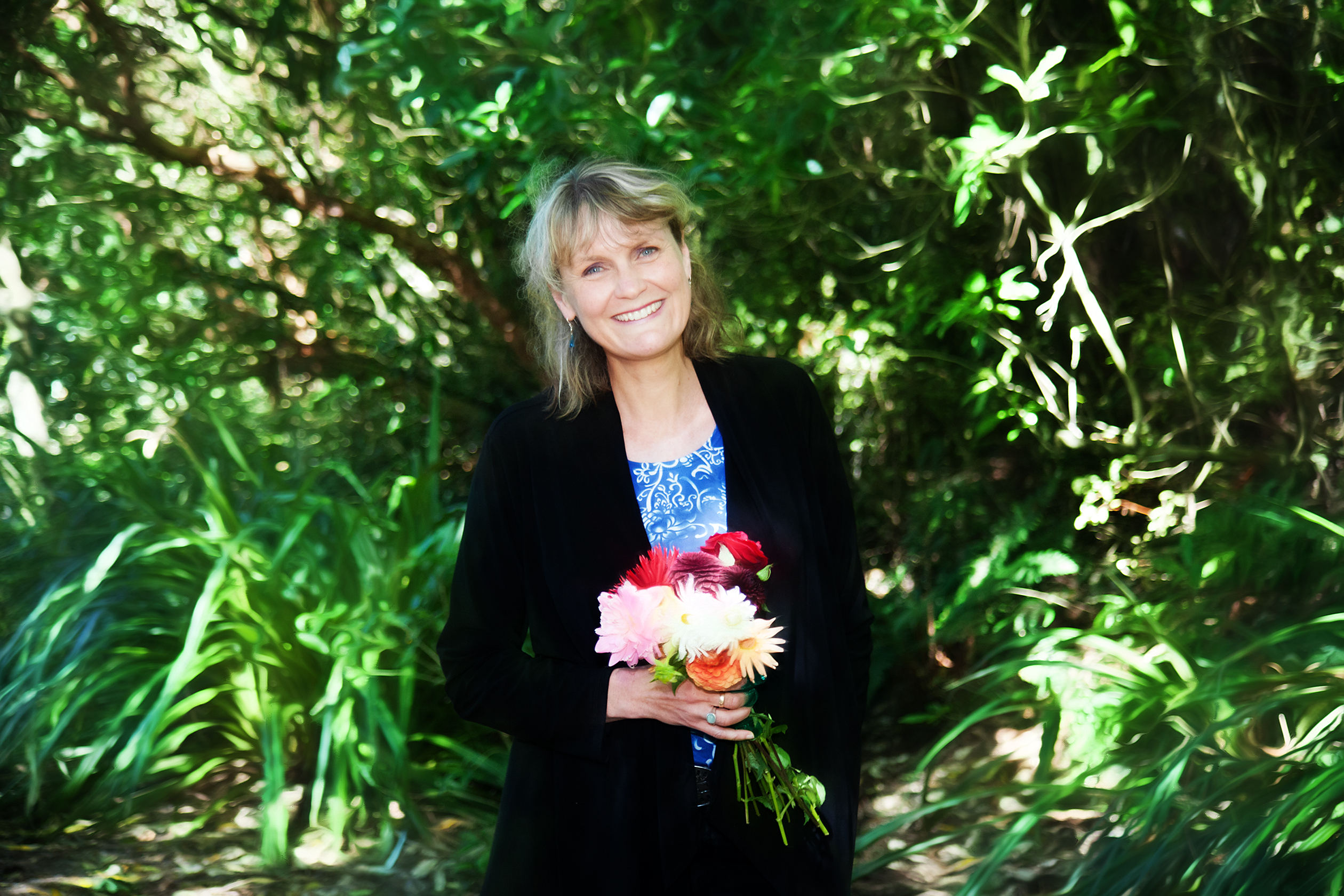
Emma Neale’s poetry is rich in connections, experience, visual and aural delights. Like many other poets, her ink is imbued with personal life, with a deep concern about the state of the planet, injustice, humanity. More than anything, Emma writes with heart, her words agile on the line, her poems lingering in the mind as you move though the day.

The readings

‘Spare change’

‘&’

Emma Neale is the author of six novels, seven collections of poetry, and a collection of short stories. Her sixth novel, Billy Bird (2016) was short-listed for the Acorn Prize at the Ockham New Zealand Book Awards and long-listed for the Dublin International Literary Award. Emma has a PhD in English Literature from University College, London and has received numerous literary fellowships, residencies and awards, including the Lauris Edmond Memorial Award for a Distinguished Contribution to New Zealand Poetry 2020. Her novel Fosterling (Penguin Random House, 2011) is currently in script development with Sandy Lane Productions, under the title Skin. Her first collection of short stories, The Pink Jumpsuit (Quentin Wilson Publishing, 2021) was long-listed for the Acorn Prize at the Ockham New Zealand Book Awards. Her short story, ‘Hitch’, was one of the top ten winners in the Fish International Short Story Prize 2023 and her poem ‘A David Austin Rose’ won the Burns Poetry Competition 2023-4. Her flash fiction ‘Drunks’ was shortlisted in the Cambridge Short Story Prize 2024. The mother of two children, Emma lives in Ōtepoti/Dunedin, Aotearoa/New Zealand, where she works as an editor. Her most recent book of poems is Liar, Liar, Lick, Spit (Otago University Press, 2024).

Otago University Press page

Poetry Shelf celebrates the Ockham NZ Book Awards 2025 Poetry Longlist

Over the next two weeks Poetry Shelf will celebrate the ten books on the Mary and Peter Biggs Award for Poetry 2025 Longlist. The longlist underlines the vitality of poetry in Aotearoa, the incredible range of books published, from style to subject matter to voice. Coupled with that is the range of publishers dedicating resources to poetry publishing, from the University Presses to Boutique Houses. That a number of sublime poetry collections didn’t make the 2025 list, also marks poetry in New Zealand as fertile terrain, with its eclectic and electric communities.

Mary and Peter Biggs Award for Poetry

  • Fox Spirit on a Distant Cloud by Lee Murray (The Cuba Press)
  • Hibiscus Tart by Carin Smeaton (Titus Books)
  • Hopurangi – Songcatcher: Poems from the Maramataka by Robert Sullivan (Ngāpuhi, Kāi Tahu) (Auckland University Press)
  • In the Half Light of a Dying Day by C.K. Stead (Auckland University Press)
  • Liar, Liar, Lick, Spit by Emma Neale (Otago University Press)
  • Manuali ʻi by Rex Letoa Paget (Saufoʻi Press)*
  • /Slanted by Alison Glenny (Compound Press)
  • Slender Volumes by Richard von Sturmer (Spoor Books)
  • Slim Volume by James Brown (Te Herenga Waka University Press)
  • The Girls in the Red House are Singing by Tracey Slaughter (Te Herenga Waka University Press)

Poetry Shelf Summer Reading Series: Dunstan Ward

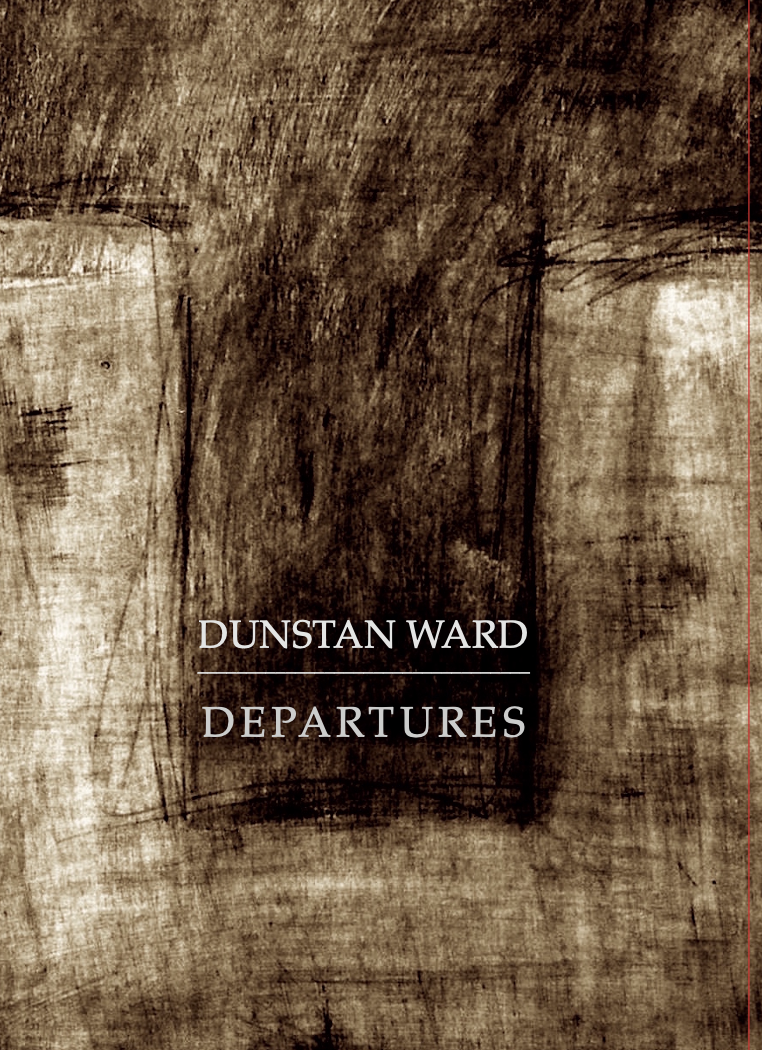
Departures, Dunstan Ward, Cold Hub Press, 2024

Listening with Nicola

‘When I heard the waves dragging the pebbles
I was reminded of my dear uncle Dunstan,
showing me how it sounds if you cup your ears.’

And so I, too, relive that moment in Kent,
four decades ago, during your first return trip
to the country that our pioneer families left.

My laptop recaptures, amplified through headphones,
the harsher sound of massive Tasman breakers
cascading down these grey-black stones on the Coast,

your unlikely new home the farther side of the Alps.
Listening now in Paris, I think of you,
listening there, and thinking of us together.

Firstlings

The first crocus burning under the oak trees,
the first snowdrops, hidden amid the dead leaves;
the first pale lilac, its childhood fragrance,
the first wild violet’s fugitive scent;
the first sunlit steps to the morning garden,
the first fingers dipped in the ocean’s font.

The first strawberries, perfumed, waterish,
the first firm red cherries, a secret wish;
the first fat asparagus, white and pricey,
the first chestnuts roasted on chillier streets;
the first oysters shucked to briny succulence,
the first glass of glowing new wine for a toast.

The first swallow’s joyous fioriture,
the first cuckoo’s echo lost in the hills;
the first bat near nightfall above the river,
the first coruscating frost on crisp grass;
the first ice stilling the weir, the millrace,
the first flakes of snow, re-enchanting the world.

Dunstan Ward

The readings

‘A Message’

‘The Garden at Night’

Having lived in Paris for over fifty years, I regard myself as a New Zealand Parisian. Born in Dunedin in 1942, I was brought up on a farm in Otago, and educated at Catholic schools in Timaru and at the University of Canterbury. After three years teaching at the University of Waikato, I left in 1971 for London, and then in 1973 settled in Paris, retiring as Professor of English at the University of London Institute. With Beryl Graves, the poet’s widow, I edited the Complete Poems of Robert Graves (Carcanet, 1995–99; Penguin Classics, 2003). I have published three poetry collections: Beyond Puketapu (Steele Roberts, 2015), and At This Distance and Departures (both Cold Hub Press, 2019 and 2024).

Cold Hub Press page