
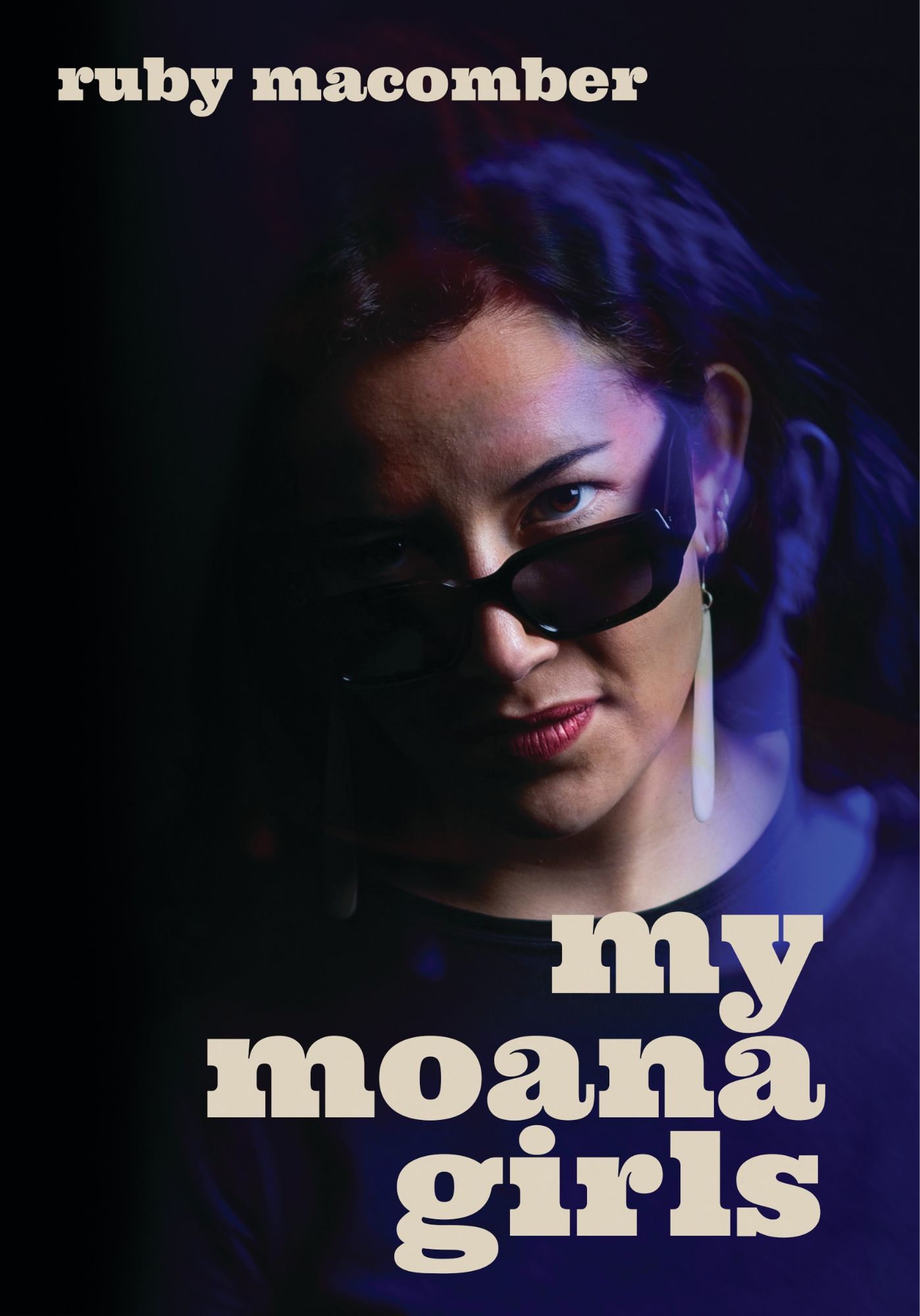
Ruby Macomber, my moana girls, Ngā Pukapuka Pekapeka, 2024
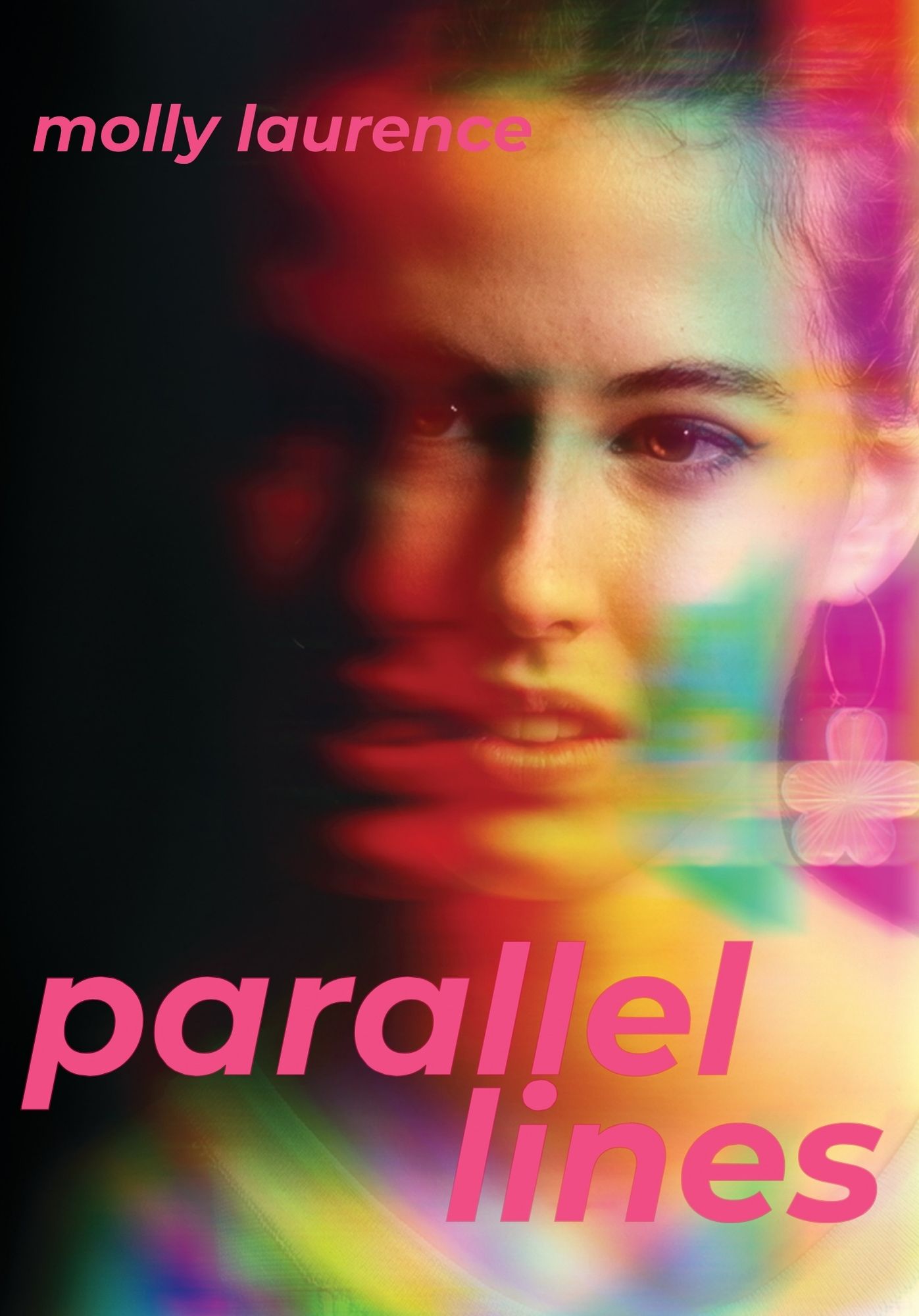
Molly Laurence, parallel lines, Ngā Pukapuka Pekapeka, 2024
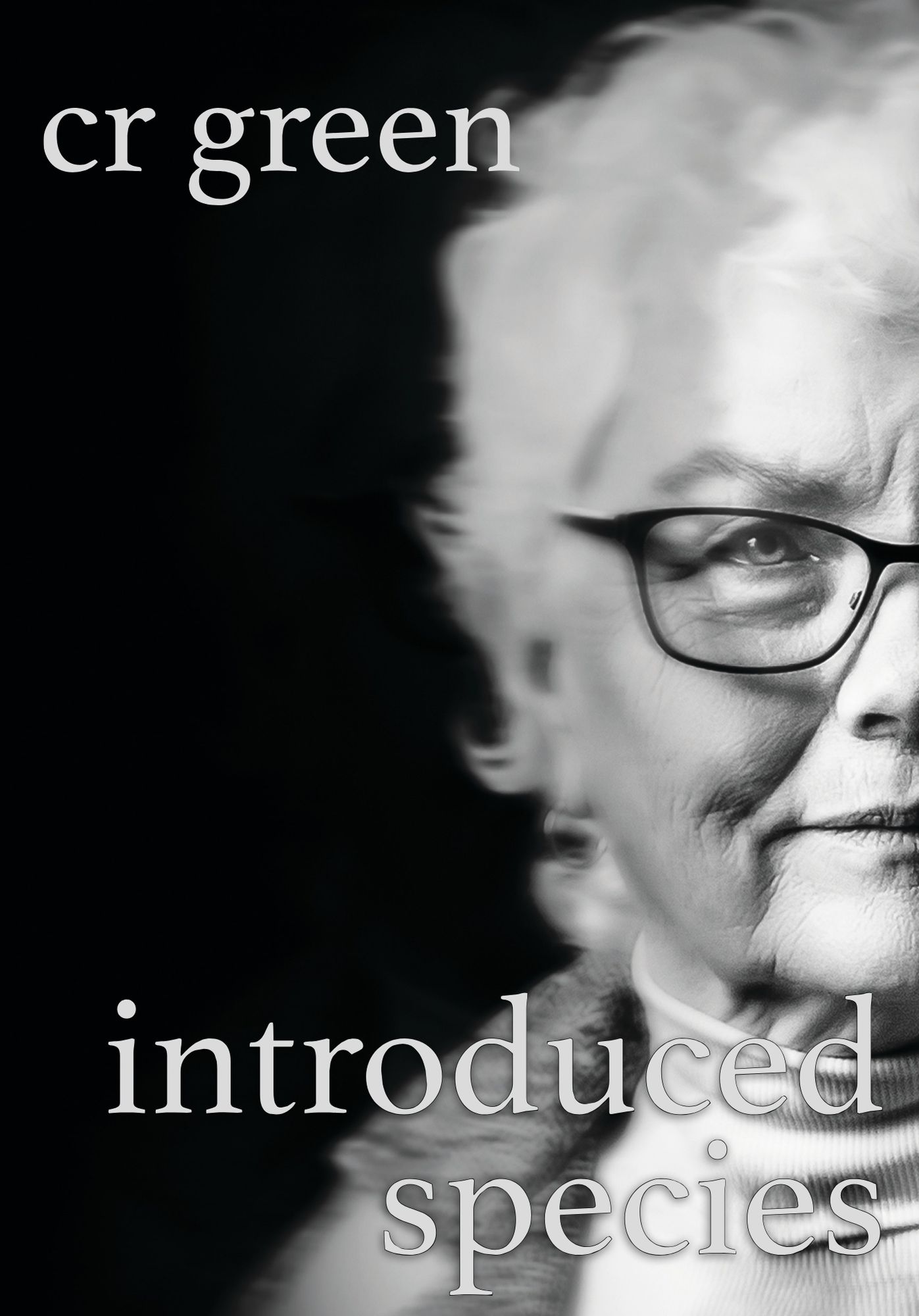
CR Green, introduced species, Ngā Pukapuka Pekapeka, 2024
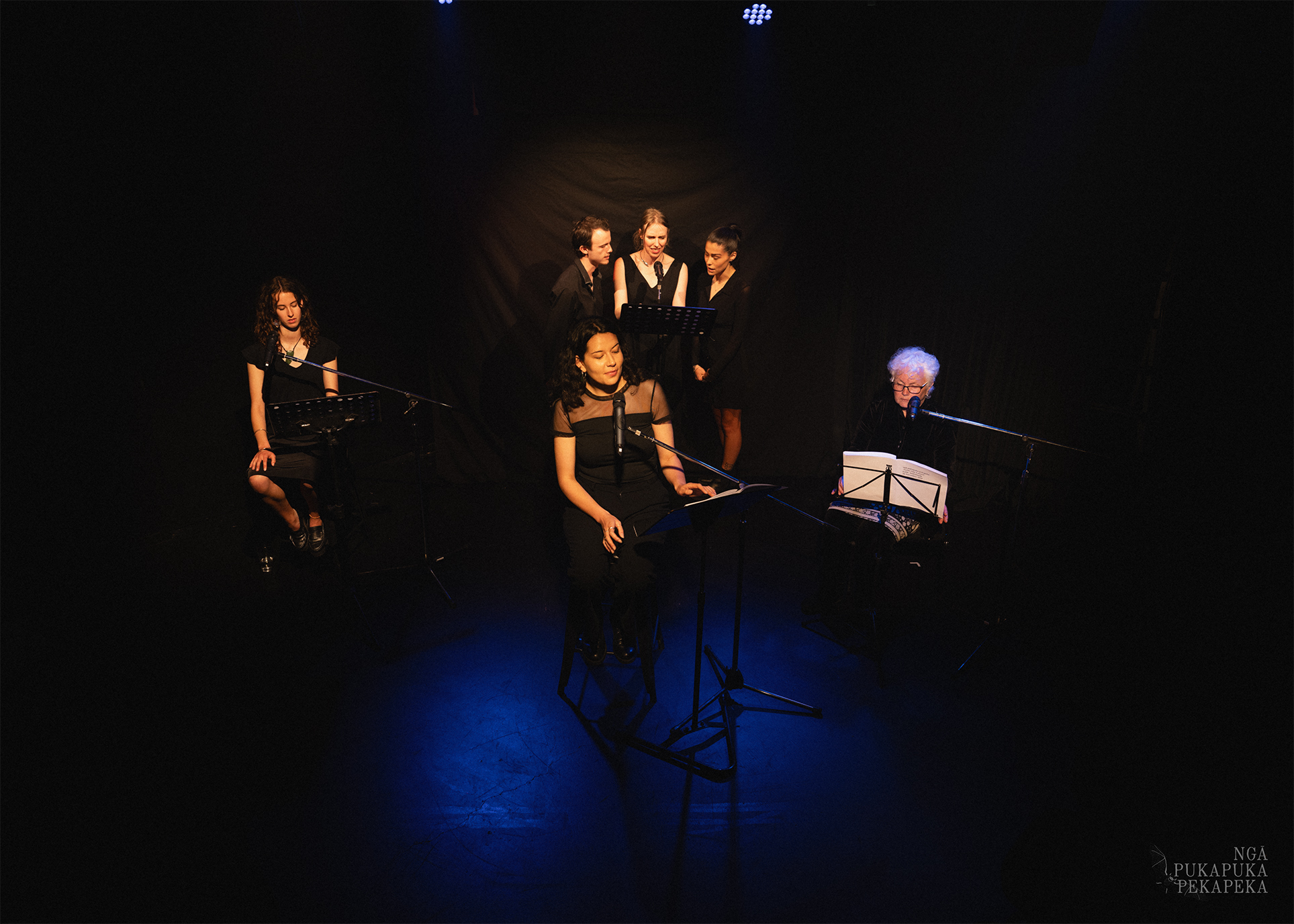
Newly formed publishing team, Ngā Pukapuka Peka, launched their first three chapbooks late November 2024. Edited by Isla Huia, Joshia Morgan and Laura Borrowdale, the arrival caught my attention as various people enthused about the two launches on social media. The publishers are keen to showcase emerging voices and to strengthen the relationship between page and performance.
I begin with a quotation from each publisher as it feels so apt when writing, reading and reviewing keeps me on my daily toes. What sparks my interest, what provokes satisfies surprises sets me wondering when word activity is such a vital activity? I love the idea of porous borders, multiple strands, poetry daring, shifting forms, steady forms, the imagined as much as the experienced, beauty as much as challenge, connections alongside cavities. And for me, more than anything in these turbulent times, I crave heart. And as Isla says, I too love it “when poetry is human”.
And that is what these three chapbooks do. They offer heart, wonder, multiple threads and connections. I am reminded of Robert Sullivan’s title, Voice Carried My Family, because this is what poetry can do. It is what these poets do. They offer us prismatic voices, multi-toned, rich in bridges and pathways, prompting us to think and feel at a personal level, and within a more universal realm of ideas and histories and futures.
I toast this sweet set of chapbooks with a mesmerising reading and a poem from each poet.
Thank you.
Isla Huia: “I’m interested in writing that had duality. When it isn’t necessarily just one thing. And when things that shouldn’t go together do. What I love the most is when poetry is human. When it’s real.”
Joshia Morgan: “I am interested in submissions that are free to experiment, focused on the marriage or separation between content and form, and that ride the line between earnest and ironic.”
Laura Borrowdale: “I want to read something done well, or something done surprisingly. Come at me with good stuff: flash, short stories, novellas; give me the shivers.”
The Readings
Ruby Macomber
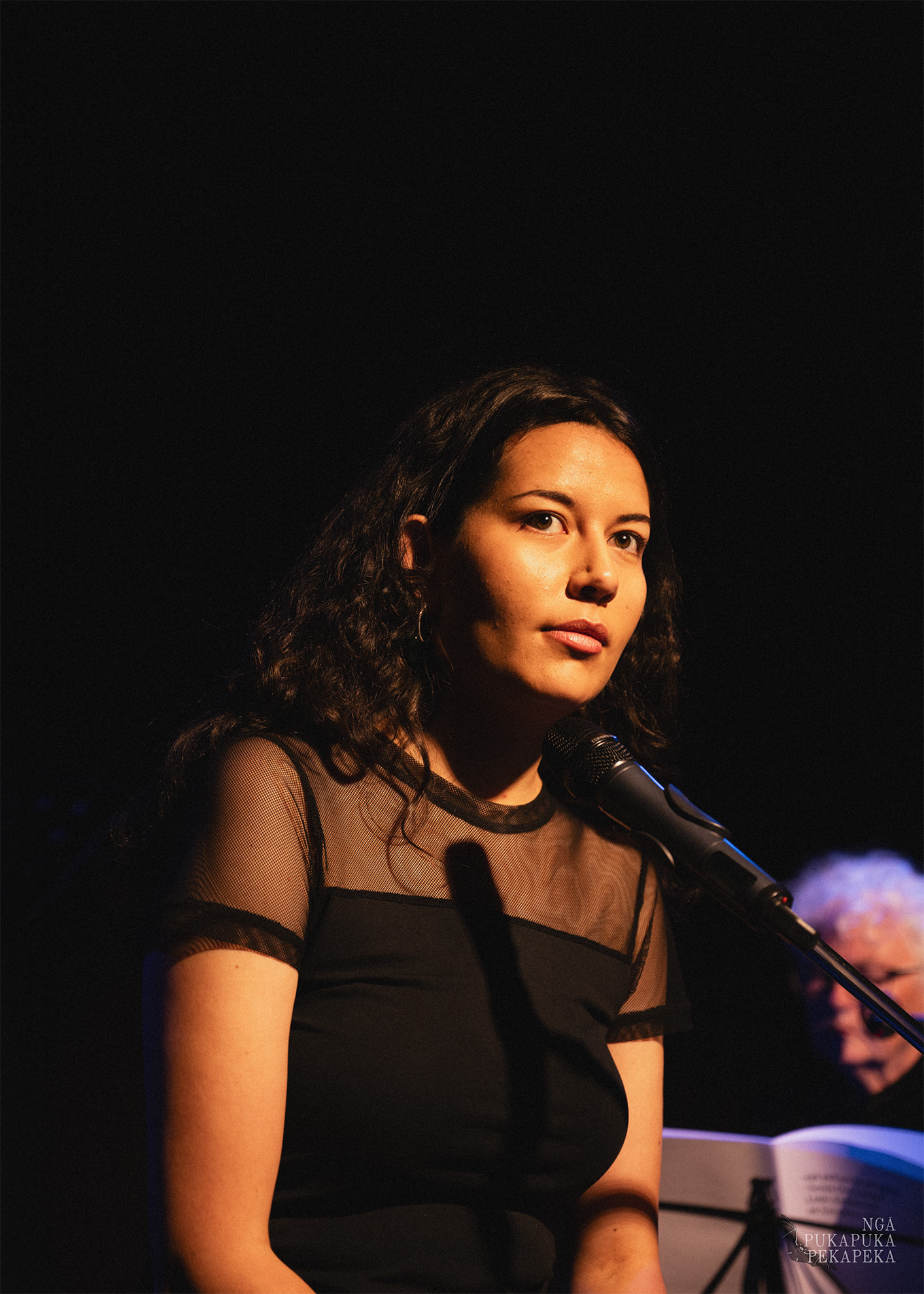
Ruby reads “Carved Baddie // Hine-ahu-one’s Girls”
What We Sang At Nan’s Funeral
There’s a siva in the Honda Civic backseat
nan will come back for
mandarins in the fruit bowl
half-peeled, like
there is something more pressing
than vitamin C, like
Frank Ocean caught on repeat
Godspeed
We kneel, knead the earthcry
because water is a language
we all speak
pray
nan hears our love
from 6ft below
on our way home
aunties weep to hydrogen
and helium
left to collide in Glen Eden streetlights
orange halogen halos seem kinder tonight
just for us, arriving
home to the backdoor
bolted
Isa isa
Vulagi lasa dina
Monu lako au na rarawa kina
Ruby Macomber
“What We Sang At Nan’s Funeral” first appeared in Starling Magazine Issue 12
Ruby Rae Lupe Ah-Wai Macomber is uri of the shores of Itu’ti’u, the flowers of Taveuni and the mighty tentacles of Te Pū o Te Wheke. She is a daughter, sister, cousin to many, and aunty to Levi. But usually, she just yaps, tries her best, and wrestles Auckland traffic with Flava on full volume.
In 2024, Ruby was the Guest Curator of the New Zealand Young Writers’ Festival in Ōtepoti and Writer in Residence the year prior. Her poem, ‘Cry Sis’, featured in Mana Moana – Pasifika Voices, was shown at the most recent United Nations Framework Convention on Climate Change. Her recent work features in Landfall, The Pantograph Punch, The Spinoff, Metro, Awa Wāhine, Starling and Waka Kuaka – The Journal of the Polynesian Society.
Since 2020, Ruby has facilitated and now manages Te Kāhui, a creative kaupapa for incarcerated young people to amplify Indigenous narrative agency. This mahi, alongside her lived experience and studies, informs her commitment as a teina to Indigenous movements for abolition and liberation.
Molly Laurence
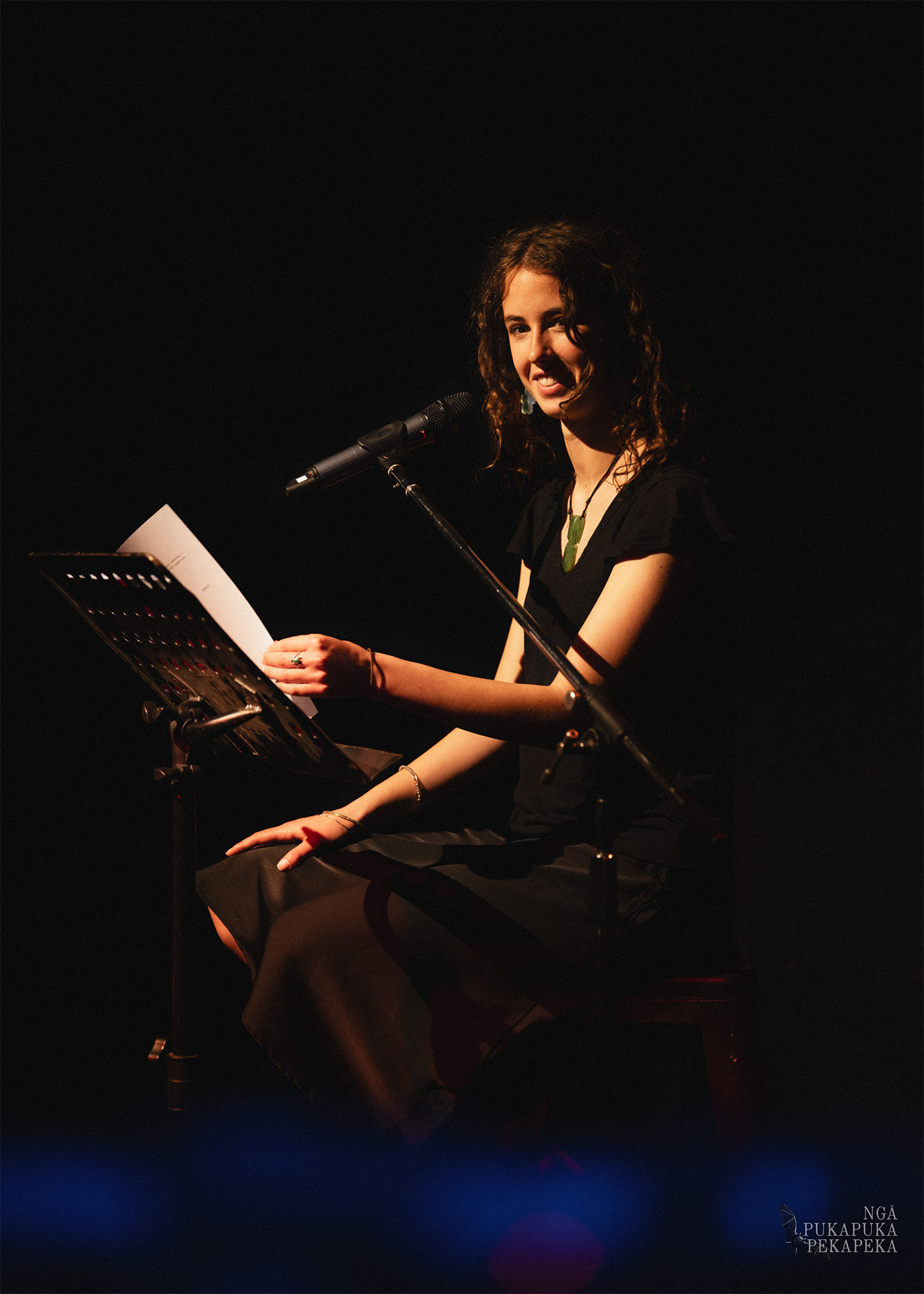
Molly reads “Third season (not counting spinoffs)”
Taking stock
start with what / your grandmothers gave you ; bone
broth; add knuckles of meat and white fingers of mushrooms grasping
at you ; the love you mix wooden / with spoon.
it bubbles
when steam reaches / gift it you ; cumin / and myrrh /
anoint your children with it. this golden ground.
others come
they throw / fruits. fistfuls
of
fiery sting. peppery burst.
nobody has come to steal your cheese. hide your sheep.
try
to fashion a sieve from your history / the grandmothers cry
save what you can / what is left to gnaw on / modesty.
(try to swallow) a click. (metallic taste)
Molly Laurence
A early version of “Taking stock” placed second in the Year 11 section of the Poetry Aotearoa Secondary School Prize.
Molly Laurence would have been born upside down and back to front if not for an interfering and entirely lifesaving C-section. She has expressed a similar preference (and hand/eye coordination) throughout the rest of her life to date.
Molly is a longstanding rangatahi poet, first published in Write On magazine as a wee nipper and sending Google docs to nice writers.
She is also a youth advocate, serving on Selwyn Youth Council and in other roles. Her poetry has appeared in notable publications such as Starling and the NZPS anthology. She has been recognised as a finalist in the National Schools Poetry Award 2022 and has twice secured second place in her age group at the Poetry Aotearoa Secondary School Poetry Prize.
In 2024, she was Head Girl at Lincoln High School; the majority of the poems were written during her time as a student there. In 2025, she will be studying law and global studies at Victoria University.
She is happiest standing on grass.
CR Green
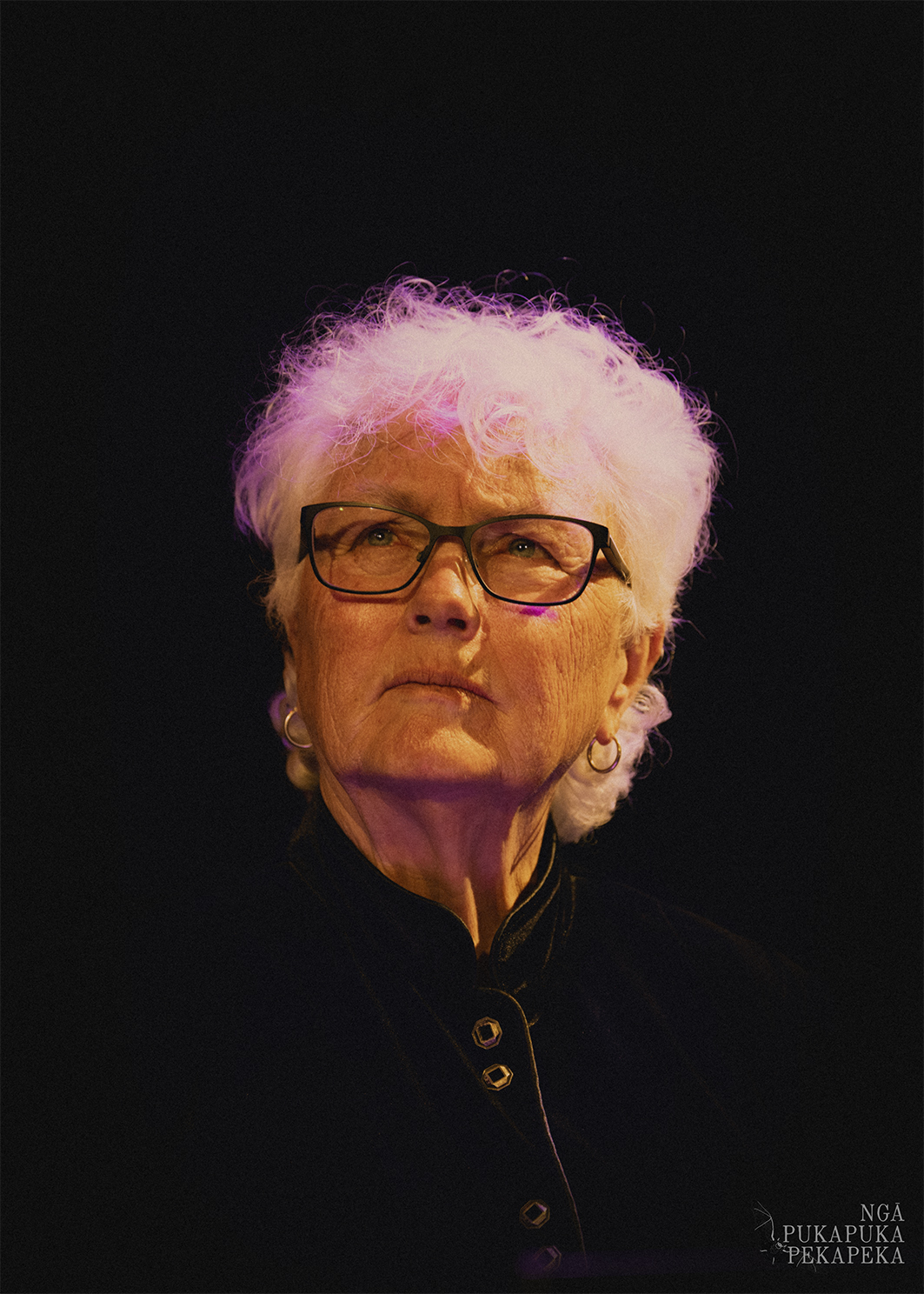
CR Green reads “Riding the 5 into the city”
Hannah knows her alphabet!
–an abecedarian
Algonquin, my first language, my mother tongue
burst from my heart, my lips, in this land ofcoastal tribes, forests, swamps, migrating up and
down this strip of earth. Each day the sun brings light to
everything. Season to season, we watched the mystery–I
felt so protected–love and
goodness existed here in my first
home, the closeness we had
in our own small
Jerusalem, but now we are taught to
keep new ways
learn them by rote over and over again,
more changes coming from these ones—
New Englanders, they say, who seem to
only want some other
part of us–our mouths, our hearts to turn, to ask
quietly to deny ourselves, who we are and
return our souls with new names to a
Saviour–a Door who will take us into eternity, our un-
tamed hearts returned
unto the one who
visited them first, who were welcomed by
Wampanoag’s Massasoit, my grandfather, to live beside us—
Xristians who took our land with impunity, now kill us,
yet, they say, seeking a new place to worship in their new
Zion.
CR Green
What holds transplants of any kind in place? In Introduced Species, American-born CR (Candy) Green presents her life’s journey beginning after WWII in California to life in Aotearoa New Zealand, including a departure and return.
From rebellious youth to Jesus freak/gospel singer, wife, mother and teacher of women in prison, Green weaves her narrative in poetry and prose. She draws inspiration from the work of Richard O. Moore, Robert Frost and Seamus Heaney in tracing her ancestry in Colonial America onwards to Aotearoa–one end of this precious earth filled with introduced species.
Her poetry and prose has most recently been published in Meniscus (AU),
Impspired (UK), Silver Birch Press (US) and …a fine line (NZ).
 NZ Poetry Shelf
Pingback: Poetry Shelf 2025 highlights (or some summer reading and listening) | NZ Poetry Shelf