Monthly Archives: December 2024

Poetry Shelf 2024 highlights collage – part three

The moon will be here before
I say cheese and crackers and I am wishing
in vain for feather down sleep

It’s almost dawn
There’s a pheasant on the lawn
My mouth is dry
The first light feels magenta

Today I will read Claire Keegan
write a long shopping list
visit the hospital
read Anna Jackson’s poetry

This is not a poem
it is a tree

Paula Green
from ‘The Venetian Blind Poems’
forthcoming The Cuba Press, 2025

2024 has been one of the most challenging years of my life. Yet within challenge and darkness, I find joy and light. Poetry Shelf has held on, is holding on, by a thin thread.

And herein lies the joy. Over the past few years I have replenished my self-care kit, inventing aids to take along my spiky road. There is nourishment in simple tasty cooking, tending a vegetable and herb garden, reading books for both children and adults, especially poetry, writing secret things, keeping my two blogs active, spending time with my family, listening to music, following on the coat-tails of my daughter as she went to concerts by The National all over the world, putting the playlist Anna Jackson made me on constant replay, see shows by Michael Hight and Shane Cotton and writing about them.

My fragile immune system has meant I haven’t risked public events, cafe outings with friends, school visits, author tours, poetry readings . . . and that is such a loss. Yet an important part of my self-care kit is to focus on what I can do, on how I can connect with people, friends, writers, readers, in multiple ways. And books, books are a most nourishing form of travel through time and space. To use my daily energy jar carefully. To read at a snail’s pace.
Ah. I still have 30 poetry books published this year in Aotearoa sitting on my desk to read and celebrate over summer. I can’t wait! Meanwhile here are seven I have loved. To these I add the must-visit Starling, an online journal for young writers, edited by Louise Wallace and Francis Cooke, with the current help of Tate Fountain, Khadro Mohamed and Nina Mingya Powles.

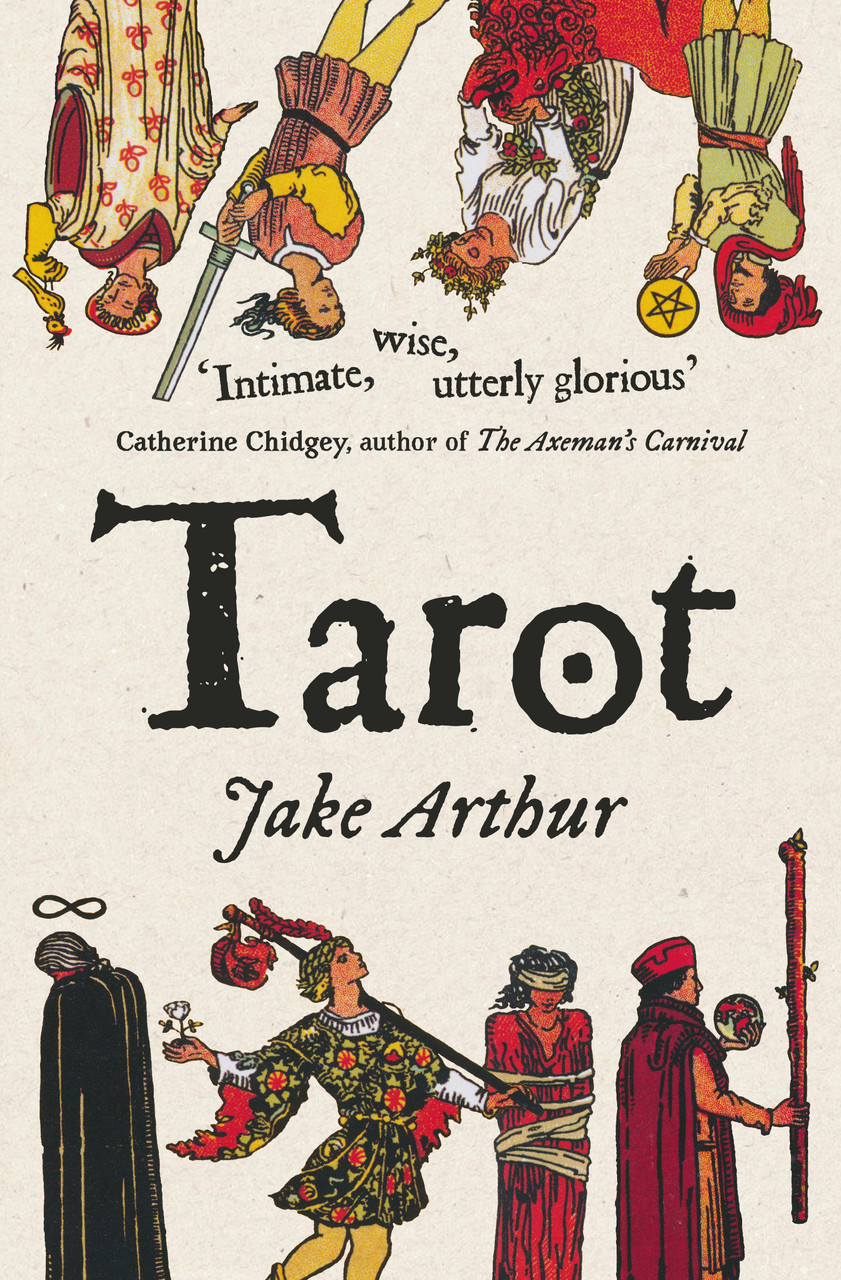
Jake Arthur’s Tarot (THWUP): After my first reading of Jake Arthur’s new collection, Tarot, I wondered how much poetry joy we can imbibe, for reading these poems felt like I was travelling through a solar system of poetry joy.

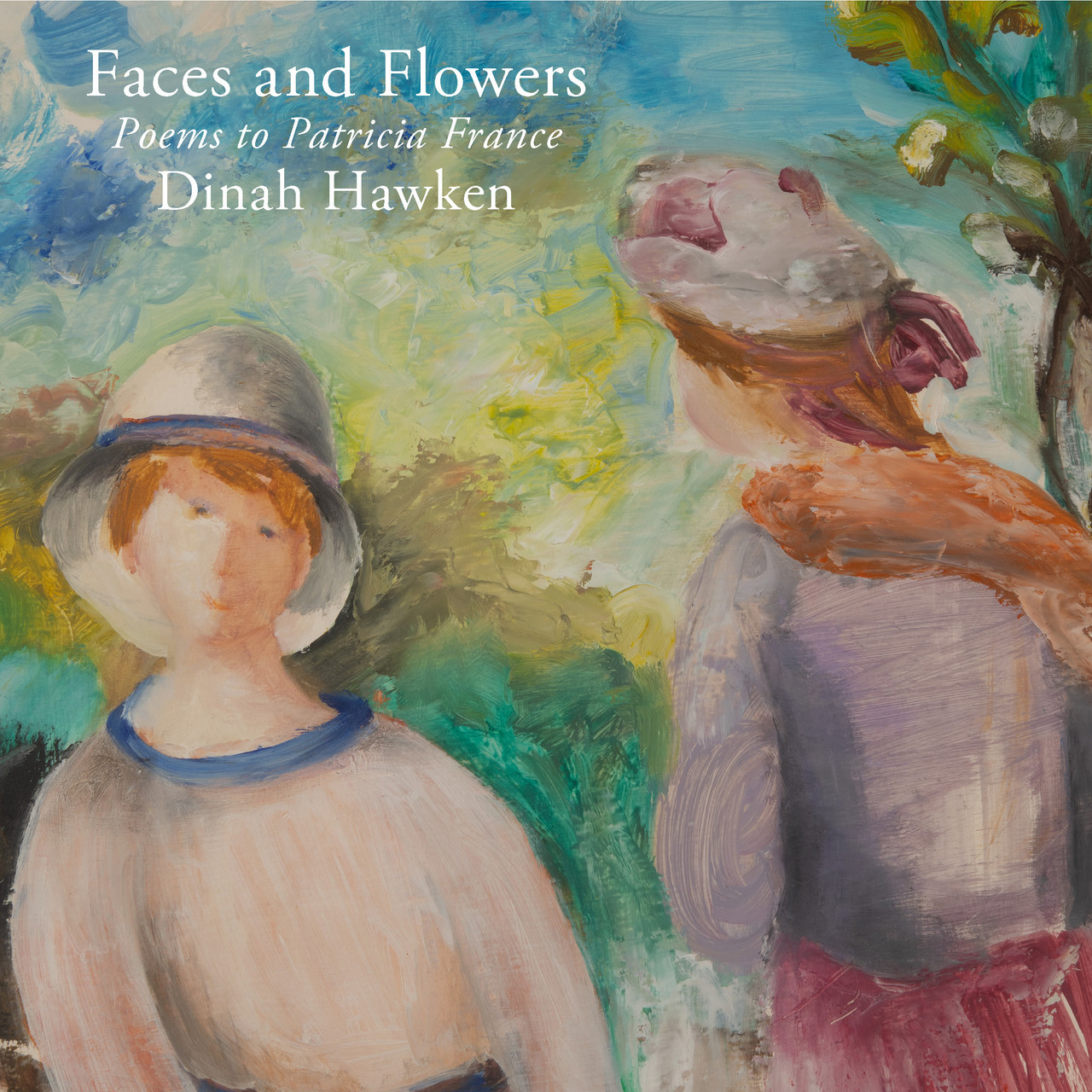
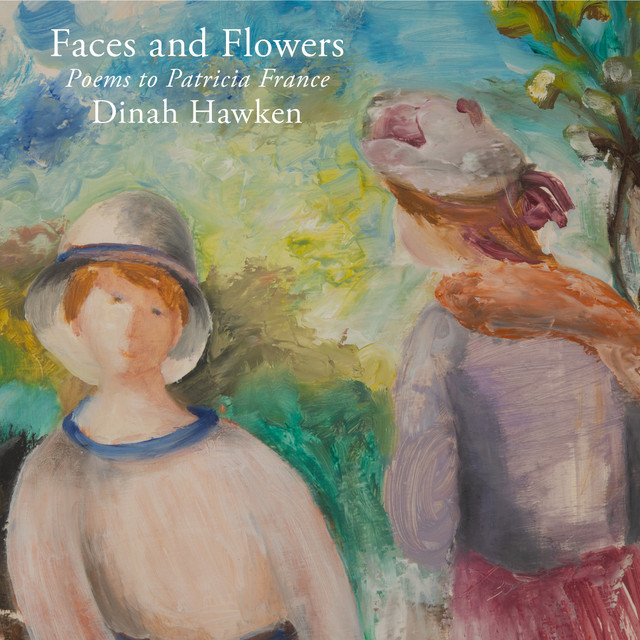
Dinah Hawken’s Faces and Flowers Poems to Patricia France (THWUP): As she has done across all her collections, she creates moments of stillness where we might enjoy miniature residencies. She writes with such craft and wisdom, with such nuances, richness, quietude. Every book she writes, reminds me why poetry matters. And this gift of a book is no exception.

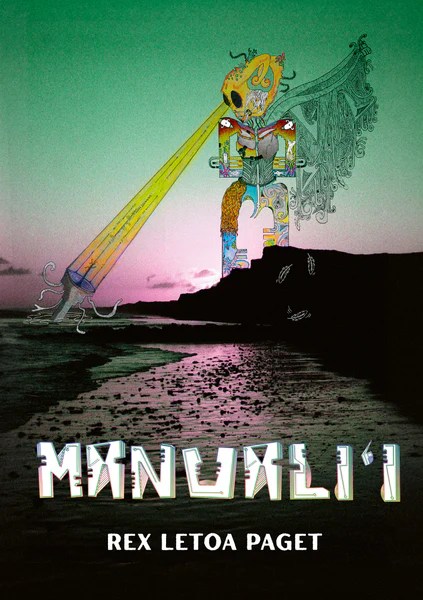
Rex Letoa Paget’s Manuali’i (Saufo’i Press): To travel slowly with this sublime collection is to enter poetry as restorative terrain, to encounter notions and parameters of goodness, fragility, recognition, to link the present to both past and future, to question, to suggest, to travel, to connect. Oh! and Manuali’i has the coolest illustrations.

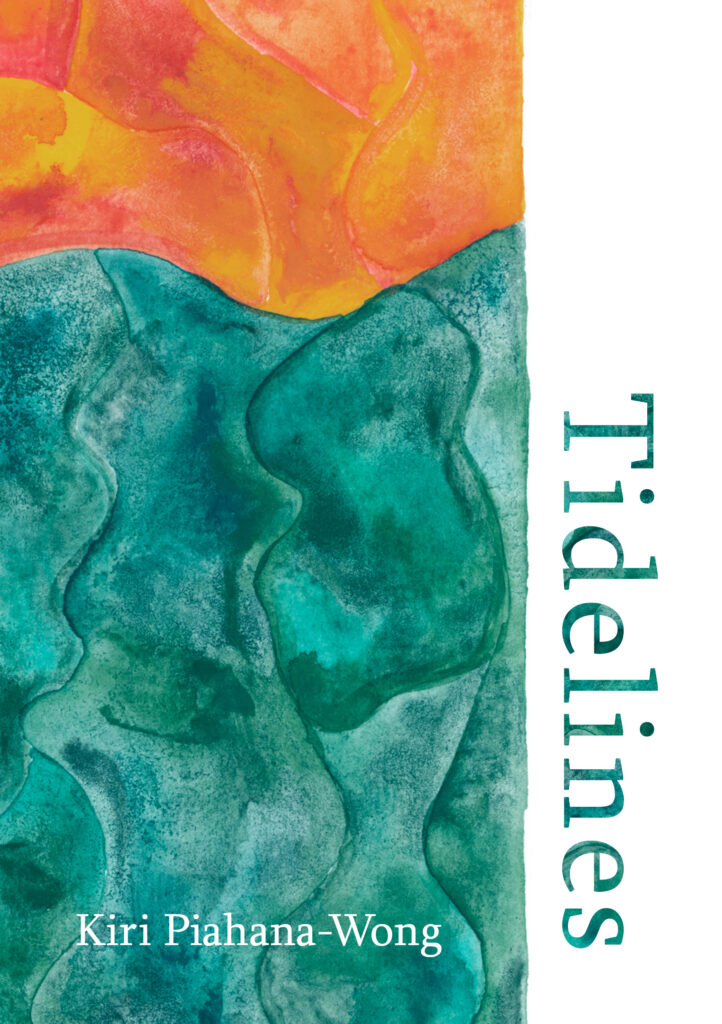
Kiri Piahana-Wong’s Tidelines (Anahera Press): This is a precious poetry collection, both moving and lyrical, that lets you feel the sting of salt and despair, fragility and resolve, and you know you need to hold life and loved ones very close. I love it.

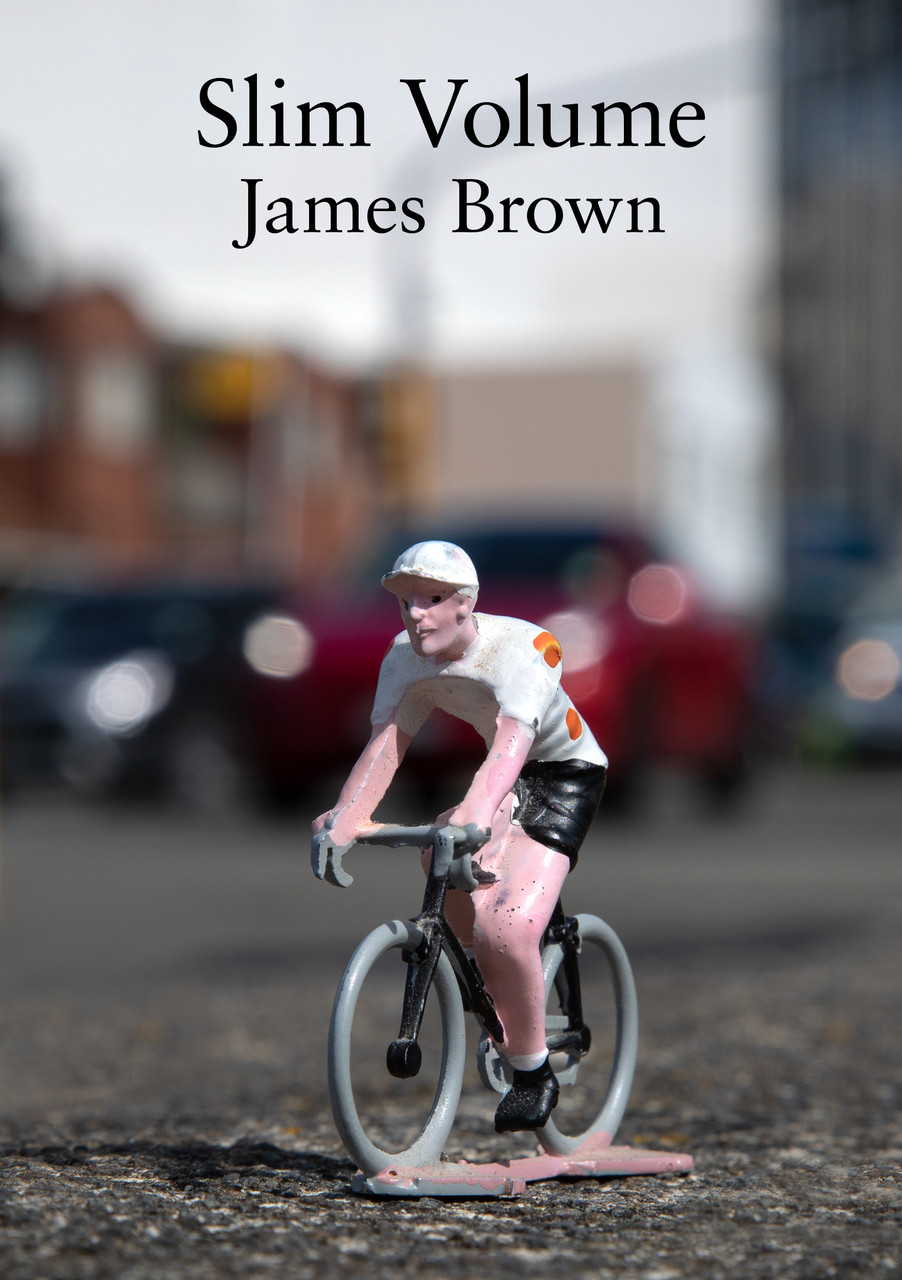
James Brown’s Slim Volume (THWUP): Slim Volume draws you into the intimacy of letting things slip, of layering and leavening a collection so that in one light it is a portrait of making poetry, in another light the paving stones of childhood. The presence of people that matter glint, and then again, in further arresting light, you spot traces of the physical world. Try reading this as a poetry handbook and the experience is gold.

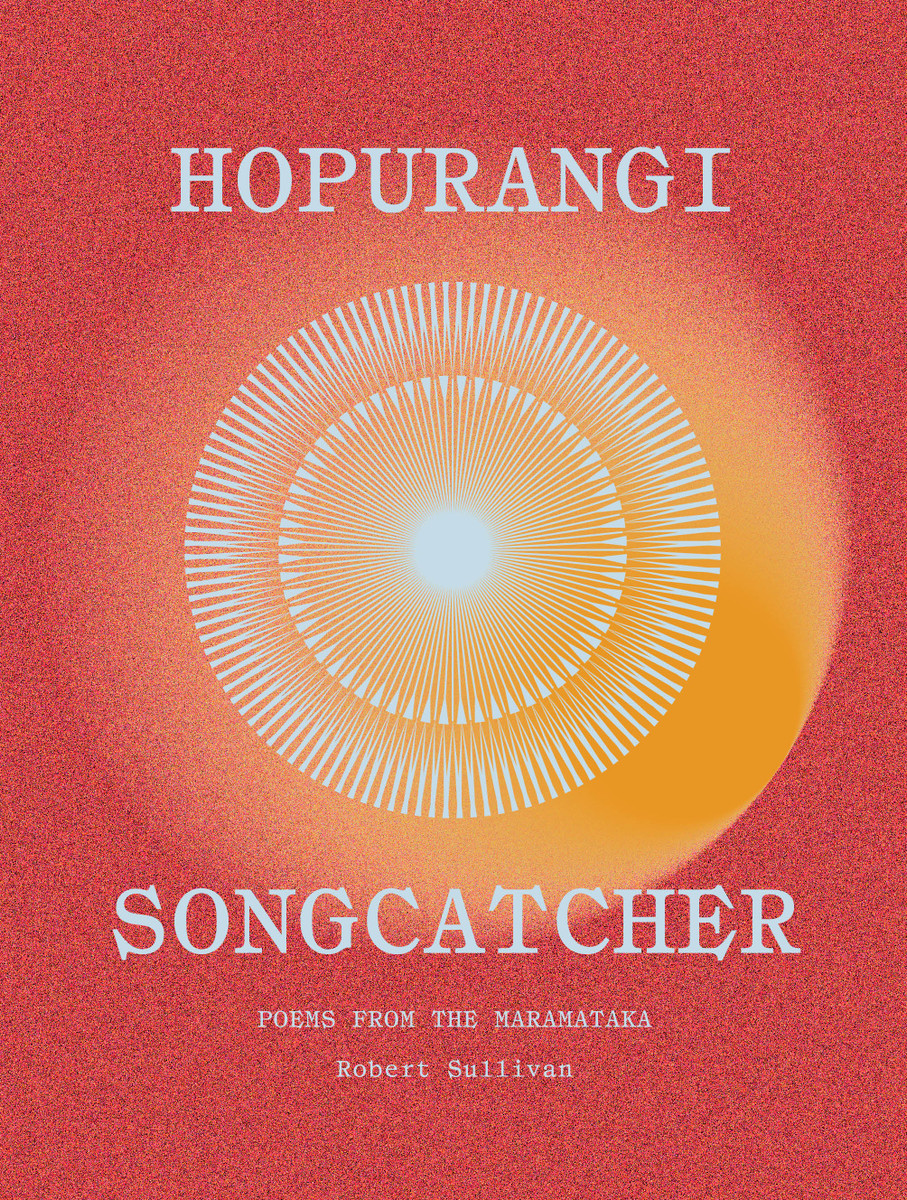
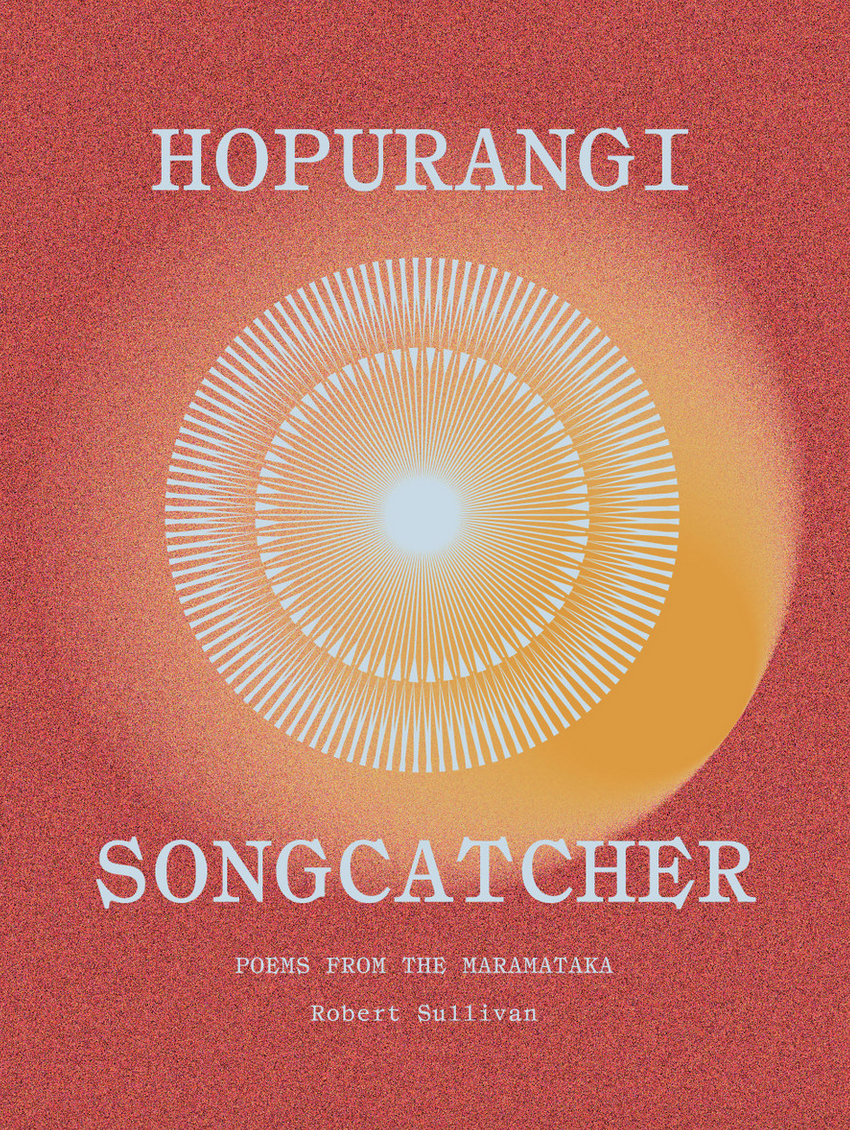
Robert Sullivan’s Hopurangi -Songcatcher Poems from the Maramataka (AUP) resonates alongside the current political edicts, prescriptions and alarming descriptions of what the Coalition Government pledges for the child, the adult and our planet. In Robert’s sublime and breath-enhancing collection, I am finding seeds of hope. Of te reo Māori growing alongside English, both languages vital on our tongues, of tending our relationships, whether human or planetary, with care as opposed to greed, of acknowledging our spikes and our difficulties, of never ceasing to learn new things. I hold this collection out to you as a book of freshness, of reassessing and finding one’s place, a book of experience, wisdom, friendship, hope. And above all, a book of aroha.

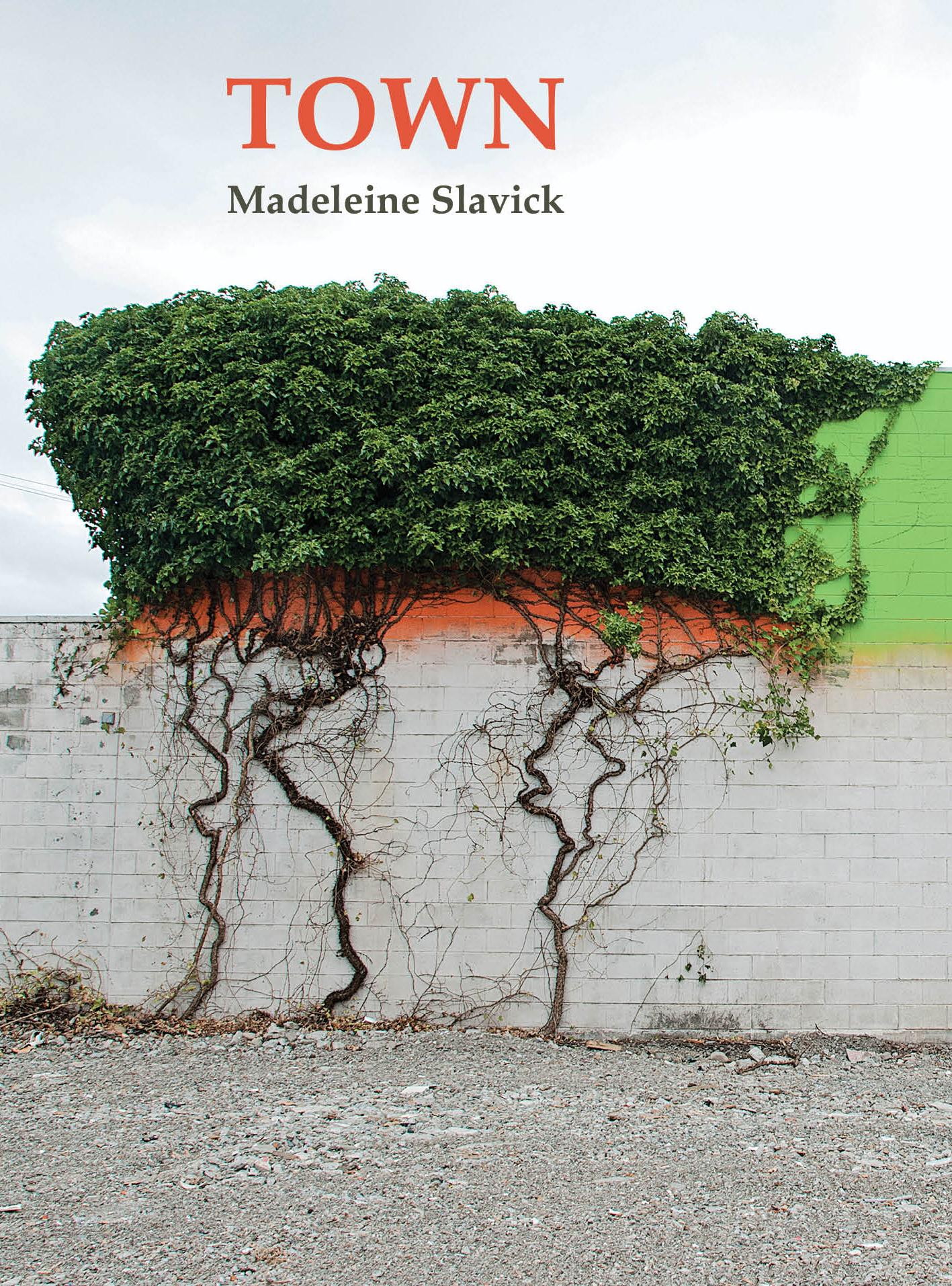
Madeleine Slavick’s Town (The Cuba Press): On the back of the book, Hinemoana Baker nails her endorsement: ‘Town is reminiscent of Robert Hass at his most beautifully imagistic, or Georgia O’Keeffe telling deep stories in flowers.’ Yes this a book to fall into, to savour the joy of contemplation, to recognise the ugly, the surprising, the familiar. It is a book of wonder.

Airini Beautrais‘s The Beautiful Afternoon (THWUP): I have been delving into this sublime book all year. A book of essays, the book engages with life and difficulty, resolve and multiple fascinations, including poetry and reading, on so many levels. It is on my blog list of summer celebrations.

Yes, I have read wonderful books of multiple genres, but the emails you have sent, so thoughtful, warm and empathetic, have also been a vital connection. Poets have contributed to Poetry Shelf so generously, responded to posts, and contributed to the buzz of poetic activity in Aotearoa, in print, online, in performance spaces, in collaboration and going solo.

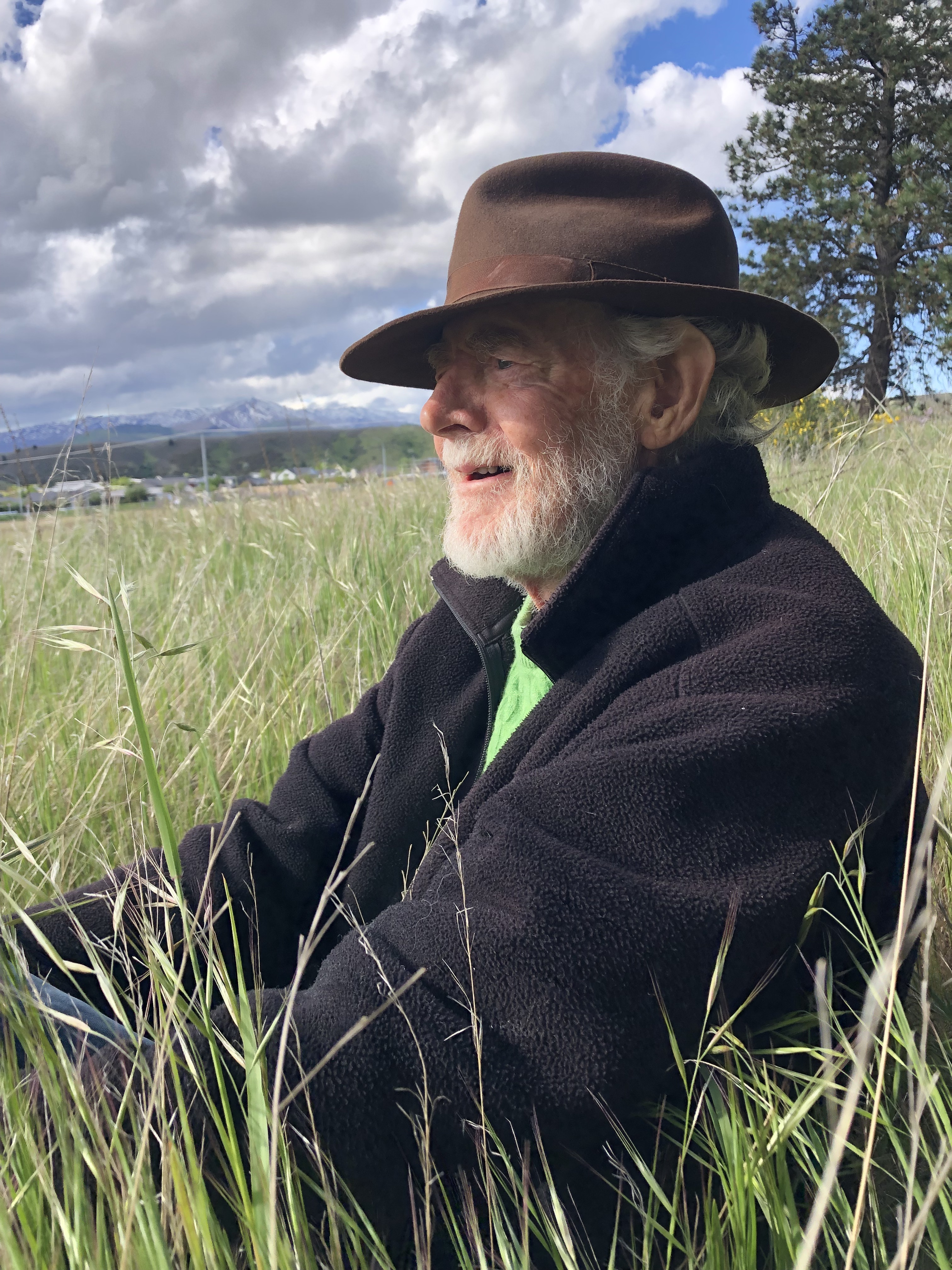
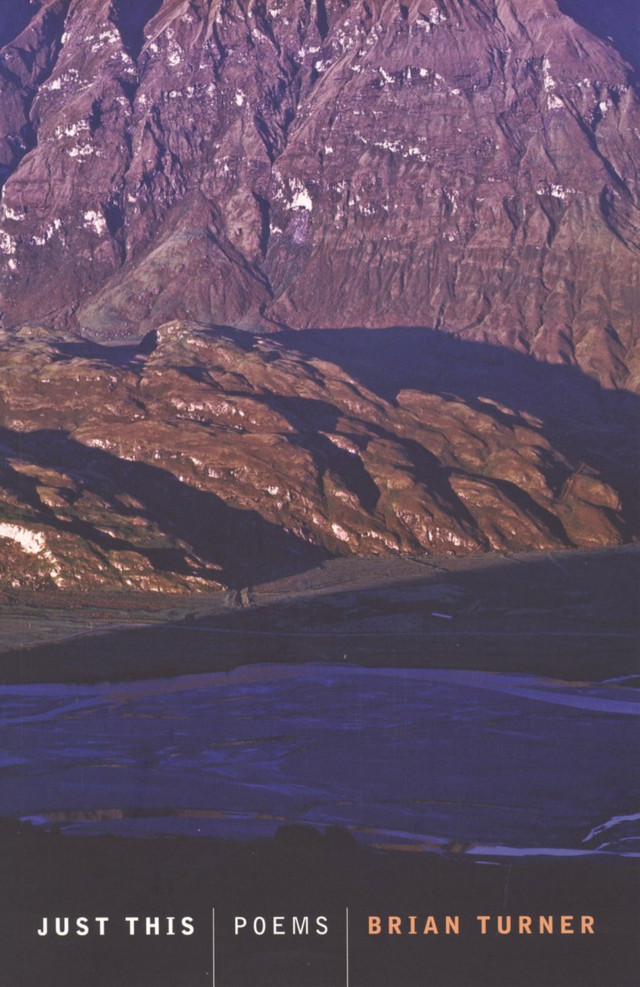
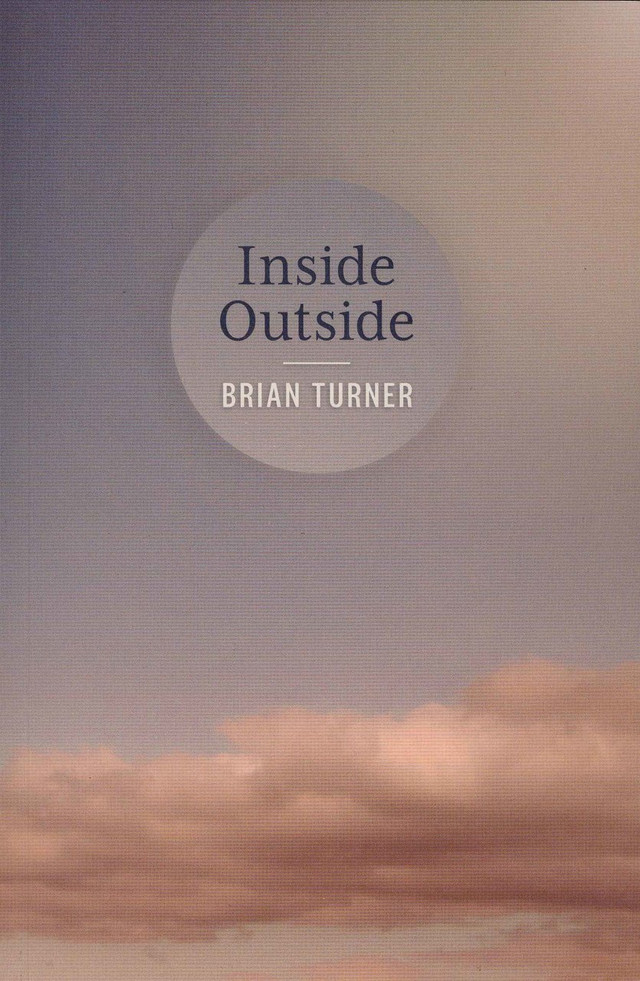
An ultimate highlight of 2024, was working with Jillian Sullivan and Peter Ireland to create a feature celebrating Brian Turner’s award, the NZ Poet Laureate of Nature. Last week, Jillian sent Peter and I an extract from her journal which describes a river-bank moment. She and Brian read our post, and the poems we had chosen, together. It is an utterly moving image, so comforting. Jillian has given permission for me to include it here. Because this is what matters. The ability, let’s say power, of poetry to make connections, with aroha, with windows opening on the world, on who we are and who we might be.

It is fitting, too that, Anuja Mitra recounts vital moments of connection in what has been a difficult year across the globe.

I finish this post, and Poetry Shelf 2024, with the verve and inspiration of Rachel McAlpine: “Roll on 2025, when I’ll be taking poems into other unexpected places.” Here’s to all of us nourishing the scope and possibilities of poetry in Aotearoa in 2025.

May you all have a safe and replenishing summer. Poetry Shelf is taking a break for three weeks and will return with a Summer Season of Readings and Reviews, to be followed by another series of themes, more Monday poems and features, poetry news, and new ideas.

Poetry Shelf 2024 Highlights Collage – part one here

Yesterday I walked into Brian’s care home for the first time in 12 days. The week away in Nelson with grandchildren. And then the days of gastro sickness, driving to Riverton, longing to lie down in the grass beside the road. On Thursday, 48 hours after the last symptoms, I walked up the hall at Longwood and saw Brian’s distinctive long lean shape curved in a chair in the lounge, hat on his head, in a group playing scatter ball. I touched his shoulder, watching his face to see if he still knew me. He looked up and his face opened. The caregiver smiled to welcome me, and gave Brian his last turn. He bowled six balls in a row into the number ten hole. The woman and residents cheered. Then he missed a high score at the end, and pretended to kick at the box of balls and made people laugh. He seemed so at ease, that this has become familiar to him, to come and play a game and to react with people, to be competitive and enjoy that. We walked to his room for I had his new dressing gown and a jacket and jersey extra for him. Do you want to come out for a drive, to a café? I asked him. Yes!

We drove up town but the café was shutting so we bought take away black coffees and sat by the sea, sheltered by a concrete wall. I told him about Paula Green’s blog and then brought it up on a phone to read to him. He read Taeiri Days, the poem I chose, and Deserts for Instance, and I read the comments Peter, Paula and I had made about his poetry and he was affected and grateful. Wow, he said. 

But to sit there, our shoulders touching, the wind and sea behind us, the footpath in front , people walking by but out of earshot, and three boys sitting on a train carriage mounted just along from us, waving to cars and cars honking back at them. In the midst of that life, Brian read his poems with such cadence and love of the language, as if it was a poetry reading to a writer’s festival, but instead it was just me, and the wind, that preciousness of hearing his words in his voice. Hearing him read once again, by a footpath.” 

2024 was difficult in ways I feel too tired to recount, and I’m far from the only one who feels this way. I want to recount instead the moments of connection, of joy and community, when people were brought together by shared passions. There was my small Tāmaki Makaurau writing group that met monthly, armed with constructive feedback and a common drive to make headway on the projects that were plaguing us. We marked the spring equinox with a picnic enjoying the nicer weather and scrawling poems in the park with chalk (from Emily Dickinson to Sappho to Mary Oliver). There were the lovely, generous audiences at the readings I attended at The Open Book for the 110th issue of takahē and Time Out Bookstore for National Poetry Day. There was the immense and enthusiastic audience I (a rare concert-goer) was part of at this year’s Hozier concert — bonded by a love of music, or maybe just something interesting to do on a Wednesday night. I had never really considered the effect of thousands of tiny phone flashlights in a dark room, but then everyone had their hands up and the arena was brighter than daylight.

In a year of precarity and bleak outcomes in the world of arts funding, my highlight is the successful Boosted crowdfunding campaign run by the Canterbury Poets’ Collective, of which I am a committee member. When an eggplant is a fiver and housing is a luxury good it seems mad to ask people to dig deep to support the next five years of live poetry programming in Ōtautahi Christchurch—but they absolutely did. We exceeded our target of $20,000 with pledges from longtime attendees, new friends, distinguished former guests from around the motu, and anonymous heroes. This funding allows us to pay the poets who come perform for us what they deserve to be paid. The whole process was a humbling and affirming reminder, if a reminder was needed, that poetry is much bigger than any of us, and that it clearly fills a need in our communities.

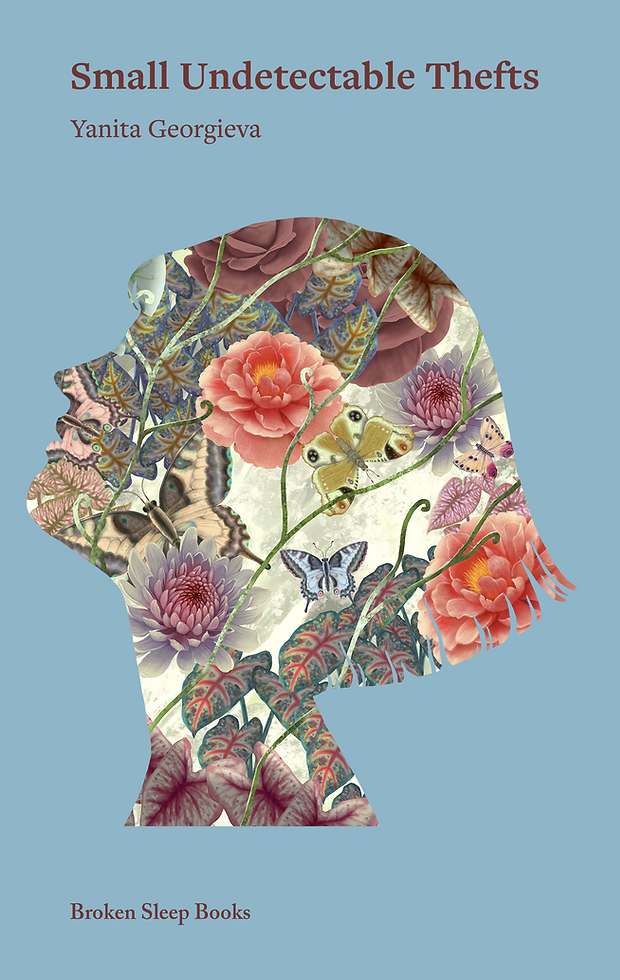
Most of us have favourite teachers, don’t we? Miss Grant, at Waterloo primary, I was sure was the cleverest, kindest person I’d ever meet. A few years later, Mr Gledhill was the one to quietly and irrevocably convince me that an understanding of history was not in fact, as my fifteen-year-old brain had decided, a total waste of time. Of course, books can be great teachers too. This year I picked up the novel The Tidal Zone by Sarah Moss (Granta) in an op shop and found I couldn’t put it down until I’d reached the last page. David Nicholl’s midlife romance You are here (Hodder & Stoughton) is feelgood and hope filled, while Sarah Tarlow’s forthright and utterly shattering memoir, The Archaeology of Loss, was quite simply a privilege to experience. More recently, I’ve been revisiting Fernando Pessoa’s The Book of Disquiet (Serpent’s Tail), the diary of  a fictional assistant bookkeeper living in Lisbon during the early part of the twentieth century. A collection of contemplations on the mystery, terror and weirdness that goes with being human, I find I can never read too much of it in a sitting, and doubt I will ever actually reach the end of it, but this is a large part of its charm. Journalist and poet Yanita Georgieva’s wonderful poem Posh Salad, voiced from the brink of parenthood, led me to her excellent pamphlet Small Undetectable Thefts. And I’m ending the year with Te Whanganui-a-Tara poet Jo McNeice’s recently published Blue Hour (Otago University Press), this year’s winner of the Kathleen Grattan Poetry Award and a phenomenally good, deeply original collection. Here’s to more great books, kind and wise teachers, and more humanity, next year.

I managed to read a bunch of books this year in somewhat chaotic, random Tristam Shandyesque fashion, swooping hither and yon, through the Gutenberg Galaxy and still believing in the primal power of the printed word in the form of actual ink-and-paper artefacts, like some kind of internet heretic. Books pile up like rubble at blitzkreig speed everywhere you look these days, either from built-in obsolescence as bookshops off-load stock to make way for more stock, or because book hoarders are dying off and relatives are dumping their libraries in recycling bins. So many books, so little time, that books rely on word of mouth or enticing blurbs — or is it reviews on Amazon? Oscar Wilde wrote of one book: ‘There were metaphors in it as monstrous as orchids and as evil in colour. The life of the senses was described in the terms of mystical philosophy. One hardly knew whether one was reading the spiritual ecstasies of some medieval saint or the morbid confessions of a modern sinner.  It was a poisonous book. The heavy odour of incense seemed to cling bout its pages and trouble the brain.’ Who wouldn’t want to read that book. It is of course, Against Nature by J.K. Husymans, and once upon a time everybody had read it or wanted to read it, to savour the incense of its pages. Nowadays, not so much.

Instead, we get something like: ‘The laptop, having slid off her chest as some point in the night, lay dead and open beside her when she woke around midday. In the bathroom down the hall, Elsa sat on the toilet and grabbed her phone, which she had placed moments prior on  the counter’s ledge.’ Thus, Madison Newbound in her 2024 novel Misrecognition (Bloomsbury).

Totally the age of screens, and totally anathema, and yet here we are. Blame our tech bro overlords or blame Kindle, or blame Nietzche, who wrote in Ecce Homo: ‘To get up in the morning, in the fullness of youth, and open a book. Now that’s what I call vicious!’ Novels  — to stick with just novels, because I’m currently judging poetry for the 2025 Ockham Book Awards and need to mind my P’s and Q’s, or have them minded for me — I rescued from various remaindered shelves or op-shop back-rooms this year included Olivia Manning’s The Great Fortune (Penguin), first published in 1960, a shrewdly observant semi-autobiographical story about British Council employees stranded in Romania at the start of World War Two. (Manning’s The Balkan Trilogy and The Levant Trilogy are well worth seeking out.) Another great find was Randolph Stow’s The Merry-Go-Round in the Sea (Penguin), from 1965, an extraordinary novel about the end of childhood set in pastoral Western Australia. It’s extraordinary not only in convincingly recreating the moodiness of the World War Two era, but also in conveying the fatalism of an Australian soldier who had been held in Japanese POW camps, after he returned.

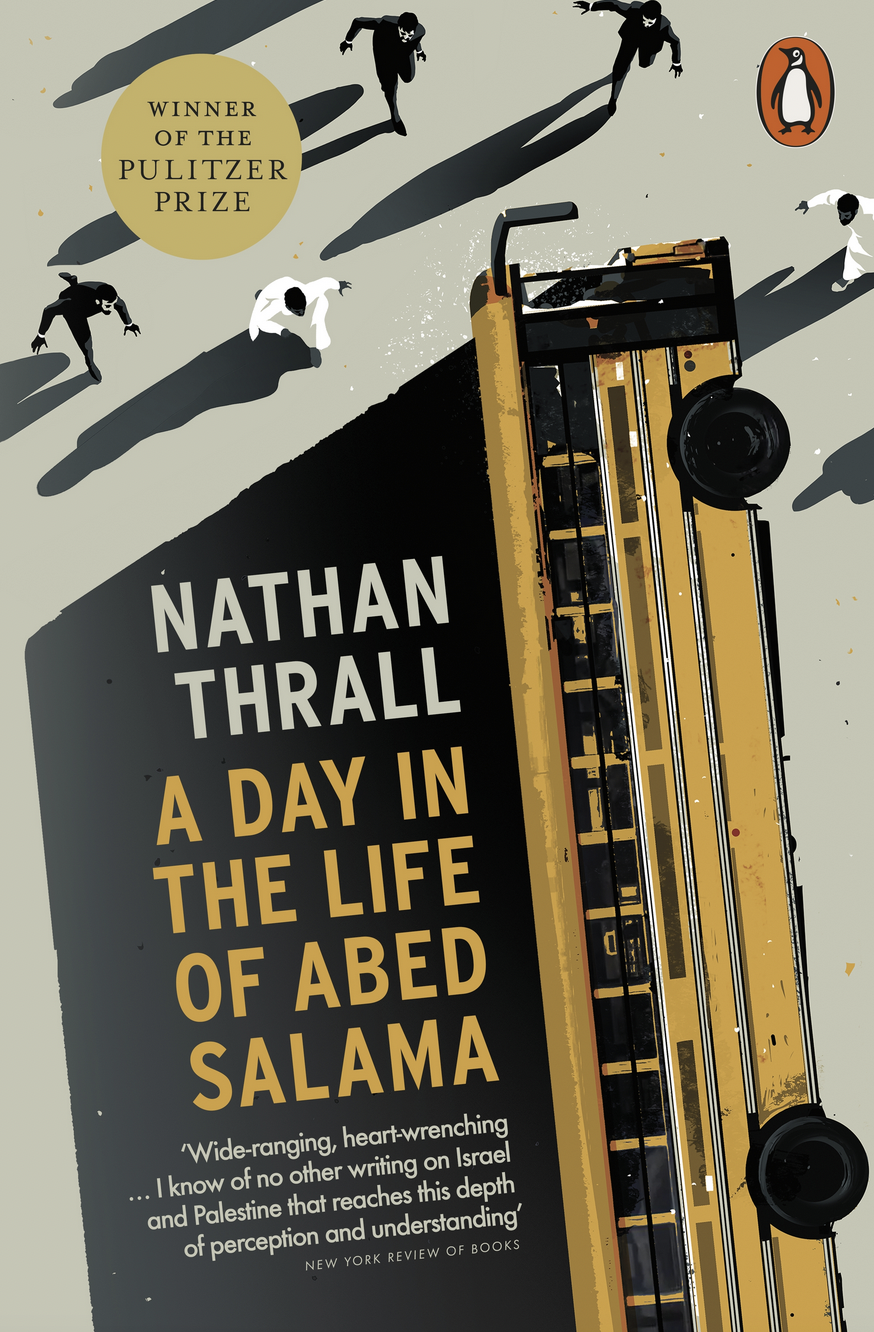
And now to nominate a few more recently-published reading highlights. A Day in the Life of Abed Salama: A Palestine Story, by Nathan Thrall (Penguin, 2023) has been overtaken by apocalyptic events, but this story of how Palestinian children who were injured in a bus accident were treated by Israeli authorities, laid out in careful and horrifying detail, is really testament to what precipitated the events of October 7th, 2023. The Palestinian people, living more or less in a state of permanent incarceration, where you could be shot and killed for looking at an Israeli settler in the wrong way, were goaded into an impossible position.

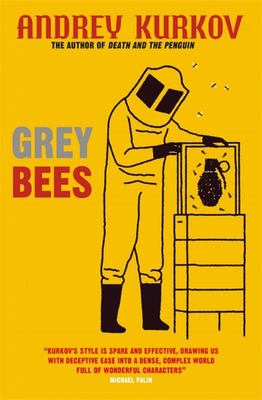
Grey Bees (Quercus Publishing, 2021) is a novel by Andrey Kurkov set in the period after the 2014 Russian invasion of Crimea and the start of the war in Donbas in Eastern Ukraine, and conveys vividly the sense of living in a twilight zone by telling the story of a solitary bee-keeper just trying to look after and protect his hives, while a war swirls around him, involving an array of curious characters including assorted loyalists, separatists, Russian occupiers and Crimean Tatars.

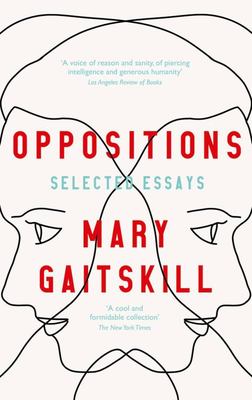
 Oppositions: Selected Essays, by Mary Gaitskill (Serpent’s Tail, 2021) is wonderfully contrarian about a variety of topics, including Norman Mailer as macho man and Vladimir Nabokov’s Lolita and Gone Girl, by Gillian Flynn: ‘Gone Girl… evokes what has become a cultural ideal of relentless feminine charm tied to power and control.’

The Backstreets: A Novel from Xinjiang, (Columbia University Press, 2022) by Uyghur writer Perhat Tursun, written before he disappeared into a concentration camp in China, is saturated in a brilliantly-rendered Kafkaesque or Borgesian atmosphere of foreboding and paranoia in the fogbound endless streets of a vast city.

This year I read Charlotte Wood’s comic novel The Weekend (Allen & Unwin, 2019) about three septuagenarian women friends who were golden girls of the 1960s meeting up for a beach-side holiday, and was so taken by its caustic wit about the ageing process that I immediately got hold of her Booker prize short-listed Stone Yard Devotional (Allen & Unwin, 2023), only to be bemused by its weird Catholic subtext. Weird because although it’s not overt, this is absolutely a novel about sectarianism reaching out from the author’s own childhood to encompass and smother. The result is dour, worthy and earnest— though the mouse plague while typically Australian is also fantastically surreal.

Quntos KunQuest’s  This Life (Agate Publishing, 2021) is a rap-novel in musically cadenced language about day-to-day life in goal and personal coping strategies, by someone locked up in Angola Penitentiary in Louisiana since 1996. Though the writer doesn’t play down his drug-related offending, it is obvious that his prolonged imprisonment is disproportionate, but that also it is highly typical of a large number of fellow inmates, who are caught up in legislation designed not to rehabilitate them but to keep them locked up. The Canadian author Cory Doctorow elaborates on this subject in his novel The Bezzle (Macmillan, 2024), which is about private prisons in California, ‘enshittened’ by private equity. As a character in The Bezzle puts it: ‘We are living in a golden age of grift. We just put a guy in the White House who brags about his criminal acts, says they “make him smart”. When it comes to embezzlement, he’s King of the Bezzle… People today, they think the government can’t do anything right, so they want the private sector to take it over. Then, when someone like this Thames Estuary outfit comes along and starts stealing everything that isn’t nailed down, those same people are like, “You see? I told you the government was incompetent.”‘

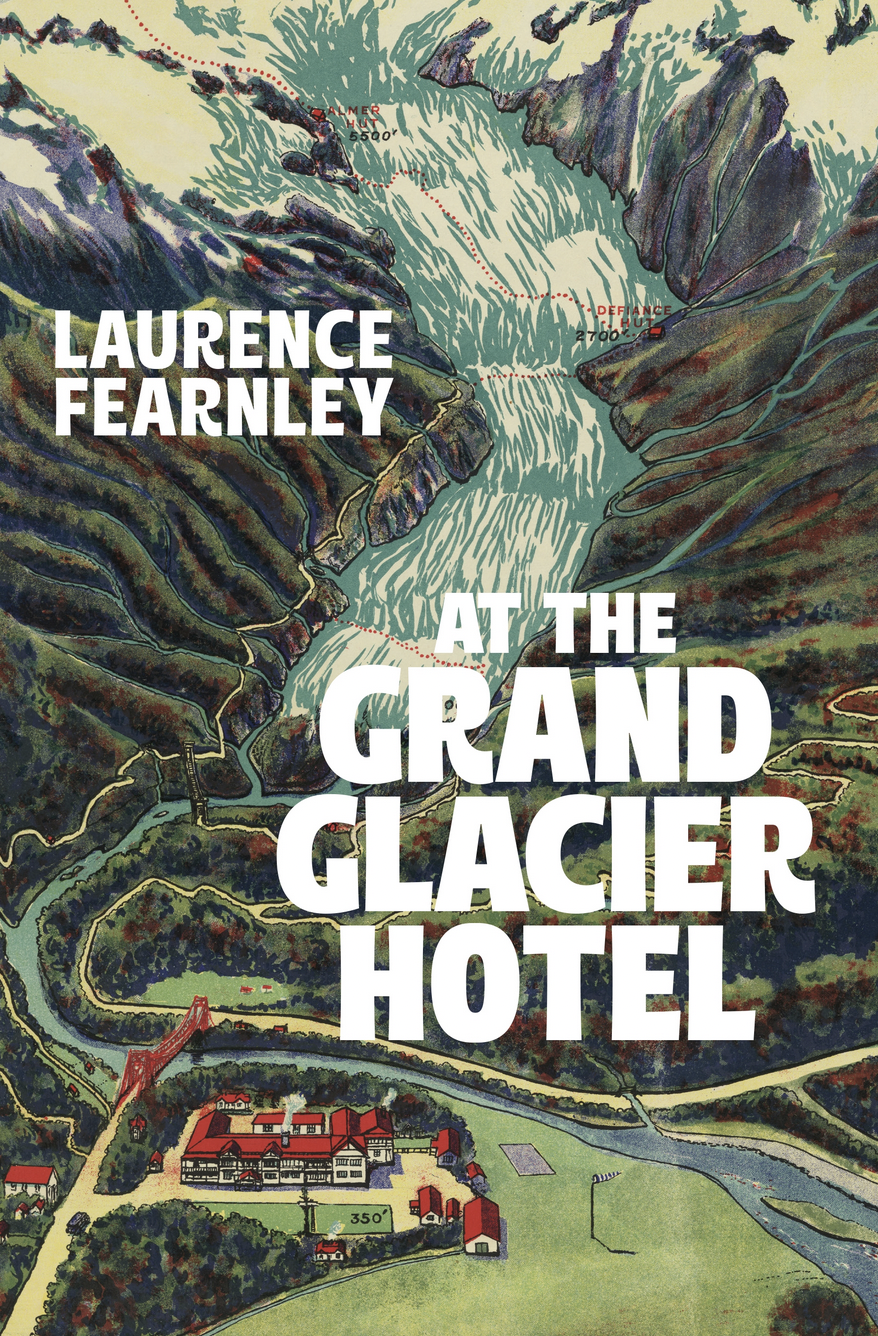
I had better stop, but I just want to mention the novel At the Grand Glacier Hotel, by Laurence Fearnley (Penguin, 2024) because it’s about proprioception, or the body’s ability to sense movement, action, and location. This ability present in every muscle, and without proprioception, you wouldn’t be able to move without thinking about your next step. Fearnley’s novel explores this fascinating topic using her own personal experience following major surgery, but the subject is also part of a set of novels about the body’s senses, of which this is the third. The sequence is shaping up to be a major achievement.

Ōtepoti Dunedin is alive with creative energy – you just have to step outside to find something happening, from independent zines to theatre to music. And there is always room for emerging voices in our literary landscape. A lot of this happens in Dunedin with energetic support of Nicky Page and her team at our UNESCO City of Literature. And 2024 was a year of collaborations.

2024 was a year of collaborations for me. Working across platforms and genres opens up new spaces for creative exploration, and each time any expectations I have going into the project are far exceeded by the results. The Arts + Science Exhibition in Ōtepoti Dunedin was a highlight, with some 50 people collaborating to present artistic-scientific representations of memory. It was a real buzz meeting regularly between February and July with Manu Berry (printmaker) and Rachel Zajac (psychologist) – discussing, experimenting, shaping our project.  We invited Cilla McQueen to participate, and together we created memories in wallpaper: graphic, tactile, poetic. Our work was shared on Poetry Shelf in July.

Fireworks with Cilla’s words

One thing leads to another. And besides the wonderfully inspiring work from this project, my poetry series ‘The map in your palm’ was runner-up in the Kathleen Grattan Award for a Sequence of Poems. The sequence deals with navigation, parenting and our natural world. A handful of the poems in this sequence had their start with the memory work I did with Manu and Rachel for the Art + Science programme. Here is the small poem that holds the title to the sequence:

Memory

holds you aloft, blows wind in your sails
knocks you sideways, calls up the dead

your lat and long, your yin and yang
this compass to guide you, your daily bread

these stories, these waypoints
the then and the present

those edges, this centre
the map in your palm

This poem indicates a way of navigating all kinds of seas, rough or calm. Stories, waypoints, poetry – these are our guides. In a year of such tumult and uncertainty, globally and locally, creative collaborations keep the spirit alive. May there be many more ways for artists and creative voices to keep moving forward in 2025.

Highlights in a Low-high year

Weirdest year ever. Weirder than the year I woke up on the floor, forgot my name and what country I was in.

Year two of being crushed-on-hard by David Seymour aka Fashweasel aka Temu-Himmler aka No-such-thing-as-white-priveldge aka Colonisation-didn’t-happen. David and his spokesperson for the Arts, Todd Stevenson, aka Never-read-a-book-of-NZ-literature, have- followed-my-every-move- like-stalker. They never passed up an opportunity to bully me. I win the PM award for literature (poetry), next day they’re calling it  a “sick sick” decision and throwing threats around all over the place. 

(Umm, I can tell you what is sick: their vile Treaty Principles Bill!)

New years day 2024 they’re posting the same thing again – telling the world I won $60K for one poem.

Wouldn’t it be awesome if one poem would earn me $60K? The PM award is for a ENTIRE CAREER, which would work out at about: 60K divided by 25 years divided by 52 weeks equals forty six dollars a week . Forty six dollars a week for being good at my job, not sixty thousand dollars for one poem. But, why would the Art spokesperson know that?

This has been the weirdness: every time something good happens: Show premier, PM award, Senior Artist Award – these sickos are pouncing like . After years of poor followed by poor and some more poor, I’ve hit year 20-something and some of my hard working chickens are coming home to roost. And it is knives out from these men: chase the chicken, tell everyone how bad the chicken is.

I think they want to eat the chicken.

2024: More Highs Than Lows

Jan: New Year in Kakanui—cutest small town in NZ. Feb: Sunflowers & ice creams from the dairy. Queenstown: wine, roses, mountains & lake. March: Ōepoti: J&K photo shoot with Clydesdale. April: Japan: crows, canals, trains, cherry blossom & piles of old snow. Taipei: a gondola ride up a mountain & a typhoon. Singapore: the smell of the effect of humidity on deep green. May: Auckland: Sky Tower skyline & Waiheke Island ferry. Russell: blue water, pohutakawa & history. Whangarei: the clock museum. June: Invercargill: out loud poetry with Jenny P. & David E. & Dan D. Aparima / Riverton: the whale. Ōtepoti: Tim Jones’ Weather Event. July: Queenstown (again): family off to Germany. Wellington: Cable car. Horowhenua: Lazy Square, a whānau hui. Wairarapa: Sisters Roadie, wine, book shops & crockery. Aug: Ōtepoti: 6 movies at Regent Film Festival; best 2, ‘Head South’& ‘Outrun’, worst 1, ‘Janet Planet’. Sept: Bluff: port, poetry, writing, weather & Cilla. Timaru: Caroline Bay at dusk, officious penguin lady & farewell to the last of my aunties. Waimate: a bargain poncho. Ōtepoti: Larnach Castle: scones & jam, red kaka beak flowers & pepper trees. Oct: Queenstown (again): airport & family back from Germany. Waihola: boardwalk across the lake. Catlins: waterfalls. Kaka Point: wind. Gore: Bro-in-law’s birthday dinner at Mr Green’s. Nov: reading through all of ‘Te Awa o Kupu’, having the Dolans in Dunedin. Tairoa Head: Katherine & seagulls & bull kelp. Dec (so far): baking cup cakes for moko, rata in flower, reading Talia’s book. All year round constant highlights: whānau, writing, drinking tea & not watching TV News.

It’s always hard to pick favourites, but here are some things I have enjoyed in 2024. 

In poetry, I really loved Kiri Piahana-Wong’s poem sequence Tidelines (Anahera Press). It is a moving combination of the story of the historical figure Hinerangi, with personal narrative. I also loved Robert Sullivan’s Hopurangi: Songcatcher (Auckland University Press), another book-length poem sequence, focusing on the maramataka. I like the ways in which Robert merges the cycles of nature with personal experiences and observations.

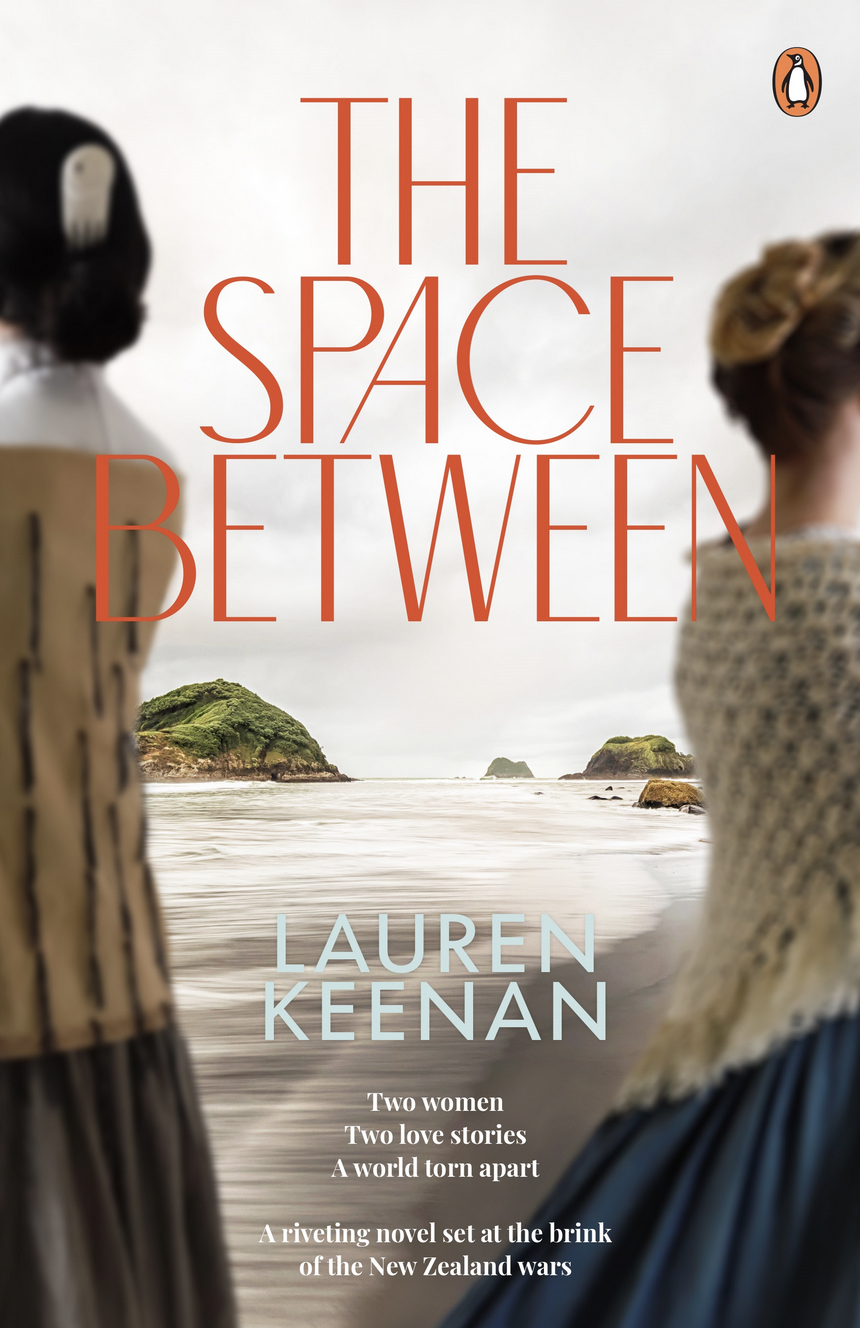
In fiction, Lauren Keenan’s The Space Between (Penguin) is an entertaining read, set in the Taranaki wars. Lauren is very good at telling an engaging story that also honours the realities of historical events. Also set in Taranaki, but more recently, is Airana Ngarewa’s Pātea Boys (Hatchette), a collection of short stories. These stories were a lot of fun, and I appreciated the local setting. 

A film highlight of 2024 was the short film Finding Venus, directed by Mandi Lynn, which I saw in the DocEdge film festival in Wellington. I have a personal connection to this film as I was one of the ‘golden shieldmaidens’ back in 2018, and have a short cameo. It has a globally relevant message and is currently touring international festivals. If you see this film, take tissues, because you will cry. 

My favourite TV series of 2024 was Rivals (Disney), based on a Jilly Cooper novel. It’s very 80s, very political incorrect, and David Tennant is an excellent villain. I loved the soundtrack, the wardrobe, the hair. I watched it twice. I really need series 2 to be made! 

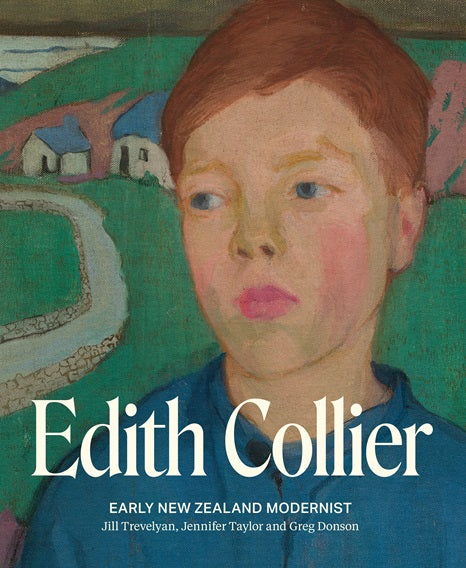
In the visual art world, it’s been exciting to have Te Whare o Rehua Sarjeant Gallery reopen in Whanganui after a long earthquake strengthening and extension project. I encourage everyone to visit Whanganui and visit the Sarjeant, where the current exhibition ‘Nō Konei | From Here’ is like a greatest hits of the collection, featuring many local artists and artists with connections to Whanganui. I was honoured to be asked to write a poem for the publication Edith Collier: Early New Zealand Modernist edited by Jill Trevelyan, Jennifer Taylor and Greg Donson. It’s a really beautiful book featuring a lot of Edith’s art. She had a fascinating life story too.

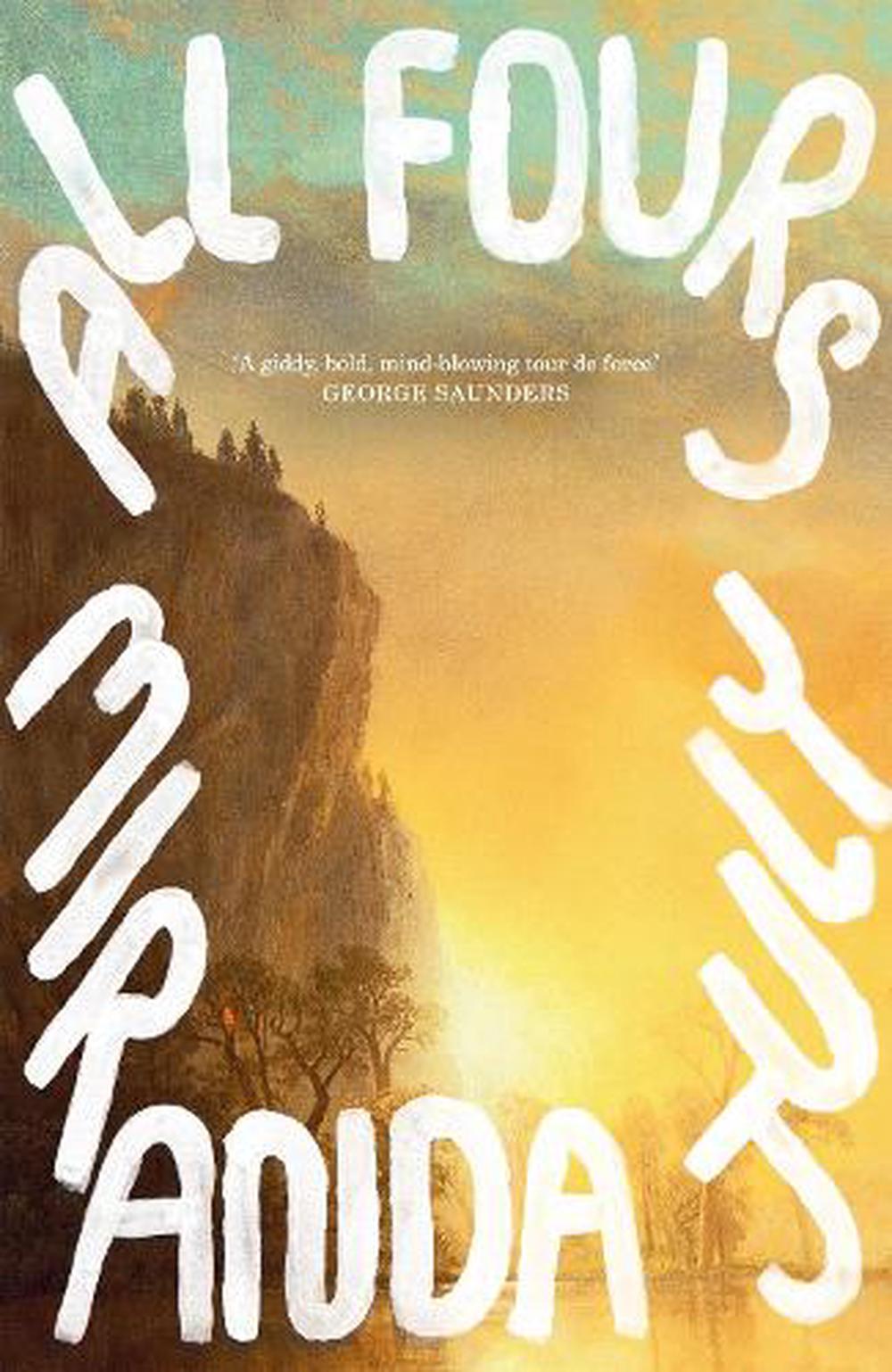
In recent years I’ve mostly been reading, and getting inspired by, creative non-fiction, but this year I have renewed my appreciation for the novel – the special things it can do, including things that push the boundaries of what I thought a novel could be. I had a rather significant birthday this year, and one of my gifts from a friend was All Fours by Miranda July (Canongate). I loved it! I loved it in the way you love something that resonates with you, and just a little way in I exclaimed to myself ‘This is why we need novels!’ Despite (or maybe because of) its nuttiness, I think it is telling something true, but in a way maybe only a novel can. It was an excellent companion piece with Lioness by Emily Perkins (THWUP) (which another friend gave me for my birthday) and from these two books I can now tell you with authority that mid-life for women is all about dancing, broadening your sexuality, and ceramic lions. 

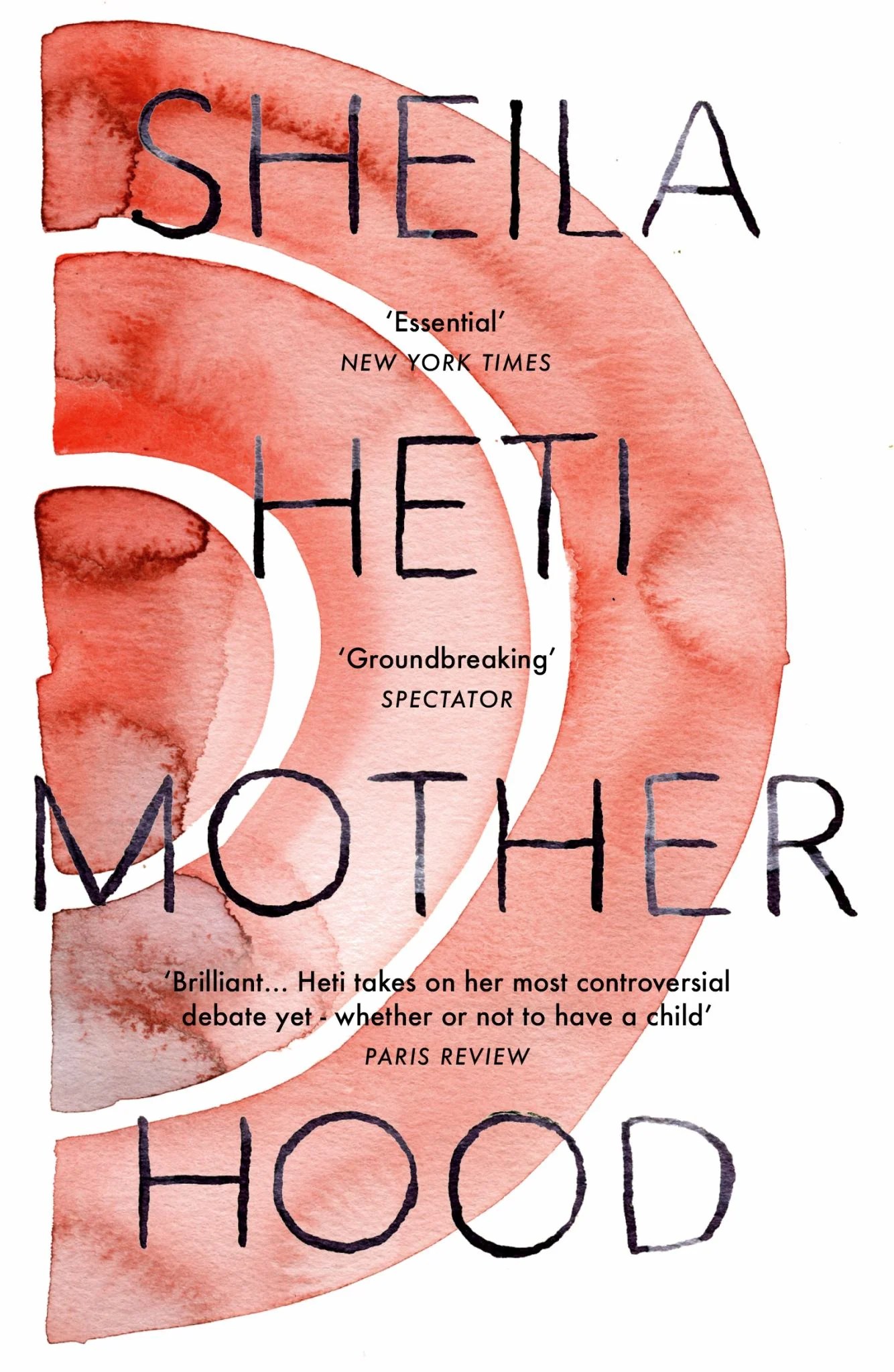
Another novel that was a highlight for me this year is Motherhood by Sheila Heti (Penguin). I had put off reading this for a while, thinking it was just about the narrator (and, being autofiction, also the author) deciding whether or not to have a child (not to say that isn’t an important decision, and in fact the local essay collection Otherhood, in which I have an essay about this very topic, was another highlight this year); and it is about that, but it’s also about so much more than that – relationships, philosophy, religion etc. And the thing that especially inspired me was the author’s engagement with chance (throwing coins to get a yes or a no) in several parts of the book, which paradoxically leads to some really meaningful ‘conversations’. It connected with my own use of randomness and chance this year, and set me off in an (to me at least) interesting direction with my own writing – in my case poetry. (I don’t think I have the stamina for a novel! Or at least not yet.) 

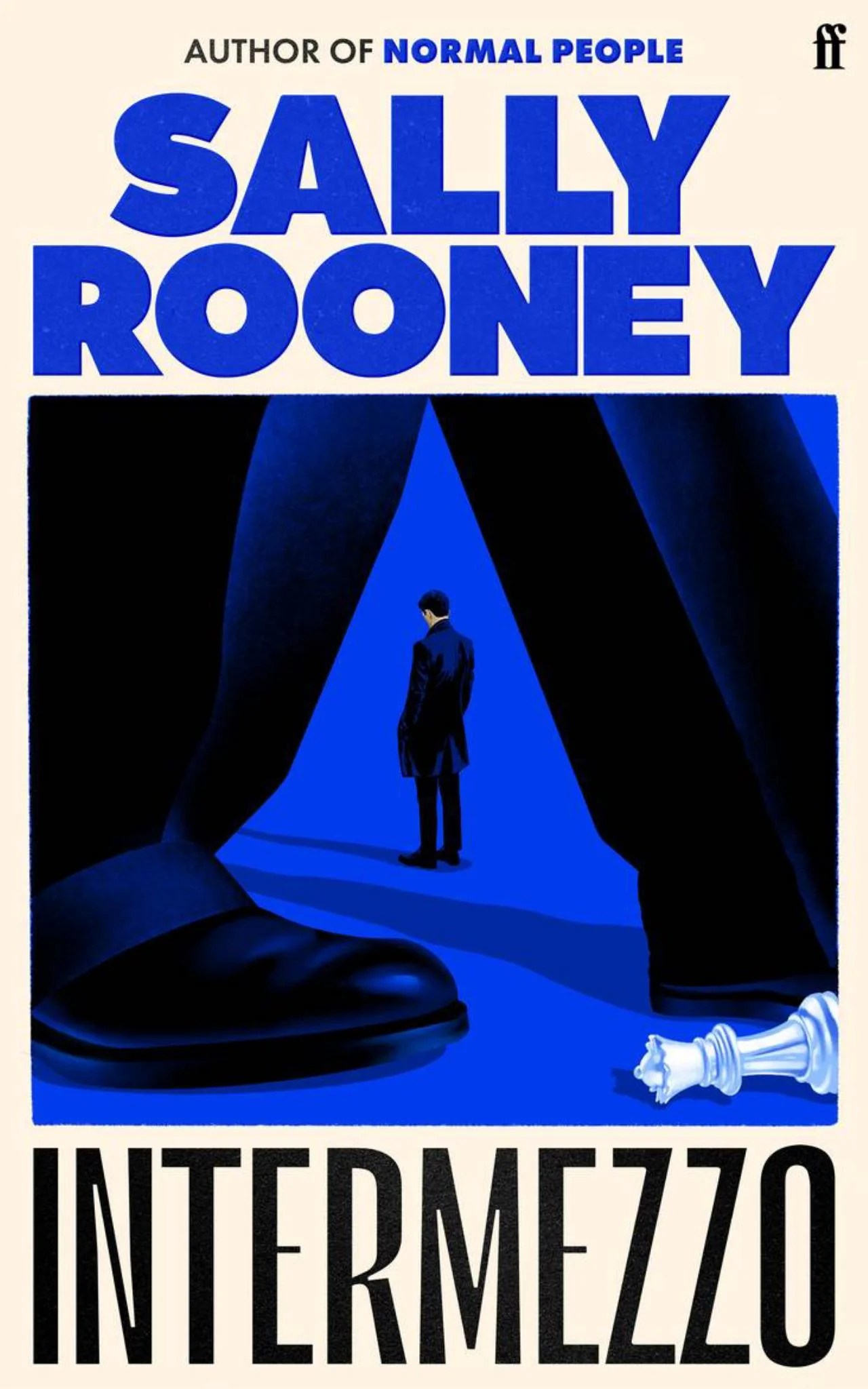
I also have to put in a quick word for Intermezzo by Sally Rooney (Faber) – though somewhat different, in my household we agree that she is a great humanist novelist in the tradition of George Eliot. And I was especially taken with the way the narrative voice/internal monologue for one of the characters (Peter) read to me like poetry in its fragmented, repeating style. Though maybe I am just looking for poetry in all literary forms. 

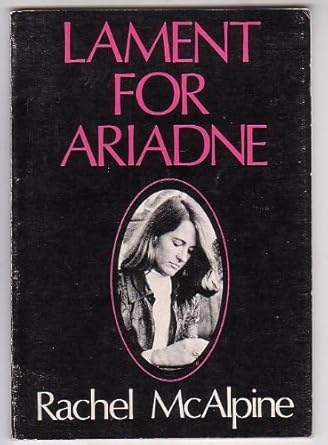
It’s almost 50 years since Caveman Press published my first book of poems, Lament for Ariadne. I could never have predicted the highlights of my 85th year! This year I jump-started a podcast that had stalled, renamed it Learning How To Be Old, and upped the stakes by including guests and street polls. That’s very exciting from my point of view.  I see the podcast as half creative toy, half public service. I’m slowly acquiring the nut and bolts of podcasting — legal, logistical, strategic, interpersonal and technical. Other highlights have been three conferences: Age Concern New Zealand, NZ Association of Gerontology, and Faculty of Psychiatry of Old Age 2024 Conference RANZP. I’ve loved speaking there as an old poet, representing their client base, with poems in my pocket. Roll on 2025, when I’ll be taking poems into other unexpected places.
Poetry Shelf 2024 highlights collage – part two

spell to keep things firm and intact
in spite of counterspells

move the hair from your face / be reflective as a cat’s eye /
become intimate with what you can touch with your hands
/ collect flora from the forest floor / shells from the foam of
the tide / find days that are silken and healing / get used to
living underneath / the same sky / when things won’t stop
coming apart / in an almost sexy way / become life-size / be
gentle to gentle things /

spell to survive

Today I put my anxiety into a card for Natalie like
a pressed flower
Today I walked around in the sun and waved to everyone
in the other ocean
Today the light wanted to come through
Today I lay under a bed of leaves
Today I woke up and kept waking up
Today there was green green green I fell into
Today I mailed out my grief in shiny gold envelopes
Today I found a long black strand of hair and held it up
to the sun as an offering
Today I couldn’t see the future but I heard it like
a branch snapping
Today I texted the sky ‘I don’t want this’
Today I remembered the big red moon in my dream
Today there was a little hope
Today there was not
Today I turned 31 and felt each of my years like a
multi-tiered wedding cake
Today I could not touch anything within my reach
Today I walked up the hill and came back down again
Today the windows reflected me
Today I saw the sea and felt it fill my lungs
Today I put on my pink mask
Today you stood closer

spell to gain courage

love wide-open against the natural framework /  sinking
always across phenomena / shift the form and work the
despair until it is hollow / when you can’t see through the
fear / you have to reclaim your structure / rearrange the text
until / you can see yourself there in it /

Stacey Teague
3 poems from Plastic, Te Herenga Waka University Press, 2024

Poetry Shelf’s Monday poem spot usually features unpublished poems, but recently I’ve posted poems that have travelled with me over time, whether months or years or decades. I have a physical poetry room in the house with a substantial book collection, but I also have a poetry room in my head where I store poetry to return to, poems that haunt comfort astonish.

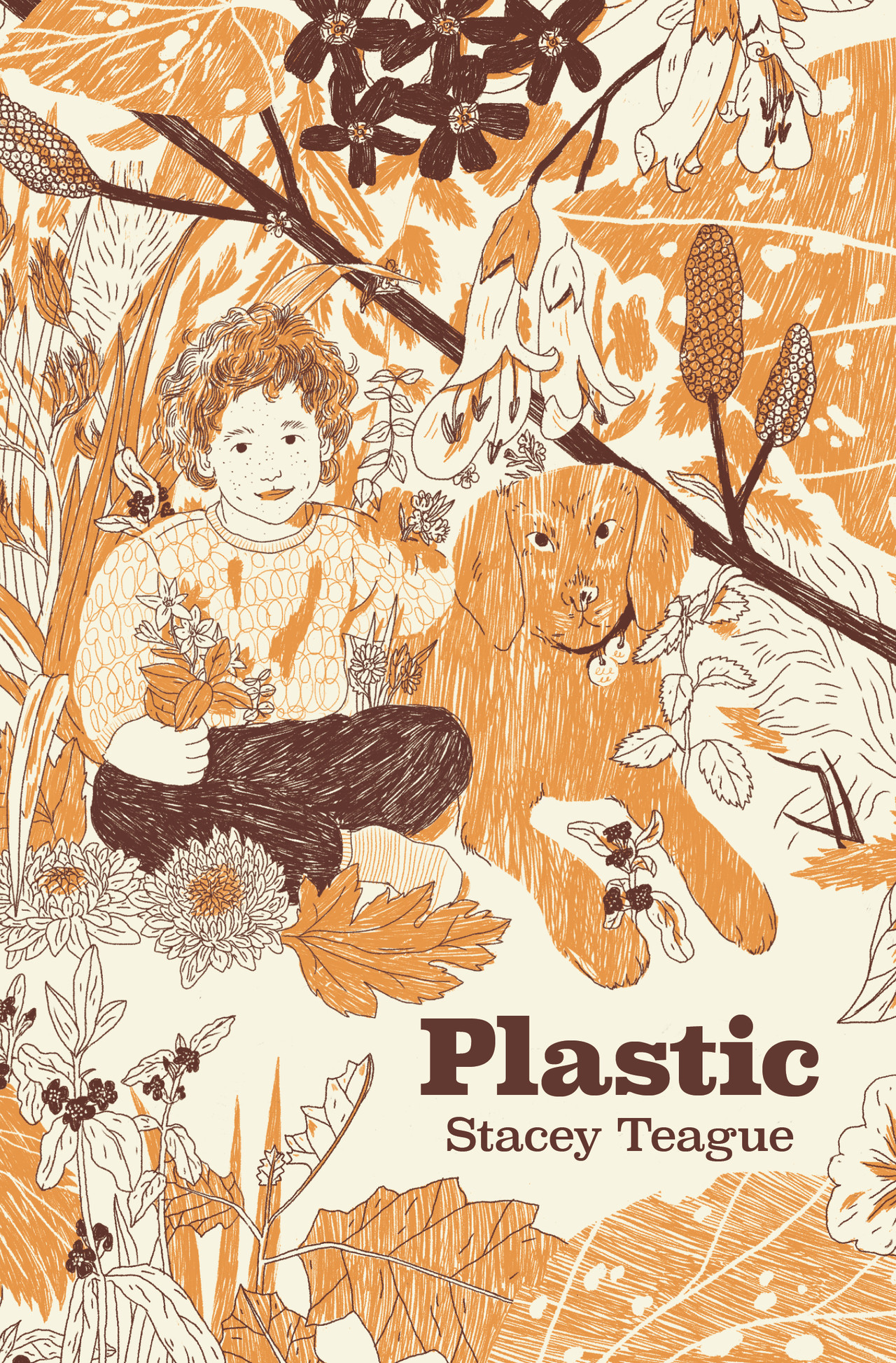
Stacey Teague’s Plastic (Te Herenga Waka University Press, 2024) is one such collection. In particular, the spell poems that are like daily reinforcements, heart boosts, poems demanding replay. I had trouble choosing three to share with you. In my review I wrote: “I have jotted down so many lines I want to quote to you, in order to share the heart-rich rewards of this glorious book. This is a book to pack an overnight bag for, to sojourn within and beyond, to reflect upon and to re-emerge nourished. I am wondering if poetry can also be an amulet that protects ‘the heart’s pulses’. I love it.”

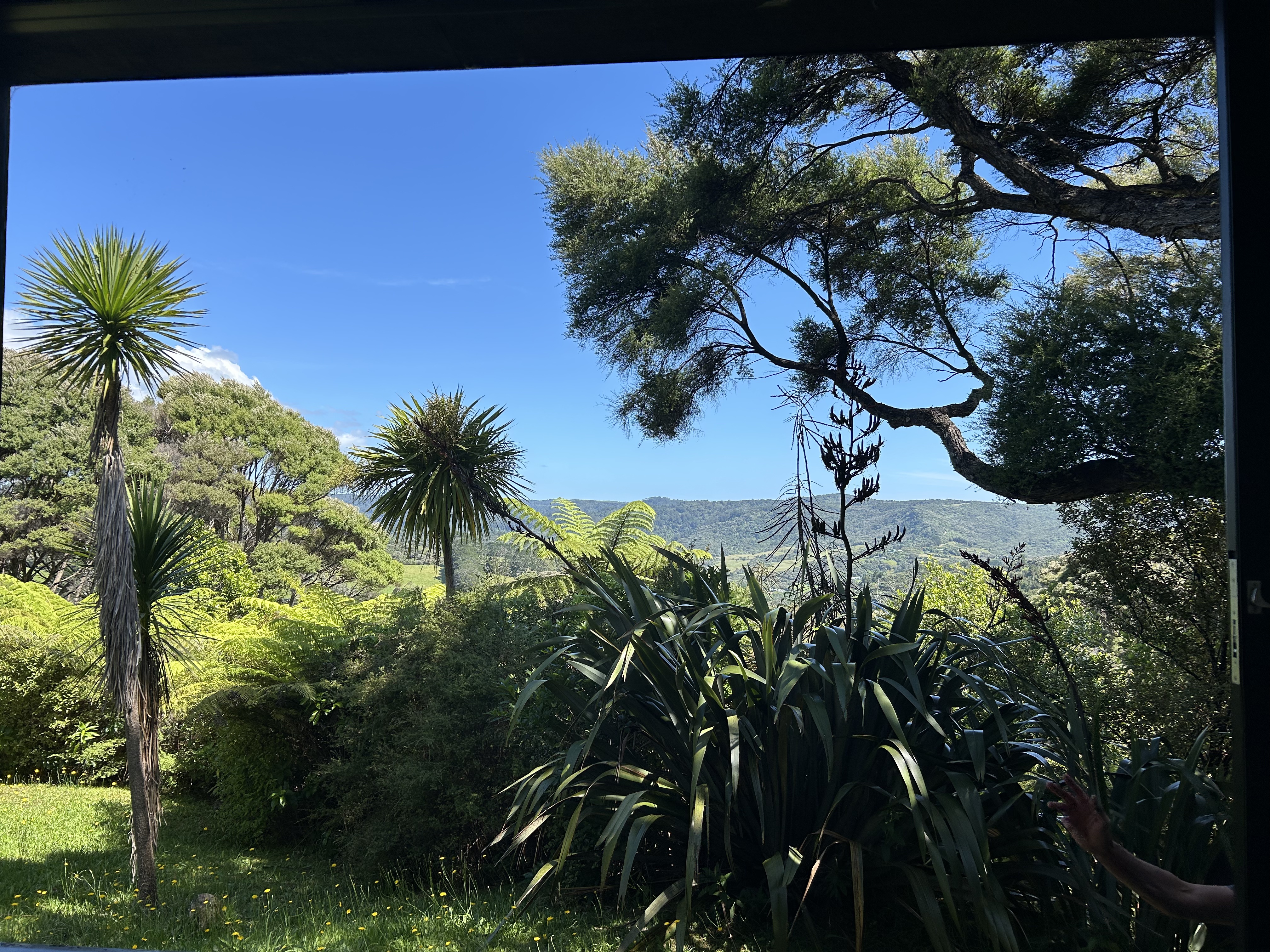
Poetry in Aotearoa is akin to the view from my windows, weird analogy I know, but it is expansive, opening wide upon sky bush land, with myriad musical tracks, imaginings, with birdsong and leaf dance, a meeting place of storm beauty clouds growth new beginnings death harvest. We are reading writing performing reviewing publishing poetry with hearts blazing, with speed and with slowness, gentleness and fire, against all odds, with love and with heart. I agree with Anna Jackson’s opening line: “This has been such a dark and troubling year but also lit up with so much that is wonderful”. And with Louise Wallace’s: “This year, particular poems have been seared in my mind with blinding lines and palpable heartbreak.”

A huge thank you bouquet to all the poets who contributed to the collage.

Poetry Shelf 2024 Highlights Collage – part one here

by Chris Tse

This year, particular poems have been seared in my mind with blinding lines and palpable heartbreak. I have seen these poems shared and reshared on social media, which is a wonderful way to both admire the work that goes into these pieces and ensure that these issues stay front and centre. I’m grateful to these hard-working poets who continue to direct our attention here – to global and local injustices – and who demand that we do not look away.

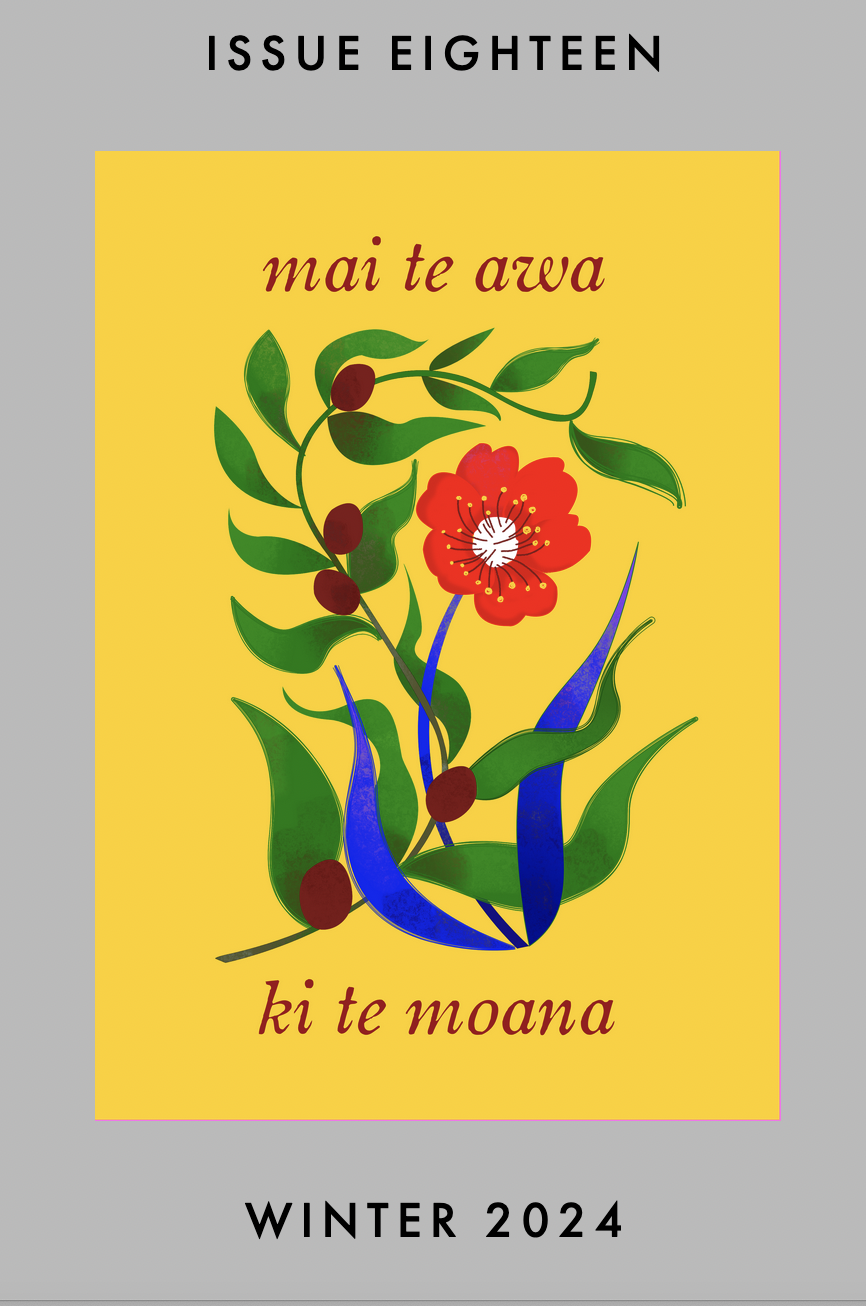
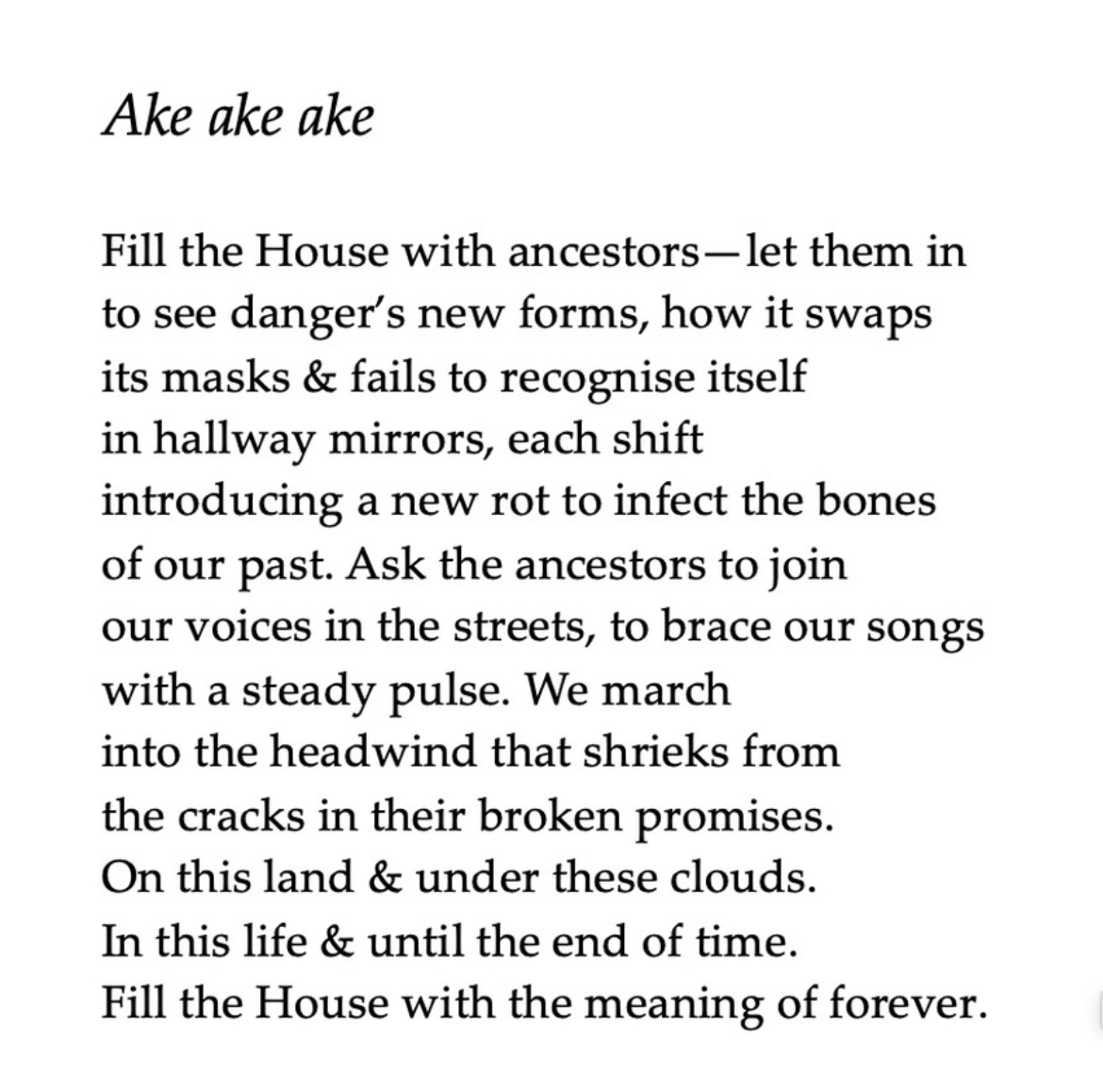
These poems include Omar Sakr’s pieces on the genocide in Palestine (a thank you to Starling Editorial Committee member, Khadro Mohamed for bringing me back to this series), many of which can be read on and shared from his Instagram and will be published by University of Queensland Press as The Nightmare Sequence in 2025. On the same topic – Loretta Riach’s devastating ‘Reverse Tragedy’ from Starling Issue 18. Finally, Chris Tse shared a scorching poem ‘Ake ake ake’ (pictured above) following the November hīkoi in response to the proposed ‘Treaty Principles Bill’ – it is of course, not too late to make a submission on the bill here.

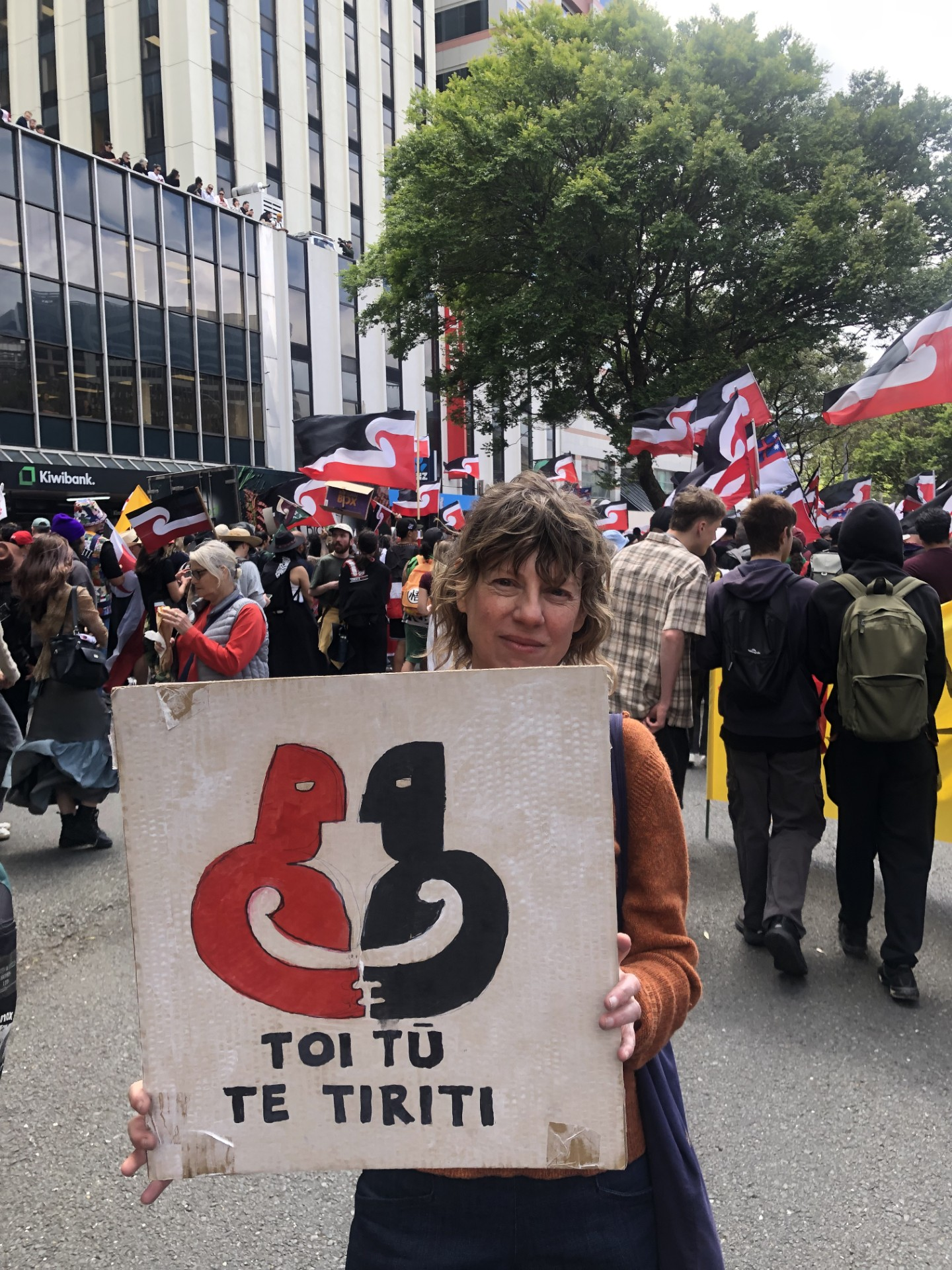
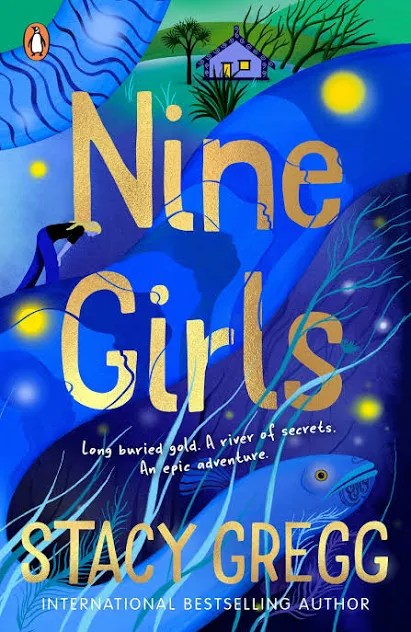
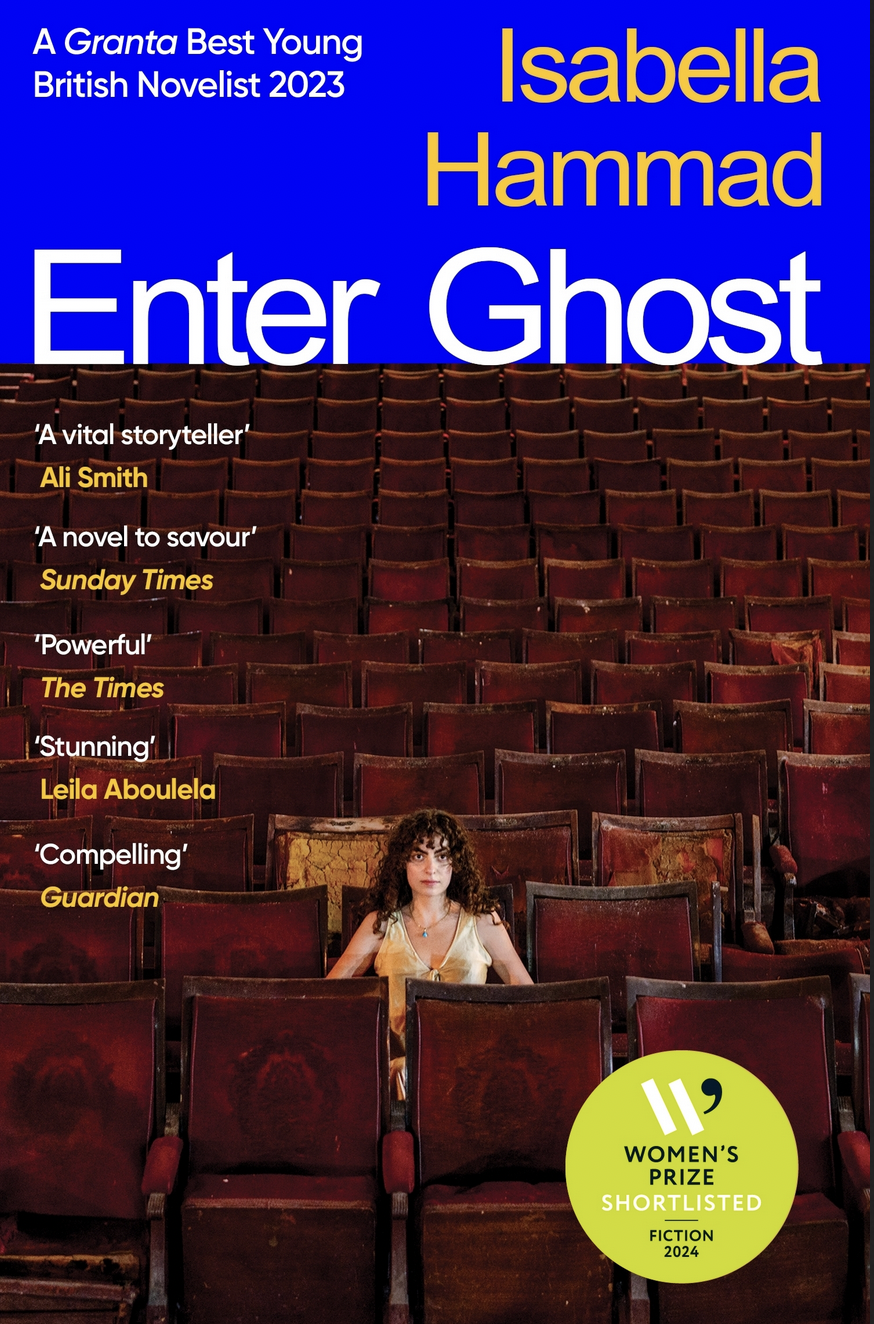
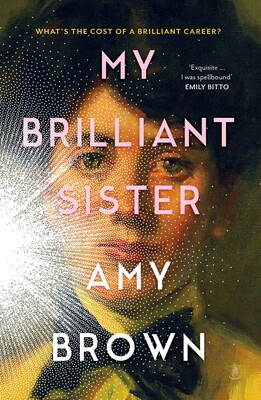
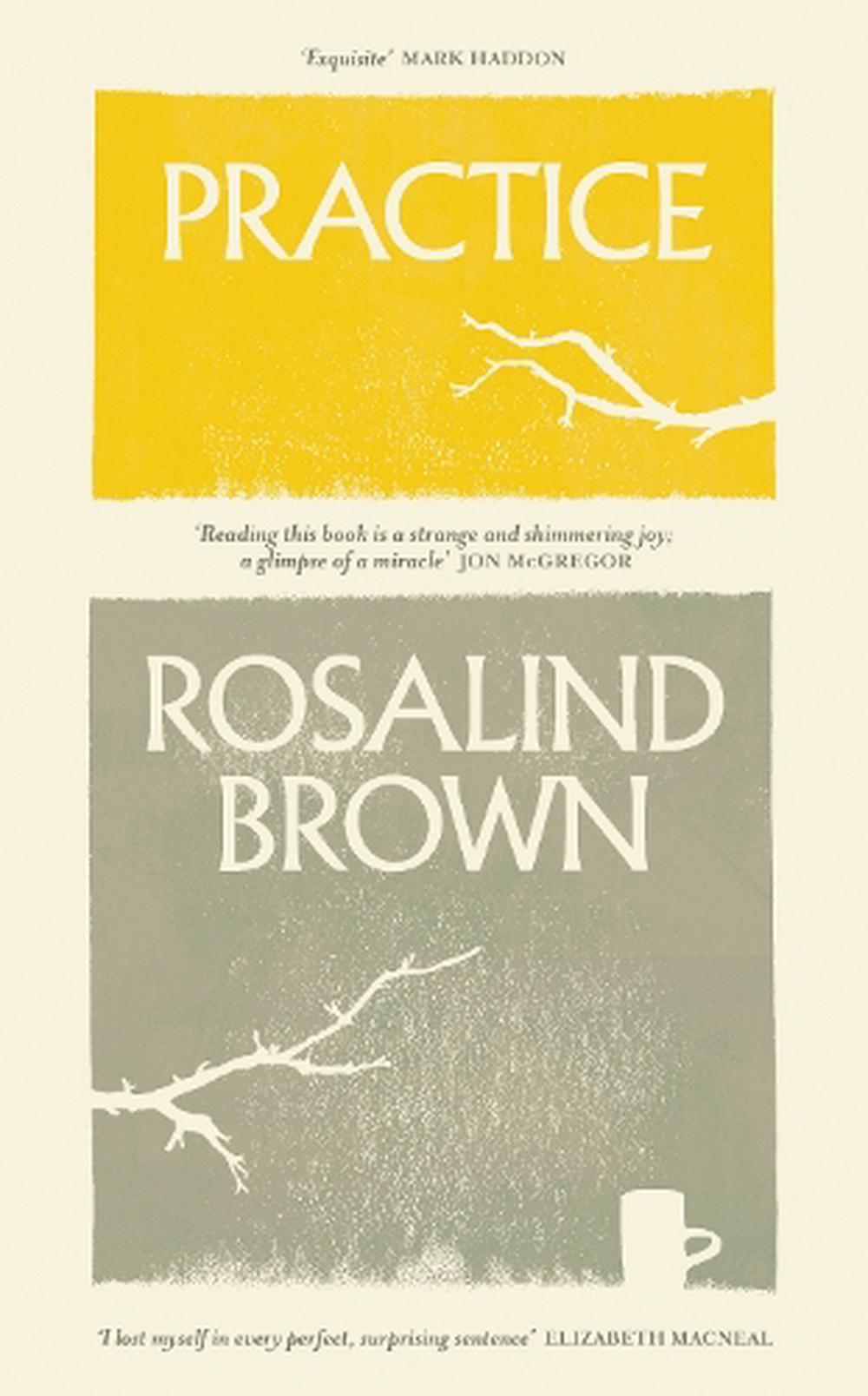
This has been such a dark and troubling year but also lit up with so much that is wonderful, such as Zia Ravenscroft’s “They beheaded St Valentine” and the whole of Starling Issue 18 that this poem appears in.  I had several brilliant poets in both of the classes I taught, American Literature and Reading and Writing Poetry, so that meant every week was highlit one way or another.  The hīkoi was a highlight.  The launch of Robert Sullivan’s Hopurangi: Song Catcher (AUP).  Writing my book, ‘Terrier Worrier’, coming out next year with AUP, while house-sitting Edreen’s cat Oli.  Going to a Tiny Ruins concert in the Begonia House, in Wellington’s Botanical Gardens.  Please, Wellington City Council, don’t pull down the Begonia House.  My Brilliant Sister (Scribner), Amy Brown’s very wonderful novel; Nine Girls (Penguin), Stacy Gregg’s novel for adolescent readers, her best yet; Isabella Hammad’s Enter Ghost (Penguin), a novel about a performance of Hamlet in the West Bank; Stacey Teague’s Plastic was a highlight, Practice (Orion), a novel by Rosalind Brown about writing an essay.  Starling Issue 18 was full of poetry highlights, including Aroha Witinitara’s “The Production,” already famous in poetry circles as the Frog Poem.  Also in Starling 18: Jackson McCarthy’s “Still Life at Sunset.” 

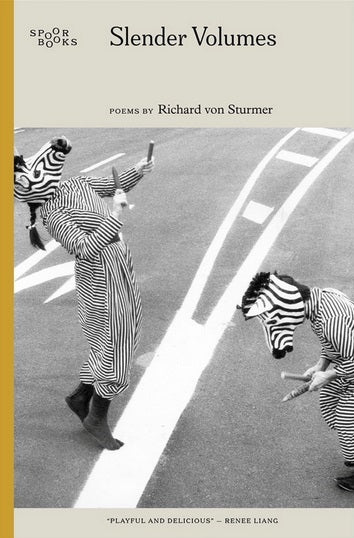
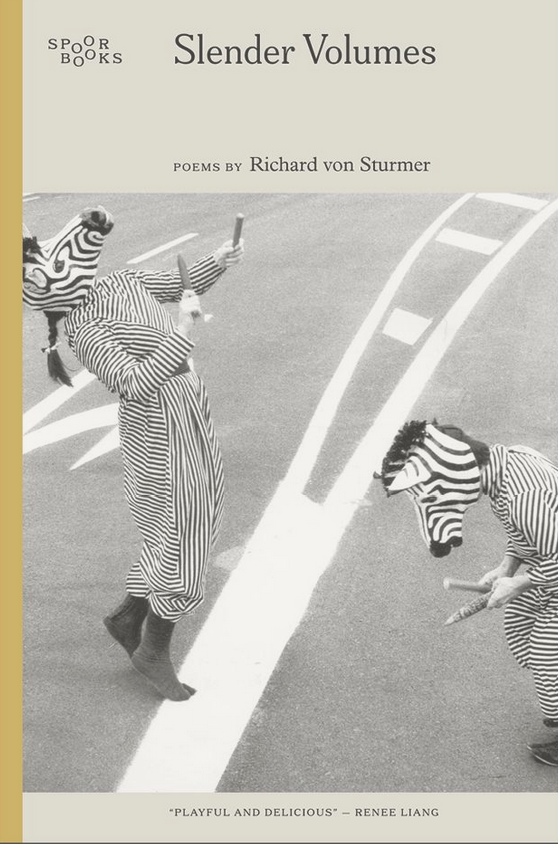
Richard von Sturmer is one of the greats. And so too is his new prose-collection Slender Volumes (published in an exquisite edition by the recently landed Spoor Books). Reading Richard is like having your eyes and mind and heart and soul polished. Polished, in fact, by two whirling dervishes in zebra outfits, singing their zebra songs and providing musical accompaniment. But then, a moment later, a Zen-like calm descends upon all… 

Alongside that, I’d place Dinah Hawken’s timeless gem of a book, Faces and Flowers (THWUP), which features the paintings of Patricia France (1911-1995). Lyrical, understated, a little sad, Dinah’s poems talk to the paintings and vice versa—and it is the most beguiling and disarming of exchanges. (By the way, anyone wishing to know more about the artist should look up ‘Patricia France Painter’ on Youtube.)

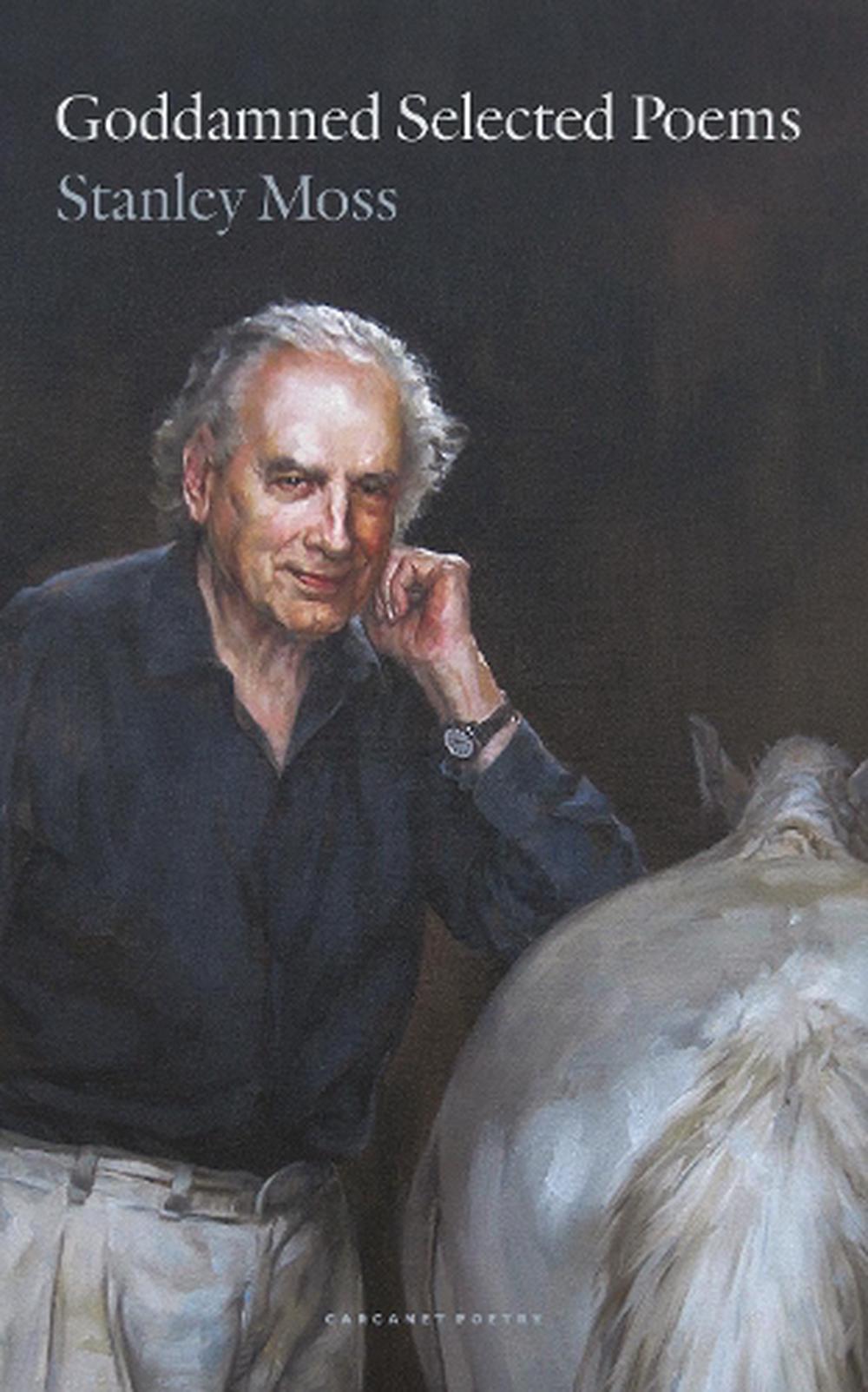
Having had the good fortune of arriving in Manchester, UK, early in 2024, I was promptly handed a collection by the American poet Stanley Moss, then in his 100th year. By the time Carcanet released his nicely titled Goddamned Selected Poems midyear, Stanley was gone. The book is stacked to the gunwales with marvellousness. His publisher Michael Schmidt wrote an obituary which serves as an excellent curtain raiser to the verse itself.

While in England, Jenny and I gave a reading with a youngish Jamaican poet Christine Roseeta Walker. Her book Coco Island (Carcanet) is fiery, imaginative, magical (but plausibly so) and full of life and character–more than sufficient  to make the midwinter city of Manchester feel like a sun-drenched, bird-heavy, wind-powered waterfront in the West Indies. 

A highlight of 2024 has been writing something between a commonplace book and an irregular diary. I have always loved quotations but this time I decided to accompany each quotation with a loosey loosey goosey kind of meditation. Each quotation was to expand to 10,000 words.

Some of the quotations:

 ‘If a lion could talk we could not understand him’, Wittgenstein. Not having a lion I substituted a cat and re-read Christopher Smart‘s ‘For I will consider my Cat Jeoffry’.

‘What I mean by a shifty eye,’ continued Miss Marple, ‘is the kind that looks very straight at you and never blinks’. (Check the TV news).

‘Prayer is the contemplation of things as they are from a very great height’, Ralph Waldo Emerson. If I were a boy I would like to have been called Waldo.

‘The canopy of a single mature tree intercepts 40% of the water falling during a storm, so it doesn’t reach the ground’. This will be titled ‘Trees’.

And the writing life:

‘I am not at all in a mood for writing, I must write on until I am’ – Jane Austen on persistence.

‘Don’t tell me the moon is shining; show me the glint of light on broken glass’ – Anton Chekhov on metaphors.

And Simon Armitage on being a practising poet: ‘the sense of being forever apprenticed to an unachievable goal’. How true that is.

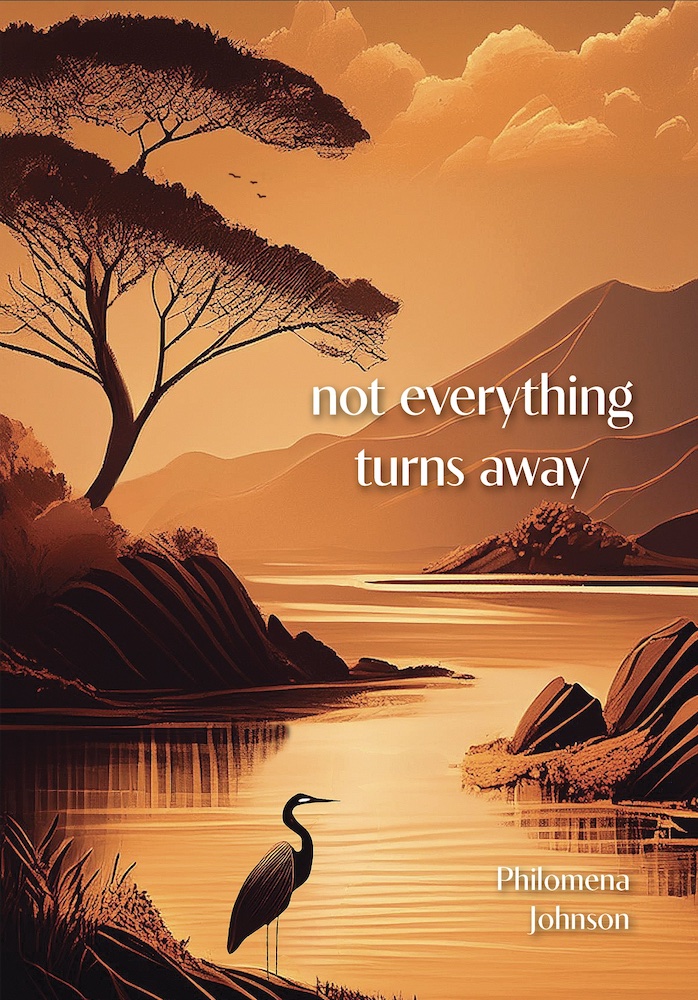
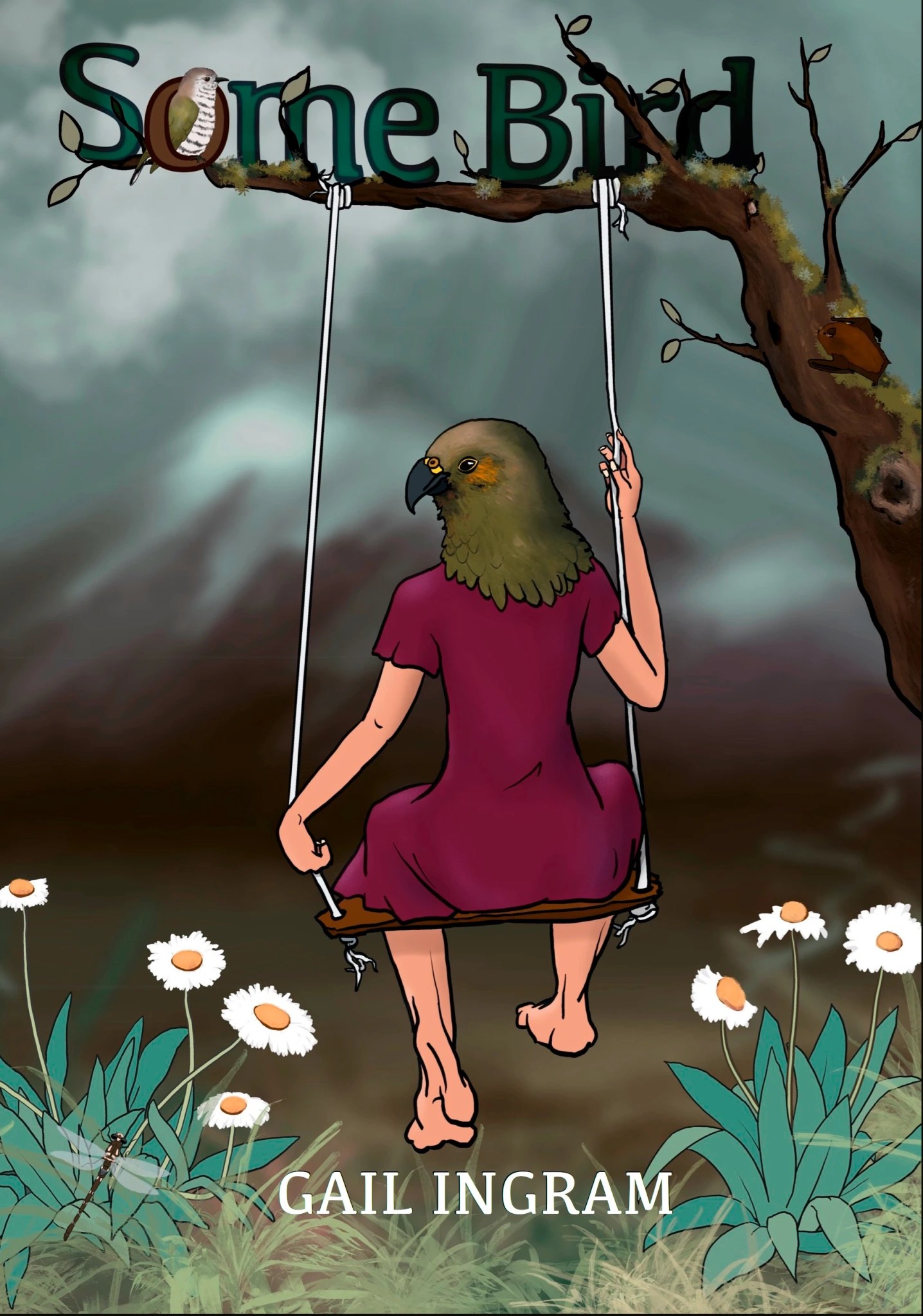
I will stick to the highlights, even though it has been a pretty tumultuous year for my family and for the world. If I can be selfish, the top highlight has to be the publication and launch of my fourth book of poetry, Based on a True Story (Sudden Valley Press). The other highlights are also all about books. The publication by Sudden Valley Press (of which I am the nominal manager) of Gail Ingram’s Some Bird, although this was in 2023. Plus the second John O’Connor Award going to Philomena Johnson’s great book, not everything turns away.

We (SVP) are also working on some great books, which deserve to see the light of day.

A continuous highlight, if there is such a thing, is my amazing family.

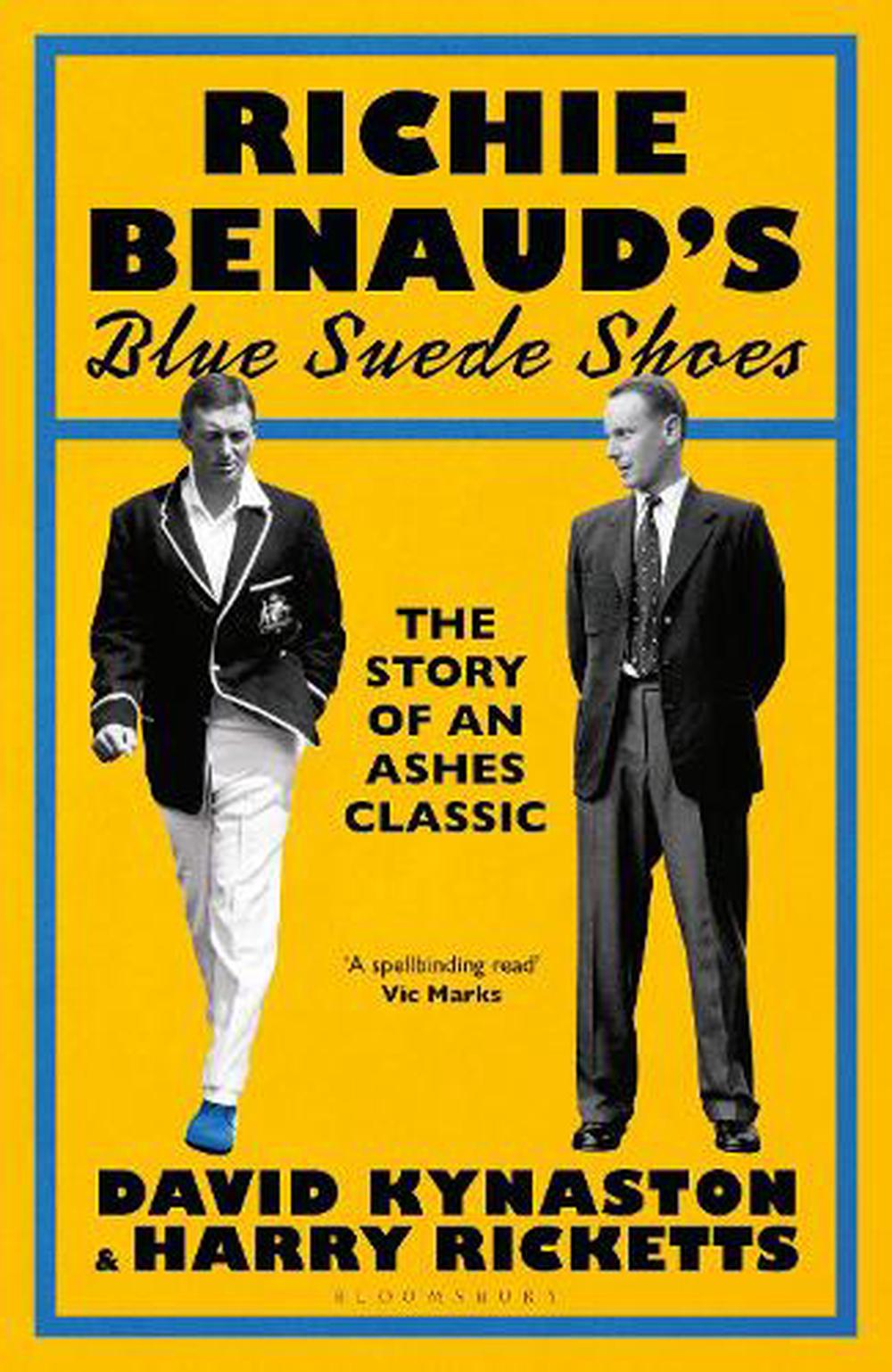
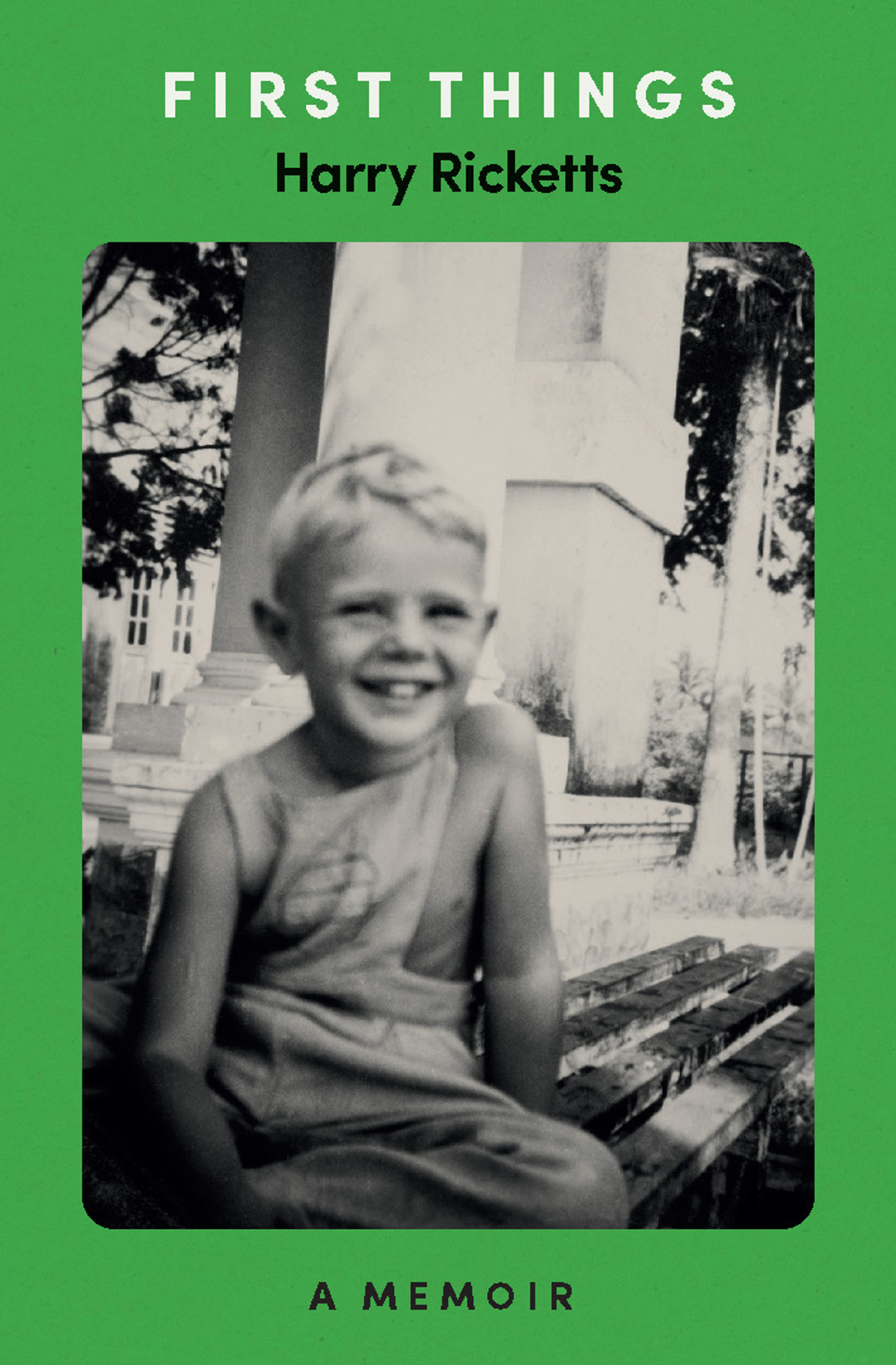
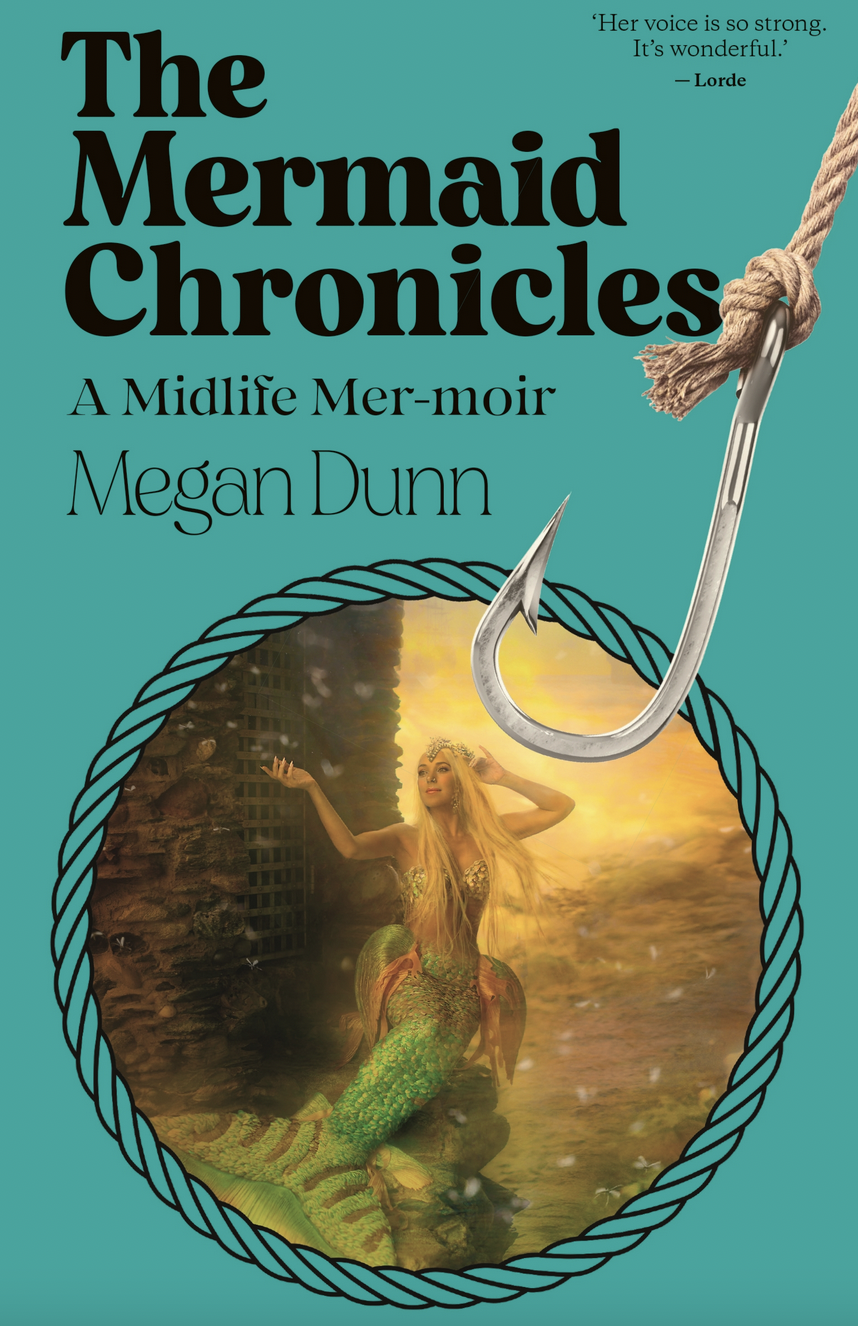
A major highlight was definitely going to Crete for a week and having long, lazy, sun-sinking dinners with children and grandchildren. On the book front, I finally finished Trollope’s six Barset novels (well worth it) and read Victoria Glendinning’s biography of Trollope (ditto). Locally, Megan Dunn’s funny, melancholy The Mermaid Chronicles: A Midlife Mer-moir (Penguin) hit the spot, as did Dinah Hawken’s Faces and Flowers: Poems to Patricia France (THWUP). (I love the way Hawken’s unrhymed sonnets riff off and around Francis’s disconcerting paintings.) Two cricketing highlights were the White Ferns winning the T20 World Cup and the Black Caps thrashing India 3-0 in India. More egotistically, the highlights were the publication of First Things, vol 1 of my memoirs (THWUP), and of Richie Benaud’s Blue Suede Shoes: The Story of an Ashes Classic, co-written with my friend David Kynaston (Bloomsbury).

First of all, on the local front, it just has to be Te Hīkoi mō Te Tiriti, the massive protests we have just seen – some of you were on that road – against Seymour’s egotistical roadblock in the flow history, that bill I will not name. Auē, an estimated 42,000 surrounding Te Whare Paremata in oceanic waves. Made me cry, and rejoice.

Out there in the wider world, for me it’s been Ukraine, as it has since Russia’s psychopathic ruler launched in 2022, his egotistical assault on the country he’s been undermining for the past ten years. The heroism of Ukraine’s citizens, and the terrible price they are paying breaks my heart. I am the child of WW2 survivors. Both parents, and both grandparents, either served in the armed forces or were civilian volunteers. Those who survived bore inner wounds that wounded us.

Those children of Ukraine who survive will also bear a generation’s trauma.

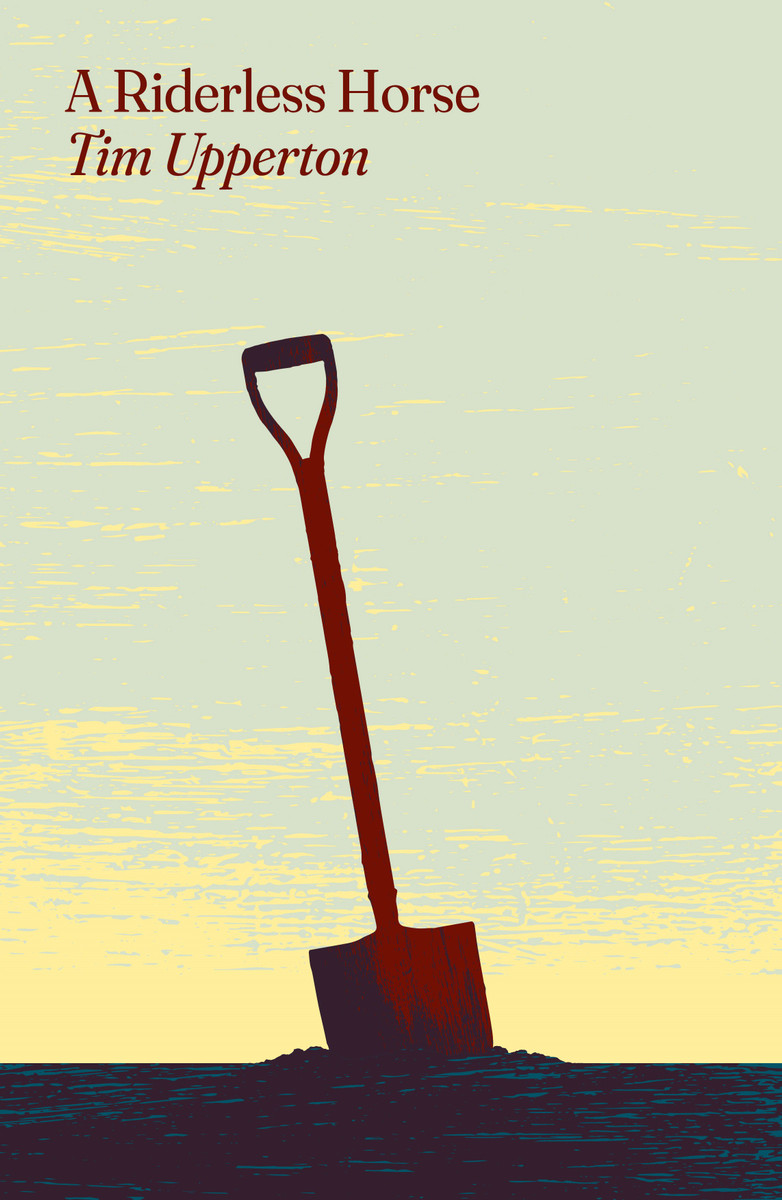
Books, how can I ignore them? Just four I can name as fresh, recently read, or in the process of reading. Poetry, I’ve been diving into Tim Upperton’s most recent work, A Riderless Horse (AUP, 2022). He’s a very fine writer with a range in both style and subject, and a deceptive simplicity of presentation that releases great depth.

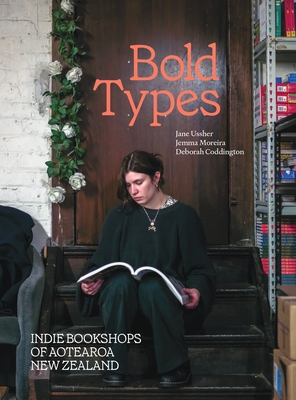
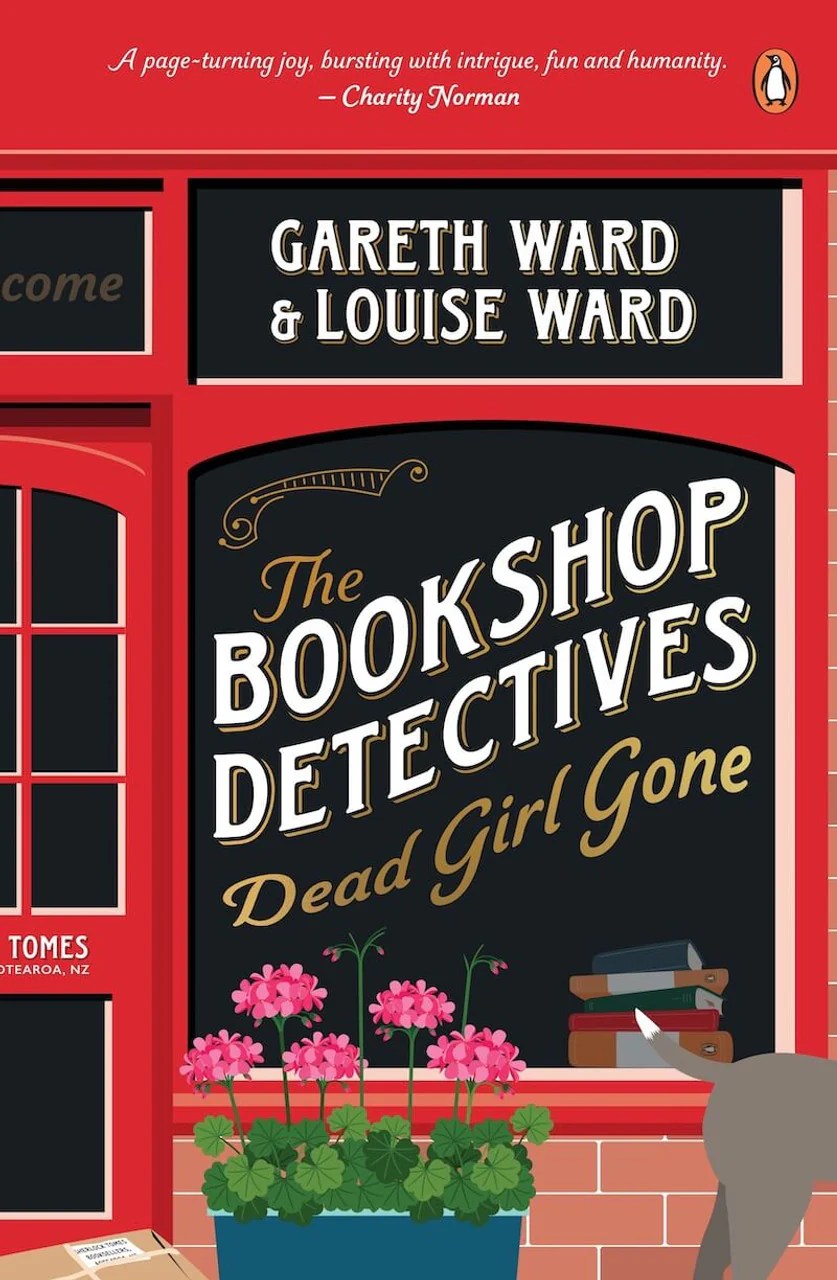
I loved Bold Types – Indie Bookshops of Aotearoa New Zealand (Ugly Hill Press), where Jane Usher, Jemma Moreira and Deborah Coddington opened up the world of independent local bookshops in print with such lavish photography. One of the shops featured, Wardini Books, in Havelock North and Napier has produced a best-selling crime novel, The Bookhop Detectives – Dead Girl Gone (Penguin), which I am happily devouring.

On the non-fiction front, I’m now digging into the magisterial work of John Barton, A History of the Bible – The Book and its Faiths (2019), recommended by a very rapid-fire biblical scholar my wife follows on Tik-Tok. No more than a dozen pages in, I can report on the erudition, superb style, the sheer sweep of this work. It is going to carry me over Christmas, and all the way to Easter, with fresh eyes, with open ears.

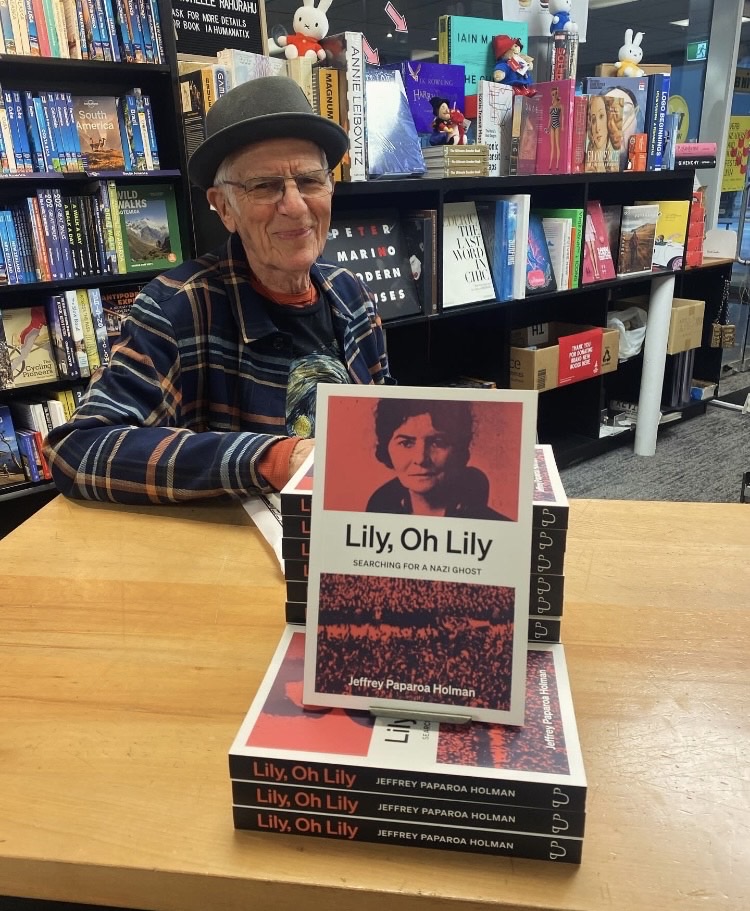
I’m also rejoicing in getting my latest work of non-fiction over the line, brought to the light by the most excellent Canterbury University Press, their designers, their proof readers, printers and distributors. What a combination of talents it takes to do all this, we writers can so easily forget to herald. Thank you, all of you, for making Lily, Oh Lily – Searching for a Nazi Ghost, a reality, out there now, set free in the world.

As my third volume of poetry is a fundraiser for Kia Ora Gaza and the Palestine Children’s Relief Fund PCRF (NZ), I would like to share the final poem ‘Children of Gaza’. When we learned of the journeys of renowned Auckland specialist Dr Alan Kerr, paediatric and cardiac surgeon who, with his wife Hazel (now friends), worked in Palestine over many years under the auspices of PCRF (NZ). The organisation does the hard work of humanitarian justice that my words can only skim. 

Children of Gaza

Where are the children of Gaza?
Gone from the wedge of land
of no water, no fuel, no medicine—
gone from the land of no sanctuary
Where are the children of Gaza?
Come out. Come out. Why are you hiding?
Why so secretive?
Your mother’s embroidered skirts will not save you
The eaves of the hospital will not save you
Your holy places will not save you
And we are complicit
We don’t stop the bombs
We don’t stop the machine
Swept under the carpet of daily life
We cover our ears on your cries
We close our eyes on despair
We anguish in solitude or out loud in the streets
Yet we do nothing to stop your agony
your tears, your disease, your starvation
We keep hydrated on the far side of the world
We eat healthy. We bite our tongues to
not offend, not offend—allow
chanting to be a crime
Oh you warmongers are hurt
by our outrage that grows to be towering
against Goliath, the brute force—
the nation of prison guards, the nation inflicting
horror every minute. We read six children
killed every hour. How to take cognisance?
Who are we? Who are we so far
and yet on the
very same earth?
And why do we hope we are different?
What makes us think we are not culpable?
Now we see how one can become
mercenary. A mercenary fighting for a speck of land
We believe what we do can make a
difference. But civil disobedience is all that’s
left for peace activists
The cries of children do not stop and our
hearts cry, as hope fills empty hands
Where, oh where are the children of Gaza?

Reihana Robinson
from be the rising human, Off the Common Book, 2024

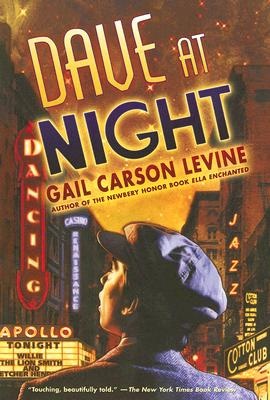
As usual I’ve had quite a varied reading diet this year, and not a huge amount of poetry! Regardless, here’s some ones that have really stuck with me. A bit of a dark theme across them all! But I guess that makes sense considering our wider world. Earlier this year I re-read a YA novel from my childhood, Dave at Night by Gail Carson Levine, and loved it just as much as I did when I was ten. Dave at Night follows a little boy in a Hebrew Boys Home in Harlem, who is rescued by a jewish elder called Solly each night to go to rent parties and jazz jam sessions. In terms of growing up understanding where we fit within jazz and music this was a huge book for me as a kid. I’d forgotten about it for years, but got so much out of rereading it. Felt like retracing my steps!

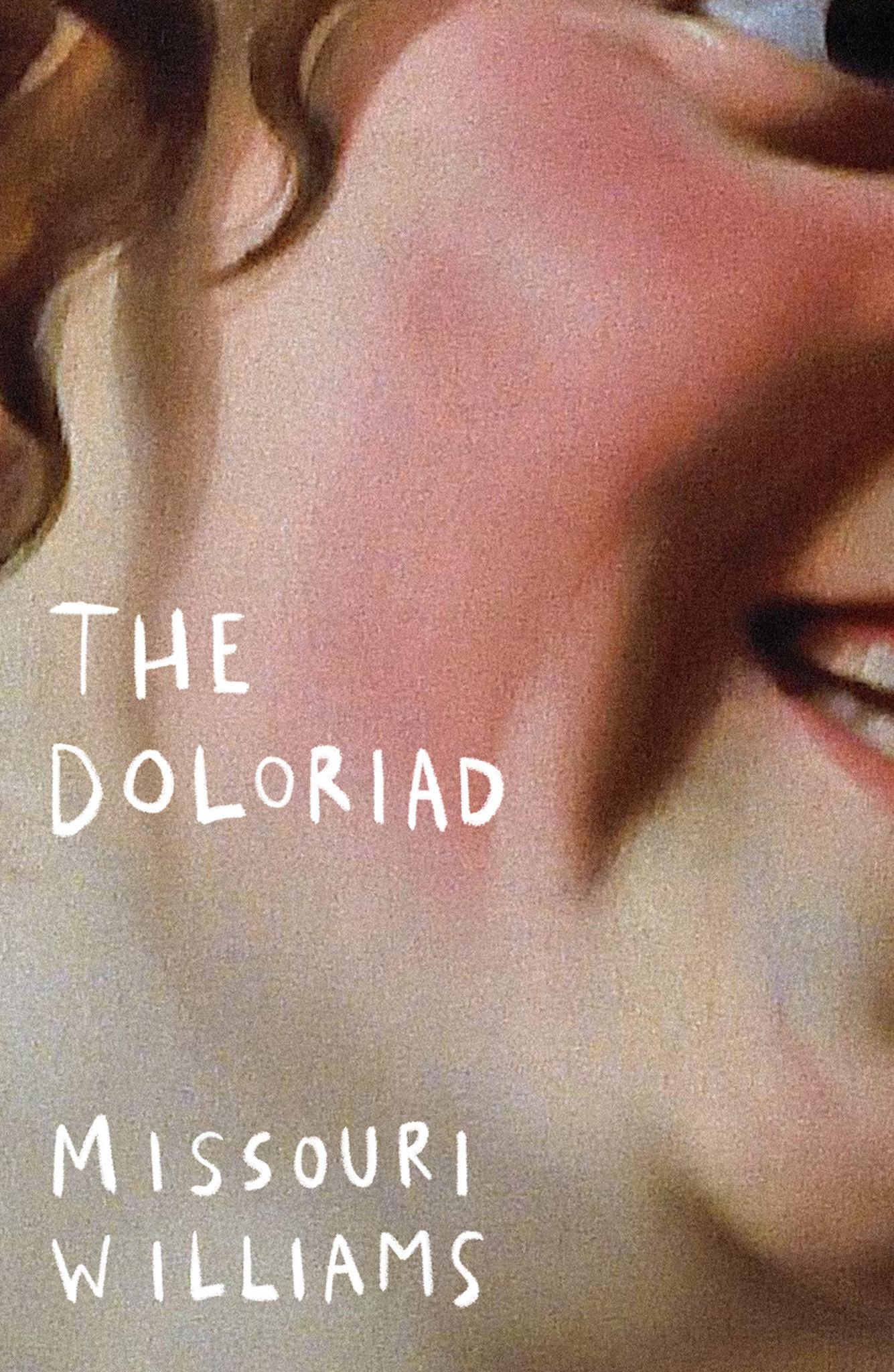
And now for something completely different… The Doloriad by Missouri Williams was a firm favourite, but is definitely not for the squeamish or faint of heart. Set in some strange post-apocalyptic settlement where one family has survived over generations in whatever way possible, the long winding sentences and descriptions in this book were part of Missouri Williams recovery from a series of temporal lobe seizures. This book is incredibly goth, incredibly detailed, and incredibly stunning (but again please apply every trigger warning bar somehow racism and homophobia).

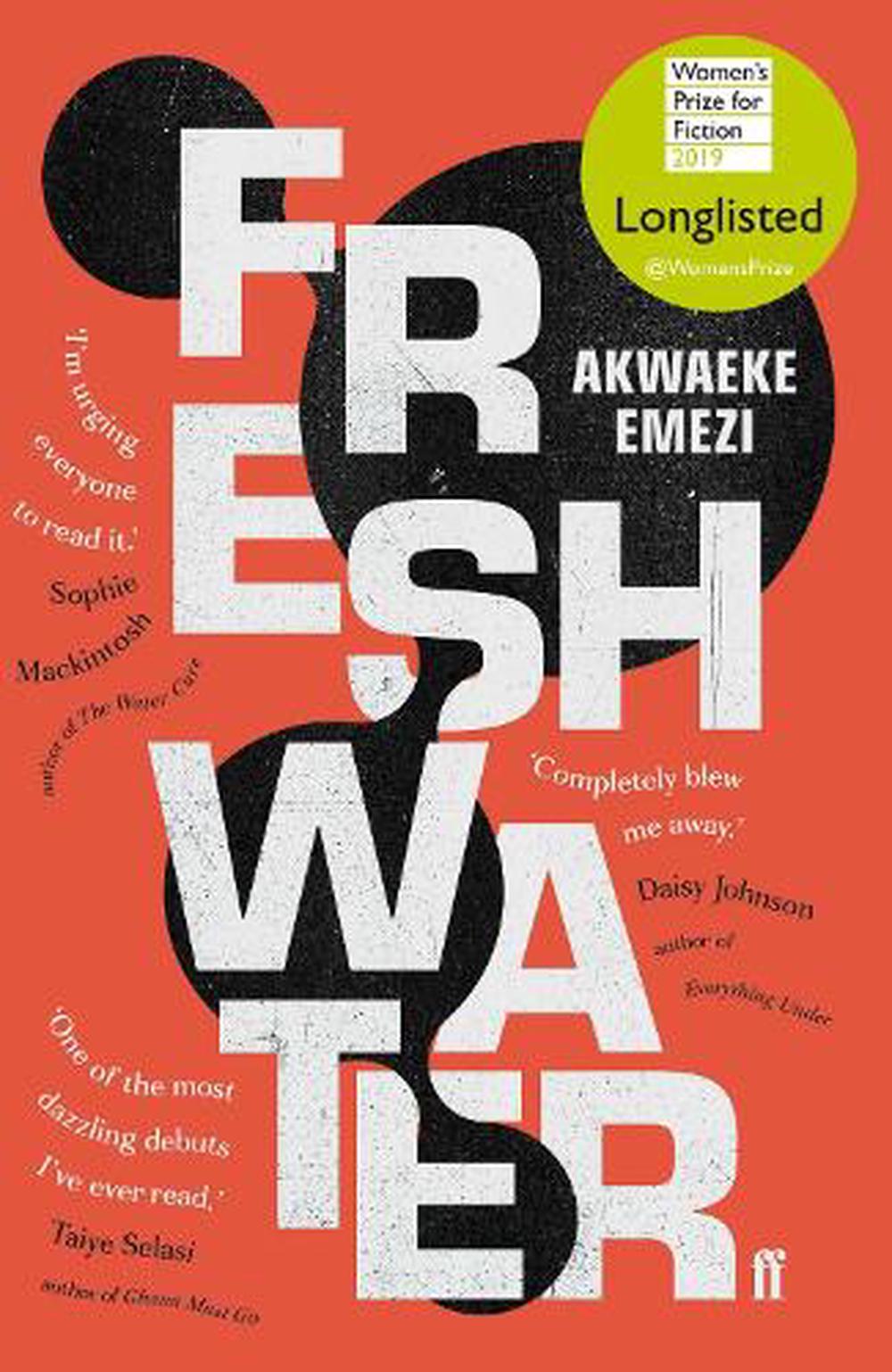
Freshwater by Awkaere Emezi has probably been my most recommended book this year. Both for how it is written, and for how it portrays our whānau who live as a system, or within their own ancestral understandings of personality, personhood, and the mind. The main character is occupied by an ogbanje, a deity from Igbo religion, and the story is of the relationship between the internal world and the external world that isn’t always built to understand the microcosms lodged within it. It’s the kind of book that gives you empathy for the character, without any sense of needing to ‘save them’ because you see how they are the expert on their own mind, as so many of us are. 

My poetry recommendation this year is again, dark (oops). Isdal by Susannah Dickey is a poem novel / exploration of the true crime genre and our obsession with it and its subsequent dehumanization of its victims. It focuses on the ‘Isdal Woman’, a woman who’s burnt remains were found in Norway in the 1970s and never identified. I loved this book because it made me question so much about how we depersonalise true crime, and about how we build mythologies around women such as this. Amazing format too, lots of different voices and people being addressed. Reads like a beautiful and tragic puzzle, which ultimately has no end.

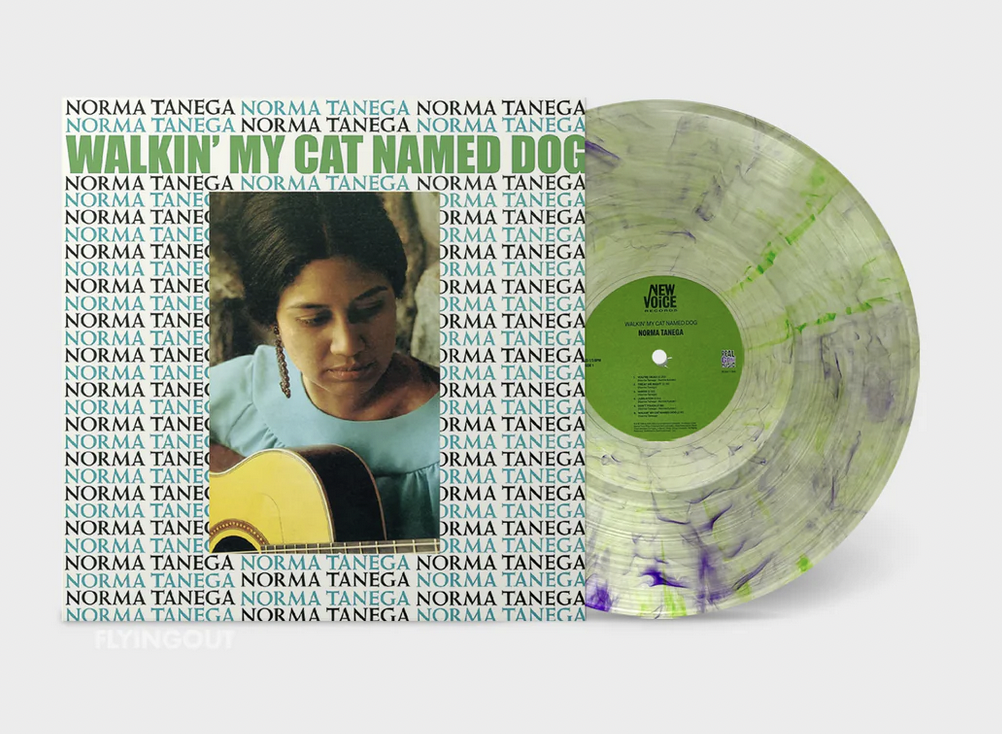
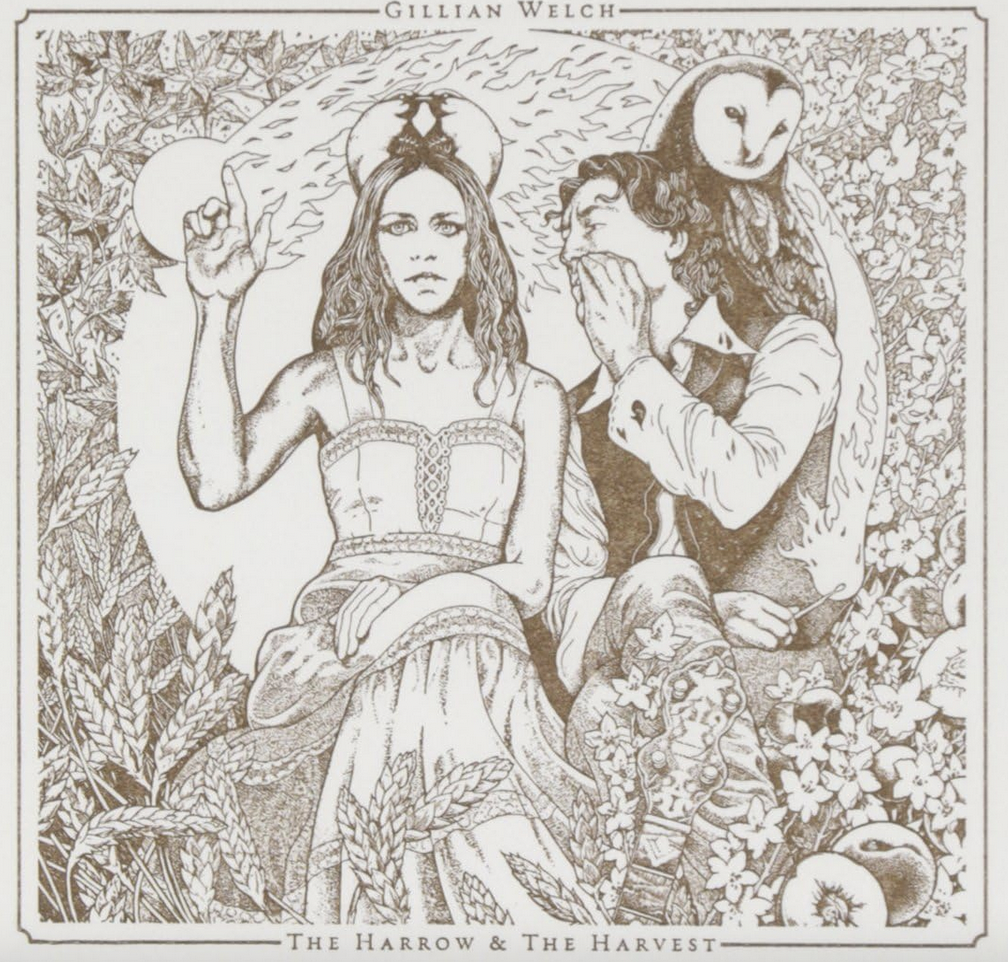
Music wise, it’s been another year of pretty diverse listening too! But here’s three albums that have been on repeat in our house. The Harrow and the Harvest by Gillian Welch has been the whānau ‘wind down at night’ album for most of this year. Welch released the album after an eight year break from recording, as she felt nothing was good enough. This record is an album of stories that are lifted higher with perfect harmonies, and gentle string backing. I fall asleep at about track seven, ‘Six White Horses’. Another popular wind down album (and definitely a writing album for me) is Same Room Another Day by mHz. I’m lucky to be friends with Mo but awkwardly I probably listen to this album more than I see him, because I listen to it all the time! It’s a chameleonic record that seems to not just play over your own surrounding environmental sounds, but becomes part of it. Even though it stays the same, it feels like it’s always changing. A discovery from the past for me this year was Walkin my Cat Named Dog by Norma Tanega. You may recognise the classic ‘You’re Dead’ from What We Do in the Shadows. But Norma’s songwriting and arrangement are peak folk class. She was a songwriter mostly for other musicians, like her friend and ex, Dusty Springfield, but this album is her being herself and getting to create her own musical world. On the title track, the story goes that Tanega wanted a dog but wasn’t allowed one in her apartment building, so she got a cat, named it ‘Dog’, and took it out on a leash.

 
In terms of general happy things that kept me going this year, ‘we’ have a cat that lives between about three or four houses on our street. She has at least three different names (we call her Maggie, short for ‘Magpie’) and seems to show up exactly when you need a little comfort and company. It’s uncanny, and she is the most amazing member of our little community (even if she sometimes brings in critters for me to rescue).

I’ve been lucky to be a part of some amazing community art spaces this year too, like Pyramid Club and Urban Dream Brokerage. These spaces have hosted some amazing gigs, exhibitions, workshops, and experiences in my communities. It’s amazing how far just opening the doors on these spaces can stretch in terms of positive impact that keeps reverberating out. And it’s a good reminder to support them. My final highlight for this year, is the beautiful jasmine-esque smell of ti kouka. And their early flowering this year means we may be in for a long hot summer.

Poetry Shelf 2024 highlights collage – part one

“Many New Zealand poetry books left their indelible mark on me this year.” Chris Tse, NZ Poet Laureate

In the middle of the night when I can’t sleep, I sometimes tune into Radio NZ and catch programmes from the BBC, programmes that cover science, the arts, climate change, people fixing the world, sports, history, happy news. Voices from all over the world, voices across time.

Recently, on Witness History, I discovered the Three Marias, three Portuguese poets who feature on the BBC’s 100 Women list, a list that features ‘inspiring and influential women from around the world’. Maria Teresa Horta, Maria Velho da Costa and Maria Isabel Barreno wrote Novas Cartas Portuguesas (New Portuguese Letters) in 1972, at a time when Portugal was ruled by an authoritarian dictatorship and women’s rights were few. The poetry collection was banned after publication, the women faced imprisonment, and became globally famous. Copies were smuggled out of Portugal and translated, and applauded by Simone de Beauvoir and Margurite Duras and other feminists: ‘It set the western world on fire’. We get to hear Maria Teresa Horta, feminist poet, journalist and activist speak. She has published over 40 books and is now 87. Listen here.

Many of us have struggled this year, mourned the unspeakable atrocities inflicted upon Gaza and Lebanon, unspeakable and yet must be spoken. Many of us have loathed a coalition government dismantling and damaging systems that protect the lives of many, that honour Te Tiriti o Waitangi, that promote the wellbeing of children, teenagers, adults, and yes, the planet. And many of us have faced health struggles, whether mental or physical, family and personal tragedies, redundancy, reduced income.

I asked some poets how they continued to write poetry in this slam of global inhumanity in my 5 Questions series. It was a question I carried and continue to carry to both my blogs, and my own writing.

The voice of Maria resonates in my head, along with the Palestine poets writing and sharing poetry against all odds, the thousands and thousands and thousands of us who marched on the hikoi, in body and in spirit.

How to respond to 2024? How to present a suite of highlights? I invited a number of poets to write a paragraph or so on what they have loved this year – and the response has been incredible. Wide ranging, multi-hued, connecting. I have added a number of books to my must-order-read list, I have felt comforted, I have identified with so much.

Amy Margurite’s admission that her capacity to read fiction has been impaired by health issues resonates when health issues have also defined my year. Amy writes, “This year poetry has allowed me to go on. Every year poetry allows me to go on.” This I share. I can’t wait to read my way through her list of poems. Ah. The rejuvenating power of poetry. Murray Edmond applauds our terrific boutique presses and highlights the rewards of long poems (yes!). Chris Tse embraces our taonga Tusiata Avia alongside four outstanding local poetry collections. Bill Manhire sends me off in search of John Gallas’s sublime tanka. The joy of short poems! Yes! It’s on order! Anne Kennedy reminds me of books I have loved, notably Grace Yee and Helen Lehndorf. Robert Sullivan’s visit to Hone Tuwhare’s crib and legacy once again gets Hone singing in my ears. I finish with the uplift of Hana Pera Aoake’s piece, and her thoughts forming an exquisite and essential bridge between writing and reading, and how the mahi and aroha of others can resonate so deeply.

My 2024 highlights collage has expanded into three parts that I am posting today, Tuesday and Wednesday. Thank you, to all the poets who have contributed so generously. This feels very special.

Earlier this year, I decided I was going to keep a monthly record of all the poems and songs I found myself loving, questioning, returning to. This has kind of felt like keeping a diary, except a diary in which I never actually write about myself but always actually do! Whenever I revisit these records, these lists, I notice something new and layered about my condition that month and I think I really love this? Yes, I do really love this. I welcome the startle.

There are so many beautiful books I wish I’d read this year, but sadly my capacity for prose has been severely restricted due to some persistent health issues. But I have read many, many poems and I have listened to many, many songs, and every single one has been there for me in exactly the way I’ve needed it to be, which is to say they’ve all managed to ‘give credit to the real things’.[1] Poetry in particular has provided incredible relief, and by relief I don’t necessarily mean escape (although I absolutely turn to poetry for this). If you’ve ever repeatedly attempted to describe twenty seemingly discrete symptoms to a doctor in a single, fifteen-minute appointment, I think you’ll understand me when I say that poetry has provided—continues to provide—some long-overdue validation. So what I mean by relief is really the feeling of being able to go on. Every year poetry allows me to go on.

If you’re interested, here’s a list of some of the poems I’ve read and adored this year.


[1] Weyes Blood, “Movies”

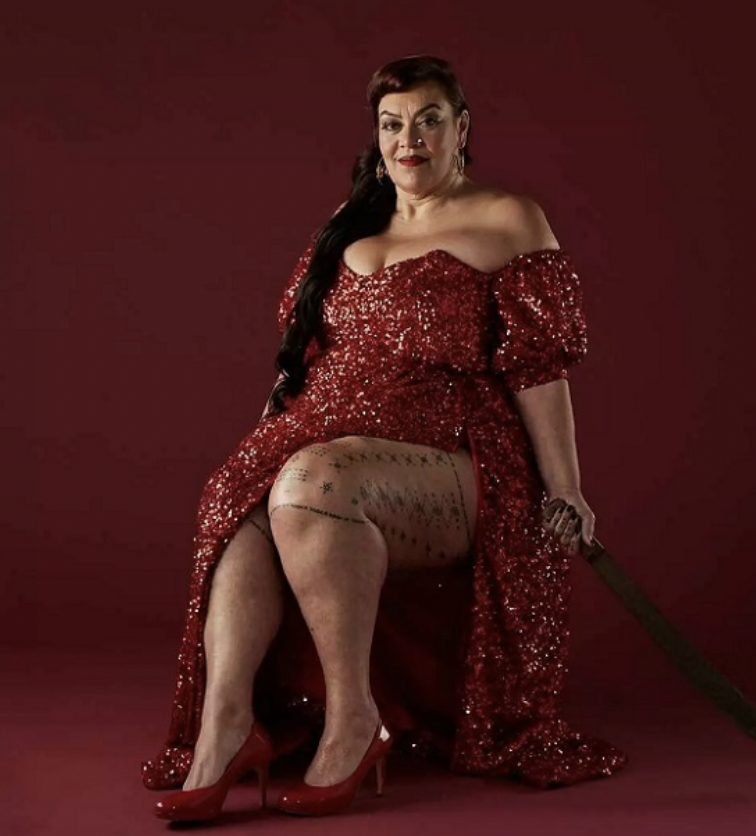
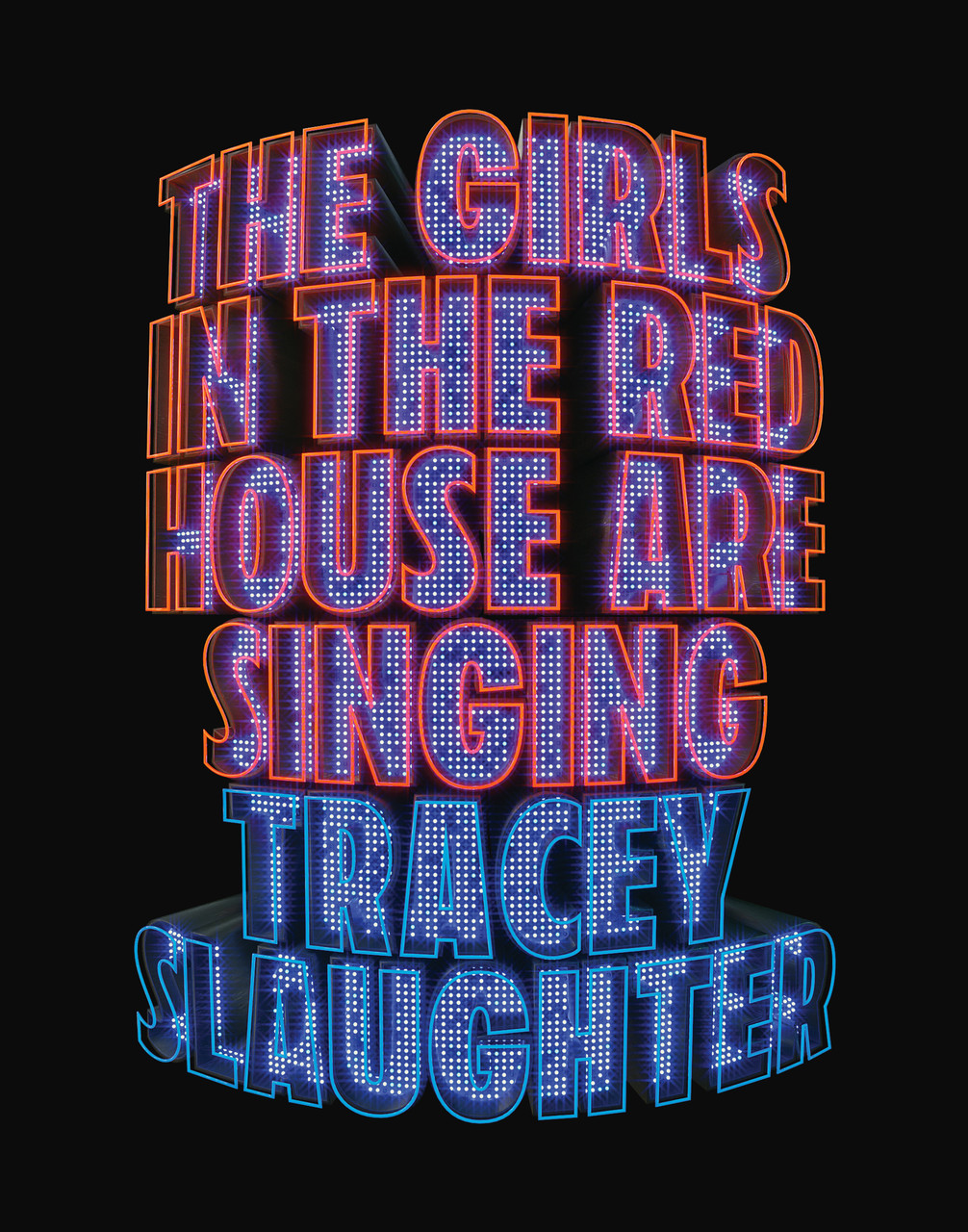
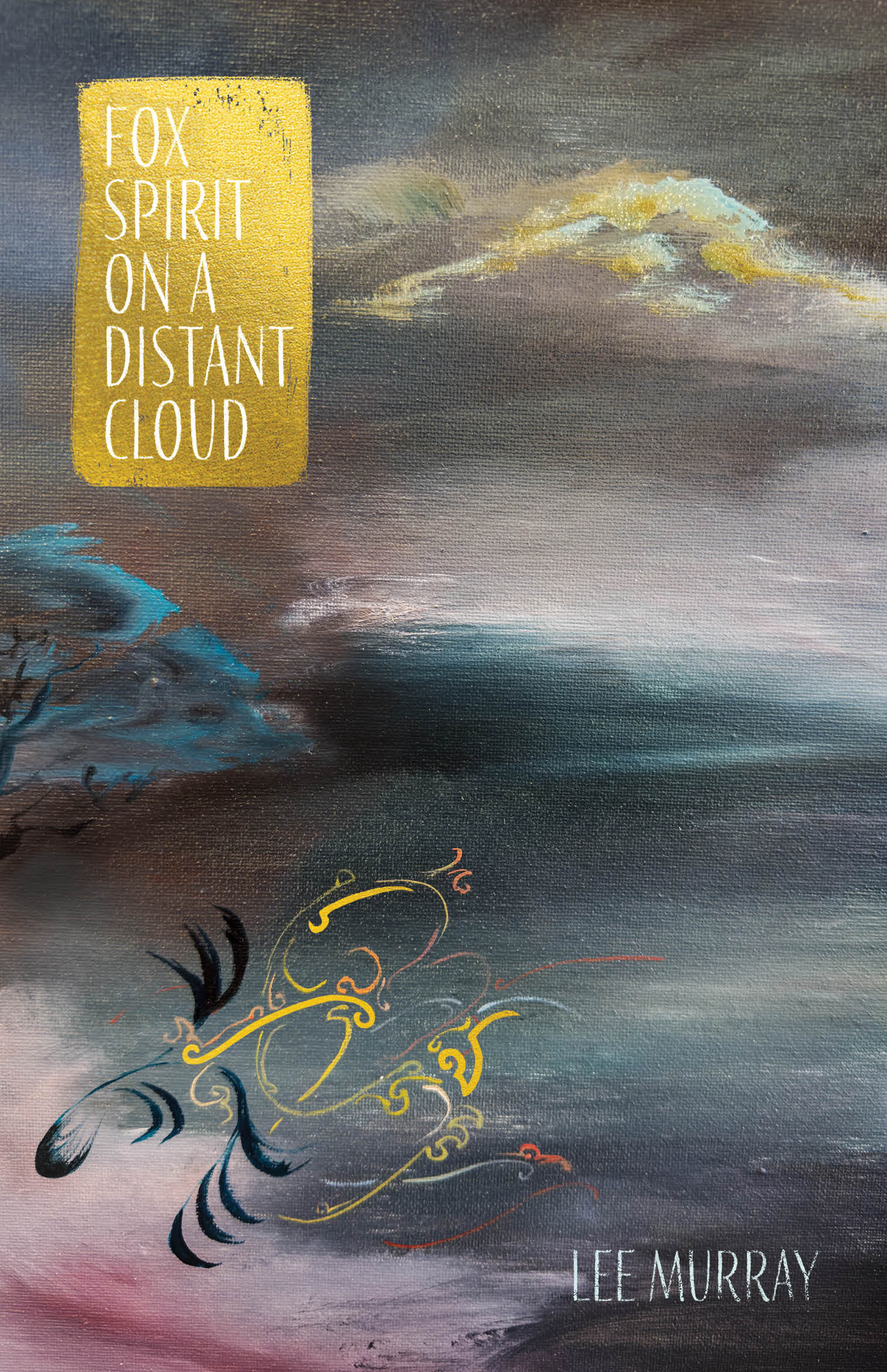
A highlight of the year for me was finally getting to watch The Savage Coloniser Show, a triumph of poetry and theatre that will no doubt be talked about for years to come. Hugest of congratulations to the show’s cast and crew for bringing Tusiata Avia’s poems to the stage with such ferocity and humanity. Many New Zealand poetry books left their indelible mark on me this year, including Tracey Slaughter’s The Girls in the Red House are Singing (THWUP); Stacey Teague’s Plastic (THWUP); Lee Murray’s Fox Spirit on a Distant Cloud (Cuba Press); and Rex Letoa Paget’s Manuali’i (Saufo’i Press). And it’s been wonderful to see New Zealand writers making waves around the world, like Megan Kitching and Robyn Maree Pickens being recognised by the 2024 Laurel Prize judges, Rebecca Hawkens winning in US journal Palette Poetry’s 2024 Sappho Prize for Women Poets, and novels by Rebecca K. Reilly and Saraid de Silva being published overseas to much acclaim.

Three highlights for me, in a year full of wonderful reading experiences:

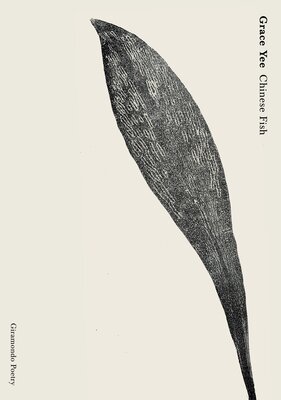
Chinese Fish, by Grace Yee (Giramondo). This stunning debut verse novel tells the story of family immigration to Aotearoa, mostly from the point of view of women. The thing that hits you first is the daring form – layered prose and poetry that is sometimes discursive, sometimes taut, always surprising. What this technical highwire act achieves is a telling that is heart-wrenching, informative, funny, original. I read this book in different ways – which to me is the sign of a great book. I gulped it down compulsively, I lingered over bits and went back to them, I and went back to the whole thing. One of my favourite books of all time.Chinese Fish won both the 2024 Mary and Peter Biggs Award for Poetry in the Ockham Awards, and the Victorian Prize for Literature in Australia, and you can see why.

A Forager’s Life: Finding My Heart and Home in Nature, by Helen Lehndorf (HarperCollins). I was late to the party for this 2023 book, but loved reading AND listening to it this year. Poet Lehndorf brings her extraordinary gifts to a book that is part memoir, part edible-plant guide, part how-to manual. I was enthralled with the contrasts in Lehndorf’s life: country girl discovers Punk, working class girl goes to uni (a poignant story in itself), young woman’s OE is spent not hanging around Earl’s Court but foraging in the wilds of her ancestor’s Britain. Each chapter ends with a recipe. As a reader, full disclosure: I am never going to make a healing tincture out of kawakawa. Doesn’t matter. The recipes are beautiful to read, and they amplify the beautiful storytelling here. A must-read.  

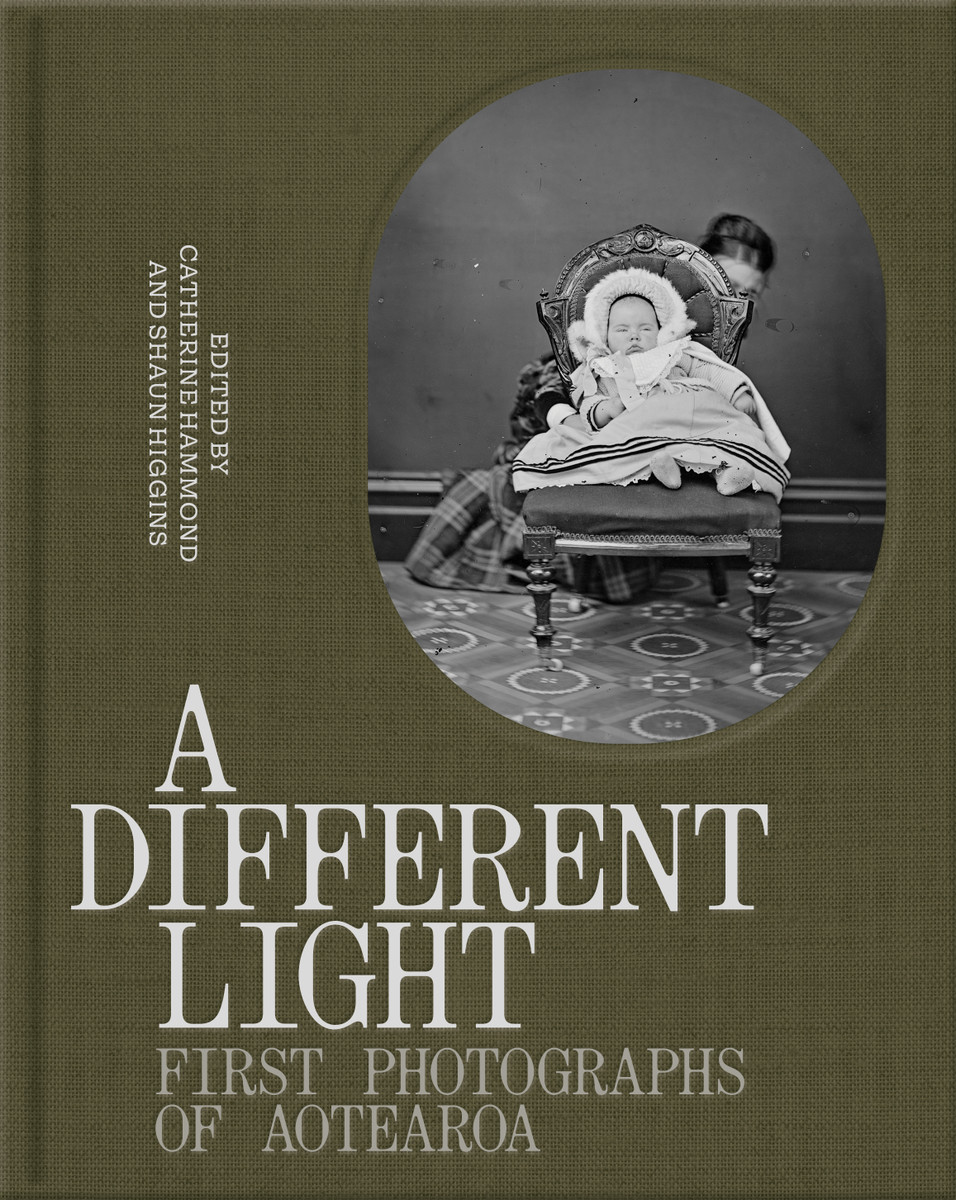
A Different Light: First Photographs of Aotearoa, by Catherine Hammond and Shaun Higgins (AUP). The book of the exhibition at Tāmaki Paenga Hira / Auckland Museum. It’s a treasure – lovely production with lots of plates, informative, moving as it shows and tells stories of Aotearoa’s photographic past.

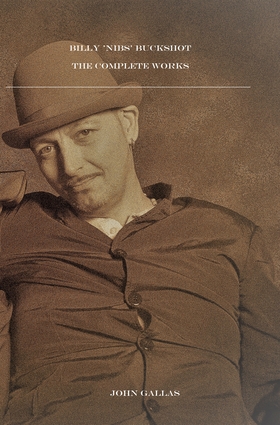
John Gallas:  Billy ‘Nibs’ Buckshot: The Complete Works

John Gallas is one of the most prolific yet mysterious figures in New Zealand poetry. He has spent most of his adult life in the UK, yet visits New Zealand frequently. I interviewed him a few years ago in Sport, where he quoted approvingly a reviewer who said his poems were “funny, melancholy, and just plain weird.” His latest book from his loyal publisher Carcanet is true to form in a number of ways. It’s certainly weird and funny and melancholy. It’s also a book of tankas, a Japanese form which – at least in this outing – is rather more demanding than the haiku. Each poem has five lines. The first has five syllables, the second seven, the third five, while the fourth and fifth each have seven.  Here there are 198 such tankas – each with a title, and double-spaced on its own page. So much white space! Each of the poems seems to float. Many of them seem to involve riding around England on a bicycle while thinking about other things, sometimes indeed words and places back in New Zealand. Here’s one called ‘The Voice’:

When I pump up the

old accordion, it hoots

and squeals and sighs with

merry anticipation.

Are you in there, my darling?

And maybe one more called ‘Summer Song’:

Remember when dad

led us up Mount Robert ridge

through a hall of snow

higher than our heads. I miss

the bright struggle of winter.

One highlight for the year has been the continued output of volumes from the small presses. Here are eight examples from five different presses:

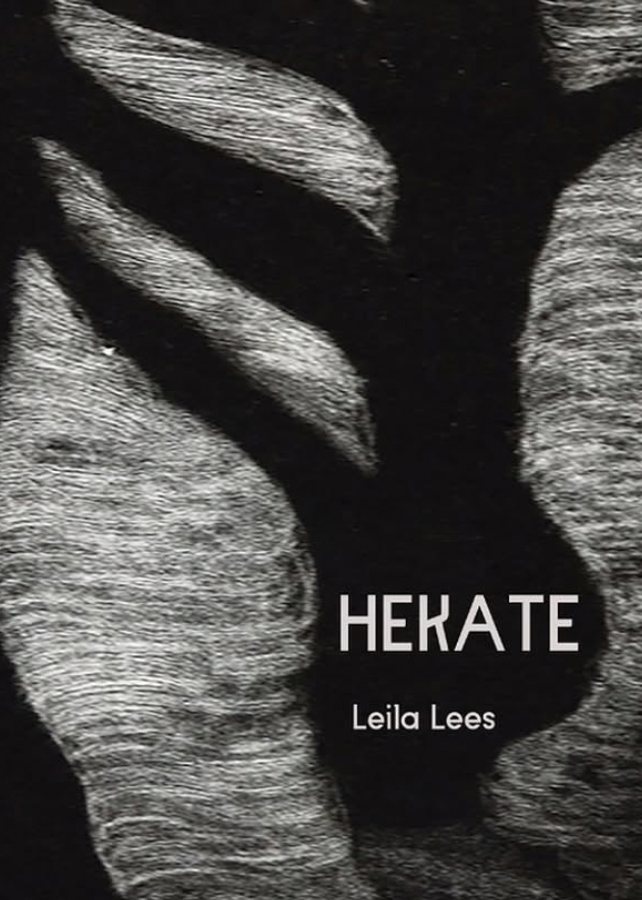
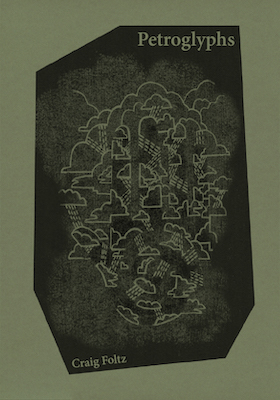
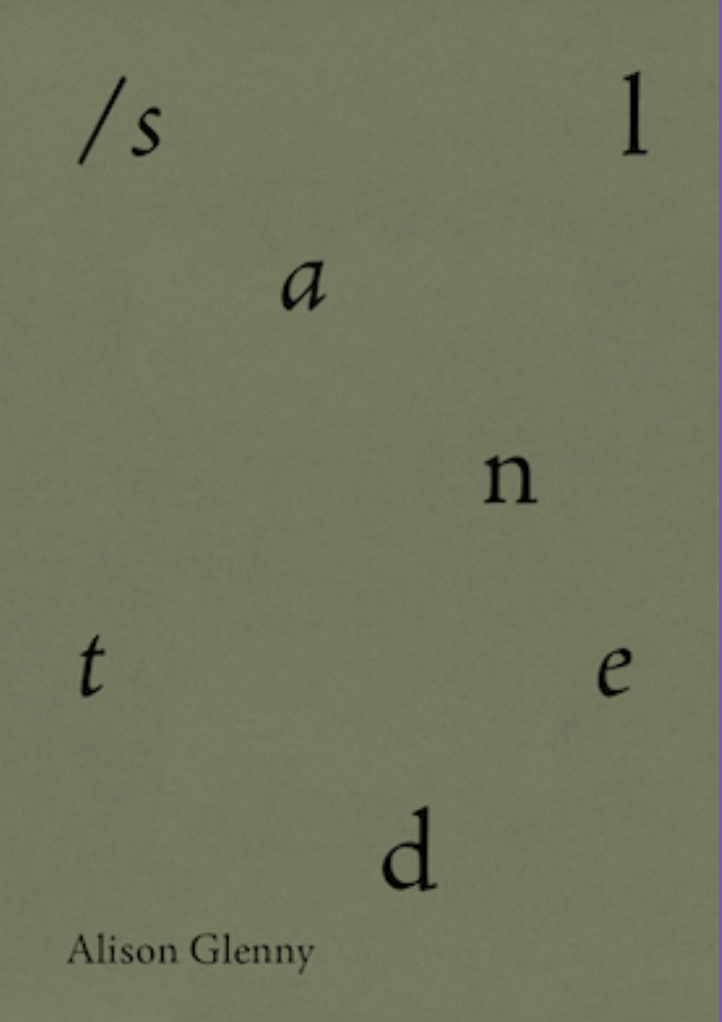
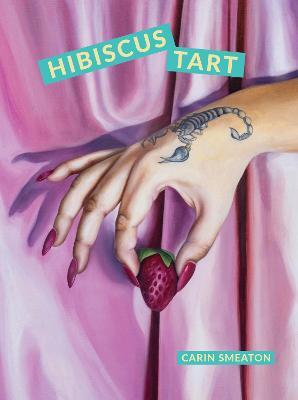
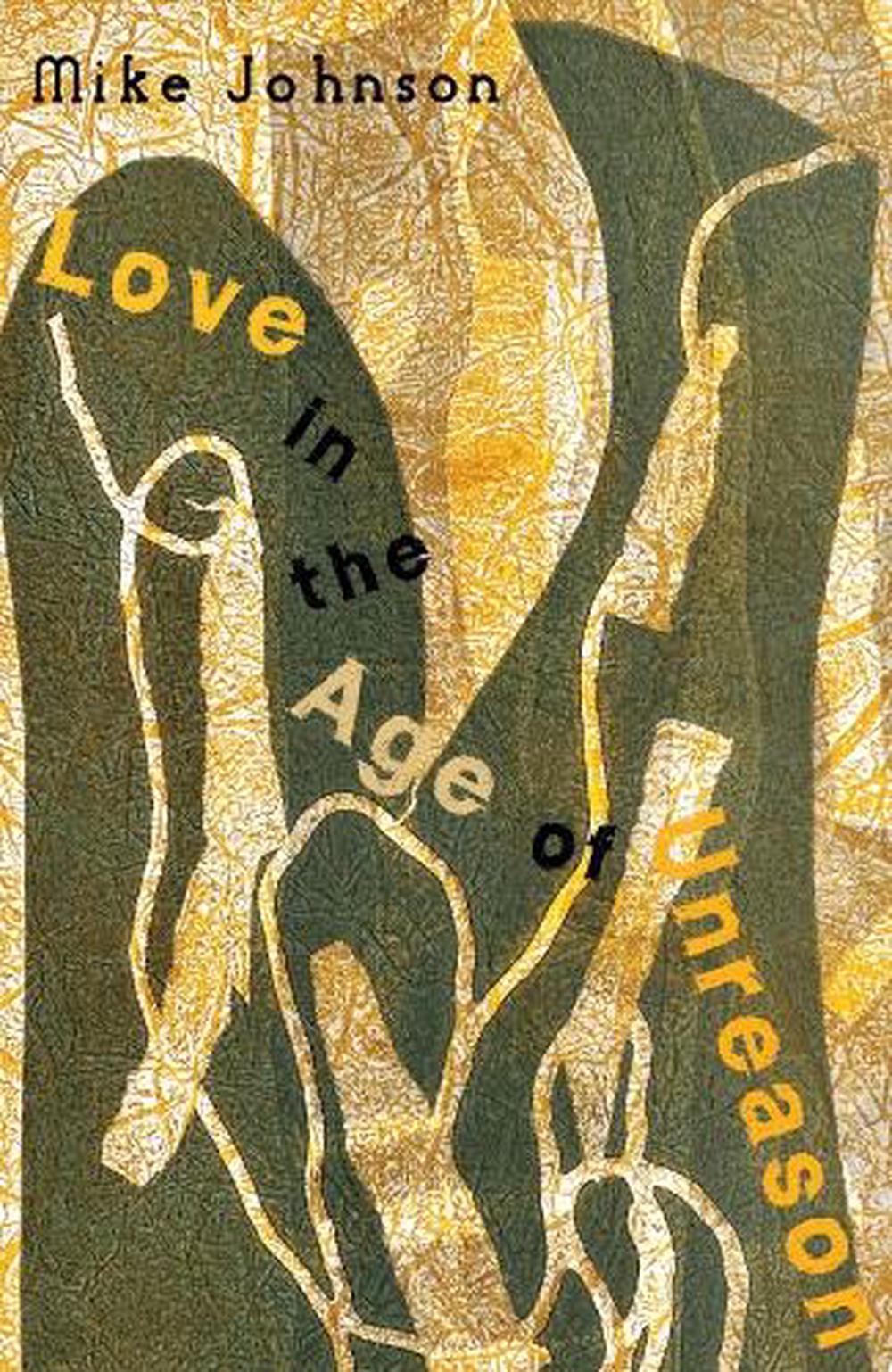
Compound Press with Alison Glenny’s /slanted and Craig Foltz’s Petroglyphs; Spoor Books with Richard von Sturmer’s Slender Volumes; Lasavia Press with Mike Johnson’s Love in the Age of Unreason, Leila Lees’s Hekate and Lindsay Rabbit’s Poems & Images; Titus Books with Carin Smeaton’s Hibiscus Tart; and, from Australian small press Vagabond, Titus and Atuanui Press’s founder and editor, Brett Cross’s first volume of his own poems, Islands.

Another highlight has been the joy of reading long poems. Ranier Maria Rilke’s ‘Requiem for a Friend,’ in memory of the painter, Paula Modersohn-Becker (1876-1907), is a ‘short’ long poem (more than 270 lines). In the face of “wrenching the till-then from the ever-since” in relation to her early death, Rilke says of the painter’s work: “you saw yourself as a fruit.” Searching to articulate what this might mean, he writes: [you] “didn’t say I am that. No: this is.” Grief at the loss of his friend brings the poem to that Horatian conundrum: “an ancient enmity/ between our daily life and the great work.” The 44 pages of James Schuyler’s The Morning of the Poem celebrate daily life as he lived it on “July 8 or July 9, the eighth surely, certainly 1976 . . .“ and, in doing so, he gives as a poem that stands up as ‘a great work.’ Byron’s uncompleted 16,000-line Don Juan is a ‘long’ long poem. Cantos VII and VIII are a full account of the Russian siege and capture of Izmail, then a Turkish/Ottoman town and fortress, during the Russo-Turkish War of 1787-1792. The Russian commander ordered Izmail taken “at whatever price.” Once captured the Russian soldiers were granted three days of carte blanche –  40,000 Turkish, Moldavian, Armenian, Jewish men, women and children were slaughtered. On 27th September 2024 the Russian military launched a drone and missile attack (drones first to distract from the missiles to follow) against the now-Ukrainian town of Izmail.  Poetry can’t stop the bombs, but it can keep us ‘up-to-date’ with the past as well as the present.

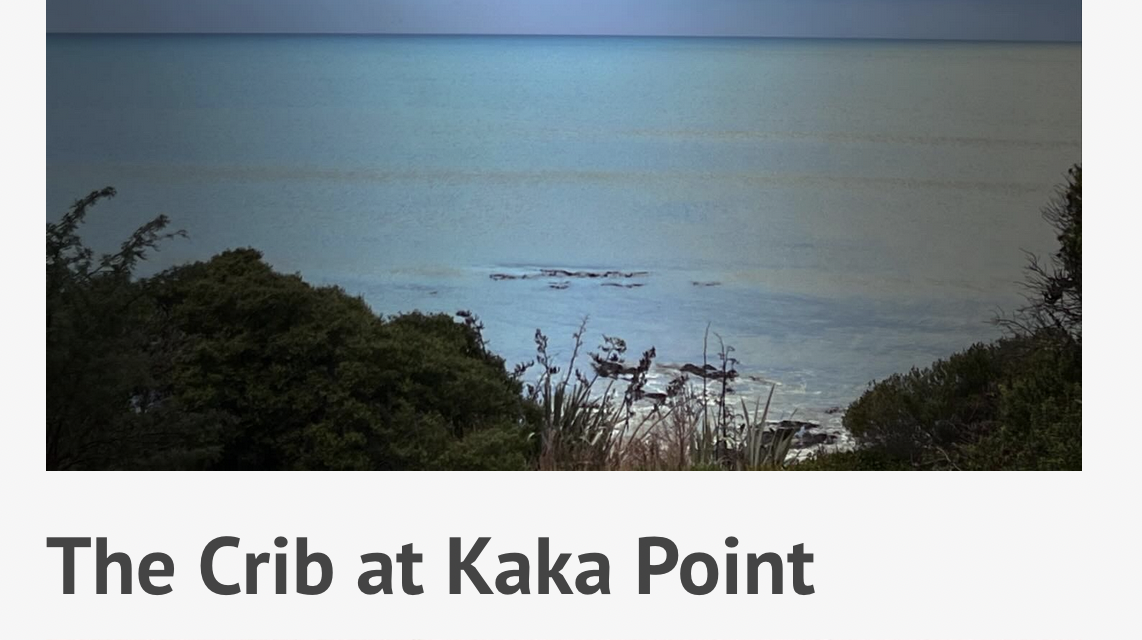
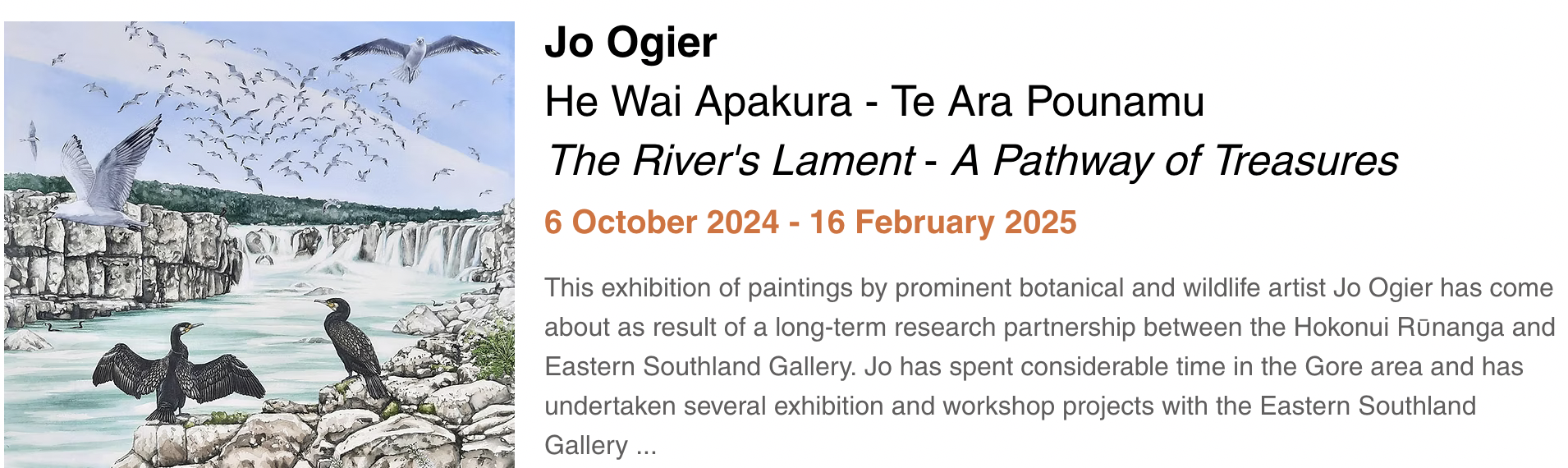
Kia ora everyone, one of my highlights this year has only just happened. It was my second visit to the Hone Tuwhare crib at Kākā Point in the Caitlins. The Hone Tuwhare Trust led by Jeanette Wikaira and Rob Tuwhare marshalled the expertise, efforts and aroha of Hone Tuwhare’s huge community and whānau to restore the crib. Big Congratulations to the Trust and their many supporters who have also established a writers and artists’ residency. After visiting Rob and Manaia Tuwhare at the crib and having a kai (venison!) and a kōrero there, we went on into the Catlins—the forests, Cathedral Cave, the Pūrākaunui Waterfalls, swimming at Papatowai estuary and then driving up the Owaka Valley to Mataura to see the effects of industrialisation on the Mata-au or Clutha River, and then into the amazing Gore Museum with the Ralph Hotere collection rich in poetry from Hone Tuwhare, Cilla McQueen, Bill Manhire and Ian Wedde and art from Marilyn Webb. One amazing part of the collection was the resurrection of the Mata-au through the imagination of botanical and wilidlife artist Jo Ogier. Her series of bird, fish and water-scapes, called “He Wai Apakura – Te Ara Pounamu, The River’s Lament – A Pathway,” was painted with support from the Hokonui Rūnanga of Kāi Tahu. Instead of the freezing works, and the abandoned papermill, there was a healthy river with its endowment of native flora and fauna. The exhibit by Jo Ogier will be there until the end of summer. 

Jo Ogier exhibition

Hone Tuwhare crib

My favourite collection of poems I read this year was Schaeffer Lemalu’s the prism and the rose and the late poems; published posthumously on Compound Press. When I write poetry I struggle with its simplicity as a form, or rather how to extricate a feeling or experience into a simple collection of words meaning my poems are always really long and due for a line edit when I eventually let go of trying to relay everything I can into one poem. Sometimes you need to just let words rest and give them space and that therein give these ideas power and an ability to percolate. Lemalu mastered this, but still sought to fuck with poetry as a form by making it conversational as though he is directly speaking to you. At other points he becomes others from anon or sean.smith or nolans bateman. He wrote through and outside the body. His poems elicit something so bodily that makes you want to observe more around you, such as the sensation of gently peeling a mandarin while reading a book and observing someone save a bee trapped in the middle of a swimming pool with their hands. It’s gentle, but cutting and although sometimes tightly structured, other times its loose and playful.

this is my rifle
this is my gun
this is for fighting
this is for fun
this is my rifle
this is my gun
this is for fighting
this is for fun

i want to see your whips
in my study break after
o how was india enjoy it

like that

from ‘2 the prism and the rose a digital manifesto by nolans bateman’

The central treatise of the book is the prism and the rose a digital manifesto by nolans bateman which is perhaps that most difficult to decipher, because all of these other voices spill out onto the page and it’s hard to know when it ends, but you don’t want it to end. His work appears deceptively simple even when there is an echo or a repetition of certain ideas or phrases or images, it’s always done in a way that’s completely unexpected and something funny, but not in a hahaha way, in a way that is mischievous.

For instance
anyone can have a brain
its a very mediocre commodity

from ‘3 the prism and the rose a digital manifesto by nolans bateman’

batman
batman
whys he running dad

because we have to chase him

from ‘7 the prism and the rose a digital manifesto by nolans bateman’

At times he blends films, from The Last Samurai, The Wizard Oz to The Sound of Music to his will and aligns them alongside more brutal realities such as mother on benefits or a line acknowledging the work of Erza Pound or the Italian poet and filmmaker Pier Paolo Pasolini or a subtle nod to Frank O’Hara’s A coke with you.

pasolini said history does not exist shortly before he died

from ‘like a peacock fanning its eyes’

 Lemalu’s poems hit really quietly and he could convey so much with only a few words, so there is room to breathe around a bricolage of different cadences . Yet the collection is full of surprises, of tiny little glimpses of life, whether that be joy, death, love and the fragility and transience of everything around us whether that be the blossoms in nights for days and neo.

search for the perfect blossom
and you won’t find it
they are all perfect

Every time I have re-read it I find something different and there are parts I find difficult until I read it aloud and try to imagine how he might have read it and what his voice might have sounded like. I never met him, but having seen some of his paintings, I think they speak to his poems in terms of the subtlety and playfulness, particularly with how he used colour. There is something of a childlike wonder or longing that I cannot quite articulate, but this is a book I will return to again and again and I’m grateful to Chris Holdaway for working with Lemalu’s whānau to publish his words. This collection is bittersweet, because I want to read more of his work, but he’s no longer with us and when I think about this I recall Donald Revell’s introduction where he notes that

‘His word is among us, travelling still’

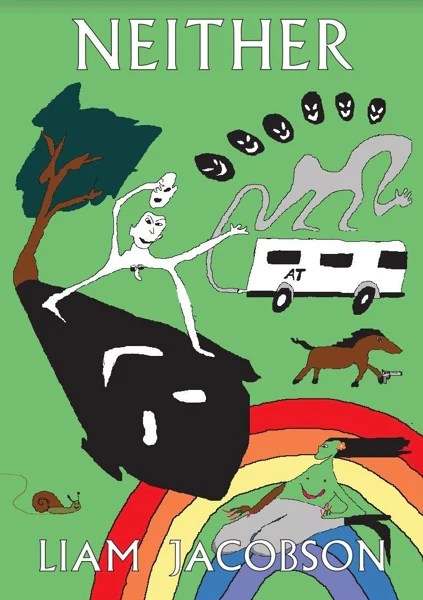
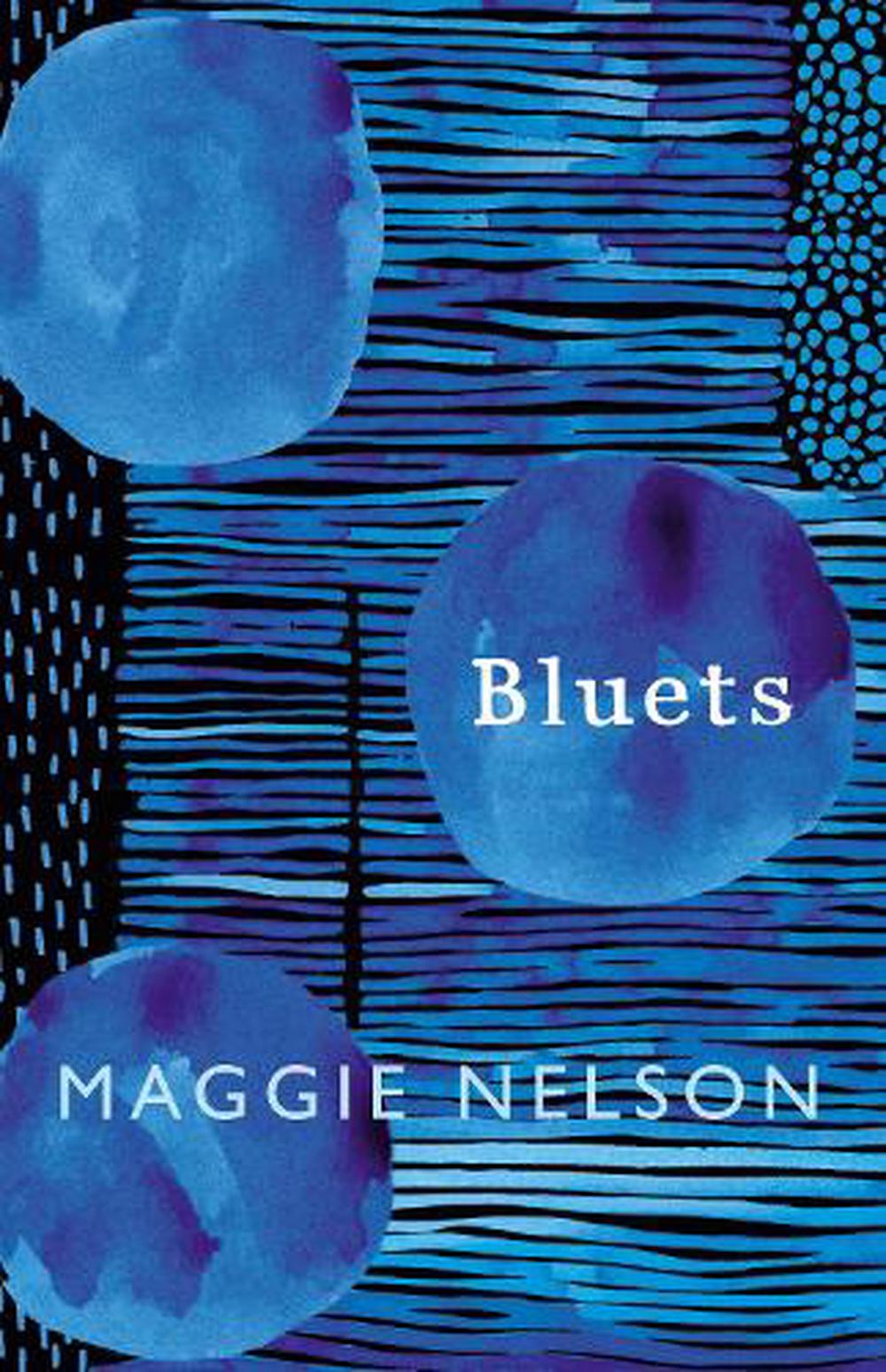
The other three poetry books I think were very important for me to read were Liam Jacobson’s Neither (Dead Bird Books), Carin Smeaton’s Hibiscus Tart (Titus Books) and Maggie Nelson’s Bluets.

Liam Jacobson’s poems are unruly; they take you in unexpected places and illuminate Tāmaki Makaurau in new ways that are not nostalgic nor cliche. They also made my heart ache and helped me nurse certain heartaches I was experiencing while reading this book.

dream-time whispers at stars
crackers n cream whippers from KRD Mart
a city in a coma shaken awake, a ghost town past the horizon’s end

from ‘BUS TO K’

i remember your hands soaked in oil
before everything started following
& i fell

which one of us feels like this?

i’d leave my body for u

from ‘SOMETHING FOR TOMORROW UNLESS YOU HATE IT’

Carin Smeaton’s Hibiscus Tart goes down many paths, she is cheeky, gives respect to slang and holds in her hands different ways of loving the whenua and offering an honest appraisal of what it means to be Indigenous in a colonised world. Sometimes I think I’m going down one wormhole only to be jolted down another only to be bitten around the corner of another. She grasps complicated and disparate ideas and forms of languages and sculpts them into porous poems that swim in your head for days afterwards. I want to read more poetry like this that doesn’t give a shit about the rules and flips images on their head and spit roasts them with fire spitting out of her fingernails one word at a time.

burning bye into
yr ancestral wings
let them go hun
they’d never make it
thru customs anyways
crammed into yr suitcase
like a whakapapa happy meal

from ‘meghan markle’s sister’

Before whales swam they flew thru the blu stars of life on
earth she calls for her orcas her children her babies to gather together
she’s ready she says to return

from ‘flying whales on earth’

Finally I re-read Maggie Nelson’s Bluets on a flight from London to Auckland. I had just seen a theatre production of Nelson’s meditation on the colour blue at the Royal Court theatre with Emma D’Arcy, Ben Whishaw and Kayla Meikle. The performance saw the three performers standing with a mic and a tray of props and a screen behind them. I hated it. I feel that Nelson’s book is very distinctly American and the lyrical, sensuous and incredibly visceral and beautiful heartbreak of Bluets needs to be read not performed. On a sentence level Bluets is so elegant and is numbered like a manifesto.  The way she blends the essay and poetry, the theoretical with the explicitly sexual pulverises your insides. It’s disjointed, but never feels that way. It’s terrifying and profound and conjures up so many different associations, memories and emotions. It distills the ecstasy of falling in love and having your heart broken in a way that I don’t think any other book has ever or will ever do as well. It’s still so powerful nearly two decades after it was published and I’m glad I re-read it and cried and cried. It’s definitely a book to give to someone you love who is in pain.

238. I want you to know, if you ever read this, there was a
time when I would rather have had you by my side than
any one of these words; I would rather have had you by
my side than all the blue in the world.

156. “Why is the sky blue?” -A fair enough question,
and one I have learned the answer to several times. Yet
every time I try to explain it to someone or remember it
to myself, it eludes me. Now I like to remember the ques-
tion alone, as it reminds me that my mind is essentially a
sieve, that I am mortal.

Non poetry books I read this year that were fucking great include Talia Marshall’s Whaea Blue, Emma Hislop’s Ruin, Catherine Comyn’s The financial colonisation of Aotearoa, Ursula K Le Guin’s The carrier bag of fiction, McKenzie Wark’s Philosophy for Spiders: On the Low Theory of Kathy Acker and Gabrielle Zevin’s Tomorrow, and Tomorrow, and Tomorrow.

Poetry Shelf visits Michael Hight’s exhibition, Headwaters

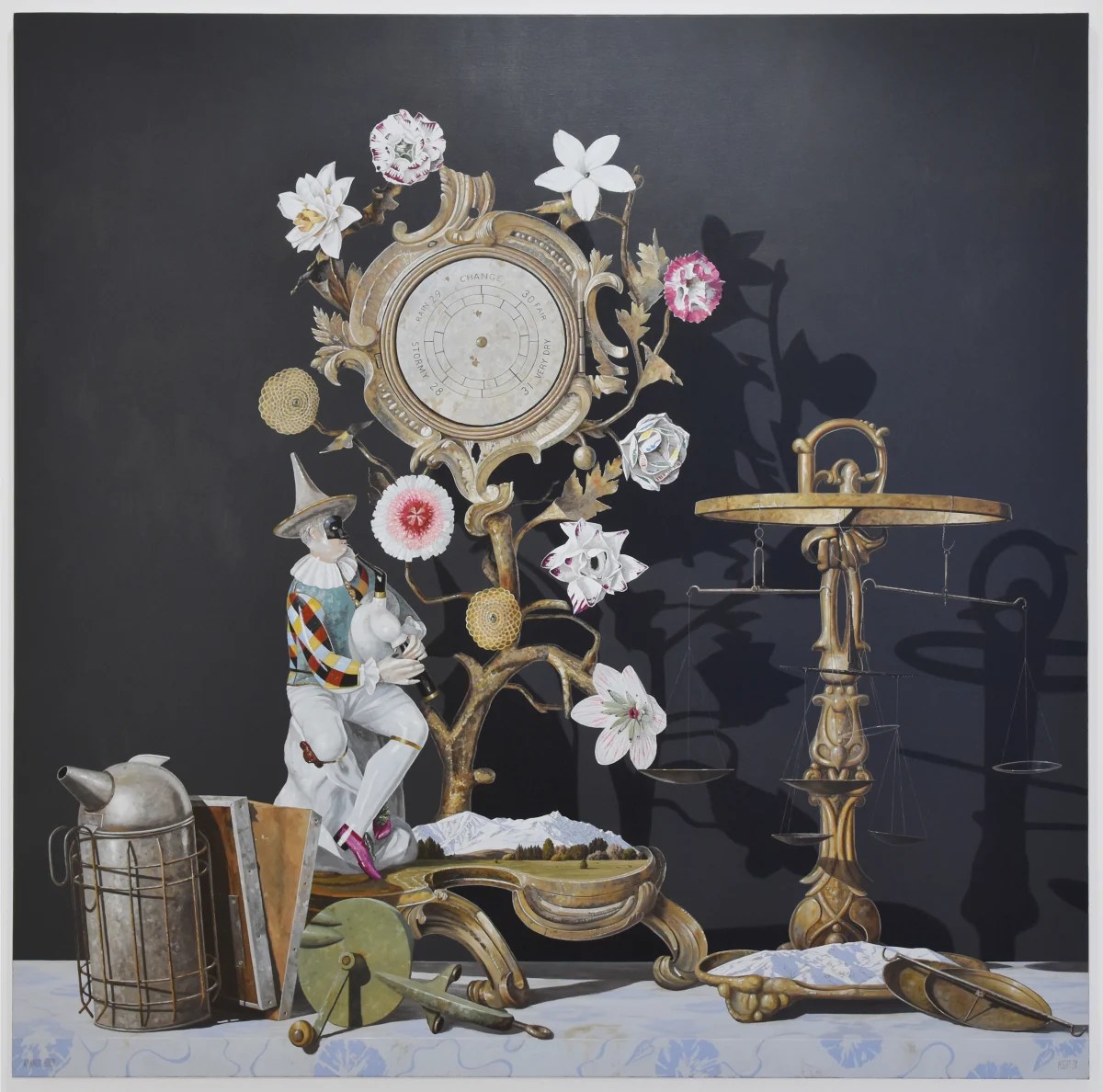
‘Kawarau River’, oil on linen, 2024

Headwaters

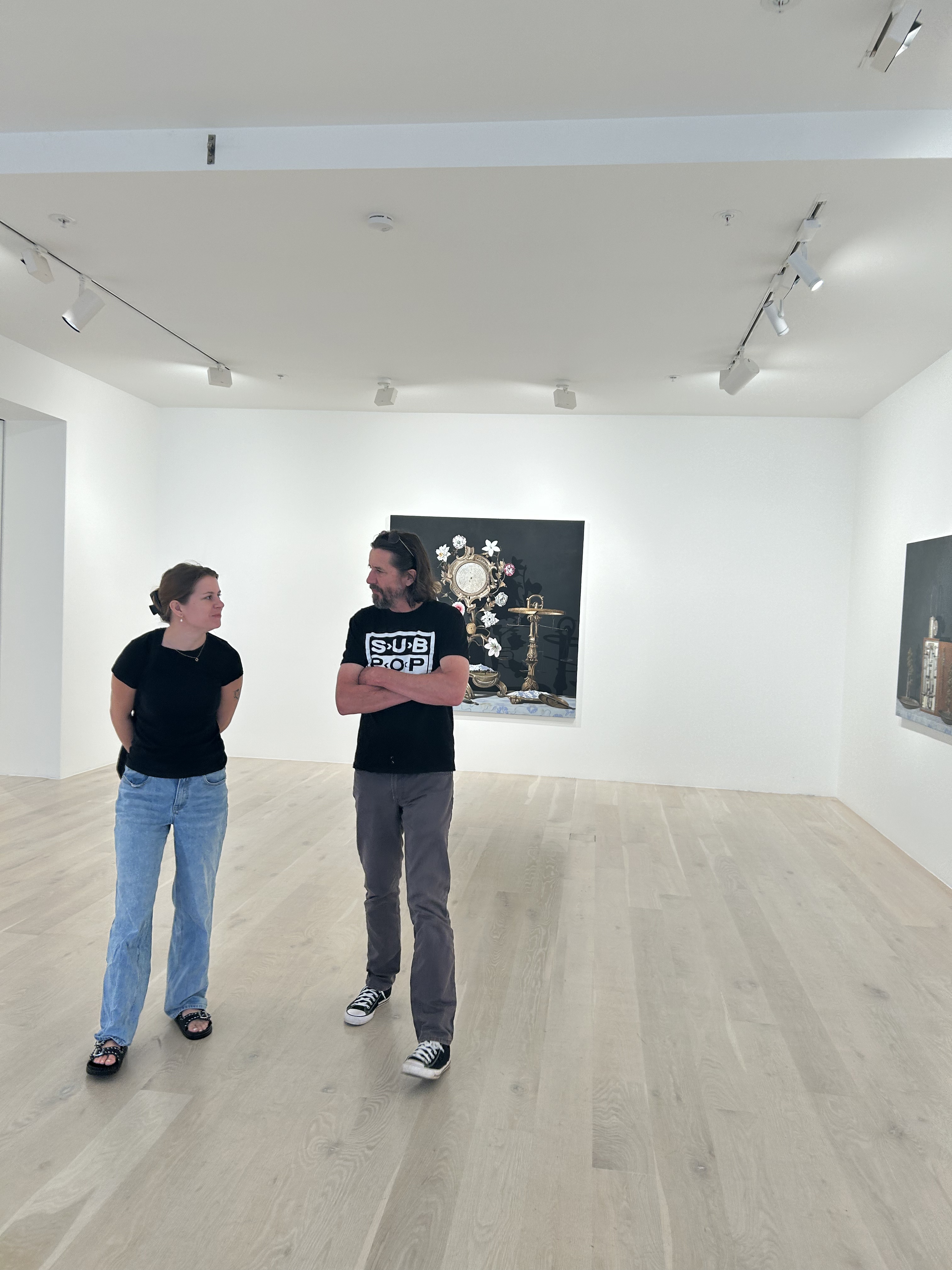
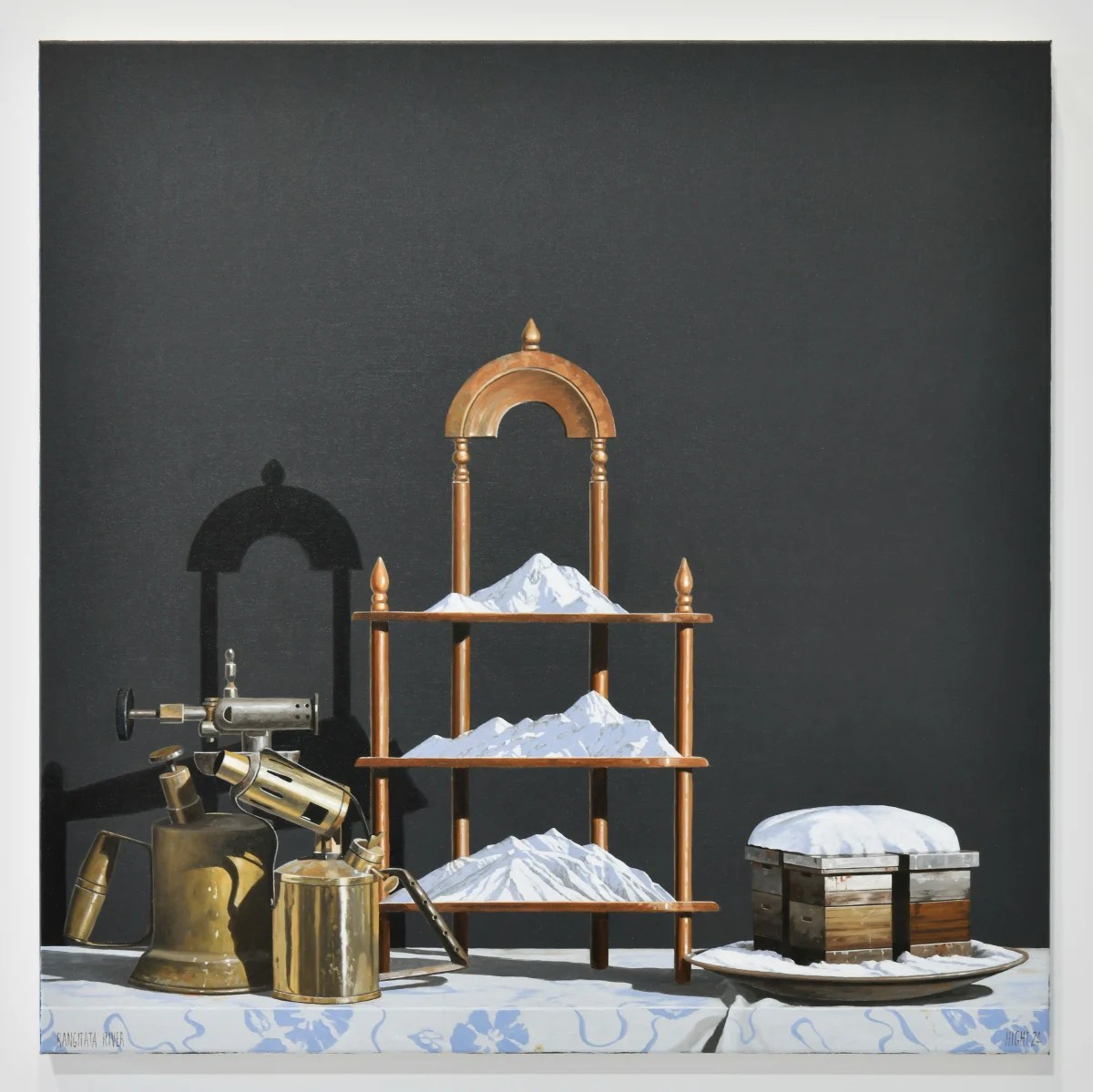
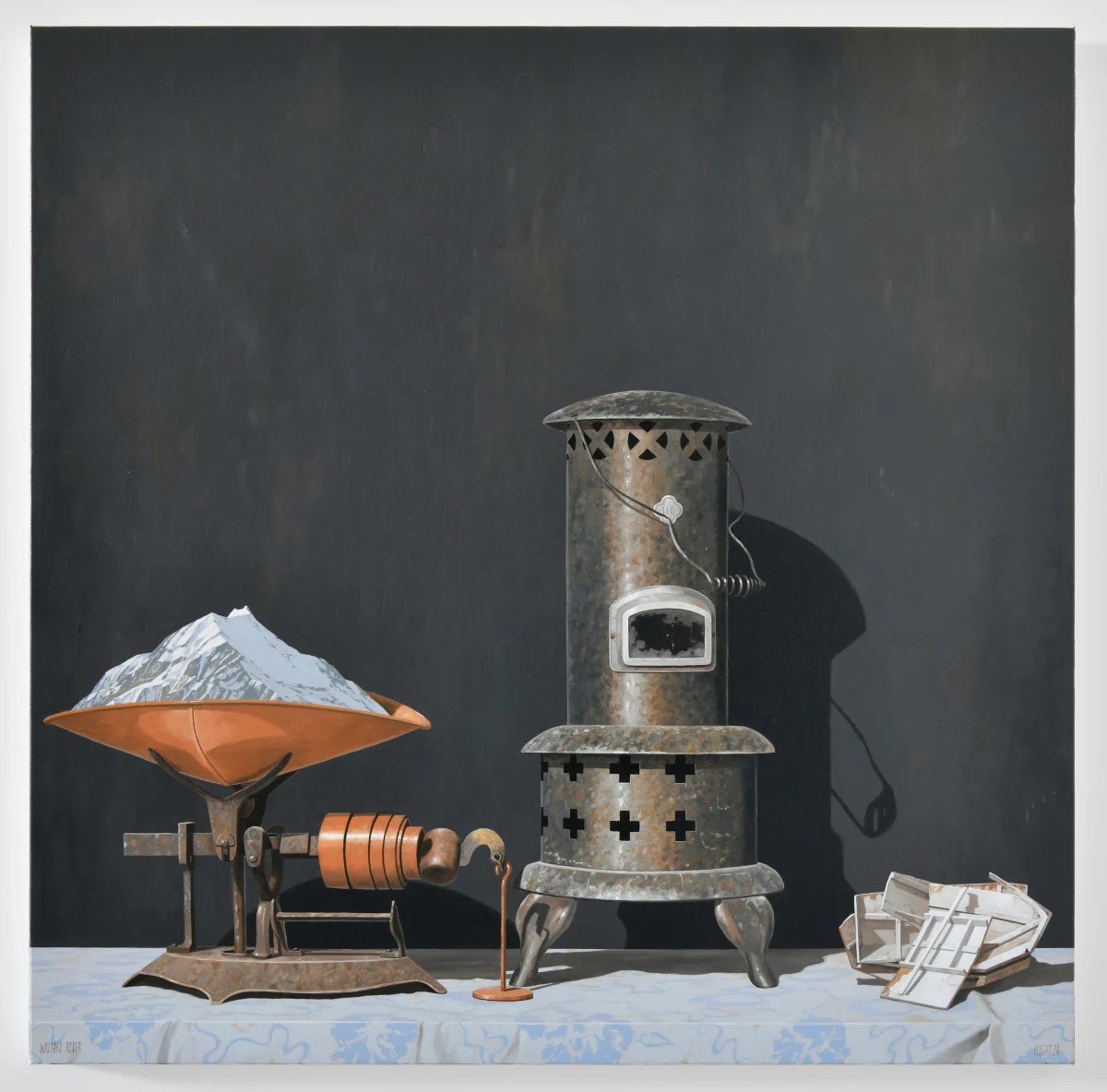
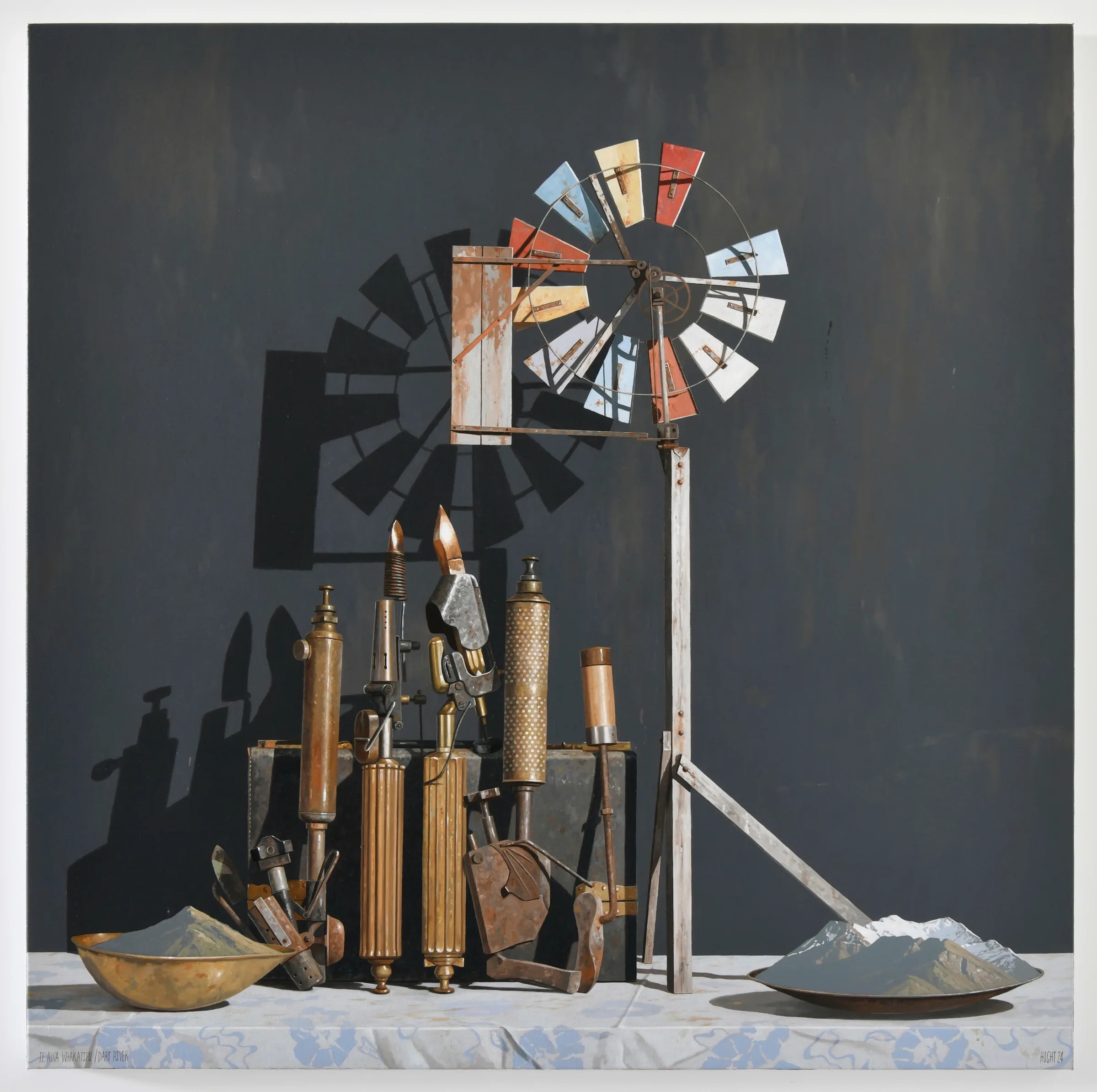
Over time, Michael Hight has produced two distinctive but connected bodies of work, his beehive paintings and his black paintings. The beehive paintings present the beehive as found arrangements on landscapes, often southern, with the allure of sky and mountain incandescent. The black paintings (the night paintings, the nocturnes) offer an arrangement of objects, usually scoured from secondhand shops, with miniature leavenings of landscape. The parallel series are in direct contrast, in opposition you could say, as they navigate night and day, shadows and light, and yet bridges are present.

Headwaters is a continuation of Michael’s nocturnal paintings, with objects and motifs that have appeared in previous works, a return to beloved locations, especially southern rivers. A wellspring of motifs, symbols, ideas, stories.

‘Rangitata River’, oil on linen, 2024

Still life. I begin with the painting as still life, a composition of objects that immediately resist confinement to immobility. Herein lies the delight and power of Michael’s artworks to transport the viewer to moments of wonder. A form of psychological, intellectual, physical movement. Each object is a surrogate vessel of memory, a repository of history, a wellspring of narrative. The objects, so often time-battered and chipped, evoke curiosity. Their function often elusive, lost in long ago activities, and yet here we are, we still heat, make light and measure. I go dream-roaming in the kerosene burners, the scales and funnel, the lanterns and old boat. The windmill, the barometer, the ornate umbrella stand, the cake stand.

Art becomes an intimate trigger point. Personal private idiosyncratic. Looking at the suite is meditation. Still life as a weave of light and dark. And perhaps in this interplay, we can see how Headwaters draws day closer, dissolving the border between light and dark, enhancing the juxtaposition between interior and exterior. Shadows on the wall favour domestic life as opposed to the external world. The tablecloth on the ledge establishes a connecting domestic chord. Objects that make light resonate.

And the beehive presence returns us to Michael’s other series, the iconic mountain peaks referencing beauty and fragility, the beehives signalling the art of transformation, the conversion of pollen into honey, an eco system under threat.

‘Kawaitaki River’, oil on linen, 2024

And yet the dark is ubiquitous. It is there in the embedded narratives. At finger’s touch, yet out of reach. And looking becomes mourning, and mourning becomes haunting. Mesmerising. Moving. There is an underlying ledger of our repeated need to measure and manipulate the land and its people. Colonisation. Climate catastrophes. Consumerism. An impulse to create. A set of scales weighs a measure of snow-capped mountain peak. A birdcage confines another. This insistence on control. And then. And then again. The scales shift. Here I am standing in the Kitchener Street gallery and the set of scales is my grandmother weighing flour and butter and making scones, and the dinghy debris is a thousand sea voyages off the coast of Northland, the bean slicer slicing Pop’s divine green beans. Ah.

‘Te Awa Whakatipu / Dart River’, oil on linen, 2024

On this tablecloth ledge, I am measuring beauty and reverie and loss. Artist becomes poet, storyteller, recorder, colourist, dream catcher. Art offers solace and point of protest. Harmony, disharmony, cryptic symbols, overt connections. I am reminded of the joy of listening to music when you go beyond speech, yet overflow with words. Feeling as much as thinking.

Art as conversation. Yes, it’s you and the painting, that private discourse, those illuminating moments you store to revisit. Three dear friends unexpectedly sent me responses to Michael’s show. Gregory O’Brien looked at it on line, while Anna Jackson and her mother, and Harriet Allan visited it in person.

I love all of them, I especially loved the one with the glass tubes, but the light on everything is so wonderful, I loved the textures in the one with the oil stove and weights, the brush strokes, and I love the shadows on the black in them all, but all of them are so haunting and resonant, with that dream like shimmer about them where everything has a symbolic feel but in such an open way, not like an equation but like an aura. Anna Jackson

What a marvellous suite of work, I do think he’s a marvel . . . great to see such purpose and continuity, and such a burrowing down into the subconscious mind and memory. Gregory O’Brien

They are like cryptic crosswords, I kept circling the room, seeing connections and savouring the amazing artistry. There’s also black humour: the mountains on cake stands, a clown, the river boat chopped up for firewood, the bird ornament flying away from an empty cage. The sense of looking at our country’s past as if in a kind of museum, leads the viewer to think of where we are now and where we are going (the river perhaps). Harriet Allan

A few weeks ago I wrote a piece about Shane Cotton’s exhibition at Gow Langsford Gallery in Onehunga. My comments returned to me as I looked at Michael’s show because they were equally applicable. Swap the figure for the object:

Movement. Shane’s art generates incredible movement. The figure painted in contemplation, walking or meditation renders me still, for an exquisite pause, until the prolonged moment slips and shifts into an acute awareness of body breath, heart beat, light, darkness, and again light.

I mentioned my partner Michael, and my occasional walks up to his studio:

Every now and then I walk up the hill to Michael’s studio and find myself in a state of awe, astonishment, wonder. I am not weeping but I am experiencing the electric fields of looking, contemplation, uplift.

To stand in the Gow Langsford’s city gallery, and absorb the suite of paintings on the walls, away from the soundtrack of bush birdsong and west coast salty air, is to again feel the electricity of looking. There was a woman walking round the gallery when I was there, her word wonder filling the room. It was contagious.

Art matters. We will continue to make art, to sing the praises of art, to inspire our children to make art, to peer into the depths of the unknown alongside the familiar, to bring history to the surface, and to speak in myriad voices and visual keys. I am with my friends on this, I love this show. These headwaters of curiosity.

Gow Langsford Gallery page

Poetry Shelf summer readings: Emma Neale

Over the summer months Poetry Shelf is hosting a series of readings from the incredible range of poetry collections published by mainstream and boutique presses in Aotearoa in 2024. It’s my Poetry Shelf toast to local poetry.

Liar, Liar, Lick, Spit, Emma Neale
Otago University Press, 2024
cover artwork by Laura Williams, design by Fiona Moffat

Emma Neale’s poetry is rich in connections, experience, visual and aural delights. Like many other poets, her ink is imbued with personal life, with a deep concern about the state of the planet, injustice, humanity. More than anything, Emma writes with heart, her words agile on the line, her poems lingering in the mind as you move though the day. I will be posting a review of her new collection in January, in my summer season of reviews and readings.

Scapegoat

Once, a stranger on a long coach ride
showed me the birthmark beneath her sleeve
as if it was a cherished photo
in a delicate heirloom locket.
It looked a little like a red-inked crowwith stooped head and slim, folded tail.

She told me that far back along
the cobweb lines of family history,
was another woman whose honest body
shared the mark and who like a weather vane
was made to spin in the bitter gale of men’s fears.

Turn around. Show your skin. Lay your breast bare.

When what they saw
made them weak at the knees
as if thighs, waist, nipples were not soft
but struck like rock against the flint
of their thoughts, they used words
like camouflage to distract and dissemble:
that mole, that smatter of freckles were

the bite, the thumb print of the devil

her port-wine birthmark
the warm place they might themselves
have stained with a bruising kiss
blunt and crimson as trodden geranium
or blackberries crushed on the tongue, so

Witch, they lied. Witch.

Emma Neale
from Liar, Liar, Lick, Spit
This poem was shortlisted in the Bridport Prize (judged by Liz Berry) this year. 

Photo credit: Caroline Davies

Emma reads ‘Spare change’

Emma reads ‘&’

Emma Neale is the author of six novels, seven collections of poetry, and a collection of short stories. Her sixth novel, Billy Bird (2016) was short-listed for the Acorn Prize at the Ockham New Zealand Book Awards and long-listed for the Dublin International Literary Award. Emma has a PhD in English Literature from University College, London and has received numerous literary fellowships, residencies and awards, including the Lauris Edmond Memorial Award for a Distinguished Contribution to New Zealand Poetry 2020. Her novel Fosterling (Penguin Random House, 2011) is currently in script development with Sandy Lane Productions, under the title Skin. Her first collection of short stories, The Pink Jumpsuit (Quentin Wilson Publishing, 2021) was long-listed for the Acorn Prize at the Ockham New Zealand Book Awards. Her short story, ‘Hitch’, was one of the top ten winners in the Fish International Short Story Prize 2023 and her poem ‘A David Austin Rose’ won the Burns Poetry Competition 2023-4. Her flash fiction ‘Drunks’ was shortlisted in the Cambridge Short Story Prize 2024. The mother of two children, Emma lives in Ōtepoti/Dunedin, Aotearoa/New Zealand, where she works as an editor. Her most recent book of poems is Liar, Liar, Lick, Spit (Otago University Press, 2024).

Otago University Press page

The Summer Readings

David Gregory reads here
Gail Ingram reads here


Poetry Shelf review: Vaughan Rapatahana reviews Tidelines by Kiri Piahana-Wong

Tidelines, Kiri Piahana-Wong
Anahera Press, 2024

This is a deceptively slim volume of fourteen poems, most of which have been published elsewhere over several years.

Deceptive, because there are not many poems, and none are very long. Deceptive also because Kiri Piahana-Wong does not pen complicated toikupu, rife with looooong, arcane kupu, nor ripe with over-clever technical tweaks and twists. Rather she is a poet who keeps things simple. Who bares their soul across few words.

So after a rather easy glide through the entire volume in one sitting, the impression may be of ‘just another’ poetry collection.

Nothing could be further from the reality: Tidelines is a profound statement of angst, anxiety (Lorazepam rears up during the poem ironically titled Happiness) and agony, replete with themes pertaining to mamae (pain) and whakamomori (suicide), garnished contrapuntally however with joy and wonder and awe for – while the poet frankly relates personal griefs and dubieties –  they also extol visceral illuminations, often presaged by ngā manu (birds), and presented as a pageant nā te Ao Tūturu (Nature). There is nothing slim whatsoever about these poems, about this collection. Despite some despair, there is bravery in the brevity, there is reconciliation, resilience. Tidelines washes away tragedy and becomes a delight, an oxymoron, a  courageous catharsis in print.  

Piahana-Wong inculcates and parallels Hinerangi, whose own loss of her bethrothed at sea led to her waiting stoically, indeed stochastically, for his reurn to her. Tragically, this never transpired and Hinerangi remained there and remains there still, cast as a set or rocks now known as Te Āhua o Hinerangi.  

Yet, this poet is not a mass of immovable headland. Far from it. Because, in compiling these poems relating some dark days of distress, several scintillas of sorrow, the poet becomes saved, rescues themself. For while during ‘On the day I died

I felt the unremitting pull
of Hinerangi calling
me, urging me to join her,
jump from the cliff, drown
myself in her distress

Piahana-Wong instead, is delivered by her tūpuna and –

(…) a mighty
gust of wind blew me back
from the edge of the cliff
and away

Indeed, by volume’s end, we read in the final poem titled – again somewhat ironically –  ‘In the beginning’ –

Sometimes, on the
right day, with the
wind in the west and
the sea gleaming,
I even catch myself
on the edge of song.

The dedication in the early pages of Tidelines is ‘For the lost. May you be found.’ To which I would now add, ‘This poetry collection will certainly help!’

Mō ngā ngaro. Kia kitea koe. Ka tino āwhina tēnei pukapuka toikupu!

Vaughan Rapatahana

Kiri Piahana-Wong is a poet, editor and publisher at Anahera Press. She is of Ngāti Ranginui, Chinese and Pākehā ancestry. Her writing has appeared in over forty journals and anthologies, including Essential NZ Poems, Landfall, Tātai Whetū: Seven Māori Women Poets in Translation, Ora Nui, Vā: Stories by Women of the Moana and more. Her previous publications are Night Swimming (Anahera Press, 2013) and (as co-editor with Vaughan Rapatahana) Te Awa o Kupu (Penguin Random House, 2023). A second poetry collection, Give Me An Ordinary Day, is forthcoming. Kiri lives in Whanganui with her family.

Anahera Press Tidelines page

Vaughan Rapatahana (Te Ātiawa, Ngāti Te Whiti) is an award-winning poet, novelist, writer and anthologist widely published across several genres in both his main languages, te reo Māori and English. He is a critic of the agencies of English language proliferation and the consequent decimation of Indigenous tongues. His most recent poetry collection, written in te reo Māori (with English language ‘translations’), is titled te pāhikahikatanga/incommensurability. It was published by Flying Islands Books in Australia in 2023. W=ith Kiri Piahan-Wong he co-edited anthology of Māori poetry, Te Awa o Kupu (Penguin,20230) Vaughan lives in Mangakino.

Poetry Shelf review: Based on a True Story by David Gregory

Based on a True Story, David Gregory
Sudden Valley Press, 2024

Finding Your Own way Home


There is a speed limit
on Memory Lane
and the fog doesn’t help.

I am racing my sister
to the next recollection
because somebody has
to claim the truth.

The truth is, there isn’t any
in this fanciful landscape.

You place the house in the sun,
while I remember the rain.

But there is the constant
of our mother,
standing in the doorway
after he left.

And you, sister, on your high horse
and me on my old green bike.


David Gregory

What is it that imbues a poetry collection with charisma, that insists you spend as much time with it as possible, that gets you thinking (even more) about what poetry can do and be? Is it the invisible strings that reattach you to the world as you read? Poetry that gets you imagining feeling pondering. Poetry that pulls you towards the unknown, that might settle and resettle, that is deeply and poignantly human. That delivers a fascinating poetry-mesh of motifs, subjects, references, allusions, withholdings. That holds you in clearings and carries you along pathways. Charismatic poetry is all of this and more. Subtle, blazing, nuanced, half shuttered, open hearted.

My life is the colour of water
nothing of itself
but what it borrows.


from ‘The Colour of Water’

David Gregory’s new collection, Based on a True Story, is perhaps one of my favourite poetry reads of the year. I never do best picks. Book of the year kind of thing. But reading this book has been exactly what I needed. So here I go, this is my poetry book of 2024.

The collection is divided into three sections that resound with narrative possibilities: ‘Once Upon a Time’, ‘Intermission’, ‘The End of the Beginning’.

The opening poem, ‘Finding your way home’, reinforces the expectation that we are entering poetry fields of travel, that memory will propel trains of thought, that memory is inconstant as much as it is necessary. In the opening poem, there is sun and rain, a high horse and a green bike, and more than anything, pathos. What is spoken fuels what is withheld, what is unspoken fertilises what is said.

Think of this collection as time travel, but also consider it as a meditation on time. There is the way time stalls as you read and the outside world dissolves to the point it is just you and the text. A slow pace of contemplation permeates the writing, and time itself is a recurring theme.

There is a focus on both the particular and the personal that stretches wide to draw in universal themes and motifs: war, sky, the weather, order, chaos, reading the world, floods, flight, beauty, writing the world whether exterior or internal. There is the way those we love might disappear into the shadows after they die, into the slipperiness of unknowing, leaving the mutations of family memories, the footprints of love. I am especially drawn to the poems where the mother or father make an entry. Poignant. One moment I am brimming with a sad ache and the next, moving tenderness.

Her life smoored
in the cold hearth
of her marriage.


from ‘Smoor’

We hold the hand of large ideas
big as parents
and so many years
from understanding.


from ‘Are We There Yet?’

Ah, I am drawn to poems that deliver philosophy as much as they deliver heart. To take an idea and hold it on your tongue and savour the taste. How does this work you might ask? Let it linger as you taste the sweetness sourness connections. I loiter upon, ‘The sea is the music that plays itself’, I am stalled by ‘Recollection is an old street in a seeping dusk’, and of course, ‘It’s not the speed of light that counts/ as much as / the speed of darkness’.

The future is blank paper
untrodden sand
and the sea’s voice.

Tell me it is not
a story written over
all the other stories?


from ‘Based on a True Story’

Linguistic surprises add to the delight in reading this collection; the utter love of what words can do is contagious. Whether it is aural chords, an unanticipated word choice, an agile simile, lithe language that serves our ears ‘Our shadows puddled out before us’, ‘A fine sieve in the sky today / giving us a dust of drizzle’, ‘I peel onions, / watch famine’s spare ribs / through the fly’s facets, television’.

Heart is what I crave when I read poetry this year. I open any page in David’s collection and I am breathing in heart.

David Gregory arrived in Christchurch NZ from the UK on a three year contract in 1982 and found a supportive literary community here. In spite of spending a year back in England on a job exchange, the pull of NZ was strong for him and his family. That whanau has grown to include four grandchildren. He has worked on coastal environmental issues for most of his working life. He has combined this with establishing his reputation as a New Zealand poet with four books to his credit. His poetry has appeared in many NZ publications and a number of anthologies and has been performed at venues in NZ and overseas. David is a founder member of the Canterbury Poets Collective. With the late John O’Connor, he established Sudden Valley Press (SVP) and is the current Manager and one of the editors.

Sudden Valley Press page

You can hear David read here as part of Poetry Shelf’s summer readings.

Poetry Shelf Monday Poem: ‘Final Whistle’ by Airini Beautrais

Final Whistle
Ōngarue, 1996

Now it’s happened, even the sound is startling
like a braking train, or a morepork hunting.
All of us are here in the bulging cookhouse,
laughing and eating.

When we started here, I was told the men would
need a bit of mothering. Sure, they did, but
it was like a family. Well I don’t know
why I am crying,

thinking of the bush and its eerie sadness,
rain collapsing all of the things we made here.
Still, I know they’ve sawn every dip and ridge, left
nothing of value.

Airini Beautrais
from Flow: Whanganui River Poems, Te Herenga Waka University Press, 2017

I have loved all Airini’s poetry collections, numerous poems have travelled with me. I have picked ‘Final Whistle’, from Flow, to share. It’s a haunting poem that folds and unfolds a thousand times as you read. Just as the collection does. In 2017 I wrote of the book: “The sumptuous choral effect produces so many layers, it is a book that demands multiple attentions.” You can see this poetic succulence in ‘Final Whistle’, this ability to produce myriad chords, shadows and light, presence and absence, intricate feeling.

In 2017, to celebrate the arrival of Flow, Airini and I embarked upon an email conversation over the course of a week. Such generosity on her part. Reading the conversation all these years later, it resonates so profoundly. The way we can slow down to a gentle pace and absorb poetry, fiction, music, art. Whether as readers or writers. Feels quite special to have done this leisurely, satisfying thing.

Here is the start of our conversation, words that remind me why I dedicate time and energy to poetry:

“After reading the first few pages of your new collection, Flow: Whanganui River Poems, I felt the kind of spark that travels like electricity through your body as you read: heart, mind, ear, eye, everything on alert. When I was doing my Masters in Italian I read the fragmented fiction of Gianni Gelati. His writing was poetic, strange, addictive. With Narratori delle pianure (Storytellers of the plains), he travelled the length of the River Po, collecting stories from people who lived there. His people, his river, yet while the river dictated the itinerary, it was less of a protagonist. Instead the people he met flourished on the page in their out-of-the-ordinary ordinariness.

I had the idea at page 24 of Flow to have an email conversation with you as I read. I wondered how my relations with the poems might change over the course of reading; the reading would act as my surrogate river with its various currents and tributaries. I wondered how I would shift in view of the poetics, the ideas, stories, characters and the river itself. The book fills me with curiosity and delight at what poems can do.”

You can read the conversation here.

Lizzie De Vegt, a singer / musician, made ‘Final Whistle’ into a song. You can listen here.

Excerpt from The Beautiful Afternoon (THWUP 2024)

Airini Beautrais is a multi-genre writer and educator who lives in Whanganui. Her most recent collection of poetry is Flow: Whanganui River Poems (VUP 2017). Her collection of essays, The Beautiful Afternoon, was published in 2024.

Poetry Shelf Summer Readings: Gail Ingram

Over the summer months Poetry Shelf is hosting a series of readings from the incredible range of poetry collections published by mainstream and boutique presses in Aotearoa in 2024. You can hear David Gregory read here.

anthology (n.) a collection of flowers 
Gail Ingram, Pūkeko Publications 2024

anthology (n.) a collection of flowers is like an ode to nature, a rich illustrated compendium of native flowers, that is encyclopedic, poetic, personal and that reaches out scented tendrils and draws nourishment from other poets, history, music, symbolism, myth, eco-fragility and wide ranging experience. Each poem is labelled with English, Te Reo and botanical names, a few facts and a photograph. The poetry is as multi-hued as the flowers, presenting a seeded and blooming meadow of past present future.

Gail reads two poems

‘They is gender diverse’

‘Grandmother and granddaughter choose a tattoo’

Definition of a buttercup

It’s easy with one word:
buttercup
but difficult with many:
it equals the sun, each calling
to the other; yellow shining
like melted butter in a porcelain cup 
under your chin
do you like butter?
grows using photosynthesis
and “water” (see later poem); 
hairy leaves as described by
alpine botanists 
with microscopic vision; 
it roots itself to
earth in a goldilocks position
between rocks, in bogs; the chance
that you stumble across one
looking up between milky
500-million-year-old karst 
under the giddy sun
this new year’s day 
in some new millennium, spinning outwards 
in an ever-expanding universe with other 
star-spiralling galaxies 
is so
immeasurably 
small.

Gail Ingram (she, her, they) writes from the Port Hills of Ōtautahi Christchurch, Aotearoa New Zealand and is author of three collections of poetry. Her latest collection, anthology (n.) a collection of flowers (Pūkeko Publications 2024) weaves poetry and botanical and mountain art. Her second and third collections Some Bird (2023) and Contents Under Pressure (2019) were published by Sudden Valley Press and Pūkeko Publications respectively. Her work has been widely published in local and international journals and anthologies, such as Poetry New Zealand, Landfall, Atlanta Review, The Spinoff, Cordite Poetry Review and Barren Magazine. Awards include winning the Caselberg (2019) and New Zealand Poetry Society (2016) international poetry prizes. She has edited for NZ Poetry Society’s flagship magazine a fine lineFlash Frontier: An Adventure in Short Fiction and takahē. She teaches at Write On School for Young Writers and holds a Master of Creative Writing (Distinction). 

Poetry Shelf celebrates Brian Turner’s Literary Award with three poems

New Literary Award in NZ goes to Brian Turner


The Central Otago Environmental Society, COES, has awarded Brian Turner the NZ Poet Laureate of Nature for his lifetime’s work in poetry and activism, fighting for and celebrating the natural world. This is a new national award in New Zealand, and is backed by the National Library of New Zealand and by former sponsors of the NZ Poet Laureate Award, John and Wendy Buck of Te Mata Wines.

Brian Turner was appointed the fourth Te Mata Estate NZ Poet Laureate in 2003-2005.

“During his tenure and in the following years, we formed a strong friendship with many shared interests, growing to admire him as an outstanding New Zealander,” says John Buck. “His myriad achievements justify the title of Poet Laureate of Nature, which we fully support.”

Peter Ireland spoke on behalf of the National Library, home to the New Zealand Poet Laureate Award.  “Brian’s whakapapa in terms of speaking to and of the environment in New Zealand is founded on a lifetime’s presence in our landscape, both the physical and literary forms of it. He is much loved, respected and recognised in these spheres and to acknowledge that with this honour is apt and fitting.”

As part of the award, there will be a sculpture of one of Brian’s poems in his loved landscape of Central Otago.

“It’s remarkable and warming to be given this award,” Brian said. “New Zealand has had the means to work hard to protect nature. Instead we’ve often cruelly damaged a lot of our forests and our lands and waters. It was important I was a supporter of environmental concerns, taking part and drawing attention to the respect required for our natural world.”

Brian came to know the land and waters of New Zealand intimately. Now 80, he was a national sportsman, an offshore sailor, a fly fisherman, a road cyclist, and and a mountaineer, climbing several major peaks including Aoraki/Mount Cook. He traversed the land and the rivers and wrote of them and for them; his environmental activism extending for over fifty years. There is much wisdom in his observation that “an attack against the Body of Nature is an attack against oneself”.

As well as the NZ Poet Laureate award, Brian Turner has been awarded numerous awards, including an Hon D Litt from the University of Otago, an ONZOM for his services to literature and the environment, the Prime Minister’s Award for Literary Achievement in Poetry, the Commonwealth  Poetry prize and several national book awards for poetry. Much of his writing has been in service to the natural world.

To celebrate this much deserved award, Jillian Sullivan, Peter Ireland and Paula Green have each picked a poem of Brian’s to share.
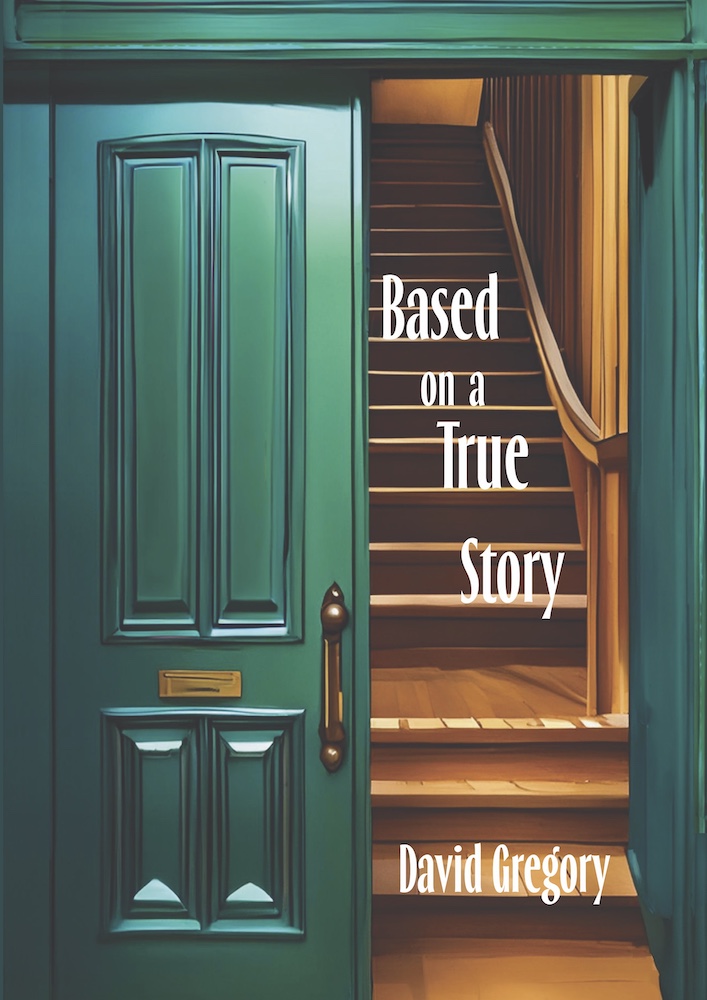
3 poems

Taieri Days

How far off those days, never mine
and never not mine, when
the only poems I knew
were the bursting greens of willows
by the Taieri in spring,
greens of cress and water weed
and the grass that sheep grazed
incognito because they all
looked much the same.

But the sky never did,
the clouds never did
shaped like tubes, plates, slats,
piles of rubble, knucklebones
and bunting streaming before the stars.

The river sprang and shone,
had a shifty and open
arrangement with skies
arcing and stretching
over the Maungatua
and Rock and Pillar ranges.

I didn’t want to own
or sell anything so grand
and communal as land;
all I needed
was the right to belong,
one’s spirit all the colours
of the spectrum,
like the sky.

Brian Turner
from Quadrant, v 42, 1998

I love this poem, imagining Brian in the hills and by the river, only needing to belong. A year ago when I asked him how he finds contentment, he said straight away, “I like the formation of the clouds,” and here they are in this poem, first published in Quadrant in 1998.

Jillian Sullivan

Just This

Find your place on the planet, dig in,
and take responsibility from there.
_ Gary Snyder

Affecting without affectation, like these sere hills
then the early evening sky where Sirius dominates
for a time, then is joined by lesser lights,

stars indistinct as those seen through the canopies
of trees shaking in the wind. There’s this wish
to feel part of something wholly explicable

and irreplaceable, something enduring
and wholesome that supresses the urge to fight …
or is there? Ah, the cosmic questions

that keep on coming like shooting stars
and will, until, and then what? All I can say
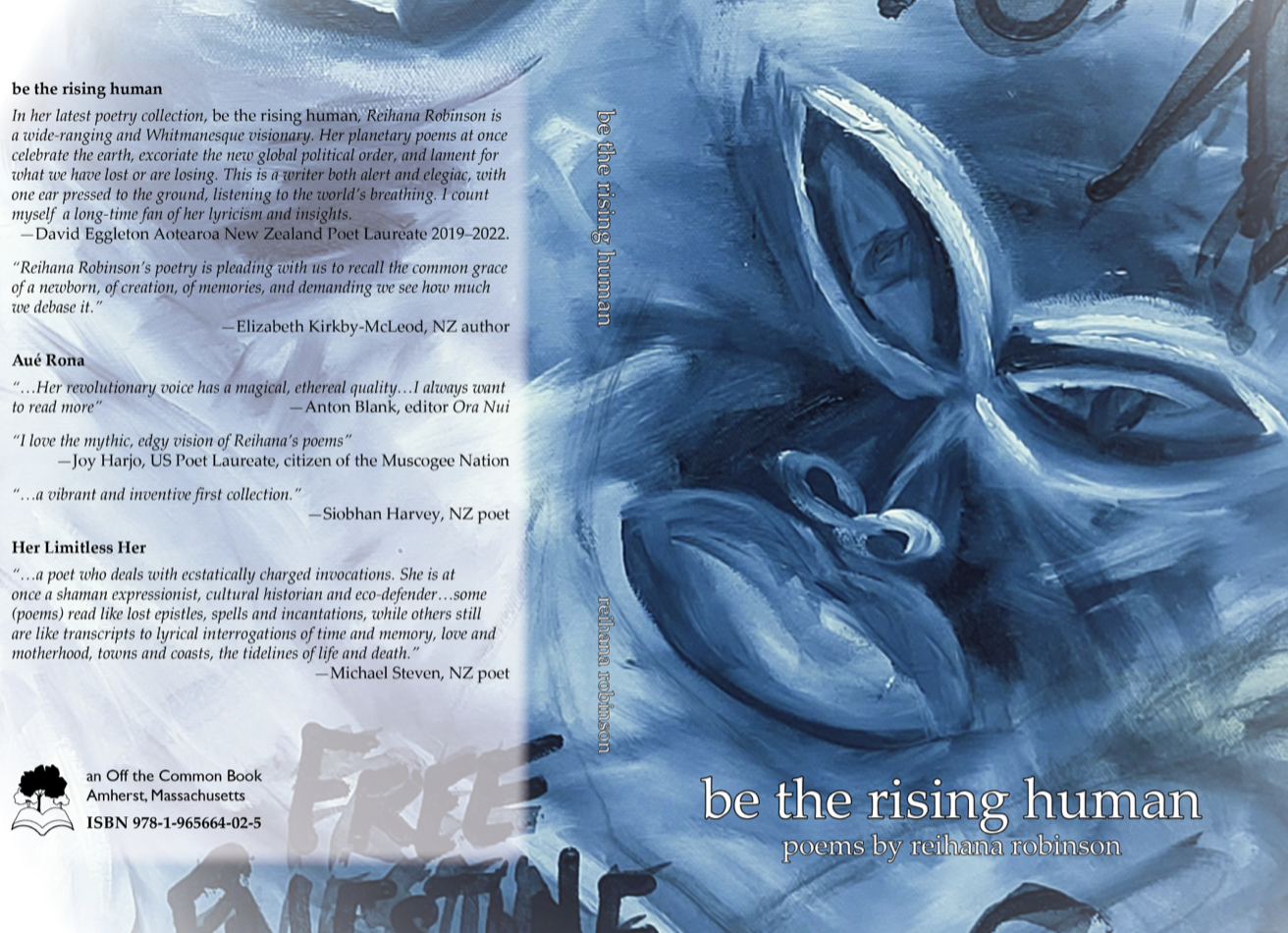
is that for me nothing hurts more

than leaving and nothing less than coming home,
when a nor’wester’s gusting in the pines
like operatic laughter, and the roadside grasses

are laced with the blue and orange and pink
of bugloss, poppies and yarrow, all of them
swishing, dancing, bending, as they do, as we do.

Brian Turner
from Just This, Te Herenga Waka University Press, 2009

It is hard to settle on one poem by Brian, but the heading quote by Gary Snyder tipped my choice in favour of ‘Just this’, the title poem of the book published in 2009. It has been lovely returning to Brian’s poems, though it’s not as though they ever leave you. To his voice – bardic, truly wise, looking at the world through the eye of the world, and the heart. Helping us to accept and to enjoy our predicament.

Peter Ireland

Deserts, for instance

The loveliest places of all
are those that look as if
there’s nothing there
to those still learning to look

Brian Turner
from Just This, Te Herenga Waka University Press, 2009

I cannot think of a more apt poet to be the inaugural NZ Poet Laureate of Nature. Brian’s poetry has provided paths and windows that enrich our connections with nature. In every book. In myriad ways. His poems sing with the music of Central Otago, they glimmer with the light and beauty of skies mountains plains. Poetry that brings nature to life within poetic forms is a vital aid, not just today in these toxic planet and human depleting times, but across the centuries. Like Peter, Brian’s poetry sticks with me, as a tonic in the difficulty of a day, as a way of breathing in what matters, what is important. I have lived with an artist for eons who is known for his Central Otago beehive works, so the southern landscapes resonate deeply for me. Perhaps this adds to the incredible effect Brian’s poetry has upon my heart. The poem I have chosen shows how a handful of words can unfold into so much more. Sublime.

Te Herenga Waka University page

Brian Turner was born in Dunedin in 1944. His first book of poems, Ladders of Rain (1978), won the Commonwealth Poetry Prize and was followed by a number of highly praised poetry collections and award-winning writing in a wide range of genres including journalism, biography, memoir and sports writing. Recent and acclaimed poetry collections include Night Fishing (VUP, 2016), and Just This (winner of the New Zealand Post Book Award for Poetry in 2010). He was the Te Mata Estate New Zealand Poet Laureate 2003–05 and received the Prime Minister’s Award for Poetry in 2009. He lives in Central Otago.