Inside the city a house Inside the house a room Inside the room a cupboard Inside the cupboard a drawer Inside the drawer a box Inside the box a necklace Inside the necklace a story Inside the story a city home
Ah, I woke up before the birds and began to build a list of things I love and am grateful for. I increased my donation to The Spin Off. Their commitment to political analysis, celebrating the arts, writing that upholds planetary wellbeing, that values our cultural differences along with our connections, is exemplary.
I tuned into the BBC podcast People Fixing the World and am reminded that behind the toxicity of leaders hellbent on destroying this planet and its people, there are those who work selflessly to mend, repair, heal, nourish.
I am mindful that so many people are on rocky roads, weathering health challenges, family and personal tragedies, violence, poverty, hunger.
These are tough dark times. For the past months, I have been weathering my own rugged track, with a zillion appointments, and my daily energy jar shrinking. Poetry Shelf holds on by a whisker because, for me, it is an essential place of connection and aroha. It is an energy booster. A joy.
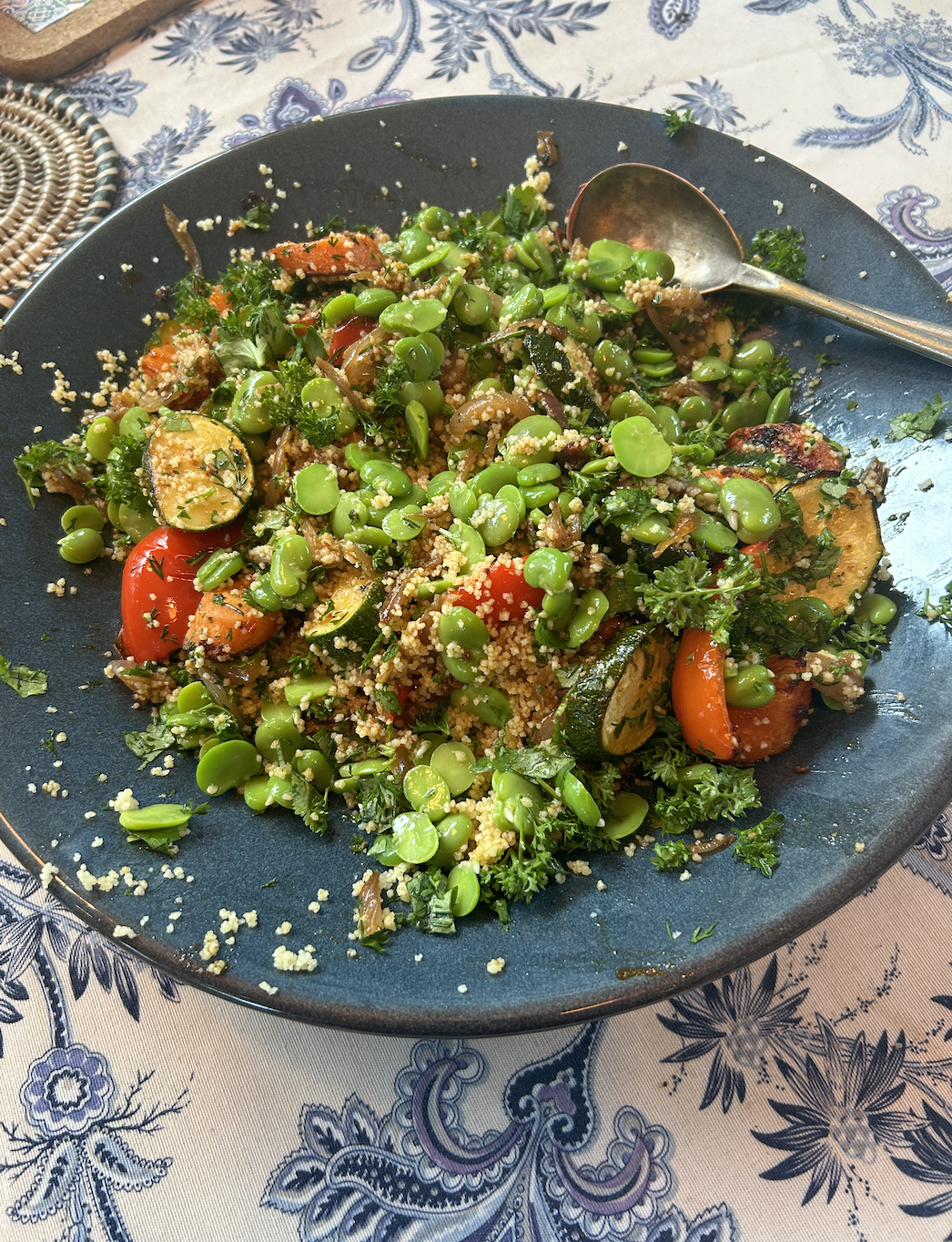
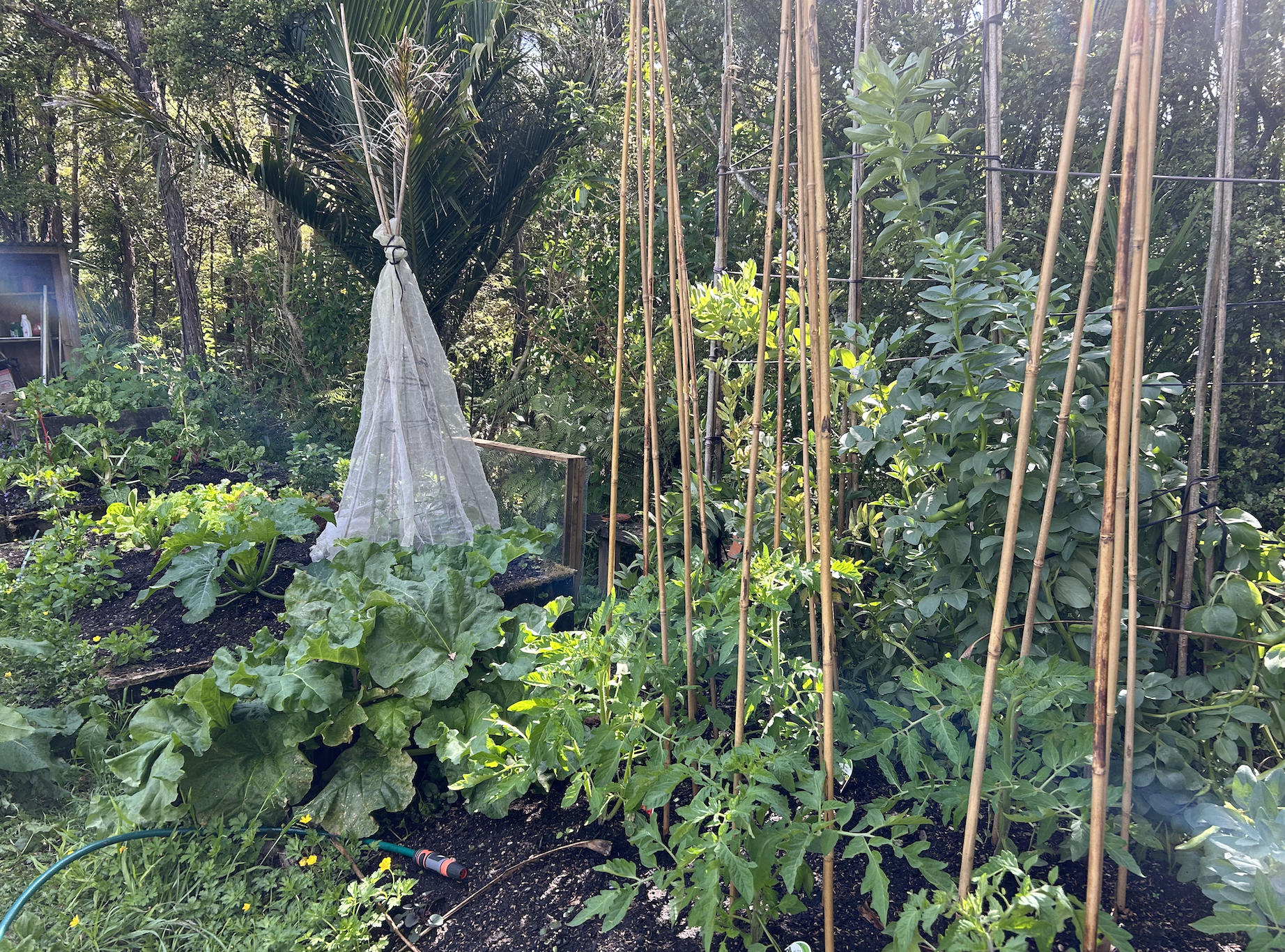
Whatever I do, I do out of love. I write out of love, I read out of love. Cook, bake bread, garden, walk. When my energy jar shrinks, I think self doubt amplifies and I question my ability to review books or write posts! But I keep hold of my tool kit and take another little step. Mistakes and all.
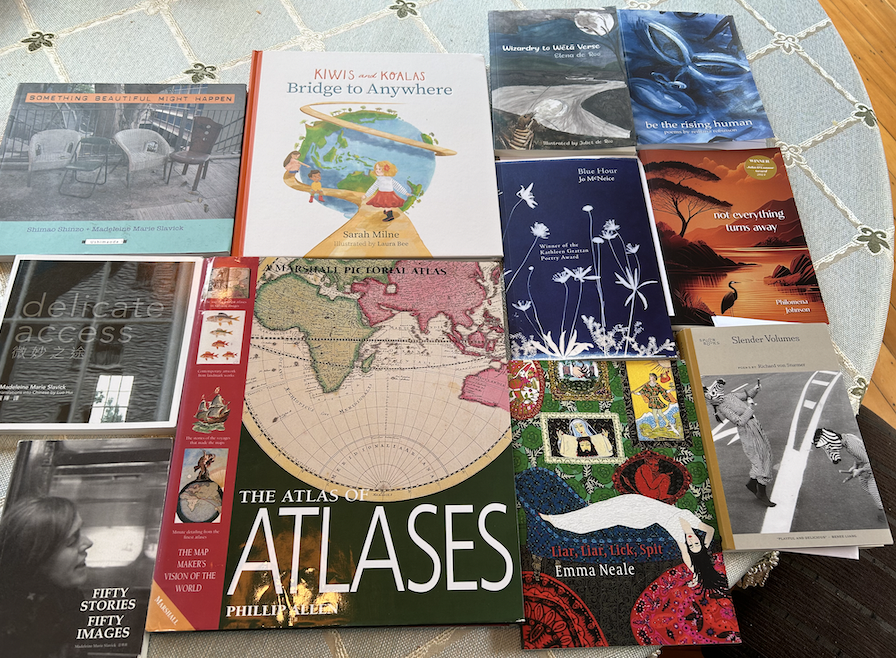
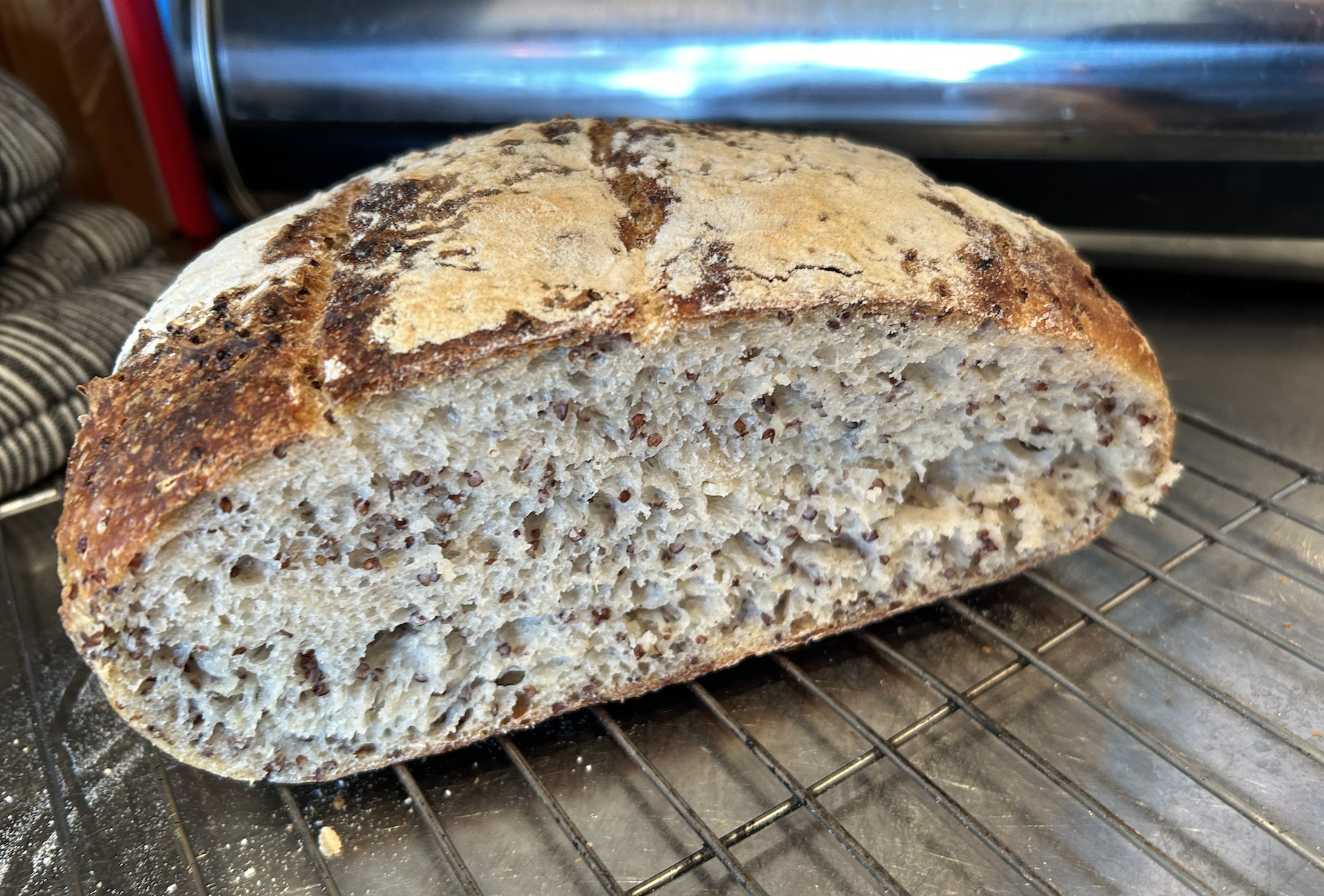
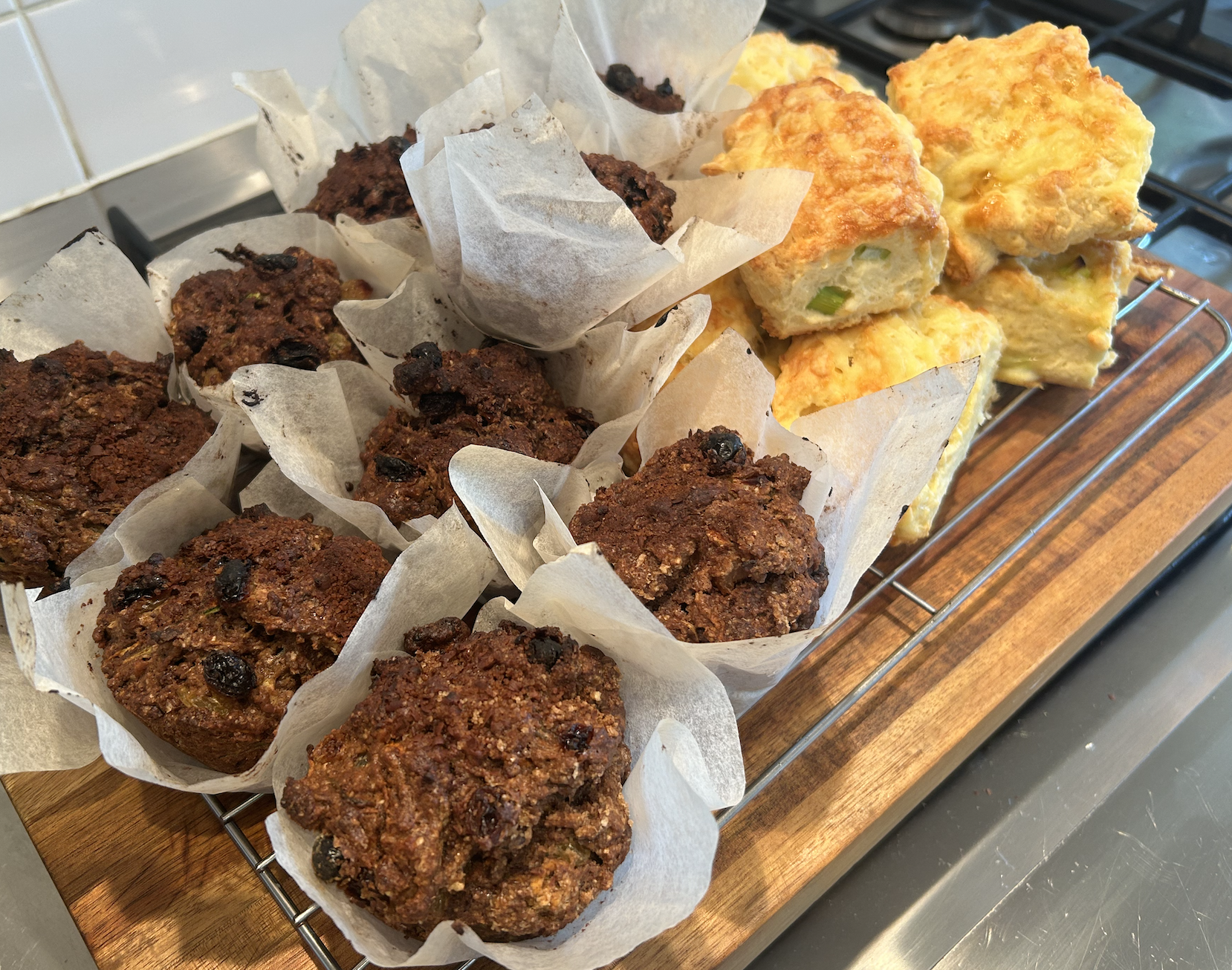
Ah. I have stack of poetry books on my desk to review – a towering pile because some days all I can do is listen to music or watch UK detective shows or bake Morning Glory Muffins (riffing off Harvest Wheat) or make sough dough bread with red quinoa (my latest version so yum!!).
And yes, I am deeply committed to Poetry Shelf, to upholding and nurturing its role as a hub for poets, readers and writers. Now more than ever it feels important – and I can’t wait to post more series next year.
In the meantime, I will be posting a 2024 highlights collage mid December and I am hoping to post reviews and more poems I love in the Monday spot.
an invite
This morning I was wondering if you would like to review a poetry book published in Aotearoa in 2024 that you have loved?
Saying no is important! This is just in case it is something you would like to do and share.
I would have six $50 book vouchers to give as koha. I could also give someone a bundle of my poetry books. I would post the reviews in December.
email me: paulajoygreen@gmail.com
I would gift six book vouchers – one per person.
And this is just if you have read a nz poetry book and loved it – I am holding onto my copies to read and review and keep in my poetry library for further use on blog.
If you are keen, let me know the name of the poetry book you would review.
Landfall Essay Competition judge Lynley Edmeades has announced the joint winners of this year’s competition: Franchesca Walker for her essay ‘Unsteady ground’ and Hannah August for her essay ‘Response to a restructure’.
Franchesca Walker’s essay explores her whānau’s history, uncovering new stories about her great-grandfather following her grandfather’s passing.
‘The essay is about secrets and it is about stories. But I don’t for a minute think that these experiences are unique to my family,’ Walker says. ‘In fact, a lot of the essay’s themes, including violence, alcoholism and intergenerational trauma, are unfortunately shared by many whānau. I actually think ‘Unsteady ground’ is an essay about the enduring impact of colonisation on Māori, although viewed through the lens of a single family.’
Walker describes writing the essay as an act of love for her tīpuna, whose resilience she admires. ‘Despite having the odds stacked against them, they kept their heads above water, kept food on the table, and kept going even when things must’ve seemed pretty bleak. Our tīpuna were heroes, but occasionally they were also villains. They were victims and perpetrators and lovers and fighters and every embodiment of humanity in between. Recognising this reality does not weaken us—on the contrary, I believe it empowers.’
In her judge’s report, Lynley Edmeades praised Walker’s essay for showing ‘what happens when a culture is silenced, when emotional and psychic lives are repressed.’ Edmeades also commended Walker for her ability to weave together fragmented memories, apocryphal stories and journalistic interpretations to create a valuable mosaic of a man who was subject to the many overbearing powers of his time. ‘With the lightest of touches, she prompts the reader to think about how the fragments of our ancestors live on within us and how the fractures and fissures might play out in our waking life.’
Hannah August’s essay critiques the recent cuts to humanities programmes in universities across Aotearoa, challenging the prevailing neoliberal societal framework that prioritises financial returns. ‘It’s still worth pointing out that there are alternative types of value that cannot be easily measured – the value of learning without a clear end goal, the value of emotional connections to works of art or literature, the value of intellectual communities that consist of diverse individuals with diverse spheres of knowledge and diverse levels of expertise. My essay seeks to explore these other types of value, and to remind readers that they exist.’
August’s essay is also a tribute to those affected by university restructures, particularly friends and colleagues in the humanities across Aotearoa, Australia and the United Kingdom. ‘Some of them have lost their jobs; some of them are still employed but with vastly increased workloads as they try to fill the gaps left by departed colleagues. I wanted to capture and pay tribute to that ubiquitous experience, and to articulate what is lost in the aftermath of a university restructure that involves staff redundancies, as well as some of what has been lost more generally in our understanding of what a university is and should be following the Covid-19 pandemic.’
Edmeades commended August’s essay for its insightful exploration of ‘the act of silencing by institutional power in the interest of profiteering models.’ She added, ‘It also makes a superb argument for the place of the public intellectual, which we need now more than ever before. Her writing is gentle and affective, authentic and unashamedly subjective.’
Edmeades noted that both essays, when considered side-by-side, revealed ‘threads of connective tissue,’ which made it impossible for her to pick between the two pieces for a single winner.
‘In their different ways, both essays suggest that manipulating ideologies for the purposes of expansion and control—either colonial or capitalist—will always have an effect. The more we can attune to the voices of our past—both collective and individual—the more fight we might have in us to endure the weight of the present and to effect positive change in the future.’
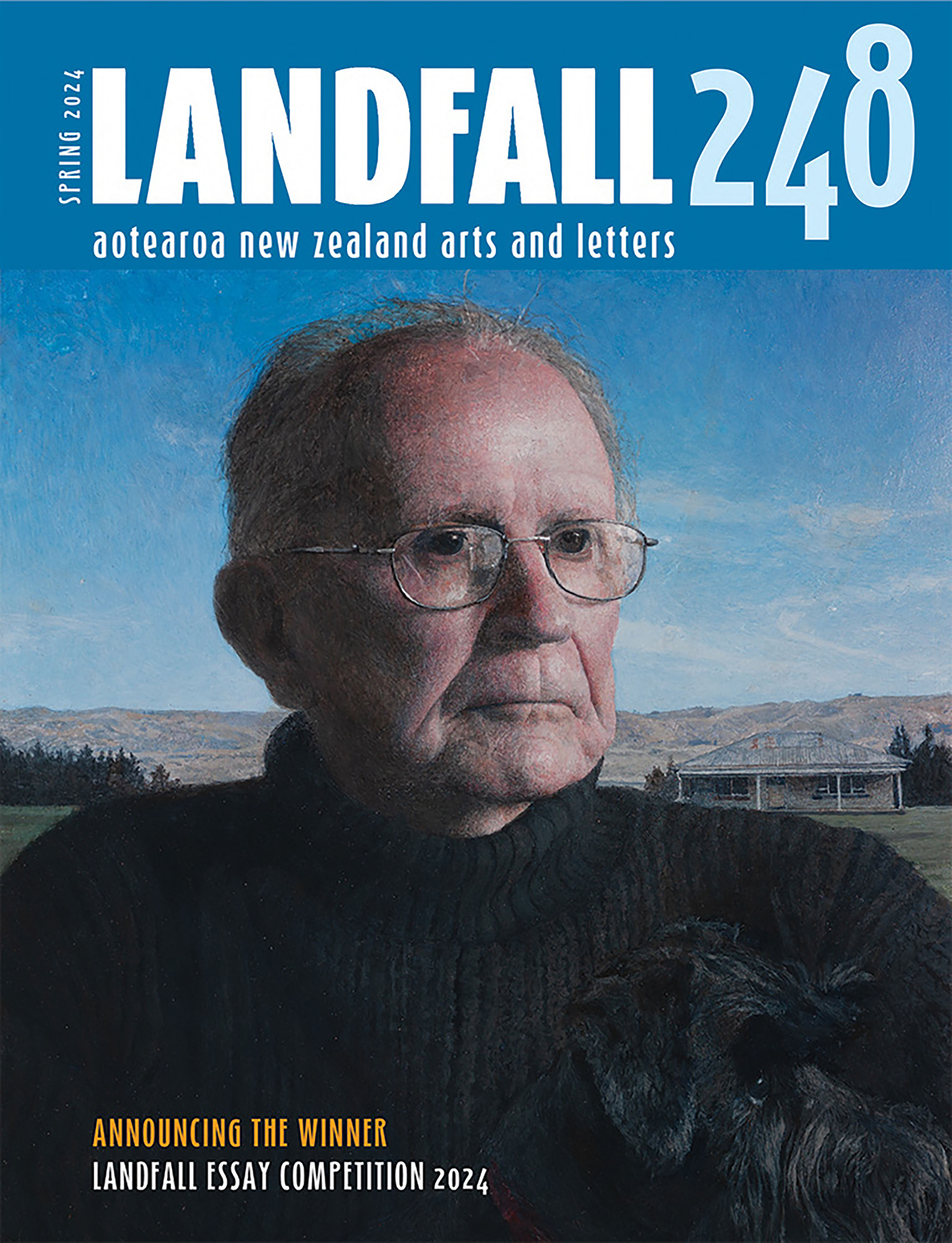
‘Unsteady ground’ by Franchesca Walker and ‘Response to a restructure’ by Hannah August will be featured in Landfall 248: Spring 2024.
Landfall is Aotearoa New Zealand’s longest-running arts and literary journal. This taonga is published twice a year and each issue features two full-colour art portfolios, fiction, poetry, creative nonfiction, essays, reviews and cultural commentary. Landfall is an exciting anthology that has it’s finger on the pulse of creativity, providing a snapshot of Aotearoa’s unique literary landscape today.
Landfall 248: Spring 2024 is dedicated to the late Vincent O’Sullivan, one of Aotearoa New Zealand’s most influential writers. This issue also announces the joint winners of the 2024 Landfall Essay Competition, a landmark annual essay competition. This exciting new issue will also include essays from the 2024 collaboration with RMIT University’s nonfiction/Lab and will announce the winner of the 2024 Caselberg International Poetry Prize.
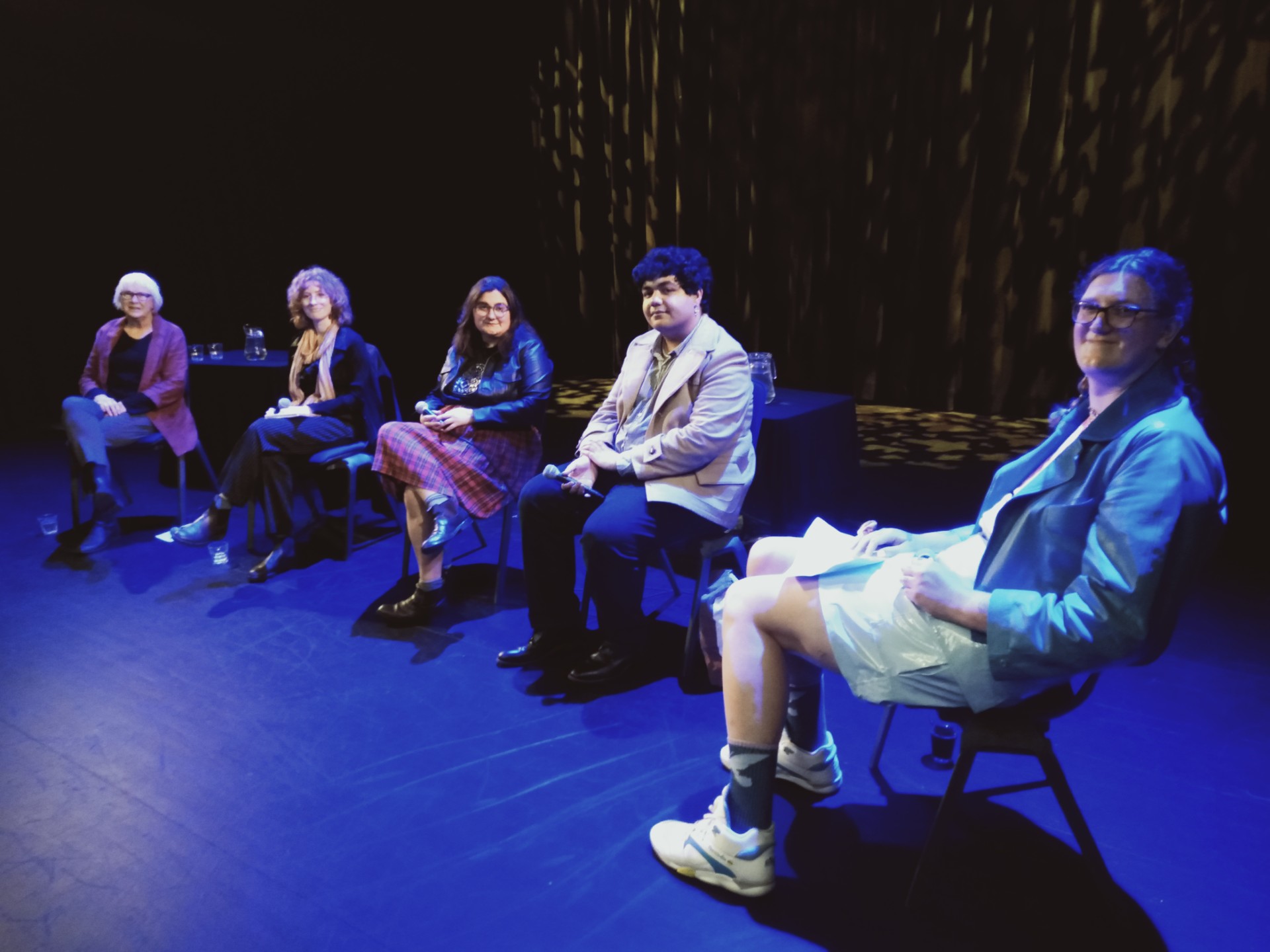
On the Friday night of Wellington’s 2024 Verb Readers and Writers Festival, award-winning poet and publisher Always Becominging seeks answers from Adrienne Jansen, Ruby Solly, Josh Toumuʻa and Brooke Soulsby about The Secret Art of Editing Poetry.
Adrienne is a writer, editor, teacher, and co-founding publisher at Landing Press, who brings a wealth of experience to the subject of editing and being edited. She has also brought a visual prop in the form of an old poem draft of her own, which poet and poetry teacher James Brown had liberally marked up in pen, to prove she was no stranger to being on the receiving end of the process.
Brooke Soulsby is a writer and publishing professional. She did the Whitireia publishing course in 2021. She is one of three founding co-editors of circular. Brooke’s work has been published in Salient, bad apple, circular, and 4th Floor Journal.
Dr. Ruby Solly (Kāi Tahu, Waitaha, Kāti Māmoe) is a musician, taonga pūoro practitioner, music therapist and writer. She co-convenes the CREW Māori and Pasifika Creative Writing Te Hiringa a Tuhi CREW 260 at Te Herenga Waka Victoria University’s International Institute of Modern Letters with Victor Rodger.
Joshua Toumu’a was the winner of the 2022 Schools Poetry Award, and a finalist in the 2023 Mansfield Short Story Competition. His work has been published in Starling, Symposia Magazine and The Spinoff.
Always kicked things off, seeking definition around the question: What is poetry?”
Ruby said: “It’s me at 2.30 this morning. Poetry, or toikupu, as it can be referred to in Te Reo Māori, can be translated as ‘art words’ in that language, which I think is a really beautiful way to explain all of what poetry can do without restricting what we think of it in terms of what it looks like on the page or what the length is. It can also be used as a technique within other writing, as well as being a thing on its own.” Ruby’s book The Artist demonstrates the former point; her book Tōku Pāpā the latter.
Brooke said: “I think poetry is a way of expressing particular emotions or capturing certain images or experiences with words and sharing them.”
Josh offered: “Poetry is an expression of the love of language.”
Always turned the question to defining editing.
Adrienne suggested: “Editing is about letting the work be the best it can be, and being itself; strengthening the work. For the editor, it’s actually about paying attention to the work, to what the writer wants and intends, and their voice.”
Brooke said: “Finding a balance between the house style of where it’s going and the intentions of the poet, helping them to bring it out. Grammar and syntax doesn’t always apply with poetry.”
Joshua said: “Find what sings in a piece and make it scream.”
Ruby said: “I was a session musician for quite a long time, and there’s a saying in session work that your job is to make the music more of itself. I think that’s a really good thing when you’re editing – instead of making it what you want it to be, bringing out what it already is.”
Always asked: “When a poem comes to you to edit, how do you ‘make it scream’ or make it more of itself?”
Joshua said: “It depends on the piece, and on what the person is asking of you. If you’re editing pieces other than yourself, you need to know what they’re asking, and if you’re editing your own work, you need to know what you’re asking of yourself. You can’t just look at this and think, Okay, how can I make this better? You need to really think, I’m gonna fix it.”
Always asked, “Adrienne, how about you? What’s your responsibility?”
“To absolutely focus on that poem,” Adrienne said. “Only ever make suggestions, then give the writer the time to think about them. I often find our first reaction is quite defensive, and then with time, we come to our own agreement or disagreement.
Brooke said: “For circular, I think that sometimes poets think they have to accept all of our changes, even though we’ve already accepted them, and you really don’t. So, I it’s about making it really clear that they are suggestions.
“I think it’s also really important to see the potential in a piece. But asking them what their intention was is really important as well, just being really open about it, because it’s a two-way relationship.”
Joshua said: “You have to be sort of passive with your language, and very deliberate with what words you choose. If I say, ‘I think that this part needs improvement,’ people would be less open to hearing my thoughts on this, because I am imposing it, that I am right and you are wrong about your art. That is not the approach you want to take when editing.”
Always suggested presenting questions is a good way of doing it.
Joshua agreed, suggesting “the compliment sandwich” approach: starting with praise, followed by constructive criticism, followed by more praise.
Brooke acknowledged one error an editor can make is thinking they have to find a mistake in every poem they are given. “Some of the poems I have accepted don’t need anything, they are just great as they are,” she said. “Perhaps all they need is a bit of support in getting it out there. You don’t need to be too heavy-handed.”
Always asked: “How is editing poetry different from editing other things?”
Ruby said: “One way is that poetry is often all about the moment. The ‘Friday Poem’ on The Spinoff, for example; it’s like, something big has happened this week that affects somebody in the community. So, the person who is editing that needs to be the thinking brain, not the lizard brain, and be like, ‘Hey, this sentence here might get you in trouble this way.’ And that is a big difference than, say, editing a whole novel that could be inspired by an event that happened now, but you won’t see that book for another five, six years. I think the timing is everything.”
Brooke referred to advice Adrienne brought to her Whitireia cohort when she visited them in 2021, which Adrienne credits to two-time US Poet Laureate Billy Collins. Collins has said it’s important for a poem to know which cards to turn over, and which to leave face down. The idea being, in impenetrable poetry, too many cards are face down.
Always asked the panellists how best to approach editing a piece that isn’t necessarily written for you?
Ruby’s answer was firm: ” You don’t edit it,” with Brooke and Adrienne supporting her stance.
“Ask for another opinion,” said Brooke.
Ruby expanded on what this requires: “I think the wider part of that conversation is that we need editors from all backgrounds. Jasmine Sargent [(Ngāti Porou) Editor (Māori) at Te Herenga Waka University Press] edited my second book. She’s absolutely incredible. She works really hard. She’s passionate about it, about the kaupapa and about the writers, but she’s also one person in that space, and we need more people, so I can write something where I don’t have to explain everything, because it’s it’s already understood, and it’s already going to go to an audience that’s like us anyway, and that’s who it’s for. So, yeah, that’s not a problem that we can solve easily without solving all of the problems. But it’s also important to mention that.”
Always asked: “I’m wondering how you all manage the different power imbalances that often come up in publishing between editor and poet, and publishers. Obviously sometimes the editor has more power and sometimes the writer has more power.”
Ruby said: “My whole life is a power imbalance. It’s funny, but it fucking sucks. I just have to deal with it. I’ve got nothing else I can do. And yeah, it’s exhausting and it’s constant.”
She gave the example of being asked to remove the entire first section of The Artist. “It’s 13 poems, but it took me a year because I had to go and talk to everybody to write the history of Te Wai Pounamu, from the beginning of creation to settlement. I had to really fight to get that kept, which was totally worth it, because it’s used in kura kaupapa Māori now to teach the history of the South Island. But the thing is, somebody has to do the big fight for stuff. Sometimes people are doing the big marketing, but not having to do the big fighting. And that’s one of the things that makes me cry when I wake up.”
Adrienne took the question, and the light Ruby had shed on it: “I so deeply believe that we’re all in it together, you know, the writer and editor and everybody else, and I suppose it is a power imbalance that I need to be aware of, that, you know, I have some power suggesting things, but it’s not the way I operate.
“I worked for about 10 years at Te Papa writing, and there’s a great head writer who said…” She pauses to consider the job title ‘head writer’; “See, that’s kind of a contradiction,” she said. “But he took the view that what we were about was just refining the text. All of us were just refining the text, which is great in that context. If you have that philosophy that really you’re just all refining the text, you all just want it to be the best that it can be, then I hope that those kinds of inequalities don’t exist so much. But maybe I’m being naive about that. Maybe I believe that, but it doesn’t happen in practice. Maybe I’m aspiring to something.”
Joshua said: “I think that is a really interesting take on it. I think that’s a really good start on history and historical writing, but poetry has a person, a single person, behind it, and when you consider the act of editing as refining, it feels like it is taking emphasis away from the original object, which is the piece, and this is where I feel the poetry power imbalances of editor versus poet, because it’s an incredibly intimate act showing someone a poem, let alone one they consider unfinished. It’s sort of unclothing a story that they are sharing. And they’re asking for advice on how they can communicate their own story. This is where the importance of the language that you use is used to support language, because you need to present yourself not as someone who’s trying to reinforce this power imbalance.”
Ruby said: “I think a refusal to acknowledge the power imbalance is a big part of the problem. So, when I mark my students’ work, I say, ‘Yes, I am in charge of you right now. I have this power. I can fail you or pass you. I’m not going to do that over these comments. However, here’s what I think, here’s where this fits in the wider thing.’ But you do have to acknowledge it, or else, it’s not that it doesn’t exist, it’s that you are refusing to see it. It’s not cute to be, like, ‘I don’t see race.’ None of those things work because it just means you get a choice, but I don’t get a choice. We don’t get a choice.
“So, I think there’s a really important point where you have to say, ‘Hey, I’m offering you an opportunity, and I have been dealt a card of hands where I have a handful of cards, and you have nothing. Am I going to let you see them or not?’ You’re not just collecting somebody’s work, like you do with bugs. You’re trying to build whakawhanaungatanga.”
Brooke agreed: “You have to respect the poet.”
The conversation circled back to Adrienne, who returned to Josh and Ruby’s points about power: “I thought about what I just said, Josh. Because refining has a lot of connotations. Refining isn’t the right word, you’re quite right,” she said. “It’s a bad word, and we’re talking about language. Let’s say you write a poem. You bring what you bring to the table your experience, knowledge, you bring all that to the table. And I [as the editor] bring something else. We both bring different things to the table. And I do see the editing process like that. But for all that, Ruby, I absolutely take your point that we have to be aware of what can happen in a relationship, because editing is all about relationships.”
As for creating the poetry that leads us to those relationships, Joshua’s advice to himself, regarding editing, offered some great instructions for the writing life in general. “I wrote a lot of really bad middle school poetry because I didn’t really know what I liked. I didn’t read nearly enough,” he said. “You need to read to be a good writer. And you need to write to be a good editor.”
Bee Trudgeon
Bee Trudgeon is a writer and children’s librarian previously published in RipItUp,The Sapling, The Spinoff, Audioculture, A Fine Line, NZ Poetry Box, and NZ Poetry Shelf. She recently completed the IIML CREW Poetry course. She lives with her whānau in a haunted house in Cannons Creek, and on the Patreon page of her alter ego, Grace Beaster.
Their names and fates were spoken. The lands and seas of the voyage were spoken. Calls of the stroke at times were spoken. Celestial guidance, sightings, were spoken. Prescriptions – medical and spiritual – were spoken. Transactions – physical and emotional – were spoken. Family (of), leaders (to), arguments, were well spoken. Elders (of), were well spoken. Burials were spoken. Welcomes at times were spoken. Futures lined up by pasts, were spoken. Repeating the spoken were spoken. Inheritance, inheritors, were spoken. Tears at times were spoken. Representations at first were spoken. The narrator wrote the spoken. The readers saw the spoken! Spoken became unspoken. [Written froze spoken.]
Robert Sullivan from voice carried my family, Auckland University Press, 2005
Over the coming months, the Monday Poem spot will include poetry that has stuck to me over time, poems that I’ve loved for all kinds of reasons.
When Robert Sullivan’s poetry collection, Star Waka, entered the world in 1999, it felt like a significant arrival. This was a poet who sang from his past present future, his ancestors friends loved ones. His collection voice carried my family particularly resonated with me, and it is a book I draw from my shelves when I crave nourishment.
This poem. This poem in particular, that speaks even more deeply to me today, when voice brings us together across the motu, bringing us together through stories, songs, history, aroha and the respect that matters.
This poem that reminds me, so acutely, so vitally, how much voice matters, how much a poem can matter – when the world our nation and our people hang by a fragile thread. When I hang by a fragile thread.
Today this poem, this precious poem, is a poem to hold close.
Robert Sullivan (Ngāpuhi, Kāi Tahu) is the author of nine books of poetry as well as a graphic novel and an award-winning book of Māori legends for children. He co-edited, with Albert Wendt and Reina Whaitiri, the anthologies of Polynesian poetry in English, Whetu Moana (2002) and Mauri Ola (2010), and an anthology of Māori poetry with Reina Whaitiri, Puna Wai Kōrero (2014), all published by Auckland University Press. Among many awards, he received the 2022 Lauris Edmond Memorial Award for a distinguished contribution to New Zealand poetry. He is associate professor of creative writing at Massey University and has taught previously at Manukau Institute of Technology and the University of Hawai‘i at Mānoa. His most recent collection is Hopurangi / Songcatcher (Auckland University Press, 2024).
International Writers’ Workshop NZ – November 22, 2024
International Writers’ Workshop NZ is delighted to announce that Ōtepoti Dunedin poets Nicola Thorstensen and Michelle Elvy are the 2024 winner and runner-up of The Kathleen Grattan Prize for a Sequence of Poems judged by Anne Kennedy from Tamaki Makaurau Auckland.
Nicola Thorstensen receives the prestigious $1000 prize for her sequence ‘Reclamation’, a tribute to her father John Thorstensen, and an exploration of childhood loss and grief. She wrote it as part of a creative-critical Masters’ thesis while studying at Massey University, and edited it during an NZSA mentorship this year. Nicola is an active member of two writing groups, and her work has appeared in Landfall, takahē, Poetry New Zealand and many other Aotearoa New Zealand poetry anthologies. She believes that the arts are critically important in these difficult times and adds, “I’m grateful and honoured to win this award, and wish to thank the Grattan family for their generosity and passion for poetry, IWW for running the competition, and judge Anne Kennedy for her thoughtful feedback.”
Michelle Elvy is awarded runner-up for her sequence, ‘The map in your palm’. Michelle, originally from the Chesapeake Bay on the US east coast, spent many years aboard her sailboat, arriving in Aotearoa in 2008. The poems in her sequence draw from her relationship to the sea, moving across geographies and time, floating multiple lives over oceans, navigating connection and loss, finding solace in the spaces of our natural world. Michelle is a writer, editor and creative writing teacher. Her books include the everrumble and the other side of better, and many anthologies.
Anne Kennedy said judging The Kathleen Grattan Prize for a Sequence of Poems was a lovely experience, but also agonising. She was impressed by the scope of many of the entries – how poets manage to create structures of poems that are unified yet offer surprises. She said that the breadth of ideas among the entries shows that poets are working in an essential way for our times and that we need poetry more than ever to express the otherwise inexpressible. On choosing her winner and runner-up she said she was looking for a sequence that uses poetic techniques skilfully, that asks the reader to consider a slice of life or the world in a new way, and that takes the reader on a well- structured journey through the poems.
Anne also awarded Highly Commended to Kerrin P. Sharpe (Ōtautahi Christchurch) and to Sarah Scott (Te Whanganui-a-Tara Wellington).
The Kathleen Grattan Prize of a Sequence of Poems was established by the late Jocelyn Grattan in memory of her mother. International Writers’ Workshop has had the honour of running the competition for its members since its inception in 2009, and over the years it has been won by both established and emerging poets. The Prize is the smaller of the two poetry competitions funded by the Jocelyn Grattan Charitable Trust, the other being the biennial Kathleen Grattan Award, run by Landfall / Otago University Press.
My mother’s voice crackled and deepened on the tape recorder.
She spoke to me only yesterday, but already the effort to speak across such great
distance, from her twenties to me in my thirties
stretched the tape like the whirr of static ghosts.
Transcribing her disembodied words how I want her here to hold my body to her breast.
Ingrid Horrocks from Mapping the Distance, Te Herenga Waka University Press, 2010
Over the coming months, the Monday Poem spot will include poetry that has stuck to me over time, poems that I’ve loved for all kinds of reasons.
Poetry is of such vital comfort at the moment. It might be the way the musicality of words strikes the ear or the subject matter catches the heart. It might be intricate or economical in effect, or both. The first time I read Ingrid’s mother poem I did an inward gasp. It is utterly moving, haunting, in both musicality and content. It’s a poem to read, and read again, to enter the poetic clearings and linger, as is the arc and reach of Ingrid’s poetry. Ah, the poetry I love is so often absorption ahead of explanation, nourishment ahead of body skewing. I have been musing on how a sublime poem can carry you beyond words. Extraordinary.
Ingrid Horrocks is the 2024 Kaituhi Tarāwhare, Creative New Zealand Writer in Residence at the IIML. She is the author of two poetry books, Natsukashii (1999) and Mapping the Distance (2010). Her most recent book, Where We Swim (2021), is a blend of essay, memoir, travel, and lyric nature writing, and her first book of fiction, Nine Lives, is forth-coming with THWUP in 2025. Sometimes, she misses being a poet. Her wonderful mother is alive and well.
New Paintings, Shane Cotton, 12 October to 16 November 202 Gow Langsford Gallery, Onehunga
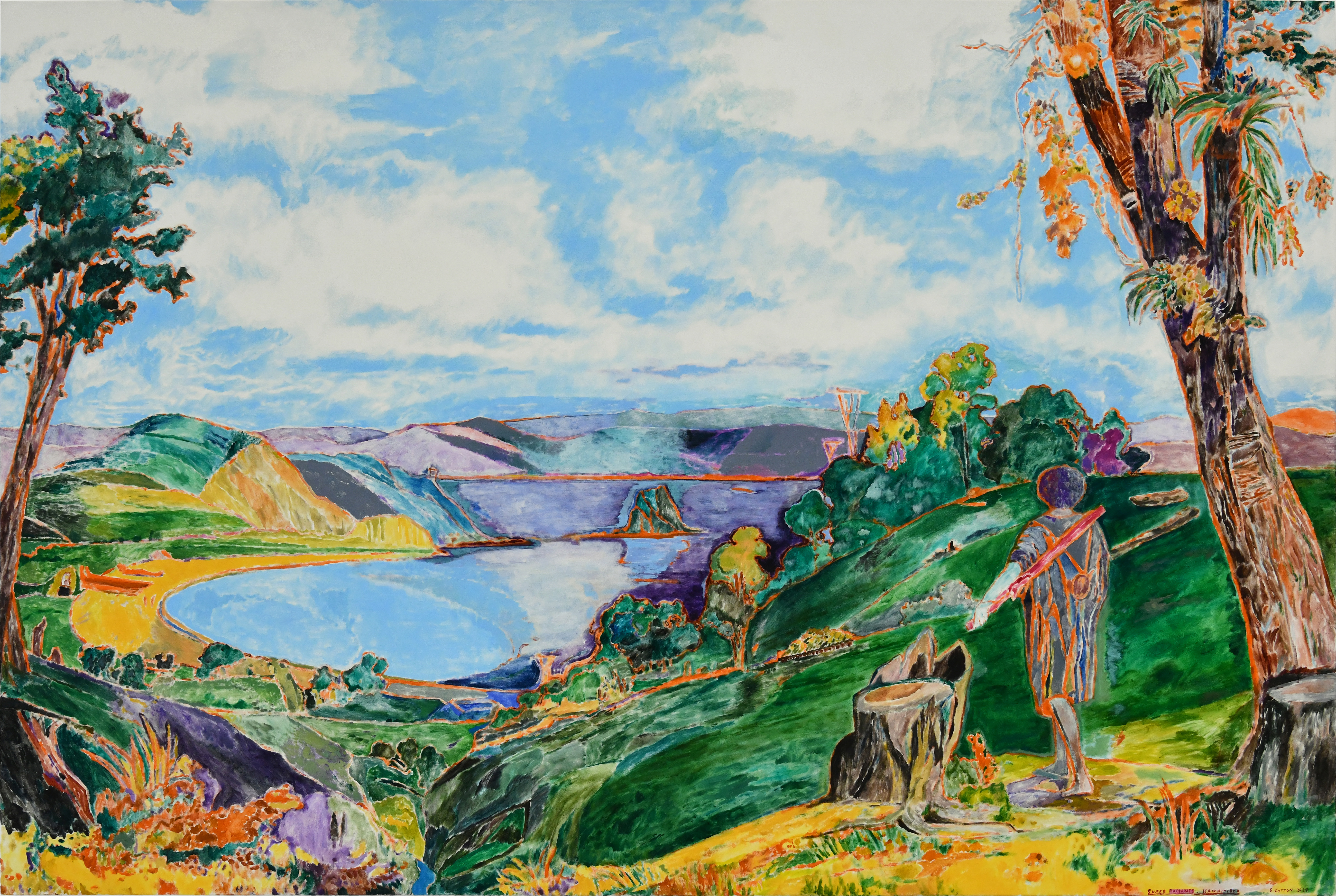
For the first time in over two years, I stood in a gallery, masked up, and absorbed art. It was my first visit to the fabulous space Gow Langsford Gallery has created in Onehunga. They still have the gallery in Kitchener Street but their new creative venture includes exhibition spaces, studios for promising artists, and an extensive visual arts library.
I had spotted Shane Cotton’s new paintings on the gallery website and decided they were essential viewing. It was time to tag along with Michael as he dropped off work for his upcoming show and to view the new space.
In my bag, I had a book I am currently reading, Pictures and Tears by James Elkins (2001), a book that prompts travel to artworks that have profoundly moved me. I am, for example, back standing in the Rothko Room at the Tate Gallery, seeing the yellow pollen mountain of Wolfgang Laib at Musee d’Art Moderne Paris, and the Vincent Van Gogh Gallery in Amsterdam. More than anything I am returned to Renaissance Art in Italy where I was moved transfixed transported rebooted.
In Florence, I wrote a letter to the Uffizi Gallery requesting permission to view Artemisa Gentileschi’s paintings in storage, for my doctoral thesis. I was in the gallery two hours before the public, there in front of Botticelli’s ‘The Birth of Venus’, nobody else in the room bar a young ragazzo with his bunch of keys. I sat on the floor in the Gentileschi storage room, mesmerised. When I stood up, il ragazzo rattled his keys, saying, che altro?, and took me to the Caravaggio works in storage. I am almost weeping to be back in this moment. Postscript: that night the gallery was bombed, and those paintings were damaged.
Ah. How to experience art? Some people do a show, do a gallery, do a painting. Maybe that is an all encompassing word, because art is something we can see think feel memorise navigate. Both ethereal and physical. Surprising challenging intoxicating.
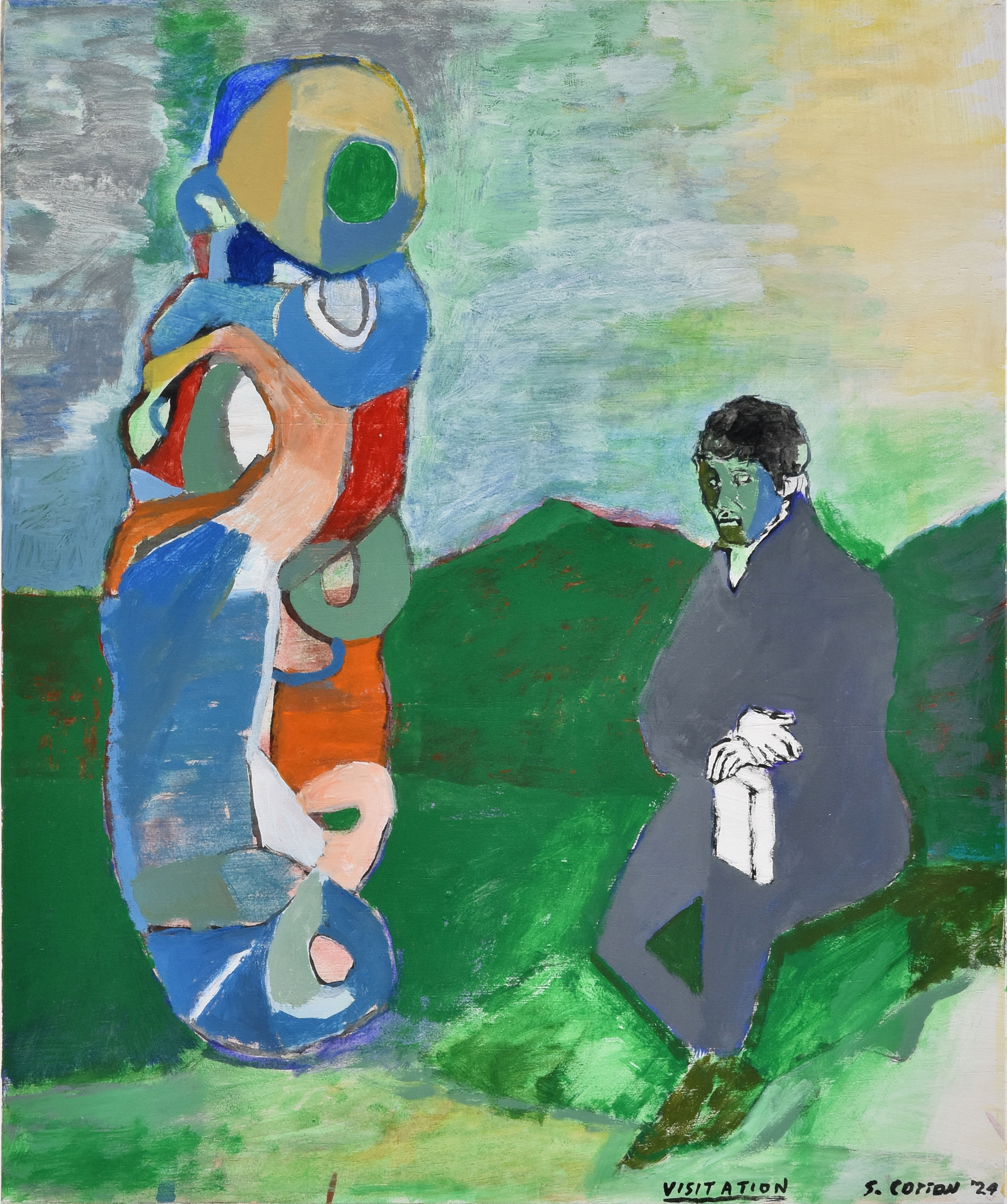
The Visitation, Shane Cotton, 2024
Tears. James Elkin’s book, as the title suggests, is a exploration of tears, on how art can prompt and promote feeling. Every now and then I walk up the hill to Michael’s studio and find myself in a state of awe, astonishment, wonder. I am not weeping but I am experiencing the electric fields of looking, contemplation, uplift.
Standing in Shane Cotton’s new show is a similar experience. I am not standing here as an art critic or reviewer, with my back catalogues of university studies, but as a poet. As a poet who sees writing as an open field of connections, possibilities, travels, techniques, innovations, traditions, conversations, challenges, protest, reverie, ideas, memory, experience, heart. I often ask poets which words matter as they write and, for me, the two I hold close, are connections and heart. I savour poetry that has heart, that forges myriad connections.
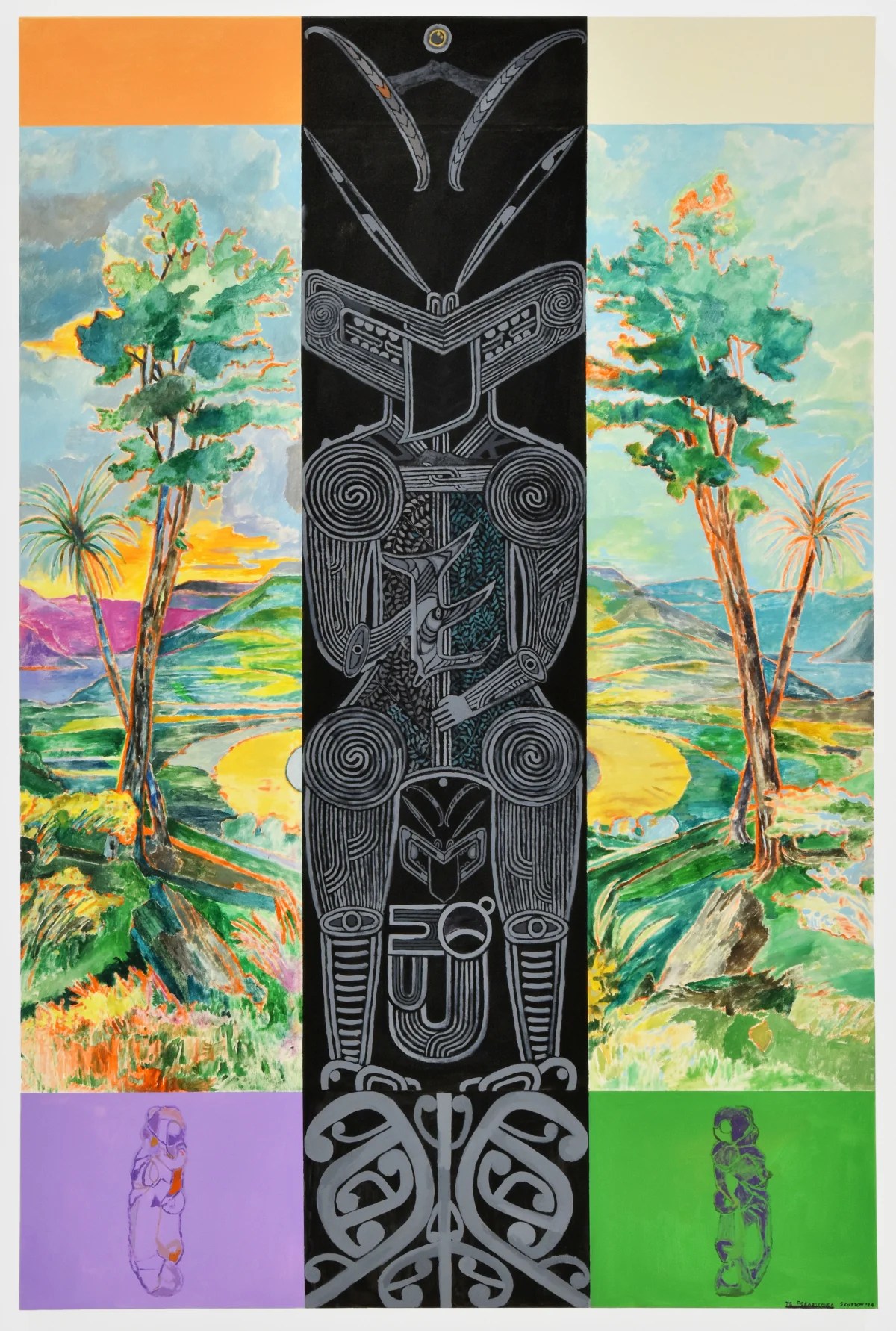
I also bring these two words, heart and connection, to art that catches me, and Shane’s sublime exhibition does exactly that. I feel these paintings like I feel a poem. The exhibition is a little different from his previous shows, but there are echoes, bridges, vital links. For me, this is art of entwinement; from personal traces to public narratives, intimate revelations to global concerns. Motifs, landscapes, people.
I begin with colour (Shane uses acrylic on board or linen), just as I might begin with the musicality of a poem. Not that there is ever a single formula for reading or viewing. Even on the website Shane’s use of colour strikes surprisingly, invigoratingly. It is scintillating, sheening, off-real, hyper-real. Think of how a piece of music might set you tingling, that is what colour can do. It generates colour hum, vibrations, psychological rhythms . . . let’s say vibes. A degree of word muteness, embedded in a moment of image trance. And Shane’s use of colour has edge, suspension, harmonics, it both elates and unsettles.
Narrative. After colour you might enter narrative. Each work carries story, close to the surface, deep set, woven, threaded, refracting, colliding, Indigenous, European, inhabited by ancestral figures. Personal. Intimate. The titles of the paintings underline the narrative scope. For example: ‘Up the Creek’, ‘Internal Visitor’, ‘The Will of the Devil’, The Laughing Tree’, ‘Sunset Gate’, ‘Rahiri’s Light’. I recommend reading Anthony Byrt’s terrific accompanying essay as it opens up the narrative richness, from colonial collisions, Ngāpuhi ancestors, the foregrounding of whakapapa, metaphorical possibilities, slippages, hybridity, visual and thematic chords. I see the exhibition as planting roots and tendrils in both new and old ground, navigating how and why we tell stories, have told stories, and must continue to tell stories in whatever form.
Movement. Shane’s art generates incredible movement. The figure painted in contemplation, walking or meditation renders me still, for an exquisite pause, until the prolonged moment slips and shifts into an acute awareness of body breath, heart beat, light, darkness, and again light.
On so many levels I am weeping. And in this catastrophic time, at home and abroad, with an inherited and ongoing smash of cruelty and greed, to breathe in strength and fragility, to spy anchor and exploration, is self fortification. It’s an aversion to explication. The way art and poetry can reside within and beyond framings. The way art and poetry are nourished by risk taking and by human care. And for me, there’s the vital impulse of never letting go of heart or a need to connect.
It feels like a miracle I could stand in the heart of this show, feel these paintings, take them home to view and revisit in my head gallery over the coming weeks.
Te Pokatūpanga, Shane Cotton, 2024
Shane Cotton (Ngā Puhi, Ngāti Rangi, Ngāti Hine and Te Uri Taniwha) is as an internationally renowned New Zealand artist, who has exhibited extensively in New Zealand and abroad. In 2008, he received a Laureate Award from the New Zealand Arts Foundation and, in 2012 was made an Officer of the New Zealand Order of Merit for services to the visual arts. Lives in Kororāreka, Russell.
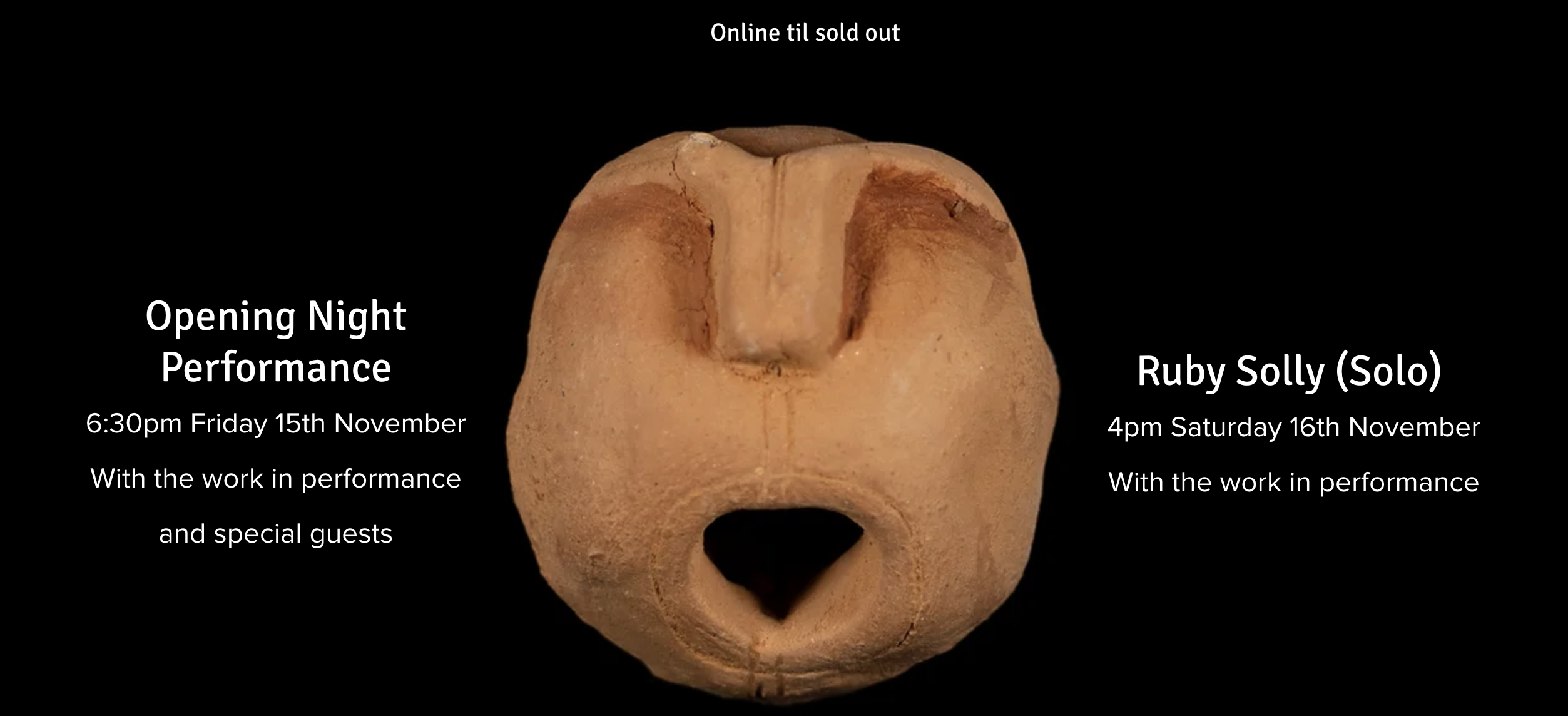
Urban Dream Brokerage, 17 Tory Street, and online November 15th – 17th
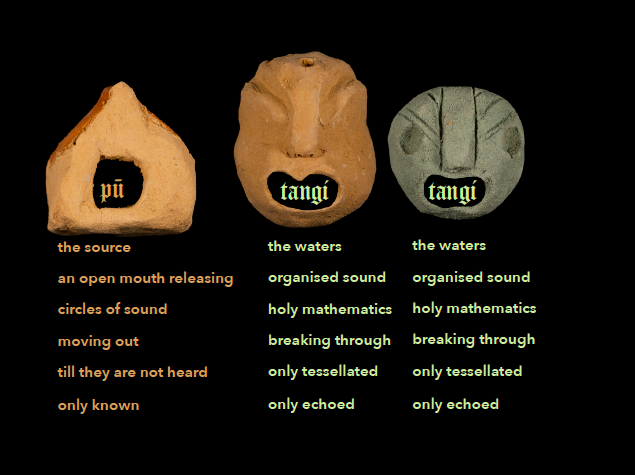
Poet and musician Ruby Solly has an exhibition coming up to help her fund raise to write a book version of her doctoral thesis on the use of taonga pūoro in hauora / health.
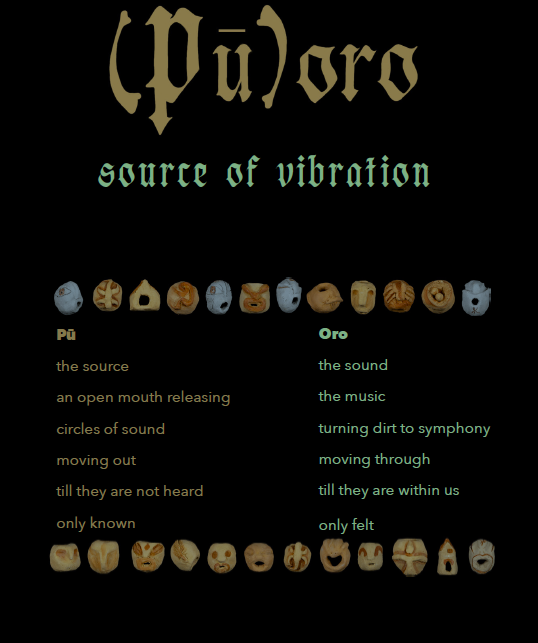
“Pūoro is often referred to as music, but really it is so much more. It is the origins of sound in all its forms, it is the resonation of sound through all things until it can no longer be heard, only felt. It is a continuous mihi oro to the song that began our world. It is so many things intertwining, so many sounds that have the potential to help, to heal, to uplift, and to release. It is a music that weaves together the ‘musical’ and what comes before, the primal melodies and rhythms of our survival as Māori. Our sounds hidden in the music, our reo purified to sound.”
The exhibition website. It includes a free download of the soundtrack which includes all 248 pūtangitangi from the exhibition.
Friday 15th November 10am-4pm Friday 15th November 6:30pm *Opening Night*Saturday 16th November 10am-4pmSunday 17th November 10am-4pm
Ruby Solly (Kāi Tahu, Waitaha, Kāti Māmoe) is a writer, musician and taonga pūoro practitioner living in Pōneke. She has been published in journals such as Landfall, Starling and Sport, among others. In 2020 she released her debut album, Pōneke, which looks at the soundscapes of Wellington’s past, present and future through the use of taonga pūoro, cello, and environmental sounds. She has recently completed a PhD in public health, focusing on the use of taonga pūoro in hauora Māori. Tōku Pāpā (THWUP, 2021) was her first book, and The Artist (THWUP, 2023) her second.
His mouth a small red hearth we huddle around: forest creatures drawn to its light and warmth.
When its suck and flicker at the breast stops we blow cool breath on the soft black coal of his head to make its wet spark dart again.
A scarlet trapdoor with tiny clapper that knocks and knocks at our dreams and enters,
his mouth springs open like the lid of a surprise to loosen translucent birthday balloons of
Ah, ah. I, I.
We stand here and watch them rise; the night crowds at fireworks make of our own mouths a kind of mirror:
Oh. Oh. You.
Emma Neale from Spark, Steele Roberts, 2008
Over the coming months, the Monday Poem spot will include poetry that has stuck to me over time, poems that I’ve loved for all kinds of reasons.
I have a poetry room in my house and a poetry room in my head, both excellent places to go travelling. The room in my head stores poems and collections that have stuck with me, whether it is the subject matter, the craft, musicality, an unfolding and enduring sense of awe and wonder. A visiting poet recently admitted (on the radio) they disliked the word ‘inspire’. I dug my heels in, and decided I like a word that evokes an intake of breath, an outtake of creativity. I guess that is what happens when I read poems I love, that delicious intake of breath and that creative trigger. More than anything, heart is always there.
Emma Neale’s poetry collections have struck multiple chords with me – so am delighted her new collection is to be launched on November 14th. A very happy coincidence indeed. So much to admire and celebrate in Emma’s writing. I am drawn into the exquisite craft, poetic rhythms, acute observations, miniature narratives. Her poems are rich in heart, lithe in movement between the domestic and the imagined, the past and the present, personal threads and political challenges. Love is the key.
I picked ‘Newborn’ to go in Dear Heart: 150 New Zealand Love Poems (2012) because the poem catches a maternal moment so perfectly, so surprisingly. The poem exemplifies Emma’s ability to layer a poem like an artichoke, to offer it to the reader to peal back and delight in each petal, and on each reading, take a slightly different route to reach a state of reading wonder. How I love this poem. This heart. Ah.
Emma Neale is the author of six novels, seven collections of poetry, and a collection of short stories. Her sixth novel, Billy Bird (2016) was short-listed for the Acorn Prize at the Ockham New Zealand Book Awards and long-listed for the Dublin International Literary Award. Emma has a PhD in English Literature from University College, London and has received numerous literary fellowships, residencies and awards, including the Lauris Edmond Memorial Award for a Distinguished Contribution to New Zealand Poetry 2020. Her novel Fosterling (Penguin Random House, 2011) is currently in script development with Sandy Lane Productions, under the title Skin.
Emma’s first collection of short stories, The Pink Jumpsuit (Quentin Wilson Publishing, 2021) was long-listed for the Acorn Prize at the Ockham New Zealand Book Awards. Her short story, ‘Hitch’, was one of the top ten winners in the Fish International Short Story Prize 2023 and her poem ‘A David Austin Rose’ won the Burns Poetry Competition 2023-4. Her flash fiction ‘Drunks’ was shortlisted in the Cambridge Short Story Prize 2024. The mother of two children, Emma lives in Ōtepoti/Dunedin, Aotearoa/New Zealand, where she works as an editor. Her most recent book of poems is Liar, Liar, Lick, Spit (due out from Otago University Press in November 2024).


 NZ Poetry Shelf