
Staring up into the sky my feet
anchor me to the ground so hard
I’m almost drowning, drowning
in air, my hair falling upwards
around my shoulders, I think I’ll hug
my coat closer. I’m standing
on hundreds of blades of grass, and
still there are so many more
untrodden on. Last night, in bed,
you said, “you are the sheet
of linen and I am the threads,” and
I wanted to know what you meant
but you wouldn’t wake up to tell me
and in the morning you didn’t
remember, and I had forgotten
till now when I think, who is
the blades of grass, who is the pasture?
It is awfully cold, and my coat
smells of something unusual.
It almost seems as if it is the stars
smelling, as if there were
an electrical fault in the sky,
and though it is almost too dark
to see I can see the sheep
moving closer, and the stars
falling. I feel like we are all
going to plunge into the sky
at once, the sheep and I,
and I am the sheep and I am
the flock, and you are the pasture
I fall from, the stars and the sky.
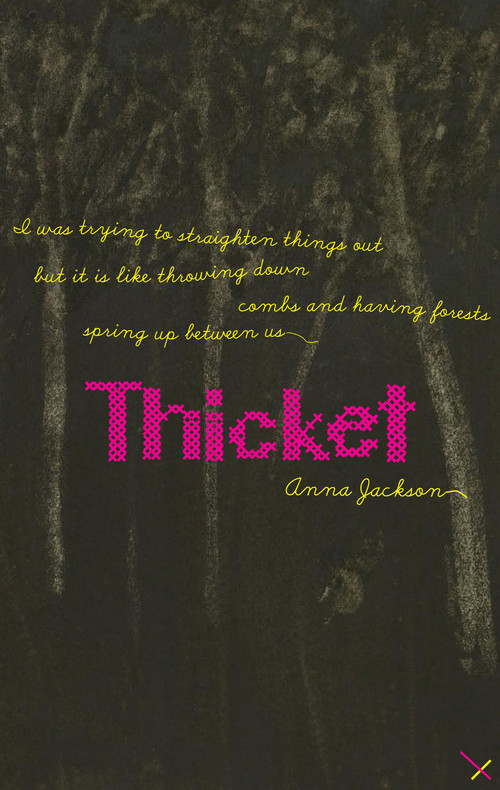
from Thicket, Auckland University Press, 2011
I have been thinking a lot about the place of poetry in global catastrophe, violence, indifference, greed and the incomprehensible leadership in Aotearoa. How and what do we write? Read? Do we need comfort or challenge or both? This week Anna Jackson.
5 Questions
Has the local and global situation affected what or how or when you write poetry?
Yes. It doesn’t feel possible to write. When I would have been writing, I have been going on protest marches. Agnes Callard asked if I would go on protest marches even if I knew it would not be instrumental in bringing about the change that the protest march was demanding, and I answered yes, in the same way I would go to a funeral even if I did not think it would restore the dead to life. But I do think that protest marches can be instrumental, and I do think writing can be instrumental. And, to be honest, there are many marches I didn’t go on, even though I thought that I should. On one of those times, I even found myself writing.
Does place matter to you at the moment? An object, an attachment, a loss, an experience? A sense of home?
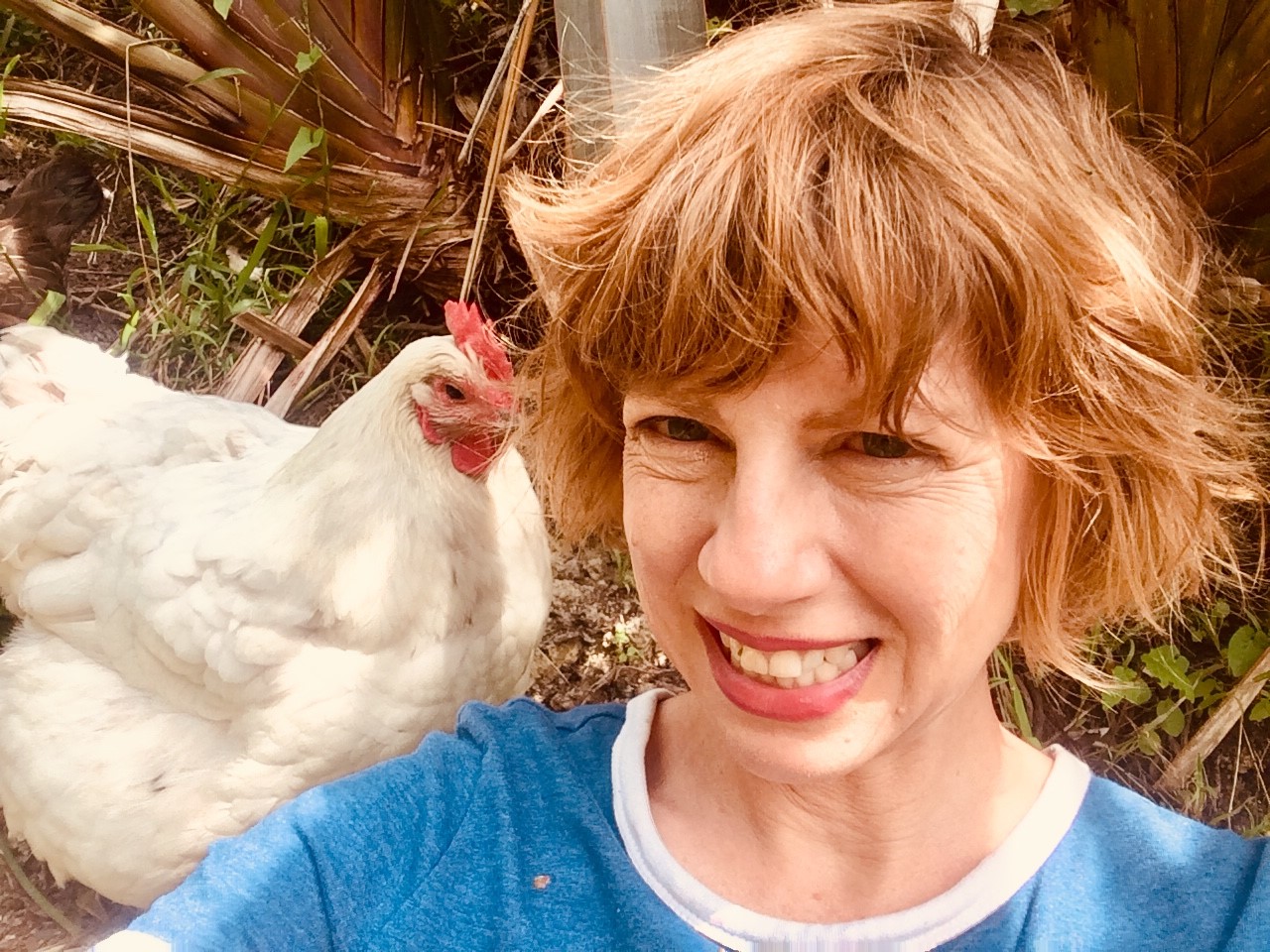
I just want to stay home with the hens. For a while I had no hens and I was free to go anywhere, but now I have hens again.
Are there books or poems that have struck a chord in the past year? That you turn to for comfort or uplift, challenge or distraction.
There are two poems that I have been particularly affected by. One of them, “The Quiet,” by Jorie Graham, I found literally hair-raising – truly, the hairs were standing up on my arms. It seems almost impossible to write about the climate crisis – though equally almost impossible not to – but this poem captured the uncanny horror of it. And then the other poem is Ilya Kaminsky’s “We Lived Happily During the War.” This is also a strange kind of horror, to not be affected by events that are causing others such trauma. This poem doesn’t offer any absolution. I don’t want it to.
What particularly matters to you in your poetry and in the poetry of others, whether using ear, eye, heart, mind – and/or anything ranging from the abstract and the absent to the physical and the present?
I think it is finding a rhythm, and then the feeling comes out of that. It is the rush of “The Quiet,” and the right-justified margins, and it is the quiet of “We Lived Happily During the War.” I don’t know. I don’t feel as if I’ve written a poem unless the rhythm is doing something interesting, and unless it has some kind of emotional effect.
Is there a word or idea, like a talisman, that you hold close at the moment? For me, it is the word connection.
Open.
I love that word too. Resonant, vital, connecting.
Anna Jackson is a New Zealand poet who grew up in Auckland and now lives in Island Bay, Wellington. She has a DPhil from Oxford and is an associate professor in English literature at Victoria University of Wellington.
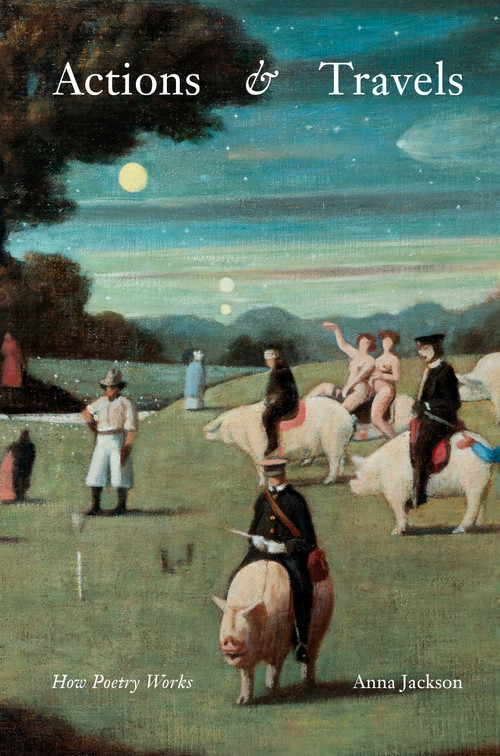
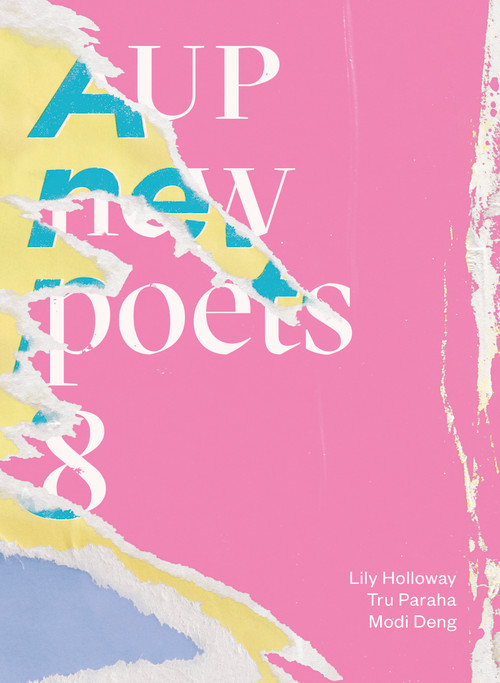
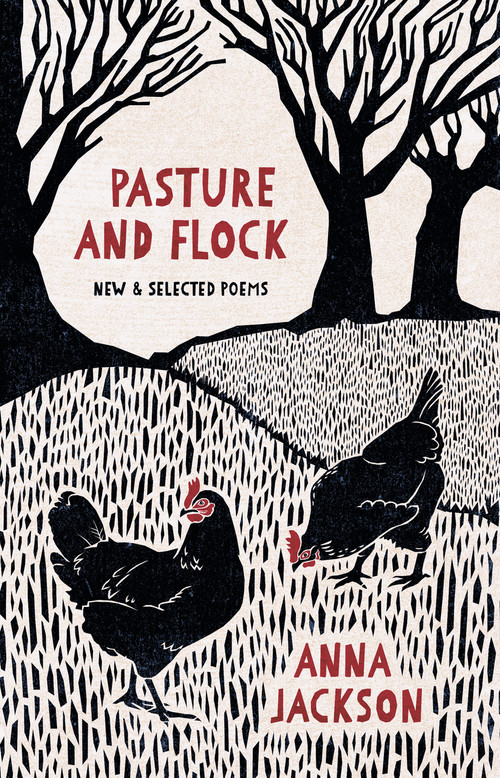
Anna made her poetry debut in AUP New Poets 1 before publishing six collections with Auckland University Press. Her most recent book, Pasture and Flock: New and Selected Poems, gathers work from her previous collections as well as twenty-five new poems. As a scholar, Anna Jackson is the author of Diary Poetics: Form and Style in Writers’ Diaries 1915–1962 (Routledge, 2010) and, with Charles Ferrall, Juvenile Literature and British Society, 1850–1950: The Age of Adolescence (Routledge, 2009). Her volume Actions & Travels: How Poetry Works (AUP, 2022) considers poetry through 100 poems.
Anna’s website
Auckland University Press page
 NZ Poetry Shelf