The Caselberg Trust International Poetry Prize is open for submissions until 5pm on 31 July 2024.
Entries will be judged blind by judge, Alan Roddick. First Prize is $500 (plus one-week stay at the Caselberg house at Broad Bay, Dunedin). Second Prize is $250; and there are up to 5 Highly-Commended awards (no monetary prizes).
The first- and second-placed poems will be published in the November issue of Landfall, and all winning and highly-commended entries will appear on the Caselberg Trust website (copyright remaining with the authors).
This looks absolutely wonderful – what genius, creative curating – will be touching base with this feast of words from my hermit haven. Would love to hear Rachael King and Claire Mabey in conversation. Love the idea of Ōtautahi is Flash, a takeover happening at The Crossing – where people can submit poems, hot takes, short reckons, memories and more. Some stellar poets to watch for Tusiata Avia, Isla Huia, Grace Yee, Tayi Tibble!!!!! Itching to listen to Talia Marshall (Ngāti Kuia, Ngāti Rārua, Rangitāne ō Wairau, Ngāti Takihiku) (Whaea Blue) and Saraid de Silva (Amma). I have barely scratched the surface of delights on offer.
Looks like I am going to have to go on another book buying, reading and blogging spree.
Thanks Ōtautahi – and special thanks to the astute reading eye and heart of programme director, Kiran Dass.
WORD Christchurch Festival 2024 Programme Announcement
A dazzling array of words and performance takeover Ōtautahi Christchurch in August
More than 100 writers, thinkers and performers from New Zealand and around the world will take to the streets, schools and theatres of Ōtautahi Christchurch offering a feast of fresh ideas, music, powerful stories and creative escapes during WORD Christchurch Festival which runs from 27 August to 1 September 2024.
Tickets go on sale at 6pm, Wednesday 3 July, with most priced under $25.
The festival, which offers a heady mix of more than 70 free and ticketed events, is thoughtfully curated to appeal to all ages, for all readers, performance and music lovers, and for anyone with a curious mind and a sense of fun.
WORD programme director Kiran Dass hopes people will venture to see writers and performers they may not have come across before, as well as booking to hear their favourites.
“Some of the great pleasures of festival-going are discovering new voices, being inspired by fresh ideas and broadening your horizons on issues by listening to local and global experts. I’m thrilled by the depth and diversity of this year’s line-up that includes well-known novelists, award-winning song writers and local and international thinkers and storytellers.
“Whether it’s a quiz night, an open-air boogie with popular musicians, or getting up close with one of your best-loved authors, WORD truly has something for everyone. To come to WORD is to be galvanised.”
The festival opens with a celebration of Janet Frame, marking her 100th year to the day by charging five writers to share moments of imagination and courage. Much-discussed and internationally acclaimed theatre work The Savage ColoniserShow comes home to ŌtautahiChristchurch, where Tusiata Avia wrote the book the show is based on; weaving together elements of stand-up comedy, waiata and theatre, Isaac Martyn (Ngāti Tūwharetoa, Te Arawa) explores what it means to reclaim Māoritanga from a Pākehā upbringing in his show He Māori?;WORD is alsoproud to collaborate with Pacific Underground to present a rehearsed reading of Oscar Kightley’s Dawn Raids at Ngā Hau E Wha Marae.
The ever-popular Risky Women is back featuring daring wāhine sharing moments when they took a chance in their personal or professional lives; the candid and unedited event Bad Diaries Salon returns with five brave writers sharing writing from their personal diaries; you’ll need to be quick to secure tickets to Cabinet of Curiosities, where writers share their weird and wonderful obsessions; join award-winning multisensory artist Dr Jo Burzynska in conversation with Dr Erin Harrington in Fragrant Texts – a sniffable exploration of all things booky; join in a debate about whether AI is negatively impacting creativity and the written word; and share nibbles and a drink with renowned New Zealand cook, caterer, entrepreneur and cooking school tutor Tina Duncan as she imparts wisdom from a lifetime working with food.
Dass says there’s still time for Cantabrians to submit their poems, statements, wishes or super short stories for Ōtautahi is Flash, a takeover happening at The Crossing – with hot takes, short reckons, memories and more, writ large by Cantabrians of all ages writing about their city.
“Anything goes and anyone can enter. All selected pieces will be part of a mighty mural brightening up The Crossing from late August all through spring. Authors of selected entries will receive a prize.”
The exploration of powerful personal stories is a feature of this year’s festival with events including new work by lauded New Zealand born British writer and literary critic Catherine Taylor; trailblazing scholar and activist Ngāhuia te Awekōtuku (Te Arawa, Tūhoe, Ngāpuhi, Waikato); former Waitaha Canterbury local body politician Dame Anna Crighton; multi-award-winning Ōtautahi Christchurch-raised poet Grace Yee; Hong Kong-born UK Queer poet Mary Jean Chan; and Wellington writer and curator Megan Dunn.
There’s plenty of fun for tamariki and rangatahi, too. Books come alive in Rolleston for a free family day at Te Ara Ātea featuring Steve Mushin, Melanie Dixon, Michaela Keeble and Tokerau Brown, Raymond McGrath, and Cubbin Theatre. There’s a free Storywalk through the Margaret Mahy playground; and don’t miss Word the Front Line where Ōtautahi’s finest high school poets battle it out for the slam champion crown. Head to the Edmonds Band Rotunda by the Ōtākaro Avon River on a Saturday afternoon for Rangatahi Boogie featuring stories and song from Anika Moa (Ngāpuhi, Te Aupōuri) and Such’n’Such, aka Greg Malcolm and Jenny Ward.
Music always features strongly at WORD which this year offers 2024 Tate Music Prize winner Vera Ellen; a dazzling performance exclusively in the Kāi Tahu dialect from Lyttelton-based vocalist Kommi; and a celebration of Moana-nui-a-kiwa connections with poets Tayi Tibble (Te Whānau ā Apanui, Ngāti Porou), Isla Huia (Te Āti Haunui a-Pāpārangi, Uenuku), and Faith Wilson accompanied bythe infectious grooves of Judah Band in Confluence. There’s Voices of Ōtākaro, a special chamber presentation that celebrates the power of verse set to melody with vocalists and musicians from the University of Canterbury and Christchurch Symphony.
Two of this year’s most talked about writers Talia Marshall (Ngāti Kuia, Ngāti Rārua, Rangitāne ō Wairau, Ngāti Takihiku) (Whaea Blue) and Saraid de Silva (Amma) appear in events throughout the festival talking about their new books, as do best-selling and critically acclaimed writers Tina Makereti(Te Ātiawa, Ngāti Tūwharetoa, Ngāti Rangatahi-Matakore, Pākehā) (The Mires) and Steve Braunias(The Survivors: True Stories of Death and Desperation) and Airana Ngarewa (Ngāti Ruanui, Ngā Rauru, Ngāruahine), author of the runaway best seller The Bone Tree.
WORD celebrates the idea of ‘better together’ in a range of powerhouse pairings. This year’sProgrammers at Large Tayi Tibble and Jordan Tricklebank (Ngāti Maniapoto) bring thoughtful flair to the programme. Tibble appears in the programme alongside US first nations poet Sasha taqwšəblu LaPointe (Upper Skagit and Nooksack Indian) for a discussion about the kinship they experienced touring together and publishing as Indigenous women in the world; Louise and Gareth Ward, who met at police school and now own beloved Havelock North bookshop Wardini Books, discuss their colourful lives and delightful cosy crime novel Bookshop Detectives; award-winning creatives, collaborators and friends, Robyn Malcolmand Emily Perkins discuss what it takes to portray real women on our pages, stages and screens; passionate conservationist and Forest and Bird chief executive Nicola Toki and artist Lily Duval come together to share conversations about some of our most curious creatures along with their book Critters of Aotearoa; and well known authors Claire Mabey (The Raven’s Eye Runaways) and Rachael King (The Grimmelings) join forces to spark young imaginations with their newly minted middle grade books.
Popular RNZ Afternoon’s presenter Jesse Mulligan hosts a Reading Party; irreverent Radio Hauraki Breakfast DJ and author of the self help guide A Life Less PunishingMatt Heath hosts a Dad’s Day Brunch; and you can stretch your legs whilst learning more about the city’s natural world on one of three author-led walks.
And if all this leaves you with big burning questions, head along to Australian scientist and communicator Dr Jen Martin’s session where she’ll use peer reviewed evidence to answer some of our weirdest conundrums.
WORD Festival executive director Steph Walker says she is proud to present a world-class festival right here in Ōtautahi Christchurch.
“Over many years, WORD has developed a unique festival that shares books, stories, performance and community-minded events with our city. With over 20 percent of our programme being free to attend, WORD is for everyone, and we can’t wait to welcome you!”
WORD Christchurch Festival warmly thanks its major funders Christchurch City Council, Creative New Zealand and the Rātā Foundation; principal funders the University of Canterbury and Te Runanga o Ngāi Tahu, its myriad of partners from here and abroad, and all its festival patrons and supporters and supporting publishers.
In memory of Caroline Sinavaiana Gabbard (1946 – May 26, 2024)
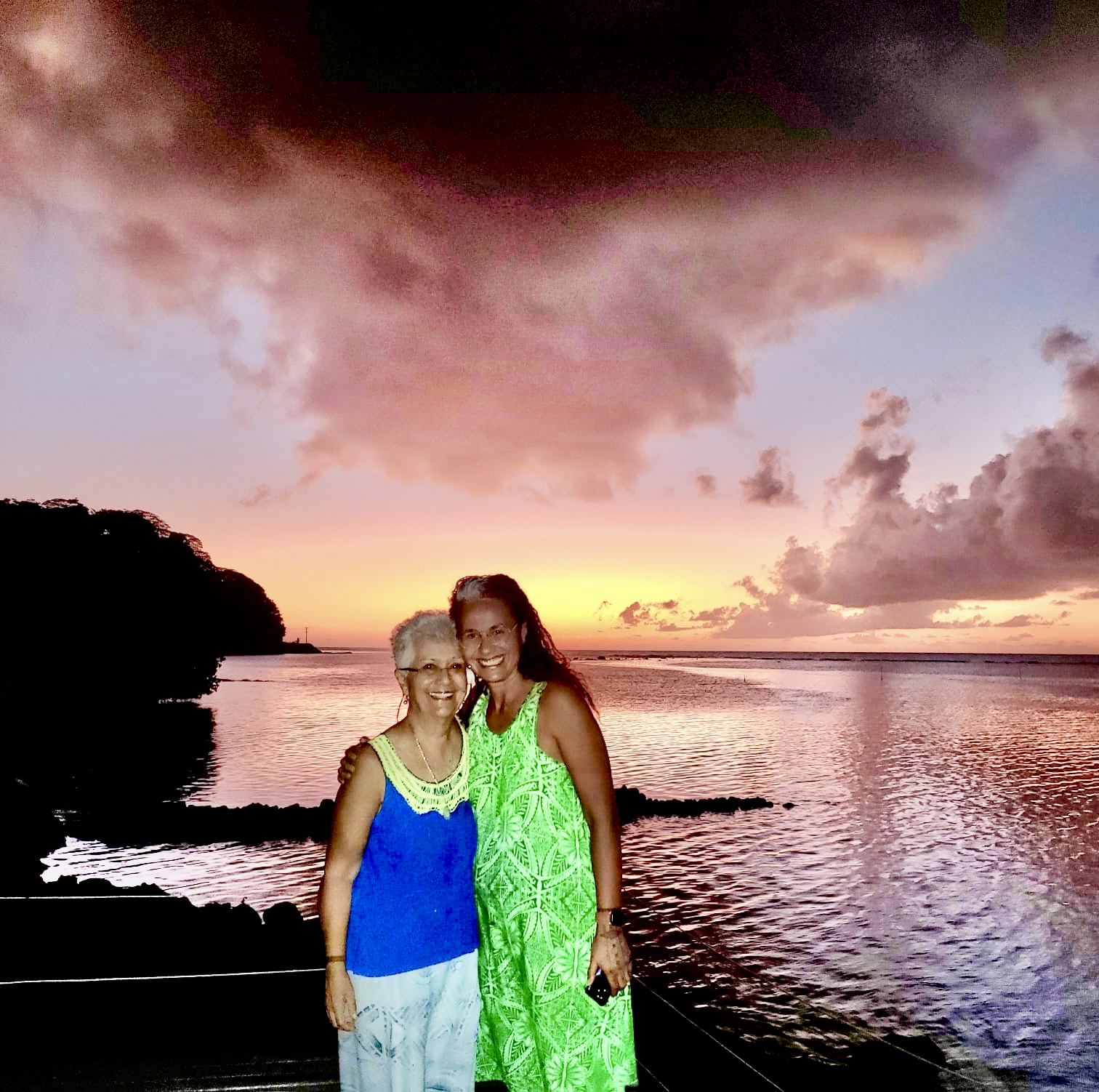
Some of us knew her as Sinavaiana, some of us knew her as Caroline. For all of us she was our Sina.
by Selina Tusitala Marsh
It pains me to speak of the tragic end to my dear friend, beloved poet, academic, writer, and environmentalist Sinavaiana’s remarkable journey. On May 26, 2024, in Samoa, our literary community was shaken to its core when Sinavaiana’s life was cut short at the age of 78. The circumstances surrounding her passing, involving fellow writer Sia Figiel, have left us all grappling with a profound sense of loss and disbelief.
In the face of such tragedy, we turn to what we know best – the power of words to heal, to remember, and to honour. What follows is a small suite of poems crafted by three of my fellow poets, dear friends who knew both Sinavaiana and Sia. These verses serve as a tribute to Caroline’s extraordinary life and the indelible mark she left on those who knew her and her work.
These poems are not just elegies; they are a celebration of Caroline’s spirit, her contributions to Pacific literature, and the lasting impact of her words. They remind us that while Caroline’s physical presence may have been taken from us far too soon, her legacy lives on through her poetry and the lives she touched.
Sinavaiana left an indelible mark on the literary world and the lives of countless students. Born in Utulei village, Tutuila, American Samoa, her journey took her from military bases in the American South to the halls of prestigious universities. Sinavaiana’s passion for English literature blossomed while teaching at Samoana High School in Pago Pago in 1969. Her academic pursuits led her to the University of Hawai’i at Mānoa, where she taught creative writing from 1997 until her retirement in 2016. As the first Samoan to become a full professor in the United States, she paved the way for future generations of Pacific Islander scholars.
Her first book of poetry, Alchemies of Distance (Tinfish Press, 2001) is a taonga in our Pacific literary canon. Its beauty lies in the way Sinavaiana transforms the challenges of diaspora into poetic gold, weaving together personal memories, cultural traditions, and political realities with skill. It stands as a powerful assertion of Pacific literary voice on the global stage. Through her exploration of ‘va’, that sacred space between things, Sinavaiana creates a poetry that bridges cultures, generations, and geographies. Her work resonates with the rhythms of our oral traditions while engaging with contemporary issues, offering a path for Pacific poets to navigate the complexities of our diasporic experiences. Alchemies of Distance is not just a collection of poems; it’s a navigation chart for those of us voyaging between worlds, a celebration of our resilience, and a testament to the transformative power of Pacific storytelling.
Her influence extended beyond academia, earning her recognition in USA Today’s list of influential women from U.S. territories in 2020. Sinavaiana’s legacy lives on through her writings and the many students she mentored, who now carry forward her passion as writers and educators.
Though I could have called on many from the Pacific literary community to submit poems, I gently called on those few who joined me in the hourly vigil for Sinavaiana as news of the tragedy unfolded: ku’ualoha ho’omanawanui, long-time friend and fellow teacher of Pacific Literature, Vilsoni Hereniko, who I first met in 1996 when he hosted an international conference on Pacific Literature from the University of Hawai’i at Manoa, and where I first met Sinavaiana and Sia, and Susan Shultz, who first published Sinavaiana’s work as editor of Tinfish Press and was a long time collaborator with Sinavaiana.
I dedicate this suite of poems to Sinavaiana’s beloved niece, Betty M. Robinson and her son, Clarence.
Selina Tusitala Marsh – two poems
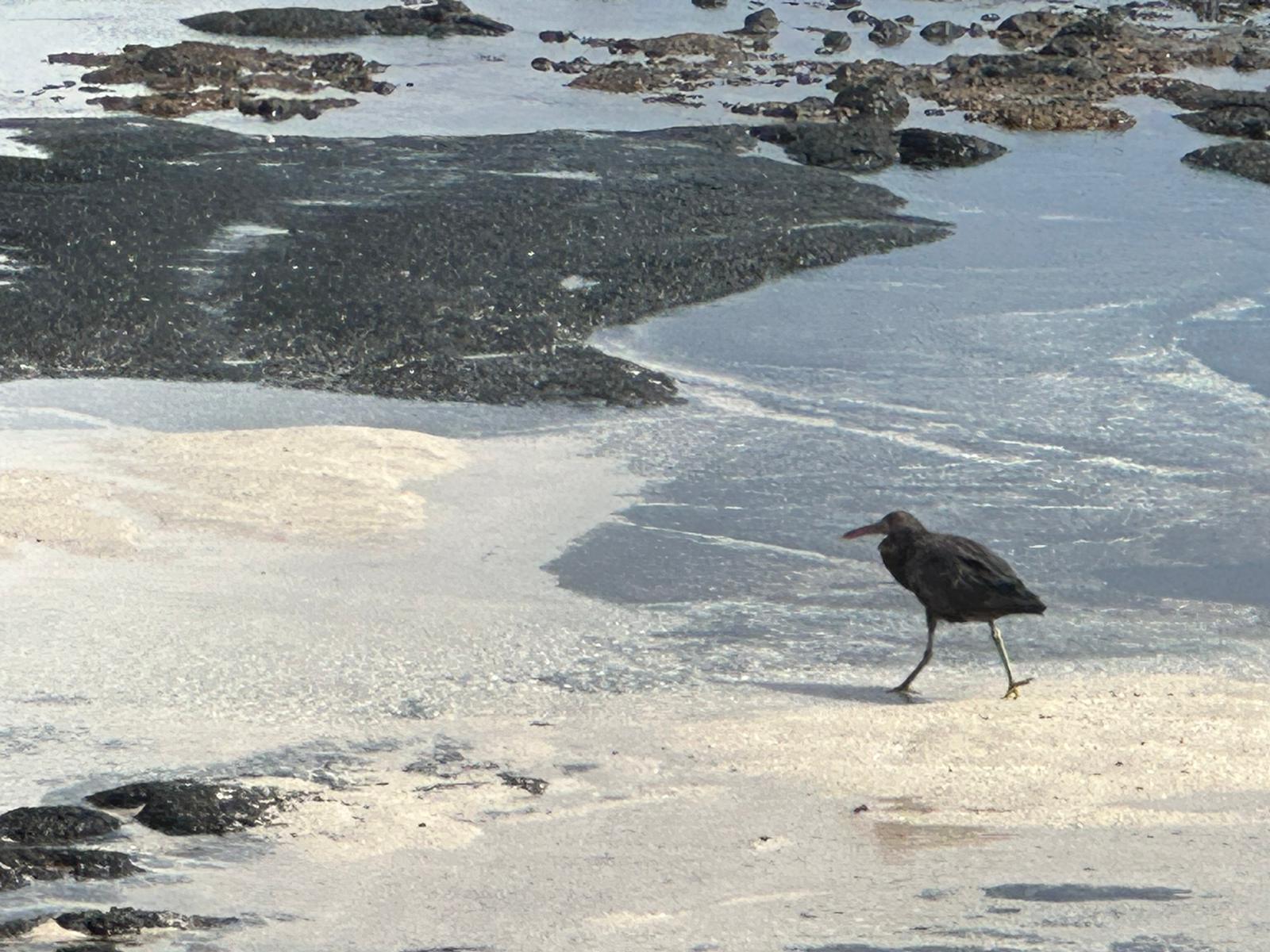
Matu’u, reef heron and Sina’s spirit animal, Savai’i blow holes Samoa, November 2023
Kailua Crystals
I walked into Kailua Crystals, thinking of you,
The stones and essential oils You packed, along with your
Yoga mat, for our work trip To Savai’i, a small apothecary
In your beach fale, and I had A heavy head and you said
‘Come, darling, come’ and rubbed Frankincense on my pulse points
Fingers cooing in soft circles, ‘There, darling, there’ and we sat
By the ocean, sipping niu and crunching Salty potato chips and later walked
Out to the blow holes at Taga i Savai’i and your
Spirit animal, the matu’u, A moon-silver reef heron
Landed on a rock before you Calling ‘See you soon, sister, see you soon.’
Poem for a Murdered Beloved Friend Murdered by a Friend
Comparatively speaking There’s not that many of us In the world
Pacific Women Poets
And now There’s one less
Pacific Woman Poet
This poem Will say What no one has
Our lines Have railed Against Colonialism Capitalism Industrialism Patriarchy
Yet the killer Was among us
One Of Us
This poem could Write lines Tying the crime Scene back to The Devil behind the Devil The evils of every -ism Of oppression The imperialist-political-economic source Of indigenous mental illness
And yet I am left With one image
Her hand Plunging a knife Into the body Of my beloved friend
Again Again Again Again Again Again Again
I do not know How she used the hammer Just that she did
I do not know At what point my friend died Just that she did
I do know That the killer Is haunted In her own mind Forever
That I will never Teach her poems again
That someday I will be Pulled out of this By the lines of the beloved
But for now These are all the lines I have.
You can hear Selina read ‘Poem for a Murdered Beloved Friend Murdered by a Friend’:
kuʻualoha hoʻomanawanui, June 2024 Gather blossoms from the upland forests Fragrant maile kissed by mist Gather foliage from the kula plains Nourished by gentle rains, caressing winds Fecund earth, surrounding soil Bursts with abundance Gather these tokens of aloha Into baskets of love and memories Woven under moons and suns To float on tides and eddies Gather sisters, brothers Gather family, friends The sacred blossoms of ancient chiefs Gather on strands of silver sand The singsong seashore scatters sand crabs Gather together where the paddlers glide On morning tide, horizon silhouette Sunlight morning calls us together— E ala ē Kahiki kū, e ala ē Kahiki moe Mai ka lā hiki a ka hālāwai Gather and weave baskets from memories Gather and weave lei of alofa Weave lei from flowers and foliage Weave love from the fragrant forests Weave lei of sweet memories Shared in laughter, tears Under Sina’s watchful eye Sun shines down on joyous waves Seabirds dance and call above Guide us in our love Gather together, sisters, brothers Gather together, family, friends Weave lei of ‘awapuhi ‘ula, palapalai That dance beyond Moananuiākea’s vast horizon We weave a lei of love for you, dear Sina Alofa atu, alofa mai A hui hou, until we meet again.
He Kanikau no Caroline Sinavaiana kuʻualoha hoʻomanawanui, June 2024
Haʻu haʻu uē wale, haʻu haʻu uē nō Uē ka lani, uē ka ua Tuahine o Mānoa Uē ka lani, uē ka makani Kahaukani o Mānoa Uē ā kiaʻi manu o Mānoa, nā manu o Kū Ua nalo wale, ua lilo loa i ka pō Ua hoʻi ʻoe ma ke ala popolohiwa a Kanaloa Ua lele ʻoe me kou manu ʻaumakua Ua kuʻu ʻoe i ke ʻaukuʻu Ua lele ʻoe i ka lani, i ka pō Ua hoʻi ʻoe me nā kūpuna Nui ke aloha iā ʻoe, e kuʻu hoa Kuʻu kumu aloha nui i noho i ka maluhia loa He kumu i mālama iā mākou, nā haumāna i ka pō weliweli He kumu i hānai iā mākou, nā haumāna He kumu i alofa iā mākou, nā haumāna He hōkū alohilohi loa ʻoe He kuaʻana, he kuahine o ke ala loa ʻimi naʻauo He kuaʻana, he kuahine o ke ala loa moʻolelo o ka Pakipika He kuaʻana, he alakaʻi i ka ʻimi heluhelu kākau He kuaʻana, he alakaʻi i ka Palapala Pasifika He kuaʻana i ka hui malaga Pasifika holoholo maikaʻi He haku mele, he tusi tala, he ipu moʻolelo He wahine mana loa ʻoe, he alakaʻi naʻauao He wahine mana loa ʻoe, e ulana mau loa i nā peʻa o nā vaka He wahine mana loa ʻoe, me ka pihaʻeu He wahine mana loa ʻoe, he alakaʻi i ka maluhia He ʻaukuʻu nō ʻoe, e lele He ʻaukuʻu nō ʻoe, e lele leʻaleʻa He ʻaukuʻu nō ʻoe, e lele loa He ʻaukuʻu nō ʻoe, e kuʻu ʻia i ka lani He ʻaukuʻu nō ʻoe, e kuʻu ʻia i ka honua He ʻaukuʻu nō ʻoe, e kuʻu iā Pūlotu E hui hou nō me Saveasiʻuleo, me Nāfanua E hui hou nō me nā manu kūpuna e alakaʻi mau loa E lele nō ʻoe me nā manulele o ka moana Ka ʻiwa, ka mōlī, ke noio kōhā E hehi i nā ʻale me ke kaʻupu E lele nō ʻoe me nā manulele o ka honua Ka manumea, ka lulu, ka fuia E hoʻopūnana me ka lupe nunu maluhia o ka waonahele E lele nō ʻoe i Kahiki E lele nō ʻoe i Tutuila E lele nō ʻoe i Utulei, kou one hānau E lele a lilo i le vā E lele me ka maluhia E lele nō ʻoe me ke alofa mau loa E hoʻomanaʻo nō ia me ke alofa
Only grief, only tears The heavens weep, the Tuahine (Sister) rain of Mānoa cries The heavens weep, the Kahaukani wind of Mānoa wails The guardian birds of Mānoa, the Manu o Kū weep for you Gone, vanished to the realm of the ancestors Returned there on the sacred dark pathway of Kanaloa You have flown with your bird guardian You have been released by the ʻaukuʻu You have flown to the heavens, to the realm of the ancestors You are reunited with your ancestors You are greatly loved, dear friend My beloved teacher, the one who lived in peace Who cared for us (students) in the time of great disaster A teacher who fed us A teacher who showed us much compassion and concern You are a bright shining star in the heavens An elder sister on the long path of wisdom-seeking An elder sister of the long path of Pasifika knowledge An elder sister, a leader of research and writing An elder sister, a leader of Pasifika literature An elder sister of the really wonderful Pasifika traveling group An exemplary poet, storyteller, historian You are a woman of great mana, an intellectual leader You are a woman of great mana, forever weaving the sails of our vaka You are a woman of great mana and laughter You are a woman of great mana, a leader of peace You are an ʻaukuʻu bird, fly You are an ʻaukuʻu bird, laughing, joyful You are an ʻaukuʻu bird, forever flying free You are an ʻaukuʻu bird released from the sky You are an ʻaukuʻu bird released from the earth You are an ʻaukuʻu bird released to Pūlotu Reunited with Saveasiʻuleo, with Nāfanua Reunited with our bird ancestors who guide us always Fly high with the seabirds who guide our navigators The frigate, the albatross, the noddy tern The albatross who tramples the waves of our great ocean Fly free with the birds of our forests The manumea pigeon, the owl, the Samoan starling Create peaceful sanctuary with the doves of the forest Fly to Kahiki Fly to Tutuila Fly home to your birthland, Utulei Fly, transform, through the alchemies of distance Fly with peace You fly free with much love always You are remembered with much love forever
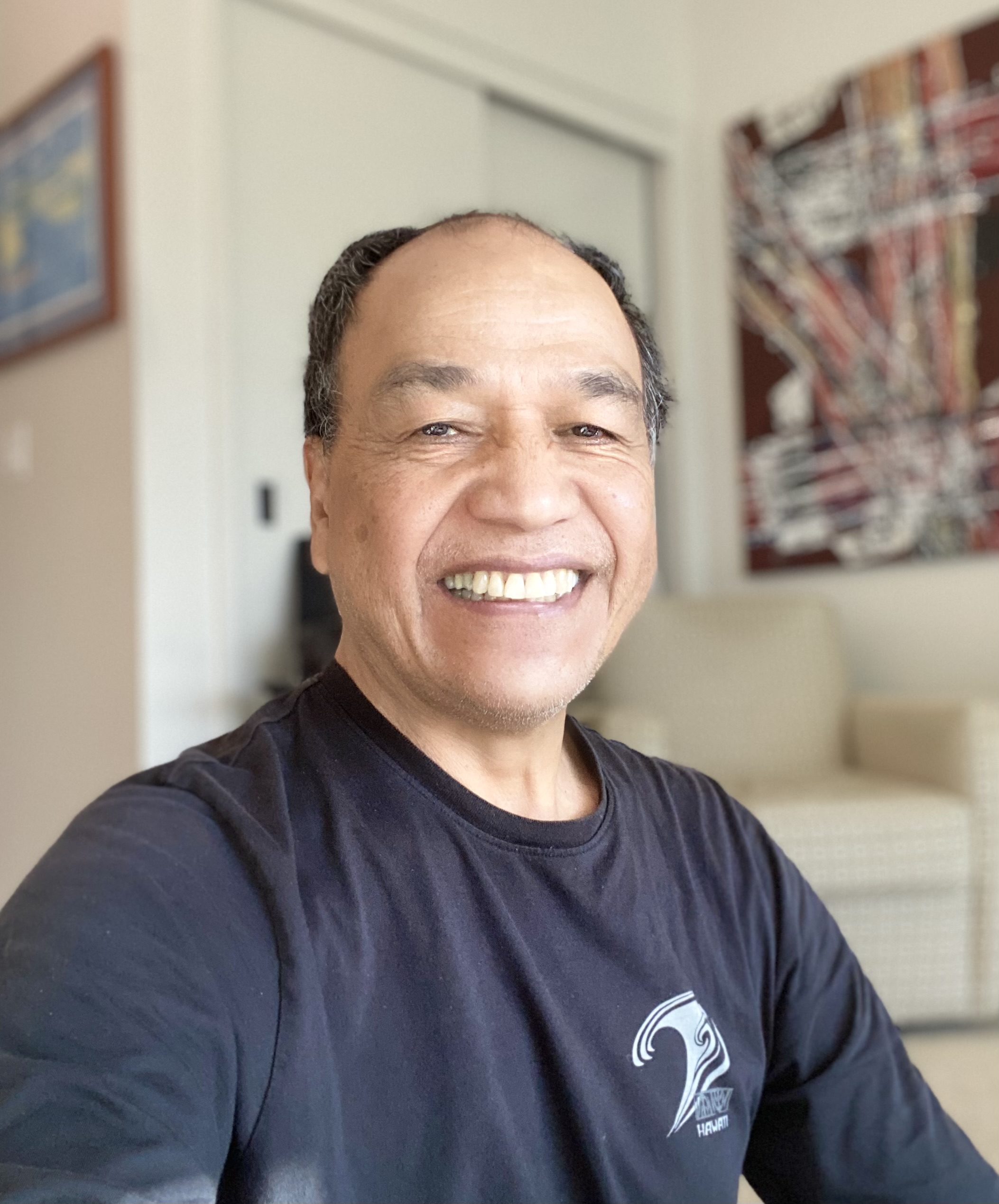
kuʻualoha hoʻomanawanui is a writer, artist, and scholar, from Wailua Homesteads, Kauaʻi. She is a professor of Hawaiian Literature at the University of Hawaiʻi-Mānoa, where she specializes in Hawaiian and Pacific literatures. She was a student of Caroline Sinavaiana, and later colleague and friend. She is an avid aloha ʻāina and active member of the Hawaiʻi Wild Bird Rescue hui.
Vilsoni (Vili) Hereniko – a poem
SINA
When you arrive Call me by my name SINA And I will return
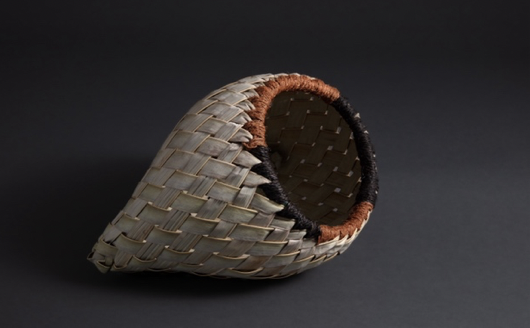
A NIU basket
Woven From the Tree of Life To carry your TEARS
‘SINA’
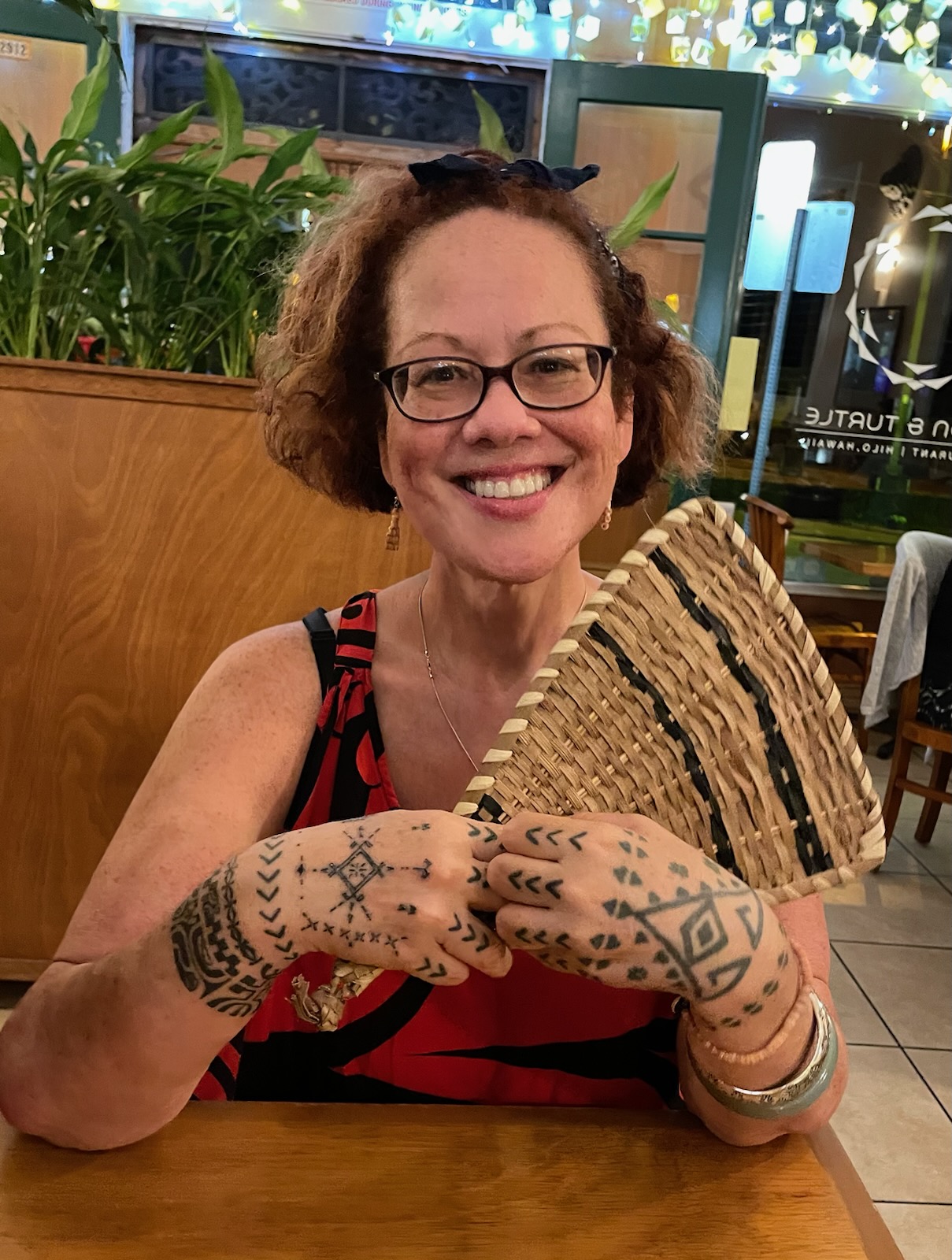
Vilsoni (Vili) Hereniko is a professor, author, scholar, playwright, filmmaker, and fiber artist (weaver of niu baskets, as in the pic.) at the School of Cinematic Arts at the University of Hawai’i at Manoa. Originally from Rotuma, Fiji, he has lived in Hawai’i for more more than thirty years.
Susan Schultz – Three poems
Prelegy: before hearing of Sina’s death
I was with the girl pulled from the rubble covered in dust shaking aftermath of hurricane without wind and she was with me in my bed when half-awake my powerlessness failed to shelter me like a sheet I was powerless to feel powerless afflicted by her terror I reached to hug her and did for the rest of the night hold her body to my body the teacher said each of the tears she cried for her dead son saved thousands of souls she’d never known despite the terror of five hours under broken cement without parent or sibling tears come between her and her broken bed water streaming down stairs at the ballpark waterfalls engorged after a week of rain the sound of it to her was voices or nothing the sound of bones inside her arms clattering something to keep her awake in my bed with husband and cat and dog (were we to let her) a safe puddle to bathe in my daughter’s first bath with me a bucket she turned over her head in a tub overlooking Kathmandu rising in antiquity to meet us as I watched her caring for herself grieving and yet happy the dust ran off her tiny body as she stood embraced by glass and light and dusted air I wish for you a life small girl who shivers un- controlled on my screen pulled from the acid of this war developed like a photograph into the obverse image on my lanai dead palm fronds the better to catch the sound of rain
puzzle
I wake up trying to put you together again. Can’t look at what I can’t imagine / or can / as I pretend to open an instruction manual / It tells my hands how to remake arms, chest, skull, the bright face I can’t see dimmed even in death / a body split open / is not fruit or seed or even mulch / but presence of blood and being whose spirit wanders / Even your killer wants you not to wander though she has her reasons / through bardos, down streets, before altars, bead to bead as mantras repeat spirit recipes for rising / resting / filling / air with yeasty smells, like the smoke on a lawn that rises / as presences / where lehua perk up for a lover built of wood, red pom pom (you’d been a cheerleader!) lit against gnarled ‘Ōhi‘a bark / signal to your being here in the forest for the trees not finding anything / but signs / the rusted ones / MEN WORKING propped against a tree stump / NO TRESPASSING dissolving into rain’s constancy / Your post-it notes re- minded you of Impermanence / No one will applaud you / til death has softened all our hard edges.
Elegy
To make meaning. To thresh it. To go all agricultural with it. To sew meaning. To hem it. To haw it. To mend it when it tears. To mean. To have that ambition. To cut construction paper, put glue on it. To mean, to adhere. As to be connected—nay stuck—together. To mean as to gather. To harvest. To love the chaff as much as the wheat. To be the contractor on such a project. That’s my CV, my claim to an ordinary life, investigative, odd. One day meaning trips, falls, can’t be found at the canyon’s floor. Meaning: you have failed me, leaving a brief presence like smoke. Meaning--we love what we can’t see, Though in this case, we see what we’re told to– Locked in that bathroom with you, dear Sina, I hold your hand, as I did my mother’s, chanting Om mane padme hung as you, and she, died. I couldn’t protect her from the blotching that began at her feet, crawled toward her heart. Sina, could I have saved you from your death? Not knowing where your life went, out window or door, fleeing to the provinces, failing to tell why what happened happened. All redundancy Intended, the the of shock, this this of grieving. Do not enter that small room, my friend says, but think of large things, transcendent ones. of dogs, puppy playing on the lawn for whom meaning is only a head game humans play to pass the time. We pass away, we euphemize, we rationalize, we hurt, we insist we can still talk to you. Let’s aspire again to the beautiful banality of being. Rain drop on roof, distant car, `io that loves open space. A little girl recognizes his call, Pulls flowers from bushes, rests In her father’s arms. Hold to that. Hold to that. Hold her.
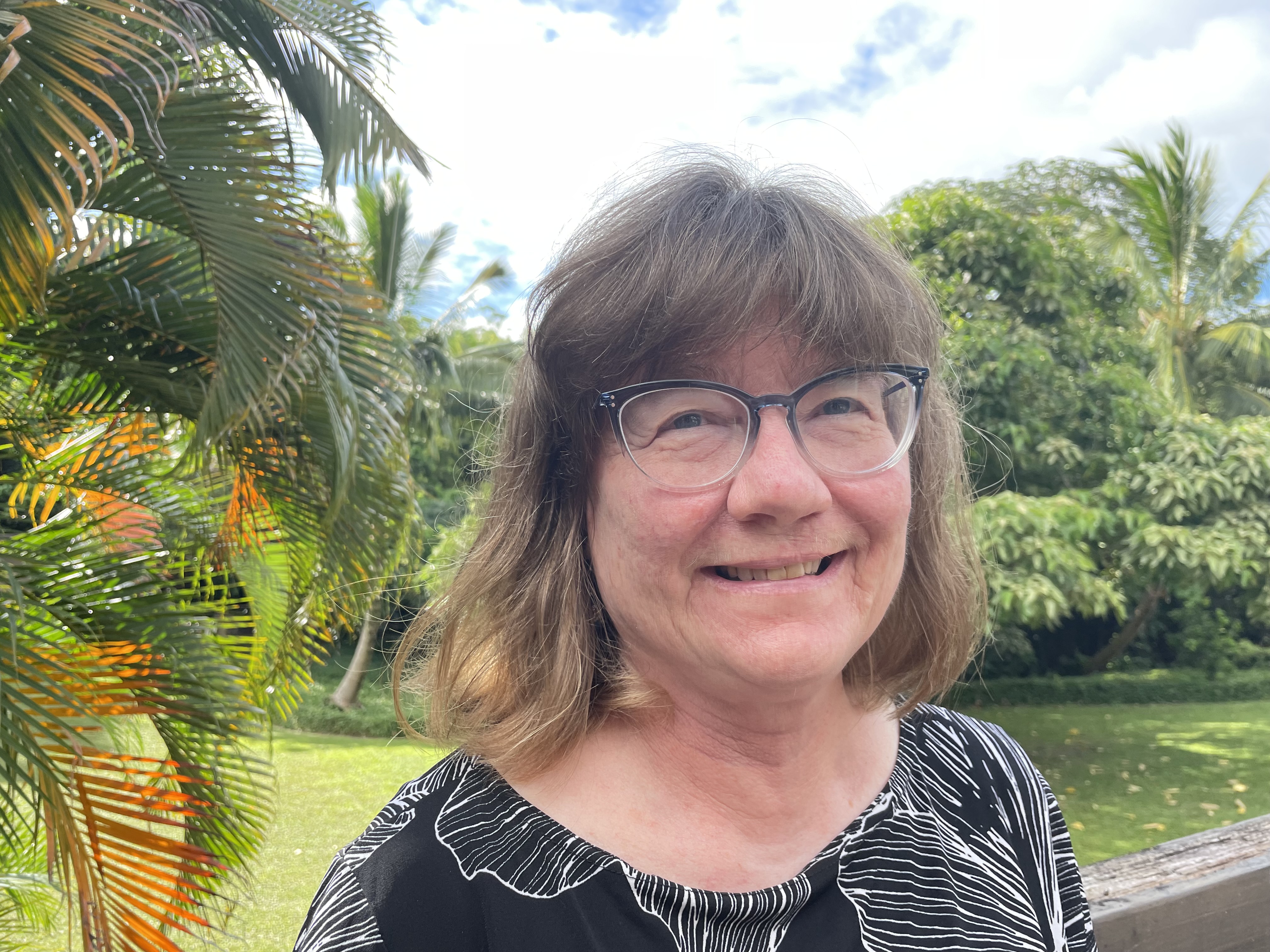
Susan Schultz: Sina was my dear colleague and friend for nearly 30 years in Hawai`i. I was editor/publisher of her book of poems, Alchemies of Distance (2002).
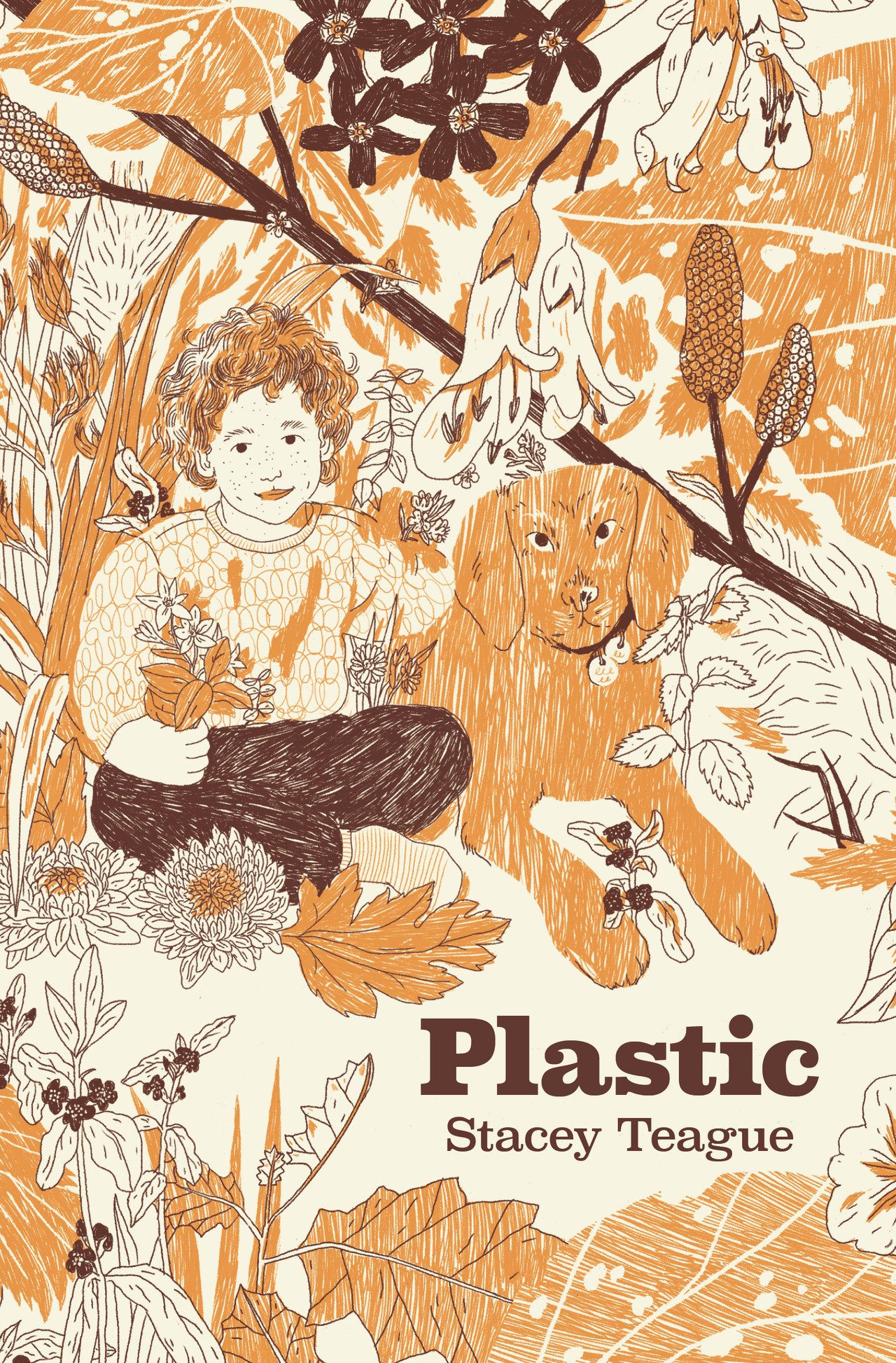
I have been thinking a lot about the place of poetry in global catastrophe and the incomprehensible leadership in Aotearoa. How do we write? Read? Do we need comfort or challenge or both? This week Stacey Teague.
A poem for winter and a poem for summer
The middle
What name do I want to name my life?
It’s almost January.
I go for a walk.
To look for evidence that things are getting better.
And I see it.
In the blackberries that line the path.
Remove the bitterness.
It’s like summer in the city.
I read your poem on the lawn.
We lie down to avoid death/wind.
If you want to use the whole body.
Jump into the sea without fear.
Sleep: Stay in the air.
Inside, my flatmates are very happy.
I try to drown it out with disturbing pop music.
What do I need to summon you into my life.
I once loved a woman who loved me.
But look how it plays out.
I can use my whole body.
You send me a photo of yourself pointing at the moon.
With a big grin and I heart react it.
The sky is still smeared pink in the middle.
london / winter
i escape the wind and light pollution taking my gloves off with my teeth as i descend into marble arch
i can feel the thames moving through me most days
getting off the train i want to kiss the streets of victoria & you
drunk and tired we take the night bus in the wrong direction
middle of the night heavy rain heavy body
i watch my friends dance around a kitchen somewhere in hackney
we ignore the weather stay in bed listening to beyonce on the shortest day of the year
staring out a window with you expecting snow
5 Questions
Has the local and global situation affected what or how or when you write poetry?
There is no part of life that is untouched by what is happening in our local politics, in the genocide in Gaza and all the other atrocities and injustice that we witness daily. We carry it with us. Truth be told I haven’t written a poem for a good while. Though I feel something gathering. Sometimes it is important to let others be heard, to step back and listen for a while.
Does place matter to you at the moment? An object, an attachment, a loss, an experience? A sense of home?
Place is very important to me. People are the most important, but place is a close second. Every day I choose to be where I am. I need to be outside, to be physically present in the world I inhabit. It reminds me I’m alive. Home is in Aotearoa, where my parents and grandparents were born, where my tūpuna walked, and I can’t imagine being anywhere else anymore.
Are there books or poems that have struck a chord in the past year? That you turn to for comfort or uplift, challenge or distraction.
I have enjoyed Birdspeak by Arihia Latham, Saga by Hannah Mettner, Talia by Isla Huia. I’m always going back to The Glass Essay by Anne Carson, forever. I love the Marys for comfort: Mary Oliver and Mary Ruefle (specifically her poem ‘A Morning Person’.
What particularly matters to you in your poetry and in the poetry of others, whether using ear, eye, heart, mind – and/or anything ranging from the abstract and the absent to the physical and the present?
What I tend to cling to in other people’s poetry is a sense of being let in to someone’s inner world, all I need is a glimpse into it. A quick open and shut.
Is there a word or idea, like a talisman, that you hold close at the moment. For me, it is the word connection.
Right now it is ‘healing is not linear’, which is also a reminder to be kind to oneself.
Stacey Teague (Ngāti Maniapoto/Ngāpuhi) is a poet and teacher living in TeWhanganui-a-Tara. She is a publisher and editor at Tender Press. Her second poetry collection Plastic was published by Te Herenga Waka University Press in March 2024.
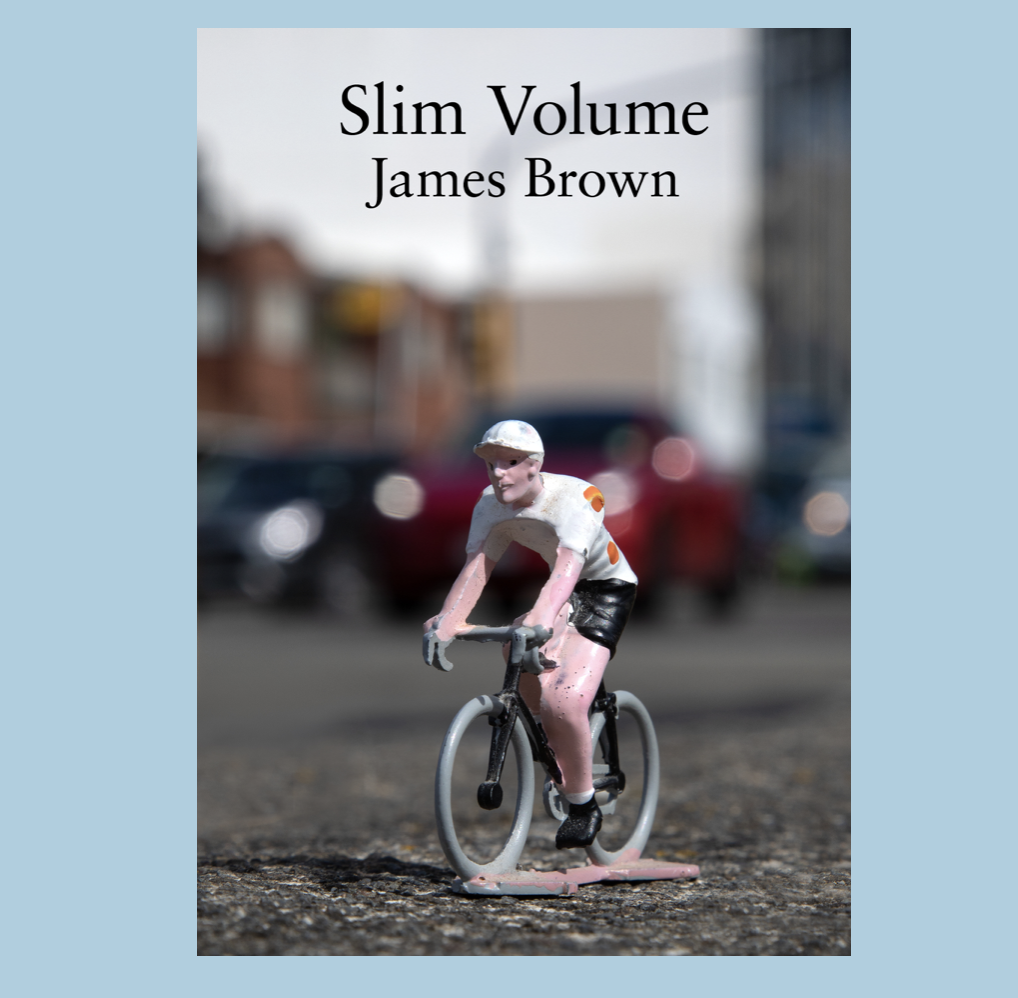
Please join us for the launch of Slim Volume, the new poetry collection by James Brown. Slim Volume will be launched by Nick Ascroft, and there will be short poetry readings by Morgan Bach, Nick Ascroft, Ashleigh Young – and James Brown.
A slim volume of verse, like a bicycle, offers us fresh and joyful and sometimes troubling ways of seeing the world.
James Brown’s eighth collection of poems begins in childhood and moves through education, jobs and the essential unremarkable activities that occupy our lives – before arriving in a post-apocalyptic future, where the nights run late and down to the wire. The poems are ever-alert to the minutiae of power, the thrill of the unexpected, and the shiny potential of an ending. Always compelling, funny, heartening, Brown speaks volumes even when claiming to have little to say.
Maddie, Lou and Poppy stride ahead waist deep on a Wednesday
Ella Booray
Ella Borrie is is a Te Whanganui-a-Tara based poet from Otago. Her writing appears in Mimicry, Swamp, Starling, Stasis Journal, Landfall and Turbine | Kapohau. She is the winner of the 2023 Biggs Family Prize in Poetry.




 NZ Poetry Shelf