
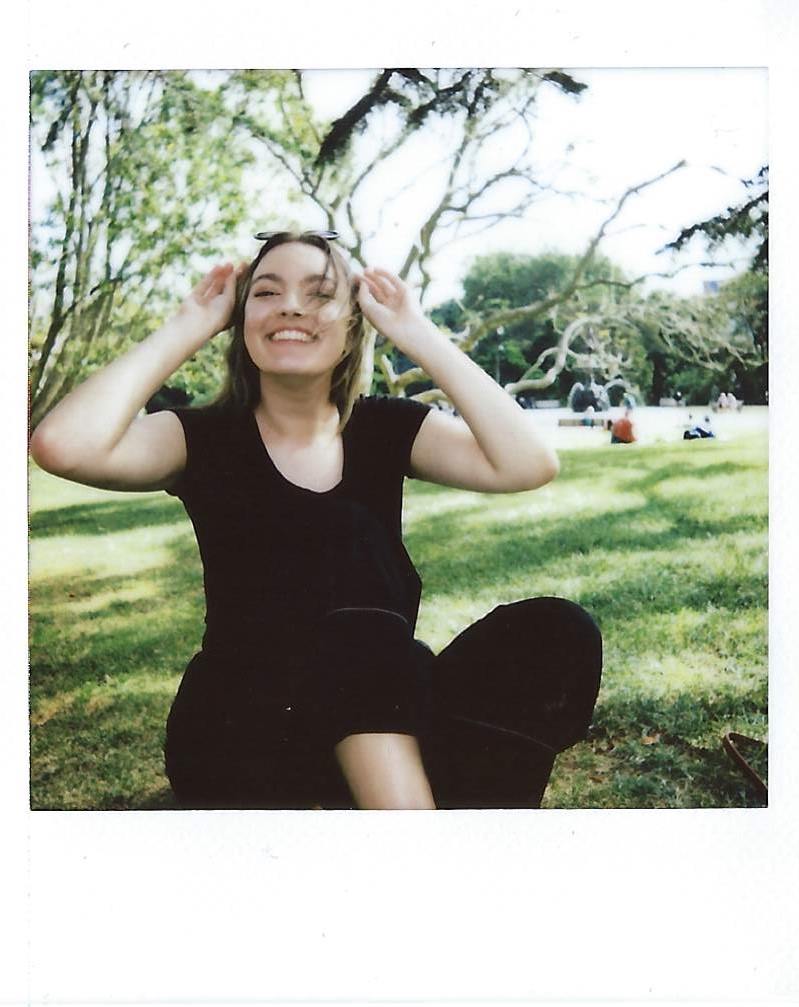
I have been thinking a lot about the place of poetry in global catastrophe and the incomprehensible leadership in Aotearoa. How do we write? Read? Do we need comfort or challenge or both? This week Tate Fountain.
Has the local and global situation affected what or how or when you write poetry?
It has. I haven’t written much poetry at all, not for a while, beyond the usual cataloguing of images and thoughts. Mostly I’ve been wanting to read and listen and get out into the world, and within that, other things have felt more pressing, especially as a result of the ongoing genocidal campaign in Palestine and the political landscape here in Aotearoa.
Part of writing, for me (and for other poets, I think, some of whom have mentioned a similar thing in their own answers), is connecting with the world around me, with the people and environments therein—understanding the relationships we all have to each other, and how we’re informed by those bonds. These past months, there have been other vehicles for connection: rallies; petitions; boycotting companies aligned with widespread and well-documented harm; showing up for friends and the communities most impacted. Writing may well come to join that line-up, but for a while my focus has been on other things, and more drawn to other voices.
Does place matter to you at the moment? An object, an attachment, a loss, an experience? A sense of home?
Place sits, as both concept and reality, at the heart of everything—it’s intertwined with the idea of home, and all those ideas you’ve described, Paula: where your memories are anchored, where you feel least obliged to perform, where you can anticipate the movements of the sun and which plants are likely to be scorched through any given window without even having to check; the place where the people who love you live. That’s what makes all of the extreme colonial violence we’re seeing across the globe, and agendas here in Aotearoa seeking to impinge on the rights of Māori and disrespect this land, so devastating—and so vital to stand up against. Because it’s homes, and histories, and futures, all under threat. And it does matter. Place matters a lot.
I’m also conscious within this question that a lot of my work to date has focused on distance, the gap between rather than the current place/situation. (I mean, not massively surprising—that’s the musical theatre ‘I Want’ song, that’s the actor’s objective, that’s the dramatic impetus for plot, isn’t it?) Right now, though, on a personal level, the laundry list of differences between where I am and where I want to be is the shortest it’s ever been, and the discrepancy is manageable. I’m trying to make the most of being in this place, alongside people and restaurants and beachfront walks and galleries I love. It can, and often does, all change so quickly.
Are there books or poems that have struck a chord in the past year? That you turn to for comfort or uplift, challenge or distraction.
This past summer—seemingly distant now—was defined book-wise for me by all about love by bell hooks and Just Kids by Patti Smith. I feel like I was doing a lot of catching up on foundational texts. The former ended up covered in underlines and annotations and the latter was absolutely the kind of thing I’d have pastiched with heart-swelling, earnest naïveté had I read it as a young teenager (hello, The Bell Jar).
In terms of poetry, though, I’ve been reading a lot of Hala Alyan’s work; her poetry is so stunning, full of sensory detail and beautiful cadences. There’s a rhythm and colour to it that just hits me every time. We’ve also published two issues of Starling in the past year, plus finishing up the reading period and selection for Issue 18, which has meant proximity to lots of work that I’m very excited, touched, and inspired by. A great perk of editing!
What particularly matters to you in your poetry and in the poetry of others, whether using ear, eye, heart, mind – and/or anything ranging from the abstract and the absent to the physical and the present?
I want something that feels truthful. Something that feels free from affect and posture; something with a real, solid core. This can be in the voice of the poem, in the tone, in the subject, the formatting, all of it. You can be as verbose as you want, as eclectic—you can make a point of that—so long as it feels, to read it, like what you’ve written matters to you.
On a technical level, I love an adroit call back, and the circularity of that; I think it’s very clean and evidence of craft. I’m also really compelled by a closing line that takes you out at the knees. Sometimes that’s a matter of sticking the landing, but sometimes it can be about the jolt of—oh. That’s not what I was expecting. And yet of course that’s where we’ve ended up. Almost being left hanging on the last step, or with the rug pulled underfoot, the intention indisputable.
I’m also a sucker for a visual swing, provided that it heightens the work. Again, it’s that intent, that sense that both what you’re expressing and how you’re expressing it are important to you. And, apparently, based on some recent curatorial conversations, I do quite like a good swear word! I think that’s to do with getting to the point.
Is there a word or idea, like a talisman, that you hold close at the moment? For me, it is the word connection.
For me, it genuinely is always ‘love’.
Tate Fountain (she/her) is a writer, producer, performer, and literary editor based in Tāmaki Makaurau. She has worked for various arts and cultural festivals in Aotearoa, is the current Editorial Committee Lead for Starling, and in 2022 published her poetry collection, Short Films, with Tender Press.

 NZ Poetry Shelf