A GOWN IS A GLACIER, RECEDING, Nina Mingya Powles, handbound chapbook, 2024
A gown can be a peony
a gown can be a kelp forest
a gown can hold vast quantities of water
from A GOWN IS A GLACIER, RECEDING
I have Nina’s zine playlist on as I write this, having had boygenius and Phoebe Bridgers albums on replay this past week. If you go to Nina’s website you will find playlists she has created for her essay and poetry collections.
I am reading Nina’s new chapbook as though it is a gown, a glacier receding, following the top thread of lines, eyes dropping to the hem, the second narrow thread at the bottom of the page, stitched between place and fabric, ‘the cotton poplin of my dress / the changing colour of an island in the harbour’, caught in the texture and tissue of the endless possibilities of gown, ‘a gown can trace an outline of a field from one’s childhood’
to the loose threads, ‘the white scholar’s dream to touch the distant place / with his own hands’ to the the sharp needle, ‘”80% of apparel is made by young women / between the ages of 18 and 24 earning under the poverty line”‘, to
‘a departure of Said’s theory of orientalism’, stalling on pleat when ‘a pleat is a sentence written by hand on folded paper’, and there I am, pleated and stitched and folded within a gown of my own making
on the occasion of reading this exquisite chapbook, sweet sharp shine falling from museum archive to faultline to documentary to stretched jeans to grandmother stories to secondhand fabric to Sally Wen Mao’s book The Kingdom of Surfaces that responds to ‘China though the looking Glass exhibition at the Met in NYC in 2015 and the documentary The First Monday in May (2016) that chronicled its making and the accompanying Met Gala.
‘I wash the dress by hand and let it become waves, I hang it to dry by the window and touch the sea through the fabric.’
Guo Pei: Fashion, Art, Fantasy 郭培 :时装之幻梦 “In this Aotearoa New Zealand exclusive exhibition, experience the extravagant, breath-taking fashions of globally renowned Chinese designer Guo Pei. Drawing on influences from around the world and incorporating extraordinary fabrics and bejewelled embroidery, Guo Pei’s striking ensembles of clothing, shoes and jewellery are truly wearable works of art.” Auckand Art Gallery Toi o Tāmariki
Nina Mingya Powles is a poet and writer from Aotearoa New Zealand, based in the UK. Her debut poetry collection, Magnolia 木蘭, was shortlisted for the Forward Prize for Best First Collection and was a finalist in the Ockham New Zealand Book Awards. She is also the author of several poetry pamphlets and zines. In 2018 she was one of three winners of the Women Poets Prize, and in 2019 won the inaugural Nan Shepherd Prize. Her resulting book of essays Small Bodies of Water was published in 2021. She has also published a short food memoir, Tiny Moons (2020). Nina is a pamphlet selector for the Poetry Book Society and is on the editorial committee of Starling magazine.
Note: I spotted a copy of Nina’s chapbook in a photograph of the Unity Books poetry table in Wellington. I see they still have one in stock.
For a while the landlady kept a zebra in the kitchen and this zebra was always there when we came down for breakfast, most often standing with its rump to the fire, no doubt dreaming of the lost lands of the savannah and though none of the neighbours believed in the zebra, saying it was an optical illusion, that all changed when bald patches appeared in their lawns, the trampled grass flecked with zebra spittle. It was unnerving to know there was a zebra out there the neighbours said, pulling their dressing gowns tighter around their waists. Ah, so, said the landlady, we must embrace the changing order, an order I might add that has nothing to do with the fires. At that some neighbours crouched, to inspect the ground for hoof prints. Others turned their thoughts to the striped pyjamas they’d seen on sale at the mall. The sun rose, hotter than ever.
Frankie McMillan
Frankie McMillan is a poet and short fiction writer. In 2016 her collection, My Mother and the Hungarians and other small fictions(Canterbury University Press) was long-listed for the Ockham New Zealand Book Awards. In 2019 The Father of Octopus Wrestling and other small fictions ( CUP) was listed by Spinoff as one of the ten best New Zealand fiction books of 2019. In the same year it was shortlisted for the NZSA Heritage awards.
In 2013 and 2015 she was the winner of the New Zealand Flash Fiction Day competition. She has won numerous awards and creative writing residencies including the Ursula Bethell residency in Creative Writing at the University of Canterbury (2014) the Michael King writing residency at the University of Auckland ( 2017) and the NZSA Peter and Dianne Beatson Fellowship (2019). Her latest book, The Wandering Nature of Us Girls ( CUP) was published in 2022.
The Caselberg Trust will soon be calling for entries for the 2024 Caselberg Trust International Poetry Competition. Now in its 14th year, the Trust is delighted to announce that Dunedin’s finest book shop – the University Book Shop is supporting the poetry prize again this year, and will also host our awards night to coincide with the publication of Landfall 248 Spring 2024. Thank you to everyone at the University Book Shop for your ongoing support.
The competition opens Saturday 1 June and closes on Wednesday 31 July 2024. Entries are judged blind. First Prize is $500 (plus one-week stay at the Caselberg house at Broad Bay, Dunedin). Second Prize is $250; and there are up to 5 Highly-Commended awards (no monetary prizes).
The first- and second-placed poems will be published in the November issue of Landfall, and all winning and highly-commended entries will appear on the Caselberg Trust website (copyright remaining with the authors).
Performance, David Coventry, Te Herenga Waka University Press, 2024
Please join us to celebrate the launch of Performance, the new novel by David Coventry, to be launched by Tracey Slaughter.
Thursday June 13 6pm Unity Books 57 Willis Street, Wellington. View more info here
All welcome! Drinks and refreshments provided.
For Coventry, ME radically overturns the rules of time, thought and embodiment – an experience which has shaped the writing of this book. Through an illuminating blend of life transcription and deep imaginative projection, he shows how placing fiction into the stories of our damaged lives can remind us of who we are and who we might have been, even when so much of us has been taken away by illness.
From a mountaineering disaster in Kaikōura to a literary encounter in Austria, a country mansion to a volcanic archipelago, this novel is a strikingly vivid, at times disorienting series of journeys, stopovers and emergencies that take in the world, one in which Coventry is often an outsider, even when at home in Wellington. With purposeful unreliability and flashes of humour amid pain and searching, Performance takes us into a space where ‘reading’ itself fails as a description of how we meet the text. This is a generous, unforgettable vista of life within illness.
Hopurangi Songcatcher, Robert Sullivan, Auckland University Press, 2024
Auckland University Press and Scorpio Books invite you to celebrate the launch of Robert Sullivan‘s new poetry collection Hopurangi—Songcatcher. Inspired by the cyclical energies of the Maramataka, these poems see the poet re-finding himself and his world – in the mātauranga of his kuia from the Ngāti Hau and Ngāti Kaharau hapū of Ngāpuhi; in his mother’s stories from his Ngāti Manu hapū at Kāretu; in the singing and storytelling at Puketeraki Marae, home of his father’s people of Kāti Huirapa, Kāti Māmoe, Waitaha and Kāi Tahu Whānui in Te Tai o Āraiteuru; and in the fellowship of friends on Facebook.
All welcome, light refreshments provided. Arrive from 5.30pm for a 6pm start.
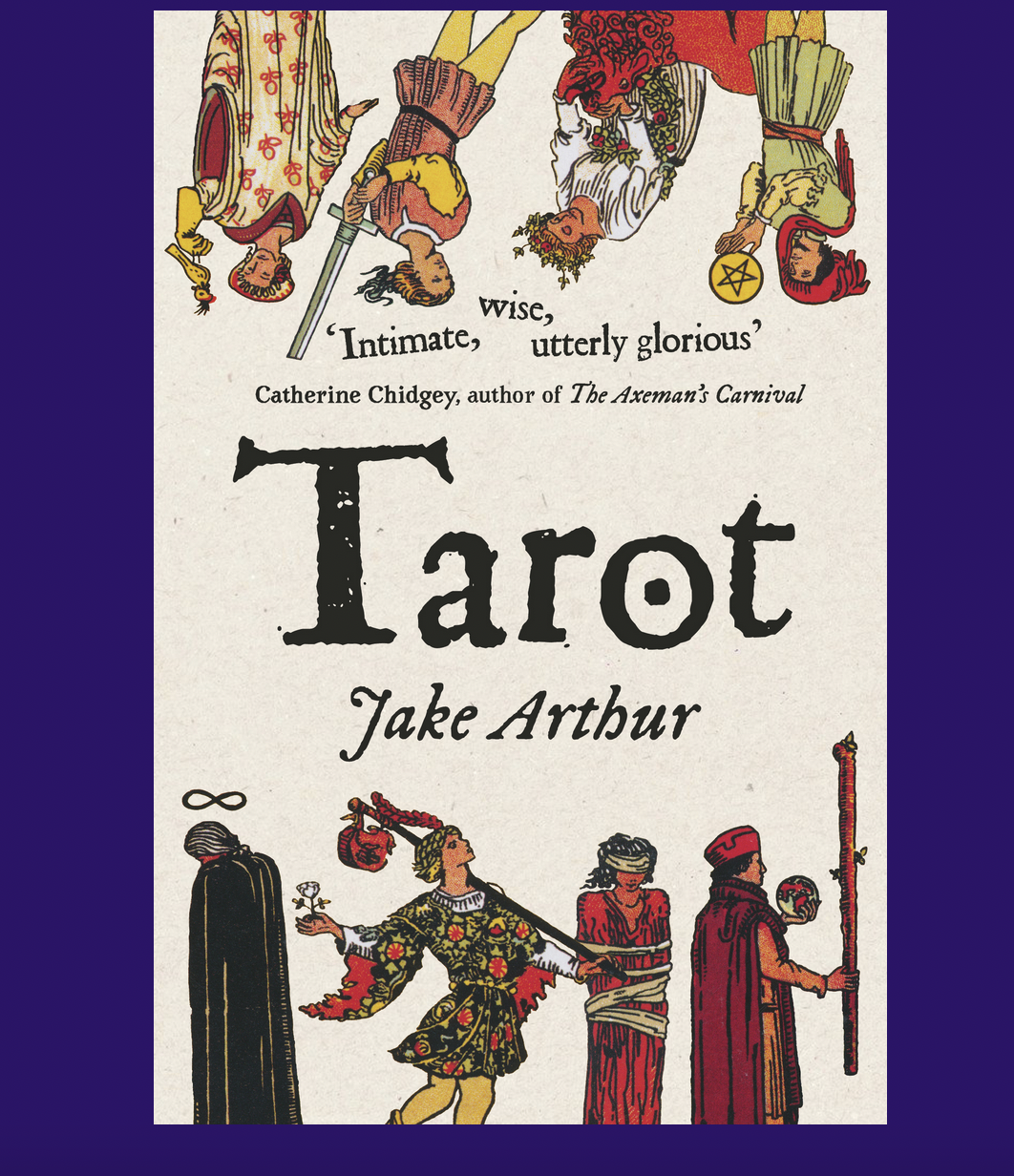
Tarot, Jake Arthur, Te Herenga Waka University Press, 2024
Join us on the eve of the solstice to celebrate Tarot, a new poetry collection by Jake Arthur.
Thursday June 20 6pm Moon Bar 167 Riddiford Street, Newtown, Wellington View more info here
All welcome!
Here are the cards. Put your hand on them, Close your eyes. You don’t want to? But you are blind with them open.
Tarot, Jake Arthur’s beguiling second poetry collection, opens with a tarot reader coaxing us into a reading over a cup of tea. And in a rush of vivid scenes and impressions, we begin to imagine episodes from different lives – a woman tries to train a robin; parents anxiously attend a teacher–parent interview; a man is cast overboard and wonders if he will ever be found. Each card prompts a new character to mull over their uncertainties, hopes, obstacles and joys.
Loosely inspired by the illustrations of the famous 1909 Rider-Waite tarot deck, with its riotous depictions of magicians, occultists, lovers, fools and angels, these poems have us grappling our way towards a clear path.
Poetry Shelf is taking a short nap for the coming week. After a tough few months navigating a stretched health system, it feels like a mountain has lifted. But sometimes when a mountain lifts you get a smash of tiredness. This is a long slow recovery road. No change there. Today I am feeling for everyone who is struggling to cope with health challenges, overdue bills, overwork and low pay, racism, homophobia, concern about nature and the state of our planet, war and its inhumane effects upon innocent people.
I love furnishing Poetry Shelf, establishing connections, spotlighting new books, showcasing authors, ideas, writing of all genres, coming up with new series. I know that more than anything, in these turbulent times, whether personal, local or global, we need to find ways to tend and build our daily joy, our self comfort, and to reach out to the person standing next to us. Poetry Shelf, for me, is solace, diversion, inspiration, heart. And it only works because you are part of it.
Poetry Lane
It leads down to the river where you can sit all day contemplating the slow walk home.
‘I just want my old life back,’ you said one evening, already fluent in the secret grammar of grief.
Out there, the sea wrinkles and slides; a kererū wobbles in the cabbage tree; clouds pile up; leaves catch fire in autumn light.
In here, the music and the books distract; friends serve coffee and sympathy; stray lines gather coincidence.
Meet somebody; complete some task; fill the unforgiving minute etc This warm hand reaches for yours.
‘I just want my old life back,’ you said one evening, already fluent in the secret grammar of grief.
Harry Ricketts
Harry Ricketts lives in Te Whanganui-a-Tara/Wellington. He has published around 30 books. His memoir First Things has just appeared from Te Herenga Waka Press, and a new collection of poems Bonfires on the Ice is due out from the same press next year.
an alchemy of distance: your absence, sisters, stirs longing your telephone talk/ raking embers from the muses’s fire. the spirit rises to the task, & I from the couch/ awake now to take up the story where the last daughter left off/ giving voice to the silence/ inside green mountains looming/ from a warm sea & voice/ to the insides of calderas/ cooled volcano’s tilted cup half-sunken to carve harbor from expanse of ocean
Caroline Sinavaiana-Gabbard, from ‘soiree’ in Alchemy of Distance, Tinfish Press, 2002
As things tip and slide and the gap between the moneyed class and the disenfranchised widens, catastrophic wars continue to rage, our nurses and doctors are stretched to breaking, our founding treaty is under heartbreaking threat, the wellbeing of everyone is hijacked into the wellbeing of the elite ….
….. furnishing a hub for local writing, books and authors, with love and celebration, is so important. This is the imperative of Poetry Shelf.
A highlight: a poet whose debut collection I adore, Isla Huia, answered my ‘5 Questions’, and I was moved by her responses. So open and honest and thoughtful. So resonant.
“For my own writing, I aim more for heart, mind and wairua than ear or eye. I want my writing to physically move me back to the place, circumstance or perspective I was in when I wrote it. I want it to feel entirely tika, and raw, and I want to understand myself better for having written it. Sometimes, that doesn’t translate onto the page, or feel palatable or decipherable to an outside audience; but it’s always the place I write from, regardless. How my readers interact with my work is secondary to whether or not I feel like I am entirely, uncompromisingly myself, within it.” Isla Huia
A highlight: I spent much of the last few weeks reading my way through Vincent O’Sullivan’s poetry collections, and again, was moved and boosted by his writing. Various people selected one of Vincent’s poems that has touched them and wrote a few comments for my tribute post.
Today my heart goes out to all the friends, whanau, academics and writers who are mourning the death of Dr Caroline Sinavaiana-Gabbard, acclaimed poet, retired professor, environmentalist, historian, in tragic circumstances in Apia. She became a professor of creative writing and Pacific literature at the University of Hawaiʻi at Mānoa. In 2002, she published her collection of poetry, Alchemies of Distance and in August 2020, she was named by USA Today on its list of influential women from US territories. Selina Tusitala Marsh has written a piece and a poem for her beloved friend on The Academy of New Zealand Literature. You can read the piece and poem here.
“Sinavaiana fearlessly confronted the painful legacies of colonialism and diaspora that have shaped our communities. Her poetry wove together deeply personal reflections with sharply political messages, inspiring us to find courage and resilience in the face of adversity. With every line, she affirmed the beauty, strength and mana of our Samoan heritage.
‘Though we mourn Sinavaiana’s passing as a profound loss, her spirit and impact live on through the many lives she touched. She reminded us that we all have a voice to stand up for our beliefs, speak truth to power, and work towards a more just, equitable future for Pacific peoples everywhere.”
Community feels so important at the moment, and yes we must question and challenge our current government, but it is also vital to connect through self and mutual care. We need, more than ever, to cherish the daily miracles, the good in the world, to be kind to ourselves, and to say ‘no’ as often as we need to.
Friday: A Vincent O’Sullivan gathering, a suite of poems with comments – A reading to launchStill Is, by Vincent O’Sullivan, THWUP
A musing and a poem
Attention spans. I read an article in The New Yorker this week on our shrinking attention spans, our addiction to multi-tasking. It got me musing on rhythms of haste, on sound bites and headline snatching, on opting for playlists over albums. On how I keep questioning my penchant to post longer gatherings on the blog. To write a review of a book and add in an audio and a conversation with the poet. To create a gathering of voices for weekend sojourns. To offer poetry as a place to slow linger, accumulate ideas, feelings, sideweavings.
Not that I am not drawn to the snapshot. Heck! There was so much love for my couplet feature, by both poets and readers, I am working on a sequel.
I am also slow-pace working on a children’s book feature at the moment, and I am thinking a lot about working with children, sparking and holding their attention, and how our books, stories, poetry, can open vital portals on themselves and the world, whether imagined or actual. And how my primary aim as teacher and children’s author is to get the child to fall in love with learning, to want to walk over the threshold of the classroom, to itch to pick up a book and read, to hold a pen and write, to open mouths and speak or sing. In both sweet short snaps and in longer discovery-unfoldings.
This week, I had my specialist checkup at hospital, and we were early so had a coffee in the foyer. As we waited, a bloke picked up his guitar and sang a waiata; people joined in, people stopped in their tracks and sang. Faces glowed warm. It was a gift and I am still feel warmth from it.
Hospital
A dude guitar-strumming, everyone singing sweet aroha in the hospital foyer, hands on hearts, and it was the shuffle runner running into the wind, the gull atop the motorway lamp post eyeing the slow traffic crawl, the fickle flash of blue sky, the news bulletin’s dark clouds, the poster asking us to mask up but not a mask to be seen, the ‘no RAT tests needed anymore’, everyone with back stories in their pockets and noxious nettles stinging their eyes, the oat milk latte hitting the spot, the bloke on the radio telling me Louis Braille invented his system at the age of fifteen, and I am on the hospital bench listing ways to travel from A to Z, as happy as Lucy and Larry, the barista swaying to the waiata beat.



 NZ Poetry Shelf