Monthly Archives: March 2023

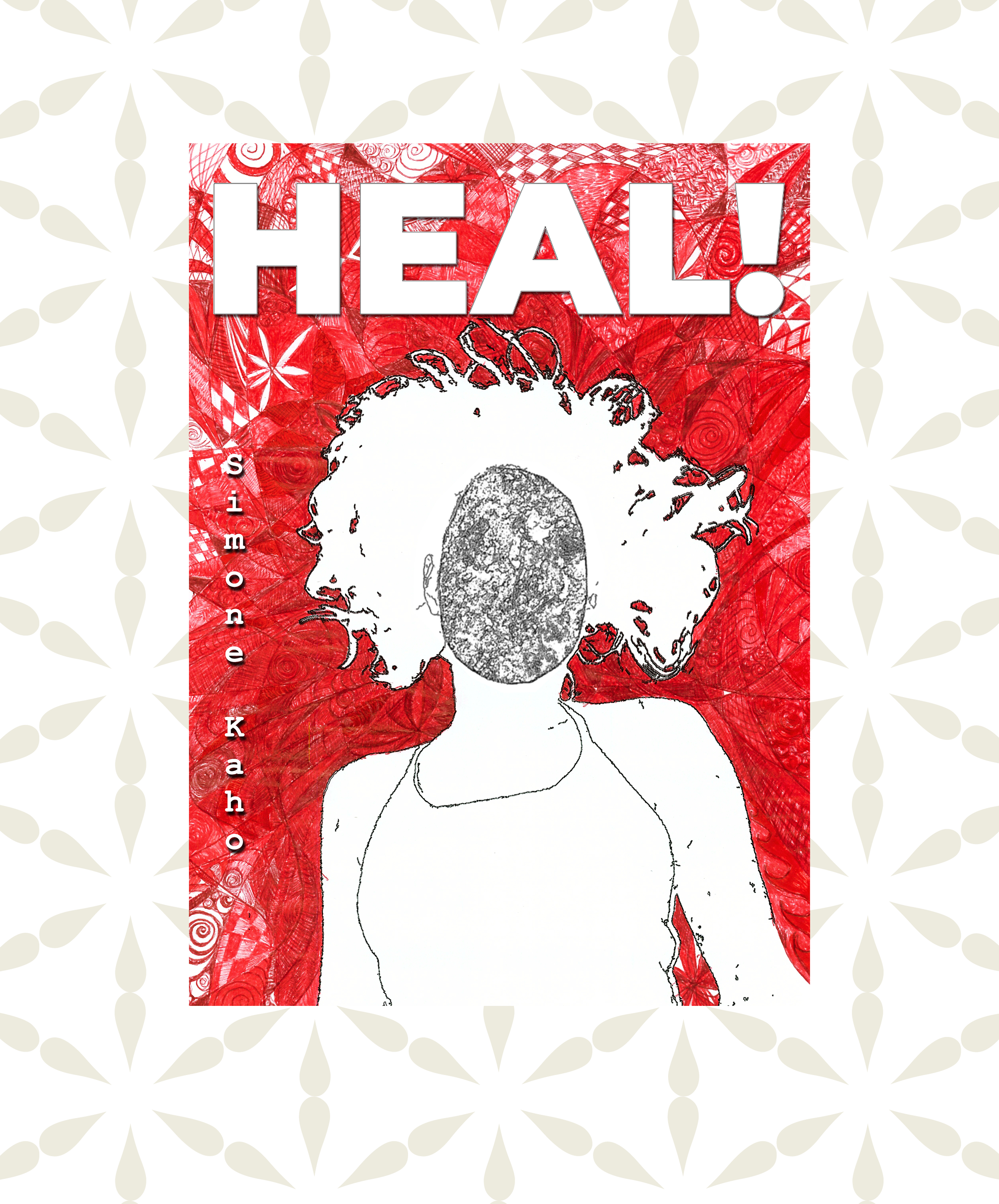
Poetry Shelf review: Simone Kaho’s Heal!

Heal! Simone Kaho, Saufo’i Press, 2022

If you read the blurb, you will discover Simone Kaho’s new poetry collection, Heal!, comes with guidance: the poetry navigates sexual violence, assault, PTSD, self harm, suicide. The blurb also offers terrific reactions from three esteemed poets: Karlo Mila, Anne Kennedy and essa may ranapiri. Karlo writes: “I read this book in one sitting. Paralysed by the beauty, purpose and pungency of the writing.” I don’t usually read blurbs or reviews before I read a book, but when the book recently missed out on a longlist placing in the NZ Book Awards, to the surprise and consternation of many readers, I found I had absorbed traces of the book before I started reading it.

I am holding the book close before I begin reading and it raises questions. How do we write the unspeakable, the unsayable, the unutterable? Sometimes, somehow, someone finds a way to do so because they must, no matter how difficult it might be. And that becomes a gift for us as readers. For any number of private or public reasons.

Simone’s extraordinary collection begins with a smell, an unidentifiable smell, it is “somewhere between a food and flower smell. The source is not clear. It’s not the dash of orange flowers whose nectaries are nice to suck, not the yellow poison berries that broke up one of her mother’s children’s parties.” After listing the things the smell is not, the poet achingly concludes:

You see how life goes on?

The entire collection is alive to smell, to sight and touch. It is rugged terrain and it is hoed ground, it is dead bird and tended insect, it is wound and it is self care. Like Karlo, I am reading Heal! in one sitting, then I sit with the door wide open, hearing a crescendo of autumn crickets, wondering how I will write my reading experience.

Simone guides us into the intimate revelations of a traumatic event, to the acute ripples etching skin and heart, and the afterwards (afterwords) needing to carry on as if life is normal. She moves back and forward, in this house and that house, from this treasured father memory to that treasured father memory, from this partner to this friend. She’s releasing spiky revelations and then turning her eye to a thing of beauty, think  smashed face with sunglasses to sweetly scented flower. I am reminded of the exclamation mark that accompanies the title of the book, and the way my eye moves from flower petal to beloved bee, to wound to scar to a mother’s bedtime stories.

In every photo I’ve taken of spring blossoms the sky behind is blue.
But I’ve seen blossomed trees in storms.
Afterwards, I go look at the battered litter of colour.
New flowery faces thrust out of twigs as if bearing no relation to the fallen below.
Sex is a natural thing, like a river or tree.

The writing inhabits the page in various settings, forms, movements, fluencies, just like thinking might do, especially thinking about hard subject matter. Thinking about traumatic and tough experience involves different patterns of thought, feelings, reckonings. I enter the open, the half closed, the hidden, a need to be safe. At one point the poet remembers planting kūmara with her father, and it gets me musing that Simone’s writing is a way of planting self in the ground, in the soil of living.

There is mint in this garden, comfrey, dandelion, silverbeet, puha. In this garden.
However, there are more weeds than anything else.

His eyes are the colour of soil, hers are too.

This morning she sees herself, arms crossed on her chest, round and complete as
a kūmara, earth embracing her, eyes closed, growing, her breath slow as light
moving across the field, drawn through nutrients in soil, held in her lungs, so
rich, sweet at the back of her throat, seeping onto her tongue, nerves above her
soul prickle, how complete a leaf is, and she, all to herself, in soil soft as clouds,
soft as sea, soft as sky.

Some reading paths might suggest Heal! is a catalogue of pain, and to a degree it is, but it is also a planting of precious life in the abundant detail, both sweet and sour, of living. It considers the who and how of self, whether writer, friend, lover, daughter, woman. Simone’s exquisite artwork adds a piquant visual layer. The cover so very striking, is a poem in its own making. This is a book that is facet rich, like a diamond striking you with light and edge, full of beauty and ache. I have barely touched its surface or depths, but I love it dearly. Thank you for sending Heal! into the world Simone, we are so very grateful.

Simone Kaho is a Tongan and Pākehā poet, creative non-fiction writer, and director. Her first poetry collection Lucky Punch was published in 2016. She has a master’s degree in poetry from Te Herenga Waka—Victoria University of Wellington’s International Institute of Modern Letters (IIML) and was awarded the IIML 2022 Emerging Pasifika writer in residence. Simone directed the 2019 web series ‘Conversations’ for E-Tangata and now works as a writer/director for Tagata Pasifika. She is an active voice in Alison Mau’s #metooNZ project.

Saufo’i Press page
Poetry Shelf favourite poems: Bill Manhire’s ‘The Prayer’

The Prayer


What do you take 
away with you? 

Here is the rain, 
a second-hand miracle, 
collapsing out of Heaven. 

It is the language of 
earth, lacking an audience, 
but blessing the air. 

What light it brings 

with it, how far 
with it, how far 
it is. 

I stayed a minute 
& the garden 
was full of voices. 


I am tired again 
while you are crossing 

the river, on a bridge 
six inches under water. 

Small trees grow out of 
the planks & shade the water. 

Likewise, you are full of 
good intentions 
& shade the trees with your body. 


Lord, Lord 
in my favourite religion 
You would have to be 
a succession of dreams. 

In each of them  
I’d fall asleep, 

scarred like a  
rainbow, no doubt, 
kissing the visible bone.

Bill Manhire
from The Elaboration (Square & Circle, 1972, with drawings by Ralph Hotere)

Note

I’ve always loved ‘The Prayer’, I think because it manages to seem fairly straightforward while maintaining a resistance to paraphrase. Or maybe it’s because the poem’s so plainly concerned with mystery and miracle. I think I was 23 when I wrote it. It was in my first published book of poems (The Elaboration, 1972) and also appears on Ralph Hotere’s Song Cycle banners. It’s been in my mind lately because the first section has found new life as the opening movement of Victoria Kelly’s Requiem, which is about to be presented at the Auckland Arts Festival. You can hear Victoria’s glorious setting of Sam Hunt’s contribution to the text here. The other contributing poets are Ian Wedde, Chloe Honum, and James K Baxter. It’s a good feeling, being resurrected in a requiem!

Here’s a little note I wrote on the Requiem text for the CD booklet:

Lost for Words 

Before it is music, it is words – texts from five writers brought together to make a single poem. 

The poem tells us that we are among the perishable things yet it also makes us feel better about this difficult truth. 

Poetry, some people have said, aspires to stop time, but these words are on the move. They ghost each other, reach out a little, and then reach further out. 

The smallest words evoke cosmic dimensions: light and sky echo and rhyme their way from page to page. 

There are also stars. 

At the very centre are the great horizons – earth and sky, sea and sky – which remind us of our own great longing to touch and be touched. 

On each side are particular deaths, while the work as a whole begins with the mīharo of the natural world and ends with the surrender that awaits us. 

Five separate voices – touched by wonder and strength and grief and frailty – brought together in a single work, which now adds a chorus to gather us all in.  

Sometimes poems (and poets) end up lost for words. 

They tiptoe towards silence. 

On the other hand, here come the singers and musicians.

Bill Manhire

Bill Manhire‘s last collection of poems, Wow, was published in 2020, and was a Poetry Book Society Selection. An interview subsequently appeared in PN Review. A recent collaboration with Norman Meehan and others, Bifröst, has been released by Rattle.

Poetry Shelf is hosting a series where poets pick a favourite poem from their own backlist.

Poetry Shelf noticeboard: Ockham NZ Book Award Poetry shortlist

Full details and other categories here

Congratulations to all the deserved finalists, I have loved all these books. Poetry awards are a time for joy and whoops for some, and slump and self doubt for others. I never forget this. I always say that good books attract readers and good books endure, regardless of awards. As a writer, it is the writing that matters – I loved the poets that missed out on a shortlist spot – and please do not let this damage your faith in your own writing.

Poetry Shelf Monday Poem: Cadence Chung’s ‘would not dare’

would not dare

it’s that one tiny shift, one flick
of a blind and suddenly your room
is a camera obscura and every
image flickering on the walls is
enough to yearn for, tongue hot
and waiting. it might be enough
for her, to listen to her heart
like a century-old recording — with
poise, with study, with interest —
but it is not enough for me, not
when every note seems to form
an anagram for her name. when
did that happen, you ask, about
freckles going from dark patches of
skin to night-sky smatterings of
glitter. when did i get so stupid?
one day you are in bed with your
downy white cat and the next
you are in your grandma’s kitchen,
tears in your eyes as you look
at her fine china teapot you
smashed, the blue willow-pattern
fragmented incomprehensible.
without saying a word, your
grandfather takes the duster,
sweeps up all the pieces and
makes you cheap tea in separate
cups. that afternoon you try and
fail to play Debussy on his old
piano, and he pretends not
to listen. the pottery fragments
watch on, those ancient lovers
broken in two, finally lying still
in their paper-towel graves.

Cadence Chung

Cadence Chung is a poet, student, and musician from Te Whanganui-a-Tara, currently studying at the New Zealand School of Music. She draws inspiration from Tumblr posts, antique stores, and dead poets. Her debut poetry book ‘anomalia’ was published by Tender Press Press in April 2022.

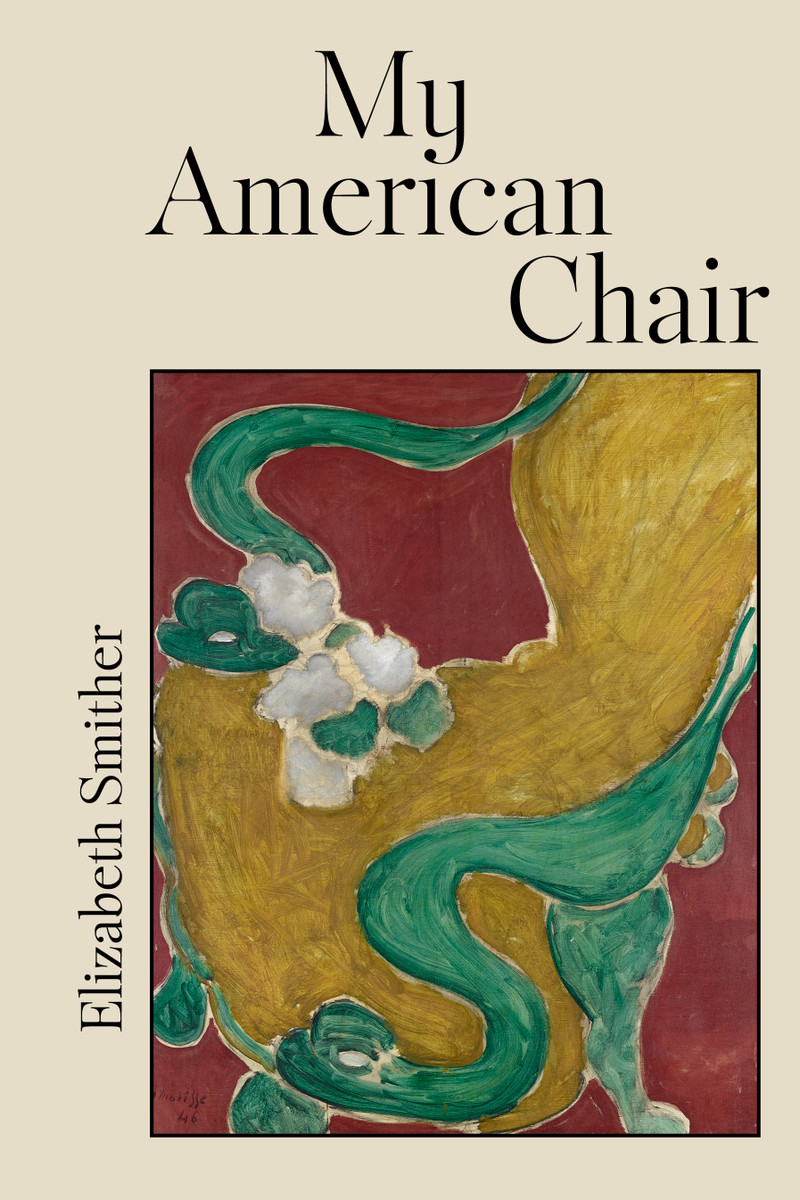
Poetry Shelf review: Elizabeth Smither’s My American Chair

My American Chair, Elizabeth Smither, Auckland University Press, 2022

Before I reached the end – slices of life cut through
by each now knife-edged page – a calm
(it might have been the page of The Scream)

dissolved the bed and the chicken, your fine
conversation which calmed everything, and the book
on my lap was reverently shut again

while outside, when darkness fell and stars
like the numbered pages came to glow
the peace of a wild book descends.

from ‘A wild book’

Elizabeth Smither’s poetry has been part of my life for a long time. I have carried its richness and its economy, its insight and its litheness, with me as both reader and writer. When you read a poem from Elizabeth’s new collection, you cannot immediately move onto the next, you need to stall and savour, and let it unfold in a sequence of aftertastes and absorbtions.

We all have different modes of writing, along with diverse reading attachments. When I read My American Chair, poetry becomes glade, it invigorates as clearing, it relishes quietness and there is simply no need for haste.

Under Elizabeth’s travelling eye and ear, the world is poetry, both the world at hand and the world at a distance. She gathers in moments, experience, fascinations, from past and present. We eavesdrop upon details that have caught her eye and heart. Yes! Because this nuanced poetry is testimony to the ability of each day, the every day, to beguile. We might move from a worn-down step to white lies to surgery to a granddaughter to a row of doctors’ receptionists all wearing leopard-spot blouses to poets disappearing between sheets on the washing line. Or the occasion of winning a national book award, when a precious ring is lost.

In the poem clearing, I move from grief to delight to familial love to wit to laugh-out-loud humour. A holidaymaker in France accidentally calls the fire brigade to hire a “a vehicle for six / with room for quantities of luggage”. The fire brigade offers to send “one of our smaller fire engines / but perhaps the ladder truck would be more suitable” (‘The joke of Sapeurs-Pompiers’).

Elizabeth’s poetry is marked by tenderness. In a wry poem, Elizabeth identifies herself and Cilla McQueen as the shortest Poet Laureates. She concludes the poem with a pocket portrait of Cilla:

Her neck grows warm, her neat head bends
over the page, she stretches her arms
and seems to frown and squint.

It is words, you clowns, the other laureate thinks
not sun in her eyes not pain of thought
but heart and pen at work again.

from ‘Cilla, writing’

There is the captivation of poetry as shifting perspective. In ‘At Saint-Chapelle’, the poet stretches out on the floor next to a young man to get a different view of the ceiling. I feel like I am doing this as I reread the collection: stretching out on the floor of the poem to view the ceiling, windows and skylights from different vantage points.

I think our being supine made a prayer
the way scouts cross themselves
for none of us could understand
how we stayed in place, anchored there.

An object might offer a mode of transportation. A pair of bath sheets and a hand towel hanging in the frost, sun, wind and showers for several days:

What does a towel matter in the great
scheme? Would it like to see the stars
or the stars debate what signal it is sending?

from ‘Towels’

A number of poems sing of friends and family, sometimes as moving eulogies, sometimes drawing a family member closer.

I see the windowsill with its figurines and toys.
She the dark sky and the stars and moon.
I hear the rain, she sees the silver spears.

from ‘Little boy on the lower bunk’

My American Chair is prismatic. I am grateful for an extended sojourn in the poems. The rewards are multiple. The freshness tangible. The music sweet harmonies. The travel nourishing. This is a book of intricate and satisfying contemplation.

Elizabeth Smither has written six novels, six collections of short stories and eighteen poetry collections. She has twice won the major award for New Zealand poetry and was the 2001–2003 Te Mata Poet Laureate. In 2004, she was awarded an honorary LittD from the University of Auckland for her contribution to literature and was made a Member of the New Zealand Order of Merit. She received the Prime Minister’s Award for Literary Achievement in 2008. Her most recent book, Night Horse (Auckland University Press, 2017), won the 2018 Ockham New Zealand Book Award for Poetry.

Auckland University Press page