Monthly Archives: August 2014

Poets at Te Papa

   
WRITERS ON MONDAYS: Best New Zealand Poems 2013

What better way to anticipate National Poetry Day* than with a line-up of nine of the best? Come along to hear Kate Camp, Mary-Jane Duffy, Dinah Hawken, Anna Jackson, Therese Lloyd, Greg O’Brien, Rachel O’Neill, Chris Tse and  Ashleigh Young read their poem selected for the annual online publication Best New Zealand Poems,  plus a favourite NZ poem. The editors of this year’s selection, Mark Williams and  Jane Stafford, will introduce the poets.

(*National Poetry Day is on 22 August).

Writers on Mondays is presented with Museum of New Zealand Te Papa Tongarewa, the New Zealand Centre for Literary Translation, and National Poetry Day.

DATE:    Monday 18 August
TIME:     12.15-1.15pm
VENUE: Te Papa Marae, Level 4, Te Papa
(please note that no food may be taken onto the Marae).

Friday Poem: Rebecca Palmer’s ‘Dear Grandma’ — now I have read the author’s note the poem shifts slightly on its axis

 OLYMPUS DIGITAL CAMERA

Dear Grandma

Albino, prune like
demoralizing the years
of hard work past,

B flat serenades
chitter chatter through
the teeth of an elephant.

African plains, vast, moonlit,
red eyes glinting –
is it Chopin’s waltz,

or your other love,
Rachmaninoff?

Poised, silent
“Shhh”, you whisper,
“Can you hear the musk deer?”


Author note: I wrote this poem from an exercise about describing a person’s hands in a workshop run by Joanna Preston. It was the beginning of summer, when the sun lingers on your shoulders in the evenings and instills in you a kind of thirst for adventure. The exercise got me thinking about how the world looks to a child and how, through the eyes of the young, the achievements of the elderly are merely fleeting impressions of an untouchable Savannah.

Author bio: Currently studying towards an undergraduate degree in English and Russian at Canterbury University. I have been published in The Fib Review.

Paula’s note: This poem hooked me. I love the surprising juxtaposition of detail and sound effects. Try, for example, writing a poem with a prune, B Flat, a grandmother, the African Plains, elephant’s teeth, the moon. This is an subtle portrait of a moment, a grandmother and a relationship. It reaches out from the intimacy of listening and sharing to the African plains — it is a poem of the wider world and the world at hand. I love the way a phrase (‘years/ of hard work past’) embeds a secret narrative that instils a sense of the buried lives of the elderly. I have used this analogy before, but this poem is like lacework: ethereal, delicate, intricate, as dependent upon holes as it is web. Interesting too how now that I have read the author’s note the poem shifts slightly on its axis. I like the idea of fleeting impressions through the eyes of a child.

New literary translation prize for NZ secondary schools, to be judged by Eleanor Catton

_70501637_eleanorcatton_getty

New literary translation prize for NZ secondary schools, to be judged by Eleanor Catton
 
New Zealand’s leading national reading charity, the New Zealand Book Council, is pleased to announce the inaugural Moving Words prize – a literary translation prize for New Zealand secondary schools.
 
The prize has been developed by the New Zealand Book Council in conjunction with the New Zealand Centre for Literary Translation and Wai-te-ata Press at Victoria University of Wellington, and the Ministry of Education. The prize is a reflection of New Zealand’s multi-ethnic and multilingual society and aims to inspire and reward excellence in literary translation by secondary-level students.
 
“We are delighted to be able to offer an avenue for the celebration of literature and language in our secondary schools and to inspire students to approach writing, and indeed reading, from a fresh perspective,” says New Zealand Book Council CEO, Catriona Ferguson.
 
Man Booker Prize winner Eleanor Catton will chair a judging panel that will select the top three entries out of 20 shortlisted entries.
 
The prize is awarded for the best previously unpublished translation into English, te reo Māori or New Zealand Sign Language of a piece of poetry or prose of no longer than 400 words.
 
Prizes are:
 
·         $500 to the first place winner(s) and $500 to their school.
·         $250 to the second place winner(s) and $250 to their school.
·         $125 to the third place winner(s) and $125 to their school.
·         A special prize will be awarded by the Honourable Chris Finlayson to the best translation from Latin or Greek.

Translations will be judged on accuracy, literary merit and on the entrant’s choice of the original piece for thematic and stylistic complexity.
 
The award is open to New Zealand residents or citizens who are attending a New Zealand secondary school, or receiving home schooling at a secondary school level, and are under 19 years of age at the closing date for submissions to the competition.
 
Closing date for submissions is 26 September 2014.
 
Entry forms can be downloaded from http://www.movingwordsnz.weebly.com or by emailing movingwordsnz@bookcouncil.org.nz.
 
For further information, visit http://www.movingwordsnz.weebly.com.
 
For more information on the work of the New Zealand Book Council go to:
 
http://www.bookcouncil.org.nz
http://www.booknotes-unbound.org.nz
http://www.facebook.com/NewZealandBookCouncil
@nzbookcouncil
 
For media enquiries, please contact New Zealand Book Council Communications Managers:
 
Rachel O’Neill (Rachel@bookcouncil.org.nz)
Phone: +64 4 801 5546
Fax: +64 4 801 5547
 
Catherine Cradwick (CatherineC@bookcouncil.org.nz)
Phone: +64 4 801 5546
Fax: +64 4 801 5547
 

Anne Kennedy and Iain Sharp in conversation

      kennedy_180 sharp_180  
Anne Kennedy has had success in every genre she tackles – fiction, poetry and film.  Her latest volume of poetry won its category in the 2013 NZ Post Book Awards. Her latest novel The Last Days of the National Costume is a finalist in the fiction category of this year’s awards. She holds The University of Auckland Residency at the Michael King Writers’ Centre, working on her next novel.
In his day job Iain Sharp is a manuscripts librarian in the Sir George Grey Special Collections at Auckland Library. He is well known as a reviewer and writer, as a poet and he has authored two books. 

 
Join them in a conversation about the world of writing over a glass of wine.

Sunday 24 August 2014, 4 pm
Michael King Writers’ Centre, Summit Road
Takarunga Mt Victoria, Devonport (off Kerr St)

Entry by koha ($5)
Bookings recommended (by August 22)

Ph: 09 445 8451
E: assistant@writerscentre.org.nz

Emily Dobson’s The Lonely Nude — The collection allows the imagination to corkscrew slightly, leaving the poem ajar for other things.

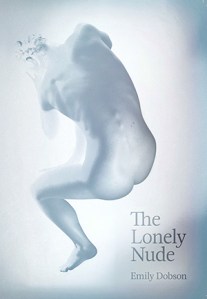
cv_the_lonely_nude                 IMG_2664

Emily Dobson, The Lonely Nude Victoria University Press, 2014

Emily Dobson’s debut collection, A Box of Bees, gathered much critical praise and was named as one of The New Zealand Herald’s Books of the Year in 2005. That same year she took up the Glen Schaeffer Fellowship in Iowa.

Emily’s new collection, The Lonely Nude, is a collection to read as a whole as much as it is a collection to read in pieces. Like a symphony in parts, or a poetic memoir that doesn’t reside solely in self-confession, experience or anecdote. The collection allows the imagination to corkscrew slightly, leaving the poem ajar for other things. Connections, disconnections, vulnerabilities, epiphanies, fantasies. It is as though the poet’s pen is driven by the real and outsidethereal. Musings, sidetracks, daydreams, anxieties. The seven sections establish thematic clusters as the titles suggest: ‘Prehistory,’ ‘The Lonely Nude,’ ‘A Holiday in Mexico,’ ‘Fall in America,’ ‘Winter,’ ‘Spring,’ ‘Going Home.’ These titles suggest an arc of living and travelling, yet the book title underlines the fragility of movement. Yes, the poet has posed as a life model (and there are poems on this topic), but there are various other nudities rippling through the lines. Scandalous gossip stolen from a women’s magazine in ‘Rude Jude goes nude.’ Or the nightmarish scenario of a house being blown away while showering in ‘Unfamiliar weather.’ (‘Foreignness is just things we’ve forgotten/ ways we could have been.’)

These new poems share the restraint and elegance of a Jenny Bornholdt poem. The line breaks are exquisite as though the poems are breathless. As though the poet has slowed the reading right down to snail’s pace so we can stall and ponder. This is nowhere more evident than in the perfect little poem, ‘Hotel Mexico.’


Hotel Mexico

The bedspread is red

like ink

in the room

with small breezes

we’re sprawling

and a few small drops

of rain are falling

on the dust

on the concrete

small buds

are opening

in our lips

spreading carelessly


These new poems shift and settle on the page in myriad ways, with or without punctuation, with or without hesitancy. At times there is a spark of humour. Often there are lines that Emily acknowledges as ‘stolen’ in her detailed footnotes. These poems emerge out of reading the world and merge into a world of reading. There is an anchor in daily life, yet the poems float and fly like a poet’s mind on the move without limitation. Lyricism is the ink in the pen. So too are the shifting forms. The ability to catch just the right modicum of detail to make a moment shine. As James Brown said of Emily’s first book, these poems are a joy to read.


I want to end with another poem that caught me:


The house

The house faces south

and we are couched in the dark side of a hill.

The grass is long and always wet.

We envy the hill opposite: we long for its sun.

There are holes in it, tunnels,

like a pencil has been poked through.

The two pines are always black as pitch.

A guitar in the corner keeps creaking.

At night the little train all lit up inside

rattles briefly around the hill,

in and out of the tunnels.


Victoria University Press page

New Zealand Book Council page

All Tomorrow’s Poets at Time Out Bookshop on NZ Poetry Day is a must-go-to event in my view

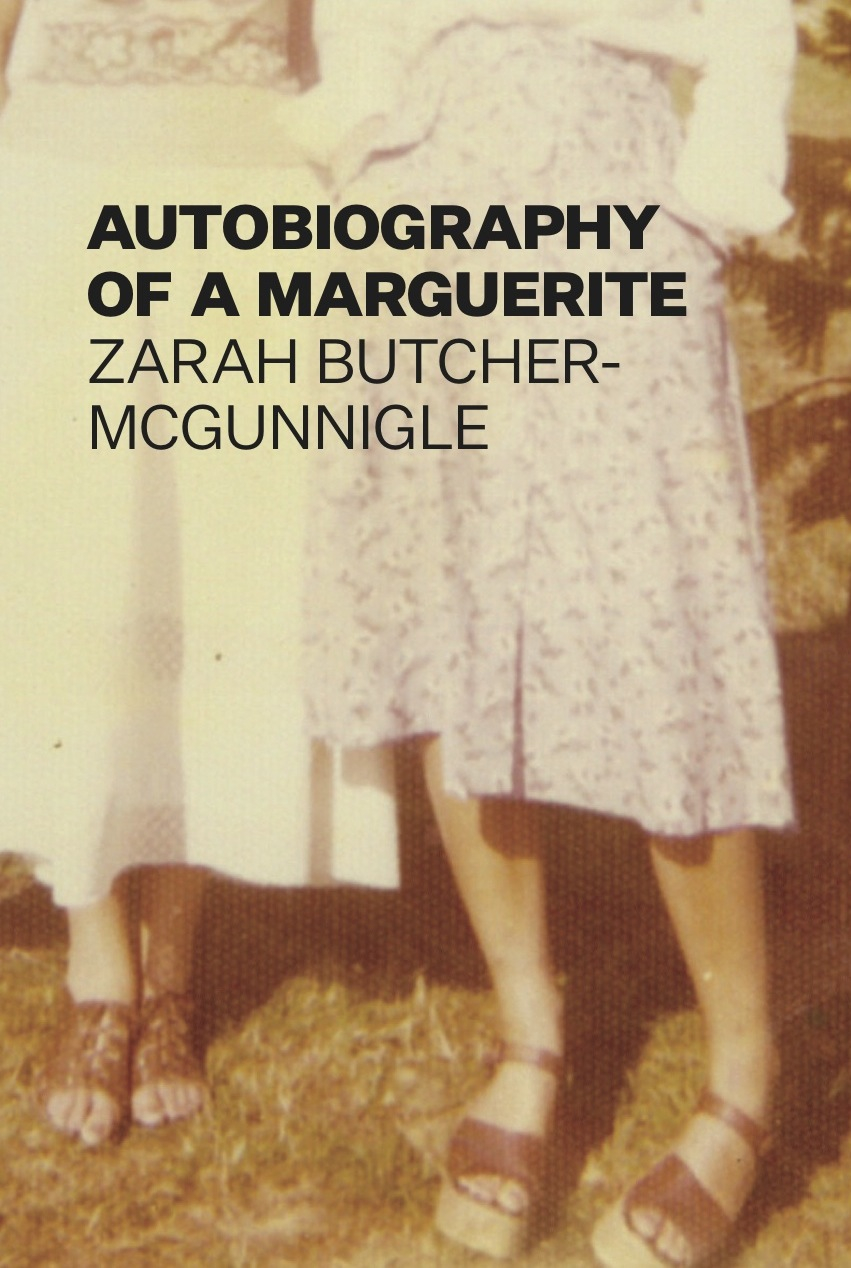
AutobiographyofaMarguerite_cover

This event looks terrific! I picked Manon as the winner when I judged The New Zealand Post Secondary School Competition a number of years back (I would so love to hear what she is doing now!) and shortlisted Kirsti for the Sarah Broom Poetry Award this year and and raved about Zarah’s book at her launch and here (and Steven’s). This is some line up. And I love the fact there are people here I have never heard of.

If I wasn’t doing a swag of things in Hamilton for Poetry Day I would be there with bells on. Anyone want to write about this event I will post it on Poetry Shelf. Cheers!

All Tomorrow’s Poets will be a unique and exciting event, showcasing cutting-edge New Zealand poetry and situating it in the context of Aotearoa New Zealand’s literary history.

MC’d by Gregory Kan and Steven Toussaint, the event will feature:

Ross Brighton
Kirsti Whalen
Craig Foltz
Isobel Cairns
Zarah Butcher McGunnigle
Jessica Hansell aka Coco Solid
Gregory Kan
Steven Toussaint
Alex Wild
Manon Revuelta

…reading their own work alongside a New Zealand poem which they have found inspirational.

All Tomorrow’s Poets will take place in the reading room, upstairs at Time Out Books, in an informal atmosphere with copious food and drink.

Come along from 6.30pm on August the 22nd to explore the expanding possibilities of poetry.

Location: Upstairs at Time Out Books, 432 Mt Eden Rd, Mt Eden, Auckland

Entry Details: Free

Contact Details: please direct any questions to Time Out Books at books@timeout.co.nz

Gregory O’Brien talks to Kim Hill about Michele Leggot: hearing Michele read was simplybreathtaking

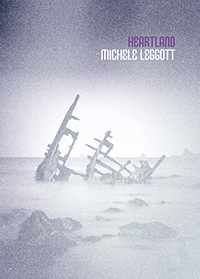
cp-heartland   cp-heartland

Gregory O’Brien was in conversation with Kim Hill this morning talking about Michele Leggott’s collection, Heartland (AUP). Michele’s book is a finalist in the Poetry section of The NZ Post Book Awards this year. Kim and Gregory pondered ‘difficulty’ in poetry but mostly  uncovered the way Michele’s book opens its arms to the reader.  Gregory is a poetry storehouse as he leads you this way and that, towards and away from the poems. Hearing Michele read from one or two was magnificent– the musicality evident, the electric connections multiple, the images resonant, the personal glimpses alluring. You can hear the discussion here.

Poem Friday: Nicola Easthope’s ‘Standing’ a metaphor that is open and pliable

OLYMPUS DIGITAL CAMERA

Standing

They say I am rock in matters of work

that the holes I dig are smooth-sided and honest

my shovel tip sharp, and handle engraved

with the flank-lines of gneiss, the green hold of forests.


But today I wake as pelvic-pink soapstone

with a ditch to shoulder, my buckling knees

tip me crown to the bottom of this infinite fissure

the litter of night time, the folding of trees.


Author’s note: This poem was fuelled by bare legs on hot concrete, the traditional Japanese garden at Pataka Museum and Art Gallery on Waitangi Day, and my return to full time work. Here, I’m exploring the baffling twin-set self I experienced in the early days of Term 1 last year: the coexistence of my reputation as an authentic, confident teacher, with my private anxieties at meeting 120 teen strangers’ needs – and being liked by them – along with a seemingly unscalable workload. Working out the worry!

Author bio: Nicola is a poet, activist, and teacher of English and Social Studies at Kāpiti College in Raumati, where she also coordinates the Eco Action Group. Her first poetry collection, leaving my arms free to fly around you, was published by Steele Roberts Aotearoa in 2011. She is currently completing her second manuscript, entitled Working the tang.

Links: http://www.creativecoast.co.nz/nicola-easthope-poet

http://www.steeleroberts.co.nz/books/isbn/978-1-877577-57-4

Paula’s note: I loved the gracefulness of each line in this poem. The enigma and the restraint. I loved the contrasting verses and the way image resonates so profoundly. If the images function as metaphor, and indeed they do, they are open and pliable. I love the literal presence of tools that can then ignite the dual sides of self. The title too is enigmatic, potent. I was lead from the place where one stands to the regard of others and then oscillated between these two meanings as the image took me from keenness and capacity to doubt and incapacity.  The final face is striking, ‘the folding of trees,’ and is a perfect, effervescent tablet to leave at the end. It sets the whole poem sparking again.